Flats, slippery corners, soft tires, and tread that wears out too early slow down almost every US rider. Many cyclists also pump to the maximum tire pressure (PSI) and wonder why the bike feels harsh instead of fast. If you want to learn how to choose fast rolling bike tyres, the answer is a mix of smart design choices and the right pressure.
The right tire saves energy on every pedal stroke. It also keeps you safe, because speed means little without grip and puncture protection. Correct PSI ties it all together, since a fast tire at the wrong pressure feels slow and sketchy.
This guide covers casing, rubber, tread, width, pressure, and tubeless setups in plain English. You will find tables, a PSI formula, and step-by-step checklists. It builds on how bike tires work and what makes a good bike tire. For the basics, start with our general guide to choosing bike tires. Every tip follows our testing process.
Quick takeaway: The fastest tire is the one that matches your road, your weight, and your pressure. Do not chase one headline number.
What Are Fast Rolling Bike Tyres?
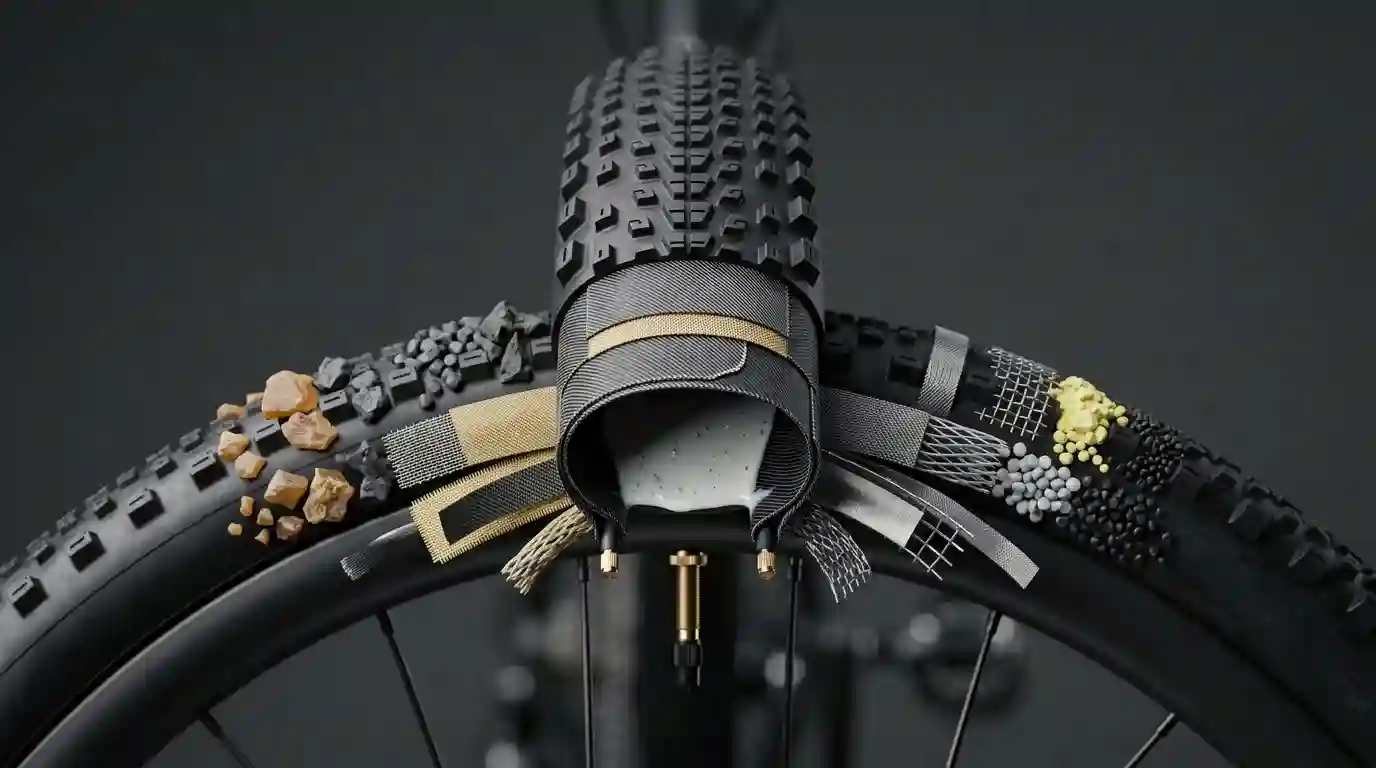
Fast rolling bike tires are tires built to lose less energy as they flex over the road. They use supple casings, efficient rubber, and tread that suits the surface. Lower rolling resistance means you need less effort to hold your speed, though the fastest tire still depends on your road, pressure, and riding style.
Your weight and riding style matter too. A tire that feels quick on smooth asphalt may feel slow on chip seal. Think of “fast” as a match between tire and terrain.
So, are fast tires worth the money? For most riders, yes. A good set can save real effort over a long ride, as long as you keep enough grip and protection for your roads.
How Do Fast Rolling Tires Work?
Every tire flexes where it touches the ground. That flex wastes a little energy as heat. Supple casings, efficient rubber compounds, and smart tread design reduce that loss.
Low rolling resistance is not the goal for every ride. A tire built only for speed may lack grip, wet traction, or puncture protection. Bike tires also work differently from car tires, as we explain in how bike tires differ from car tires.
What Is Rolling Resistance in Cycling?
Rolling resistance is the force that opposes a tire as it moves over a surface. Casing losses and tire deformation are the biggest causes.
It is not the same as aerodynamic drag, drivetrain friction, or wind resistance. Those forces act on the rider and bike, not the tire. Rough pavement raises rolling losses too, which is why choosing tires for rough roads matters.
What Makes a Bike Tire Fast Rolling?
Six factors shape speed: casing, rubber compound, tread, width, pressure, and overall construction. A tire’s full design matters more than any single feature.
Lab data and real-world riding both help. Labs test tires on smooth drums under fixed loads. Real roads add bumps, wind, and corners, so use both views to compare fairly.
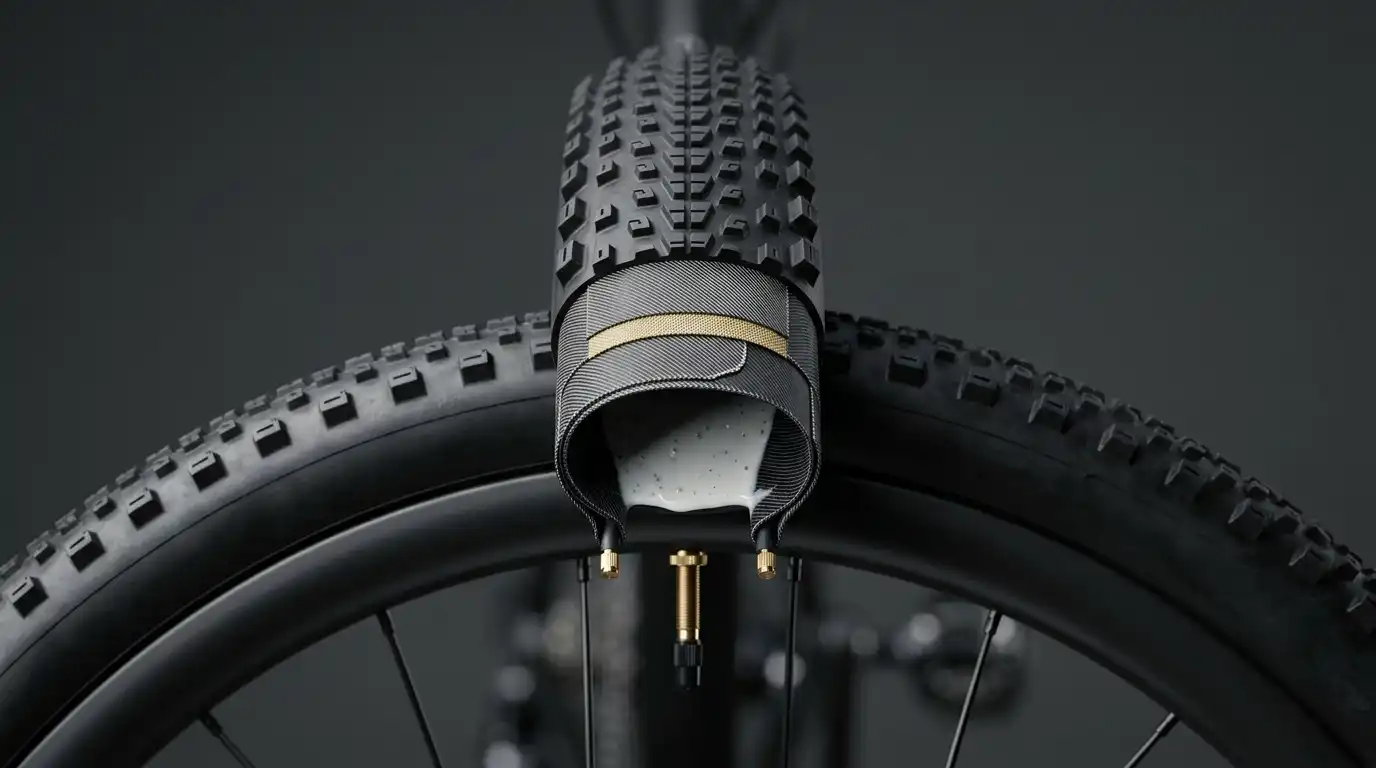
Choose a Tire With a Supple Casing
Casing TPI means threads per inch in the tire body. Higher TPI can support a lighter, more flexible casing, but TPI alone does not prove a tire is faster.
Compare casing flexibility, puncture protection, durability, and intended use. A very thin casing can roll well but cut easily. Our guide to bike tire casing explains the trade-offs.
Compare Rubber Compounds
Softer rubber can improve grip but may raise wear or rolling losses, depending on the formula. Firmer compounds may roll efficiently but can offer less grip in some conditions. Rubber hardness is measured by durometer on the Shore A scale, where lower means softer.
Look for independent rolling resistance tests alongside wet-grip and durability reviews. See what a bike tire rubber compound is for more detail. Wet roads need extra care, so read how to choose bike tires for wet weather.
Look for an Efficient Tread Pattern
Smooth or lightly textured center tread suits pavement and hard-packed paths. Tall, widely spaced knobs add traction on loose ground but can add rolling losses on pavement.
Side knobs improve cornering traction on gravel and trails. Learn why bike tires have different tread patterns and how much tread a bike tire should have.
Check for a Puncture Protection Belt
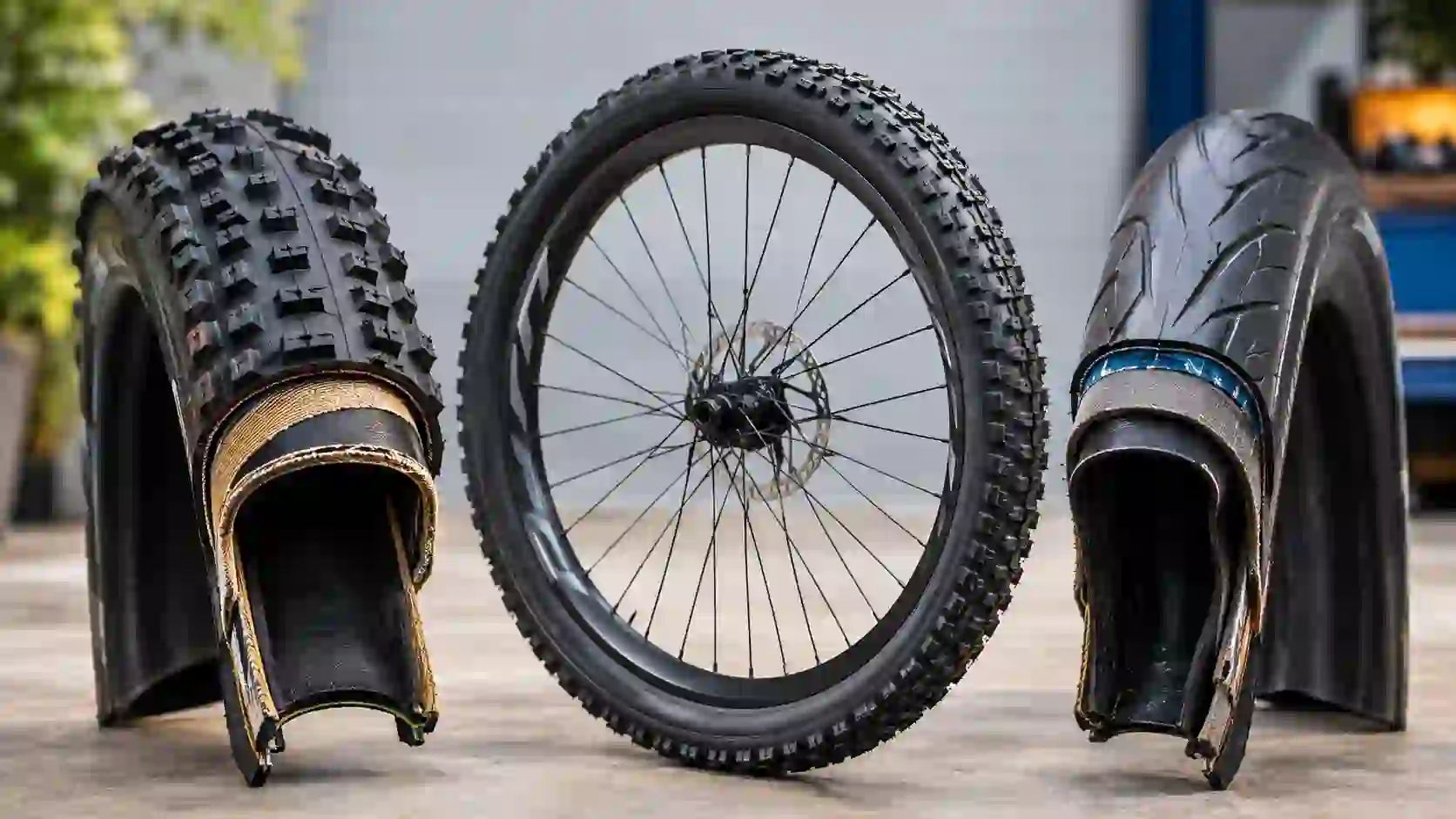
A puncture belt is a layer of nylon or aramid under the tread. It helps resist cuts and sharp debris.
Extra protection can add weight or stiffness, depending on the design. Choose protection based on your roads, not only the lowest rolling resistance score. Daily riders should read how to choose tires for daily cycling.
Rolling Speed vs. Grip: A Quick Comparison
Speed and grip pull in opposite directions. The table shows how common design choices shift that balance.
| Design Choice | Rolling Speed | Grip and Protection |
|---|---|---|
| Supple, high-TPI casing | Higher | Lower cut resistance |
| Soft rubber compound | Lower to medium | Higher wet grip |
| Smooth tread | Higher | Lower on loose ground |
| Puncture belt | Slightly lower | Higher flat protection |
| Wider tire at lower PSI | Often higher on rough roads | Higher comfort and control |
Use this as a guide, then match the mix to your route.
How to Choose Fast Rolling Bike Tyres for Your Riding Style
Match tire design to your most common surface, speed needs, and weather. Balance low rolling resistance with cornering grip, comfort, and flat protection.
Check the tire’s approved size and pressure range before buying. The table below gives quick picks by riding style.
| Riding Style | Best Tread | Typical Width |
|---|---|---|
| Road | Smooth or fine file tread | 28 to 32 mm (1.1 to 1.25 in) |
| Gravel | Slick or semi-slick center | 38 to 45 mm (1.5 to 1.75 in) |
| Mountain bike | Low-profile center, strong side knobs | 2.25 to 2.4 in (57 to 61 mm) |
| Commuting | Smooth with puncture belt | 35 to 42 mm (1.4 to 1.65 in) |
| E-bike | Reinforced smooth or light tread | 40 to 55 mm (1.6 to 2.2 in) |
Riders who switch surfaces can also read how to choose tires for road and off-road.
Best Fast Rolling Tires for Road Bikes
Look for smooth center tread, an efficient casing, and a compound suited to dry or wet roads. Compare 25 mm, 28 mm, and wider options based on rim fit, comfort, and frame clearance.
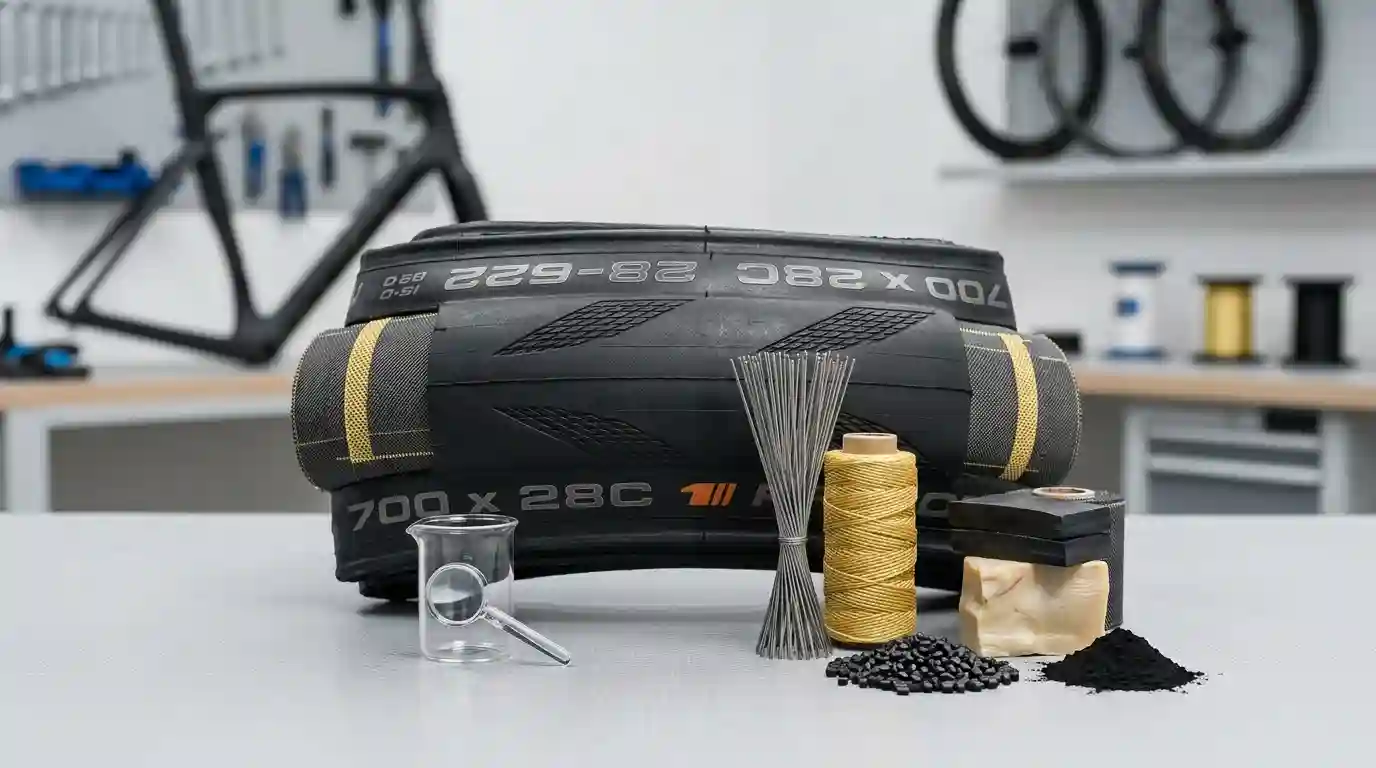
Do not assume a narrower tire is always faster. Construction and pressure matter just as much. Our guide to the best tire width for road and city riding and the best 700c tires for comfort can help. Not sure what the code means? See what 700×28 means.
Best Fast Rolling Tires for Gravel Bikes
Choose a slick or semi-slick center tread for hard-packed gravel and paved links. Use more tread and stronger side knobs for loose gravel, dirt, and rough corners.
Consider tubeless gravel tires for lower pressure and fewer pinch flats when your setup allows. Read how to choose bike tires for gravel roads and how to choose tires for mixed surfaces.
Fast Rolling Tires for Mountain Bikes
Use a low-profile center tread for firm trails and speed. Pick stronger side knobs for cornering grip and braking control.
Do not choose by speed alone if trails are rocky, muddy, or steep. Pacific Northwest mud needs open knobs, while Southwestern loose rocks need tough sidewalls. Older bikes may use sizes such as 26×2.1, so see what 26×2.1 means or what 650b means.
Best Fast Rolling Tires for Commuting
Choose a smooth or lightly treaded tire for roads and bike paths. Balance speed with puncture protection for glass, thorns, and rough pavement.
Reflective sidewalls add visibility for daily urban riding. Browse how to choose tires for a commuter bike, the best bike tire size for commuting, and what bike tire to buy for commuting. For daily use, the best bike tires for everyday riding are worth a look.
Fast Rolling Tires for E-Bikes
Check whether the tire is rated for your e-bike’s load and speed. E-bike torque and extra weight wear casings faster, so choose strong casings and good puncture protection.
Compare rolling efficiency with wet grip and braking, especially on heavier bikes. Use the ETRTO tire size system and what the numbers on bike tires mean to confirm a safe fit.
What Tire Width Is Best for Fast Rolling?
The best width depends on road surface, rim width, frame clearance, and rider weight. Wider tires can improve comfort and control, especially on rough roads.
Compare full tire-and-rim setups, not width alone. For a deeper look, read bike tire width explained and what tire width you should choose.
Are Narrow Tires Faster Than Wide Tires?
Not automatically. On smooth lab drums, narrow tires can look quick. On real pavement, a wider tire at a suitable pressure often absorbs bumps and wastes less energy.
Contact patch shape plays a role too. A wide tire has a short, wide patch that flexes less per turn, while a narrow tire has a long, thin one. That helps explain why wider tires can hold their own at the same pressure.
Use independent tests that match surface, pressure, wheel setup, and conditions. If you ride older gear, check whether you can put narrower tires on a bike. Wondering about the opposite? See whether you can use wider tires on your bike.
How to Check Rim Width Compatibility
Check the rim maker’s approved tire-width range. Confirm the tire clears the frame, fork, brakes, and fenders with a safe gap.
For tubeless setups, verify that both rim and tire are approved for tubeless use. The table below is a general guide based on inner rim width.
| Inner Rim Width | Typical Tire Range |
|---|---|
| 15 to 17 mm | 25 to 32 mm |
| 19 to 21 mm | 28 to 40 mm |
| 23 to 25 mm | 32 to 45 mm |
| 25 to 30 mm | 38 to 50 mm |
Always follow your rim maker’s chart. For help, see how to check if a tire will fit your wheel, bike tire size compatibility, and how much wider a tire you can fit.
How to Set Tire Pressure for Lower Rolling Resistance
Pressure changes deformation, grip, comfort, and puncture risk. Do not assume maximum pressure gives the fastest ride. On real roads, a tire that is a little softer often rolls faster because it stays in contact with the surface instead of skipping over bumps.
Use a pressure calculator as a starting point. Then adjust for your surface and handling. Tires also leak air slowly, as we explain in why bike tires lose air, so check your tires regularly.
Finding the Right PSI for Your Weight
Start with total system weight: rider, bike, clothing, and cargo. Then consider tire width, inner rim width, front-to-rear balance, and road conditions. Stay within the tire and rim limits.
The table below shows rear tire starting points for tubeless setups. Subtract 3 to 4 PSI for the front.
| Total Weight | 25 mm | 28 mm | 32 mm | 40 mm |
|---|---|---|---|---|
| 150 lb (68 kg) | 62 PSI | 51 PSI | 41 PSI | 31 PSI |
| 175 lb (79 kg) | 72 PSI | 60 PSI | 48 PSI | 37 PSI |
| 200 lb (91 kg) | 83 PSI* | 68 PSI | 55 PSI | 42 PSI |
| 225 lb (102 kg) | 93 PSI* | 77 PSI* | 62 PSI | 47 PSI |
| 250 lb (113 kg) | 103 PSI* | 85 PSI* | 69 PSI | 52 PSI |
Note: Values marked with * pass the 72.5 PSI (5 bar) cap that many hookless rims carry. Pick a wider tire or a hooked rim in those cases.
The PSI Formula for Total System Weight
This is a rule of thumb, not a manufacturer spec. Never exceed the maximum printed on your rim or tire.
- Add rider, bike, and gear weight in pounds.
- Multiply by 0.55 for road, gravel, and commuter bikes. Use 0.60 for mountain bikes.
- Multiply that rear load by the width factor: 0.75 for 25 mm, 0.62 for 28 mm, 0.50 for 32 mm, 0.38 for 40 mm, and 0.20 for 2.25 in.
- Subtract 3 to 4 PSI for the front tire.
- Add 5 to 10 percent for inner tubes. Subtract 2 to 5 PSI on wet roads or loose rock.
Example: A 165 lb rider, 22 lb bike, and 3 lb of gear total 190 lb. The rear load is about 105 lb, so a 28 mm tire starts near 65 PSI rear and 61 PSI front.
Step-by-Step Guide to Setting Tire Pressure
Follow these four steps for a fast, safe setup.
- Check the tire sidewall and rim maker’s pressure limits.
- Enter rider weight, bike weight, tire width, and riding surface into a tire pressure calculator.
- Measure pressure with a reliable gauge before riding.
- Test ride, then make small adjustments while checking grip, comfort, and stability.
Tip: Skip the guesswork. Run your numbers through the Free Bike Tire Pressure Calculator for a tailored starting PSI.
Terrain Adjustments for US Roads and Trails
Local surfaces change the best PSI. Start from the formula, then adjust to fit where you ride.
- Pacific Northwest mud and wet roots: Run 2 to 5 PSI lower and pick open tread that sheds mud.
- Southwestern loose rocks: Keep enough pressure to avoid rim strikes, and favor tough sidewalls.
- Northeast potholes and frost heaves: Use a wider tire and slightly more pressure to protect the rim.
- Midwest chip seal and gravel roads: Go lower with a supple casing to cut vibration and rolling losses.
Change one thing at a time, so you know which tweak helped.
Should You Use Higher or Lower PSI for Speed?
Too much pressure raises vibration and cuts control on rough surfaces. The tire bounces instead of rolling smoothly, which can feel fast but waste energy.
Too little pressure raises casing flex, rim-strike risk, and instability. Find the pressure that balances speed, grip, comfort, and safe handling for your setup.
Are Tubeless Tires Faster Than Tires With Inner Tubes?
Tubeless setups can reduce some energy loss and help prevent pinch flats. Speed gaps depend on tire build, sealant, pressure, and the tube used for comparison.
Tubeless systems need compatible rims, tires, valves, and tubeless sealant. Long rides raise the stakes, so also see how to choose tires for long distance.
Benefits of Tubeless Tires
Sealant can close small punctures when enough of it sits inside the tire. Tubeless setups may allow lower pressure, which improves grip and comfort on rough surfaces.
They also cut pinch-flat risk compared with standard tube setups. Check sealant every 2 to 4 months, and sooner in hot, dry climates.
When Inner Tubes Make More Sense
Inner tubes are often simpler to install, repair, and maintain. Lightweight latex or TPU tubes can perform differently from standard butyl tubes.
Carry a compatible spare tube and repair tools, even when you run tubeless. A tube is the fastest way to finish a ride after a big cut.
How to Set Up Tubeless Tires
Follow these four steps for a clean setup.
- Confirm tire and rim compatibility.
- Fit suitable tubeless tape, a valve, and the correct amount of sealant.
- Seat the tire bead using a safe, suitable inflation method.
- Check for leaks, rotate the wheel to spread sealant, and confirm pressure before riding.
Hooked vs. Hookless Rims in Plain English
A hooked rim has a small lip on the inside wall that grips the tire bead. A hookless rim has a smooth, straight wall with no lip.
Hookless rims can be lighter and easier to set up tubeless. They also carry strict pressure caps, often 72.5 PSI (5 bar), and work only with approved tires. Hooked tubeless rims often allow up to about 100 PSI.
Look for markings on the rim, tire, or tape. If you cannot find them, ask the wheel maker before you inflate.
How to Compare Fast Rolling Bike Tires Using Test Data
Use independent tests that measure rolling resistance instead of relying on brand claims. Compare results at similar pressures and loads, with the same wheels and test surfaces.
Check whether the test also covers puncture resistance, wet grip, wear, and real-world ride quality. Read how we review products in our editorial policy.
Which Rolling Resistance Tests Should You Trust?
Look for clear methods, calibrated equipment, and published conditions. Prefer reputable labs and cycling publications that explain how they test.
Treat one test as evidence, not a guarantee. A tire that wins on a smooth drum may behave differently on a cracked back road.
How to Compare Tire Performance Fairly
Compare the same tire size where possible, with the same load and pressure. Review rolling resistance next to weight, puncture protection, and grip.
Check the date and version of the tire tested, because designs change. If you spot an error in our own data, our corrections policy explains how to tell us.
Common Mistakes When Choosing Fast Rolling Bike Tyres
Many riders buy the smoothest tire without thinking about wet roads, gravel, or cornering. Others inflate to the maximum, believing more PSI always means more speed.
Some ignore rim width, frame clearance, load ratings, or tubeless compatibility. Each mistake can cost speed, grip, or safety.
How to Avoid These Mistakes
Choose for your main riding surface, not a headline speed claim. Use a pressure calculator, and verify every manufacturer limit.
Check current reviews and real-world durability feedback before buying. If you still feel stuck, our About page shows who runs these tests.
How to Maintain Fast Rolling Tires
Check pressure before important rides, and inspect tread and sidewalls often. Remove embedded glass or sharp debris carefully, and repair damage using the tire maker’s guidance.
Replace tires with serious cuts, exposed casing, bulges, or worn-through tread. Clean tires and proper storage also extend life.
When Should You Replace Bike Tires?
Timing depends on mileage, compound, surface, load, and storage. Look for flat spots, worn tread, repeated punctures, cracks, and casing damage.
Follow the maker’s wear indicators, and replace unsafe tires promptly. Worn tires lose both speed and grip, so waiting too long rarely saves money. Riders who log heavy miles or carry loads should inspect tires every few weeks. Our guide on how often to replace bike tires gives clear timelines.
How to Fix a Flat on the Road
A quick fix keeps a fast ride from turning into a long walk. Carry a spare tube, levers, a pump or CO2, and a small patch kit.
- Find and remove the cause, such as glass or a thorn.
- Take the tire off one side and pull out the damaged tube.
- Run your fingers inside the tire to check for sharp bits.
- Fit the new tube with just a little air, then seat the bead.
- Inflate to your target PSI and check the tire sits evenly.
Frequently Asked Questions
What are the fastest rolling bike tires?
Tires with efficient casings, suitable compounds, and tread matched to the surface often roll quickly. The best option depends on whether you ride pavement, gravel, or trails. Beginners can start with the best bike tires for beginners.
Are slick bike tires faster than treaded tires?
Slick tires often roll efficiently on smooth pavement. Tread helps on loose dirt, mud, and cornering on rough surfaces.
Does higher tire pressure make a bike faster?
Not always. Excess pressure can raise vibration and energy loss on rough roads. The best PSI depends on tire width, rider weight, rim, and surface.
Are tubeless tires faster than inner-tube tires?
They can be, depending on tire design, pressure, sealant, and tube type. Compare complete setups instead of assuming tubeless always wins.
What PSI should I use for my weight?
Start with a calculator that considers total system weight, tire width, and surface. Stay within the approved range for both tire and rim. Drop 2 to 5 PSI in wet weather for better grip.
Can wider tires roll faster than narrow tires?
Yes, in some real-world conditions, especially on rough surfaces. Rim fit, pressure, and casing design also affect speed. If you are unsure, see whether you can change bike tire width on your frame.
How do I know if a bike tire will fit my rim?
Check the rim maker’s approved tire-width range and the tire’s size markings. Confirm frame clearance and tubeless compatibility if relevant. Learn how to measure bike tire size, how to read bike tire size, and how to find your bike tire size.
How do I know when my bike tires need replacing?
Look for worn tread, exposed casing, cuts, bulges, and frequent punctures. Follow any wear indicators and the maker’s safety guidance. For sizing help, see what bike tire size you need.
Conclusion: Choose Fast Rolling Tires Without Losing Control
Prioritize casing quality, tread design, rubber compound, and pressure for your main riding surface. Balance rolling resistance with grip, comfort, puncture protection, and compatibility.
The fastest setup is the one that suits your bike, route, and conditions. Check pressure often, replace worn tires early, and test one change at a time. Small, steady tweaks beat big guesses. If you need more sizing help, read why bike tires come in different sizes, whether you can put a different size tire on your bike, bike wheel size vs tire size, what 700c means, and bike tire markings explained.
Ready to ride faster and safer? Enter your exact weight, tire size, and rim width into the Free Bike Tire Pressure Calculator and Tire Finder Tool at TheBikeTires.com. Get a safe starting PSI in seconds, then fine-tune it on your next ride.

Mohidul Islam is a leading cycling technology specialist and bike tire consultant with over 15 years of hands-on experience in the bicycle industry. He holds a Bachelor of Science in Mechanical Engineering from Penn State University, where he focused heavily on material science, tread mechanics, and rubber compound performance. Over the past decade and a half, Alex has conducted extensive field testing, tubeless setup evaluations, and tire pressure modeling for road, mountain, and e-bikes. His practical insights and data-driven approach help cyclists of all levels optimize grip, speed, and durability on every ride.