Wet roads change everything. Rain has a way of exposing every weakness in a bike setup, from worn rubber to the wrong pressure. Painted lines turn slick, braking distances grow, and a corner that felt easy yesterday feels risky today. Many US riders also face flats from road grit, and tires that wear out early after a wet season. Knowing how to choose tyres for wet weather helps you stay upright and ride with confidence.
The right tire and the right PSI work together. They protect your safety, keep your speed up, and make rainy rides more comfortable. A good wet-weather tire gives you more margin when something unexpected happens, such as a car door or a sudden stop. Our team explains every choice in plain English. See our testing process and editorial policy to learn how we work.
How Do You Choose Bike Tires for Wet Weather?
Quick answer:
- Choose tires with a suitable rubber compound, reliable wet-surface grip, and enough width for your bike and riding style.
- Set tire pressure (PSI) to match rider weight, tire width, road conditions, and maker limits.
- Check tire condition, tread design, and compatibility before riding in rain.
Wet riding rewards good rubber, steady pressure, and smooth habits. Do not judge a tire by tread depth alone. Many riders assume more grooves mean more grip, but that is often wrong on pavement. The compound and the way the tire holds its shape count for more. For a refresher on the basics, read how bike tires work.
What Makes a Bike Tire Good in Wet Conditions?
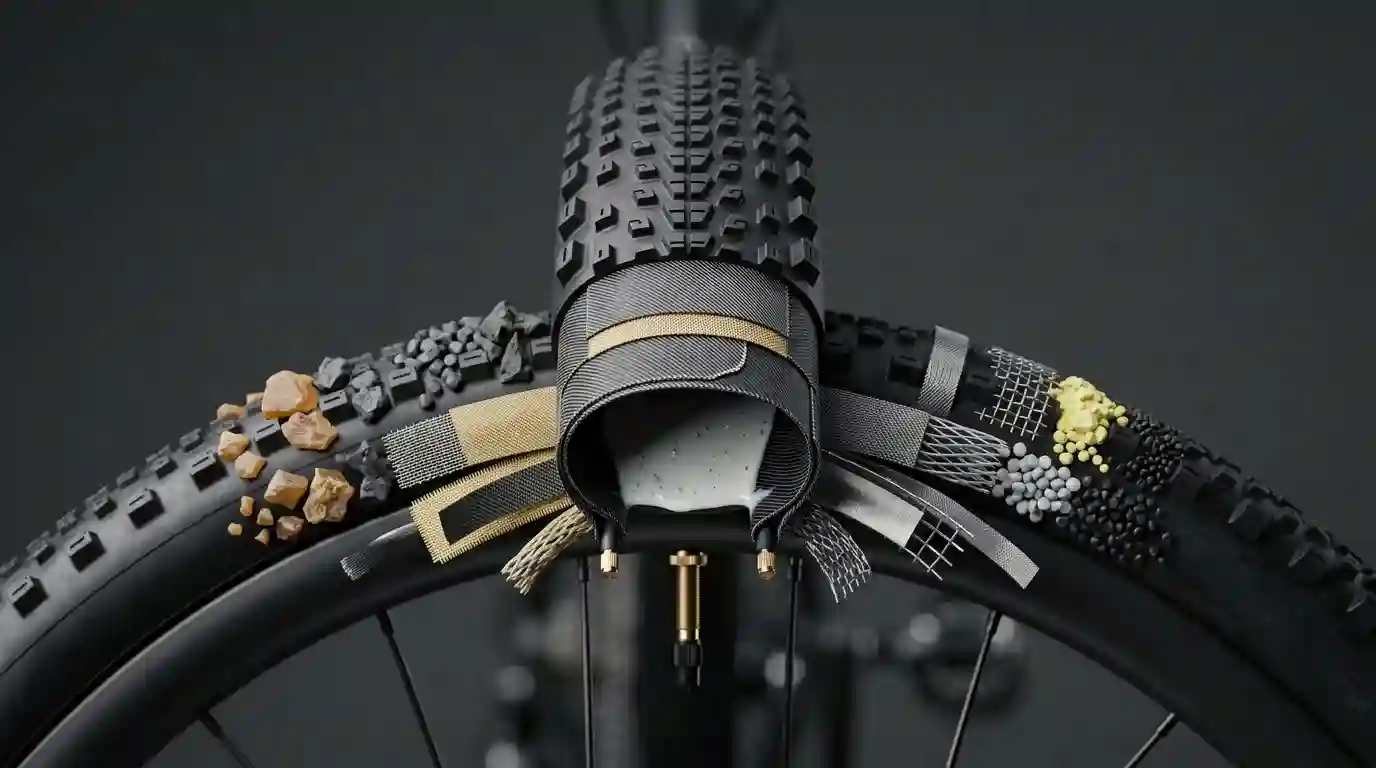
Rubber compound, contact patch, and casing design affect grip, comfort, and handling. On paved roads, compound and surface contact often matter more than deep tread. On muddy trails, suitable knobs help the tire bite into loose ground. Open spacing also lets mud fall out of the tread instead of packing in.
Our guide on what makes a good bike tyre covers the traits that count.
Which Wet-Weather Tire Features Matter Most?
- Rubber compound: Helps maintain grip on damp surfaces. This is the single most important wet-weather trait.
- Tread pattern: Supports traction on dirt, mud, gravel, and loose ground. It matters less on clean pavement.
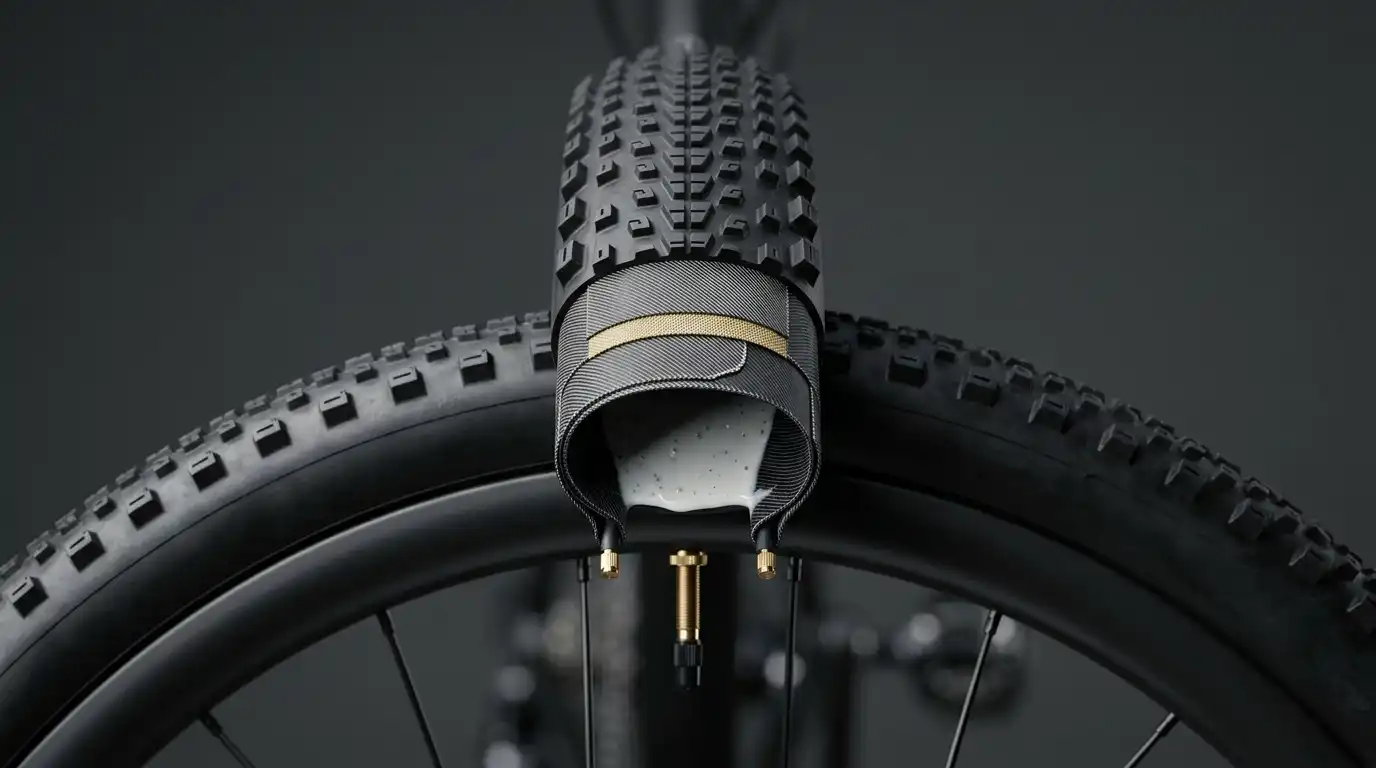
- Casing and puncture protection: Balance ride feel, durability, and resistance to flats. A supple casing also conforms better to wet road texture.
New to tire shopping? See the best bike tyres for beginners and the best bike tyres for everyday riding.
Why Do Bike Tires Lose Grip in Wet Weather?
Water, road grime, painted lines, metal covers, and fallen leaves all cut traction. Braking and cornering forces can also exceed the grip at the tire’s contact patch. Smooth riding, lower cornering speeds, and gradual braking cut the risk of a skid.
Pacific Northwest drizzle and Southeastern summer storms both bring oily film to the road. That film is often the slickest on the first rain after a dry spell. Desert cities in the Southwest see this often, because oil and dust build up for weeks before a storm.
How Does Water Affect Tire Contact?
A tire must keep enough contact with the road to pass on braking and turning forces. Bicycle tires work differently from car tires, so do not apply car-style hydroplaning rules directly. Standing water, debris, and slick surfaces can still create serious handling risks. Deep puddles can also hide potholes and sharp objects, so slow down and pick a clear line.
Which Surfaces Are Most Slippery When Wet?
Painted road markings, steel plates, wet wooden bridges, and smooth metal are especially slick. Wet leaves, mud, and fine gravel reduce grip on paths and trails. Avoid sudden turns, hard braking, and sharp steering on these surfaces.
Cross them upright and in a straight line whenever you can. Brake before the slick patch, not on it. Keep your hands relaxed so the bike can move a little underneath you.
Which Tire Tread Pattern Is Best for Wet Weather?
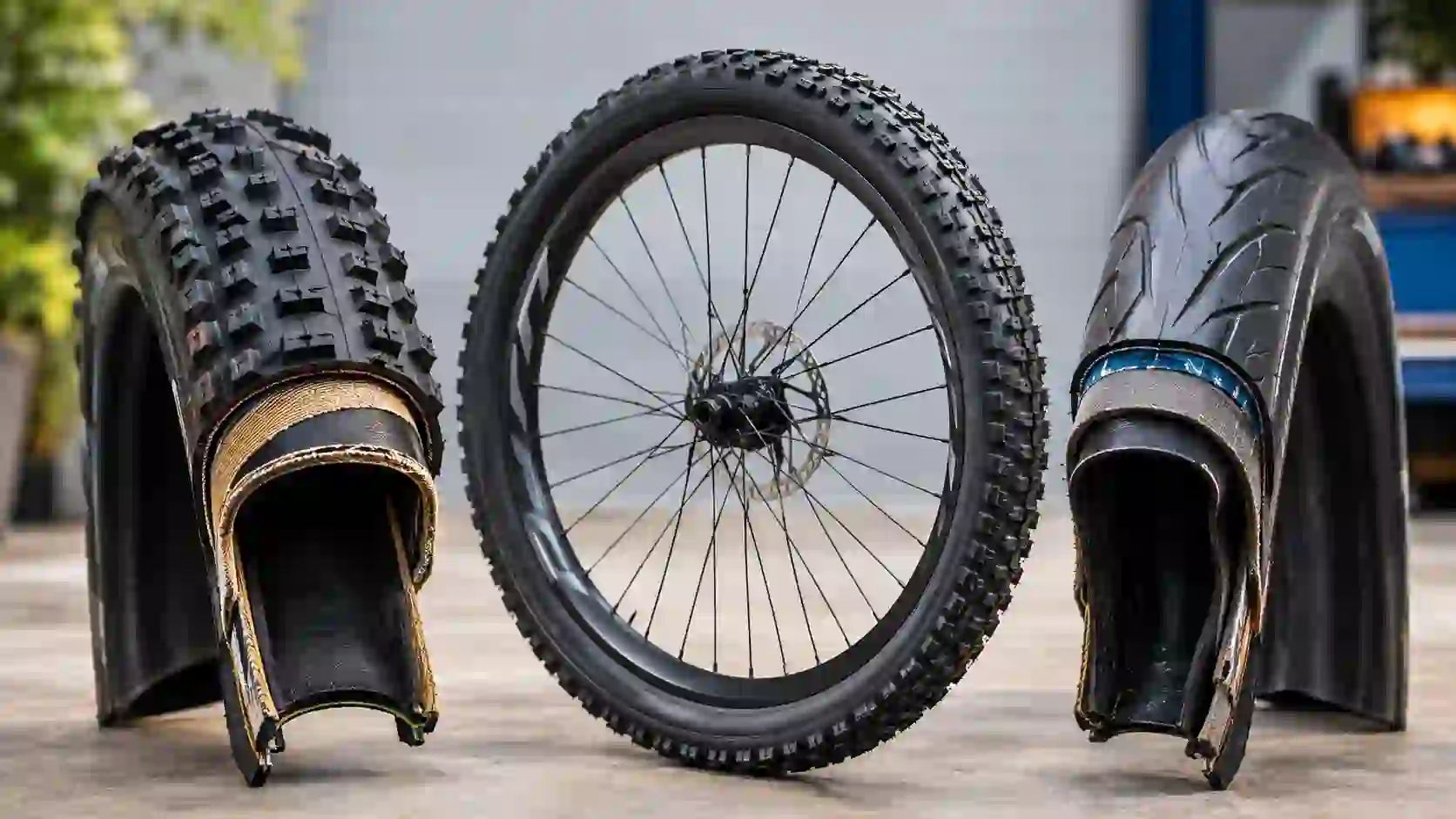
The best tread depends on the surface, not on how much tread a tire has. Road tires often use a smooth or lightly textured center to cut rolling resistance. Gravel and mountain bike tires use more pronounced tread when loose or muddy ground needs extra traction.
For more on design, read why bike tires have different tread patterns and how much tread a bike tyre should have.
Are Slick Bike Tires Good in the Rain?
Slick road tires can grip wet pavement very well when their compound and build are suitable. Grooves are not always needed to push water away at normal riding speeds. Check the maker’s wet-grip guidance instead of judging safety by tread depth. Many top road racers use slick tires in the rain, which shows how well modern compounds work.
Are Knobby Tires Better for Wet Roads?
Large knobs add drag and can feel less predictable on smooth pavement. Closely spaced knobs or shallow tread suit mixed paths and light gravel. Deep, open knobs are more useful in mud than on wet asphalt. On pavement they squirm under load and can feel vague in turns.
How Should You Choose Tread for Different Riding Conditions?
| Riding Condition | Tire Features to Consider |
|---|---|
| Wet city roads | Reliable rubber compound, durable casing, suitable width |
| Road cycling | Wet-grip compound, low rolling resistance, puncture protection |
| Wet gravel | Small to medium knobs, supportive casing, adequate volume |
| Muddy trails | Open, self-clearing tread with suitable knob spacing |
| E-bike commuting | Durable construction, reliable wet grip, suitable load rating |
Use this table as a starting point. It covers the most common daily and weekend rides across the country. Southwestern loose rock and Pacific Northwest mud ask for very different tread, even though both can be wet.
How Does Rubber Compound Affect Wet-Weather Grip?
Rubber compounds change how a tire conforms to surface texture and keeps traction. Softer compounds can improve grip in some conditions but may wear faster. Performance varies with formula, temperature, surface, and tire build. Cold rain, such as a Northeast fall storm, can stiffen some compounds and lower grip.
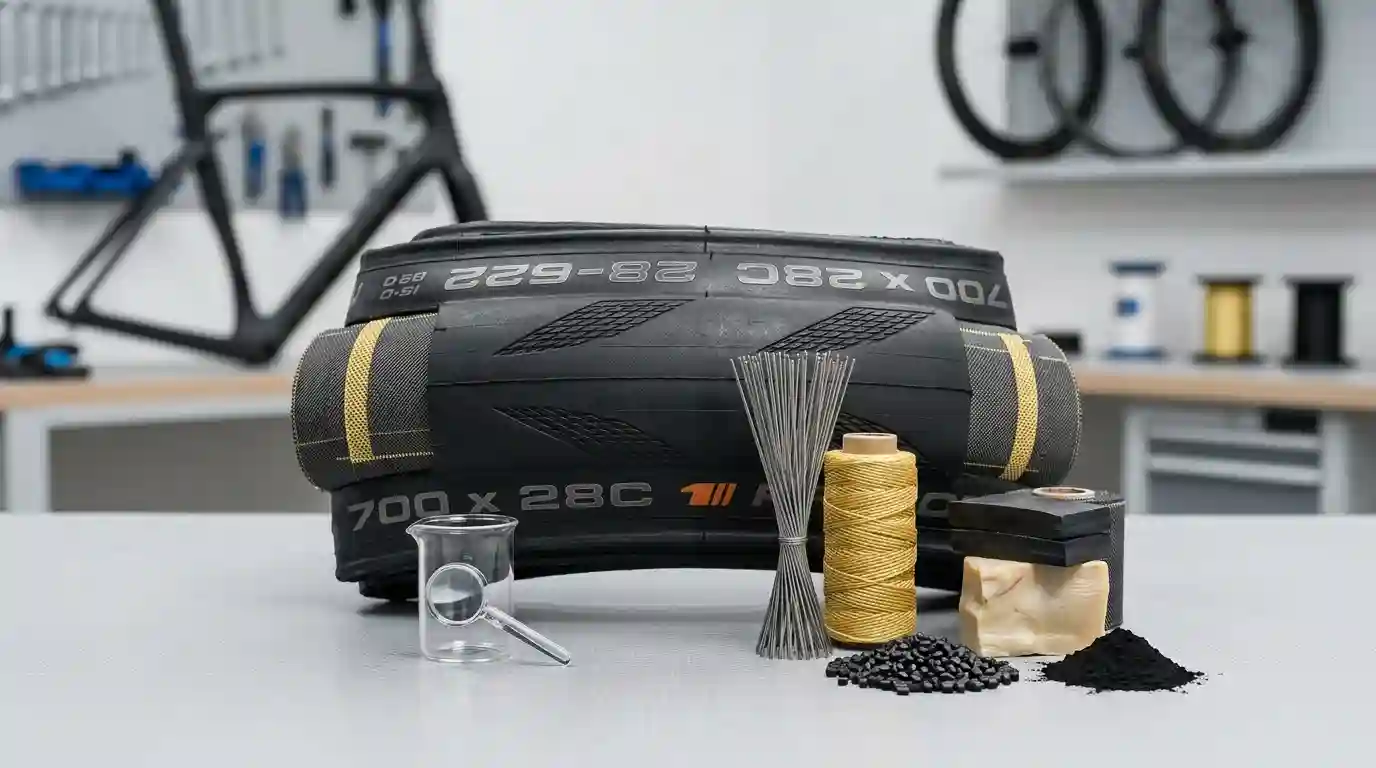
Durometer measures rubber hardness, and a lower number means softer rubber. Learn more in what bike tire rubber compound is and what bike tyres are made of.
Is Softer Rubber Better for Wet Roads?
A softer compound may grip certain surfaces better, but softness alone does not guarantee better wet performance. Harder compounds may last longer, depending on the design. Many commuters accept a slightly firmer compound in return for thousands of extra miles. Compare maker specs and independent wet-grip tests when you can. Dual-compound tires use a harder center for wear and softer shoulders for cornering grip.
What Should You Know About Tire Casing TPI?
TPI means threads per inch and describes one part of casing construction. Higher TPI can support a more supple ride in some designs, but thread material and casing layers matter too. TPI alone does not decide wet grip, puncture resistance, or tire quality. A thin, flexible casing helps the tire mold to the road, while a thick one resists cuts.
Our guide to bike tire casing explains each layer.
What Tire Width Is Best for Wet-Weather Riding?
Wider tires hold more air and can run lower pressure when the wheel and frame support them. A larger contact patch can improve comfort and control, but width alone does not guarantee more grip. Always check frame clearance, fork clearance, rim compatibility, and maker limits. Leave a few millimeters of space around the tire, since wet grit can build up and rub.
Read bike tire width explained and what tyre width you should choose for the full picture.
Are Wider Bike Tires Safer in the Rain?
Wider tires may improve comfort and control on rough or uneven wet surfaces. A 32mm or 35mm tire often feels calmer than a 25mm tire on broken, wet pavement. Correct pressure, rubber compound, and tire build still matter. Never fit a tire that exceeds safe clearance or the approved size for your bike.
See how much wider a tire you can fit before you buy.
How Do You Check Rim Width Compatibility?
Match the tire size to the rim maker’s approved tire-width range. A labeled 32mm tire can measure 34mm on a wide rim, so measure the mounted tire when space is tight. Check the inner rim width and the tire’s stated size before buying. For tubeless setups, confirm the tire and rim are explicitly compatible.
| Internal Rim Width | Typical Road/Gravel Tire Range |
|---|---|
| 15-17mm | 23-32mm |
| 19mm | 25-40mm |
| 21-23mm | 28-45mm |
| 25mm | 32-50mm |
These are rough guides, so confirm with your rim maker.
Hooked vs. hookless: A hooked rim has a small lip that locks the bead in place. A hookless rim has a straight wall and relies on a tight bead fit. Many hookless rims cap pressure near 72 PSI (5 bar), so read the rim label.
For more fit help, see bike tire size compatibility and bike wheel size vs tire size.
Which Tire Width Suits Road, Gravel, and Mountain Bikes?
- Road bikes: Choose a compatible width that balances speed, comfort, and control.
- Gravel bikes: Consider wider tires for wet dirt, rough paths, and mixed surfaces. Sizes from 38mm to 45mm are common.
- Mountain bikes: Pick width and tread by terrain, wheel size, rim limits, and riding style. Most trail bikes run about 2.3 to 2.5 inches.
What Tire Pressure (PSI) Should You Use in Wet Weather?
Quick setup guide:
- Start with the tire and rim maker’s permitted pressure range.
- Adjust for rider and bike weight, tire width, terrain, and conditions.
- Test changes in small steps of 2 to 3 PSI.
- Keep enough pressure to prevent rim strikes, tire squirm, or loss of control.
Use a real gauge, since many pump dials are off by several PSI. Tires also lose air slowly, as explained in why bike tyres lose air. Check often with the tips in how often to check bike tyres.
Should You Lower Tire Pressure for Wet Roads?
A small pressure cut may improve comfort and contact on rough surfaces, if it stays within safe limits. Even 3 to 5 PSI can soften the ride and help the tire follow wet road texture. Lower pressure is not automatically better on smooth wet pavement. Avoid pressures so low that they cause pinch flats, tire instability, or rim damage.
How Do You Calculate the Right PSI for Your Weight?
Weigh the rider, bike, and carried gear. This is your system weight. Put about 45% on the front wheel and 55% on the rear. Multiply each load by a width factor: 0.66 (28mm), 0.52 (32mm), 0.45 (35mm), or 0.34 (40mm).
Then adjust. Subtract 5 to 10% for wet or rough roads. Subtract about 10% for tubeless. Add 5 to 10% for inner tubes.
Example: A 175 lb rider, 25 lb bike, and 10 lb of gear make 210 lb. The rear carries about 116 lb and the front about 95 lb. On 32mm tires, that gives about 60 PSI rear and 49 PSI front. A 7% wet-weather cut brings that to roughly 56 and 46 PSI.
Starting PSI by System Weight
This table shows dry starting PSI (front / rear) for tubeless setups.
| System Weight | 28mm | 32mm | 35mm |
|---|---|---|---|
| 150 lb | 45 / 54 | 35 / 43 | 30 / 37 |
| 175 lb | 52 / 64 | 41 / 50 | 35 / 43 |
| 200 lb | 59 / 73 | 47 / 57 | 40 / 50 |
| 225 lb | 67 / 82 | 53 / 64 | 46 / 56 |
| 250 lb | 74 / 91 | 59 / 72 | 51 / 62 |
Treat these as a first guess, then test. Never exceed the limit printed on the tire or rim. Heavy riders on hookless rims may hit the rim limit first. In that case, move to a wider tire instead of adding air.
What Factors Change the Ideal Wet-Weather PSI?
Tire width, casing build, rim width, and total load all matter. Tubeless tires may run different pressure than tube setups, depending on the tire and rim. Rough surfaces may suit lower pressure, while heavy loads and hard impacts may need more support. Cargo, panniers, and wet gear all add to system weight.
Are Tubeless Tires Better for Wet-Weather Cycling?
The Tubeless systems can cut some punctures and allow lower pressure when the setup supports it. Tubeless sealant can seal small punctures, but it cannot fix every cut or failure. Tubeless tires also do not give better wet grip on their own, since tread and compound still rule. The real gain is fewer flats and the option of lower pressure.
Tubeless vs. Inner Tubes for Rainy Conditions
| Feature | Tubeless Setup | Inner-Tube Setup |
|---|---|---|
| Small punctures | Sealant may seal some holes | Often needs a patch or tube replacement |
| Pressure flexibility | Can support lower pressure within safe limits | Pinch-flat risk may limit low-pressure use |
| Maintenance | Needs sealant checks and setup care | Usually simpler to inspect and repair |
| Wet grip | Depends on tire design and pressure | Depends on tire design and pressure |
How to Set Up Tubeless Tires for Wet Weather
- Confirm tire, rim, and rim tape compatibility.
- Install the tubeless valve and fit the tire as the maker instructs.
- Add the specified amount of sealant and inflate within the permitted range.
- Check the bead, inspect for leaks, and verify pressure before riding.
Checking Tubeless Sealant: How Often?
Follow the sealant maker’s inspection and refill schedule. Hot weather, frequent riding, and sealant type change how fast it dries. Many riders refresh sealant every few months, and more often in hot, dry climates. Carry a pump, a plug kit where suitable, and a backup repair option for longer rides.
What Puncture Protection Should Wet-Weather Tires Have?
Wet rides expose tires to glass, grit, thorns, and road debris. Rain also washes debris into bike lanes. Glass and small stones collect along the edge of the road, right where cyclists ride. Puncture belts and reinforced casings reduce some punctures but may add weight or rolling resistance.
Inspect the tread and sidewalls often, especially after riding through debris.
Is a Puncture Belt Worth It for Commuting?
A puncture belt is a protective layer under the tread. It helps riders who travel daily on debris-covered roads. Compare protection, weight, rolling resistance, and handling, and do not assume any tire is immune to cuts. Many riders find a mid-level belt is the best balance.
How Do You Know When a Tire Needs Replacing?
Replace tires with exposed casing threads, serious cuts, bulges, or visible damage. Look for worn tread, repeated punctures, cracking, and aging rubber. Old rubber hardens and loses grip, even if the tread looks fine. Follow any wear indicators and replacement advice from the maker.
See how often bike tyres should be replaced for more.
How Should You Choose Wet-Weather Tires for an E-Bike?
E-bikes often carry more total weight and can deliver higher torque. That combination makes wet starts and hard braking more demanding on tires. Choose tires with suitable load ratings, casing strength, and speed ratings where they apply. Put dependable wet grip, puncture protection, and wheel compatibility first.
Does E-Bike Torque Affect Tire Wear?
Yes. Strong acceleration raises the forces on the driven tire, which is usually the rear. A hub or mid-drive motor can spin the tire on a wet launch. E-bike torque, frequent starts, heavy loads, and hard cornering can speed up wear. Check pressure and tire condition more often if you ride daily or carry cargo.
What Should E-Bike Commuters Look For?
Pick tires approved for the bike’s intended speed and load. Many e-bikes assist up to 20 or 28 mph, so look for a matching speed rating on the sidewall. Consider reinforced casings and puncture protection for frequent urban riding. Confirm that size, rim fit, and pressure limits match both the bike and tire makers’ specs.
Our guide on what bike tyre to buy for commuting and the best bike tyre size for commuting add more.
How Can You Test Wet-Weather Tire Performance?
Compare tires under similar conditions instead of trusting brand claims. Look for independent tests that measure wet braking, cornering grip, rolling resistance, and durability. Good tests explain how they wet the surface and how fast they ride. Record pressure, surface, temperature, rider load, and method so comparisons mean something.
Which Testing Standards and Methods Matter?
Review recognized bicycle tire safety standards, such as ISO and ETRTO, for build and compatibility. Look for controlled wet-grip tests that describe the surface, water, speed, and braking method. Separate standard safety compliance from performance claims, since one does not prove the other.
Our ETRTO sizing guide explains the sizing standard.
How Do You Compare Tires Fairly?
Use the same bike, wheels, rider load, and test route where you can. Change one thing at a time, such as tire model or pressure, so you know what caused the difference. Measure pressure carefully before each test. Avoid strong conclusions from one ride or uncontrolled weather.
Common Mistakes When Choosing Tires for Wet Weather
- Buying deep tread for every rainy ride, even when most riding is on paved roads. It adds noise and drag with little gain.
- Changing PSI without checking tire, rim, and load limits.
- Ignoring tire wear, frame clearance, and tubeless compatibility.
Thinking about a size change? Read can I use wider tires on my bike, can you put narrower tires on a bike, and can you change bike tire width.
How Can You Avoid Losing Grip in the Rain?
Choose a tire suited to your real surface and riding style. Brake earlier and more gently, and avoid abrupt direction changes. Use both brakes, with a little more on the rear when the road is slick. Check pressure, tread condition, and tire damage before each ride.
What Should You Check Before a Wet Ride?
Inspect the tread and sidewalls for cuts, embedded debris, and wear. Confirm tire pressure and make sure the wheels are secure. Test braking gently in a safe spot before you enter traffic or start a descent. Wet rims and pads need a moment to bite, so plan extra stopping distance.
Frequently Asked Questions About Wet-Weather Bike Tires
More answers live on our site FAQs page.
What Are the Best Bike Tires for Rain?
Look for dependable wet grip, a suitable compound, and a casing that fits your needs. Choose slick or lightly textured tires for many paved roads, and more pronounced tread for loose terrain.
Are Slick Bike Tires Safe on Wet Roads?
Yes, suitable slick road tires can grip wet pavement well. Tire quality, compound, pressure, road debris, and riding technique all affect safety.
Should Bike Tire Pressure Be Lower in the Rain?
Not always. A small cut may help on rough surfaces, but the right pressure depends on the bike, tire, load, and conditions. Stay inside the maker’s limits and avoid pressure that causes instability or rim strikes.
Are Tubeless Tires Better Than Inner Tubes in Wet Weather?
Tubeless setups can cut some punctures and may allow lower pressure. Neither setup guarantees better wet grip, since tire build and compound matter more.
How Much PSI Should I Use Based on My Weight?
No single PSI fits every rider at a given weight. Use system weight, tire width, rim specs, and a pressure calculator to set a safe starting point.
How Do I Know When My Bike Tires Are Worn Out?
Look for wear indicators, flattened tread, exposed casing, deep cuts, bulges, and cracking. Replace tires with structural damage even if the tread still looks usable.
Can I Put Wider Tires on My Bike for Better Wet Grip?
Possibly, if the frame, fork, brakes, and rims support the larger tire. Confirm approved tire and rim pairings before you upgrade. See will this bike tire fit my wheel.
Do Gravel Tires Work Well on Wet Roads?
Many gravel tires work well on mixed routes, but results depend on compound, tread, and casing. Aggressive knobs add rolling resistance on pavement, so match the design to your usual terrain.
Conclusion: Choose the Right Tires for Safer Wet-Weather Rides
Put dependable rubber compounds, suitable tread, correct PSI, and compatibility ahead of looks. Match tire width and tread to your route, from wet pavement to muddy trails, and inspect tires regularly. Good tires help, but smooth braking, careful cornering, and lower speed remain essential in the rain. A few small habits, such as a weekly pressure check and a look at the tread, keep your tires ready for the next storm.
To decode sizes, read how to read bike tire size, how to measure bike tire size, how to find bike tyre size, and what bike tire size you need. Codes like 700c and 700×28 are covered too. For everyday picks, see how to choose bike tires for everyday riding.
Test Your Exact Setup With Our Free Calculator
Ready for safer rainy rides? Enter your bike type, tire width, rim width, and total weight into the Free Bike Tire Pressure Calculator / Tire Finder Tool at TheBikeTires.com. You will get a clear starting PSI and tire ideas that fit your bike.
Our tool takes the guesswork out of width, rim, and weight. It also helps you compare tire options that fit your bike. Do not guess. Check your setup today and ride in the rain with more grip, comfort, and confidence.

Mohidul Islam is a leading cycling technology specialist and bike tire consultant with over 15 years of hands-on experience in the bicycle industry. He holds a Bachelor of Science in Mechanical Engineering from Penn State University, where he focused heavily on material science, tread mechanics, and rubber compound performance. Over the past decade and a half, Alex has conducted extensive field testing, tubeless setup evaluations, and tire pressure modeling for road, mountain, and e-bikes. His practical insights and data-driven approach help cyclists of all levels optimize grip, speed, and durability on every ride.