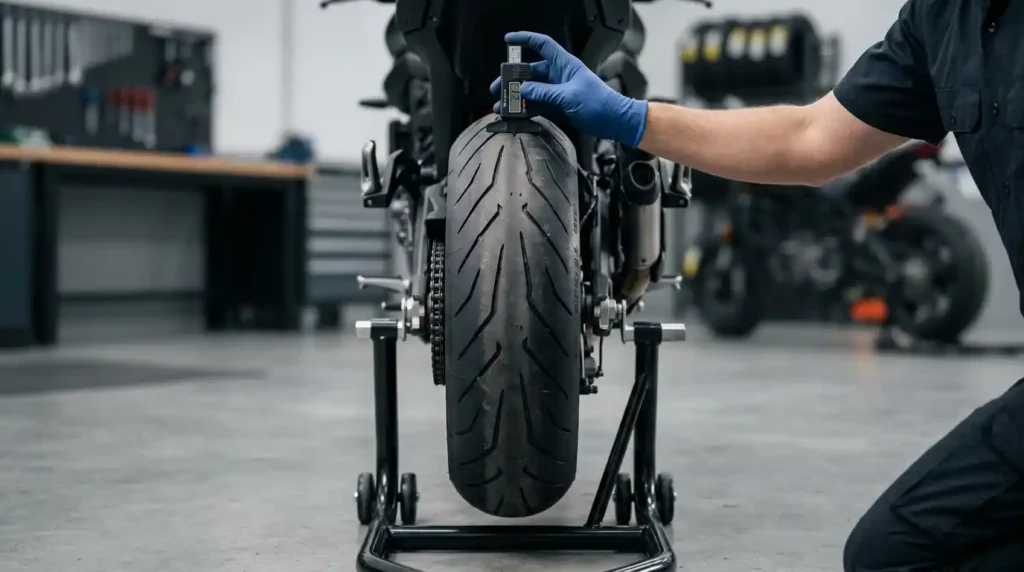
Navigating wet asphalt, carving through Pacific Northwest loam, or maintaining traction on Southwestern loose-over-hardpack requires absolute confidence in your rubber. Yet, many US cyclists suffer from sudden cornering slides, sluggish acceleration, frequent flats, or premature wear because they misjudge their tire tread.
Unlike automotive tires, there is no single universal tread-depth standard for bicycles. The right amount of tread depends on your riding discipline, surface terrain, rubber compound, and tire volume.
Choosing the right tire and maintaining correct tire pressure (PSI) directly impacts rider safety, speed, and overall comfort. Understanding tread wear, casing health, and surface interaction ensures you replace tires before handling becomes unsafe.
How Much Tread Should a Bike Tyre Have?
TREAD DEPTH REQUIREMENTS
ROAD (0mm – 2mm) GRAVEL (2mm – 4mm) MTB (4mm – 8mm+)
+——————+ +——————+ +——————+
| Smooth Slicks | | Mixed File Tread | | Tall Knobs |
| Maximum Contact | | Mid-Depth Blocks | | Mechanical Bite |
| Minimal Drag | | Flexible Grip | | Mud Shedding |
+——————+ +——————+ +——————+
Featured Snippet Summary
Optimal bicycle tire tread depends entirely on riding terrain and tire design:
- Road Bike Tires: Feature shallow patterns or fully smooth slick profiles (0mm to 2mm) because pavement requires direct rubber contact rather than knobs for traction.
- Gravel Bike Tires: Utilize low-to-medium tread blocks (2mm to 4mm) to balance fast asphalt rolling with grip on loose dirt and fire roads.
- Mountain Bike Tires: Rely on deep, aggressive knobs (4mm to 8mm+) to bite into mud, rocks, and loose loam.
- Tire Replacement: Replace tires immediately when center tread flattens out, shoulder knobs tear, or casing threads become visible.
Is There a Minimum Bike Tire Tread Depth?
Bicycle tires do not have a legally mandated minimum tread depth like motor vehicles. Instead, safety is evaluated by casing structural integrity, rubber condition, and functional traction.
Some high-end road and gravel tires feature molded Tread Wear Indicators (TWI)—small circular dimples in the center tread. When the rubber wears down until these dimples disappear, the tire has reached the end of its intended lifespan.
Does More Tread Mean a Better Bike Tire?
More tread does not automatically equal a better tire. While tall knobs provide mechanical bite on loose trails, they flex under load on hard pavement. This casing deformation increases rolling resistance, reduces efficiency, and creates squirm during hard cornering.
Slick tires provide superior grip on dry asphalt by maximizing the physical contact patch between the rubber and the road surface.
Why Does Bike Tire Tread Matter?
Tread interacts directly with terrain to control steering input, braking deceleration, and acceleration transfer.
TREAD DYNAMICS SPECTRUM
SMOOTH SLICK (Road) TALL KNOBBY (MTB)
+——————–+ +——————–+
| Direct Contact | | Mechanical Bite |
| Zero Knob Flex | VS. TREAD | High Terrain Flex |
| Ultra-Low Drag | | High Off-Road Traction
| Asphalt Optimized | | Loose Soil Depth |
+——————–+ +——————–+
How Tread Affects Cornering Grip
Tread patterns dictate how lateral forces transfer when leaning a bike. Off-road tires feature reinforced shoulder knobs that bite into soft soil during turns.
On paved roads, shoulder knobs reduce stability by flexing, making smooth rubber compounds and proper pressure higher priorities for predictable cornering traction.
How Tread Affects Rolling Resistance
Rolling resistance represents energy lost as the tire deforms under load. Tall knobs continuously bend and spring back while turning, absorbing leg power.
Minimizing tread depth on hard surfaces preserves kinetic energy and increases speed.
How Much Tread Should a Road Bike Tire Have?
ROAD TREAD PROFILE LIFECYCLE
NEW TIRE (Round Profile) WORN TIRE (Flat Center)
/————\ /————\
( Smooth Arc ) | Flat Spot | <– Wear Limit
\____________/ \____________/
Road tires require minimal tread depth (0mm to 1mm) because bicycle tires do not hydroplane on wet pavement at normal cycling speeds.
Do Road Bike Tires Need Tread?
Road tires do not need deep grooves. Pavement grip relies on rubber compound flexibility and molecular contact with the road.
Slick road tires maximize this rubber contact patch, while wet-weather road grip depends on soft silica rubber compounds and correct PSI, not deep grooves.
What Does a Worn Road Tire Look Like?
A worn road tire exhibits a distinct flat strip down its center line, changing its cross-sectional profile from a round arc to a squared-off shape.
Replace road tires when this flat center section becomes wide, when thread plies show through, or when the built-in wear indicator dimples vanish.
How Much Tread Should a Gravel Bike Tire Have?
Gravel tires must handle mixed surfaces, bridging the gap between pavement efficiency and off-road control.
GRAVEL TREAD DESIGN CATEGORIES
FAST SEMI-SLICK (2mm) AGGRESSIVE MIXED (4mm)
+———————–+ +———————–+
| Smooth Center Line | | Wide Open Knobs |
| Low Asphalt Drag | VS. | High Mud Clearance |
| Micro-Shoulder Knobs | | Loose-Over-Hard Grip |
+———————–+ +———————–+
Fast-Rolling Gravel Tread
Fast gravel tread uses low-profile center file-hatch patterns (1.5mm to 2.5mm) paired with small cornering knobs.
These designs minimize drag on tarmac while providing grip on packed dirt and fine gravel roads.
Aggressive Gravel Tread
Aggressive gravel tread features raised center blocks (3mm to 4.5mm) with wider spacing.
These tires excel on loose Southwestern gravel, thick mud, and steep rocky ascents where mechanical traction outweighs rolling efficiency.
How Much Tread Should a Mountain Bike Tire Have?
Mountain bike tires rely on deep tread blocks (4mm to 8mm+) to dig through loose surface layers into firm soil.
MTB TREAD CATEGORIES
XC RACE TREAD TRAIL / ENDURO MUD / WET TREAD
+————+ +————+ +————+
| 3mm – 4mm | | 5mm – 7mm | | 7mm – 10mm |
| Tight Blocks| | Staggered | | Spike Spaced|
| Low Weight | | Deep Ramp | | Max Shedding|
+————+ +————+ +————+
XC Tire Tread
Cross-country (XC) tires feature tightly spaced, short knobs (3mm to 4.5mm) angled to reduce rolling resistance during fast climbing and high-speed racing.
Trail and Enduro Tire Tread
Trail and Enduro tires use tall, aggressive knobs (5mm to 7mm) with reinforced side blocks to withstand heavy cornering loads and high-speed descent impacts.
Mud Tire Tread
Mud-specific tires use widely spaced spike knobs (7mm to 10mm+). The open spacing prevents sticky mud from clogging the casing, allowing the tire to clear debris as it rotates.
How to Tell If Bike Tire Tread Is Worn Out
Follow this Featured Snippet inspection checklist to evaluate your tire’s wear status:
TREAD WEAR INSPECTION MATRIX
[Center Line] ——-> Flattened profile or missing center grooves?
[Side Knobs] ——–> Rounded edges, tearing, or cracking at base?
[Casing Ply] ——–> Visible fabric, threads, or internal carcass?
[Rubber Health] —–> Dry rot, micro-cracks, or cut marks?
- Check Profile Shape: Identify if the center tread has flattened out into a square profile rather than a smooth dome.
- Inspect Knob Edges: Look at cornering knobs on off-road tires. If the leading edges are rounded off, braking and cornering grip will drop significantly.
- Examine Knob Base Support: Bend side knobs sideways with your thumb. Look for micro-tears or cracking where the knob joins the casing base.
- Look for Exposed Casing Threads: Inspect cut areas. If woven fabric, cord plies, or nylon threads are visible, replace the tire immediately.
- Locate Tread Wear Indicators: Check if the circular molded wear dimples on road/gravel tire centers have worn flush.
- Evaluate Puncture Frequency: Multiple flats over consecutive rides indicate the protective rubber layer under the tread has thinned out.
What Does a Worn Bike Tire Look Like?
VISUAL TREAD WEAR SIGNALS
ROAD: SQUARED PROFILE MTB: TORN SHOULDER KNOBS
/————\ /–\ /–\
| Flat Spot | ( X ) ( ) <– Torn Base
\____________/ \__/ \__/
A severely worn road tire exhibits a squared-off center strip, exposed casing cords, or deep glass cuts.
A worn mountain bike tire shows rounded knob edges, torn side blocks, and undercut tread profiles that slide unpredictably in turns.
Can You Ride a Bike Tire With Low Tread?
Slick or semi-slick tires designed with low tread are fully safe for dry pavement riding.
However, riding an off-road or road tire past its intended wear limit reduces casing protection, dramatically increases flat risks, and degrades wet-weather traction.
How Tire Pressure Affects Tread Wear
Maintaining incorrect PSI distorts the tire’s intended contact patch, causing accelerated, uneven tread wear.
PSI IMPACT ON TREAD WEAR
UNDER-INFLATED (Low PSI) OVER-INFLATED (High PSI)
Excess Shoulder Wear Excess Center Wear
\_______/ \_______/
| x x | | x x |
[_________] [_________]
How Low PSI Changes Tire Wear
Insufficient air pressure forces the tire casing to collapse laterally under load. This shifts pressure to the tire shoulders, causing premature wear along the outer tread edges and exposing the sidewall to rim-pinch damage.
How High PSI Changes Tire Wear
Over-inflation crowns the tire center, concentrating system weight onto a narrow strip of rubber. This accelerates center tread wear while reducing cornering traction and comfort.
Does Tire Width Affect Tread Wear?
Tire width dictates total air volume, which changes how load weight distributes across the tread surface.
TIRE WIDTH & TREAD LIFE DYNAMICS
NARROW TIRE (25mm) WIDE TIRE (2.4″)
+———————–+ +———————–+
| High Contact Stress | | Distributed Load |
| Faster Center Wear | VS. | Slower Wear Rate |
| High Required PSI | | Lower Operating PSI |
+———————–+ +———————–+
Wider vs. Narrower Tires
Wider tires spread rider and bike weight over a larger contact patch area. Operating wide tires at correct, lower pressures reduces localized friction stress, helping the tread rubber wear down more evenly.
How Rim Width Changes Tire Shape
Mounting a wide tire on a narrow rim causes a rounded profile that accelerates center tread wear.
Mounting a narrow tire on an overly wide rim squints the tread pattern, exposing fragile sidewalls to trail abrasions. Always match tire width to inner rim width.
+————————————————-+
| RECOMMENDED INNER RIM WIDTH MATCHING |
+————————————————-+
| Inflated Tire Width | Ideal Inner Rim Width |
+———————–+————————-+
| 25mm – 28mm (Road) | 19mm – 21mm |
| 38mm – 45mm (Gravel) | 21mm – 25mm |
| 2.3″ – 2.5″ (MTB) | 28mm – 35mm |
+———————–+————————-+
How Rubber Compound Affects Tread Life
Tread longevity depends on rubber compound formulation, measured using a durometer shore hardness scale (e.g., 50a to 70a).
RUBBER COMPOUND SPECTRUM
SOFT COMPOUND (50a) HARD COMPOUND (70a)
+——————–+ +——————–+
| Maximum Traction | | High Durability |
| Rapid Tread Wear | VS. SHORE | Lower Traction |
| Trail / Wet Grip | | Commuter / High Mi.|
+——————–+ +——————–+
Soft vs. Hard Rubber
- Soft Rubber (50a – 55a): Conforms to trail surface irregularities, providing exceptional grip on wet roots and rocks, but wears down quickly.
- Hard Rubber (60a – 70a): Resists abrasion and lasts for thousands of miles, making it ideal for daily commuter bikes, though it offers less wet-weather traction.
- Dual / Triple Compounds: Feature hard rubber along the center tread for fast rolling and long life, paired with soft rubber side knobs for cornering grip.
How Tread Pattern Affects Bike Tire Performance
TREAD PATTERN ARCHITECTURE
SLICK TREAD SEMI-SLICK TREAD KNOBBY TREAD
+————+ +————+ +————+
| Smooth | | File Center| | Deep Blocks|
| Asphalt | | Side Knobs | | Open Gaps |
+————+ +————+ +————+
Slick Tread
Slick tires feature smooth center tread for high pavement performance. Rubber compound elasticity provides cornering traction without knob flex losses.
Semi-Slick Tread
Semi-slick designs combine a low-profile center tread with raised shoulder knobs. This offers efficient rolling on straight pavement while maintaining cornering control on loose gravel.
Knobby Tread
Knobby tread uses tall rubber blocks separated by wide voids. The deep blocks penetrate soft dirt, while the open gaps help shed mud as the tire rotates.
How Casing Construction Affects Tread Performance
Tread blocks rely on the underlying casing fabric to maintain structural integrity.
CASING TPI COMPARISON
HIGH TPI CASING (120 TPI) LOW TPI CASING (60 TPI)
+————————-+ +————————-+
| Thin Nylon Threads | | Thick Nylon Cords |
| Highly Supple Ride | VS. | High Abrasion Shield |
| Conforms to Micro-Bumps | | Stiff Structural Shell |
+————————-+ +————————-+
What Does Casing TPI Mean?
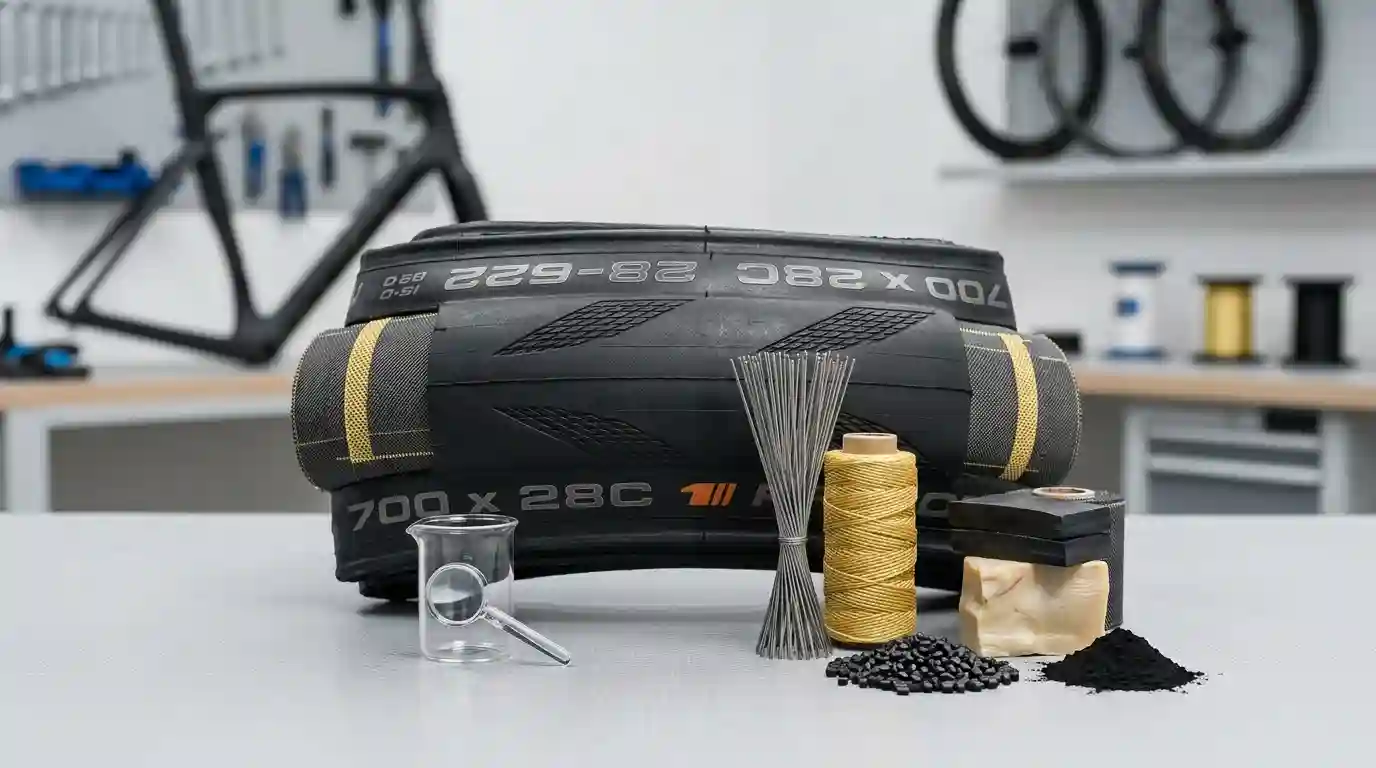
TPI (Threads Per Inch) measures thread density inside the casing fabric. High TPI casings (120–320 TPI) use fine threads that flex easily, allowing the tread to conform to small trail bumps for maximum traction. Low TPI casings (30–60 TPI) use thicker cords that resist cuts and abrasion.
How Casing Affects Cornering
A supple, high-TPI casing lets the tread patch conform to rough roads during turns. However, if pressure is set too low, the casing can flex excessively, leading to tire squirm under hard leaning forces.
How Puncture Protection Relates to Tread
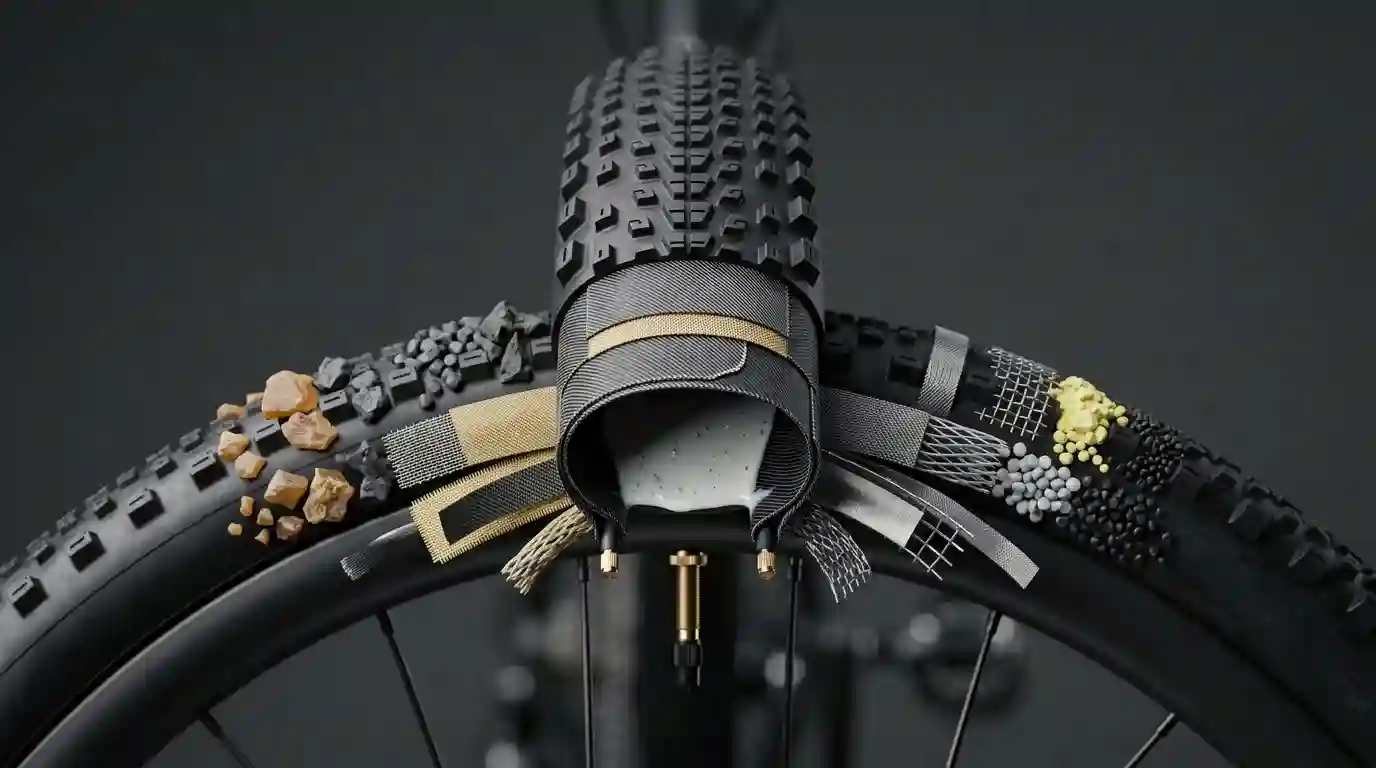
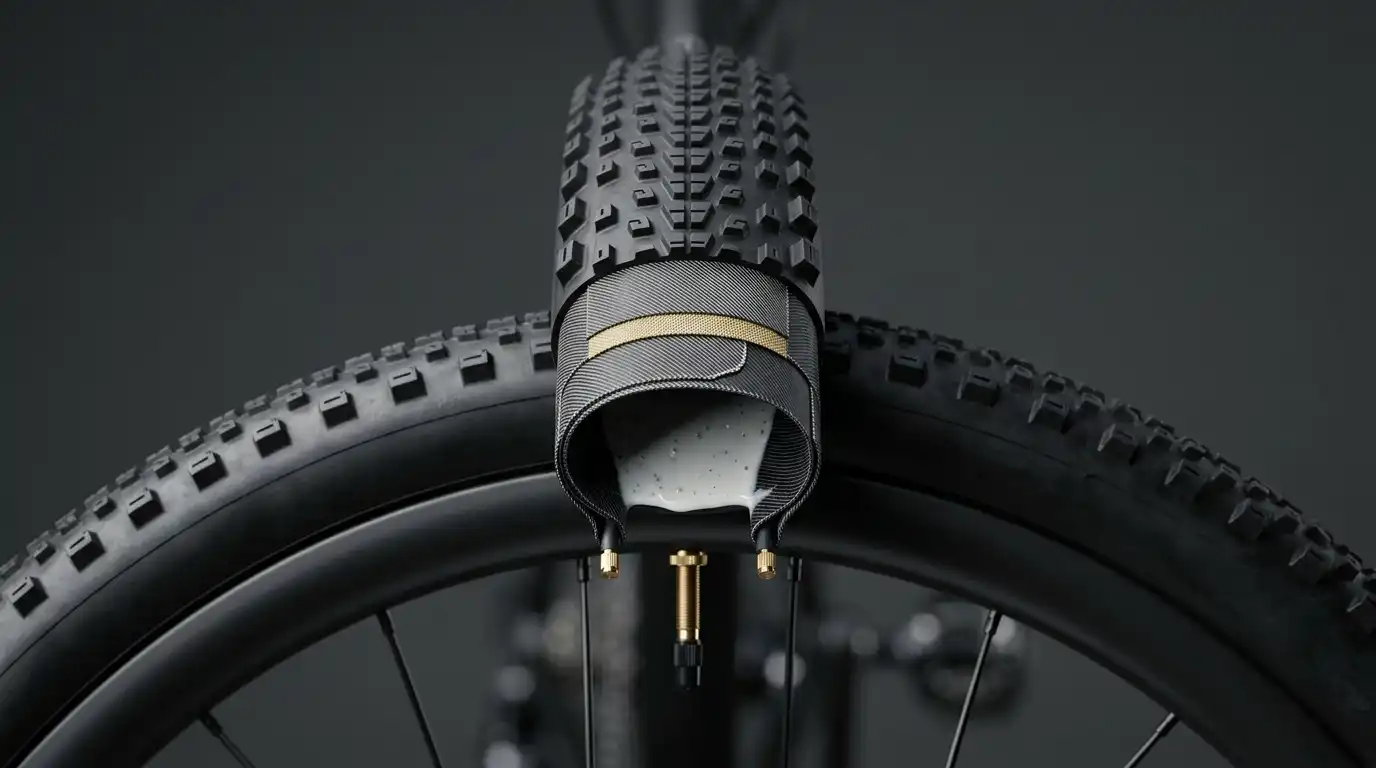
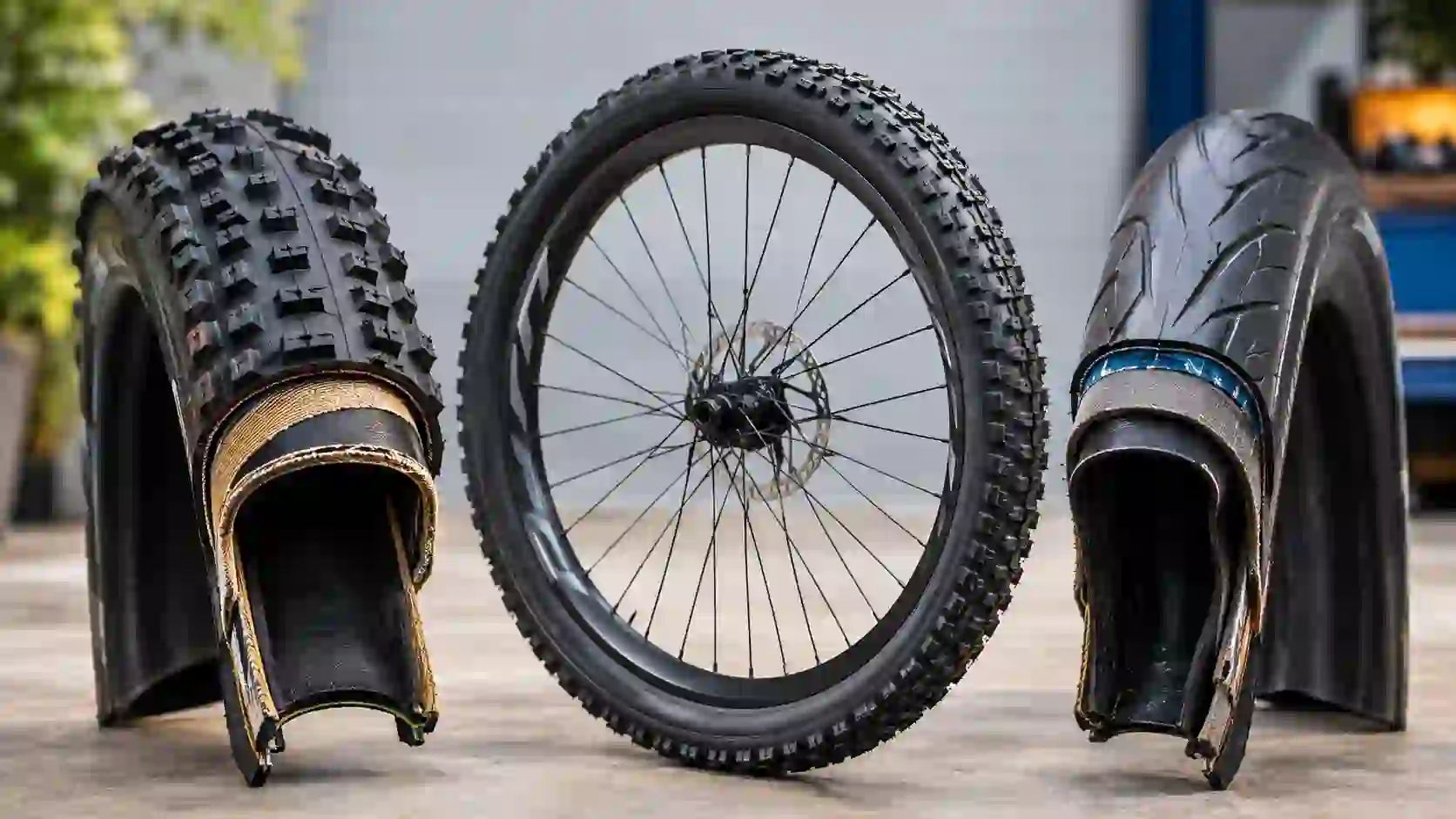
Most flat protection sits directly under the tread rubber as woven fabric belts or protective strips.
TIRE CROSS-SECTION LAYERS
/——————-\ <– Tread Rubber
| Puncture Shield | <– Kevlar / Nylon Belt
\——————-/ <– Casing Plies (TPI)
| |
[_________________] <– Bead Wire / Kevlar
Can Thick Tread Prevent Flats?
Thick tread rubber increases the distance sharp debris must penetrate to reach the inner casing.
However, thick rubber adds weight and increases rolling resistance. Integrating woven puncture belts under the tread provides lightweight flat defense without requiring bulky rubber.
How Tubeless Tires Change Tread and Tire Selection
Tubeless setups remove the inner tube entirely, replacing it with a sealed rim, a tubeless valve, and liquid tubeless sealant.
TUBELESS SYSTEM INTEGRATION
[ TUBELESS SEALANT ] —> Closes tread punctures instantly (up to 1/4″)
[ LOWER OPERATING PSI ] -> Maximizes tread contact area without pinch flats
[ ZERO TUBE FRICTION ] -> Reduces internal resistance for faster rolling
Removing the inner tube eliminates pinch flats, allowing you to run lower tire pressure safely. This lower pressure helps tread knobs conform to trail obstacles, dramatically improving cornering traction.
How E-Bike Use Affects Tread Wear
Electric bikes generate immediate e-bike torque and carry heavier overall system loads due to battery and motor integration.
E-BIKE TREAD LOAD FACTORS
HIGH TORQUE DEMAND ADDED SYSTEM WEIGHT SPEED SUSTAINING
Fast Rear Tread Wear Increases Casing Load Requires Heavy Tread
Rear e-bike tires experience rapid tread wear from frequent acceleration forces. Choose e-bike tires certified with E-50 or ECE-R75 ratings, which feature reinforced casings, heavy-duty puncture belts, and durable rubber compounds.
How Much Tread Is Enough for Safe Riding?
Safety depends on maintaining structural tire health rather than holding to a specific tread depth number:
+————————————————-+
| TIRE REPLACEMENT TIMELINE |
+————————————————-+
| Tire Type | Average Lifespan | Primary Replacement Trigger |
+————-+——————+—————————–+
| Road | 1,500 – 3,000 mi | Flat profile center / TWI |
| Gravel | 1,200 – 2,500 mi | Worn center file / Cuts |
| MTB | 700 – 1,500 mi | Rounded / Torn side knobs |
| E-Bike | 1,000 – 2,000 mi | Accelerated rear tread wear |
+————-+——————+—————————–+
When Should You Replace a Bike Tire?
Replace your tire immediately if you spot exposed casing threads, large tread cuts, bulging sidewalls, torn shoulder knobs, or if you experience frequent flats.
Should Front and Rear Tires Have the Same Tread?
Not necessarily. Front tires handle steering and braking control, benefiting from deeper tread patterns and softer rubber compounds.
Rear tires carry more rider weight and transfer pedal power, making low rolling resistance, firmer rubber, and long tread life higher priorities.
How to Check Bike Tire Tread at Home
Follow this step-by-step guide to inspect your tires at home:
HOME TREAD CHECK STEPS
[1. Clean Rubber] —> [2. Inflate PSI] —> [3. Rotate & Inspect]
| |
v v
[6. Check Wear Indicator] <— [5. Inspect Sidewall] <— [4. Check Knobs]
- Clean the Tread Surface: Wash off dirt, mud, and road grime so the tread rubber is clearly visible.
- Inflate to Normal PSI: Pump the tire to your regular riding pressure to expand cuts and carcass deformities for easier inspection.
- Rotate Slowly Under Good Light: Spin the wheel slowly, inspecting the center tread for flat spots, cuts, or embedded glass bits.
- Flex the Side Knobs: Bend shoulder knobs with your thumb to check for tearing or cracking along their bases.
- Examine Sidewalls: Check for fraying casing threads, bulging rubber, or severe abrasion marks along both sidewalls.
- Locate Tread Wear Indicators: Check if the molded wear dimples on the center tread are still visible.
Common Bike Tire Tread Mistakes
- Assuming more tread always means more grip: Running knobby mountain bike tires on pavement reduces grip and increases rolling resistance due to knob flex.
- Ignoring rubber age: Old tires can dry-rot and lose traction even if they have plenty of tread remaining.
- Neglecting pressure adjustments: Running improper PSI causes uneven tread wear and shortens tire life.
- Riding torn side knobs off-road: Continuing to ride on torn shoulder knobs leads to sudden sliding during turns.
People Also Ask About Bike Tire Tread
How much tread should a bike tire have?
There is no single universal minimum depth. Road tires require 0mm to 1mm, gravel tires use 2mm to 4mm, and mountain bike tires need 4mm to 8mm+ depending on terrain.
How do I know if my bike tire tread is worn out?
Look for a squared-off center strip, rounded knob edges, torn side blocks, exposed casing threads, or the disappearance of built-in wear indicator dimples.
Do bike tires need tread?
Road tires do not need deep grooves to prevent hydroplaning on pavement. Off-road tires require knobs to dig into dirt, mud, and loose surfaces.
Frequently Asked Questions
+————————————————-+
| QUICK FAQ REFERENCE TABLE |
+————————————————-+
| Question | Solution / Answer |
+————————+————————+
| Universal tread depth? | None; depends on terrain|
| Deeper tread on wet? | No; soft compound matters|
| Tubeless needs tread? | No; tread equals terrain|
| Weight impacts wear? | Yes; higher load = faster wear|
+————————+————————+
Is there a minimum tread depth for bike tires?
No legal minimum depth exists. Judge safety by casing health, rubber condition, and whether the tread retains its functional shape.
How much tread should a road bike tire have?
Road tires use shallow or slick tread profiles (0mm to 2mm). Smooth rubber maximizes direct contact with asphalt.
How much tread should a mountain bike tire have?
MTB tires require 4mm to 8mm+ knobs to dig into soil, rocks, and loam.
Do tubeless tires need more tread?
No. Tubeless compatibility refers to casing and bead sealing, which is separate from tread depth.
Does rider weight affect tire tread wear?
Yes. Heavier system loads increase tread friction and casing deformation, accelerating wear. Proper pressure helps distribute this load evenly.
What PSI should I use to protect bike tire tread?
Calculate pressure based on total system weight, tire width, and rim width. Proper pressure prevents center-strip or shoulder wear.
Are deeper treads better for wet roads?
Not on pavement. Wet road traction relies on soft rubber compounds and proper tire pressure rather than deep tread grooves.
Find the Right Tire Pressure for Your Tread
Evaluating tire tread is key to maintaining a safe, efficient ride. However, even new tread cannot perform correctly if your tire pressure is set wrong.
Incorrect PSI causes unpredictable cornering, uncomfortable vibration, and premature wear.
Stop guessing your pressure. Calculate your personalized pressure settings using the Free Bike Tire Pressure Calculator / Tire Finder Tool at TheBikeTires.com.

Mohidul Islam is a leading cycling technology specialist and bike tire consultant with over 15 years of hands-on experience in the bicycle industry. He holds a Bachelor of Science in Mechanical Engineering from Penn State University, where he focused heavily on material science, tread mechanics, and rubber compound performance. Over the past decade and a half, Alex has conducted extensive field testing, tubeless setup evaluations, and tire pressure modeling for road, mountain, and e-bikes. His practical insights and data-driven approach help cyclists of all levels optimize grip, speed, and durability on every ride.