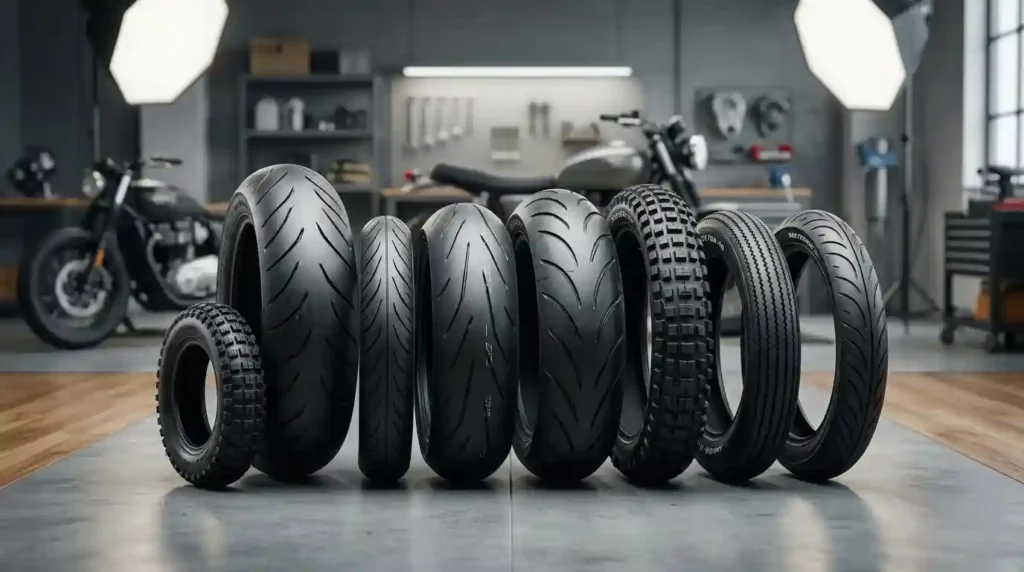
Navigating high-speed descents on smooth tarmac, powering through Pacific Northwest mud, or crushing sharp Southwestern rock gardens demands total confidence in your equipment. Yet, many riders struggle with frequent flats, unpredictable cornering slides, sluggish rolling speed, or premature tread wear.
Choosing the right bicycle tire size and maintaining the optimal pressure (PSI) directly impacts your safety, handling control, and overall comfort. A larger or wider tire is not automatically better for every ride. Instead, bike tires come in different diameters and widths because bikes are specifically engineered for different riders, terrains, speeds, and handling demands.
Understanding how wheel diameter, tire width, inner rim width, casing construction, and rolling resistance interact helps you make informed choices for your bike setup.
Why Are Bike Tyres Different Sizes?
WHY BIKE TIRES COME IN DIFFERENT SIZES
[ Terrain Demands ] ——–> Smooth Asphalt vs. Rough Trail
[ Handling Dynamics ] ——> Snappy Steering vs. Rollover Stability
[ Rider Preferences ] —–> Low Weight Speed vs. Plush Air Volume
[ Rim & Frame Fit ] ——–> Clearance Limits & Bead Seating
Featured Snippet Summary
Bike tires come in various sizes because different riding environments require different trade-offs between speed, grip, absorption, and control. Key reasons include:
- Different Terrain: Road, gravel, mountain, and commuter bikes require distinct tire volume, width, and tread characteristics.
- Different Handling: Tire dimensions directly alter cornering grip, steering responsiveness, stability, and road vibration absorption.
- Different Performance Goals: Narrower tires reduce overall weight and aerodynamic drag, while wider tires maximize traction, casing flexibility, and comfort.
- Different Wheel Designs: Rim diameter, inner rim width, and frame clearance restrict which tire sizes can safely be mounted.
What Determines Bike Tire Size?
Selecting a tire size requires looking at three fundamental dimensions:
- Tire Diameter: Determines the physical wheel size category (e.g., 700c, 29-inch, 27.5-inch/650b) the tire fits onto.
- Tire Width: Dictates total air volume, the shape of the contact patch, road chatter absorption, and cornering traction.
- Rim & Frame Constraints: Internal rim width, fork crown clearance, and rear stay clearance establish strict physical limits for safe operation.
Why Do Road, Gravel, and Mountain Bikes Use Different Tire Sizes?
TIRE SIZE & VOLUME COMPARISON
ROAD (28mm) GRAVEL (40mm) MOUNTAIN BIKE (2.4″)
+———+ +————+ +—————–+
| Low Drag| | Balanced | | High Air Volume |
| High PSI| | Mid PSI | | Low Pressure |
| Slick | | File Tread | | Deep Knobs |
+———+ +————+ +—————–+
Road Bike Tire Sizes
Road bikes prioritize low rotational weight, aerodynamic efficiency, and low rolling resistance on paved surfaces. Traditional road setups used narrow 23mm tires pumped to harsh, ultra-high pressures.
Modern road bikes have shifted toward wider 28mm to 32mm tires. Paired with modern wide rims, wider road tires run at lower pressures, allowing the casing to flex over rough asphalt micro-imperfections without losing momentum or sacrificing cornering speed.
Gravel Bike Tire Sizes
Gravel bikes operate across mixed surfaces, from smooth tarmac to sharp, loose limestone roads. They typically use widths ranging from 38mm to 50mm (2.0 inches).
This added air volume protects rims against pinch flats and provides sufficient flotation over loose pebbles. Gravel setups frequently utilize tubeless setups to drop pressures safely for extra comfort and traction.
Mountain Bike Tire Sizes
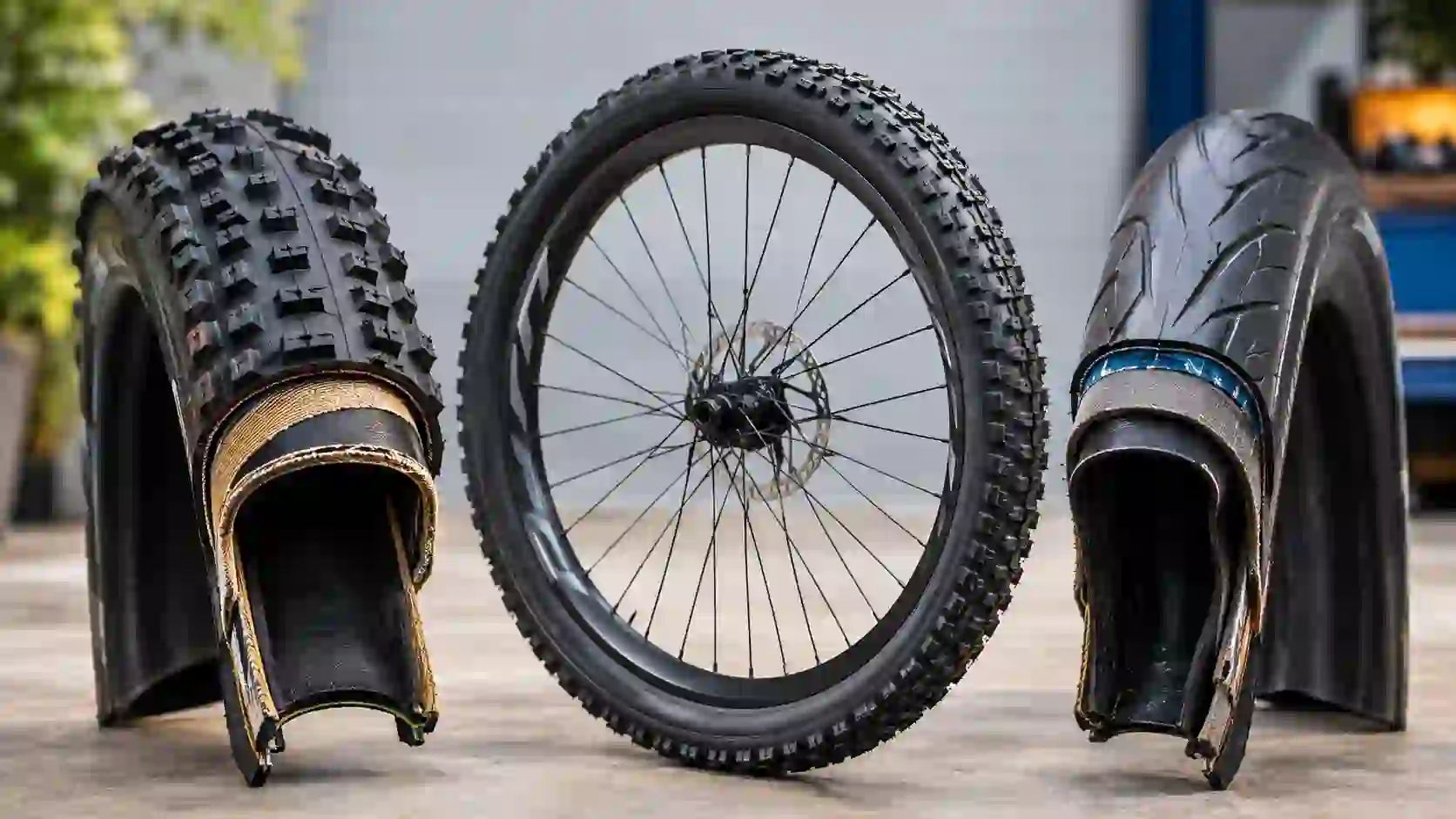
Mountain bikes (MTB) deal with heavy impacts, wet roots, loose dirt, and rock gardens. They utilize high-volume casings ranging from 2.3 inches to 2.6 inches (or up to 3.0 inches for plus-bikes).
These high-volume tires operate at very low pressures (8 to 28 PSI), enabling the deep tread pattern to conform around terrain obstacles for maximum mechanical bite and impact absorption.
What Is the Difference Between Tire Diameter and Tire Width?
It is critical to separate wheel diameter from tire width:
- Diameter: The measure across the wheel circle where the tire bead seats (e.g., 622mm bead seat diameter for 700c and 29-inch wheels).
- Width: The cross-sectional distance from sidewall to sidewall when inflated to operating pressure.
DIAMETER VS. WIDTH ARCHITECTURE
<—— WIDTH ——>
/————\
/ Tread Area \
| Casing | ^
\ / |
===|===========|=== | HEIGHT / DIAMETER
| Rim Bed | |
+———–+ v
Does a Bigger Bike Tire Mean a Bigger Wheel?
Not necessarily. A tire can be significantly wider without altering the rim’s wheel bead diameter. For example, a 700 × 28c road tire and a 700 × 45c gravel tire fit on the exact same 622mm wheel rim diameter, but the 45c tire has a much taller and wider profile.
Does Wider Always Mean Better?
Wider tires increase air volume, traction, and vibration damping. However, wider tires also add weight, increase aerodynamic drag, and require wider frame clearances. The ideal width depends on your specific surface, rider weight, and frame design.
Why Do Bike Wheels Have Different Diameters?
Wheel diameter shapes how a bike rolls, turns, and accelerates:
+————————————————-+
| WHEEL DIAMETER CHARACTERISTICS |
+————————————————-+
| Wheel Category | Primary Handling Advantage |
+—————-+——————————–+
| 20″ / 24″ | Compact frames, snappy acceleration |
| 27.5″ (650b) | Agile cornering, lower standover |
| 700c / 29″ | High rollover, momentum retention |
+—————-+——————————–+
How Does Wheel Diameter Affect Handling?
Smaller wheel diameters (like 27.5-inch / 650b) accelerate rapidly and change direction with minimal steering input, giving the bike an agile, playful feel. Larger wheel diameters (like 29-inch / 700c) establish a longer contact patch and maintain momentum over trail obstacles much more effectively.
How Does Wheel Size Affect Speed?
Larger wheel diameters carry momentum efficiently over rough ground because their shallower attack angle rolls over bumps rather than slamming into them. However, overall speed depends heavily on rubber compound, casing TPI, casing flexibility, and correct pressure rather than wheel diameter alone.
Why Are Some Bike Tires Narrow and Others Wide?
Tire width represents a balance between rolling efficiency, weight, traction, and bump compliance.
WIDTH TRADE-OFF SPECTRUM
NARROW TIRES (23-25mm) WIDE TIRES (2.4″-2.6″)
+———————–+ +———————–+
| Ultra-Light Weight | | Massive Air Volume |
| Low Aerodynamic Drag | VS. WIDTH | High Impact Absorption|
| Stiff Ride Compliance | | Lower Operating PSI |
| High Pinch-Flat Risk | | Increased Drag/Weight |
+———————–+ +———————–+
How Tire Width Affects Rolling Resistance
On a laboratory drum, narrow tires at high PSI roll efficiently. However, on real-world roads and trails, wider tires at optimal, lower pressures suffer less casing deflection over rough surfaces. This lowers impedance losses and results in a faster, smoother ride.
How Tire Width Affects Comfort
Air volume acts as a natural suspension system. Doubling tire width dramatically increases air volume, allowing the tire to cushion impacts and eliminate high-frequency chatter without bottoming out on the rim.
How Tire Size Affects Tire Pressure
Tire size and total air volume directly determine how much air pressure (PSI) is needed to support a rider.
AIR VOLUME VS. PRESSURE DYNAMICS
HIGH VOLUME (2.4″ MTB) LOW VOLUME (25mm Road)
+———————–+ +———————–+
| Large Air Chamber | | Small Air Chamber |
| Low Pressure Needed | VS. | High Pressure Needed |
| 20 – 25 PSI Target | | 75 – 90 PSI Target |
+———————–+ +———————–+
How to Choose PSI for Different Tire Sizes
Always calculate target pressure using total system weight (Rider + Bike + Gear) and measured inflated width.
Practical Formula for Baseline Tire Pressure (PSI)
Base Rear PSI=(4Total Weight (lbs))×(Tire Width (mm)28)
Base Front PSI=Base Rear PSI×0.90
- Tubeless Systems: Subtract 3 to 5 PSI.
- Rough / Wet Surfaces: Subtract 3 to 5 PSI for extra contact area.
+————————————————-+
| ESTIMATED PSI MATRIX BY RIDER WEIGHT |
+————————————————-+
| Total System Load | 28mm Road | 40mm Gravel | 2.4″ MTB |
+——————-+————+————–+———-+
| 60 lbs | 68-72 PSI | 33-36 PSI | 2-23 PSI|
| 90 lbs | 78-82 PSI | 39-42 PSI | 24-26 PSI|
| 220 lbs | 88-92 PSI | 45-48 PSI | 27-29 PSI|
+——————-+————+————–+———-+
What Happens If Tire Pressure Is Too Low?
Running insufficient PSI causes severe tire squirm during cornering, increases the risk of pinch flats, damages tire casings, and can dent carbon rims during hard rock impacts.
What Happens If Tire Pressure Is Too High?
Overinflated tires reduce traction, make handling feel harsh and skittish, and cause the bike to bounce off surface imperfections rather than absorbing them, increasing fatigue.
Why Does Rim Width Matter for Different Tire Sizes?
Tire width must be paired with an appropriate inner rim width to maintain structural stability.
RIM WIDTH & TIRE PROFILE
NARROW RIM (7mm) MODERN RIM (2-25mm) OVERSIZED RIM (>30mm)
Squirm Profile Ideal Round Profile Square Tread Edge
\_______/ \_______/ \_______/
| | | | | |
[_________] [_________] [_________]
How Do You Match Tire Width to Rim Width?
- 25mm to 28mm Tires: Pair best with 9mm to 2mm inner rim widths.
- 38mm to 45mm Gravel Tires: Pair best with 2mm to 25mm inner rim widths.
- 2.3″ to 2.5″ MTB Tires: Pair best with 28mm to 35mm inner rim widths.
Can You Put a Wider Tire on Any Rim?
No. Mounting a wide tire on an overly narrow rim creates a bulbous “lightbulb” profile that squirms sideways when cornering. Always verify compatibility charts provided by both rim and tire manufacturers.
How Bike Tire Size Numbers Work
TIRE MARKING DECODER
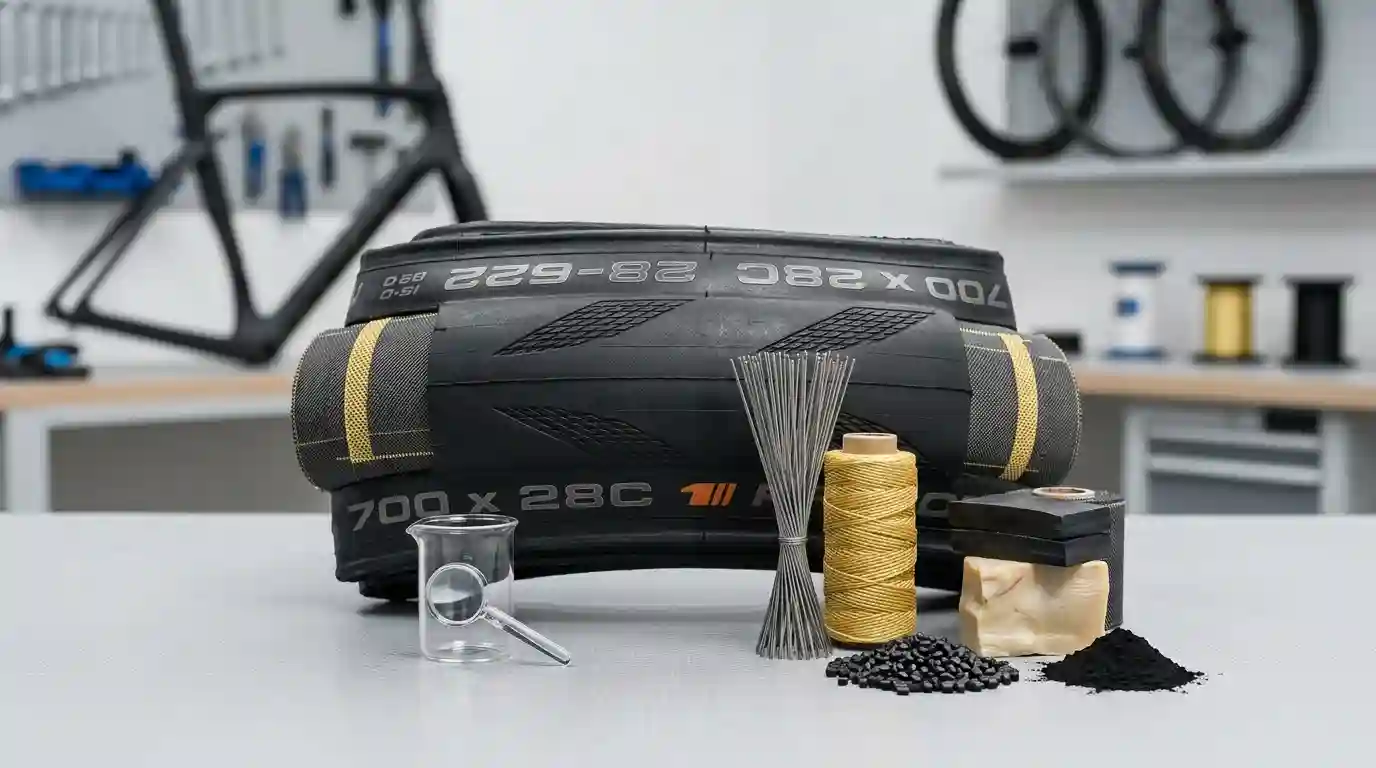
700 × 28C 29 × 2.4 28 – 622
+—+ +–+ ++ +–+ ++ +–+
| | | | | |
Nominal Inflated Nominal Inflated Width ISO/ETRTO
Diameter Width (mm) Diameter Width (in) (mm) Bead Dia.
Featured Snippet Summary
Bike tire size markings use three distinct sizing systems:
- 700 × 28c (French System): “700” denotes the nominal outer wheel diameter category, and “28” represents the approximate tire width in millimeters.
- 29 × 2.4 (Imperial System): “29” denotes the nominal mountain bike wheel diameter in inches, and “2.4” represents the tread width in inches.
- 28 – 622 (ISO / ETRTO Standard): The most precise international standard. “28” is the exact width in millimeters, and “622” is the exact Bead Seat Diameter (BSD) of the rim in millimeters.
Why Are Bike Tire Sizes Not Always Exact?
You may notice that a tire labeled “28mm” actually measures 30mm when mounted. Final inflated dimensions vary based on internal rim width, casing stretching over time, operating inflation pressure, and tread lug height.
Mounting the same tire on a wider rim increases its measured width and flattens its cross-sectional profile.
How Tire Size Affects Cornering Grip
Cornering grip depends on keeping a stable contact patch pressed against the trail or road surface:
CORNERING PROFILE STABILITY
OPTIMAL MATCH (25mm Rim / 2.4″ Tire) POOR MATCH (7mm Rim / 2.4″ Tire)
Stable Lateral Support Squirming Casing Shear
/————\ /————\
| Contact | ( Contact )
[______________] \____________/
|| ||
Wider tires maintain a larger, squarer contact patch at lower pressures. However, if a wide tire is mounted on an overly narrow rim, the casing rolls sideways under leaning forces, causing sudden traction loss.
How Tire Size Affects Rolling Resistance
Rolling resistance is driven by hysteresis—the energy lost as rubber deforms and recovers while rolling.
While narrow tires drag less aerodynamically at high speeds, wider tires run at lower pressures deform less over road chatter, reducing energy loss on real-world rough surfaces.
How Tire Size Affects Puncture Protection
Larger-volume tires offer greater clearance between the tread surface and the rim flange, reducing the risk of bottoming out and causing pinch flats (where the inner tube is pinched against the metal rim).
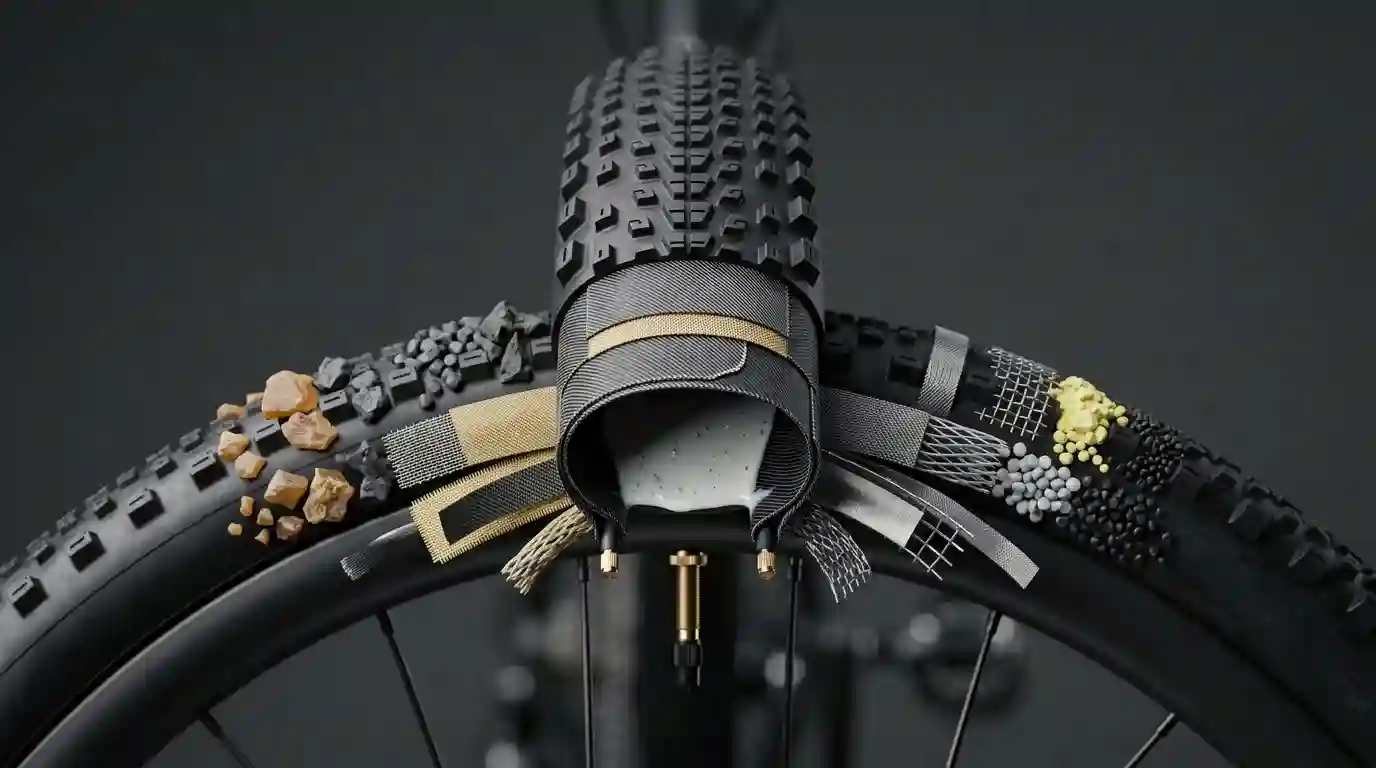
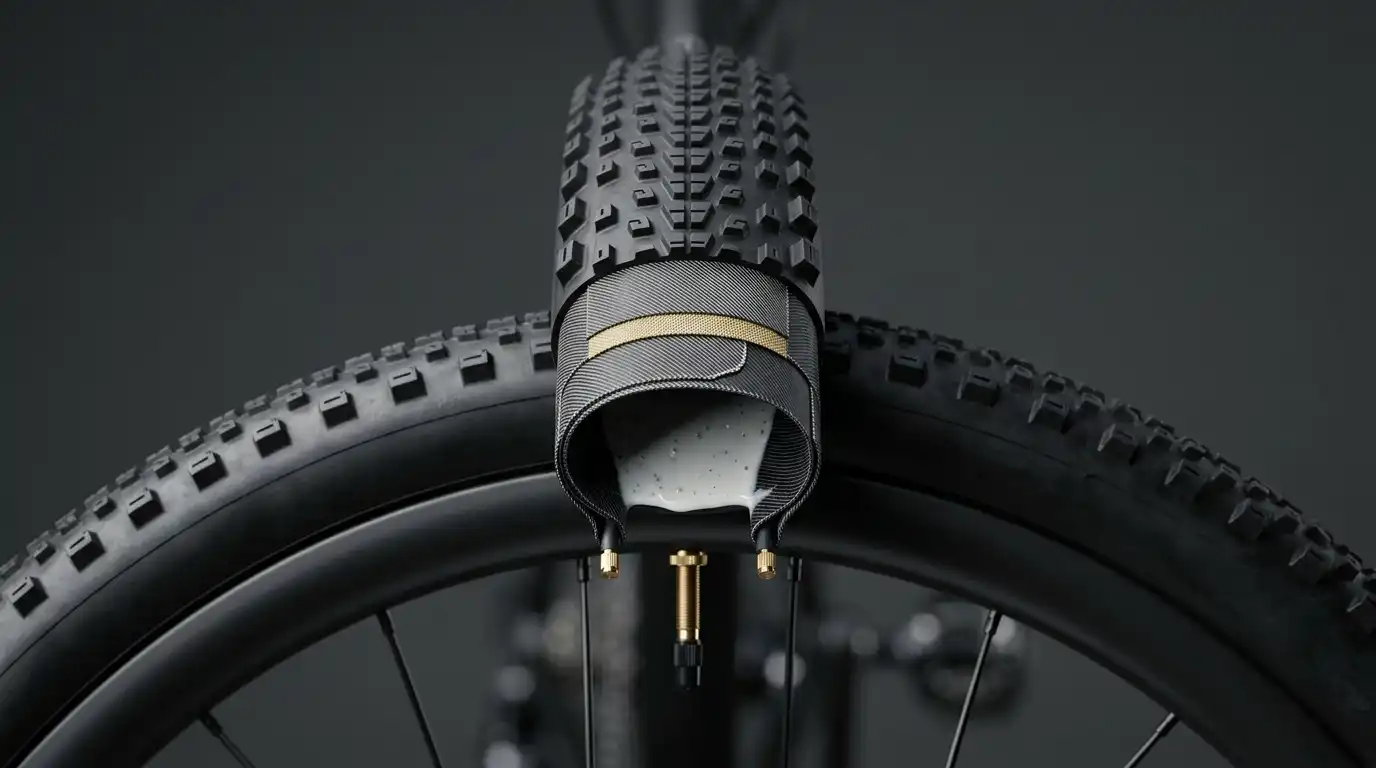
Additionally, wide tires accommodate thicker rubber tread blocks and woven puncture belts beneath the casing.
Does Casing TPI Change With Tire Size?
TPI (Threads Per Inch) measures thread density inside the casing plies rather than physical tire dimensions.
- High TPI (20–320): Uses fine, thin threads for a supple, fast-rolling ride, commonly used in performance road tires.
- Low TPI (30–60): Uses thicker nylon cords for higher puncture and abrasion resistance, commonly found in wide mountain bike or commuter tires.
How Tubeless Setups Change Tire Size Choices
Tubeless setups use liquid tubeless sealant instead of inner tubes.
Removing the inner tube eliminates friction between the tube and casing, allowing riders to choose wider, higher-volume tires and run significantly lower pressures without risking pinch flats.
TUBELESS ADVANTAGE MATRIX
NO INNER TUBE LOWER PSI CAPS SEALANT DEFENSE
+—————+ +—————+ +—————+
| Zero Friction | | Maximized | | Plugs Small |
| No Pinching | | Contact Patch | | Punctures |
+—————+ +—————+ +—————+
Why E-Bikes May Use Different Tire Sizes
Electric bikes generate immediate e-bike torque and carry heavier total system weights due to motor and battery integration.
Consequently, e-bike tire sizes feature wider profiles (2.4″ to 2.8″), reinforced multi-ply casings, and high load ratings to prevent rapid rear-tire wear and rim strikes. Look for tires with official E-50 / ECE-R75 safety certifications.
How Tire Size Changes With Riding Style
Match your tire size to your primary cycling discipline:
TIRE SELECTION BY RIDING STYLE
RACING COMMUTING TOURING OFF-ROAD
+—————+ +—————+ +—————+ +—————+
| 25mm – 28mm | | 32mm – 38mm | | 35mm – 42mm | | 2.3″ – 2.6″ |
| Lightweight | | Heavy Belt | | High Load | | Aggressive |
| Low Drag | | Long Wear | | Multi-Surface | | High Volume |
+—————+ +—————+ +—————+ +—————+
How to Choose the Right Bike Tire Size
Follow this Featured Snippet step-by-step checklist when selecting new tires:
TIRE SELECTION FLOWCHART
[. Check Rim ISO] —> [2. Measure Inner Width] —> [3. Check Frame Gap]
| |
v v
[6. Confirm PSI] <— [5. Choose Width] <— [4. Match Discipline]
- Check Rim Diameter: Locate the ISO/ETRTO rating on your rim or old tire (e.g., 622mm for 700c/29er).
- Measure Internal Rim Width: Verify the inside width between rim flanges.
- Check Frame & Fork Clearance: Measure the narrowest gap at the chainstays and fork crown, ensuring at least 4mm to 6mm of open clearance around the tire for mud and flex.
- Determine Primary Surface: Select smooth slicks for pavement, file-treads for gravel, or aggressive knobs for loose trail dirt.
- Select Target Width: Match width to your weight, rim width, and terrain needs.
- Set Inflation Range: Calculate your baseline PSI using total system weight.
Common Bike Tire Size Mistakes
- Assuming all width labels are identical: A 28mm tire from one brand can measure differently than a 28mm tire from another brand on the same rim.
- Overlooking frame clearance: Installing tires that are too wide can rub away frame paint and carbon fiber layers when flexed under load.
- Ignoring inner rim width: Mounting a wide tire on an overly narrow rim causes lateral tire squirm when cornering.
- Maintaining old PSI on wider tires: Failing to lower pressure when upgrading to a wider tire causes a harsh, bouncy ride.
How to Measure Your Bike Tire Size
PHYSICAL MEASUREMENT STEPS
[ READ SIDEWALL ] [ MEASURE RIM ] [ CHECK CLEARANCE ]
Locate 622 x XXmm Caliper Internal Minimum 4-6mm Gap
or XX x X.X” Code Width Between Hooks Around All Stays
- Read the Sidewall: Find the ISO/ETRTO numbers printed on your current tire sidewall.
- Measure Internal Rim Width: Use calipers to measure the inside distance between the rim walls.
- Measure Frame Clearance: Slide an Allen key between your inflated tire and the frame to verify there is at least 4mm to 6mm of clearance on all sides.
People Also Ask: Why Are Bike Tyres Different Sizes?
Why are bike tires different sizes?
Bike tires vary in diameter and width to match specific terrains, rider weights, handling requirements, and frame clearances.
Does bike tire size matter?
Yes. Tire size directly impacts rolling resistance, ride comfort, cornering grip, pinch-flat protection, and overall stability.
Are bigger bike tires better?
Not automatically. Larger tires add rotational weight and air drag, though they deliver superior vibration absorption and traction off-road.
Are wider bike tires faster?
Wider tires are often faster over rough real-world roads because they roll over micro-imperfections smoothly at lower pressures. However, on smooth indoor tracks, narrow tires remain faster due to aerodynamic advantages.
Frequently Asked Questions
+————————————————-+
| TIRE FAQ SUMMARY |
+————————————————-+
| Question | Key Takeaway |
+————————+————————+
| Can I switch widths? | Yes, if rim/frame fits |
| Wider tire = lower PSI?| Yes, air volume increases|
| 29er fit 27.5 rim? | No, BSD must match |
| E-bike tires special? | Needs high load/torque |
+————————+————————+
Why do road bikes have smaller tires than mountain bikes?
Road bikes prioritize light weight, rapid acceleration, and aerodynamics on smooth pavement, while mountain bikes require large air volume and deep tread to cushion heavy off-road impacts.
Can I use a different tire width on my bike?
Yes, provided the new width falls within your rim’s recommended width range and leaves at least 4mm to 6mm of frame clearance.
Does a wider tire need lower PSI?
Yes. Wider tires contain greater air volume, allowing them to support the same rider weight at lower pressure without bottoming out.
What happens if a bike tire is too wide for the rim?
The tire forms a rounded “lightbulb” shape, making it prone to squirming under lateral cornering loads.
Can I put a 29-inch tire on a 27.5-inch wheel?
No. The Bead Seat Diameter (BSD) must match the rim system exactly (622mm for 29″ vs 584mm for 27.5″).
Do e-bikes need special tire sizes?
While size labels look identical, e-bikes require tires with reinforced casings and higher load ratings to withstand high e-bike torque and vehicle weight.
Find Your Ideal Tire Size and PSI
Understanding tire size is the first step toward optimizing your ride. Setting the correct tire pressure for your specific tire width and rider weight unlocks maximum comfort, cornering grip, and speed.
Stop guessing your setup. Calculate your exact personalized pressure settings using the Free Bike Tire Pressure Calculator / Tire Finder Tool at TheBikeTires.com.

Mohidul Islam is a leading cycling technology specialist and bike tire consultant with over 15 years of hands-on experience in the bicycle industry. He holds a Bachelor of Science in Mechanical Engineering from Penn State University, where he focused heavily on material science, tread mechanics, and rubber compound performance. Over the past decade and a half, Alex has conducted extensive field testing, tubeless setup evaluations, and tire pressure modeling for road, mountain, and e-bikes. His practical insights and data-driven approach help cyclists of all levels optimize grip, speed, and durability on every ride.