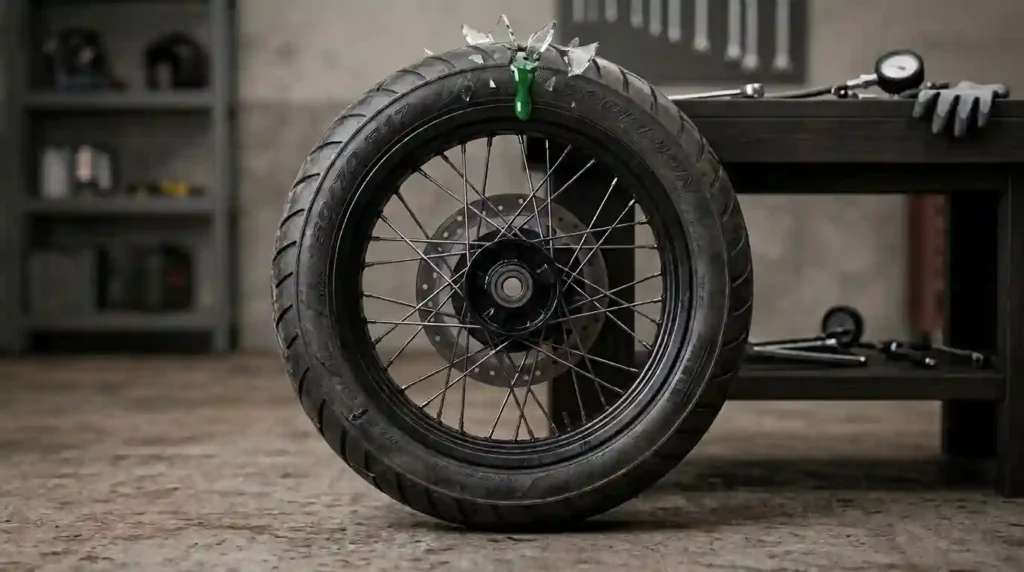
You are rolling along a city bike lane or a quiet road shoulder. Then you hear that soft hiss. You stop, check the tire, and spot a tiny, shiny sliver in the rubber. A bike tyre puncture from glass is one of the most common flats on US roads, and it is easy to fix badly.
Cyclists across the country deal with the same tire troubles. Flats, weak cornering grip, wrong tire pressure (PSI), and quick tread wear top the list. The right tire and the right PSI shape your safety, your speed, and your comfort. If you are shopping for new tires, start with our guide on how to choose bike tyres.
Glass is sneaky. A small shard can cause a slow leak that you chase for days. A bigger one can slice the casing and drop the tire flat in seconds.
This guide shows you how to find glass safely, repair the tube, and check the tire before you ride again. It covers road, gravel, mountain, commuter, and e-bike setups.
Quick answer: Find every shard. Remove it with tweezers, not bare fingers. Check the casing. Then patch or replace the tube and set the right PSI.
What Happens When Glass Punctures a Bike Tire?
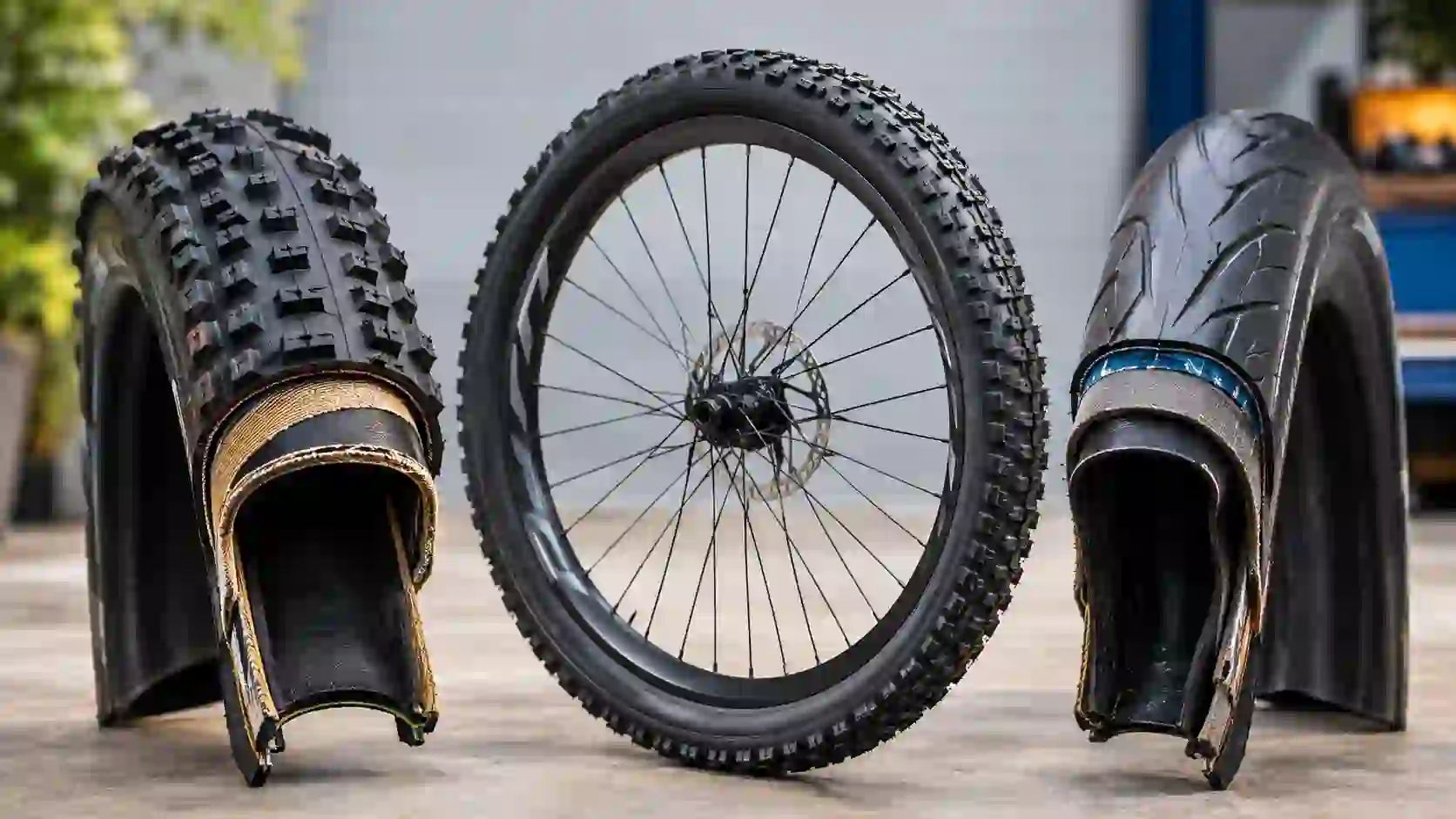
Glass can cut through the tread or sidewall. It then reaches the inner tube or the tubeless air chamber. The casing is the fabric layer under the rubber that gives the tire its shape. Our explainers on how bike tires work and what a bike tire casing is cover the basics.
Small fragments often cause slow leaks. Larger shards can leave deep cuts and fast air loss.
The right repair depends on three things: where the hole is, how the casing looks, and what wheel setup you run.
A glass cut that stops in the rubber is minor. A cut that reaches the casing threads is not. The depth of the cut tells you which case you have. When in doubt, treat the tire as damaged and look closer.
Signs of a Glass Puncture
Look for a small cut, a shiny fragment, or a tire that keeps losing pressure. Run a gloved hand lightly over the tread to feel for a rough spot. A tire that is soft every morning is a classic clue.
Other clues include a wet spot from sealant, a faint hiss, or a tire that needs air before every ride. Do not wave these off. Glass can work deeper with each wheel turn.
Watch for repeat flats after you fit a new tube. Check the tread and the sidewalls, because a shard can hide inside the rubber. Slow leaks have other causes too, as why bike tyres lose air explains.
Glass Punctures vs. Other Flat Tires
Glass often leaves a small cut or a narrow hole in both tire and tube. Pinch flats leave two nearby slits after a hard hit on the rim. Thorns leave tiny round holes, and sharp metal can cut deeper.
Pinch flats come from low pressure, so see how much air to put in a bike tire.
Two holes in the tube mean you should look at pressure, not at glass. One narrow slit usually means a shard.
| Flat Type | Hole Pattern | Common Cause |
|---|---|---|
| Glass | Narrow cut or slit | Broken bottles, road debris |
| Pinch flat | Two parallel slits | Low PSI plus impact |
| Thorn | Tiny round hole | Brush, goatheads |
| Sharp metal | Deeper cut | Wire, nails, staples |
Why Does Glass Puncture Bike Tires?
Broken glass collects on roads, bike lanes, shoulders, and some trails. It can pierce tire rubber, especially when the tread is thin.
Little puncture protection lets sharp pieces reach the casing. Wear matters, too. A worn tire has less rubber between the glass and the casing. Tire pressure, tire build, and riding conditions all change your risk. No tire is puncture-proof.
Riding on Roads With Broken Glass
City streets and road shoulders collect glass from bottles, vehicle incidents, and roadside litter. Rain in the Pacific Northwest often sweeps that debris into the bike lane edge. Wet roads can also make small bits cling to the tire.
Commuters and road cyclists face repeat exposure on busy routes. Riding a few feet left of the gutter line often avoids the worst of it. Avoid visible glass when it is safe to do so. Never swerve hard into traffic to miss it. A flat is better than a crash.
After storms and on trash-collection days, scan the road edge more closely. Glass often sits in the same stretch for weeks.
Tire Tread and Puncture Protection
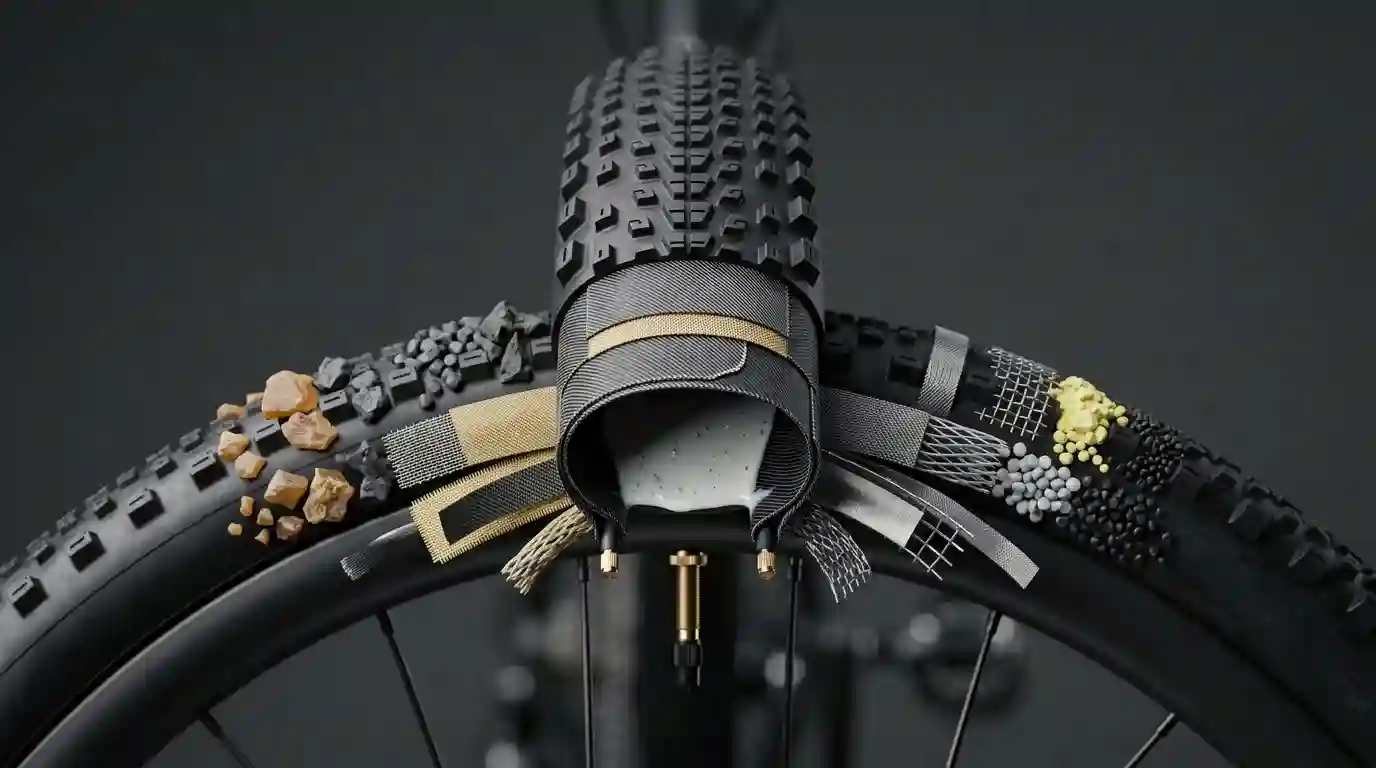
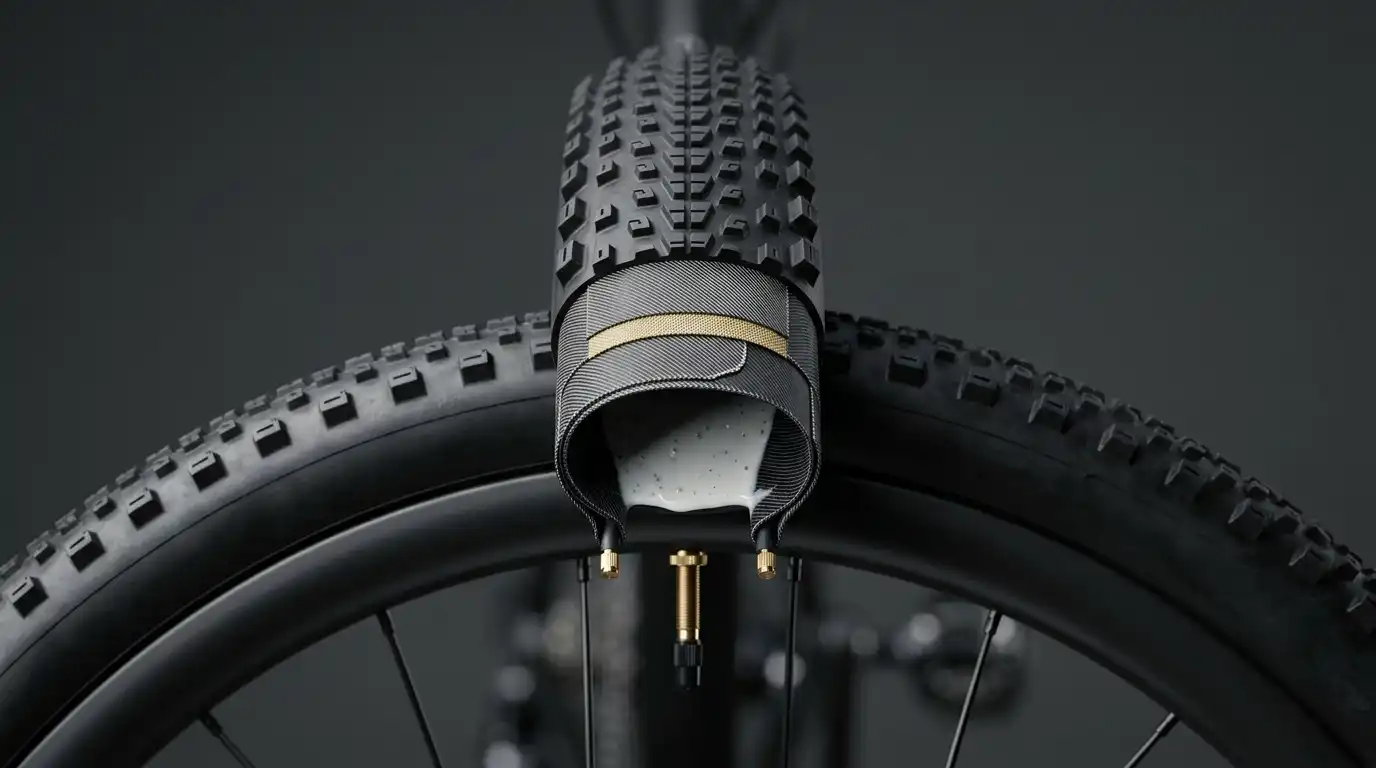
A puncture belt is an extra layer under the tread. It can block sharp objects before they reach the tube. Reinforced casing layers may add durability, but sidewall protection varies by model.
Rubber matters as well. Read what a bike tire rubber compound is and why bike tires have different tread patterns.
Balance protection against rolling resistance, weight, and cornering grip. Our article on puncture protection vs. rolling resistance explains the trade-off.
Does Tire Pressure Affect Glass Punctures?
Correct PSI helps the tire carry the rider and absorb impacts as designed. Low PSI raises pinch flat risk when you hit a pothole or curb.
Higher pressure does not guarantee glass protection. It can also reduce grip on rough surfaces. Read what happens if bike tire pressure is too high.
Rim fit matters too. Inner rim width sets which tire widths work well.
| Inner Rim Width | Typical Tire Range |
|---|---|
| 17 mm | 25 to 32 mm |
| 21 mm | 28 to 40 mm |
| 25 mm | 35 to 50 mm |
| 30 mm | 2.1 to 2.6 in |
These are common guides. Follow your rim maker. Hooked rims have a small lip that grips the bead. Hookless rims do not, and many cap pressure near 72 PSI. See bike tire size compatibility.
How to Find Glass in a Bike Tire
Inspect the tread and sidewalls under bright light before you pull out anything. Remove the wheel and tube. Then match the hole in the tube to the same spot on the tire.
Use tweezers or pliers, not bare fingers. Glass can slice skin and hide in the rubber.
Good light helps most. Work on a clean surface so you do not lose a small shard in the grass.
Quick steps: 1. Inspect the outside. 2. Find the leak in the tube. 3. Check the inside of the tire with a light.
Inspect the Tire Exterior (Step 1)
Rotate the wheel slowly. Look for shiny fragments, cuts, or small holes.
Check the sidewalls as well as the tread. Mark the suspected spot with chalk or a paint pen before you remove the tire. This helps you match tire and tube later. Glass that has worked into the tread can be hard to see, so flex the tire and look again.
Turn the tire slowly under a bright light. A tiny mirror-like flash often gives the shard away.
Locate the Leak in the Inner Tube (Step 2)
Note the tube’s position and valve direction as you remove it. Inflate it a little and listen for escaping air.
Use soapy water to find tiny leaks by looking for bubbles. You can also dip the tube in water. Compare the hole’s position with the tire to find any glass that remains.
If you cannot see a hole at first, hold the inflated tube under water longer. Slow leaks show up as a thin stream of tiny bubbles.
Check the Tire Interior (Step 3)
Use a bright light to look inside the tire for glass and casing damage. Turn the tire inside out and flex it. That can reveal a fragment and loosen it.
Wipe the inside with a cloth, or wear gloves, to catch hidden bits. Remove any piece with a suitable tool. Gloves protect your hands from small cuts. Do not reinstall the tube until the tire is clear and safe.
One missed sliver can ruin your new tube in minutes. Take an extra minute here, and it will save you a second repair.
How to Fix a Bike Tire Puncture From Glass
Remove the glass and inspect the tire for deep cuts, exposed casing threads, or sidewall damage. Patch a repairable tube, or fit a new one if the damage is too large.
Reinstall the tire with care. Check pressure, bead seating, and air retention before you ride.
Remove the Wheel and Tire (Step 1)
Shift gears as needed. Release the brake or axle mechanism for your bike. On a disc-brake bike, do not squeeze the brake lever while the wheel is out.
Deflate the tire fully. Use compatible tire levers to lift one bead. Plastic levers are kinder to the rim. Take the tube out without pulling or damaging the valve stem.
Remove the Glass Safely (Step 2)
Pull out visible fragments with tweezers or pliers. Check the puncture from both the outside and the inside of the tire.
Glass that sits flush may need a small pick to lift it. Work slowly and keep your fingers clear. Keep the shard if you can. Its size tells you how deep it went. Replace the tire if the glass left a deep cut, a torn casing, or a damaged bead. Cut threads can fail later, even if the tube holds air today.
Patch or Replace the Inner Tube (Step 3)
Clean and dry the puncture area before you apply a compatible patch. Follow the patch maker’s steps for glue, curing time, and pressure.
Replace the tube if the hole is large, the valve area is damaged, or the tube has several weak spots. On the road, a fresh tube is often the quicker option.
At home, a patched tube is fine for a small hole. On a ride, a spare tube gets you moving sooner and is less fussy in the cold.
Reinstall and Inflate (Step 4)
Check the rim tape. Make sure the tube is not trapped under the bead. Confirm the bead sits evenly around the rim.
Inflate slowly within the approved tire and rim limits. Slow inflation helps the bead seat evenly. Our guide on how to inflate a bike tire correctly walks you through it. Then check for leaks.
Wait a few minutes and press the tread. Recheck PSI. A drop means a missed shard or a pinched tube.
| What You Find | Action |
|---|---|
| Small tube hole, tire intact | Patch or replace tube |
| Tiny nick, threads intact | Reinstall, inspect often |
| Cut with fraying threads | Replace tire |
| Bulge or damaged bead | Replace tire now |
Can Tubeless Sealant Fix a Glass Puncture?
Tubeless sealant can close some small glass punctures. It depends on hole size and sealant condition.
A deep cut or large shard may leave damage that sealant cannot safely fix. Inspect the casing even when the sealant stops the leak.
Sealant hides damage. A tire that looks fine from outside can have cut threads inside, so look at the inner surface.
How Tubeless Sealant Works
Sealant flows toward a small hole and forms a plug as air escapes. The seal depends on puncture size, sealant condition, pressure, and tire build.
Sealant dries out over time. Riders in hot, dry areas often top it up every few months. Keep it fresh by following the maker’s service steps. After a leak, spin the wheel so the hole sits low, wait a minute, and recheck PSI.
Tubeless vs. Inner-Tube Repairs
Inner-tube systems usually need a patch or a new tube after a glass puncture. Tubeless systems may seal small holes without removing the tire.
Both setups need a check for deep cuts, damaged beads, or ongoing air loss.
| Factor | Inner Tube | Tubeless |
|---|---|---|
| Small glass cut | Patch or new tube | Often self-seals |
| Roadside effort | Tube swap | Often none |
| Upkeep | Low | Refresh sealant |
| Deep cut | Replace tube, check tire | Plug, boot, or replace |
When Should You Use a Tubeless Plug?
A compatible plug may help when sealant cannot close the hole alone. Use products approved for your tire and the puncture spot. Read the maker’s guide first, since plug rules differ by tire.
Do not use a plug to make a torn sidewall or a damaged bead safe. If air keeps escaping, fit a tube and replace the tire at home.
A plug is a trail fix. Check it again at home in good light.
How to Prevent Glass Punctures on Bike Tires
Pick tires with puncture protection that suits your roads or trails. Inspect them for glass, cuts, cracks, and worn tread.
Keep suitable PSI. Replace tires when the casing or tread is no longer safe. A new tire costs far less than a crash. Our guide on how often bike tyres should be replaced can help.
Choose Tires With Puncture Belts
Puncture belts add a layer beneath the tread on many models. Some tires use extra casing reinforcement for commuting and rough roads.
Compare verified test results. Do not trust the word “puncture-proof.” Read how to choose puncture-resistant bike tyres and what bike tires are made of.
Use Tire Liners or Puncture-Resistant Tubes
Compatible tire liners add a barrier against some sharp objects. Puncture-resistant tubes give extra protection but add weight.
Check fit and installation to prevent rubbing or tube damage. A liner that sits flat and fits well does its job best. Trim liner ends so they do not overlap too much. Many urban commuters pair a liner with a good tire for extra peace of mind. Pull the liner out every few months and clean off any stuck glass.
Inspect Tires and Maintain Correct PSI
Check tire surfaces after rides through glass-prone areas. See how often to check bike tyres and how much tread a bike tyre should have.
Use a gauge before rides. See how to check bike tire pressure. Here is a quick starting estimate. It is a rule of thumb, not a standard.
- Add rider, bike, and gear weight in pounds. This is your system weight.
- Front load is about 47% of that. Rear load is about 53%.
- Multiply each load by the width factor below.
- Subtract about 10% for tubeless, 5% for wet roads, and 10% for rough ground.
| Tire Width | Width Factor |
|---|---|
| 28 mm (1.1 in) | 0.80 |
| 32 mm (1.25 in) | 0.68 |
| 40 mm (1.6 in) | 0.40 |
| 2.1 in (53 mm) MTB | 0.30 |
| 2.4 in (61 mm) MTB | 0.22 |
Example for 32 mm tubed tires:
| System Weight | Front PSI | Rear PSI |
|---|---|---|
| 150 lb | 48 | 54 |
| 180 lb | 58 | 65 |
| 210 lb | 67 | 76 |
| 250 lb | 80 | 90 |
Never pass the tire or rim limit. For more detail, read how to find the correct bike tire pressure and whether you can overinflate a bike tire.
Best Bike Tires for Glass-Prone Roads
Compare casing, puncture belt design, rubber compound, and tread durability. Weigh puncture resistance against rolling resistance, comfort, and grip.
Confirm tire size, rim fit, and frame clearance before you buy. A tire that fits poorly can add its own problems. Our list of the best bike tyres for puncture protection can help you shop.
| Rider Type | Look For | Common Width |
|---|---|---|
| Road and commuter | Belt, durable casing | 28 to 40 mm |
| Gravel | Reinforced casing | 38 to 50 mm |
| Mountain bike | Strong casing, wide volume | 2.2 to 2.6 in |
| E-bike | Load rating, belt | 40 mm and up |
Best Tires for Road Cycling and Commuting
Look for practical puncture protection for city streets and daily rides. Choose a tread pattern that suits pavement and wet weather.
Balance durability with low rolling resistance and comfort. A slightly wider tire can add comfort and puncture margin at lower pressure. See how to choose tyres for a commuter bike, the best bike tyre size for commuting, and our picks of bike tyres for daily commuting.
Tires for Gravel and Mountain Biking
Consider reinforced casings for rocky routes and sharp trail debris. Gravel tires and mountain bike tires often run lower pressure than road tires.
Match tread and rubber to the terrain and the cornering traction you need. Wet Pacific Northwest mud calls for a different tread than dry Southwestern loose rock. Read how to choose bike tires for gravel roads and how to choose tires for mixed surfaces.
E-Bike Tires Built for Glass Roads
Choose tires made for your bike’s use and total load. E-bike torque and system weight add stress, so casing strength matters.
Consider tougher construction for commuting, cargo, and rough streets. Heavier loads push glass deeper on contact, so casing strength counts. Read how to choose durable bike tyres and bike tyre markings explained for beginners. Check fit with will this bike tire fit my wheel.
How Glass Puncture Resistance Is Tested
Compare tires using clearly documented puncture and casing test methods. Check whether tests measure tread penetration, sidewall strength, or both.
Lab results guide relative performance. They do not guarantee safety from every shard. See our testing process and editorial policy for how we approach reviews.
Understanding Casing TPI and Puncture Belts
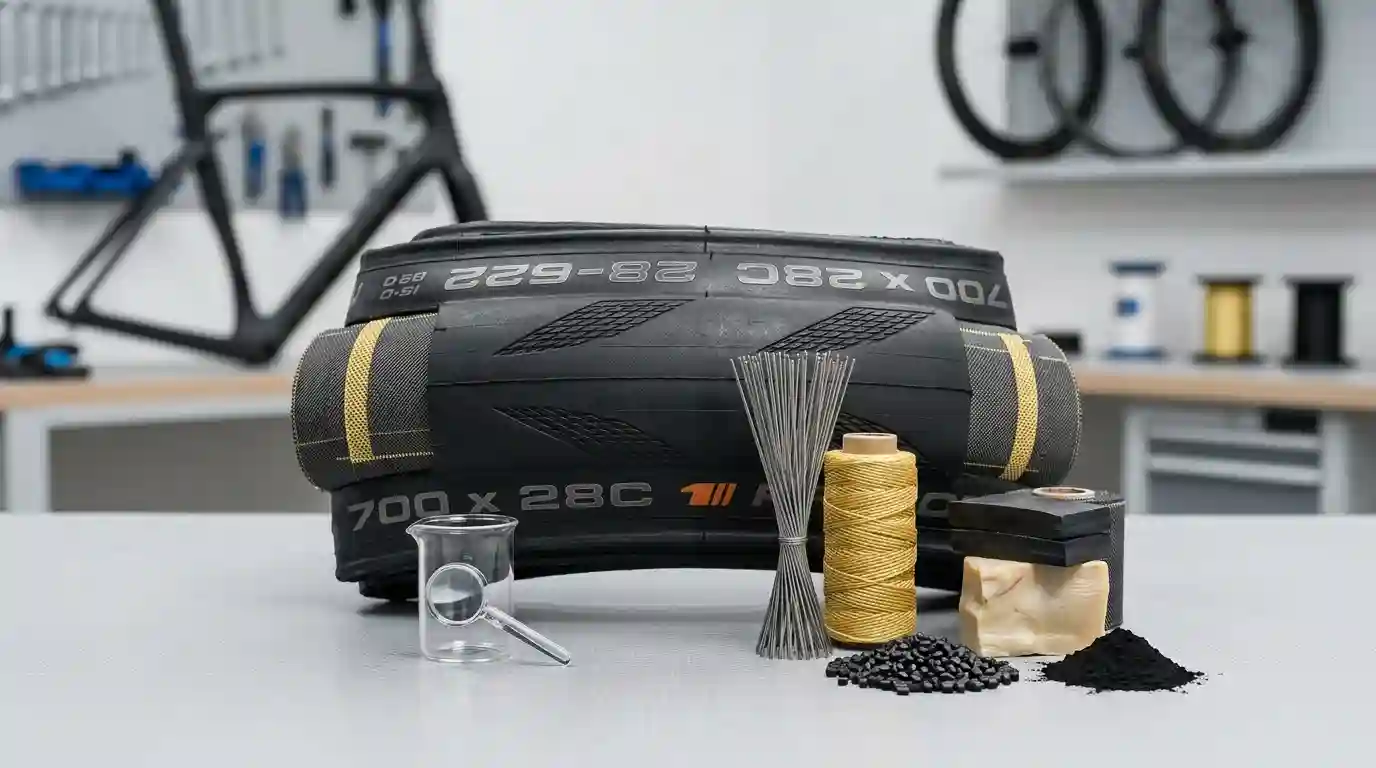
TPI means threads per inch. It does not set puncture resistance by itself. Thread material, casing layers, rubber, and belts all matter.
Puncture belts often focus on the tread. They may not protect the sidewall equally. Read what the numbers on bike tyres mean.
| Term | Plain-English Meaning |
|---|---|
| TPI | Thread density in the casing |
| Durometer | Rubber hardness; lower is softer |
| Puncture belt | Extra layer under the tread |
| Sealant | Liquid that plugs small holes |
| Rolling resistance | Energy lost as the tire rolls |
What to Look for in Tire Test Results
Review the method, sample size, pressure, tire size, and puncture tool. A sharp point and a wide edge test different things, so glass-like tools matter. Compare results only when conditions are alike.
A tire that wins a lab test can still lose to a long shard on a real road. Treat test data as a starting point and match it to your routes.
Add real-world feedback from riders on similar terrain. Protection can change ride feel, so see how much bike tires affect grip, comfort, and speed.
Frequently Asked Questions About Bike Tire Glass Punctures
Can glass puncture a bike tire without causing an immediate flat?
Yes. A tiny fragment can cause a slow leak. It may even block some air loss while it stays embedded. Remove the glass and inspect the tire before you repair or replace the tube.
Should I remove glass from my bike tire?
Yes, carefully, before normal riding. Use tweezers or pliers and inspect the tire for more damage. Replace the tire if the casing or bead is structurally damaged.
Can tubeless tires prevent glass punctures?
No. Tubeless tires do not stop glass from piercing the casing. Sealant can close some small holes, depending on the puncture and the sealant. Large cuts may need a plug, a boot, or a new tire.
What PSI helps reduce bike tire punctures?
It depends on rider weight, tire width, rim fit, and terrain. Low pressure can raise pinch-flat risk, while too much can hurt grip. Follow maker limits and use a calculator as a start. You may also want to see how much wider a tire you can fit.
Are puncture-resistant tires worth buying?
They can cut flats on glass-prone roads, but no tire is puncture-proof. Compare protection, weight, rolling resistance, and comfort. Choose a tire that suits your terrain and riding style.
Can I patch a bike tire after a glass puncture?
You can often patch the tube if the hole is small and the tube is sound. A casing may tolerate a small puncture, but deep cuts need more careful checks. Replace tires with damaged beads, bulging sidewalls, or a compromised casing.
How often should I check my bike tires for glass?
Check after rides through glass or road debris. Check pressure before rides and look for stuck fragments during routine care. Replace tires when wear or damage makes them unsafe.
Do tire liners protect against glass?
Liners can add a barrier against some sharp objects. Poor fit can cause rubbing or bunching. Use a compatible liner with suitable tires and correct pressure. Our guide on how to choose bike tires for rough roads shows how setups differ by surface.
Final Verdict: Prevent Glass Punctures Before Your Next Ride
Glass punctures can often be repaired, but you must remove every fragment before you reuse the tire. A shard left behind is the top reason for a repeat flat. Check the tube, the tire, and your PSI before you go.
Here are the key takeaways:
- Find and remove all glass, then check the casing.
- Patch or replace the tube, and confirm the tire holds air.
- Replace any tire with a deep cut, fraying threads, a bulge, or a damaged bead.
- Use belts, liners, and correct PSI to cut repeat flats.
Test your exact setup. Do not guess your pressure or your tire fit. Use the Free Bike Tire Pressure Calculator / Tire Finder Tool at TheBikeTires.com to match PSI and tire size to your weight, rim, and riding style. It takes a minute, and it can save you a long walk home.
Glass will always be on the road. Riders in busy cities and in rural areas see it alike. A good tire, the right PSI, and a quick check after each ride keep it from winning.

Mohidul Islam is a leading cycling technology specialist and bike tire consultant with over 15 years of hands-on experience in the bicycle industry. He holds a Bachelor of Science in Mechanical Engineering from Penn State University, where he focused heavily on material science, tread mechanics, and rubber compound performance. Over the past decade and a half, Alex has conducted extensive field testing, tubeless setup evaluations, and tire pressure modeling for road, mountain, and e-bikes. His practical insights and data-driven approach help cyclists of all levels optimize grip, speed, and durability on every ride.