
Ever finish a ride with numb hands and a sore back? You are not alone. Many US riders battle rattling roads, flats on the commute, shaky cornering grip, the wrong PSI, and tread that wears out too soon.
So, how much do bike tyres affect comfort? A great deal. Tires are the first thing between you and the road. They soak up some vibration and help the bike roll over bumps.
Four things shape how smooth a ride feels: tire width, tire pressure (PSI), casing flexibility, and the surface. The right mix also keeps you safer, because a calm bike is easier to control.
This guide shows you how to ride more comfortably. You will not have to give up much speed, grip, or flat protection.
Quick answer: Tires have a major effect on comfort. Width and PSI usually matter most. Casing, tread, and rim fit come next.
How Much Do Bike Tires Affect Comfort?
Tires cushion small bumps. They also cut the buzz that travels up through your hands, seat, and feet.
They do not work alone. The frame, fork, saddle, handlebars, and your riding position all add to the feel. A great tire cannot fix a saddle that does not fit.
Road buzz is more than an annoyance. Over a long ride it adds to fatigue in your hands, neck, and lower back. Tired riders react slower, so comfort links to safety.
Think of the whole bike as a chain of small shock absorbers. The tire is the first link and often the cheapest to change. That is why many riders feel a big shift after one tire swap.
The best setup depends on your terrain, your weight, your bike type, and your goals. Curious about the basics? Read how bike tires work.
Can Better Bike Tires Make Your Ride Smoother?
Yes, often. A tire with more volume (the amount of air inside) can soften sharp hits.
A flexible casing also helps. It bends over cracks and chip seal instead of passing every bump to you.
The right pressure ties it all together. It balances cushion, grip, and stability. For a deeper look, see what makes a good bike tire.
What Makes a Bike Tire Comfortable?
Three traits matter most:
- Tire width: Wider tires hold more air. They may allow lower pressure when your rim and frame permit.
- Casing flexibility: A supple casing bends over small surface changes.
- Tire pressure: Correct PSI tames vibration without causing squirm or rim strikes.
Air volume deserves a closer look. A bigger tire holds more air, so the same load squeezes it less. That lets you run softer pressure and keep a stable feel.
Tread and rubber play smaller roles. We cover them below. You can also read about bike tire width explained for more detail.
How Tire Pressure (PSI) Affects Comfort
Pressure controls how much a tire deforms under load. A softer tire flexes more and smooths the ride.
Too much pressure makes rough roads feel harsh. Too little can cause squirm, rim strikes, or pinch flats.
Here is a simple way to picture it. A hard tire acts like a rock rolling over bumps. A softer tire wraps around them and keeps the bike steadier.
No single PSI suits every rider or tire. Tires also leak slowly, so learn how often to check bike tires and why bike tires lose air.
What Is the Best Tire Pressure for a Comfortable Ride?
Start with the tire and rim maker’s limits. Then use a trusted pressure calculator.
Consider rider weight, front and rear load, tire width, casing, and surface. Adjust in small steps. Test comfort, grip, and steering on a familiar route.
Here are comfort-leaning starting points for 32 mm (1.25 in) tubeless tires on pavement.
| Rider + bike weight (lb) | Rear PSI | Front PSI |
|---|---|---|
| 130 | 38 | 35 |
| 150 | 44 | 41 |
| 170 | 49 | 46 |
| 190 | 55 | 52 |
| 210 | 61 | 58 |
Note: Add 5 to 10 PSI for inner tubes. Never go past the tire or rim maximum.
Heavier riders need more pressure to protect the rim. Lighter riders can run less and gain more cushion. Rear tires carry more weight, so they need a few more PSI than front tires.
Is Lower Tire Pressure More Comfortable?
Often, yes. Lower pressure lets the tire absorb bumps and cut vibration on rough surfaces.
But very low pressure has costs. The tire can feel unstable. Tubes can pinch flat. Rims can even get damaged.
Use the lowest practical pressure that still gives safe handling and solid support. In rain, a slightly softer tire can also boost cornering traction.
Here is a quick test. If the bike feels vague in corners, add 2 to 3 PSI. If your hands buzz on every crack, drop 2 to 3 PSI. Small moves tell you more than big ones.
How to Set Tire Pressure for More Comfort
Use this formula for a first guess:
Rear PSI = total system weight (lb) x width factor
Width factors: 28 mm = 0.36, 32 mm = 0.29, 40 mm = 0.20, and 2.3 in (58 mm) MTB = 0.13. For extra comfort, take off 5 to 10 percent. Front PSI runs 3 to 5 lower.
Example: a 170 lb rider, 22 lb bike, and 8 lb of gear make 200 lb. On 32 mm tires, 200 x 0.29 is 58 PSI. Trim 7 percent for comfort and you land near 54 PSI rear.
- Check the tire size and pressure limits.
- Enter rider weight, tire width, bike type, and riding surface into the free calculator at TheBikeTires.com.
- Inflate to the suggested starting PSI and check how the bike feels.
- Adjust slightly and retest on the same route.
Do Wider Bike Tires Make Riding More Comfortable?
Often they do. Wider tires have more air volume. That lets you run lower pressure, which can help on rough roads.
Still, width alone does not decide comfort. Construction, true inflated width, rim width, and pressure all count.
Always check frame clearance, fork clearance, and approved rim fit first. Our tire width guide can help you pick a size.
Narrow vs. Wide Tires for Comfort
Narrow road tires can feel firm on rough pavement. That is true especially when they are pumped too hard.
Wider tires absorb more vibration. They help on cracked roads and gravel.
Think about your roads. Smooth bike paths reward almost any width. Cracked county roads, frost heaves, and patched city streets reward more volume.
Compare tires at suitable pressures. Do not assume one width always wins. See the best tire width for road and city riding for specific ranges.
How Rim Width Affects Tire Comfort
Rim width changes a tire’s shape, measured width, and support. A compatible rim keeps handling stable at the intended pressure.
Rims come in two styles. Hooked rims have a lip that holds the bead. Hookless rims have none, so they often cap pressure near 72 PSI (5 bar). Always check yours.
| Inner rim width | Typical tire width range |
|---|---|
| 19 mm (0.75 in) | 25 to 35 mm |
| 21 mm (0.83 in) | 28 to 40 mm |
| 23 mm (0.91 in) | 30 to 47 mm |
| 25 mm (0.98 in) | 35 to 50 mm |
These are typical ranges only. Follow your wheel maker’s guidance. Learn more about tire size compatibility and the ETRTO system.
Can You Put Wider Tires on Your Bike?
Maybe. Many frames have more room than riders expect. Others are tight from the factory.
First check frame, fork, brake, and fender clearance.
Next, confirm the width works with your rim’s inner width. Leave room for mud, debris, and wheel flex. Add the tire maker’s suggested gap.
Not sure how much room you have? See how much wider a tire you can fit. You can also read if you can use wider tires on your bike and whether you can change bike tire width.
How Tire Casing and Rubber Compound Affect Comfort
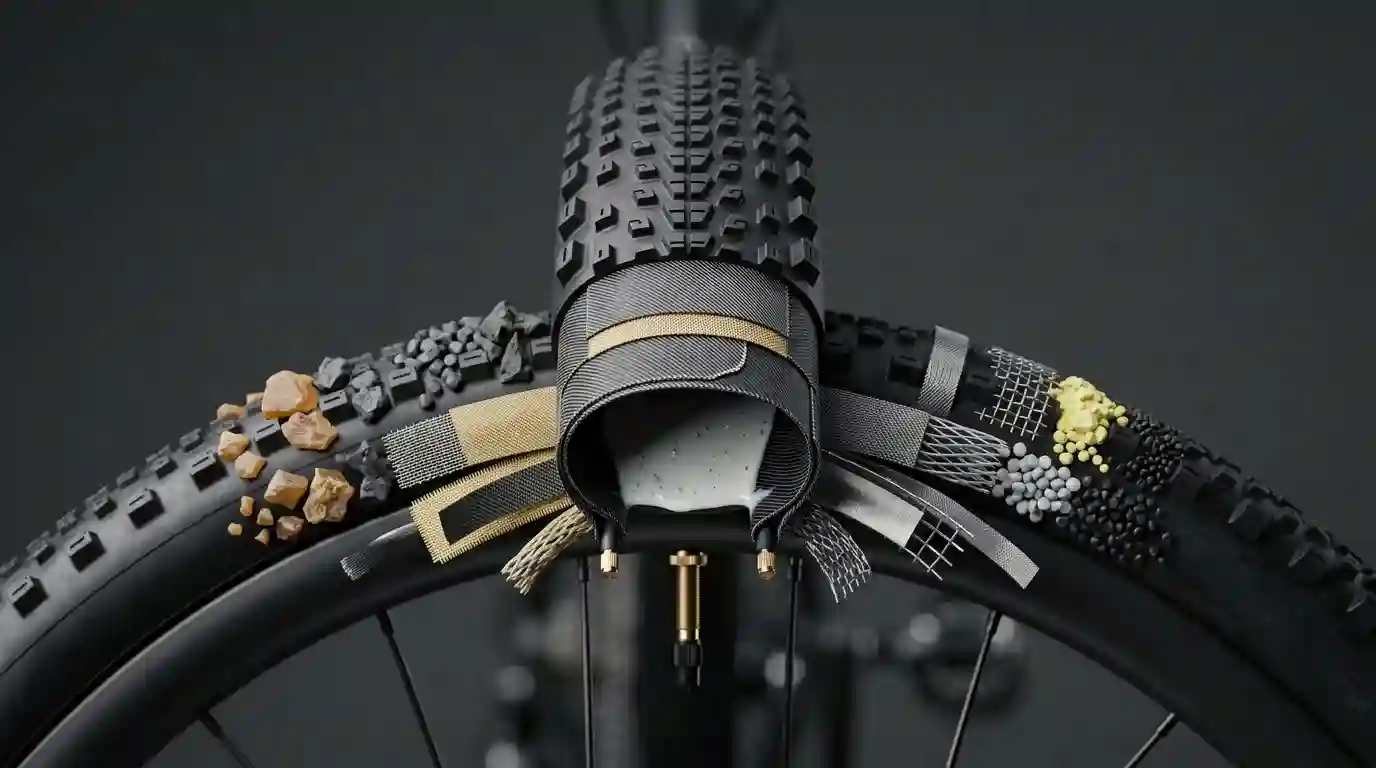
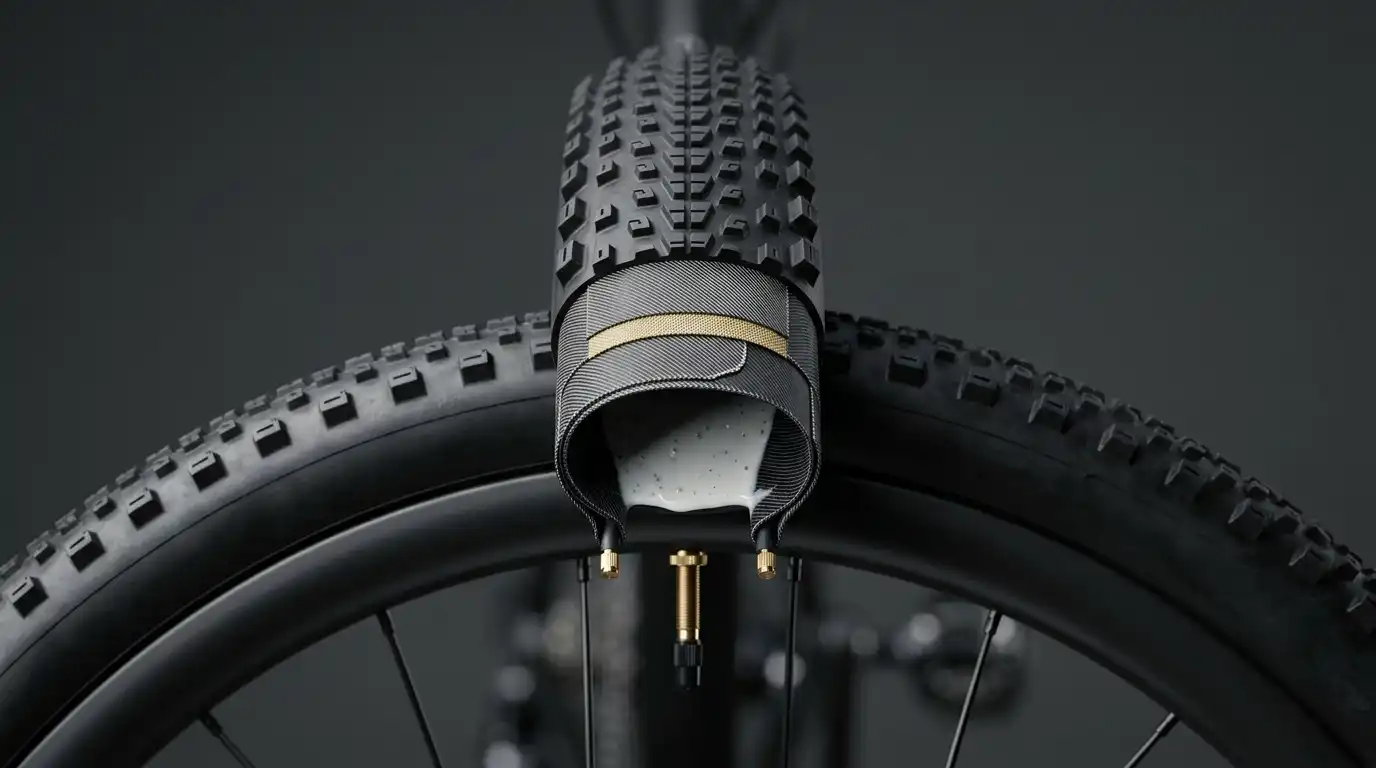
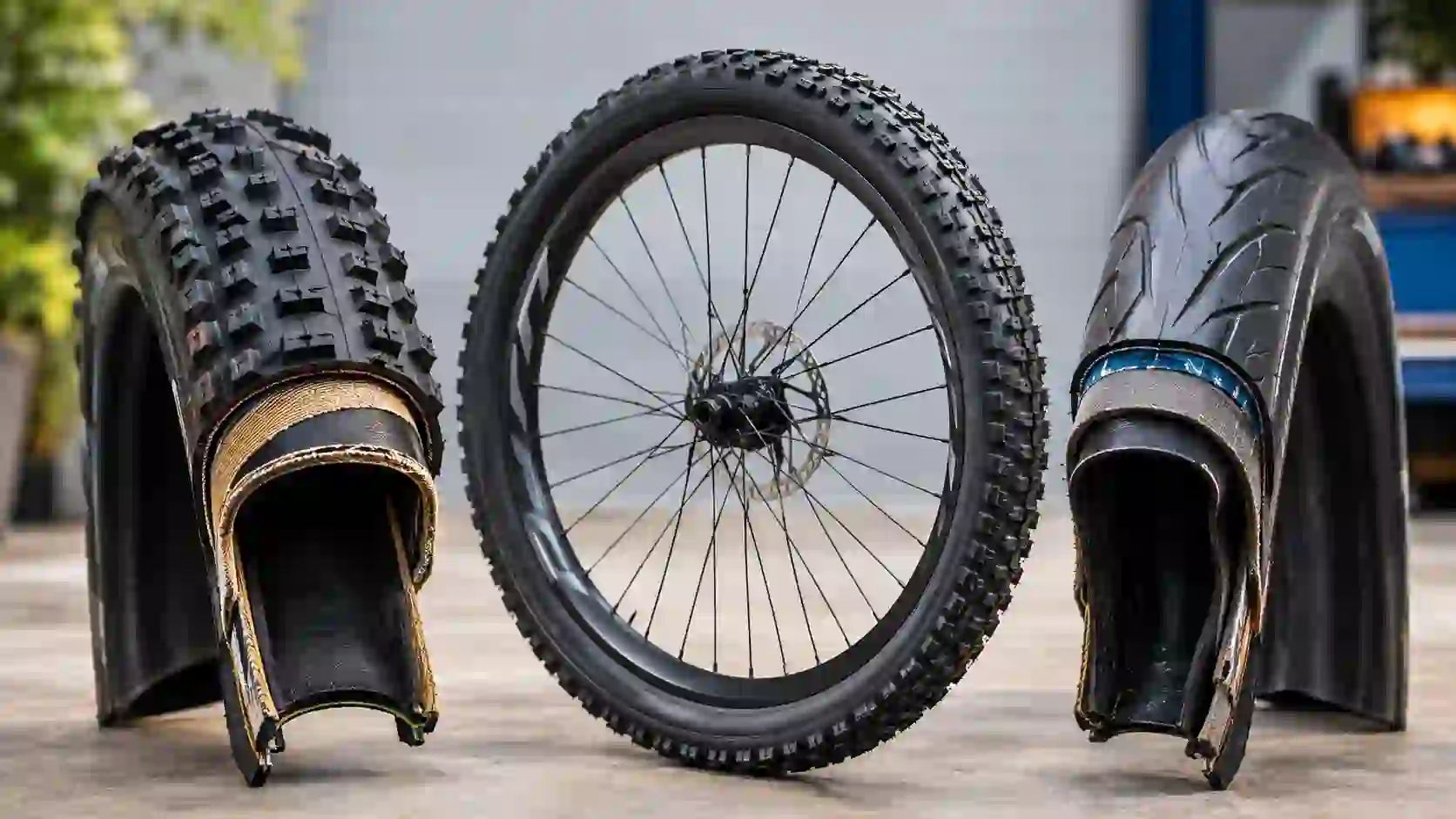
The casing is the fabric body of the tire. A flexible one bends over small bumps. A stiff one passes them on.
Supple casings also tend to grip well on rough ground. They keep the tread in touch with the surface instead of skipping over it. That helps both comfort and control.
Rubber compound affects grip, wear, and road feel. It matters, but it is not the main comfort driver.
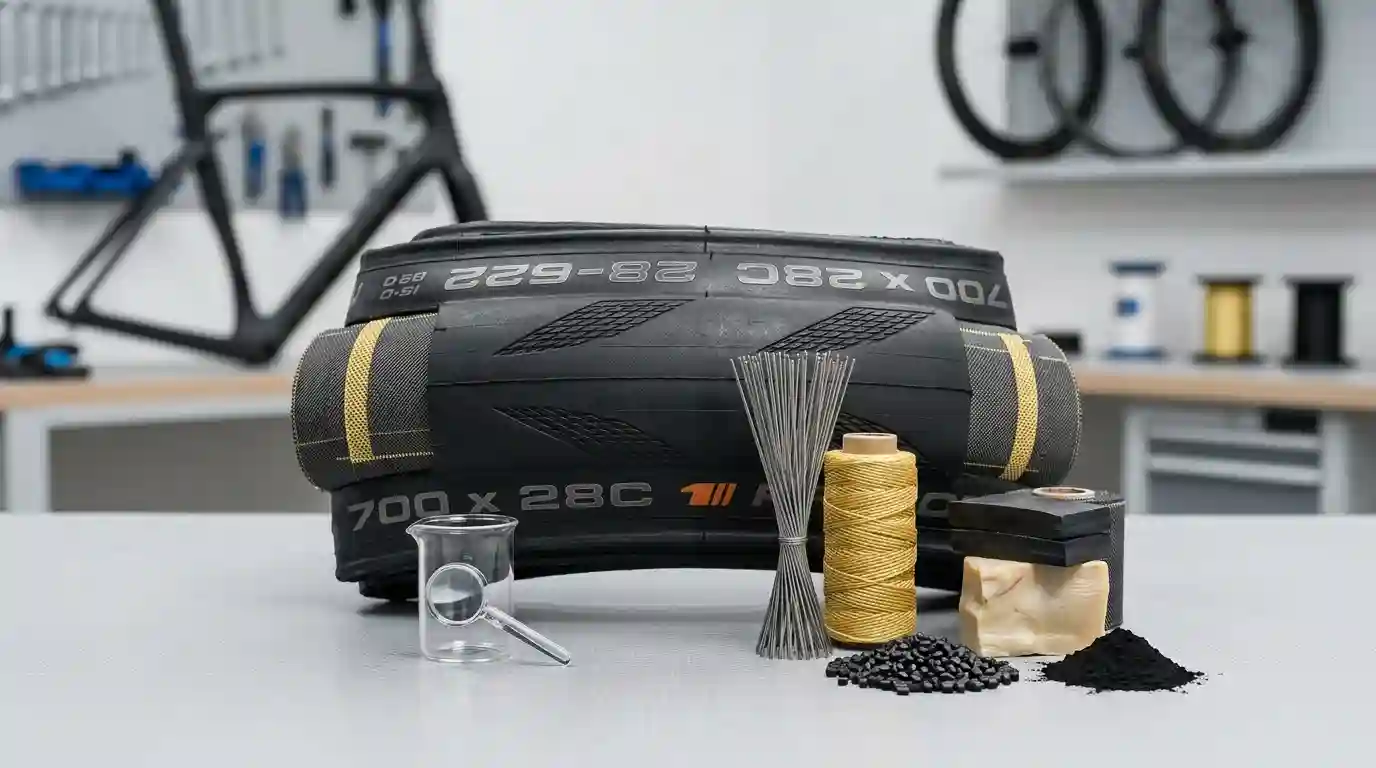
Remember that TPI alone does not set comfort. Materials and construction count too. Learn about the tire casing in our guide.
What Is Casing TPI, and Does It Affect Comfort?
TPI means threads per inch in the casing. It tells you how fine the weave is.
A supple casing can help a tire hug uneven ground. That often feels smoother.
Look at the complete design. Check thread material, protective layers, and sidewall build. Do not buy on TPI alone.
Do Softer Rubber Compounds Make Bike Tires More Comfortable?
Not much. Compound mainly changes grip, wear, and rolling feel.
Makers rate hardness with a durometer number. A lower number means softer rubber. That helps grip, but comfort depends more on casing, air volume, and pressure.
Hard compounds usually last longer. Soft compounds usually grip better, but wear faster. Many tires blend both across the tread.
Seek a balanced design for your conditions. See the rubber compound guide and what bike tires are made of.
How Puncture Belts Affect Comfort
Puncture belts are extra layers under the tread. They help block glass, thorns, and road debris.
Some reinforced tires feel stiffer. The effect varies by model, so do not assume.
Choose protection based on your routes and flat risk. Do not decide by weight or comfort alone. Desert riders facing goathead thorns often gain more from protection than they lose in suppleness.
Which Bike Tires Are Best for Different Riding Surfaces?
Match the tire to the ground. A tire built for one surface can feel harsh on another. This table gives a quick view.
| Tire type | Best use | Comfort considerations |
|---|---|---|
| Road tires | Paved roads | Width, casing, and PSI matter |
| Endurance road tires | Long paved rides | Often balance comfort and speed |
| Gravel tires | Mixed pavement and gravel | More volume can smooth rough surfaces |
| Mountain bike tires | Trails and rocky terrain | Large air volume helps absorb impacts |
| Commuter tires | City streets | Comfort, puncture protection, and grip matter |
| E-bike tires | Commuting and recreation | Load rating, casing strength, and pressure are important |
Need help choosing? Read how to choose bike tires for a full walkthrough.
Best Road Bike Tires for Comfort
Look for a fitting width, a flexible casing, and a pressure range that suits your weight. Endurance models are often a good place to start, since they are built for long, bumpy miles.
Consider wider road tires if your frame and rim allow. Many riders find 28 to 35 mm (1.1 to 1.4 in) calmer on chip seal.
Balance cushion with rolling resistance and cornering grip. See our picks for the best 700c tires for comfort and decode 700×28.
Best Gravel Tires for Comfort
Pick enough volume for gravel, washboard, and rough patches. Many riders choose 38 to 45 mm (1.5 to 1.8 in) for mixed rides.
Choose a tread pattern that fits your mix of pavement, hardpack, and loose ground. Add tubeless sealant to cut flat interruptions.
Read how to choose tires for gravel roads and tires for mixed surfaces.
Top Mountain Bike Tires for Comfort
Higher-volume tires help absorb roots, rocks, and trail chatter. Think Southwestern loose rocks or Pacific Northwest roots and mud.
Pick tread and casing strength for your terrain and style. Set pressure for traction while avoiding rim strikes on hard hits.
Common trail sizes include 26×2.1 and 650b.
Best Commuter and E-Bike Tires for Comfort
Seek dependable puncture protection and stable handling on uneven streets. Potholes, curbs, and rail tracks are daily tests for commuters.
Check load ratings, mainly for heavier e-bikes and cargo. E-bike torque can also wear tires faster and raise the need for reliable traction.
See how to choose tires for a commuter bike and the best tire size for commuting.
Are Tubeless Tires More Comfortable Than Inner-Tube Tires?
They can be. Tubeless tires often run at lower pressure without the same pinch-flat risk.
The tube is gone, so nothing can pinch between tire and rim. That is the main reason tubeless riders can go softer. It also helps in the rocky Southwest, where sharp edges are common.
Lower pressure can add comfort and grip on rough ground when the setup is compatible.
Inner tubes still work well. With the right tire and PSI, they can feel smooth too.
How Tubeless Sealant Helps on Rough Roads
Tubeless sealant is a liquid latex mix. It can close many small punctures before the tire loses much air.
Tubeless setups can support lower pressure in some conditions. That adds cushion on rough roads.
Check sealant levels, tire fit, rim tape, and valve seals often. Sealant dries out over time.
Can Inner Tubes Still Provide a Smooth Ride?
Yes. A correctly sized tire at a suitable pressure can feel great with a standard tube.
Latex or TPU tubes may change ride feel and rolling resistance. Results depend on the tire and setup.
Pick a tube that matches your tire size and valve type. A tube that is too big can fold and cause a lump. A tube that is too small can stretch thin and fail.
Budget riders can stay with butyl tubes and still ride comfortably. Not sure of your size? Learn how to read bike tire size.
How to Choose Bike Tires for Maximum Comfort
Match tire type and width to your usual roads, trails, and ride length.
Compare casing flexibility, puncture protection, grip, and independent tests. Check tire and rim fit before you buy or install anything.
Unsure what you need? See what bike tire size you need.
What to Look for When Buying Comfortable Bike Tires
- Width and volume: Pick a size that fits the bike and suits your terrain.
- Casing construction: Seek a design that balances flexibility and durability.
- Protection and grip: Choose enough puncture resistance and tread for your usual routes.
Riding far? Our guide to tires for long distance covers comfort over many miles.
How to Compare Tire Comfort Reviews
Look for reviews that list tire size, pressure, rider weight, and surface.
Compare independent rolling resistance results with real-world comfort and grip reports. Treat comfort as a riding outcome, not a claim based on TPI or width alone.
Our testing process and editorial policy explain how we review tires.
How to Test and Improve Bike Tire Comfort
Try this simple home checklist:
- Inspect the tires: Look for cuts, bulges, uneven wear, and embedded debris.
- Check tire pressure: Use a reliable gauge rather than guessing by feel.
- Review compatibility: Confirm tire size, rim width, and maker pressure limits.
- Test a small adjustment: Change pressure in small steps within approved limits.
- Ride the same route: Compare comfort, grip, steering, and vibration.
- Record the result: Note tire model, PSI, load, and surface so you can repeat the best setup.
What Testing Standards Help Measure Tire Comfort?
Record pressure, rider and bike load, tire size, and surface for each test. Even a simple notes app works. Write down how the ride felt on a 1 to 10 scale.
Use repeatable routes or controlled vibration measurements to compare setups fairly.
Lab rolling resistance tests are useful performance data. They are not a direct measure of comfort.
Can Tire Comfort Improve Without Buying New Tires?
Often, yes. Lowering excess pressure can make an instant difference on rough roads.
Check tire condition, wheel alignment, and installation too. Poor setup can ruin ride quality. A tire that sits unevenly on the rim can wobble and feel rough.
A loose headset, worn wheel bearings, or a bent rim can also add buzz. Fix these first, then judge the tires.
If harshness remains, look at tire width and casing. Also check other contact points, like the saddle and handlebars.
Common Mistakes That Make Bike Rides Less Comfortable
Riders hurt their own comfort in simple ways. Some run far too much PSI for their weight and road.
Others fit tires too narrow for the terrain, or tires that do not suit the rim. Many ignore worn tires, poor installation, or air loss mid-ride.
Here are the top comfort killers in short form:
- Pumping to the sidewall maximum every ride
- Using one PSI for every road and every season
- Skipping a weekly pressure check
- Choosing tires by looks, not by size and use
Why Do My Bike Tires Feel Too Hard?
Your pressure may be too high for the tire size, rider load, and surface. Many riders inflate to the number printed on the sidewall. That number is a maximum, not a target.
A stiff casing or low-volume tire can also pass on more vibration.
Check the approved pressure range, then adjust safely. Check tread wear too, using our guide on how much tread a bike tire needs.
Can Low Tire Pressure Damage My Bike?
Yes. Very low pressure can cause rim strikes, squirm, or bead trouble. It can also make steering feel slow and sloppy.
Tube setups can pinch flat when the tire bottoms out. Tubeless tires can burp air or even dent rims if pressure is too low for the load and terrain.
Aim to stop trouble before it starts. Feel for a squirmy front end, a bouncy rear, or clunks over bumps. These are early signs your pressure is off.
Rough roads need extra care. See how to choose tires for rough roads and wet weather tires.
Frequently Asked Questions About Bike Tire Comfort
1. How much do bike tyres affect comfort?
Bike tires have a major effect on ride comfort. They absorb some bumps and reduce road vibration. Tire width, casing flexibility, PSI, and surface all matter.
2. Are wider bike tires more comfortable?
Often, yes. Wider tires give more air volume and can run at lower pressure. Casing design, build, and rim fit also affect comfort. You can also see if you can put narrower tires on a bike.
3. What is the best PSI for a comfortable bike ride?
It depends on rider weight, tire width, casing, load, and terrain. Start with a trusted calculator. Stay within the tire and rim limits. In wet weather, many riders drop a few PSI.
4. Are tubeless tires more comfortable than tires with inner tubes?
They can be, especially when a compatible setup allows lower pressure on rough ground. A well-chosen tube tire can also ride smoothly.
5. Do wider tires slow you down?
Not always. Wider tires can help on rough roads, and some roll very well. Speed depends on build, pressure, tread, and surface.
6. Does tire tread affect comfort?
Yes, but mostly through how the tire meets the ground. Knobs help grip on loose dirt. Smoother tread suits pavement. Casing and pressure do more to cushion bumps. See why tires use different tread patterns.
7. Can the wrong rim width affect tire comfort?
Yes. Rim width changes tire shape and support. A mismatch can be unsafe. Check the maker’s approved range, or confirm if a tire will fit your wheel.
8. When should I replace my bike tires?
Replace tires with exposed casing, serious cuts, bulges, or damage past the maker’s limit. Heavy wear and frequent flats are also signs. See how often bike tires should be replaced.
Conclusion: Get a Smoother Ride With the Right Bike Tires
Comfort comes from a mix of factors. Tire width, PSI, casing flexibility, tread, puncture protection, and rim fit all play a part.
It also comes from matching your setup to your weight and terrain. Do not just pick the widest tire or the lowest pressure. Test small pressure changes and choose tires based on real needs and solid evidence.
Key takeaways:
- Width and PSI usually shape comfort the most.
- A supple casing helps more than soft rubber.
- Always respect tire and rim pressure limits.
- Test, record, and repeat what works.
For more ideas, browse everyday riding tires and learn how to measure bike tire size. Want to know who writes this advice? Meet the team on our About page.
Ready for a smoother ride?
Stop guessing your PSI. Enter your weight, tire width, and terrain into the Free Bike Tire Pressure Calculator and Tire Finder Tool at TheBikeTires.com. Get a tuned starting point in seconds. Then test it on your favorite route and feel the difference.

Mohidul Islam is a leading cycling technology specialist and bike tire consultant with over 15 years of hands-on experience in the bicycle industry. He holds a Bachelor of Science in Mechanical Engineering from Penn State University, where he focused heavily on material science, tread mechanics, and rubber compound performance. Over the past decade and a half, Alex has conducted extensive field testing, tubeless setup evaluations, and tire pressure modeling for road, mountain, and e-bikes. His practical insights and data-driven approach help cyclists of all levels optimize grip, speed, and durability on every ride.