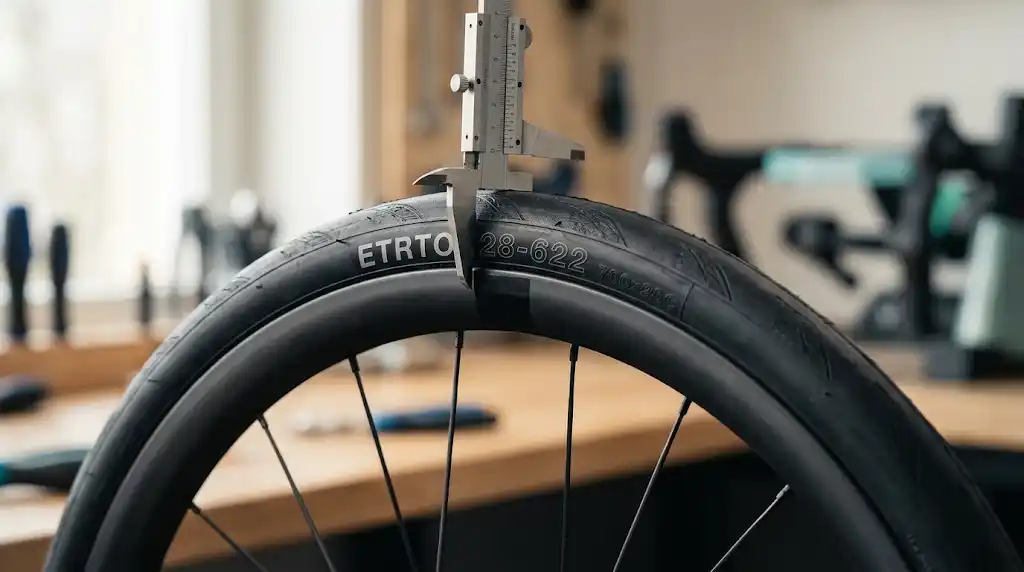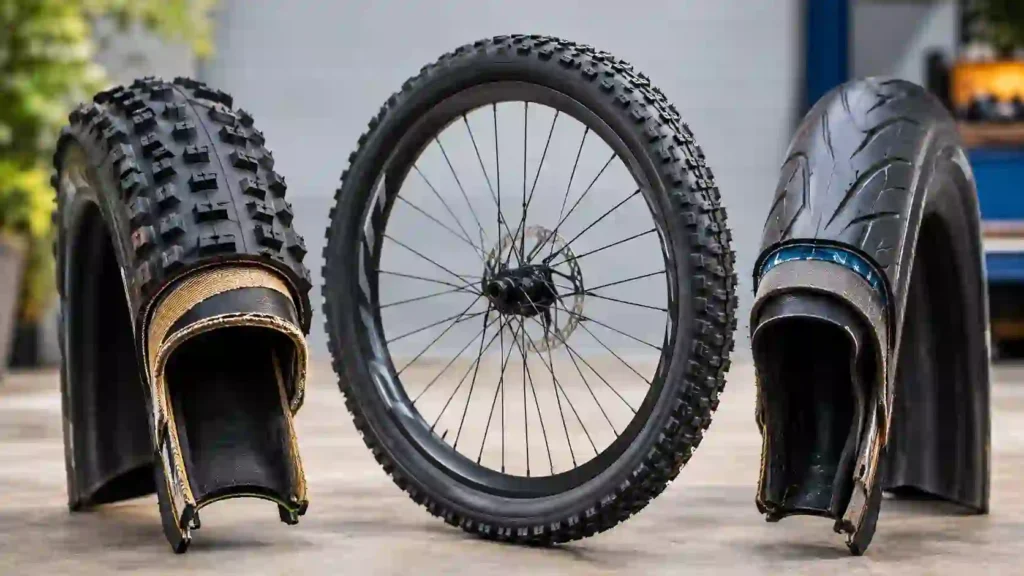
A bike tire combines air pressure, rubber, casing, tread, and bead construction to support the rider and maintain controlled contact with the road or trail. Tire design directly affects rolling resistance, cornering grip, braking, comfort, puncture protection, and handling. In this comprehensive guide, you will explore tire construction, PSI optimization, tread patterns, TPI ratings, tubeless systems, internal rim width compatibility, tire selection, proper installation, and step-by-step flat repair.
Featured Snippet: How Do Bike Tires Work? Bike tires work by using an inflated casing and rubber tread to create a controlled contact patch with the riding surface. Tire pressure, width, tread pattern, rubber compound, and casing construction affect grip, rolling resistance, comfort, and puncture resistance.
1. Introduction: Why Your Bike Tires Matter
US cyclists face an array of riding challenges across the country—from sudden pinch flats on rocky Pacific Northwest singletrack to poor cornering grip on rain-slicked suburban pavement. Many riders battle premature tread wear or harsh ride quality simply because they run incorrect tire pressure or use an unsuitable casing for their local conditions.
Choosing the right bicycle tire and maintaining correct PSI directly impacts rider safety, speed, and comfort. As the sole component connecting your bike frame to the earth, your tires dictate how efficiently pedaling energy translates into forward motion, how predictably your bike stops, and how securely you navigate high-speed turns.
2. What Is a Bike Tire and How Does It Work?
+——————————————————-+
| CONTACT PATCH DYNAMICS |
+——————————————————-+
| Rider & Bike Weight Force ↓ |
| |
| ( Tire Casing ) |
| / \ |
| +———+———–+———+ |
| | [ Flexible Rubber Tread ] | |
| Surface <–+——————————-+–> Road |
| ^^^ CONTACT PATCH ^^^ |
| Grip / Braking / Pedaling / Steering Forces |
+——————————————————-+
What does a bike tire actually do?
- Supports System Weight: Holds up the combined mass of the rider, bicycle, and gear.
- Transmits Forces: Creates the vital contact patch that transfers pedaling torque, braking friction, and steering inputs directly to the ground.
- Dampens Terrain: Absorbs small impacts and surface chatter, smoothing out the ride and helping maintain continuous traction.
What happens when a bike tire rolls?
As your bicycle moves forward, the bottom of the tire flattens against the riding surface. The flexible casing undergoes continuous flexing as it enters and leaves the contact patch.
This repeated deformation consumes energy, converting a portion of your pedaling effort into internal friction and heat. This mechanical loss is known as rolling resistance. Setting the correct tire pressure ensures the casing flexes enough to conform to terrain without wasting excessive energy or causing handling instabilities.
Why does the tire’s contact patch matter?
The contact patch is the exact footprint of rubber touching the road or trail surface.
NARROW TIRE / HIGH PSI WIDE TIRE / LOWER PSI
(Postage Stamp Size) (Credit Card Size)
+—+ +———+
| | | |
+—+ +———+
Concentrated Pressure Distributed Load
Low Off-Road Grip High Off-Road Traction
Tire pressure, casing flexibility, and tire width directly govern the size and shape of this patch. However, overall traction depends on more than sheer contact area—the hardness of the rubber compound, terrain roughness, rider load distribution, and casing deformation all interact to establish real-world grip.
3. What Are the Main Parts of a Bike Tire?
+———————————-+
| TREAD (Outer Layer) |
+———————————-+
| PUNCTURE PROTECTION BELT |
+———————————-+
| CASING (Fabric Layers) |
+———————————-+
| BEAD (Wire/Kevlar) |
+———————————-+
Tire tread
The tread is the outer rubber layer that engages directly with the ground. Its construction and profile shape determine off-road biting power, wet-weather water evacuation, and pavement drag.
Smooth road tires utilize minimal tread to maximize contact on clean pavement, whereas mountain bike tires deploy tall, widely spaced rubber knobs to dig into soft dirt, loose rocks, and deep mud.
Tire casing
The casing forms the woven fabric structure beneath the tread that contains air pressure and dictates how the tire conforms to rough surfaces.
Casing density is measured in TPI (Threads Per Inch). While TPI provides an indicator of casing flexibility, it does not define tire quality on its own—thread thickness, fabric material (such as nylon, cotton, or aramid), layer count, and rubber coating thickness are equally critical.
Low TPI (30-60 TPI) High TPI (120-320 TPI)
+————————-+ +————————-+
| Thick Nylon Threads | | Fine Woven Threads |
| Heavy Rubber Coating | | Supple Casing Flex |
| High Cut Resistance | | Low Rolling Drag |
+————————-+ +————————-+
Tire bead
The tire bead is the reinforced edge that hooks beneath the rim flange to lock the tire onto the wheel under pressure.
- Wire Beads: Constructed from solid steel strands; rigid, durable, and heavier (commonly found on budget, urban, or downhill tires).
- Folding Beads: Constructed from flexible Kevlar or synthetic aramid fibers; significantly lighter and foldable for easy transport.
Note: The tire bead diameter must match your wheel’s specific diameter rating (e.g., 700c, 29-inch, 27.5-inch/650b, or 26-inch).
Puncture protection
Manufacturers embed protective breakers, high-density aramid belts, or full sidewall cross-weaves beneath the tread to prevent glass, thorns, and sharp flints from piercing the inner air chamber.
While heavy puncture belts reduce flat tires, they add weight and increase casing stiffness. Urban commuters and e-bike riders prioritize rugged durability, whereas road racers favor supple, thin casings to minimize rolling resistance.
4. How Does Bike Tire Pressure Work?
Why is tire pressure important?
Air pressure (measured in PSI or Bar) serves as the primary tuning parameter for your bicycle. Proper PSI balances speed, comfort, handling predictability, and flat prevention.
Too Much Pressure (Over-Inflation) Too Little Pressure (Under-Inflation)
+——————————–+ +——————————–+
| * Harsh, tiring ride quality | | * High risk of pinch flats |
| * Tire bounces over bumps | | * Tire squirm when cornering |
| * Reduced cornering traction | | * Potential rim damage on rocks|
+——————————–+ +——————————–+
What PSI should a bike tire have?
There is no single PSI setting for every cyclist. You must always begin within the tire and rim manufacturers’ recommended range stamped on the sidewalls. From there, fine-tune your pressure based on total system weight, tire volume, internal rim width, casing stiffness, terrain roughness, and ambient weather. Make adjustments in small 1–2 PSI steps.
+ 3
Does rider weight affect tire pressure?
Heavier riders require higher inflation pressures or wider tire volumes to prevent the casing from collapsing under load. Because rear wheels carry roughly 60% of total system weight, rear tires usually require 2–3 PSI more than front tires. Higher-volume tires hold more air, allowing heavier cyclists to run lower relative pressures without risking rim strikes.
Featured Snippet: Simple PSI Baseline Model A practical starting model for setting pressure:
Starting PSI=Reference PSI×(Reference WeightSystem Weight)
Where Reference Weight is based on a standard 170 lb system load.
This baseline must be adjusted for tire volume, internal rim width, tubeless usage, and terrain conditions while staying strictly within manufacturer pressure limits.
| Rider Weight (lb) | Road (28mm / Tubeless) | Gravel (40mm / Tubeless) | MTB (2.4″ / Tubeless) |
| 140 lb (63 kg) | 55 Front / 58 Rear PSI | 26 Front / 28 Rear PSI | 18 Front / 20 Rear PSI |
| 170 lb (77 kg) | 65 Front / 68 Rear PSI | 30 Front / 32 Rear PSI | 21 Front / 23 Rear PSI |
| 200 lb (91 kg) | 75 Front / 78 Rear PSI | 35 Front / 37 Rear PSI | 24 Front / 26 Rear PSI |
| 230 lb (104 kg) | 83 Front / 86 Rear PSI | 39 Front / 42 Rear PSI | 27 Front / 29 Rear PSI |
5. How Does Tire Width Affect Bike Performance?
Are wider bike tires faster?
Wider tires are not inherently faster or slower—their performance depends on the riding surface. On rough asphalt, gravel, or dirt trails, wider tires operated at lower pressures roll faster because they deform around surface imperfections rather than transferring violent vibrations upward into the rider. This reduction in impedance loss saves leg energy over long distances.
Narrow High-PSI Tire Wide Lower-PSI Tire
(Vibration / Bounce) (Smooth Absorption)
↓ Rigid Bump ↓ Terrain Molds
/\/\/\/\/\/\ ————
How does tire width affect grip?
Increasing tire volume provides extra cushion, allowing lower air pressures without risking rim bottoming. Lower pressure allows the casing to mold around loose rocks and uneven pavement, boosting cornering traction and braking stability.
What happens if a tire is too wide for the rim?
Mounting an excessively wide tire onto a narrow internal rim distorts the intended tire profile into a “lightbulb” shape.
LIGHTBULB PROFILE ROUND PROFILE
(Tire Too Wide for Rim) (Proper Rim/Tire Match)
/ \ / \
( ) | |
\ / \ /
|—|—| |———|
Narrow Rim Matched Rim
This distortion causes the sidewall to fold or squirm under cornering loads, reducing steering predictability and increasing the risk of the tire bead unseating from the rim. Always consult manufacturer compatibility guidelines.
6. How Does Rim Width Affect Bike Tires?
What is internal rim width?
Internal rim width is the distance (in millimeters) measured inside between the rim’s bead hooks or hookless walls.
Internal Rim Width Measurement:
|<- – – – ID – – – ->|
|–| |–|
| \ / |
| |————| |
This measurement dictates the mounted profile, air volume, and side stability of your tire. The exact same tire will measure wider and sit flatter on a 25mm rim than on a 19mm rim.
Why does tire profile matter?
An optimized tire profile ensures that side tread and shoulder knobs engage the ground at predictable lean angles. A rim that is too wide flattens the tire into a square shape, leading to abrupt breakaway transitions during fast turns. Conversely, an overly narrow rim creates a round profile that squirms during hard braking.
| Bike Discipline | Tire Width Range | Matching Internal Rim Width (ID) |
| Modern Road | 28mm – 32mm | 19mm – 23mm |
| Gravel / All-Road | 38mm – 48mm | 23mm – 25mm |
| Trail / All-Mountain | 2.3″ – 2.6″ (58mm – 66mm) | 28mm – 35mm |
| E-Bike / Commuter | 40mm – 55mm | 21mm – 27mm |
7. How Do Bike Tire Tread Patterns Work?
How do slick bike tires work?
Slick road tires deliver maximum pavement grip because smooth rubber provides continuous, uninterrupted contact with dry asphalt. Bicycle tires cannot hydroplane at typical cycling speeds due to their narrow, rounded profiles and high contact pressure, making deep tread grooves unnecessary on clean pavement.
How do mountain bike tire knobs work?
Off-road tread knobs act as mechanical claws that penetrate soft soil, mud, and loose terrain.
CENTER KNOBS: Low profile for rolling speed & braking bite
[||] [||] [||] [||]
SHOULDER KNOBS: Tall, angled edges for high-lean cornering bite
/ \ / \
/ \ / \
Tall shoulder knobs dig in as the bike leans into corners, while center knobs feature ramped edges to reduce rolling resistance and square back-edges to maximize braking authority.
What tread pattern is best for gravel tires?
- Hardpack & Pavement: Micro-diamond file tread or semi-slick center bands.
- Loose-Over-Hard: Small, tightly clustered center knobs with raised shoulder lugs.
- Wet Mud & Technical Trails: Widely spaced 3mm–4mm knobs designed to clear sticky mud.
8. How Do Rubber Compounds Affect Bike Tire Performance?
What is a tire rubber compound?
Rubber compounds combine natural and synthetic polymers with silica, carbon black, and plasticizer oils to govern tread behavior under varying loads and temperatures.
HARD COMPOUND (70a Durometer) SOFT COMPOUND (42a-50a Durometer)
+———————————+ +———————————+
| * Low rolling resistance | | * Exceptional wet surface grip |
| * High tread mileage life | | * Conforms instantly to rocks |
| * Reduced deformation rebound | | * Faster tread wear under load |
+———————————+ +———————————+
Why do tires use multiple compounds?
Performance tires frequently combine multiple rubber compounds across a single tread strip:
- Center Tread: Harder rubber compound (e.g., 60a durometer) to maximize speed and extend wear life.
- Shoulder Tread: Softer, slow-rebound rubber compound (e.g., 50a or 42a durometer) to provide maximum traction during cornering.
TRIPLE COMPOUND DISTRIBUTION
[ Soft Cornering Rubber ]
/ \
[ Medium Transition Rubber ] [ Medium Transition ]
/ \
[======= Hard Firm Base / Center Tread Rubber =======]
9. What Does Casing TPI Mean?
What is TPI on a bike tire?
TPI stands for Threads Per Inch in the casing’s fabric weave. It measures how many nylon, cotton, or synthetic threads pass through one square inch of casing layer. Higher TPI casings use finer, thinner threads, requiring less heavy rubber filler.
LOW TPI CASING (30-60 TPI) HIGH TPI CASING (120-320 TPI)
\ / \ / \ / \ / \|/ \|/ \|/ \|/
Thick Nylon Fabric Fine Supple Threads
Heavy Rubber Impregnation Minimal Rubber Matrix
Stiff, Cut-Resistant Fast-Rolling, Flexible
Is higher TPI always better?
No. While high-TPI casings (120–320 TPI) offer a supple ride feel, low weight, and low rolling drag, their thin fabric threads are more vulnerable to sidewall cuts. Low-TPI casings (30–60 TPI) deploy thicker nylon cords that resist tears and harsh impacts, making them well-suited for urban commuters, e-bikes, and downhill racing.
10. What Is Rolling Resistance in Bike Tires?
What causes rolling resistance?
Rolling resistance stems primarily from hysteresis—the internal energy lost as heat when the tire’s casing and rubber continuously flex and recover while rolling across the ground.
Tire Rotation Direction –>
___—___
/ \
| |
Unloaded Unloaded
Casing Casing
\ HYSTERESIS /
\ ENERGY /
–_DEFL_–
—
GROUND CONTACT
Tire pressure, casing suppleness, tread thickness, rubber compound damping, and surface roughness all determine total hysteresis drag.
Does higher PSI reduce rolling resistance?
On perfectly smooth laboratory steel drums, higher PSI reduces rolling drag. However, on real-world asphalt and gravel, excessively high pressure increases resistance by causing the bike to bounce over micro-obstructions. This upward vibration wastes leg power.
Do slick tires roll faster?
Slick designs eliminate tread squirm on hard pavement, but casing construction and rubber compound play an equally critical role. A supple knobby gravel tire with high-end race rubber can roll faster than a stiff, low-TPI slick built with heavy puncture belts.
11. How Do Tubeless Bike Tires Work?
What is a tubeless bike tire?
A tubeless system replaces the conventional inner tube with an airtight seal created directly between a tubeless-ready (TLR) tire bead and a sealed rim channel.
[ TIRE TREAD ]
/ \
/ \
( Air Chamber )
\ /
|–BEAD–BEAD–|
|====SEAL=====| <— Liquid Sealant
[ RIM TAPE ]
+—VALVE—–+
Key components include:
- Tubeless Rim Tape: Covers interior spoke holes to make the rim bed airtight.
- Tubeless Valve: Threaded metal stem clamped into the rim with a rubber seal.
- Tubeless Sealant: Liquid latex liquid containing suspended micro-particles.
How does tubeless sealant work?
When a thorn or sharp glass pieces the tire, escaping air forces liquid sealant toward the puncture. The latex polymers and suspended particles freeze together under the rapid pressure drop, sealing small holes (up to 1/8 to 1/4 inch) automatically while riding.
How do you set up tubeless bike tires?
Featured Snippet: Tubeless Setup Instructions
- Check Compatibility: Verify both tire and rim feature tubeless-ready bead profiles.
- Tape Rim: Clean rim bed with isopropyl alcohol and stretch tubeless tape tightly over spoke holes.
- Install Valve: Insert the tubeless valve through the tape hole and tighten the lockring hand-tight.
- Mount First Bead: Push one tire bead completely over the rim edge into the center channel.
- Mount Second Bead: Push the second bead over the rim, leaving a small opening at the bottom.
- Inject Sealant: Pour liquid sealant (2 oz for road, 3–4 oz for gravel/MTB) into the casing.
- Seat Beads: Finish mounting the bead, then inflate rapidly using a floor pump or compressor until the beads snap onto the rim shelves.
- Shake & Seal: Rotate and shake the wheel horizontally to distribute sealant along the sidewalls.
12. Tubeless vs. Inner Tube: Which Is Better?
TUBE PINCH FLAT TUBELESS SEALING
(Tube pinched against rim) (Sealant plugs hole instantly)
| || | | || |
|===/ \===| |===|::|===|
Puncture! Instant Seal
Advantages of tubeless
- Eliminates traditional pinch flats caused by trapping an inner tube against the rim.
- Allows lower operating pressures for enhanced traction, comfort, and control.
- Liquid sealant automatically seals small tread punctures without stopping.
Advantages of inner tubes
- Simple, clean installation without handling liquid latex sealant.
- Straightforward roadside repairs with standard patch kits or replacement tubes.
- Minimal ongoing maintenance for casual cyclists.
Which should you choose?
- Road Cycling: Tubeless reduces rolling drag and seals high-speed flats; inner tubes remain popular for simple maintenance.
- Gravel & MTB: Tubeless is strongly recommended to enable low-pressure off-road traction and prevent frequent thorn punctures.
- Commuting: Inner tubes paired with thick puncture-belted tires provide long-term reliability without sealant maintenance.
13. How Do E-Bike Tires Work?
Why do e-bikes need different tires?
Electric bicycles (Class 1, 2, and 3) generate high motor torque and carry higher system weights than non-assisted bicycles. Specialized e-bike tires feature reinforced casing layers, anti-puncture breakers, and heavy-duty beads to safely support these increased loads.
Look for European ECE-R75 certification on high-speed e-bike tires, which verifies safety testing for speeds up to 30 mph (50 km/h).
STANDARD TIRE CASING REINFORCED E-BIKE CASING
+————————+ +————————+
| 1-Layer Nylon Fabric | | Dual Casing Layers |
| Standard Rubber Bead | | Reinforced Apex Inset |
| Standard Sidewall | | Anti-Puncture Belt |
+————————+ +————————+
How does e-bike torque affect tire wear?
Motor assistance transmits immediate acceleration torque through the rear wheel. This increased force accelerates rubber tread wear. E-bike owners should inspect rear tires regularly for center tread flattening and cut damage.
14. How to Choose the Best Bike Tires
MINIMUM SAFE CLEARANCE
+—————————+
| Fork Arch |
| | 4mm | |
| [=== TIRE ===] |
| | 4mm | |
| Fork Leg |
+—————————+
Best tire features for road cycling
- 28mm–32mm width options.
- Supple 120+ TPI casing for low rolling resistance.
- Dual-silica compound for predictable wet-weather cornering grip.
Best tire features for gravel
- 38mm–45mm volume to absorb trail chatter.
- Tubeless-ready beads and reinforced sidewall cut protection.
- Versatile tread pattern: smooth center file with raised cornering lugs.
Best tire features for mountain biking
- 2.35″–2.6″ aggressive width options.
- Soft shoulder rubber compound (42a–50a) for cornering traction on wet rocks and roots.
- Reinforced sidewall casing grid (e.g., Maxxis EXO, Continental Protection).
Best tire features for commuting
- Thick sub-tread puncture breaker belt (e.g., Schwalbe Marathon SmartGuard).
- Long-wearing 60a–70a hard rubber compound.
- Reflective sidewall stripes for night visibility in urban traffic.
15. How to Install a Bike Tire
How to install a tire with an inner tube
- Check Rotation Arrow: Align tire sidewall direction arrows with forward wheel rotation.
- Mount One Bead: Push the first tire bead completely over the rim edge into the center depression.
- Inflate Tube Slightly: Add 2–3 PSI to the inner tube so it holds its shape without twisting.
- Tuck Tube Inside: Insert the tube into the tire casing, starting at the valve stem.
- Mount Second Bead: Push the second bead over the rim edge using your thumbs; avoid using tire levers near the end to prevent pinching.
- Check Bead & Inflate: Verify the inner tube is not trapped under the tire bead, then inflate gradually to target PSI.
How to avoid damaging a tube
- Never pinch inner tube rubber between the rigid tire bead and aluminum/carbon rim wall.
- Ensure cloth or tubeless rim tape completely covers all internal spoke holes.
- Use plastic tire levers sparingly and avoid metal tire levers that can slice tube walls.
16. How to Fix a Flat Bike Tire
How to fix an inner-tube flat
- Remove the wheel from the bike and unseat one tire bead.
- Remove the tube and inflate it to locate the puncture hole.
- Carefully run your fingers along the inside of the tire casing to find and remove embedded glass, wire, or thorns.
- Apply an adhesive patch over the hole or replace the tube with a new spare.
- Reinstall the tire, check bead seating, and reinflate.
How to repair a tubeless puncture
- Rotate the wheel so the puncture faces down, allowing sealant to reach and plug the hole.
- If sealant cannot bridge the hole, insert a rubber tubeless plug using an insertion tool.
TUBELESS PLUG REPAIR
| Plug Tool |
v || v
+——-||——-+
| [ || ] | <– Rubber Plug
| Tire Tread |
+—————-+
- Trim excess plug material flush with the tread and reinflate to your desired PSI.
- For large casing tears, insert an inner tube as an emergency roadside repair.
Why does my bike tire keep going flat?
- Unremoved glass or wire remains embedded inside the tire rubber.
- Damaged or shifted rim tape exposes sharp spoke hole edges.
- Under-inflation leads to recurring pinch flats when hitting potholes or curb edges.
17. How Long Do Bike Tires Last?
NEW TIRE PROFILE WORN OUT TIRE PROFILE
(Smooth Round Crown) (Flattened Center Tread)
/\ /——\
/ \ / \
( ) ( )
\ / \ /
What causes bike tires to wear?
Tire lifespan depends on total mileage, rider mass, road surface roughness, ambient weather, braking habits, and storage conditions. Skid braking and rear electric motor acceleration cause rapid center tread wear.
What are the signs of a worn bike tire?
- Center tread flattens out into a square profile.
- Tread rubber wears thin enough to expose internal casing threads.
- Sidewall rubber shows deep cracking, dry rot, or cuts.
- Punctures occur with increasing frequency as protective rubber thins out.
Should you replace tires based on mileage?
Use mileage only as a general baseline. Always inspect the physical condition of the tire casing and tread. Replace any tire immediately if structural casing damage, bulges, or thread separation threaten safety.
18. How Are Bike Tires Tested?
LABORATORY DRUM TESTER
+——————-+
| Weighted Axle |
| | |
| [Bike Tire] |
| | |
| (Motorized Drum) |
+——————-+
Rolling resistance testing
Engineers measure tire rolling efficiency by pressing inflated tires against motorized steel drums under controlled wheel loads. These tests quantify watt losses caused by casing hysteresis under consistent temperature and speed parameters.
Puncture resistance testing
Laboratory machines drive standardized steel needles and sharp blades into tire treads and sidewalls, recording the exact force (in Newtons) required to penetrate protective layers.
Grip and cornering testing
Dynamic friction testing measures cornering and braking traction on wet and dry surfaces across controlled slip angles, providing comparative data on rubber compounds.
19. Bike Tire Maintenance Checklist
- [ ] Pre-Ride Pressure Check: Verify tire PSI with a digital gauge before major rides.
- [ ] Tread Inspection: Remove embedded glass slivers or small stones before they pierce the casing.
- [ ] Check Tubeless Sealant: Replenish liquid sealant every 3 to 6 months.
- [ ] Inspect Bead Seating: Confirm tire beads sit evenly along the rim line.
- [ ] Verify Compatibility: Check internal rim width limits before changing tire sizes.
20. Frequently Asked Questions
How do bike tyres work?
Bike tires use air pressure within a flexible fabric casing to support rider weight, absorb surface chatter, and press rubber against the road to create steering, pedaling, and braking traction.
What PSI should I use for my bike tires?
Optimal PSI depends on total weight, tire volume, internal rim width, casing stiffness, and terrain. Start within the manufacturer’s printed range and adjust pressure based on performance testing.
Are tubeless tires better than inner tubes?
Tubeless setups prevent pinch flats, allow lower operating pressures for enhanced grip, and seal small punctures automatically. Inner tubes remain simpler to install and maintain for casual riders.
Does higher PSI make bike tires faster?
No. Over-inflating tires causes them to bounce over road imperfections, increasing vibration and rolling resistance on real-world surfaces.
How does rider weight affect bike tire pressure?
Heavier riders require higher inflation pressure or larger tire volumes to support system mass without bottoming out against the rim.
How do I know when my bike tires need replacing?
Replace tires when the center tread flattens out, casing fabric shows through worn rubber, sidewalls exhibit severe dry rot, or flat tires occur frequently.
Can I put wider tires on my bike?
Yes, provided your bike frame, fork, and brake calipers have at least 4mm–6mm of clearance around the tire, and your rim width supports the wider profile.
Why do e-bike tires wear faster?
Electric bicycles carry higher total weight and apply immediate motor torque through the rear wheel, accelerating tread rubber wear.
21. Final Takeaways: How Do Bike Tires Work?
- Air pressure controls how your tire deforms and interacts with the ground surface.
- Tread design, rubber compound, casing TPI, width, and puncture belts balance speed, traction, comfort, and durability.
- Matching internal rim width with tire volume ensures predictable handling and safe bead security.
- Tubeless systems provide puncture protection and lower-pressure traction when properly maintained.
- The ideal tire setup depends on your specific system weight, bike frame clearance, local terrain, and riding style.
Ready to Optimize Your Bike Setup?
Fine-tune your ride today! Use the Free Bike Tire Pressure Calculator / Tire Finder Tool at TheBikeTires.com to calculate your starting PSI and discover tire options matched to your bike, weight, and riding style!

Mohidul Islam is a leading cycling technology specialist and bike tire consultant with over 15 years of hands-on experience in the bicycle industry. He holds a Bachelor of Science in Mechanical Engineering from Penn State University, where he focused heavily on material science, tread mechanics, and rubber compound performance. Over the past decade and a half, Alex has conducted extensive field testing, tubeless setup evaluations, and tire pressure modeling for road, mountain, and e-bikes. His practical insights and data-driven approach help cyclists of all levels optimize grip, speed, and durability on every ride.