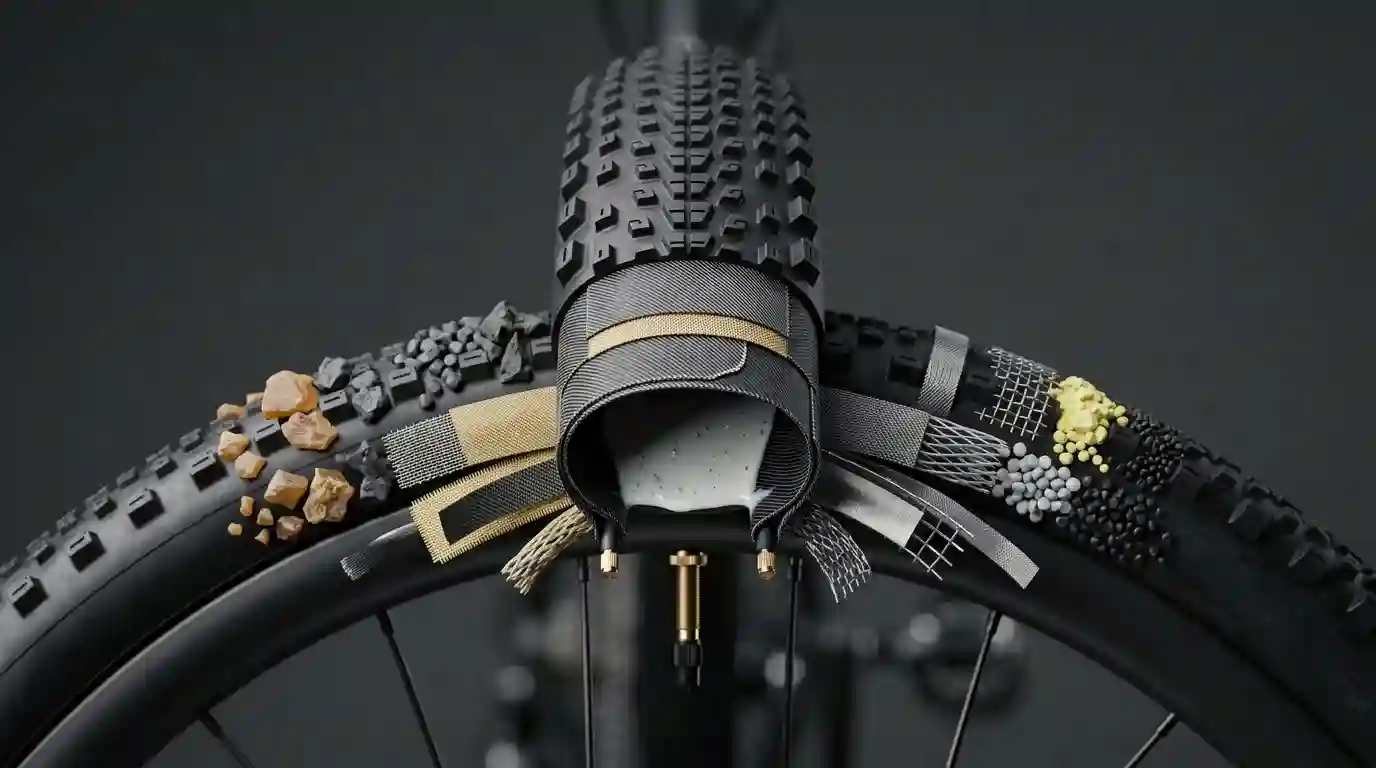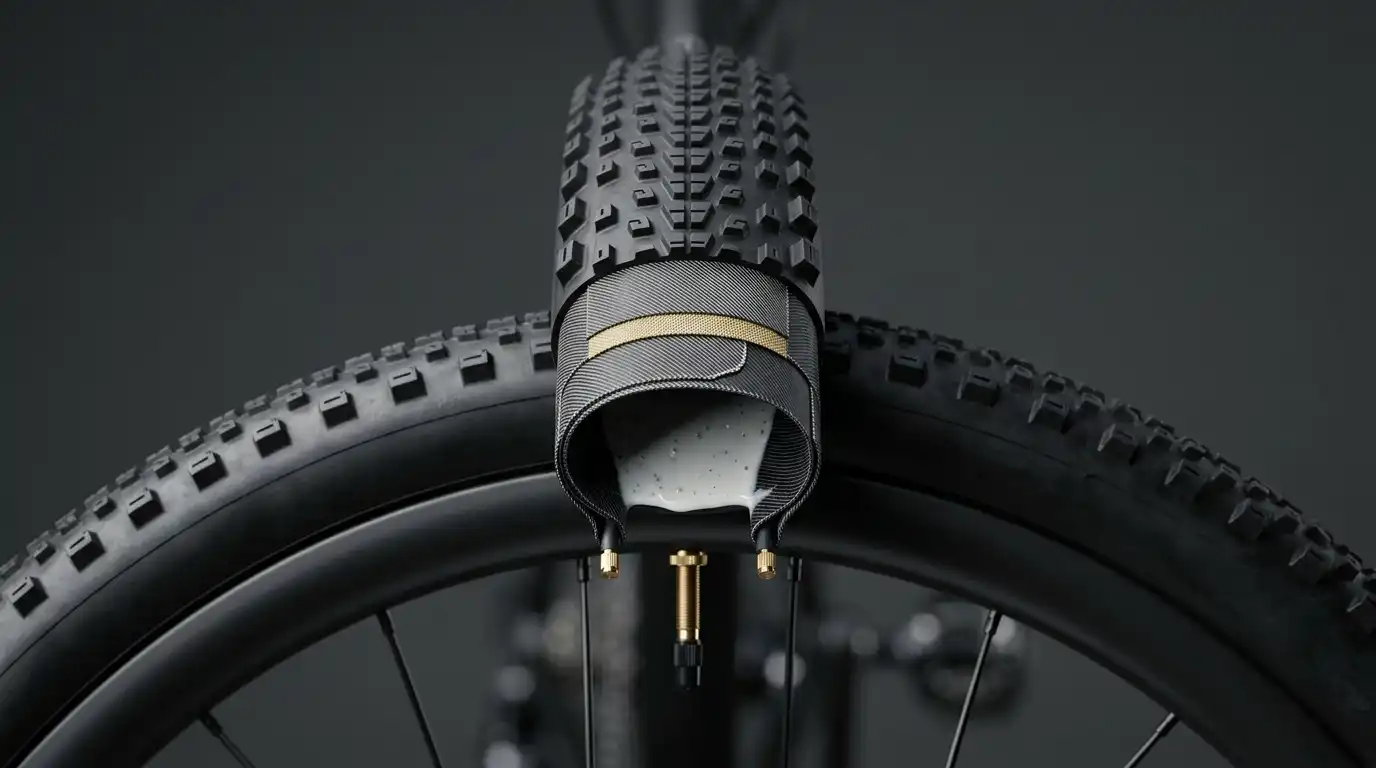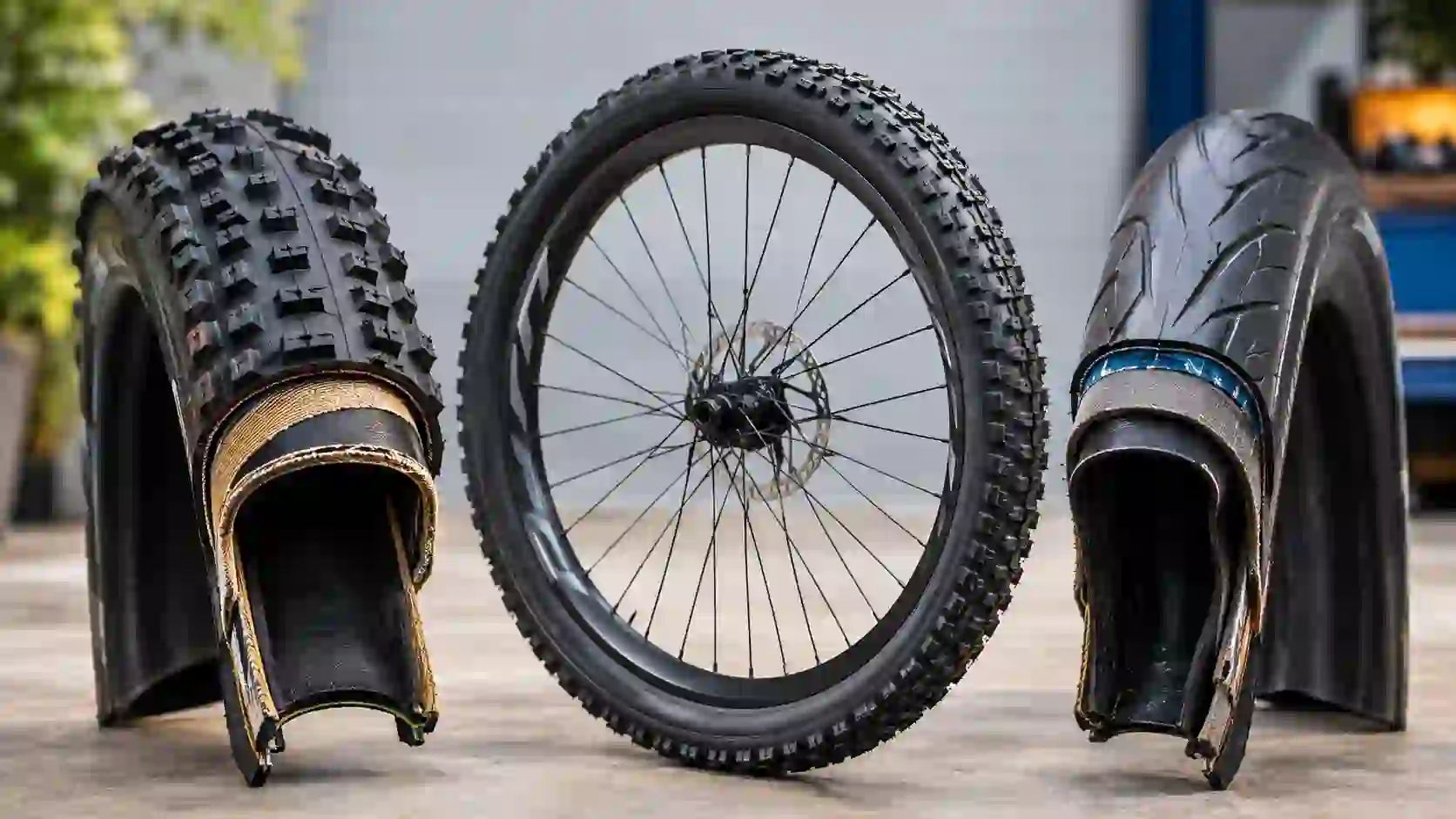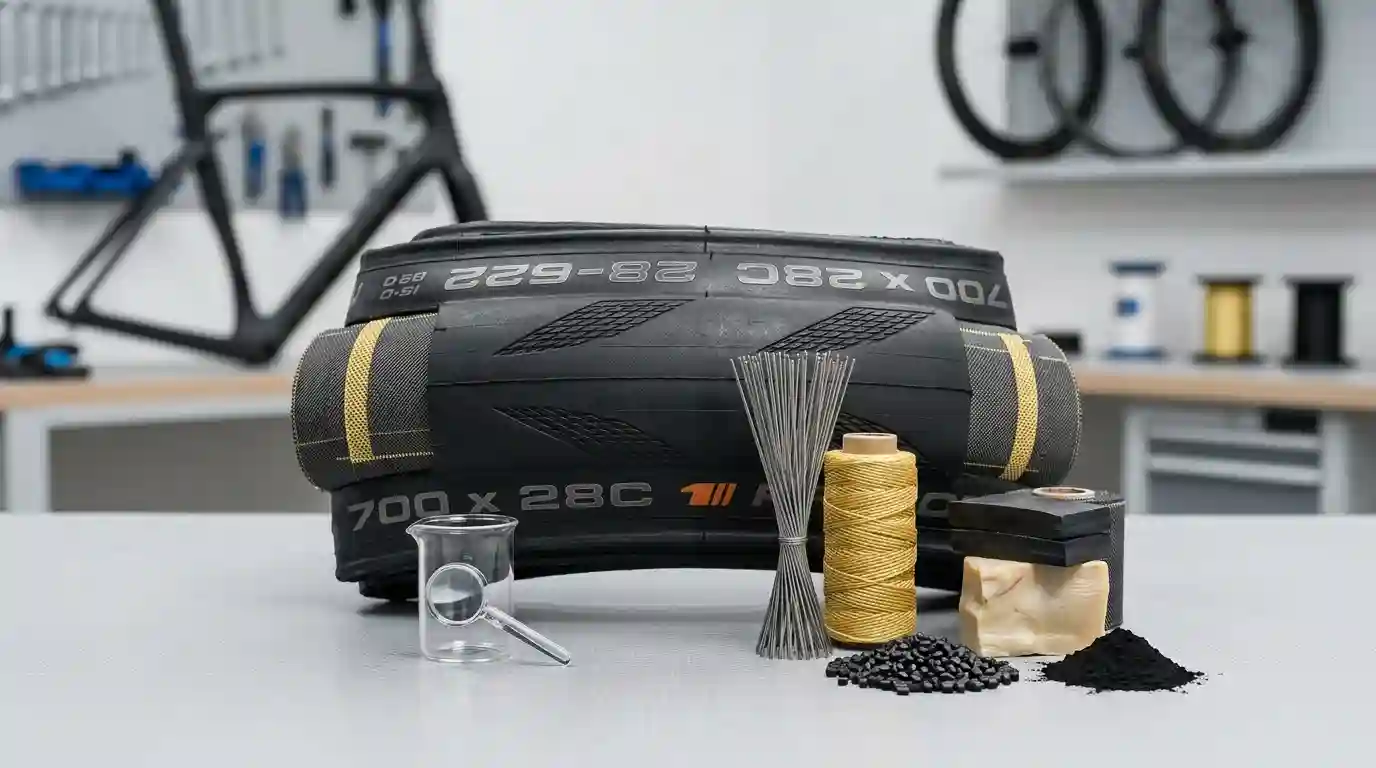
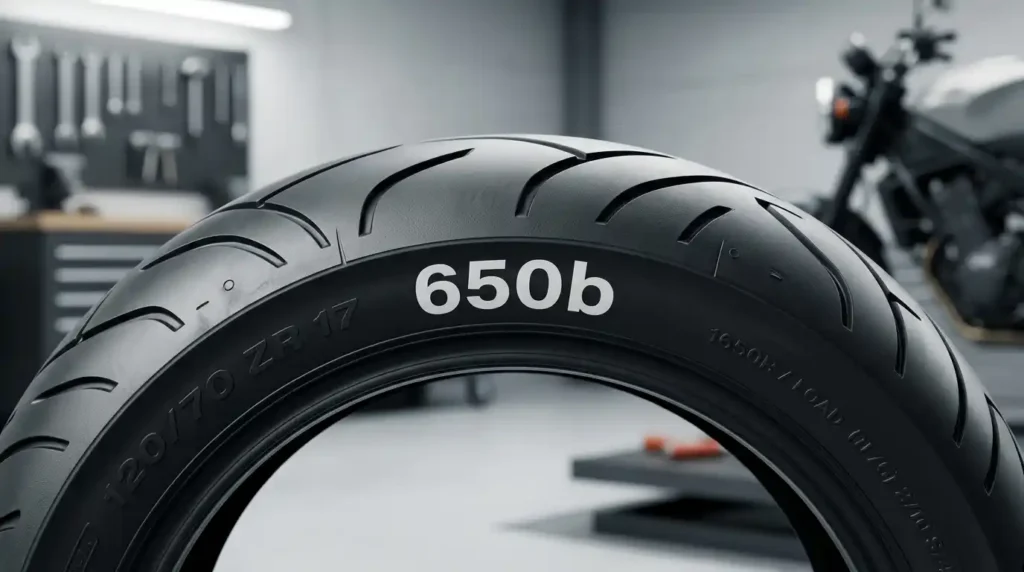
650B is a bicycle wheel and tire size designation defined by a 584 mm bead-seat diameter (BSD). The “650B” label indicates the rim diameter standard, not the width of the tire, which is specified separately (such as 650B x 47). While 650B wheels are commonly called 27.5-inch wheels in mountain biking, these measurement systems are not mathematically identical, as total outer diameter varies depending on tire thickness.
What Does 650B Mean on a Bike Tire?
Choosing the right bicycle tire size can mean the difference between a smooth, confident ride and a frustrating afternoon dealing with pinch flats, poor cornering grip, or tire clearance issues.
Understanding tire markings like 650B, 700C, or 27.5-inch is critical for safety, speed, and comfort across all terrain types.
The designation 650B refers to the rim diameter standard rather than the absolute outer diameter of the mounted tire.
The critical metric for 650B compatibility is its 584 mm bead-seat diameter (BSD), which determines if a tire will physically fit onto a rim.
Cyclists frequently see 650B, 27.5-inch, and ETRTO/ISO 584 used interchangeably on modern product listings.
| Size Terminology | Standard Application | Metric BSD | Primary Usage |
|---|---|---|---|
| 650B | Gravel, Road, Touring | 584 mm | High-volume road & gravel tires |
| 27.5-Inch | Mountain Bike (MTB) | 584 mm | Trail, Enduro, Downhill |
| ETRTO 584 | Universal Technical Standard | 584 mm | Precise wheel/tire matching |
What Does the “650” Mean?
The “650” originates from an old French sizing system that estimated the total outer diameter of a mounted tire in millimeters.
Under this historical framework, a fully inflated tire was meant to measure approximately 650 mm from ground to top tread.
Modern tire widths vary so widely that the “650” figure should never be treated as an exact measurement of current wheel height.
What Does the “B” Mean?
In the traditional French system, letters (A, B, and C) denoted different internal rim diameters used to keep the outer wheel height near 650 mm.
A “650A” rim was narrow and large, while a “650C” rim was smaller to accommodate narrower racing tires.
The “B” designation sits in the middle, corresponding directly to a 584 mm rim seat.
Today, the letter “B” is purely historical and does not indicate tire width or casing volume on modern tires.
What Is the Modern 650B Measurement?
In precise modern terms, every 650B tire relies on an exact 584 mm bead-seat diameter.
The actual outside diameter of a 650B wheel changes significantly based on tire width, casing thickness, and tread depth.
A narrow 650B road tire will have a noticeably smaller outer diameter than a high-volume 650B mountain bike tire.
What Size Is a 650B Bike Tire?
Because 650B specifies the rim standard, a 650B tire can vary widely in physical width and total volume.
Common examples include:
- 650B x 35: Narrow, smooth-tread road or light commuter setups.
- 650B x 42: All-road and fast-rolling gravel configurations.
- 650B x 47: High-volume gravel, adventure, and urban commuter setups (often called “Road Plus”).
- 650B x 2.1: Mountain bike tires measuring approximately 2.1 inches wide.
Wider tires increase the total outer diameter of the wheel assembly and require greater frame and fork clearance.
+-------------------------------------------------------------------+
|                        OUTER TIRE DIAMETER                        |
|<----------------------------------------------------------------->|
|                                                                   |
|         +-----------------------------------------------+         |
|         |           BEAD-SEAT DIAMETER (BSD)            |         |
|         |<--------------------------------------------->|         |
|         |                                               |         |
|   |=====|===============================================|=====|   |
|   | TIRE|                   584 mm RIM                  | TIRE|   |
|   |=====|===============================================|=====|   |
|         |                                               |         |
|         +-----------------------------------------------+         |
|                                                                   |
+-------------------------------------------------------------------+
650B vs 27.5-Inch
650B and 27.5-inch tires use the exact same 584 mm bead-seat diameter and fit on the same rims.
Mountain bike products typically label tires in imperial inches (e.g., 27.5 x 2.3), whereas gravel and road products use metric notation (e.g., 650B x 47).
The overall outer diameter varies based on tire width, tread knobs, and internal rim width.
650B vs 26-Inch
Traditional 26-inch bicycle wheels use a 559 mm bead-seat diameter, making them physically smaller than 650B wheels.
You cannot install a 26-inch tire on a 650B rim or a 650B tire on a 26-inch rim.
Attempting to mix these sizes will lead to installation failure, unseated beads, or serious safety hazards.
How to Read a 650B Tire Size
Bicycle tire sidewalls feature multiple sizing formats designed to indicate rim diameter, tire width, and technical standards.
A typical label like 650B x 47 indicates a 584 mm rim standard with a nominal tire width of 47 mm.
Checking international standard markings is the most reliable way to verify tire and rim compatibility.
What Does 650B x 47 Mean?
- 650B: Indicates a 584 mm bead-seat diameter.
- 47: Indicates a nominal tire width of roughly 47 mm when inflated on a standard testing rim.
Mounted width varies depending on the internal rim width and casing flexibility.
What Does 650B x 2.1 Mean?
- 650B: Standard 584 mm rim diameter.
- 2.1: Indicates a nominal tire width of 2.1 inches (approximately 53 mm).
Imperial width labels are standard across mountain biking categories.
Always check frame clearance tolerances, as aggressive shoulder knobs can extend beyond the nominal width.
650B and ETRTO/ISO Tire Markings
The European Tyre and Rim Technical Organisation (ETRTO) and International Organization for Standardization (ISO) use a standardized two-number format: Width – Diameter.
For example, a 47-584 marking indicates:
- 47: Tire width in millimeters.
- 584: Bead-seat diameter in millimeters.
                        SIDEWALL MARKINGS EXPLAINED

       Metric French Format                  ETRTO / ISO Format

           650B x 47                              47 - 584
           |      |                               |    |
   Standard   Nominal Width               Nominal Width   Exact Bead-Seat
   Rim Class    (in mm)                      (in mm)      Diameter (in mm)
Matching the 584 portion guarantees that the tire bead will seat properly onto a 650B/27.5-inch rim.
Why Do Cyclists Choose 650B Wheels?
650B setups allow cyclists to run high-volume, wide tires without excessively increasing total wheel diameter.
This pairing balances traction, vibration dampening, and agile handling across rough terrain.
Common applications include gravel riding, bikepacking, urban commuting, smaller-frame road setups, and mountain biking.
Benefits of 650B Tires
- Air Volume & Comfort: High-volume casings run at lower PSI, absorbing trail chatter and rough pavement.
- Traction & Stability: A wider contact patch improves cornering grip on loose gravel, mud, and wet roads.
- Tubeless Efficiency: Tubeless setups with sealant provide flat protection and allow lower pressures without pinch-flat risks.
Potential Drawbacks of 650B
- Availability: 700C choices remain more abundant in standard road and racing categories.
- Aerodynamics: High-volume tires present a larger frontal area, increasing aerodynamic drag at high speeds.
- Pavement Speed: Deep tread or ultra-wide casings can increase rolling resistance on smooth tarmac compared to narrow road tires.
650B vs 700C: What’s the Difference?
The fundamental mechanical difference between 650B and 700C is the rim diameter: 650B uses a 584 mm BSD, while 700C uses a 622 mm BSD.
                           BSD COMPARISON

     650B / 27.5"                                   700C / 29er
   (584 mm Rim Dia)                               (622 mm Rim Dia)

     +-----------+                                 +-----------+
    /             \                               /             \
   |    584 mm     |                             |    622 mm     |
    \             /                               \             /
     +-----------+                                 +-----------+
| Feature | 650B (584 mm BSD) | 700C (622 mm BSD) |
|---|---|---|
| Rim Diameter | 584 mm | 622 mm |
| Tire Volume Potential | Higher (Allows thicker, wider tires) | Moderate (Constrained by frame limits) |
| Acceleration | Faster spinning up from lower rotational mass | Slower initial spin, maintains momentum |
| Rollover Ability | Moderate | Superior rollover on large obstacles |
| Best Uses | Rough Gravel, Trail, Bikepacking, Urban | Smooth Road, Fast Gravel, Cross-Country MTB |
650B vs 700C Tire Width
Because a 650B rim is 38 mm smaller in diameter than a 700C rim, frame builders can fit wider tires into the same frame clearance.
For instance, a gravel bike might fit a maximum tire width of 700C x 40 mm or 650B x 47 mm without tire rub against the chainstays.
Which Is Faster: 650B or 700C?
Neither size is universally faster; performance depends on terrain, surface roughness, tire compound, and casing construction.
- On Smooth Pavement: 700C tires generally offer lower aerodynamic drag and higher top-end momentum.
- On Rough Trails & Gravel: High-volume 650B tires reduce rider fatigue and deformation losses by absorbing impacts.
Which Is Better for Gravel?
- Choose 700C for hardpack dirt, smooth fire roads, and fast group gravel rides where efficiency and momentum matter.
- Choose 650B for coarse gravel, singletrack trails, mud, or loaded bikepacking where comfort and cornering traction are priorities.
How to Choose the Right 650B Tire Width
Selecting tire width requires balancing rider weight, terrain severity, rim width, and available frame clearance.
                            TIRE WIDTH APPLICATION

   Narrow (35mm-40mm)          Medium (42mm-47mm)          Wide (2.1"+ / 53mm+)
  +------------------+        +------------------+        +---------------------+
  | Smooth Pavement  |        | Coarse Gravel    |        | Singletrack Trails  |
  | Light Commuting  |        | Mixed Surface    |        | Mud & Loose Rocks   |
  | Fast Gravel      |        | Bikepacking      |        | Technical MTB       |
  +------------------+        +------------------+        +---------------------+
650B Tires for Road and Commuting
For paved roads and urban commuting, select widths between 35 mm and 42 mm with slick or semi-slick tread.
Look for integrated puncture belts (such as aramid or nylon sub-tread layers) to prevent flats from glass and road debris.
650B Tires for Gravel
Gravel setups excel with widths between 42 mm and 50 mm (650B x 47 is a popular standard).
Opt for flexible casings with 120 TPI (threads per inch) to maximize supple power transfer and comfort.
Pairing wide gravel tires with tubeless sealant protects against thorn punctures and pinch flats.
650B Tires for Mountain Biking
Trail and mountain bikes typically run 650B (27.5-inch) widths from 2.2 to 2.6 inches.
Prioritize aggressive side knobs, durable casing reinforcements (such as EXO or Sidewall Shielding), and dual/triple rubber compounds.
Target rubber durometer ratings around 60a for center tread durability and 42a–50a for soft shoulder knob grip.
How to Check if a 650B Tire Fits Your Bike
Never assume a tire labeled 650B will fit your bike simply because the rim diameter matches.
Step 1: Check the Rim Diameter
Confirm your wheel uses a 584 mm bead-seat diameter by checking ETRTO stampings on the rim strip or sidewall.
Step 2: Check Rim Width
Compare the tire’s width against your wheel’s internal rim width.
- A 21 mm internal rim pairs well with 35 mm–47 mm tires.
- Wide 2.1″+ tires perform best on rims with internal widths of 25 mm to 30 mm.
Using an overly wide tire on a narrow rim creates a “lightbulb” profile that squashes during hard cornering.
                          RIM & TIRE PROFILES

      Ideal Match                          Poor Match ("Lightbulb")
  (Wide Rim + Wide Tire)                  (Narrow Rim + Wide Tire)

       /=========\                             /=========\
      (           )                           (           )
       \         /                             \         /
        |       |                               \       /
        +-------+                                +-----+
        | RIM   |                                | RIM |
        +-------+                                +-----+
   Stable sidewall support                 Unstable cornering squirm
Step 3: Check Frame and Fork Clearance
Measure the physical space inside your frame chainstays, seatstays, fork crown, and brake calipers.
Maintain at least 4 mm to 6 mm of clearance between the tire and frame on all sides to allow for wheel flex and mud accumulation.
What Tire Pressure Should You Use With 650B Tires?
Tire pressure (PSI) dictates rolling resistance, cornering grip, and rim protection.
Because 650B tires hold higher air volume than narrow road tires, they require lower pressure to perform correctly.
Factors That Affect 650B Tire Pressure
- Total System Weight: Combined weight of rider, bike, and cargo. Higher loads require higher PSI.
- Tire Volume: Larger air volume requires lower static pressure to support the same load.
- Terrain: Lower pressure improves traction on loose or rough surfaces; higher pressure protects rims on hardpack.
- Tubeless vs. Tubes: Tubeless configurations can run 3–5 PSI lower than tubed setups without pinch-flat risks.
Baseline Tire Pressure Chart (Total System Weight: 180 lbs / 82 kg)
| Tire Size | Front Pressure (Tubeless) | Rear Pressure (Tubeless) | Inner Tube Adjustment |
|---|---|---|---|
| 650B x 38 mm | 36 PSI | 39 PSI | Add +4 PSI |
| 650B x 47 mm | 28 PSI | 31 PSI | Add +4 PSI |
| 650B x 2.1 in (53 mm) | 22 PSI | 25 PSI | Add +3 PSI |
| 650B x 2.4 in (61 mm) | 18 PSI | 21 PSI | Add +3 PSI |
How to Calculate Your Starting PSI
Use this basic formula to calculate starting rear tire pressure:
Base Rear PSI=(4Total System Weight (lbs))×(Tire Width (mm)40)
To calculate front pressure, subtract 10%:
Front PSI=Rear PSI×0.90
Example: For a 200 lb system weight on 650B x 47 mm tubeless tires:
- Base Rear PSI = (200/4)×(40/47)=50×0.85=42.5 PSI
- Adjust for tubeless efficiency (-20% factor for modern wide rims): ≈31 PSI Rear
- Front PSI = 31×0.90=28 PSI Front
Signs Your 650B Pressure Is Incorrect
- PSI Too High: Harsh ride quality, excessive bouncing over small rocks, reduced cornering grip, skittering in loose turns.
- PSI Too Low: Tire squirm during hard cornering, rim bottoming out over square-edge bumps, tubeless burping (air escaping past the bead).
Are 650B Tires Good for Tubeless Setups?
High-volume 650B tires benefit significantly from tubeless conversion.
Eliminating inner tubes reduces weight, lowers rolling resistance, and allows lower operating pressures without pinch flats.
                          TUBELESS vs TUBED

         Tubed Setup                           Tubeless Setup
   +---------------------+               +---------------------+
   | Outer Tire Casing   |               | Outer Tire Casing   |
   |   +-------------+   |               |   ~~~~~~~~~~~~~~~~~ |
   |   | Inner Tube  |   |               |   | Liquid Sealant| |
   |   +-------------+   |               |   ~~~~~~~~~~~~~~~~~ |
   | Rim               |               | Rim + Airtight Tape |
   +---------------------+               +---------------------+
   Pinch flat risk on impacts            Self-healing puncture protection
How to Set Up a 650B Tubeless Tire
- Prepare the Rim: Clean the internal rim bed with isopropyl alcohol and install airtight tubeless rim tape (2 mm wider than the internal rim width).
- Install Tubeless Valve: Insert the tubeless valve through the valve hole and hand-tighten the locknut firmly.
- Mount the Tire: Push one tire bead into the center channel of the rim, then install the second bead, leaving a 6-inch opening.
- Add Sealant: Inject liquid tubeless sealant directly into the opening (or through the valve stem with a core remover tool).
- Seat the Bead: Inflate rapidly using a floor pump, tubeless chamber, or air compressor until the tire beads snap into place.
- Distribute Sealant: Rotate and shake the wheel horizontally to coat the interior walls and check for air leaks.
How Much Tubeless Sealant Do You Need?
| Tire Volume / Size | Recommended Liquid Sealant |
|---|---|
| 650B x 38–42 mm | 2.0 fl oz (60 ml) |
| 650B x 47–50 mm | 3.0 fl oz (90 ml) |
| 650B x 2.1–2.4 in | 4.0 fl oz (120 ml) |
Reapply sealant every 3 to 6 months, especially in arid or warm climates where sealant dries faster.
Do 650B Tires Have Higher or Lower Rolling Resistance?
Wheel size alone does not dictate rolling resistance.
Rolling resistance depends on casing flexibility (TPI), rubber compound, tread pattern, inflation pressure, and surface roughness.
                     ROLLING RESISTANCE FACTORS

   Casing Flex (TPI) ------+
   Rubber Compound --------+---> Real-World Rolling Resistance
   Tread Profile ----------+
   Inflation Pressure -----+
How Casing TPI Affects Performance
Casing construction is measured in TPI (Threads Per Inch):
- 60 TPI Casing: Thicker nylon threads. Highly resistant to sidewall cuts, stiff sidewalls, higher rolling resistance.
- 120+ TPI Casing: Fine, supple threads. Conforms easily to ground surface variations, lowers rolling resistance, improves ride comfort.
How Tread Pattern Changes Rolling Resistance
- Slick / File Tread: Minimal rolling resistance on asphalt; optimal for city commuting and paved roads.
- Semi-Slick / Centered Ridge: Fast-rolling center line with aggressive side knobs for cornering traction on gravel.
- Knobby Tread: Raised tread blocks dig into loose dirt or mud, increasing friction and rolling resistance on smooth surfaces.
Are 650B Tires Good for E-Bikes?
650B tires are well-suited for electric bikes (e-bikes) due to their high air volume and stable contact patch.
E-bikes generate higher motor torque and carry heavier system weights, placing extra demands on tires.
650B E-Bike Tire Considerations
- Load Rating & E-Bike Certification: Ensure tires are certified for e-bike speeds (e.g., ECE-R75 approval for speeds up to 31 mph / 50 km/h).
- Reinforced Casings: Choose tires with dual-ply or heavy-duty sub-tread belts to prevent rim strikes from extra bike weight.
- Higher PSI Baseline: Maintain slightly higher pressures (+3 to +5 PSI) than standard non-electric bikes to prevent sidewall collapse.
Common 650B Tire Compatibility Mistakes
Avoid these critical errors when selecting 650B tires:
1. Assuming 650B Defines Width
650B specifies only rim diameter. Always verify both length and width values (e.g., 650B x 47 or 47-584) before purchasing.
2. Mixing 650B with 26-Inch Tires
650B uses a 584 mm BSD, while traditional 26-inch uses a 559 mm BSD. They are not interchangeable.
3. Ignoring Rim Width Limits
Installing a wide 650B tire on an ultra-narrow rim degrades cornering control and causes squirm. Always check the manufacturer’s internal rim width recommendations.
How to Buy the Right 650B Tire
Identify your primary riding surface to select the right tread pattern, casing weight, and puncture belt construction:
                          TIRE SELECTION FLOWCHART

                  What is your primary riding surface?
                                   |
         +-------------------------+-------------------------+
         |                         |                         |
      Pavement                  Gravel/Dirt             Trails/Mud
         |                         |                         |
         v                         v                         v
   Slick/File Tread          Semi-Slick Knobs         Aggressive Knobs
   60-120 TPI                120 TPI Supple           Reinforced Sidewalls
   Puncture Belt Layer       Tubeless-Ready           Soft Rubber Compound
- For Commuters: Prioritize hard-wearing rubber compounds (60a durometer), thick sub-tread puncture protection, and reflective sidewall strips.
- For Gravel Riders: Look for a 120 TPI tubeless casing, low center tread, and flexible sidewalls for lower rolling resistance.
- For Trail Riders: Choose aggressive shoulder knobs, reinforced sidewall protection (e.g., EXO, Apex, or SnakeSkin), and soft rubber compounds for damp conditions.
650B Tire Maintenance and Wear Checks
Regular maintenance prevents flats and extends tire life.
When Should You Replace a 650B Tire?
Replace your tire immediately if you notice:
- Worn Center Tread: The center profile has flattened, exposing sub-tread rubber or internal casing cords.
- Sidewall Threads Exposed: Deep abrasions or cuts extending through outer sidewall rubber layers.
- Frequent Punctures: Punctures occurring repeatedly in short intervals indicate thread casing failure.
- Casing Bulges: Internal thread tearing that causes visible bulges under pressure.
How Often Should You Check Tire Pressure?
- Tubeless Setups: Check before every ride. Tubeless systems slowly weep micro-air volumes through casing pores.
- Inner Tube Setups: Check once or twice weekly.
- Sealant Checks: Inspect internal liquid sealant levels every 3 months by removing the valve core and using a dipstick tool.
Expert Testing: How to Evaluate a 650B Tire
Professional mechanics and tire testers evaluate 650B performance using standardized parameters:
- Mounted Width Accuracy: Measuring actual width on a standard rim width (e.g., 21 mm internal) using digital calipers at 30 PSI.
- Casing Suppleness: Evaluating sidewall deflection under load to gauge power efficiency and vibration dampening.
- Cornering Edge Transition: Testing transition stability as the tire leans from center tread onto shoulder knobs.
Controlling tire pressure is essential during testing; a variation of just 2 PSI significantly alters rolling resistance, grip, and comfort metrics.
People Also Ask About 650B Bike Tires
Is 650B the Same as 27.5 Inches?
Yes, 650B and 27.5-inch tires share the exact same 584 mm bead-seat diameter. “27.5” is predominantly used in mountain biking, while “650B” is common in gravel, road, and commuting categories.
Is 650B the Same as 26 Inches?
No. Traditional 26-inch rims have a 559 mm bead-seat diameter, which is smaller than the 584 mm BSD of a 650B rim. The two sizes are not cross-compatible.
Can I Put a 650B Tire on a 700C Rim?
No. 700C rims feature a 622 mm bead-seat diameter, whereas 650B tires require a 584 mm rim. A 650B tire will not fit onto a 700C wheel.
Is 650B Better Than 700C?
Neither is universally superior. 650B allows wider, higher-volume tires for comfort and rough-terrain traction, while 700C offers better momentum and aerodynamic efficiency on smoother surfaces.
What Is the Best 650B Tire Pressure?
There is no single correct PSI. Ideal pressure depends on rider weight, tire volume, rim width, and terrain. A typical starting point for a 180 lb rider on 650B x 47 mm tubeless tires is 28 PSI front / 31 PSI rear.
Can 650B Tires Be Tubeless?
Yes, provided both the 650B tire and rim are marked as tubeless-compatible. You will also need tubeless rim tape, airtight valves, and liquid sealant.
Frequently Asked Questions About 650B Tires
What does 650B mean on a bike tire?
650B designates a wheel and tire standard built around a 584 mm bead-seat diameter (BSD). The tire width is listed separately (e.g., 650B x 47).
What is the difference between 650B and 700C?
650B uses a 584 mm BSD, while 700C uses a 622 mm BSD. 650B wheels accept wider, higher-volume tires within standard frame clearances.
Can I use a different-width 650B tire on my bike?
Yes, provided your rim’s internal width supports the new tire profile and your frame and fork offer at least 4–6 mm of tire clearance.
What PSI should a 650B tire have?
Target PSI depends on system weight, tire volume, and surface conditions. High-volume 650B gravel tires generally run between 25 and 35 PSI.
Are 650B tires good for gravel bikes?
Yes, 650B setups are popular on gravel bikes because high-volume tires absorb trail vibration, improve cornering traction, and help prevent pinch flats over rough terrain.
Are 650B tires good for commuting?
Yes. High-volume 650B tires provide extra comfort over potholes, train tracks, and unpaved roads while offering good puncture resistance.
How do I know if a 650B tire will fit my rim?
Confirm that your rim has a 584 mm bead-seat diameter (labeled as 584 or 27.5) and that the tire’s width falls within the rim’s recommended width range.
When should I replace a 650B tire?
Replace your tire when the center tread flattens out, internal casing threads become visible, sidewalls show deep cuts, or punctures occur frequently.
650B Tire Size: Key Takeaways
- 584 mm Bead-Seat Diameter: 650B refers to a 584 mm BSD standard, shared directly with 27.5-inch wheels.
- Width Is Listed Separately: The 650B designation indicates rim standard, not tire width. Width is shown separately in millimeters or inches (e.g., 650B x 47 or 27.5 x 2.1).
- Frame Clearance & PSI Control: To optimize performance, match internal rim width to tire size, maintain proper frame clearance, and calculate PSI based on system weight.
Find Your Ideal Tire Pressure and Fit
Matching tire pressure to your weight, rim width, and terrain ensures maximum traction, comfort, and flat protection. Stop guessing your PSI or relying on generic sidewall maximums.
Use the Free Bike Tire Pressure Calculator / Tire Finder Tool at TheBikeTires.com to compute optimized starting pressures and find compatible 650B tire options tailored to your setup.

Mohidul Islam is a leading cycling technology specialist and bike tire consultant with over 15 years of hands-on experience in the bicycle industry. He holds a Bachelor of Science in Mechanical Engineering from Penn State University, where he focused heavily on material science, tread mechanics, and rubber compound performance. Over the past decade and a half, Alex has conducted extensive field testing, tubeless setup evaluations, and tire pressure modeling for road, mountain, and e-bikes. His practical insights and data-driven approach help cyclists of all levels optimize grip, speed, and durability on every ride.