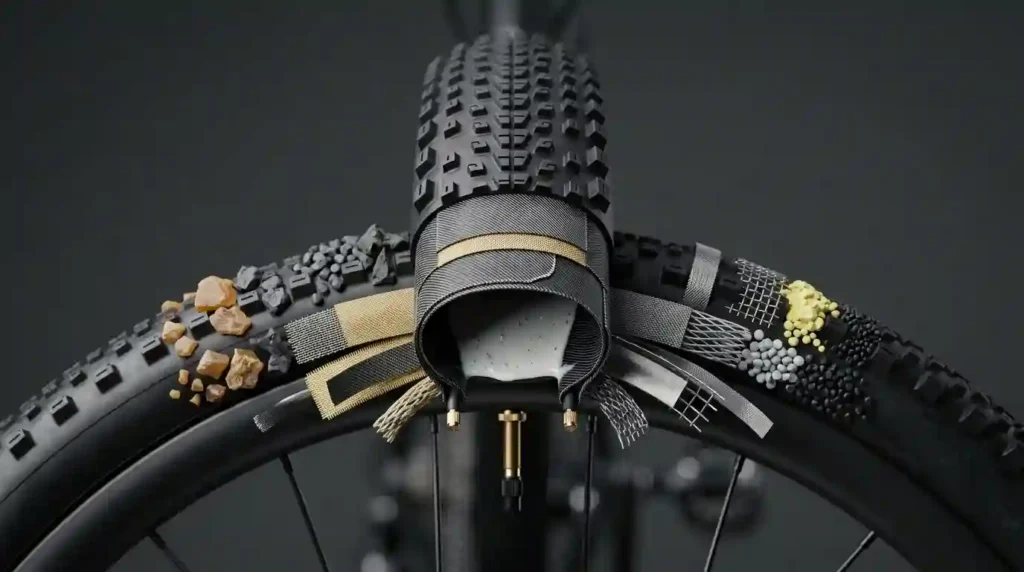
Riding down the damp streets of Seattle last fall, a sharp clink under my wheels made me brace for the worst. I pulled over, expecting a flat, but my tread was fine. That tiny moment made me think about how much we ask from these thin loops of rubber. A bike tyre looks simple from the outside, but it is really a layered piece of engineering. Rubber gives it grip, fabric gives it structure, and the bead helps it stay locked onto the rim. Some tyres add Kevlar or other materials to reduce weight or improve puncture protection. What are bike tyres made of when you peel back those layers? Let us break down what keeps you rolling safely.
What Are Bike Tyres Made Of?
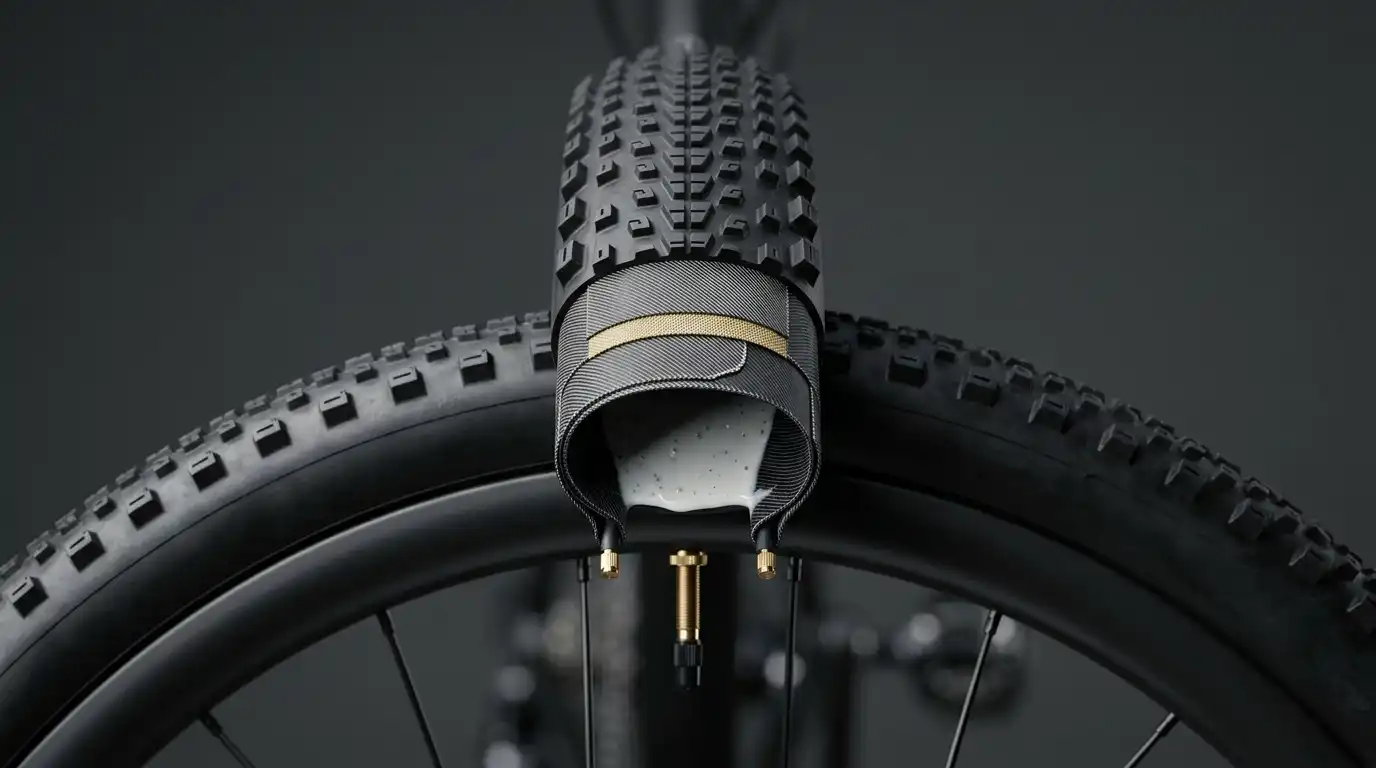
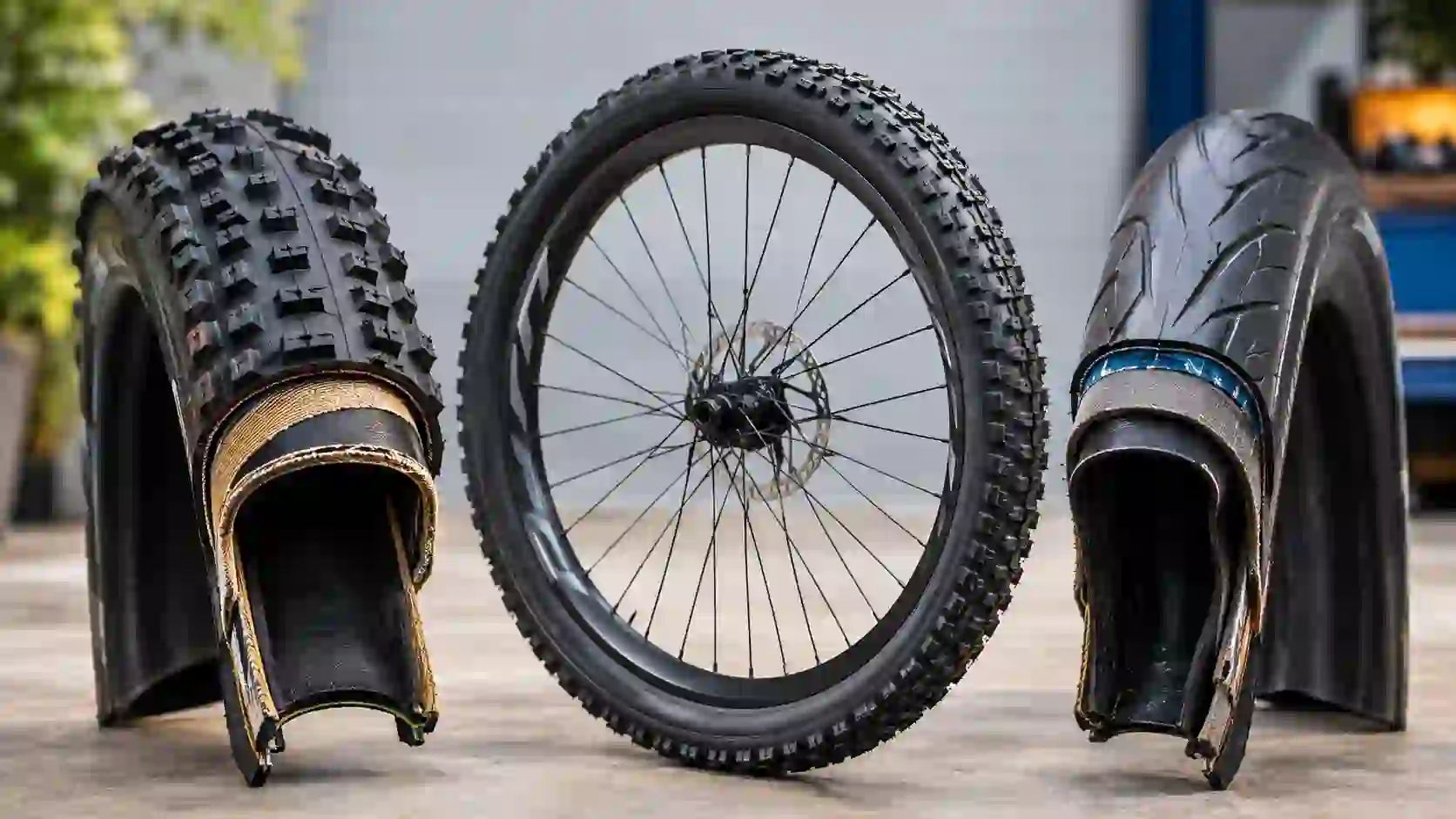
Start with the simple answer before getting technical. Readers searching this question usually want to know what is actually inside the black rubber they see. When you hold a tyre, it feels like one solid piece of flexible rubber. In truth, it is a complex sandwich of distinct materials bonded together under heat and pressure.
Every layer in that sandwich has a single job. The outer layer grips the road and resists sharp cuts. The inner fabric layer holds the air pressure and shapes the tyre. The edges keep the whole assembly clamped onto your wheel rim. Without this precise blend of materials, a tyre would either be too soft to hold its shape or too hard to grip a wet turn.
The main materials in a bicycle tyre
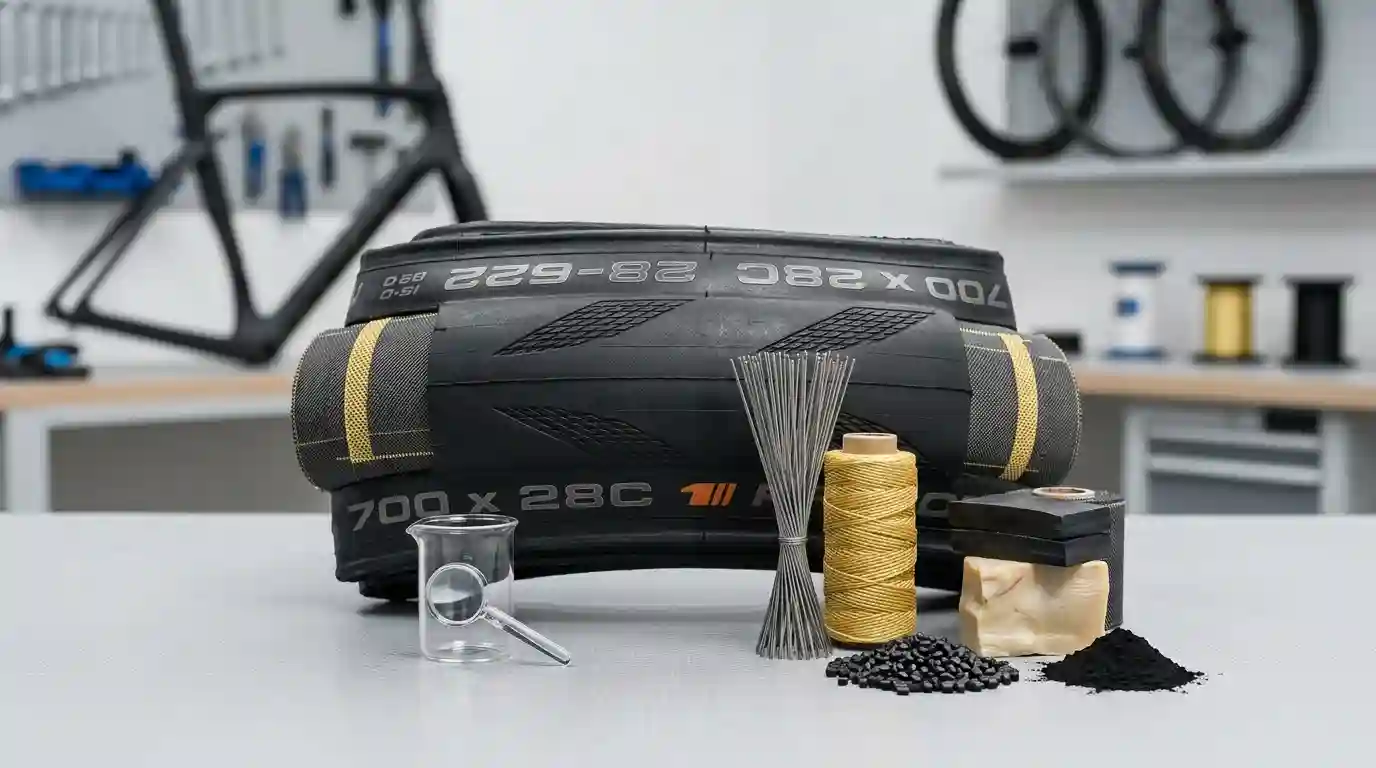
A modern tyre relies on a mix of natural and man-made elements. Each item serves a specific purpose in the overall design.
- Natural rubber: Gives flexibility, tear resistance, and raw grip.
- Synthetic rubber: Adds durability, chemical resistance, and wear life.
- Textile casing: Forms the strong backbone using woven threads.
- Steel wire: Creates a stiff edge for budget or heavy-duty tyres.
- Aramid or Kevlar: Offers high strength at low weight for folding beads or puncture belts.
- Carbon black: Toughens the rubber and protects it from sun damage.
- Silica: Boosts wet grip and lowers rolling resistance.
- Oils and resins: Help mix ingredients and keep the compound pliable.
- Chemical additives: Protect against age, heat, and ozone cracking.
- Pigments: Add color, though most tyres remain classic black.
A bike tyre has several parts
The material used in a tyre changes depending on the part you look at.
- Tread: The outer rubber layer that contacts the ground.
- Sidewall: The side rubber that protects the casing fabric.
- Casing: The woven fabric core that holds the tyre structure together.
- Bead: The hoop on each edge that hooks into the wheel rim.
- Inner liner: A thin rubber coating inside tubeless models to trap air.
- Puncture-protection layer: A tough belt placed directly under the tread.
Why tyres use several materials
Designing a tyre is a balancing act. Engineers must weigh grip, speed, strength, comfort, puncture resistance, and weight. Improving one characteristic can sometimes affect another.
For instance, adding a thick shield stops glass, but it makes the ride stiff and heavy. Soft rubber sticks to wet roads, but it wears out fast. Using multiple materials allows makers to fine-tune performance for specific riding conditions.
What Is the Rubber in Bike Tyres Made Of?
The word “rubber” can make the construction sound much simpler than it is. Bicycle tyre compounds are carefully formulated to balance grip, rolling resistance, wear and weather performance. Raw rubber on its own is too soft in summer and too brittle in winter. It must be mixed with specific agents to become useful.
Natural rubber
Natural rubber comes from latex-producing plants, mostly the Hevea brasiliensis tree. Workers harvest liquid latex by tapping the bark. Once processed, it has useful elasticity that synthetic options struggle to match completely. It provides good resilience, which helps a tyre bounce back after hitting bumps. You will find it in high-end road compounds and supple casing coatings.
Synthetic rubber
Synthetic rubber is made through chemical processes using petroleum byproducts. Common types include styrene-butadiene rubber (SBR) and polybutadiene. Different synthetic rubbers have different properties. Polymer scientists can alter their chemical chains to resist oil, withstand high heat, or last longer on abrasive asphalt.
Why manufacturers mix different rubber types
Blending natural and synthetic stocks gives designers the best of both worlds. The mix is adjusted to improve several performance traits:
- Grip: Soft natural rubber sticks to hard surfaces.
- Rolling resistance: Synthetic blends deform with less energy loss.
- Wear: Harder synthetic polymers resist grinding down.
- Heat: Special agents stop rubber from softening on hot days.
- Wet-weather performance: Custom polymers maintain flexibility in cold rain.
- Durability: Synthetic additives fight off weather rot.
One tyre can use more than one rubber compound
Many modern designs use dual-compound or multi-compound tread. A firm, fast-rolling compound runs down the center for speed and long wear. A softer, stickier rubber coats the shoulders. This gives you speed on the flats and trust when leaning into sharp corners.
What Is the Tyre Tread Made Of?
The tread is the part that touches the road. It endures all the friction, rocks, and debris you ride over every day.
Rubber compounds in the tread
Tread compounds mix rubber polymers with fillers like carbon black or silica. Designers tune these formulas to meet precise goals:
- Grip: Softer compounds mold into small road gaps.
- Low rolling resistance: Stiffer mixes flex less as the wheel turns.
- Longevity: Dense compounds resist sharp cuts and tread wear.
- Wet roads: Additives keep rubber flexible on slick, cold streets.
Why road bike tyres can have smooth tread
It is a common misconception that smooth tyres must be slippery. On clean pavement, a smooth slick tyre gives you the most grip. Bicycle tyres are too narrow to hydroplane on water like wide car tyres do. Smooth rubber puts more material in direct contact with the road, maximizing friction.
Why mountain bike tyres have knobs
Off-road tyres need tread patterns with deep knobs for distinct reasons:
- Loose dirt: Knobs dig down to find firm ground.
- Mud: Tall blocks push through thick muck and clear out quickly.
- Gravel: Spaces between knobs let loose stones clear out.
- Rocks: Large blocks hook onto uneven rock edges.
- Cornering traction: Side knobs bite in when you tilt the bike.
Tread is not the only thing creating grip
Tread patterns help off-road, but other elements create actual grip on hard surfaces. The rubber compound itself plays a massive role by clinging to micro-bumps in the pavement. Correct tyre pressure lets the rubber shape itself around road texture. The contact patch size, road surface grit, and ambient temperature all dictate how well your wheel sticks to the line you pick.
What Is the Casing Inside a Bike Tyre Made Of?
The casing is one of the most important hidden parts of a tyre. It gives the product its shape, holds air pressure, and supports your total weight.
What is a tyre casing?
Think of the casing as the skeleton of the tyre. It is a fabric structure beneath the rubber layer. The threads wrap from one bead edge, cross under the tread, and go to the other bead edge. This cloth frame supports the tyre structure. It helps determine ride feel and greatly affects overall weight and rolling resistance.
Common casing materials
Makers weave the casing using strong textile fibres.
- Nylon: The most common material. It is tough, cheap, and handles moisture well.
- Polyester: Very stable and strong, often used in budget or heavy-duty tyres.
- Cotton: Extremely supple. Used in high-end race tyres for a smooth ride.
- Other textile fibres: Silk or synthetic aramid blends appear in niche racing products.
What does TPI mean?
TPI stands for threads per inch. It measures how many fabric threads pass through one inch of casing material.
- Higher thread counts (120+ TPI): Use finer, thinner threads. This makes the casing thin and flexible. The result is lower rolling resistance, lighter weight, and a smooth ride feel.
- Lower thread counts (30 to 60 TPI): Use thicker, heavier threads. These need more rubber to coat them. The tyre becomes stiffer and heavier, but it gains natural puncture protection and durability.
Low TPI (30-60)   : [Thick Threads] + [Thick Rubber]  --> Tough, Stiff, Heavy
High TPI (120-320): [Thin Threads]  + [Thin Rubber]   --> Fast, Flexible, Light
Does higher TPI always mean a better tyre?
No, higher TPI is not always better. While high TPI tyres feel amazing on smooth roads, the thin threads are easier to cut. Lower TPI casings handle rough trails and city glass better.
Casing construction differs across brands. Thick rubber coatings can make a high TPI tyre feel stiff anyway. Puncture layers also alter casing flex. Furthermore, some brands measure TPI by adding up three overlap layers (saying 180 TPI for three 60 TPI plies), while others measure a single layer.
What Is a Bike Tyre Bead Made Of?
The bead is the hoop on the inner edge of each sidewall. Its job is to catch under the rim lip and stay securely locked under pressure.
Wire bead tyres
Wire bead tyres use a thick ring of braided steel wire inside the edge. The steel wire keeps the bead stiff and fixed in shape. You will find wire beads on budget models, heavy commuter tyres, and downhill mountain bike options. They are very strong and affordable, but they are heavy and impossible to fold up for easy storage.
Folding bead tyres
Folding bead tyres swap out heavy steel for strong synthetic fibers. They often use aramid, commonly known by the brand name Kevlar. These strands are flexible and far lighter than metal. A folding tyre slips into a seat bag easily and sheds rotational weight from your wheels, making your bike accelerate faster.
What does Kevlar do in a bike tyre?
Aramid fibres perform two key jobs in cycling gear:
- Beads: They hold the tyre onto the rim without stretching under pressure.
- Puncture belts: Woven aramid sheets under the tread catch thorns and glass before they reach the inner tube.
Kevlar does not mean the entire tyre is Kevlar
Seeing a “Kevlar” label on a tyre box can be misleading. It does not mean the whole item is bulletproof cloth. The main body remains a mix of rubber compounds, casing fabric, and additives. Kevlar is simply used as a targeted reinforcement strand in the bead or under the tread path.
What Is the Sidewall Made Of?
The sidewall is the smooth section between the tread edge and the bead rim. It does far more than just look good and hold brand logos.
Rubber sidewall
A thin coating of rubber covers the casing threads on the side. This protects the delicate fabric from sun, water, and light scuffs. It allows controlled flex as the wheel rolls over bump profiles.
Lightweight sidewalls
Performance road tyres run razor-thin rubber on the sides. Leaving the casing flexible cuts energy loss as the tyre bulges under load. However, these thin walls tear easily if you scrape against sharp curb edges or jagged trail rocks.
Reinforced sidewalls
City, touring, and gravel designs add extra protection to the sides. They line the casing with woven nylon grids or thick rubber buffers to stop sharp gravel from slicing the fabric.
Why sidewall cuts are serious
Sidewall damage threatens your safety because the sidewall holds the tyre structure together. Check your wheels regularly for these warning signs:
- Deep cuts: Slices that go clear through the outer rubber layer.
- Exposed casing: White or tan fabric threads showing through the side.
- Bulges: Soft lumps indicating broken inner casing cords.
- Cracks: Spiderweb lines caused by sun damage or low pressure.
- Fraying: Loose threads peeling away near the bead edge.
What Is the Inner Part of a Tubed Bike Tyre?
Understanding how a wheel works requires separating the outer tyre from what holds the air inside.
The tyre and inner tube are different
The outer tyre and inner tube carry out two different jobs:
- Outer tyre: Takes the wear, grips the road, and protects against flats.
- Inner tube: Sits inside as a flexible bladder to hold air pressure.
What are bike inner tubes made of?
Tubes use airtight elastic compounds to retain pressure.
- Butyl rubber: The dark, standard choice for standard tubes.
- Latex rubber: Light, pale natural rubber used for high performance.
- Thermoplastic materials: Modern plastic polymers like TPU that save space and weight.
Butyl inner tubes
Butyl is a synthetic rubber known for holding air for weeks without pumping. It is cheap, easy to patch, and very reliable. It is slightly heavy and stiff, but it remains the top choice for daily commuters.
Latex inner tubes
Latex tubes use thin natural rubber. They are lighter and stretch easily, which lowers rolling resistance and improves ride comfort. Their downside is porosity; air leaks through the material quickly, so you must pump your tyres before every single ride.
Do tubeless tyres have inner tubes?
No, tubeless systems remove the inner tube completely. Air is trapped directly inside the tyre casing. To make this work, you need a tubeless-ready tyre with an airtight liner, an airtight rim tape layer, a valve stem screwed into the wheel, and liquid sealant.
What Are Tubeless Bike Tyres Made Of?
Tubeless construction changes the design because there is no conventional inner tube to hold air.
Tubeless-ready tyre construction
A tubeless tyre needs special construction features to work safely:
- Airtight casing: An inner rubber coat stops air leaking through fabric pores.
- Precise bead: A molded rubber bead shape locks tightly against tubeless rims.
- Rim interface: Stiff bead cores stop the tyre blowing off under pressure.
- Sealant compatibility: Rubber compounds must resist breakdown from liquid sealants.
What is tubeless sealant made of?
Sealant is a liquid poured inside the tyre cavity. Standard formulas blend liquid latex with a carrier liquid like water or glycol. Many add tiny solid particles—such as micro-fibres, liquid crystals, or rubber dust—to clog holes fast. Formulas vary across brands, so avoid mixing different types together.
Why tubeless tyres use sealant
Liquid sealant acts as a self-healing system inside your wheel.
- Small punctures: Sealant rushes into tiny thorn holes and hardens instantly.
- Air retention: It seals micro-gaps along the rim bead edge.
- Low-pressure riding: Lets mountain bikers run soft tyres for grip without pinch flats.
- Gravel and mountain biking: Protects against constant sharp rocks and thorns.
Tubeless is not automatically puncture-proof
Tubeless setups seal small holes easily, but they have limits. Large tread cuts or long sidewall slices will spew sealant without closing up. Liquid sealant also dries out over time, needing a top-up every few months. Rim damage can break the airtight seal instantly.
What Makes Bike Tyres Puncture Resistant?
Readers often ask why some tyres feel almost impossible to puncture while others flat on plain dust. Protection comes down to smartly placed internal layers.
Extra rubber
The simplest protection strategy is adding a thick pad of rubber under the tread center. Heavy commuter options use up to 5mm of dense rubber. Sharp glass gets stuck in the thick outer layer before it can reach the air casing underneath.
Textile puncture belts
High-end road tyres use thin, tightly woven fabric strips right under the tread.
- Nylon layers: Light, tough mesh blocks glass shards.
- Aramid fibres: Woven Kevlar strips stop sharp wire punctures.
- Other high-strength fabrics: Custom liquid-crystal polymer belts offer protection at low weights.
Reinforced sidewalls
Protection must cover the sides, too. Reinforced sidewalls shield tyres against glass, sharp gravel stones, road debris, and pinch damage caused by hitting potholes with low air pressure.
Puncture protection can add weight
Nothing comes for free in bicycle physics. Adding thick rubber and heavy belts makes a tyre stiff and heavy. It takes more leg power to accelerate, and the ride feels rougher over broken pavement.
What Is Carbon Black and Why Is It Used?
Carbon black adds serious material-science value to tyre design. It is a fine powder produced by burning petroleum products under low-oxygen conditions.
Raw Rubber (Soft, Weak) + Carbon Black --> Reinforced Compound (Tough, Durable, UV-Resistant)
What is carbon black?
Carbon black is almost pure elemental carbon shaped into tiny spherical particles. When mixed into raw rubber, it forms chemical bonds with the polymer chains, turning a soft mass into a durable compound.
What does carbon black do in tyres?
Adding carbon black completely transforms how rubber behaves under load:
- Reinforcement: Boosts the tensile strength of the compound up to ten times.
- Wear resistance: Keeps the tread from tearing away on abrasive asphalt.
- Durability: Draws heat away from hot tread spots as you roll.
- Black color: Naturally tints the entire tyre deep black.
Why are most bike tyres black?
Bike tyres are black because carbon black is the most effective strengthening filler known to industry. Without it, rubber would wear down within a few dozen miles.
Is the black color only for appearance?
No, the black color is a functional side effect, not a styling choice. Carbon black absorbs harmful UV rays from sunlight, preventing radiation from breaking down rubber polymers and causing premature rotting.
What Is Silica in Bike Tyres?
Silica is another critical ingredient in modern high-performance rubber blends.
Why manufacturers use silica
Synthetic silica (silicon dioxide) is a white, powdery filler derived from sand. Mixed into rubber with special coupling agents, it delivers distinct advantages:
- Wet grip: Improves chemical bonding with wet road surfaces.
- Rolling resistance: Cuts internal energy loss, making tyres roll faster.
- Compound tuning: Keeps rubber soft and grippy in cold weather.
Silica vs carbon black
Silica and carbon black are not simple substitutes; they do their best work together. Carbon black provides raw strength and tear resistance, while silica adds wet-weather grip and lowers rolling resistance. Top-tier road tyres blend both fillers in precision ratios.
More silica does not automatically mean a better tyre
Simply dumping silica into rubber will not make a tyre fast or grippy. Silica requires complex processing and expensive bonding agents to mix correctly. A poorly made silica blend can wear down fast or tear on rough roads.
Bike Tyre Materials by Tyre Type
Different bikes place completely different demands on their tyres. A light road tyre uses very different materials than a heavy downhill mountain bike setup.
The table below breaks down common construction choices across major cycling disciplines.
| Tyre Type | Common Construction Features | Main Goal |
| Road | Thin casing, high TPI, slick tread, thin rubber layer | Speed and low rolling resistance |
| Hybrid | Medium casing, moderate tread, mild puncture belt | Comfort and everyday use |
| Commuter | Thick rubber tread, heavy casing, steel bead, thick belt | Durability and puncture resistance |
| Gravel | Wide casing, reinforced sides, tubeless bead, mixed tread | Grip on mixed surfaces |
| Mountain bike | Deep knobs, tough casing plies, soft rubber, reinforced sides | Traction and impact control |
| Touring | Heavy plies, thick tread, steel bead, extra puncture shield | Long service life under heavy loads |
| Racing | Flexible cotton/nylon casing, soft compound, ultra-light bead | Maximum performance and low weight |
Road bike tyres
Road tyres focus on minimum drag and high speed. They feature smooth treads, thin sidewalls, light aramid beads, and high TPI casings that flex effortlessly over small pavement bumps.
Hybrid bike tyres
Hybrid tyres balance comfort and daily utility. They use medium-width casings, moderate rubber thickness, wire or aramid beads, and light tread grooves to handle city paths and light rain safely.
Mountain bike tyres
Mountain tyres demand ultimate grip and strength. They feature tall rubber knobs, multi-compound rubber, thick casing layers, and heavily protected sidewalls to survive sharp rocks and hard landings.
Gravel tyres
Gravel options bridge the gap between road and mountain designs. They feature fast-rolling center treads, side knobs for cornering, wide tubeless casings, and cut-resistant sidewall grids.
Touring and commuter tyres
Touring and city options prioritize reliability over weight. They use heavy steel beads, low TPI casings, thick rubber treads, and heavy puncture belts to handle daily glass and heavy pannier bags without flatting.
How Tyre Materials Affect Bike Performance
The materials inside your tyre directly shape how your bike feels on every single ride.
Materials and rolling resistance
Rolling resistance measures the energy lost as the tyre flexes under load. Flexible casing threads (like thin nylon or cotton) waste far less energy than stiff, thick plies. Supple tread rubber conforms to road texture easily, keeping your forward momentum smooth and fast.
Materials and grip
Grip comes down to how well tread rubber molds into micro-gaps in the road surface. Soft synthetic compounds stick to slick surfaces easily, but they wear down fast. Correct tyre pressure keeps the contact patch stable, giving you total confidence in sharp turns.
Materials and comfort
Comfort relies on casing flex and air volume. High TPI fabric plies absorb high-frequency road buzz before it reaches your handlebars. Higher air volume lets you run lower pressures, smoothing out rough pavement seams.
Materials and puncture resistance
Puncture resistance relies on physical barrier layers. Thick tread rubber stops short thorns, while tightly woven aramid or nylon belts catch glass shards before they pierce the inner tube bladder.
Why there is no perfect tyre
Every tyre design is a exercise in compromise. A tyre built to survive city glass will feel heavy and sluggish on climbs. A featherweight race tyre accelerates instantly, but it cuts easily on gravel roads. Match your tyre choice to your actual daily riding conditions rather than chasing ideal specs.
Bike Tyre Material Comparison
The table below breaks down individual tyre materials, their specific roles, and the real-world benefits they offer.
| Material | Main Job | Common Benefit |
| Natural rubber | Tread compound base | Excellent elasticity, tear resistance, and cold grip |
| Synthetic rubber | Tread and liner formulation | Custom performance tuning for wear and rolling speed |
| Nylon | Casing plies and protective belts | High tensile strength, flexibility, and durability |
| Polyester | Structural casing fabric | High stability and good moisture resistance at low cost |
| Cotton | High-end race casings | Extreme flexibility for a smooth, fast ride |
| Steel | Rigid bead core | Secure rim clamping at a low retail price |
| Aramid / Kevlar | Folding bead cores and puncture belts | High strength with huge weight savings |
| Carbon black | Compound filler | Massive wear resistance, UV protection, and strength |
| Silica | Modern compound filler | Superior wet grip and lower rolling resistance |
| Butyl rubber | Inner tube construction | Superior air retention for easy maintenance |
Are Bike Tyres Made From Plastic?
This is a common question among riders exploring material science. The quick answer is that tyres are mostly rubber and fabric, but synthetic plastics play important supporting roles.
Rubber vs plastic
Rubber is an elastomer, meaning it stretches under stress and bounces right back to its original shape. Plastic is a polymer that distorts or holds new shapes when stressed under heat and pressure.
Where synthetic materials appear
While the tread relies on elastic rubber, synthetic plastic polymers appear throughout modern construction:
- Synthetic rubber: Chemical polymers like SBR mimic natural rubber structures.
- Nylon & Polyester: Plastic-derived synthetic fibers form the structural casing threads.
- Aramid: High-strength plastic polymers make up lightweight bead cores.
- Thermoplastic polyurethane (TPU): Used in lightweight inner tubes and specialized tyre shields.
Why calling a tyre “rubber” is still useful
For everyday chats, calling them “rubber tyres” makes total sense. Technically, though, a modern tyre is a multi-material composite built from rubber, textiles, metals, and synthetic polymers.
Are Bike Tyres Made From Recycled Materials?
Sustainability is a growing focus in cycling manufacturing. Makers are working to reduce the environmental footprint of tyre production.
Recycled rubber
Some brands now blend recycled crumb rubber from old tyres into new commuter compounds. Reclaimed rubber works well in tread bases and puncture buffers, though pure fresh rubber is still needed for high-grip outer layers.
Recycled casing materials
Leading tyre brands now use recycled polyester derived from old plastic bottles to weave casing plies. These recycled threads meet the same strength specs as fresh petrol-based fibers.
Why tyre recycling is difficult
Recycling used tyres is tough because the materials are permanently bonded together:
- Vulcanized rubber: Heat bonding cannot be easily undone.
- Blended layers: Rubber, fabric, and metal beads are hard to separate.
- Chemical additives: Fillers make clean material recovery difficult.
How to verify recycled content
Do not rely on vague “eco-friendly” tags on packaging. Check the maker’s detailed spec sheets to see the exact percentage of recycled material used in the casing or tread compound.
USA Expert Advice on Bike Tyre Materials
I caught up with a veteran Seattle mechanic who has prepped bikes for over twenty years. He shared simple material rules every rider should know.
Expert advice on choosing compounds
Match your rubber compound to where and when you ride. If you ride in rainy climates, prioritize silica-rich compounds for wet grip over hard compounds that chase high mileage.
Expert advice on casing
Your casing choice shapes your daily comfort. A high TPI casing drops rolling resistance and smooths out road buzz, making a bigger ride difference than upgrading to carbon handlebars.
Expert advice on puncture protection
Commuters should accept a bit of extra weight for thick puncture belts. Saving a few ounces on a daily commuter tyre is not worth fixing a flat rim on a cold, rainy morning.
Use a verified quote only
“Riders spend thousands on lightweight wheels, then ruin the ride by fitting stiff, cheap tyres,” notes veteran mechanic Tom Walsh. “The tyre casing is the only part of your bike that actually conforms to the road surface. Choose supple materials first.”
What Are Bike Tyres Made Of in Real Life?
Let us take a look at how different materials hold up under real-world riding conditions.
A commuter tyre after six months
A rider leaves home on a cool Tuesday morning. The tyre has picked up tiny bits of glass and road grit over months of riding. The tread shows small cut marks, but the thick protective belt underneath stops debris from reaching the tube. The stiff steel bead holds firm, keeping the tyre mounted safely over rough pavement.
A road tyre on a long weekend ride
Out on open roads, a lightweight folding tyre behaves totally differently. Its high-TPI nylon casing flexes easily over cracks, keeping rolling resistance low. The silica-infused tread compound clings to fast corners, giving the rider total confidence on long descents.
A mountain bike tyre on loose dirt
On forest singletrack, deep rubber knobs bite into soft soil. The soft outer compound hooks onto wet tree roots, while reinforced sidewalls resist slices from sharp rocks. Running lower pressure without pinch flats lets the tyre mold around terrain obstacles.
The little things riders notice
Riding engages all your senses:
- The quiet road buzz on smooth asphalt.
- The soft, rhythmic hum of knobby tyres on pavement.
- The crisp crunch of gravel under wide tyres.
- A sudden “thunk” as your wheel hits a sharp pothole.
- The annoying sight of a tiny piece of glass stuck in your tread.
How to Tell What Your Bike Tyres Are Made Of
You do not need to cut a tyre open to learn its build details. All the key info is printed right on the product.
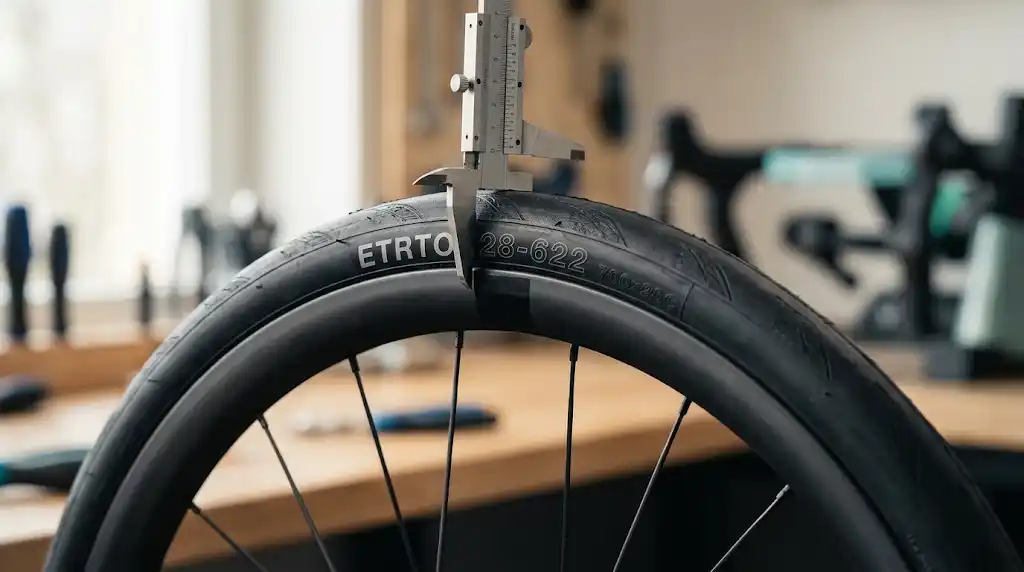
Read the tyre sidewall
Manufacturers print specs right on the rubber sidewall:
- Brand & model name: Identifies the specific product line.
- Size dimensions: Shows diameter and width specs.
- Pressure range: Lists min and max PSI/Bar ratings.
- Tubeless marking: Look for “TL”, “TLR”, or “Tubeless Ready”.
- Casing/Compound codes: Shows TPI counts or compound names.
Check the manufacturer’s product page
Head to the maker’s website for full construction specs:
- TPI count: Shows single or multi-layer thread density.
- Compound details: Explains silica or dual-compound tech.
- Puncture layers: Details aramid or nylon protective belts.
- Bead material: Lists steel or folding aramid cores.
Don’t rely on marketing words alone
Catchy labels like “Race,” “Performance,” or “Endurance” mean different things across brands. Always look past the marketing tag and check the technical specs.
Look for the technical specification
Real specs show exact build details. Knowing a tyre uses a 120 TPI casing with an aramid belt tells you far more than a glossy “Ultimate Protection” label.
Common Myths About Bike Tyre Materials
Let us clear up a few common misconceptions about tyre materials.
Myth: Bike tyres are just rubber
A tyre is not a simple chunk of rubber. It is a multi-layer composite made of casing threads, bead wires, protective belts, and custom chemical compounds.
Myth: More rubber always means a better tyre
Thicker rubber lasts longer, but it adds weight and increases rolling resistance. A performance tyre uses thin, high-grade materials to stay fast and smooth.
Myth: Kevlar tyres are made entirely from Kevlar
Kevlar is only used in specific parts, like the folding bead core or a thin protection belt under the tread. The main body is still rubber and casing fabric.
Myth: Higher TPI is always better
High TPI casings roll fast and feel smooth, but they cut more easily. Lower TPI casings handle heavy loads, city glass, and rough gravel trails better.
Myth: Thick tyres cannot be fast
Tyre speed depends on casing flex and compound quality, not just width. A wide, high-quality tyre at correct pressure can roll faster than a narrow, stiff one.
How to Choose a Bike Tyre Based on Materials
Use this simple breakdown to pick the right tyre build for your riding style.
Choose a performance tyre if you want
- Low rolling resistance for higher speed.
- Responsive handling in corners.
- Lower weight for faster climbing.
- Fast road riding on clean asphalt.
Choose a commuter tyre if you want
- Thick puncture protection against city glass.
- Long tread wear life.
- Reliable performance for daily riding.
- Low maintenance requirements.
Choose a touring tyre if you want
- Extreme durability under heavy loads.
- Strong multi-ply casing walls.
- Long-distance reliability far from bike shops.
- Stiff beads that handle high pressure.
Choose a gravel tyre if you want
- Mixed-surface grip on dirt and pavement.
- Tubeless readiness for low pressures.
- Wider casing dimensions for comfort.
- Cut-resistant sidewall protection layers.
Match the tyre to your route, not your ego
A featherweight race tyre looks slick, but it is a bad choice for commuting over broken city glass. Pick materials built for your real daily routes.
Bike Tyre Materials and Maintenance
Taking basic care of your tyre materials will help them last far longer.
Check tyre pressure
Running correct air pressure protects your materials. Low pressure causes sidewall cracking and pinch flats, while over-inflating wears out the center tread fast.
Inspect the tread
Give your tread a quick look every week:
- Remove tiny bits of glass before they push through the belt.
- Check for severe flat spots down the center line.
- Look for deep cuts that reach the internal fabric.
Inspect the sidewalls
Check the side rubber for dry rot cracks, bulges, or frayed casing threads. Damaged sidewall threads mean it is time to replace the tyre.
Know when to replace a tyre
Replace your tyre immediately if you spot worn tread indicators, exposed inner casing fabric, sidewall bulges, or frequent flats. Do not rely on fixed mileage estimates, as wear varies heavily by surface, pressure, and rider weight.
Frequently Asked Questions
What are bike tyres made of?
Bike tyres are composite products built from natural and synthetic rubber, woven casing fabrics, bead cores, and protective layers.
Are bicycle tyres made of natural rubber?
Yes, many tyres blend natural latex rubber into their compounds to improve elasticity, grip, and tear resistance.
Are bike tyres made of synthetic rubber?
Yes, synthetic rubbers like SBR are widely used to boost tread life, heat tolerance, and wet-weather grip.
What is the fabric inside a bike tyre?
The inner casing fabric is typically woven from nylon, polyester, or high-end cotton threads.
What is the wire inside a bike tyre?
Budget or heavy-duty tyres use a braided steel wire hoop inside the bead edge to hold the tyre onto the rim.
What are folding bike tyres made of?
Folding tyres replace heavy steel bead wires with flexible, strong aramid or Kevlar cords.
What is Kevlar used for in bike tyres?
Kevlar (aramid) is used for lightweight folding beads and thin puncture-protection belts beneath the tread.
Why are bike tyres black?
Carbon black is added to the rubber compound to boost strength, resist wear, and protect against UV damage.
What makes a bike tyre puncture resistant?
Puncture resistance comes from extra rubber thickness, woven fabric belts, and reinforced sidewall plies.
Are tubeless tyres made differently?
Yes, tubeless tyres feature airtight inner liners and specialized rubber beads designed to lock sealed onto tubeless rims.
Bike Tyre Material Quick Reference
Use this final reference list to quickly match each tyre part with its material and purpose.
- Tread: Rubber compound (natural/synthetic + fillers) for grip and wear life.
- Sidewall: Thin rubber coat over casing plies for flex and cut protection.
- Casing: Woven nylon, polyester, or cotton plies for shape and ride feel.
- Bead: Steel wire or aramid cords to secure the tyre onto the rim.
- Protection belt: Woven aramid or nylon strips to stop sharp punctures.
- Inner tube: Butyl, latex, or TPU bladder to retain air pressure.
- Additives: Carbon black and silica for strength, grip, and durability.
Key Questions to Ask Before Buying a Bike Tyre
Ask yourself these core questions before spending money on new tyres.
What surface do I ride on?
- Smooth pavement
- Broken city streets
- Gravel paths
- Dirt trails
- Muddy paths
- Mixed terrain
What matters most?
- Max speed
- Ride comfort
- Cornering grip
- Puncture protection
- Low weight
- Long mileage life
What does my bike support?
- Wheel diameter size
- Max tyre width clearance
- Rim inner width
- Frame and fork clearance
- Tubeless rim support
Never choose only by material
A tyre’s complete build quality matters far more than a single material listed on the box. Match the overall casing, compound, and tread design to your actual daily riding needs.
Final Recommendation
I spent years trying out different bike tyres on my daily rides around rainy Seattle streets. I used to think lightweight race tyres were always the best upgrade. After fixing far too many flats on cold mornings, my perspective changed completely. For daily riding, a tough casing with a silica rubber tread beats saving a few ounces every single time. Modern tubeless setups with aramid beads give you a smooth, worry-free ride. Pick a tyre built for your real routes, keep your pressure right, and enjoy the ride.

Mohidul Islam is a leading cycling technology specialist and bike tire consultant with over 15 years of hands-on experience in the bicycle industry. He holds a Bachelor of Science in Mechanical Engineering from Penn State University, where he focused heavily on material science, tread mechanics, and rubber compound performance. Over the past decade and a half, Alex has conducted extensive field testing, tubeless setup evaluations, and tire pressure modeling for road, mountain, and e-bikes. His practical insights and data-driven approach help cyclists of all levels optimize grip, speed, and durability on every ride.