Buying the wrong tire is a common and costly mistake. Maybe you want fewer flats on a rough commute. Maybe you want more grip on a loose desert trail, or a softer ride on chip-seal roads. Whatever the goal, one question comes first: how to check if a tyre will fit a bike wheel (we say “tire” in the US, but it is the same part).
Fit is more than a number on the sidewall. It covers wheel diameter, tire width, rim width, frame clearance, brakes, and pressure. Get one wrong and you risk rubbing, poor handling, or a blowout. Good fit also affects safety, speed, and comfort, because the right tire at the right PSI grips better and rolls easier.
This guide walks you through every check in plain English. You will see tables, formulas, and a simple checklist. For a deeper background, see our guide on bike tire size compatibility. Our team follows a clear editorial policy, and you can learn more about us and how we work.
How Do You Know if a Tire Will Fit a Bike Wheel?
Tire fit depends on four things: wheel diameter, tire size, rim width, and frame clearance. Tire width alone does not decide it.
Quick answer: A tire fits when its bead-seat diameter matches the rim and its width is within the rim and bike’s approved range.
Start by comparing the size printed on the tire sidewall with your wheel’s specs. If you want the full picture of how the two differ, read bike wheel size vs tire size. Then confirm the diameter using the ETRTO bike tire sizes system, which is the most reliable method.
Read the Tire Size on the Sidewall
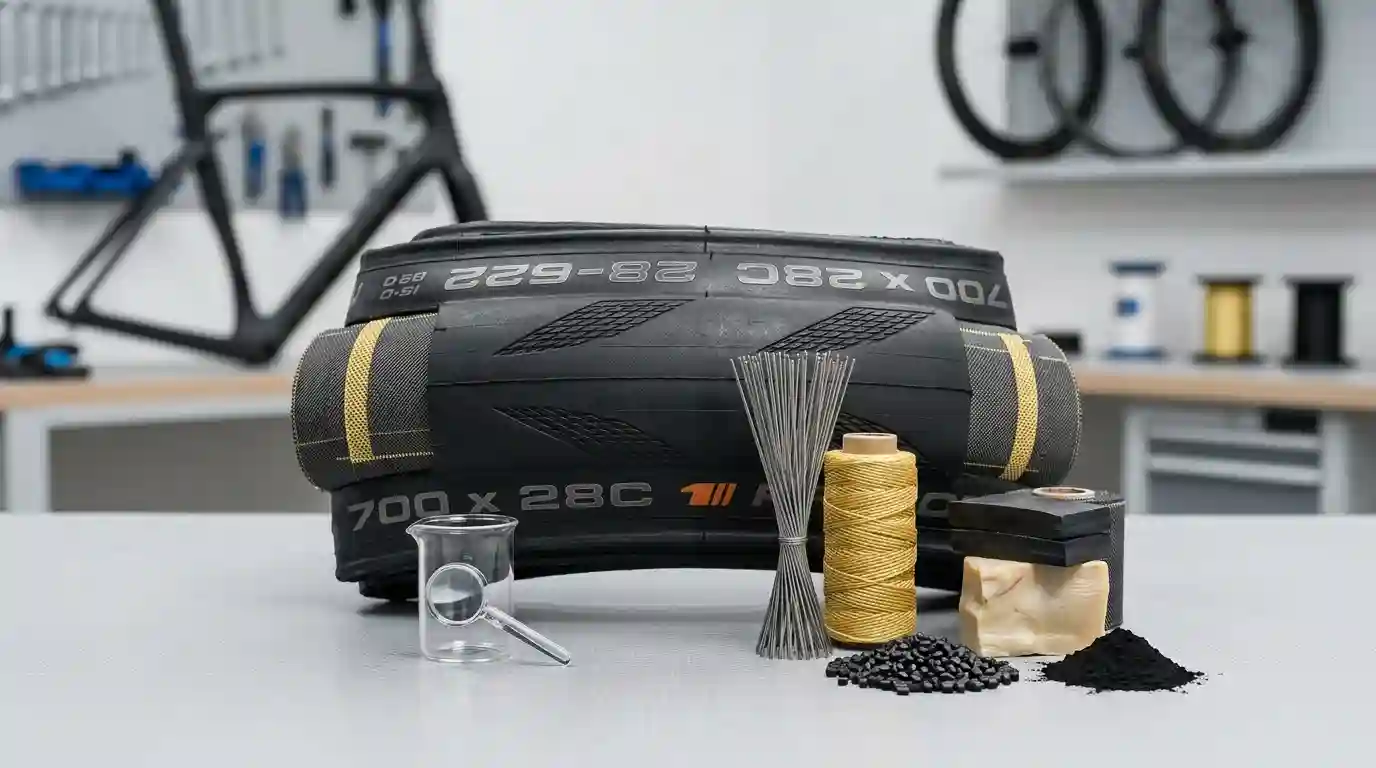
Every tire has its size molded into the rubber. You will see marks like 700×28C, 700×40C, 26×2.1, or 29×2.4. These tell you the tire’s rough diameter and width.
The first number is the approximate outer diameter. The second is the nominal width. Inches are common on mountain bikes. Millimeters are common on road and gravel tires.
ISO/ETRTO sizing is the safest check. It lists two numbers, such as 28-622. The first is width in mm. The second is the bead-seat diameter in mm. For help decoding these marks, try bike tyre markings explained for beginners and our guide on how to read bike tire size.
| Sidewall Marking | Meaning | ISO/ETRTO Equivalent |
| 700×28C | Road tire, 28 mm wide | 28-622 |
| 700×40C | Gravel or hybrid, 40 mm wide | 40-622 |
| 26×2.1 | Older MTB, 2.1 in wide | 54-559 |
| 29×2.4 | Modern MTB, 2.4 in wide | 61-622 |
What Do the Numbers on a Bike Tire Mean?
The first number is the wheel and tire diameter. The second is the nominal tire width. “Nominal” means the stated size, not the exact measured size.
Older inch-based and French sizing can confuse buyers. Two tires with the same label may not share a bead diameter. That is why you should match the ETRTO number when you can.
Learn more in our explainer on what the numbers on bike tires mean. For common examples, see what 700×28 means and what 26×2.1 means.
Why Tire Width Matters
Wider tires can add comfort, traction, and low-pressure performance. They absorb bumps better on rough pavement and gravel. They can also reduce the risk of pinch flats.
But wider is not always better. Rim width and frame clearance set firm limits. A tire that is too wide for the rim can feel vague in corners.
Width also changes rolling resistance, cornering grip, and puncture protection. On smooth roads, a narrower tire can feel quicker. On rough surfaces, a wider tire often wins. Read bike tire width explained and why bike tires come in different sizes for more.
Confirm Your Bike Wheel Size Before Buying a Tire
Wheel size labels are loose. The same label can hide different real diameters. The number that matters is the bead-seat diameter (BSD), which is where the tire bead sits on the rim.
Here are the common standards:
| Common Name | BSD (mm) | Typical Use |
| 700C | 622 | Road, gravel, hybrid |
| 29-inch | 622 | Mountain bikes |
| 650B / 27.5-inch | 584 | Gravel, MTB, touring |
| 26-inch MTB | 559 | Older mountain bikes |
Notice that 700C and 29-inch share the same 622 mm BSD. Yet a stated size alone does not always guarantee fit. That is why you should check the real BSD where possible. Our guides on what 700C means and what 650B means clear up the confusion. Not sure which size you need? Try what bike tire size do I need.
Ways to Find Your Wheel Size
Use these three steps in order:
- Read the tire already on your bike.
- Look for marks on the rim or in the wheel documentation.
- If marks are unclear, measure the rim or check the maker’s specs.
Our walkthrough on how to find bike tire size covers each step. If you need a ruler and calipers, see how to measure bike tire size.
Match Rim Width and Tire Width
Internal rim width shapes the tire once it is inflated. A wider rim spreads the tire out and gives more support to the sidewalls. A narrow rim pinches the tire into a taller, rounder shape.
A tire can have the right diameter and still be wrong for your rim. Too narrow a rim can hurt cornering stability. Too wide a rim can strain a thin tire. Rim width also changes ideal tire pressure and rolling resistance.
| Internal Rim Width | Typical Tire Width Range |
| 15 mm | 23 to 32 mm |
| 17 mm | 25 to 37 mm |
| 19 mm | 28 to 42 mm |
| 21 mm | 30 to 47 mm |
| 25 mm | 35 to 55 mm |
| 30 mm | 2.1 to 2.6 in (53 to 66 mm) |
| 35 mm | 2.3 to 2.8 in (58 to 71 mm) |
These are typical ranges only. Always confirm with the tire and rim maker.
Measuring Rim Width
Follow these steps:
- Remove the tire if you can.
- Measure the gap between the inner bead hooks.
- Check the wheel maker’s published internal width if available.
Do not mix up internal and external rim width. External width is bigger and will lead you to the wrong tire range.
Can You Put Any Width Tire on the Same Wheel?
No. Each rim has a practical tire-width range. Extremely narrow or wide pairings can cause poor handling, tire roll, or bead failure.
Skip any single “universal rule.” Use the maker’s compatibility chart instead. Our guide on putting a different size tire on your bike explains the safe limits.
Inspect Frame and Fork Tire Clearance
A tire must clear the frame, fork, chainstays, seatstays, and brakes. Leave extra room for mud, debris, wheel flex, and tire growth. New tires often swell a little after a few rides.
Take special care when moving to wider gravel tires or high-volume mountain bike tires. Pacific Northwest mud packs fast and eats clearance. Read how much wider a tire you can fit before you buy.
Ideal Clearance and How Much Bigger a Tire Can You Fit
People Also Ask: “How much bigger of a tire can I put on my bike?”
The answer depends on your frame and the maker’s limit. Road, gravel, mountain, and e-bike frames all vary a lot. As a rough guide, leave a gap on each side and above the tire.
| Bike Type | Suggested Gap per Side |
| Road | 4 to 6 mm (0.16 to 0.24 in) |
| Gravel | 6 to 8 mm (0.24 to 0.31 in) |
| Mountain | 6 to 10 mm (0.24 to 0.39 in) |
| Muddy conditions | 10 mm (0.39 in) or more |
If the frame label lists a max tire width, treat it as the limit. Our post on using wider tires on your bike offers more detail.
Test Clearance at the Tightest Point
Spin the wheel and look at both sides of the tire. Check these spots:
- Fork crown
- Brake bridge
- Chainstays
- Seatstays
On an e-bike, think about wheel flex and motor torque. Hard acceleration can push the wheel and tire off line. Leave a bit more space for safety.
Verify Brake and Drivetrain Compatibility
Rim brakes often limit tire width more than disc brakes. The caliper sits close to the rim and the tire. A big tire can rub the pads or the arch.
Also check fenders and racks. Then confirm the tire clears the chain, cassette, and derailleur. A tire that touches any drivetrain part is a safety risk.
Rim Brakes vs. Disc Brakes
Rim brakes can restrict tire size because the hardware sits near the rim. Disc brakes give more freedom for wider tires. Older frames may still have tight clearance, even with modern disc wheels.
Going the other way? Our post on putting narrower tires on a bike explains when slimmer tires work and when they do not.
Tubeless Tire and Rim Compatibility
Confirm that both the tire and the rim are made for tubeless use. Check whether the rim needs tubeless tape, a certain valve, and compatible tubeless sealant. Then follow the maker’s mounting steps and pressure limits.
A hookless rim has no small lip on the inner wall. It needs tires approved for hookless use. Many hookless rims cap pressure near 72.5 PSI (5 bar), and some mountain bike versions cap lower. A hooked rim has that lip and is more forgiving.
Learn how air escapes and why sealant helps in why bike tires lose air.
Inner Tube vs. Tubeless Fit
A tire can fit a rim without being approved for tubeless use. Tubeless setups need a proper rim bed, tire bead, seal, and inflation system.
Never go past the lowest max pressure. That could be the tire limit, the rim limit, or the hookless limit. When in doubt, use the lowest number.
Use Tire Pressure to Confirm the Setup
Tire pressure (PSI) changes tire shape, comfort, traction, and rim protection. Wider tires run lower pressure than narrow ones. Rider weight and rim design also matter.
Use the maker’s advice first. Then use the formula below as a starting point. Check your pressure often. See how often to check bike tires for a simple routine.
Rider Weight and Tire Pressure
Heavier riders and loads need more pressure. Tire size, casing build, rim width, terrain, and riding style also play a part.
Use this simple method for a starting PSI:
- Add rider, bike, and gear weight in pounds. This is your system weight.
- Find the rear load: 55 percent for road and gravel, 60 percent for MTB. The front is the rest.
- Multiply that load by 0.75.
- Multiply by the width factor below.
| Tire Width | Width Factor |
| 25 mm | 1.00 |
| 28 mm | 0.84 |
| 32 mm | 0.69 |
| 40 mm | 0.49 |
| 50 mm | 0.35 |
| 2.4 in | 0.26 |
Example: A 175 lb rider on a 25 lb bike has 200 lb system weight. On 40 mm gravel tires, the rear load is 110 lb. So 110 × 0.75 × 0.49 gives about 40 PSI rear. The front load is 90 lb, which gives about 33 PSI.
| System Weight | Road 28 mm (rear) | Gravel 40 mm (rear) | MTB 2.4 in (rear) |
| 150 lb | 52 PSI | 30 PSI | 18 PSI |
| 180 lb | 62 PSI | 36 PSI | 21 PSI |
| 210 lb | 73 PSI | 42 PSI | 25 PSI |
| 240 lb | 83 PSI | 48 PSI | 28 PSI |
Adjust from there. Drop about 10 percent for wet roads or slick Pacific Northwest mud. Tubeless riders can often go 5 to 10 percent lower. On Southwestern loose rock, go slightly lower for grip, but watch for rim strikes. Never exceed the tire or rim maximum. For the exact number on your setup, use the Free Bike Tire Pressure Calculator.
What Happens if Tire Pressure Is Too Low?
Very low PSI raises the risk of rim strikes, tire squirm, burping, and pinch flats. It can also blur steering precision and hurt cornering stability.
Tubeless tires can be more at risk of bead instability at low pressure. The tire may lose its seat in a hard turn. Stay above the maker’s minimum.
Casing, TPI, and Puncture Protection
Casing TPI means threads per inch in the tire body. It affects ride feel, flexibility, and durability. A higher TPI is often lighter and more supple, but it is not automatically better.
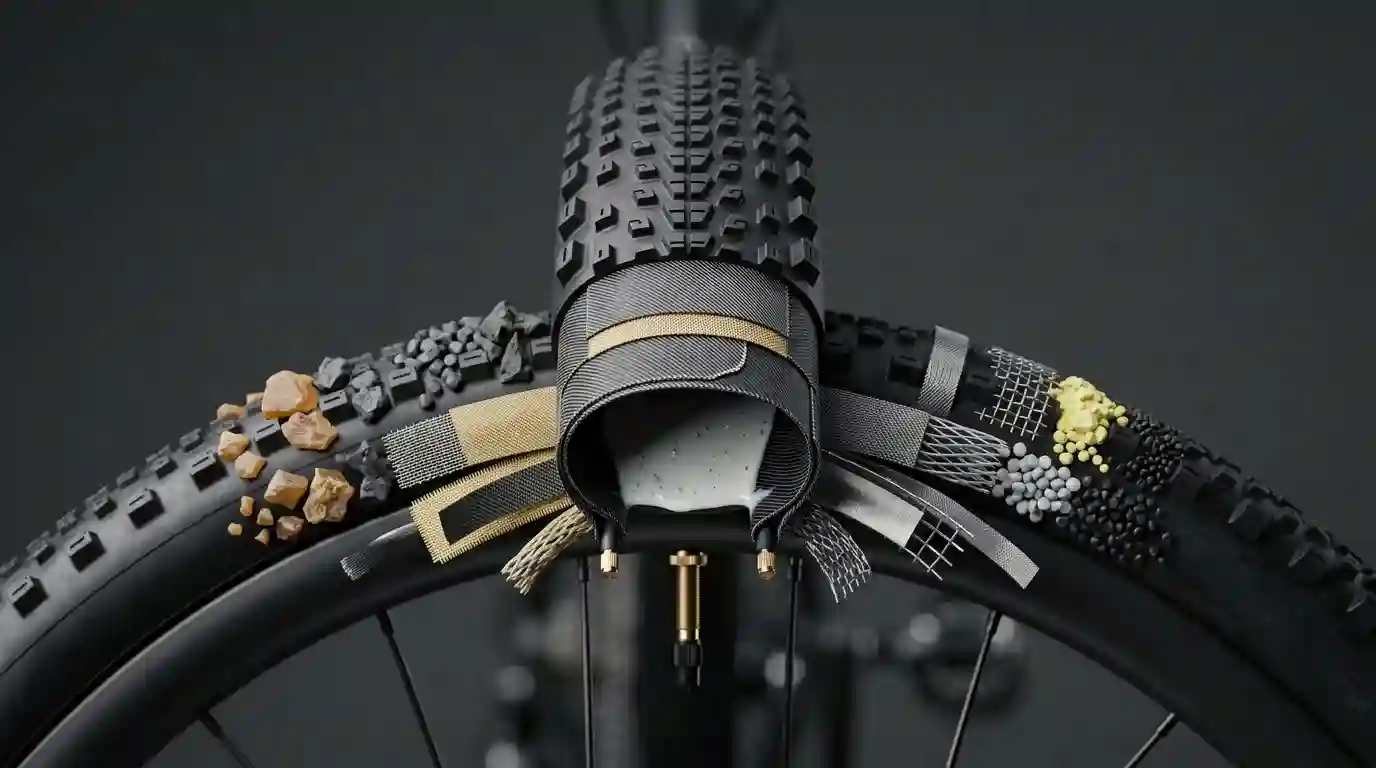
For commuting and rough roads, look for puncture belts and reinforced sidewalls. These add puncture resistance but also add weight. To go deeper, read what bike tire casing is and what bike tires are made of.
Rubber hardness matters too. A softer durometer grips better but wears faster. See what a bike tire rubber compound is for a simple breakdown.
Does Tire Construction Affect Wheel Fit?
Construction does not change the basic bead-seat diameter rule. But different casings can measure different widths on the same rim.
Heavy-duty commuter and e-bike tires may measure wider. They may also need more frame clearance. Always measure the inflated tire after mounting.
Your Intended Riding Type
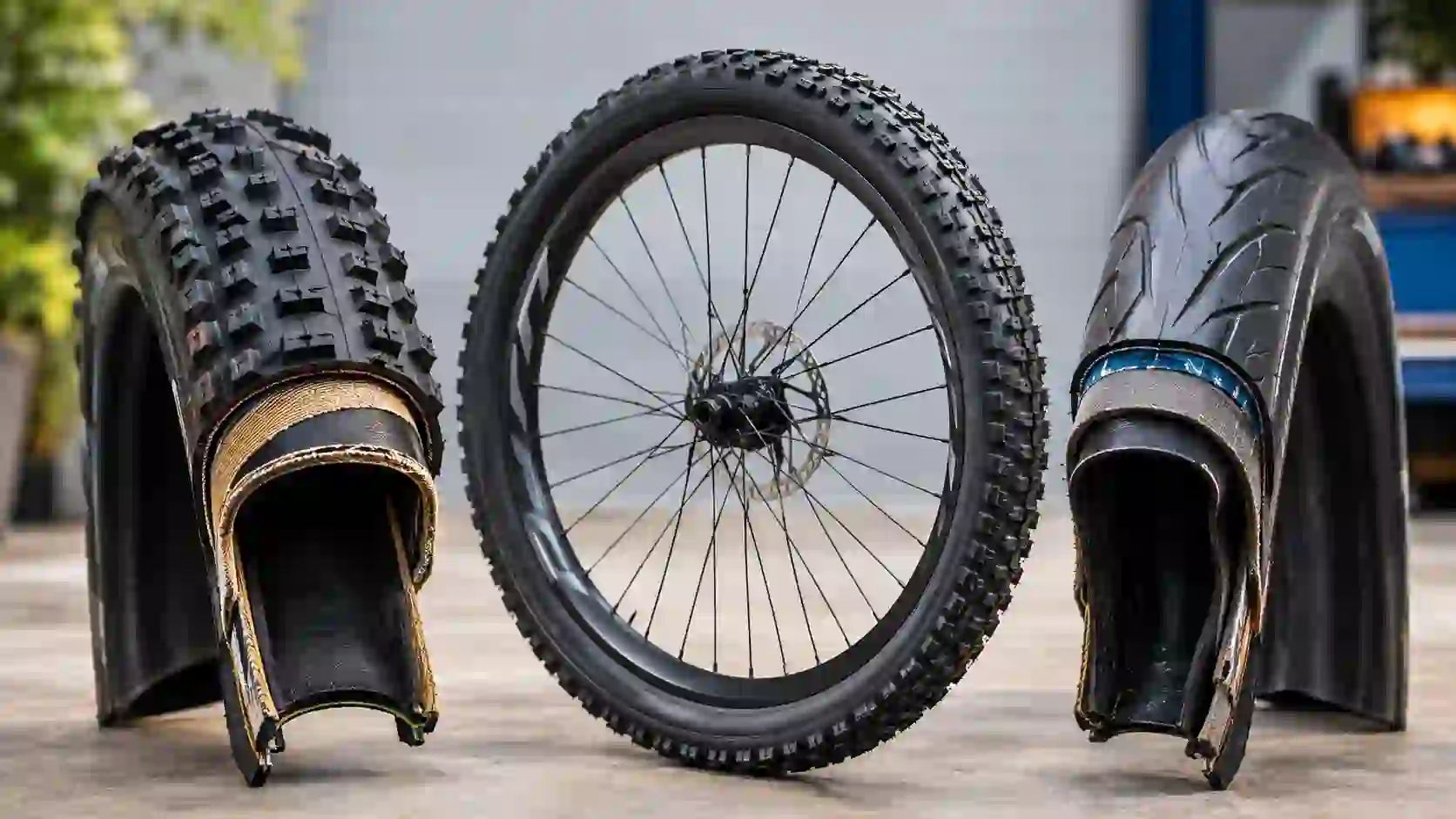
Match the tire to the bike and terrain. Think road, gravel, MTB, commuting, touring, or e-bike. Compare tread pattern, casing strength, rolling resistance, and cornering traction.
A tire that fits is not always the right tire. Learn why in why bike tires have different tread patterns. For daily rides, see how to choose bike tires for everyday riding.
Road and Gravel Tire Fit
Road tires favor low rolling resistance and steady pavement handling. Gravel tires need extra room for wider casings and mud.
Check rim-width range and frame clearance before you upgrade. A move from 28 mm to 40 mm is a big jump. Do not guess.
Mountain Bike Tire Fit
Mountain tires need space for mud and suspension travel. Check front and rear width limits on their own, since a fork and a frame often differ.
Aggressive knobs can raise the clearance you need. Tread depth also changes how a tire wears. Our post on how much tread a bike tire should have helps you judge.
E-Bike Tire Fit
E-bikes add system weight, motor assist, and e-bike torque. That puts more stress on the tire and rim.
Look for tires rated for your bike’s speed and load. Check rim, tire, and pressure limits before you change sizes. For city riders, see what bike tire to buy for commuting.
Step-by-Step: How to Check if a Tire Will Fit Your Wheel
- Read the current tire size and record its diameter and width.
- Check the new tire’s ISO/ETRTO size and confirm the bead-seat diameter matches.
- Verify internal rim width against the tire maker’s compatible range.
- Measure frame and fork clearance at the tightest points.
- Check brake, drivetrain, and fender clearance.
- Confirm tire and rim pressure limits.
- Install and inflate with care, then spin the wheel and inspect clearance.
Common Tire-Fit Mistakes to Avoid
- Buying by the label alone, such as “26,” “27.5,” “29,” or “700C.”
- Assuming any tire width works with any rim width.
- Ignoring frame clearance because the tire fits the wheel.
- Mixing tubeless tires and rims that are not compatible.
- Using pressure outside the maker’s limits.
New riders make these mistakes most often. If that is you, our list of best bike tires for beginners is a safe place to start.
Signs a New Tire Is Too Wide
Look for rubbing on the frame, fork, brake hardware, or drivetrain. Check whether the inflated width is larger than the stated size. Many tires measure wider than the label once mounted.
Test the wheel in real conditions. Turn the bars, load the bike, and ride over bumps. On a suspension bike, compress the fork and shock to check clearance through the full stroke.
Tire Size and Ride Performance
Wider tires can improve comfort, traction, and stability when matched to the rim. Narrower tires offer a different feel and can cut aerodynamic drag in some cases.
The best choice balances rolling resistance, pressure, casing, tread, and cornering grip. For a full checklist of quality signs, read what makes a good bike tire. If you want the science, see how bike tires work.
Fit Testing and Manufacturer Standards
Put published compatibility charts from trusted tire and rim makers first. Use standard ETRTO/ISO numbers to compare parts.
For safety-critical choices, the maker’s specs should override any generic online rule. We explain how we evaluate products on our testing process page.
People Also Ask: Bike Tire Compatibility
Here are quick answers to the top questions riders search.
Will Any Tire Fit Any Bike Wheel?
No. The bead-seat diameter must match. The width must suit the rim and the bike.
Frame, fork, brake, and drivetrain clearance also matter.
Which Tire Size Does My Bike Need?
Check the sidewall and wheel specs. Match the new tire’s ISO/ETRTO diameter. Then verify its recommended rim-width range.
Is a Wider Tire Possible on My Bike?
Often yes. But the rim, frame, fork, brakes, and drivetrain must all have enough room.
Check the actual inflated width, not just the printed number.
Does a Wider Tire Need a Wider Rim?
Not always. But every tire has a recommended rim-width range.
A suitable rim supports the tire’s intended shape and handling.
Is a Tubeless Tire Compatible With Any Rim?
No. Tubeless fit depends on both the tire and the rim.
Follow approved tire and rim pairings and the install steps from the maker.
FAQ: Bike Tire and Wheel Compatibility
Should I check tire fit by bead diameter first?
Yes. Match the tire’s bead-seat diameter to the wheel, then confirm the rim-width range.
After that, check frame, fork, brake, and drivetrain clearance.
Do 700C Tires Fit All 700C Wheels?
Not necessarily. 700C mainly names the 622 mm bead-seat diameter.
Tire width must still suit the rim and the room in your frame.
Will a 28mm Tire Work on a 25mm Rim?
Check the rim maker’s approved tire-width range. Compatibility depends on the rim’s internal width and the tire design.
Clearance: How Much Should I Leave?
Follow the bike maker’s guidance. Allow extra room for wheel flex, debris, mud, and tire growth.
Rider Weight and Fit: Does It Matter?
Rider weight does not change the bead diameter you need. It does change PSI, casing choice, load rating, and rim protection.
Are Wider Tires Faster?
Not by default. Real speed depends on construction, pressure, surface, aerodynamics, and rolling resistance.
On rough surfaces, a wider tire can be faster because it allows lower pressure.
Tire Lifespan: How Long Do Bike Tires Last?
Wear depends on mileage, rider weight, terrain, rubber compound, pressure, and conditions. Replace tires when the tread, casing, or sidewalls show heavy wear or damage.
For signs to watch, see how often bike tires should be replaced.
Can I Change Tire Width Without Changing the Wheel?
Often yes, if the new width fits the rim’s range and the bike has enough room. Verify the full wheel and frame fit before install.
Read more on whether you can change bike tire width.
Conclusion: Confirm Tire Fit Before You Buy
The safest approach is to check bead-seat diameter, rim width, tire width, and frame clearance together. Do not trust a single size number. Real inflated widths can differ from the label.
A correct fit also supports the right PSI, lower rolling resistance, better cornering grip, stronger puncture protection, and steadier handling. Ready to shop? Browse our picks for the best bike tires for everyday riding.
CTA: Find the Right Tire Setup
Take the guesswork out of your next tire swap. Enter your bike type, tire size, and system weight into the Free Bike Tire Pressure Calculator and Tire Finder Tool at TheBikeTires.com.
Whether you commute, race on the road, ride gravel, shred singletrack, or power an e-bike, it gives you a smart starting setup in seconds. Test your exact setup today and ride with more confidence.

Mohidul Islam is a leading cycling technology specialist and bike tire consultant with over 15 years of hands-on experience in the bicycle industry. He holds a Bachelor of Science in Mechanical Engineering from Penn State University, where he focused heavily on material science, tread mechanics, and rubber compound performance. Over the past decade and a half, Alex has conducted extensive field testing, tubeless setup evaluations, and tire pressure modeling for road, mountain, and e-bikes. His practical insights and data-driven approach help cyclists of all levels optimize grip, speed, and durability on every ride.