
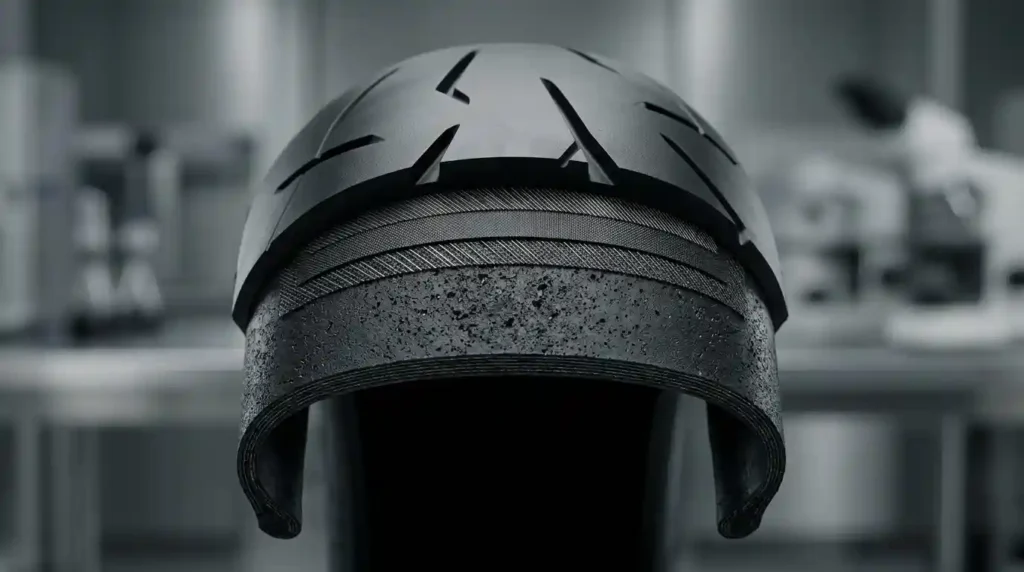
Cyclists across the United States face diverse riding conditions on every ride. You might be leaning into a fast turn on wet asphalt in Seattle, descending loose gravel fire roads in Colorado, powering up slick granite in Utah, or navigating glass-littered bike lanes in New York City.
When your bike washes out in a corner, spins out on a steep climb, or rolls with sluggish effort, the issue often comes down to the chemical engineering of your tread: the bike tire rubber compound.
Choosing the right rubber compound and maintaining proper tire pressure (PSI) directly dictates your safety, cornering grip, rolling resistance, and overall ride quality.
The rubber compound serves as the chemical interface between your bicycle and the ground. Its formulation balances five key performance parameters:
- Cornering Traction & Mechanical Grip: How effectively the rubber conforms to micro-textures on road and trail surfaces.
- Rolling Resistance: How much energy is lost as internal heat (hysteresis loss) when the tread deforms and rebounds under load.
- Tread Wear & Longevity: How well the rubber matrix withstands abrasive wear from pavement and sharp rocks.
- Puncture Defense: The resistance of the rubber compound to glass, sharp flints, and thorn penetrations.
- Temperature Stability: How consistently the rubber maintains flexibility in freezing winter conditions or scorching summer heat.
From ultra-soft downhill mountain bike formulations to long-wearing commuter compounds, understanding tire rubber chemistry helps you select the best tire for your setup.
Featured Snippet: What Is Bike Tire Rubber Compound?
A bike tire rubber compound is the engineered blend of natural and synthetic rubbers, fillers (such as silica and carbon black), polymers, oils, and chemical additives that gives a tire its specific grip, rolling resistance, durability, and wear characteristics.
What Is Bike Tire Rubber Compound?
In simple terms, a bike tire rubber compound is the chemical recipe used to create the tire’s outer tread and protective rubber layers. Uncured rubber in its raw state is soft, sticky, and mechanically weak.
To turn raw rubber into a durable bicycle tread, tire chemists blend raw elastomers with structural reinforcing agents, curing agents, and vulcanizing compounds.
+———————————————————————————–+
| CROSS-SECTION OF A BIKE TIRE |
+———————————————————————————–+
[ RUBBER TREAD COMPOUND (Outer Contact Surface) ] |
[ Sub-Tread Puncture Belt (Optional Protective Strip) ] |
[ Woven Casing Fabric Body (120 TPI / 60 TPI Nylon or Cotton) ] |
[ Airtight Inner Liner / Inner Tube Chamber ] |
| [ Left Bead (Rim Anchor) ] [ Right Bead (Rim Anchor) ] |
+———————————————————————————–+
Rubber compound is distinct from the other structural components of a bike tire:
- Casing: The woven fabric skeleton (measured in TPI) beneath the rubber that holds the tire’s shape under air pressure.
- Tread Pattern: The physical shape, depth, and arrangement of rubber knobs or sipes molded into the surface.
- Puncture Belt: An auxiliary layer of aramid or woven nylon positioned directly beneath the tread compound.
- Bead: The Kevlar or steel wire ring embedded at the casing edge to secure the tire to the rim.
Where Is the Rubber Compound on a Bike Tire?
The primary rubber compound covers the crown and shoulders of the tire where it contacts the road or trail.
Many performance tires use multi-compound construction:
- Center Tread Compound: Formulated for low rolling resistance and long wear life under acceleration and braking.
- Shoulder Tread Compound: Formulated with a softer rubber compound for maximum adhesion when leaning into corners.
- Sidewall Coating: Formulated with a thin, flexible rubber skin engineered to resist UV degradation and rock abrasion.
+———————————————————————————–+
| DUAL-COMPOUND TREAD LAYOUT (CROSS-SECTION) |
+———————————————————————————–+
[ HARDER CENTER COMPOUND ] (Low Resistance) |
[ SOFTER SHOULDER ] [ SOFTER SHOULDER ] (High Cornering Grip) |
[ COMPOUND ] [ COMPOUND ] |
+——————————————————————————-+ |
| | WOVEN TIRE CASING FABRIC | |
+———————————————————————————–+
What Is Bike Tire Rubber Made Of?
Bicycle tire compounds combine several key ingredients:
- Natural Rubber (Polyisoprene): Harvested from rubber trees, providing high tear strength and elasticity at low temperatures.
- Synthetic Polymers (SBR, BR): Petroleum-derived polymers engineered for consistent wear and wet-weather traction.
- Reinforcing Fillers:
- Carbon Black: Traditional microscopic carbon particles that reinforce the rubber matrix, improve wear life, and give tires their black color.
- Silica (Silicon Dioxide): Synthetic nano-particles that reduce rolling resistance while significantly improving wet weather grip.
- Plasticizers & Oils: Adjust the stiffness (durometer) and cold-weather flexibility of the cured rubber.
- Vulcanizing Agents (Sulfur & Accelerators): Cross-link polymer chains during heat curing to give the rubber its spring-like elasticity.
How Does Bike Tire Rubber Compound Affect Performance?
+———————————————————————————–+
| THE TIRE COMPOUND PERFORMANCE TRADE-OFF |
+———————————————————————————–+
[ HIGHER GRIP ] |
/ \ |
/ \ |
[ LOWER ROLLING RESISTANCE ] — [ HIGHER DURABILITY ] |
+———————————————————————————–+
Note: Formulating a compound to maximize one vertex usually requires a trade-off |
against the other performance parameters. |
+———————————————————————————–+
Does Rubber Compound Affect Bike Tire Grip?
Yes. Tire grip operates through two primary mechanisms:
- Mechanical Keying: The rubber compound physically deforms into micro-roughness on the asphalt or dirt surface.
- Molecular Adhesion: Chemical intermolecular forces (van der Waals forces) created between the rubber polymer chains and the road surface.
A softer, more compliant compound deforms easily over surface imperfections, creating a larger effective contact patch for braking and cornering.
Does Rubber Compound Affect Rolling Resistance?
Yes. When a tire rolls under load, the rubber compound flexes continuously at the contact patch. Energy lost during this mechanical flexing is released as heat—a process called hysteresis.
High-grade silica compounds reduce internal molecular friction within the rubber matrix. This allows the compound to deform around road texture without wasting energy, reducing rolling resistance without compromising wet grip.
Soft vs. Hard Bike Tire Rubber Compounds
Rubber hardness is measured using a Shore A Durometer gauge. Lower durometer numbers indicate softer, more flexible rubber, while higher numbers represent harder, more rigid rubber.
+———————————————————————————–+
| SHORE A DUROMETER RATING SCALE |
+——————+———————–+——————–+——————-+
| DUROMETER RATING | RUBBER CHARACTERISTIC | PRIMARY BENEFIT | TYPICAL USE |
+——————+———————–+——————–+——————-+
40A – 50A | Ultra-Soft Compound | Extreme Grip | Downhill / Enduro |
50A – 60A | Soft / Medium Compound| Balanced Grip | Trail MTB / Front |
| 60A – 70A | Firm Compound | Fast & Durable | Road / Gravel |
70A – 80A | Hard Compound | Maximum Lifespan | Commuter / E-Bike |
—————–+———————–+——————–+——————-+
+———————————————————————————–+ SOFT VS. HARD RUBBER COMPOUND COMPARISON |
+————————————+———————————————-+
| SOFT RUBBER COMPOUND (40A – 55A) | HARD RUBBER COMPOUND (65A – 80A) |
+————————————+———————————————-+
• Maximum cornering traction | • Long tread wear life |
| • High mechanical keying on rocks | • Low rolling resistance on smooth pavement |
• Excellent cold-weather traction | • Excellent resistance to tread tearing |
• Faster wear rate under braking | • Less ultimate grip on slick or wet roots |
+————————————+———————————————-+
What Are Soft Bike Tire Compounds Good For?
Soft compounds excel in low-traction environments where grip is the primary priority over longevity:
- Steering control and shoulder knob stability on technical mountain bike trails.
- Wet-weather road racing on slick asphalt.
- Descending over wet granite, polished roots, and off-camber loose soil.
What Are Hard Bike Tire Compounds Good For?
Harder compounds excel in applications where durability and efficiency are essential:
- High-mileage urban commuting over glass-littered pavement.
- Fast center tread rolling efficiency on long gravel races.
- Rear tire applications where acceleration forces and braking drag accelerate wear.
Are Dual-Compound Bike Tires Better?
For most riders, yes. Dual-compound (and triple-compound) designs feature a firmer center rubber (e.g., 60A durometer) for low rolling resistance and long wear, paired with softer shoulder rubber (e.g., 50A durometer) for cornering stability.
Why Do Bike Tires Use Different Rubber Compounds?
+———————————————————————————–+
| RUBBER COMPOUND SELECTION BY DISCIPLINE |
+—————-+——————–+———————+———————–+
| DISCIPLINE | TYPICAL DUROMETER | FILLER TECHNOLOGY | PRIMARY FOCUS |
+—————-+——————–+———————+———————–+
Road Performance| 60A – 68A Dual | High Synthetic Silica| Speed & Wet Adhesion |
| Gravel / All | 62A / 55A Dual | Reinforced Polymer | Abrasion Resistance |
Trail / MTB | 50A Front / 60A Rear| High Natural Rubber | Traction & Rebound |
| City Commuter | 70A Single Compound| Carbon Black Heavy | High Mileage & Cuts |
E-Bike | 65A Heavy-Duty | High Polymer Density| High Torque & Weight |
—————-+——————–+———————+———————–+
Road Bike Tire Compounds
The Road racing compounds prioritize rolling efficiency and wet-weather traction. High-silica formulations allow road tires to maintain adhesion on rain-slicked asphalt without requiring heavy, drag-inducing tread knobs.
Mountain Bike Tire Compounds
MTB tires utilize specialized damping compounds designed to control rebound speed. High-damping rubber deforms over roots and rocks without bouncing back rapidly, keeping the tread firmly grounded over rough terrain.
Gravel Tire Compounds
Gravel compounds must withstand sharp, abrasive flint and stone impacts while maintaining smooth rolling efficiency when transitioning back onto paved roads.
Commuter Tire Compounds
Commuter tire rubber prioritizes maximum tread lifespan, cut resistance, and structural stability across varied weather conditions.
E-Bike Tire Compounds
Electric bikes generate higher continuous torque and carry additional system weight (often 50–60 lbs). E-bike tire compounds feature dense polymer matrices to prevent rapid wear and tread deformation under power.
Rubber Compound vs. Tread Pattern
Tread pattern and rubber compound are distinct performance parameters that work as a unified system.
TIRE TRACTION SYSTEM
|
+——————————–+——————————–+
| |
v v
+——————————-+ +——————————-+
| TREAD PATTERN | | RUBBER COMPOUND |
+——————————-+ +——————————-+
| • Mechanical interlocking | | • Surface-level adhesion |
• Penetrates soft mud & dirt | | • Conforms to micro-texture |
| • Clears water & trail debris | | • Determines energy rebound |
+——————————-+ +——————————-+
Which Matters More: Tread or Rubber Compound?
Neither works effectively in isolation:
- An aggressive downhill mud tread made from a hard, non-compliant 70A compound will slip on wet rocks and roots.
- A smooth slick tire made from a soft 40A compound will slide on loose soil because it lacks tread knobs to penetrate the trail surface.
Optimal tire selection requires matching both tread geometry and rubber durometer to your specific terrain.
Rubber Compound and Tire Pressure (PSI)
Tire pressure (PSI) dictates how much the rubber compound deforms against the riding surface.
+———————————————————————————–+
| PRESSURE VS. COMPOUND PERFORMANCE |
+———————————-+————————————————+
| UNDER-INFLATED RUBBER COMPOUND | OVER-INFLATED RUBBER COMPOUND |
+———————————-+————————————————+
| • Excessive tread wriggle & heat | • Reduced contact patch footprint |
• Increased squirm under load | • Deflects off obstacles without keying |
• Higher risk of rim pinch flats | • Reduced cornering grip on rough ground |
+———————————-+————————————————+
Practical Tire Pressure Formula
To find your baseline tire pressure based on system weight, tire volume, and compound type:
Base Front Pressure (PSI)=4.5Total System Weight (lbs)×Compound Factor
Compound Adjustment Factors:
- Soft MTB Compound (40A–50A): 0.95 (Slightly reduced pressure to enhance mechanical keying)
- Standard Road/Gravel Compound (60A–68A): 1.00
- Hard Commuter Compound (70A+): 1.05
Base Rear Pressure (PSI)=Base Front Pressure+5
Example: A 170 lb rider on a 25 lb gravel bike (195 lbs total) running standard 62A dual-compound 40mm tires:
Base Front=4.5195×1.00≈43 PSI
Base Rear=43+5=48 PSI
(Note: Scale formula output down for high-volume mountain bike tires).
+———————————————————————————–+
| STARTING TIRE PRESSURE CHART BY COMPOUND TYPE |
+——————–+———————+——————+———————+
| TOTAL WEIGHT (LBS) | ROAD 28MM (65A DUAL)| GRAVEL 40MM (60A)| MTB 2.4″ (50A/60A) |
+——————–+———————+——————+———————+
130 – 150 lbs | 55 – 60 PSI | 28 – 32 PSI | 18 – 20 PSI |
| 150 – 180 lbs | 62 – 68 PSI | 33 – 37 PSI | 21 – 24 PSI |
180 – 210 lbs | 70 – 78 PSI | 38 – 42 PSI | 25 – 28 PSI |
210+ lbs | 80 – 88 PSI | 43 – 48 PSI | 29 – 32 PSI |
+——————–+———————+——————+———————+
Featured Snippet: What Is the Ideal Tire Pressure?
The ideal bike tire pressure depends on rider weight, tire width, rim width, casing construction, terrain, and riding style—not rubber compound alone.
How Rubber Compound Affects Tire Wear
TREAD WEAR DYNAMICS
|
+———————————+———————————+
| |
v v
+——————————–+ +——————————–+
| HIGH ABRASION FACTORS | | PRESERVATION FACTORS |
+——————————–+ +——————————–+
• Hard skid braking | | • Consistent, correct PSI |
| • Coarse, chip-seal asphalt | | • Smooth, progressive braking |
• High e-bike torque output | | • Storing tires out of direct |
• Under-inflation (tread flex) | | sunlight and ozone sources |
+——————————–+ +——————————–+
What Causes Bike Tire Rubber to Wear?
Tire rubber wears through mechanical abrasion, friction-generated heat, and environmental degradation (UV radiation and atmospheric ozone).
Hard rear braking and wheel spin break the cross-linked polymer bonds at the tread surface, shedding microscopic rubber particles and flattening the tire crown profile.
How to Tell When Bike Tire Rubber Is Worn Out
Check your tire rubber regularly using these visual indicators:
- Flattened Center Profile: A wide flat spot along the top of the tire tread indicates heavy wear.
- Exposed Sub-Tread / Casing: Replace the tire immediately if you see a contrasting color puncture belt or woven casing fabric.
- Tread Wear Indicators (TWI): Many road tires feature small molded dimples on the tread center. When these dimples wear flat and disappear, the rubber compound is fully worn down.
- Dry Rot & Ozone Cracking: Fine spiderweb cracks in the tread rubber or sidewall indicate that the plasticizers have oxidized, making the rubber brittle and unsafe.
- Torn or Undercut Knob Bases: On mountain bike tires, check whether side knobs are tearing away from the base tread compound.
+———————————————————————————–+
| TIRE WEAR AND REPLACEMENT MATRIX |
+————————+——————————-+————————–+
| VISUAL SYMPTOM | STRUCTURAL CONDITION | RECOMMENDED ACTION |
+————————+——————————-+————————–+
Missing TWI Dimples | Tread worn to minimum depth | Replace Tire |
| Center Crown Flat Spot | Impaired cornering transition | Plan Replacement |
Visible Fabric Casing | Critical casing exposure | DO NOT RIDE – Replace |
| Fine Sidewall Cracks | Compound oxidation / dry rot | Replace Tire |
+————————+——————————-+————————–+
Rubber Compound and Tubeless Bike Tires
Tubeless technology removes the inner tube, relying on liquid sealant, a precise bead fit, and an airtight casing.
+———————————————————————————–+
| TUBELESS SYSTEM INTERACTION WITH RUBBER |
+———————————————————————————–+
[ Liquid Tubeless Sealant (Fills Micro-Punctures in Casing Rubber) ] |
[ High-Tensile Tubeless Bead (Locks Securely into Rim Channel Hooks) ] |
| [ Flexible Rubber Compound (Maintains Contact Footprint at Lower Pressures) ] |
+———————————————————————————–+
Does Rubber Compound Matter More With Tubeless Tires?
Yes. Running tubeless allows you to lower inflation pressure safely without the risk of pinch flats. Lower pressure increases tread deformation, allowing softer rubber compounds to key effectively into rough terrain.
However, lower tubeless pressures place greater mechanical stress on side knobs during cornering, making compound structural integrity and knob tear resistance essential.
Rubber Compound, Casing TPI, and Tire Construction
A tire functions as a complete system where compound, casing, and puncture belts interact under load:
- High TPI Casing (120+ TPI): Complements a high-silica race compound by allowing the tread to conform easily over surface chatter.
- Low TPI Casing (30–60 TPI): Pairs well with harder commuter compounds to build a durable, cut-resistant tire structure.
+———————————————————————————–+
| CASING TPI VS. RUBBER COMPOUND SYNERGY |
+——————-+——————–+——————-+———————-+
| CASING SPEC | RUBBER TYPE | RIDE CHARACTER | BEST APPLICATION |
+——————-+——————–+——————-+———————-+
120 TPI (Supple) | Soft / High Silica | Fast, Compliant | Performance Road |
60 TPI (Balanced) | Dual Compound | Durable, Fast | Gravel / Trail MTB |
| 30 TPI (Heavy) | Hard / Carbon Heavy| Stiff, Long-Life | Urban Commuter / Cargo|
+——————-+——————–+——————-+———————-+
Rubber Compound and Rim Width
Inner rim width changes the shape of the mounted tire, altering the profile of the rubber compound.
+———————————————————————————–+
| EFFECT OF RIM WIDTH ON TREAD PROFILE |
+———————————————————————————–+
NARROW RIM (Tread Pinched) | OPTIMAL RIM (Tread Squared) | OVERLY WIDE RIM (Flat)
( COMPOUND ) | / COMPOUND \ | | COMPOUND |
( ) | / \ | | |
[____] | [________________] | [____________]
Shoulder knobs tilted inward | Shoulder knobs engage right | Exposed sidewalls
+———————————————————————————–+
Mounting a tire on an overly narrow rim squashes the shoulder compound inward, forcing you to lean the bike further to engage cornering grip. Conversely, an overly wide rim flattens the compound profile, exposing the sidewalls to damage.
+———————————————————————————–+
| RIM WIDTH MATCHING GUIDELINES |
+———————–+—————————+——————————-+
| TIRE CASING WIDTH | RECOMMENDED INNER RIM | APPLICATION DISCIPLINE |
+———————–+—————————+——————————-+
25mm – 28mm | 19mm – 21mm | Modern Road Performance |
38mm – 45mm | 23mm – 25mm | Gravel / Mixed Surface |
| 2.3″ – 2.5″ | 28mm – 30mm | Trail / Enduro Mountain Bike |
+———————–+—————————+——————————-+
Best Bike Tire Rubber Compound for Different Riders
The Best Compound for Road Cycling
Look for a high-silica dual compound with a 65A center for low rolling resistance and a 55A shoulder for cornering confidence in both dry and wet conditions.
Best Compound for Mountain Biking
Run a softer compound front tire (e.g., 42A/50A triple compound) for maximum cornering traction, paired with a firmer dual-compound rear tire (e.g., 50A/60A) for durability and fast rolling speed.
Best Compound for Gravel Riding
Select a balanced dual compound featuring a fast-rolling center and cut-resistant shoulder rubber designed to withstand sharp stone impacts.
Best Compound for Commuting & Cargo
Choose a durable, high-density carbon black compound (70A durometer) equipped with a sub-tread puncture belt for maximum tread life.
Common Bike Tire Rubber Compound Mistakes
- Assuming Softer Is Always Faster: Soft compounds increase hysteresis losses on smooth surfaces, increasing rolling drag compared to silica-optimized firm compounds.
- Ignoring Temperature Effects: Riding soft MTB compounds in sub-freezing temperatures causes the rubber to harden, drastically reducing traction.
- Misjudging Rear Tire Wear: Running ultra-soft compounds on rear tires causes rapid wear under acceleration and climbing.
- Neglecting Pressure Adjustments: Over-inflating soft compound tires prevents the rubber from conforming to surface texture, negating its traction benefits.
How Bike Tire Rubber Compounds Are Tested
Tire manufacturers and independent labs evaluate rubber compounds using standardized testing protocols.
+———————————————————————————–+
| LABORATORY COMPOUND TESTING PROTOCOLS |
+———————-+—————————–+——————————+
| TEST METRIC | TESTING APPARATUS | MEASURED PARAMETER |
+———————-+—————————–+——————————+
Durometer Hardness | Shore A Needle Gauge | Resistance to penetration |
Rolling Resistance | Motorized Drum Power Meter | Wattage loss under load |
| Wet Friction Coeff. | Dynamic Friction Tester | Skid resistance on wet steel |
Abrasion Resistance | DIN Rotating Drum Abrader | Volume of rubber lost (mm³) |
+———————-+—————————–+——————————+
Laboratory tests measure baseline metrics, while field testing evaluates real-world handling, temperature sensitivity, and wear characteristics under real riding conditions.
People Also Ask About Bike Tire Rubber Compounds
What Is a Rubber Compound on a Bike Tire?
It is the chemical blend of natural and synthetic rubbers, polymers, silica, carbon black, and oils that forms the tire tread.
Is Softer Bike Tire Rubber Better?
Softer rubber provides greater grip on rough surfaces, but it wears faster and can increase rolling resistance on smooth pavement.
Does Tire Compound Affect Rolling Resistance?
Yes. Formulations that reduce internal polymer friction (hysteresis loss) roll faster by converting less pedaling energy into heat.
Do Bike Tires Have Different Rubber Compounds?
Yes. Tire manufacturers engineer specific compound recipes for road, gravel, mountain bike, commuter, and e-bike applications.
What Is a Dual-Compound Bike Tire?
It is a tire that combines two distinct rubber formulations: a firmer center compound for fast rolling and long wear, paired with softer shoulder rubber for cornering grip.
Frequently Asked Questions
What Is the Best Rubber Compound for Bike Tires?
There is no single best compound. Choose a high-silica formulation for fast road riding, a soft dual-compound for off-road traction, or a hard compound for urban commuting.
Does Tire Rubber Affect Bike Tire Pressure?
While compound softness does not change your target PSI directly, softer compounds allow you to run slightly lower pressure without sacrificing cornering stability.
Are Soft Bike Tires Faster?
Not on smooth pavement. Soft compounds conform well to rough ground, but firm high-silica compounds roll faster on smooth surfaces by minimizing internal flex energy losses.
Are Hard Bike Tire Compounds Better for Commuting?
Yes. Harder compounds resist abrasive wear from pavement and help prevent sharp glass and debris from penetrating the tread.
What Is the Best Compound for Mountain Bike Tires?
A soft, high-damping compound on the front wheel provides cornering traction, while a firmer dual-compound on the rear balances rolling speed and durability.
Does Rubber Compound Affect Tubeless Tires?
Yes. Tubeless systems allow lower operating pressures, which helps the rubber compound conform more effectively to terrain features.
How Does Rim Width Affect Tire Compound Performance?
Proper rim width maintains the designed arc of the tread compound. Overly narrow or wide rims distort the shoulder knobs and impair cornering grip.
How Long Does Bike Tire Rubber Last?
Tread life varies from 1,000–1,500 miles for soft mountain bike tires up to 3,000–5,000+ miles for firm commuter tires, depending on riding style, terrain, and inflation pressure.
Final Verdict: Understanding Bike Tire Rubber Compound
The rubber compound is a critical factor determining your bike tire’s grip, rolling efficiency, and lifespan.
To choose the right setup:
- Match Compound to Application: Prioritize soft compounds for off-road control, silica-based compounds for road speed, and firm compounds for urban durability.
- Utilize Multi-Compound Tires: Select dual- or triple-compound tires to balance center rolling efficiency with shoulder cornering grip.
- Fine-Tune Inflation Pressure: Maintain proper PSI for your weight, tire width, and terrain to maximize traction and wear life.
Find the Right Tire and PSI for Your Ride
Ready to optimize your ride performance and cornering traction?
- Use our Free Bike Tire Pressure Calculator at TheBikeTires.com to determine your ideal inflation pressure.
- Explore our Tire Finder Tool to compare rubber compounds, durometer ratings, casing TPI, and puncture defense features for your exact setup.

Mohidul Islam is a leading cycling technology specialist and bike tire consultant with over 15 years of hands-on experience in the bicycle industry. He holds a Bachelor of Science in Mechanical Engineering from Penn State University, where he focused heavily on material science, tread mechanics, and rubber compound performance. Over the past decade and a half, Alex has conducted extensive field testing, tubeless setup evaluations, and tire pressure modeling for road, mountain, and e-bikes. His practical insights and data-driven approach help cyclists of all levels optimize grip, speed, and durability on every ride.



