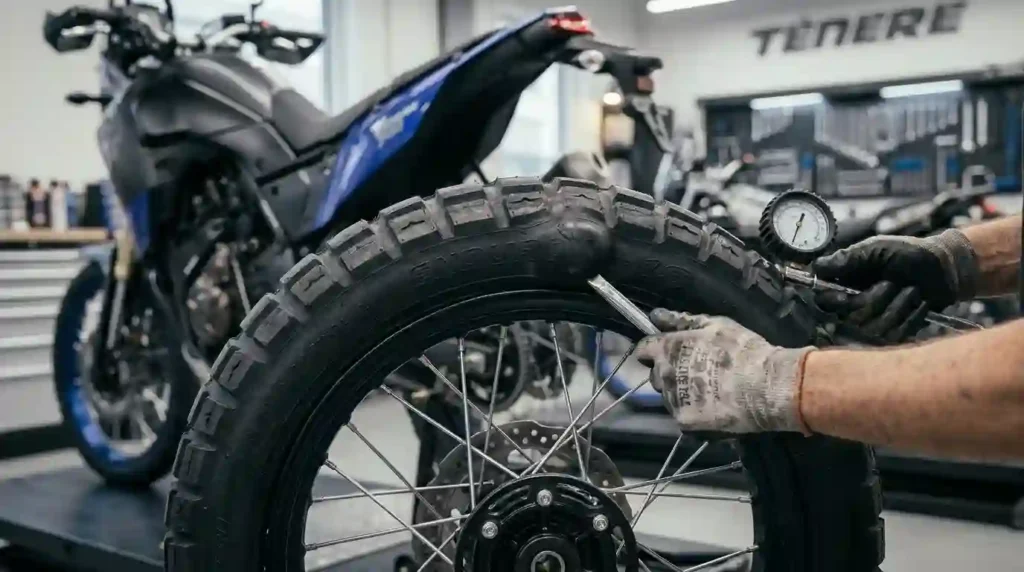
You fix a flat on the roadside, pump the tire up, and spot a lump. Many US riders face this problem, along with slow leaks, poor cornering grip, wrong PSI, and fast tread wear. A bulge is the one that can be dangerous.
If your bike tyre has a bulge after puncture repair, the cause may be minor or serious. It may be a trapped tube or an uneven bead. It may also be damaged casing, which can fail without warning.
The right tire and the right tire pressure (PSI) protect your safety, speed, and comfort. This guide shows you how to tell the difference, what to do, and when to replace the tire. Our advice follows our testing process and editorial policy.
Safety first: Stop riding if the bulge is on the tire itself. This matters most if it grows under pressure or shows the casing.
Why Does a Bike Tyre Have a Bulge After a Puncture?
A bulge often means the tire casing or sidewall is damaged. It can also mean the tire bead is not seated right on the rim. The bead is the stiff edge that locks the tire to the rim.
A poorly fitted inner tube can also get trapped under the bead. That creates a raised area, and it can burst when you add air.
Quick answer: A bulge after a puncture usually signals casing damage, an unevenly seated bead, or a trapped inner tube. Stop riding until you find the cause. Replace a tire with a structural bulge instead of trying to inflate it back into shape.
If you want to know how the parts work together, read how bike tires work.
What Does a Bulge in a Bike Tire Look Like?
Use your eyes and a slow spin test:
- Look for a raised area, bubble, or uneven section on the sidewall or tread.
- Spin the wheel slowly. Watch whether the bulge moves with the tire.
- Check whether the bead sits evenly along the rim on both sides.
A lump that stays in one spot on the tire often points to casing damage. A lump near the rim edge that comes and goes may point to a bead or tube issue.
Is a Bike Tire Bulge After a Puncture Dangerous?
Yes, it can be. A casing bulge can mean the tire’s inner structure has weakened.
A damaged tire may fail suddenly. High pressure, hard braking, cornering, and e-bike torque all raise the load on a weak spot. E-bike riders carry extra weight and speed, so the risk is higher.
Do not ride on a suspected casing bulge. Replace the tire or have a qualified bike mechanic inspect it. Many local shops will look at a tire for free or a small fee. Learn more in our guide on how often bike tires should be replaced.
Can I Ride a Bike With a Tire Bulge?
Not if the bulge is on the tire body. The tire could split, and a blowout at speed is a real hazard.
If the bulge is only a trapped tube at the bead, you may fix it. Deflate the tire, reseat it, and check again. If you cannot tell which it is, walk the bike or call for a ride.
What Causes a Bike Tire Bulge After a Puncture?
Several things can cause a bulge:
- A puncture repair can reveal damage that was already in the casing.
- Wrong tube installation or poor bead seating can cause an uneven shape.
- Too much pressure, impact damage, and worn rubber can make a weak spot show.
Most bulges trace back to one of four sources. Knowing which one you have saves time and money. It also keeps you safe on the next ride.
Let’s look at each cause in turn.
Damaged Tire Casing or Sidewall
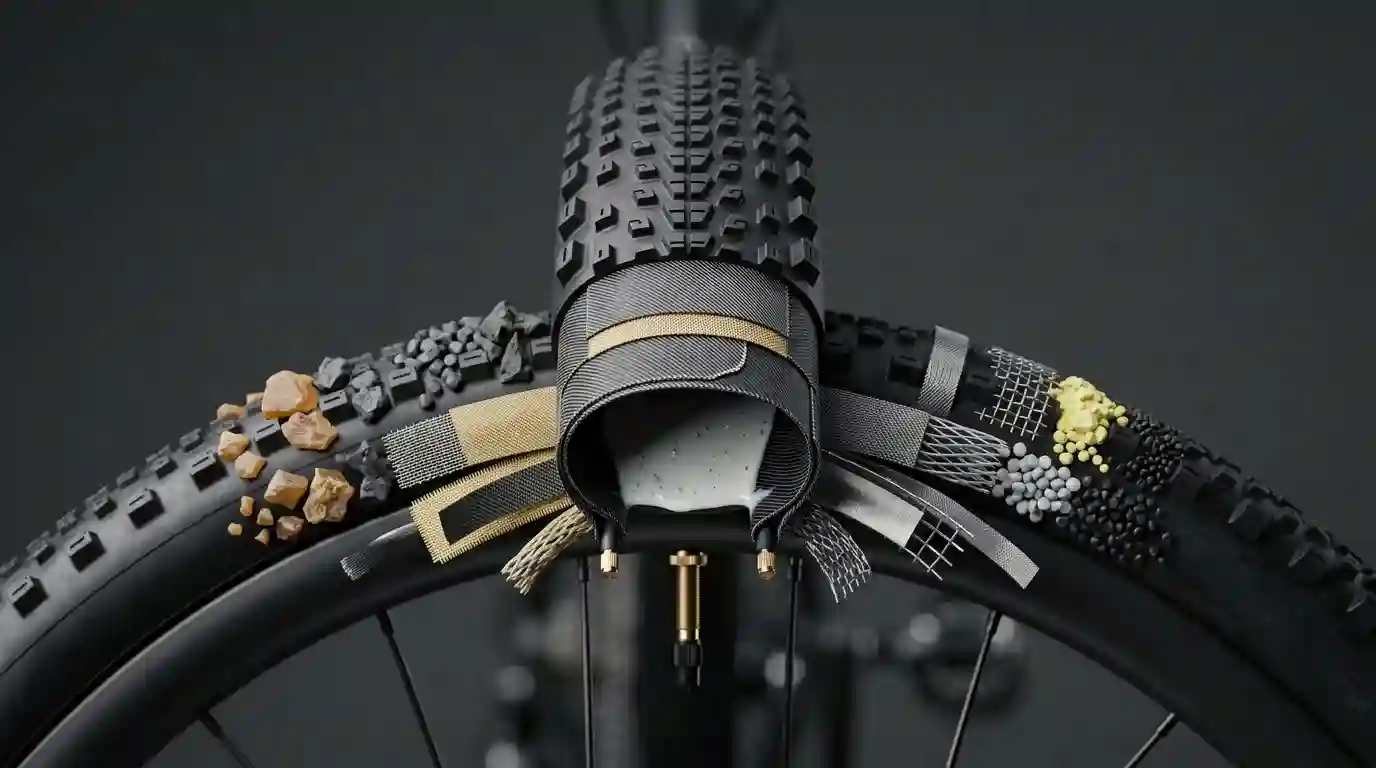
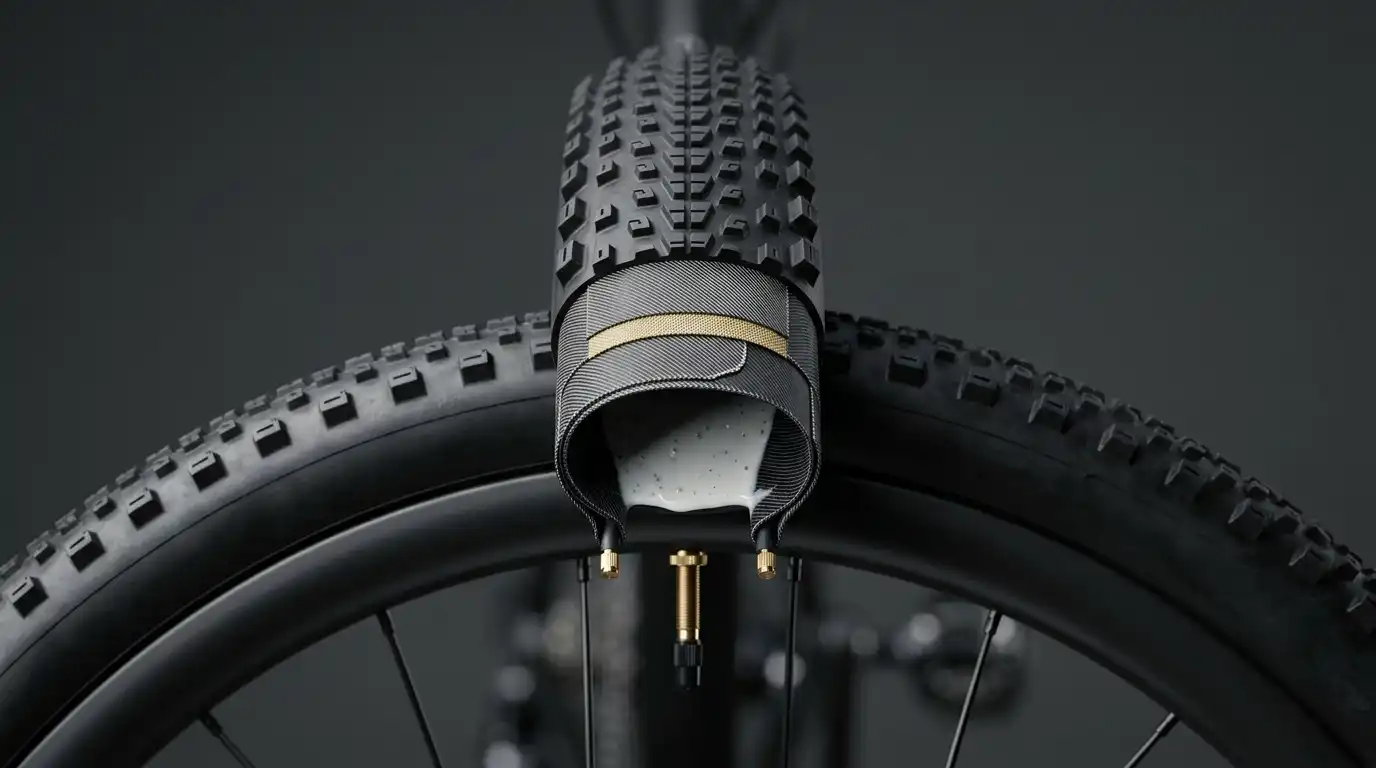
Casing threads hold the tire together under pressure. When threads break or separate, the rubber can push outward. Our bike tire casing guide explains the layers.
Cuts, sharp debris, potholes, and rim strikes can hurt the casing even when the puncture looks small. Southwestern loose rock and broken pavement are common culprits.
A damaged casing usually needs a new tire. A new inner tube alone will not fix it.
Inner Tube Trapped Under the Tire Bead
During installation, part of the tube can slip between the bead and the rim. When you inflate, it may swell into a visible bubble.
That trapped tube can burst as pressure builds. Deflate the tire fully before you touch it.
This problem is most common after a roadside repair. Hands are cold, light is poor, and you are in a hurry. Slow down, and take an extra minute to check the bead.
Then reseat the tube and tire, but only if the casing and bead are undamaged.
Incorrect Tire Bead Seating
After a repair, the bead may not sit evenly around the rim. Look for the molded line near the rim edge. It should stay an even distance above the rim all the way around.
If the bead will not seat, deflate the tire. Inspect the tire, rim, and fit before you try again. The guide on tire size compatibility can help.
Overinflation or Rim Compatibility Problems
Pressure above the tire or rim limit stresses the casing and bead. A tire and rim that do not match can also seat badly or fit unsafely.
Check the maker’s pressure limits and approved width range. Do not rely on a generic PSI number. Many tires print a maximum on the sidewall, and many rims list their own limit too. The lower of the two is your ceiling. See whether a bike tire will fit your wheel before you buy.
Why Does My Bike Tire Bulge After Changing the Inner Tube?
The usual reason is a tube pinched under the bead or a bead that did not seat. A tube that is too big or too small for the tire can also bunch up.
Another cause is a tire that was already weak. Fresh air simply showed the damage. Always check the tube size against the tire size. Our guide on how to read bike tire size makes this easy.
How Do I Know if My Bike Tire Casing Is Damaged?
Look for a growing bubble, exposed threads, deep cuts, or uneven spots. Then deflate the tire. If the bump stays, the casing is likely hurt.
Also run a finger along the inside of the tire. Feel for cracks, thin spots, or sharp objects. If you see structural damage, replace the tire.
How to Check a Bike Tire Bulge Safely
- Move the bike away from traffic. Do not ride it to test the bulge.
- Inspect the tire while it is still. Keep your face and hands away from a pressurized damaged area.
- Deflate the tire before you remove it or look for a trapped tube.
A pressurized tire with a weak spot can burst. Treat it with care.
Good light helps. Work in a bright, dry spot, and shine a flashlight inside the tire once it is off the rim. Small cuts and thin spots show up much better that way.
Step-by-Step Tire Inspection
- Stop riding and check the whole tire for bubbles, cuts, exposed threads, and uneven areas.
- Inspect the bead on both sides. See whether it sits evenly around the rim.
- If a tube is fitted, release all air. Then check for trapped sections or install damage.
- Inspect the rim edge, rim tape, and tire interior for sharp objects or impact damage.
- Replace the tire if the casing or bead is damaged. Then inflate the new tire to a suitable pressure.
Two rules to remember:
- Never try to hide a structural bulge by adding more air.
- If you cannot find the cause, have a bike mechanic inspect the wheel before you ride.
Can You Fix a Bike Tire Bulge After a Puncture?
It depends on the cause. A bulge from a trapped tube or an uneven bead may be fixable if the casing and bead are sound.
A bulge from casing separation, broken threads, or bead damage generally means a new tire. A tube patch fixes a tube hole. It does not restore a damaged tire’s strength.
So the answer to “can a bike tire bulge be repaired?” is sometimes. Only the simple causes can be corrected.
When in doubt, replace the tire. A new tire costs far less than a crash, and it gives you fresh casing and a clean bead.
How to Fix a Bulge Caused by a Trapped Inner Tube
- Remove the wheel if needed and fully deflate the tire.
- Loosen one bead. Reposition the tube so it lies inside the tire with no folds or pinched spots.
- Reseat the bead. Check both sides before adding air slowly.
- Stop if the bulge returns or the tire does not seat evenly.
Keep these points in mind:
- Follow the tire and rim maker’s install directions.
- Avoid tool use that pinches the tube or hurts the bead.
- Replace the tire if you find cuts, separated threads, or other structural damage.
To finish the job, see how to inflate a bike tire correctly.
When Should You Replace the Tire Instead of Repairing It?
- Replace a tire with a growing sidewall bubble, exposed threads, a damaged bead, or clear casing separation.
- Replace tires with serious impact damage even if the tube holds air.
- Pick a new tire that matches your wheel’s approved rim width and pressure limits.
Not sure what fits? Read what the numbers on bike tires mean and how ETRTO sizes work.
Can a Tire Boot Fix a Bulge?
A tire boot is a patch placed inside the tire. It can briefly reinforce a small cut in an otherwise sound casing. That may get you to a safe place to repair.
It cannot reliably fix a large bulge, split casing, or damaged bead. Do not treat a boot as a lasting fix for structural failure.
Does Tire Pressure Cause a Bulge After a Puncture?
Wrong pressure can make a weak casing worse. It can also add to bead problems.
Too much PSI stresses the tire and rim. Too little PSI raises the risk of rim strikes and pinch flats, which damage the tube and sometimes the casing. Use the range approved by the tire and rim makers, then adjust for width, rider weight, and terrain.
Heat matters too. Air expands in a hot car or on a sunny Arizona road, so pressure can climb during a ride. Check it again if the weather changes a lot.
How to Choose the Right Tire Pressure (PSI)
Start with the maker’s guidance. Add rider weight, bike weight, cargo, and tire volume. Heavier riders and loaded e-bikes need a different setup than light road riders.
Use a calibrated gauge. Our guide on how to check bike tire pressure shows how. For more, see how to find the correct bike tire pressure.
For road, gravel, and hybrid tires, try this rough formula for each wheel:
Starting PSI = 0.7 × wheel load (lb) × (28 ÷ tire width in mm) × (28 ÷ tire width in mm)
Use 55 percent of total weight for the rear wheel and 45 percent for the front. Total weight means rider, bike, and gear.
| System weight | 32 mm (1.25 in) | 40 mm (1.6 in) |
|---|---|---|
| 150 lb (68 kg) | 44 rear, 36 front | 28 rear, 23 front |
| 200 lb (91 kg) | 59 rear, 48 front | 38 rear, 31 front |
| 250 lb (113 kg) | 74 rear, 60 front | 47 rear, 39 front |
These are starting points for tube setups. Never pass the printed limit.
Does Tire Width Affect Bulge Risk?
Wider tires hold more air, but they still need a suitable pressure and a compatible rim. Narrow road tires and wide gravel tires use different ranges because size and load differ.
Never fit a tire outside the approved rim range to gain comfort. Check your inner rim width first. Our tire width explained guide covers the basics.
| Inner rim width | Typical tire width range |
|---|---|
| 19 mm | 28 to 40 mm (1.1 to 1.6 in) |
| 21 mm | 32 to 45 mm (1.25 to 1.75 in) |
| 25 mm | 40 to 55 mm (1.6 to 2.2 in) |
Hooked vs. hookless: Hooked rims have a lip that holds the bead. Hookless rims do not, and they often have a lower pressure cap. Follow your rim maker.
Can Overinflation Damage a Tire Casing?
Yes. Going past the maker’s pressure limit can stress the casing, bead, and rim. So can too much PSI cause a bike tire bulge? It can, especially on an already weak tire.
A tire with a bulge should come out of service, even if the pressure is within the printed limit. Limits are safety boundaries. They do not make a damaged tire safe.
Learn more about what happens if bike tire pressure is too high and whether you can overinflate a bike tire.
Do Tubeless Bike Tires Develop Bulges After Punctures?
Yes, they can. Tubeless tires can bulge from casing damage, bead trouble, or poor installation.
Tubeless sealant is a liquid that plugs small holes. It may seal a small puncture. It cannot rebuild broken casing threads or a damaged bead.
If a tubeless tire has a structural bulge, replace it. Do this even if the sealant stops the leak.
Tubeless setups add a few extra checks. Make sure the bead is fully seated all the way around. Look at the rim tape and valve base, and shake the wheel to hear if the sealant has dried out. Sealant does not last forever, so top it up on the maker’s schedule.
Tubeless vs. Inner Tube Tire Bulges
| Feature | Inner-tube tire | Tubeless tire |
|---|---|---|
| Common installation issue | Tube trapped under bead | Bead not seated correctly |
| Puncture repair | Patch or replace tube | Sealant or compatible repair |
| Casing bulge | Unsafe; usually replace tire | Unsafe; usually replace tire |
| Main maintenance need | Tube and tire inspection | Sealant, bead, and casing inspection |
Can Tubeless Sealant Fix a Sidewall Bulge?
No. Sealant can help close some small punctures, depending on hole size and the product.
It cannot repair casing separation or a damaged bead. Follow the sealant maker’s upkeep advice. Replace any tire that has structural damage.
How to Choose a Replacement Bike Tire
Match the new tire to your wheel diameter, approved rim width, riding style, and pressure range. Weigh puncture protection, casing durability, tread pattern, and wet grip.
Balance durability against weight and rolling resistance. That is the energy a tire wastes as it rolls. Do not pick a tire by tread looks alone.
Our guide on how to choose bike tires walks through the steps. You can also see what makes a good bike tire.
Should You Choose a Puncture-Resistant Tire?
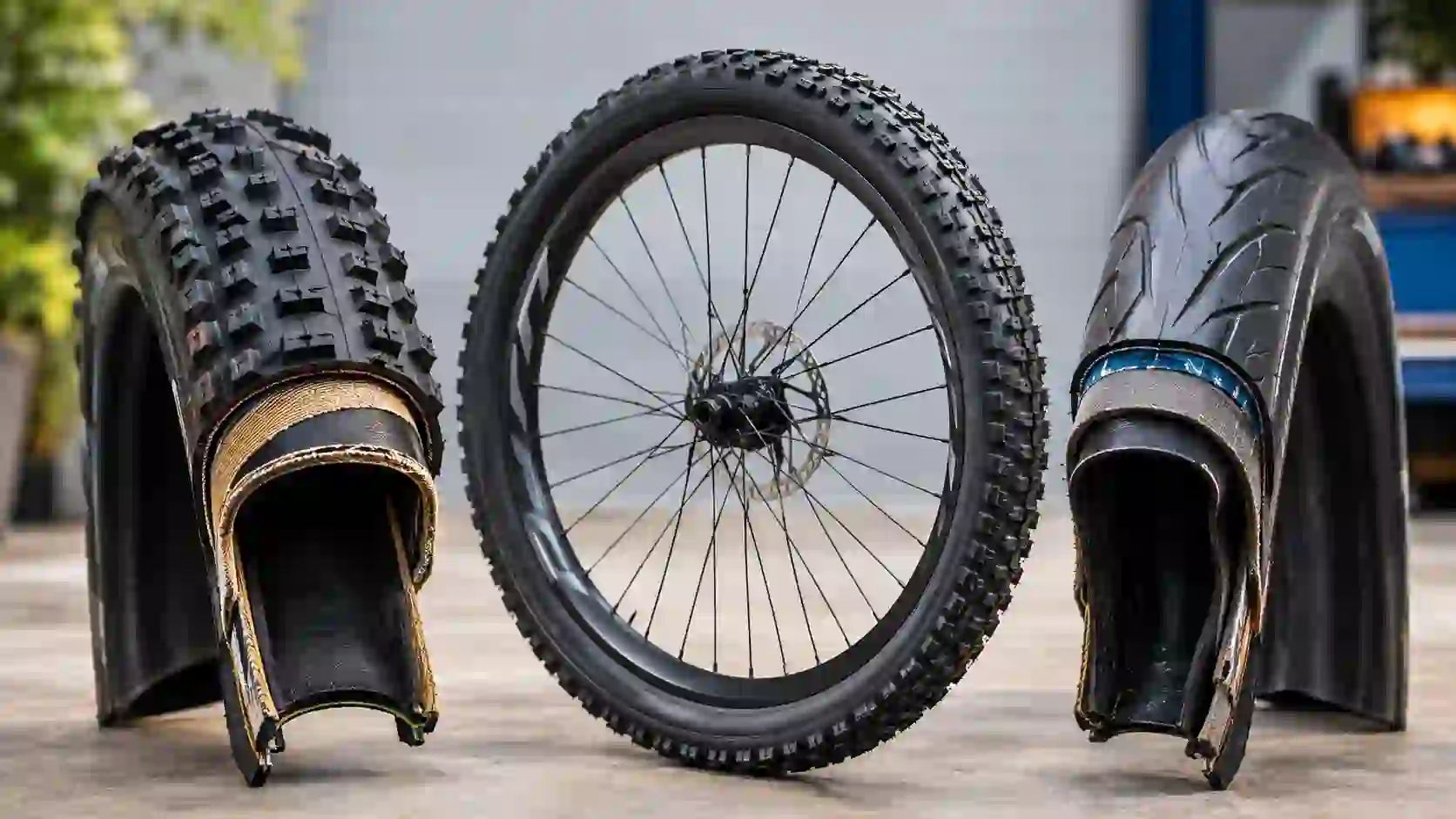
Reinforced casings and puncture belts can cut the risk of some sharp-object flats. A puncture belt is a tough layer under the tread.
Puncture protection does not make a tire immune to pinch flats, impact damage, or bulges. Commuters may value durability. Road riders may want low rolling resistance and good ride feel.
See how to choose puncture-resistant bike tires and the best bike tires for puncture protection. Our post on puncture protection vs rolling resistance shows the tradeoff.
How Do Casing TPI and Rubber Compound Matter?
TPI means threads per inch in the casing. It does not measure total tire strength on its own. A higher TPI is usually lighter and suppler, not always tougher.
The rubber compound affects grip, wear, and rolling resistance. Durometer is the scale for rubber hardness. Soft rubber grips better but wears faster.
No compound can make up for a damaged casing. Read about bike tire rubber compound and what bike tires are made of.
Which Tires Work Best for Gravel Bikes and E-Bikes?
- Gravel tires should balance casing protection, volume, tread pattern, and cornering traction on mixed surfaces. See how to choose bike tires for gravel roads.
- E-bike tires must suit the bike’s speed rating, load, and use.
- Think about motor acceleration, braking loads, and cargo weight when you pick durable tires. See how to choose durable bike tires.
Daily riders should also read about commuter bike tires. Riders on broken pavement can check tires for rough roads.
How to Prevent Another Tire Bulge or Puncture
- Check pressure before rides. Inspect tires for cuts, stuck debris, and wear.
- Install tubes with care. Confirm even bead seating before you ride.
- Avoid sharp hits when you can, and replace tires that show structural damage.
Use plastic tire levers and work slowly. Metal tools and rushed pulls can pinch the tube or nick the bead. Before you inflate, run a finger around both sides to feel for trapped rubber.
Slow air loss makes tires easier to damage. Find out why bike tires lose air to catch it early. In rain or mud, such as Pacific Northwest trails, read how to choose bike tires for wet weather.
Build a Simple Tire Maintenance Routine
- Check pressure with a gauge before longer rides. Do it more often with high-pressure road tires. See how often to inflate bike tires.
- Inspect the tread and sidewalls weekly, or after sharp debris or rough ground.
- Check rim tape, valves, and tubeless sealant on the schedule their makers suggest.
Our guide on how often to check bike tires offers a full plan.
Know When a Tire Has Reached the End of Its Life
- Replace tires with repeat bulges, deep cuts, exposed threads, or damaged beads.
- Watch for heavy tread wear, repeated punctures, and cracked rubber.
- Do not judge safety by tread depth alone. A tire with plenty of tread can still have a weak casing, especially after hard hits or years in the sun.
Learn how much tread a bike tire should have and why bike tires have different tread patterns.
How Experts Test Tire Durability and Safety
When you compare tires, record the size, casing build, rim width, pressure, load, and test conditions. Use repeatable inspection and pressure checks so results are fair.
Lean on maker specs and documented independent tests. Do not claim an informal ride test meets a certified standard unless it truly does. Our own approach is in our testing process.
What Should a Tire Review Measure?
- Rate puncture resistance, casing durability, rolling resistance, and cornering grip as separate traits.
- Check tire and rim fit against the maker’s written rules.
- State the method and limits so readers can judge how results apply to their own rides.
For more on grip, see how much tires affect grip.
Frequently Asked Questions
1. Why does my bike tire have a bulge after a puncture?
The casing may be damaged, the bead poorly seated, or a tube trapped under the bead. Stop and inspect the tire first.
2. Is it safe to ride with a bulge in a bike tire?
No, not if casing or bead damage causes it. The tire could fail suddenly. Replace a damaged tire first.
3. Can I repair a bulge in a bike tire?
You may fix a bulge from a trapped tube or uneven bead if the tire is sound. A casing bulge usually means a new tire.
4. Can overinflation cause a bike tire bulge?
Yes. Extra pressure stresses the casing, bead, and rim. Follow the maker’s limits.
5. Can a tubeless tire develop a bulge?
Yes. Sealant may close a small hole but cannot fix casing or bead damage.
6. How do I know if my bike tire casing is damaged?
Look for a growing bubble, exposed threads, deep cuts, or uneven spots that stay after you deflate the tire.
7. Does a tire bulge mean I need a new inner tube?
Not always. A trapped or damaged tube may need fixing or replacing. A bulge from casing damage needs a new tire too.
8. How often should I check my bike tire pressure?
Check it before rides and after big changes in temperature or load. Correct PSI cannot make a damaged tire safe.
Stay Safe When Your Bike Tire Develops a Bulge
A bulge after a puncture can mean casing damage, a trapped tube, or poor bead seating. Never guess.
A few calm minutes of inspection can prevent a crash. When the cause is simple, you fix it and roll on. When it is structural, a new tire is the safe choice.
- Stop riding, inspect the tire with care, and replace it if the casing or bead is hurt.
- Prevent repeats with suitable PSI, matched rims and tires, and regular checks.
- Learn how bike wheel size vs tire size works so every part fits.
- Decode sidewall labels with our bike tire markings guide.
Ready to dial in your setup? Test your exact tire, rim, and weight with the Free Bike Tire Pressure Calculator and Tire Finder Tool at TheBikeTires.com. Get a safe PSI in seconds and ride with confidence.
Want to know who writes our guides? Meet the team on our about page. Also see how much air to put in bike tires for a quick start.

Mohidul Islam is a leading cycling technology specialist and bike tire consultant with over 15 years of hands-on experience in the bicycle industry. He holds a Bachelor of Science in Mechanical Engineering from Penn State University, where he focused heavily on material science, tread mechanics, and rubber compound performance. Over the past decade and a half, Alex has conducted extensive field testing, tubeless setup evaluations, and tire pressure modeling for road, mountain, and e-bikes. His practical insights and data-driven approach help cyclists of all levels optimize grip, speed, and durability on every ride.