Flats ruin rides. So do slippery corners, harsh vibration, and tires that wear out too soon. Most of these problems start with one small number.
If you want to know how to find the correct bike tyre pressure, you are in the right place. The right tire pressure (PSI) makes you safer, faster, and more comfortable. The wrong one costs you grip and invites pinch flats.
This guide uses plain English and US units, with metric in brackets. You will get a step-by-step method, a weight-based formula, and quick tables. You will also learn how to test your own setup. Our editorial policy explains how we keep this advice accurate.
What Is the Correct Bike Tire Pressure?
Bike tire pressure is the air pressure inside your tire. In the US we measure it in pounds per square inch (PSI). Many gauges also show bar, where 1 bar is about 14.5 PSI.
The correct pressure balances four things:
- Rolling resistance: how much energy the tire wastes as it rolls.
- Comfort: how well the tire soaks up bumps.
- Puncture protection: how well the tire avoids rim strikes and pinch flats.
- Cornering grip: how well the tire holds the road in a turn.
The best number changes with tire width, rider weight, rim design, terrain, and tire build. If you want the basics first, read how bike tires work.
Why Does Bike Tire Pressure Matter?
Pressure controls how much the tire flexes. Too much pressure makes the ride harsh and can cut grip on rough ground. Too little pressure lets the tire squirm and hit the rim.
Higher pressure can reduce casing movement on smooth roads. Lower pressure can help traction and absorb bumps. The goal is a safe middle that fits you, your bike, and your route.
A good tire also helps. See what makes a good bike tyre for the traits that matter.
Is There One Perfect PSI for Every Bike?
No. A narrow road tire and a wide mountain bike tire need very different pressures. A 25 mm tire might run near 80 PSI, while a 2.4 inch tire might run near 25 PSI.
Tubeless tires often run lower than tires with inner tubes. That depends on the setup. Always stay within the limits printed on your tire and rim.
For more on how size changes the ride, see our guide to bike tire width.
How to Find the Correct Bike Tyre Pressure Step by Step
Follow these six steps for a safe starting point:
- Check the tire sidewall. Find the maker’s recommended range and the maximum PSI.
- Identify your tire size. Read the width and diameter markings to understand tire volume.
- Estimate your total load. Add your body weight, clothing, backpack, cargo, and bike weight.
- Check your setup. Confirm whether you run inner tubes or tubeless, and find your rim width.
- Choose a starting pressure. Use a trusted calculator or the maker’s chart as a guide.
- Test and adjust. Ride familiar terrain. Change pressure in small steps until grip, comfort, and stability improve.
Not sure about step 2? Our guide on how to read bike tire size walks you through it. You can also learn what the numbers on bike tyres mean.
Where Can You Find the Recommended PSI?
Start with the sidewall. Most tires print a pressure range there, often in both PSI and bar.
Next, visit the tire maker’s website. Many brands list advice by tire size and use. Then confirm that your pick fits the limits of the tire, the rim, and any other wheel part.
Need help decoding the text on the rubber? Try bike tyre markings explained for beginners. We also share how we judge tire data on our testing process page.
How Do You Read Bike Tire Pressure Markings?
Look for PSI and bar values near the tire edge. You may see a range, a maximum, or both.
The marked maximum is a limit. It is not the best pressure for riding. Most riders will run well below it.
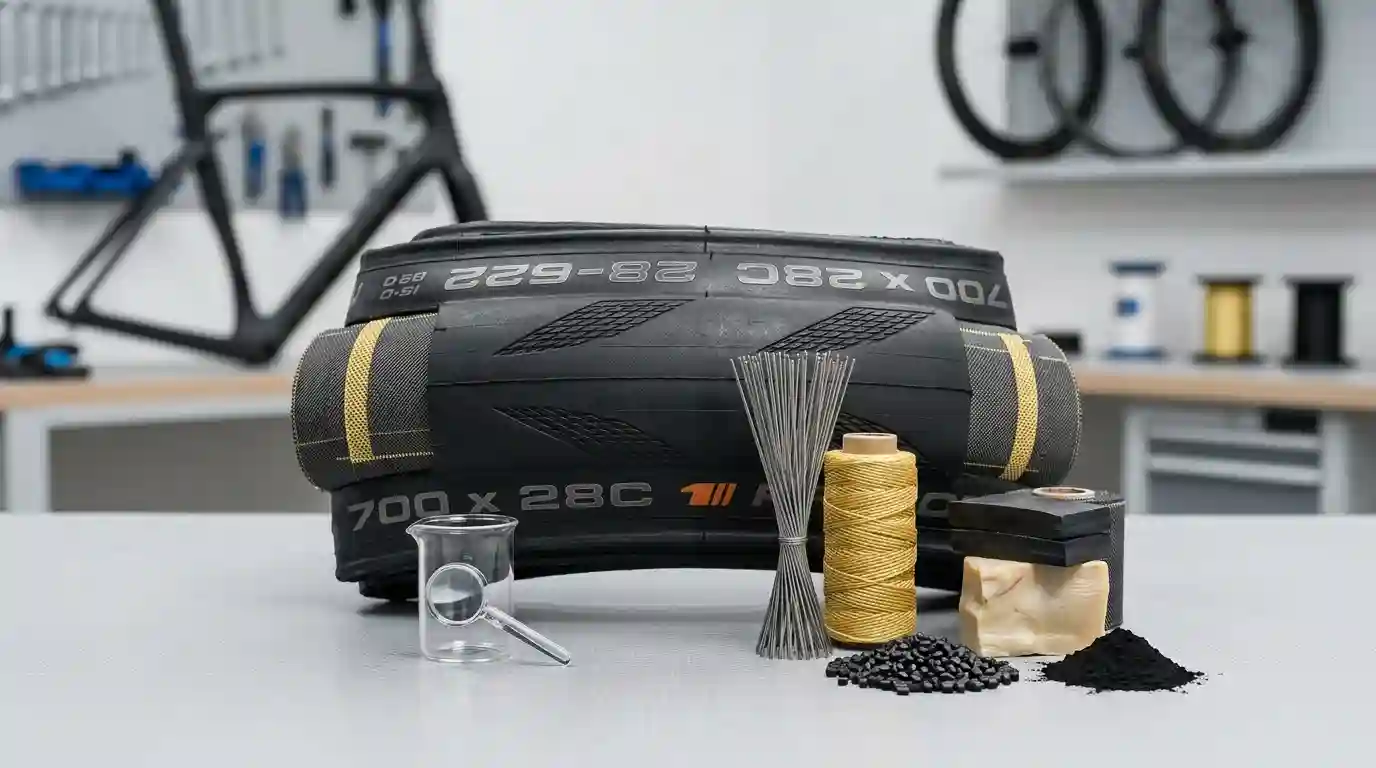
Check the size code too. Examples include 700 × 28C and 29 × 2.4 inches. The ETRTO number is the most exact, so see ETRTO bike tyre sizes. You can also measure your bike tire size yourself.
What Factors Affect the Ideal Bike Tire PSI?
Five things shape your best pressure: weight, tire volume, rim width, surface, and tire build. Change one, and the ideal number moves.
That is why copying a friend’s PSI rarely works. The sections below break each factor down in simple terms.
Rider Weight and Total System Weight
System weight is you plus the bike plus everything you carry. More weight needs more pressure to avoid too much tire squash.
Count your bike, water bottles, lock, and bags. A commuter with a loaded pannier may carry 20 pounds more than a weekend rider.
Set front and rear pressure separately. The rear wheel often carries more of the load, so it usually needs a little more air.
Tire Width and Air Volume
Wider tires hold more air. More air volume carries the same load at lower pressure.
Narrow road tires need higher PSI than wide gravel or mountain bike tires. Always compare the actual width once the tire is mounted. Rim width can change the real size.
Not sure which width suits you? See what tyre width you should choose. You may also wonder why bike tyres come in different sizes.
Rim Width and Wheel Compatibility
Inner rim width is the gap between the rim walls. It shapes the tire profile and sidewall support.
Follow the rim and tire makers’ charts instead of using tire width alone. The table below shows commonly cited ranges. Treat it as a guide and confirm with your maker.
| Inner rim width | Typical tire width range |
|---|---|
| 17 mm | 25 to 32 mm |
| 19 mm | 28 to 37 mm |
| 21 mm | 30 to 45 mm |
| 25 mm | 35 to 55 mm |
| 30 mm | 2.3 to 2.6 in (MTB) |
Hooked rims have a small lip that locks the tire bead in place. Hookless rims do not. Many hookless road rims carry a lower pressure limit, often near 72 PSI (5 bar), so check your rim maker’s number.
Learn more in bike tire size compatibility explained. You can also check whether a tire will fit your wheel.
Road Surface and Riding Conditions
Smooth pavement suits a firmer setup. Rough roads and gravel often work better with lower pressure.
Loose dirt needs extra tire give for traction. Think of Southwestern loose rocks or Pacific Northwest mud. Both reward a tire that can mold to the ground.
Wet roads call for careful tuning. For tire picks, see how to choose bike tires for rough roads and for mixed surfaces.
Recommended Bike Tire Pressure by Bike Type
These ranges are broad starting examples, not universal rules. The right PSI depends on tire width, rider and bike weight, tire build, rim limits, and terrain.
| Bike type | Example tire size | Illustrative starting range |
|---|---|---|
| Road bike | 25 to 28 mm | 65 to 95 PSI |
| Endurance road bike | 30 to 35 mm | 45 to 75 PSI |
| Gravel bike | 38 to 45 mm | 25 to 45 PSI |
| Hybrid or commuter bike | 35 to 45 mm | 40 to 65 PSI |
| Mountain bike | 2.2 to 2.4 in | 20 to 35 PSI |
| Plus-size mountain bike | 2.6 to 3.0 in | 12 to 25 PSI |
Tip: Use these numbers as examples only. They are not verified for every tire. Always stay inside your tire and rim limits.
- Tubeless setups may use lower pressure than tube-type setups.
- E-bikes may need different settings because of weight, motor assist, and cargo.
- Fine-tune in small steps after you pick a start point.
What Is the Best PSI for Road Bikes?
Start with the tire maker’s advice for your measured width, rider load, and rim size. Then adjust.
Do not assume maximum pressure gives the lowest rolling resistance. On real roads, a slightly softer tire often rolls faster because it vibrates less.
Test on the roads you actually ride. For help with width, see the best tyre width for road and city riding. If you see the code 700c, read what 700c means.
Which PSI Works Best for Mountain Bikes?
Think about tire volume, terrain, rider weight, and sidewall support. Bigger air volume lets you run lower pressure.
Technical trails often reward softer tires. But too little air can cause rim strikes or tire roll. Set the front and rear tires on their own.
Rear pressure usually runs a bit higher. The front tire needs to steer and grip. Wheel size matters too, so see what 650b means and how to choose tires for road and off-road.
What Is the Best PSI for Gravel and Commuter Bikes?
Gravel riders balance speed, loose-surface traction, and puncture resistance. Gravel tires reward patient testing.
Commuters face potholes, debris, daily cargo, and wet braking. Use a setup that protects the rim without feeling harsh.
Smooth asphalt and rough pavement call for different pressure. Read our picks on how to choose gravel road tires and commuter bike tyres. Also see the best tyre size for commuting.
What Tire Pressure Should You Use on an E-Bike?
Count the rider, bike, battery, and cargo. E-bikes are heavy, so total system weight climbs fast.
E-bike torque adds stress at launch. Braking loads are higher too. Check the tire’s load rating and use the e-bike and tire makers’ guidance, especially with heavy cargo or fast models.
Look for tires built for daily use. Our guide on choosing tires for daily cycling is a good place to start.
How to Calculate Bike Tire Pressure Based on Rider Weight
Weight is the biggest driver of your PSI. You can estimate a start point with simple math.
The method below is a rule of thumb for road and gravel tires up to about 45 mm. It is not a lab result. For wider mountain bike tires, use a trusted calculator or the maker’s chart.
Is There a Simple Bike Tire Pressure Formula?
There is no single formula that fits every tire and every ride. Good calculators weigh rider mass, tire width, load split, and surface.
Still, you can build a rough start point in three steps:
- Find system weight in pounds. Add rider, bike, and cargo. Example: 165 + 22 + 8 = 195 lb.
- Find rear PSI. Multiply system weight by 0.40. Then multiply by (28 ÷ tire width in mm) raised to the power of 1.8.
- Find front PSI. Multiply the rear number by 0.90.
Then adjust. Subtract about 10 percent for tubeless. Subtract another 5 to 10 percent for rough or wet surfaces.
Worked example: 195 lb on 32 mm tires gives about 61 PSI rear and 55 PSI front with tubes. Tubeless, that falls to about 55 and 50 PSI.
How Should You Adjust Front and Rear Tire Pressure?
Begin with the maker’s setup or a trusted calculator. Then split the load. Most bikes put more weight on the rear wheel, so the rear tire usually needs more air.
Change one tire at a time. Move by 2 to 3 PSI on road tires and 1 to 2 PSI on mountain tires. Notice grip, comfort, and stability after each change.
The table shows rule-of-thumb starting points from the formula above. These are illustrative numbers, not verified recommendations.
| System weight | 28 mm road, tubes (rear / front) | 40 mm gravel, tubeless (rear / front) |
|---|---|---|
| 130 lb (59 kg) | 52 / 47 PSI | 25 / 22 PSI |
| 160 lb (73 kg) | 64 / 58 PSI | 30 / 27 PSI |
| 190 lb (86 kg) | 76 / 68 PSI | 36 / 32 PSI |
| 220 lb (100 kg) | 88 / 79 PSI | 42 / 38 PSI |
| 250 lb (113 kg) | 100 / 90 PSI | 47 / 43 PSI |
If a result tops your tire or rim limit, stay at the limit and pick a wider tire.
How Can You Tell If Your Tire Pressure Is Too High or Too Low?
Too high: The bike feels harsh or skittish. Grip fades on rough surfaces.
Too low: The tire squirms in corners. You may feel a vague front end or hit the rim over bumps.
Also check for slow pressure loss, visible damage, and sidewall stress. If air keeps dropping, read why bike tyres lose air.
Tubeless vs. Inner Tube Tire Pressure
Tubeless and tube-type setups behave differently. The main gap is how well each one resists pinch flats.
A pinch flat happens when the tire squashes the tube against the rim. Tubeless setups have no tube to pinch. That is why they often run lower.
Can Tubeless Tires Run at Lower PSI?
Yes, often. With no tube to pinch, tubeless systems allow lower pressure.
Lower pressure can raise traction and cut vibration on rough ground. That helps in the Pacific Northwest on wet roots and in the Southwest on loose rock.
But very low pressure can still cause burping, rim damage, or tire roll. Stay inside system limits and move down slowly.
How Does an Inner Tube Affect Tire Pressure?
Tube-type tires need enough pressure to avoid pinch flats under your load. That is the key trade-off.
The right number depends on tube material, tire width, rim design, and surface. Latex and butyl tubes can behave differently.
Never copy pressure from a different tire or wheel setup. Start from your own tire’s guidance.
Does Tubeless Sealant Affect Tire Pressure?
Tubeless sealant is a liquid that plugs small punctures. It does not replace correct pressure or regular checks.
When pressure drops, look for dried sealant, valve leaks, and poor bead seating. Sealant dries out over time, so refresh it as your maker advises.
Follow the sealant brand’s instructions for upkeep and compatibility.
How Tire Construction Affects Pressure and Performance
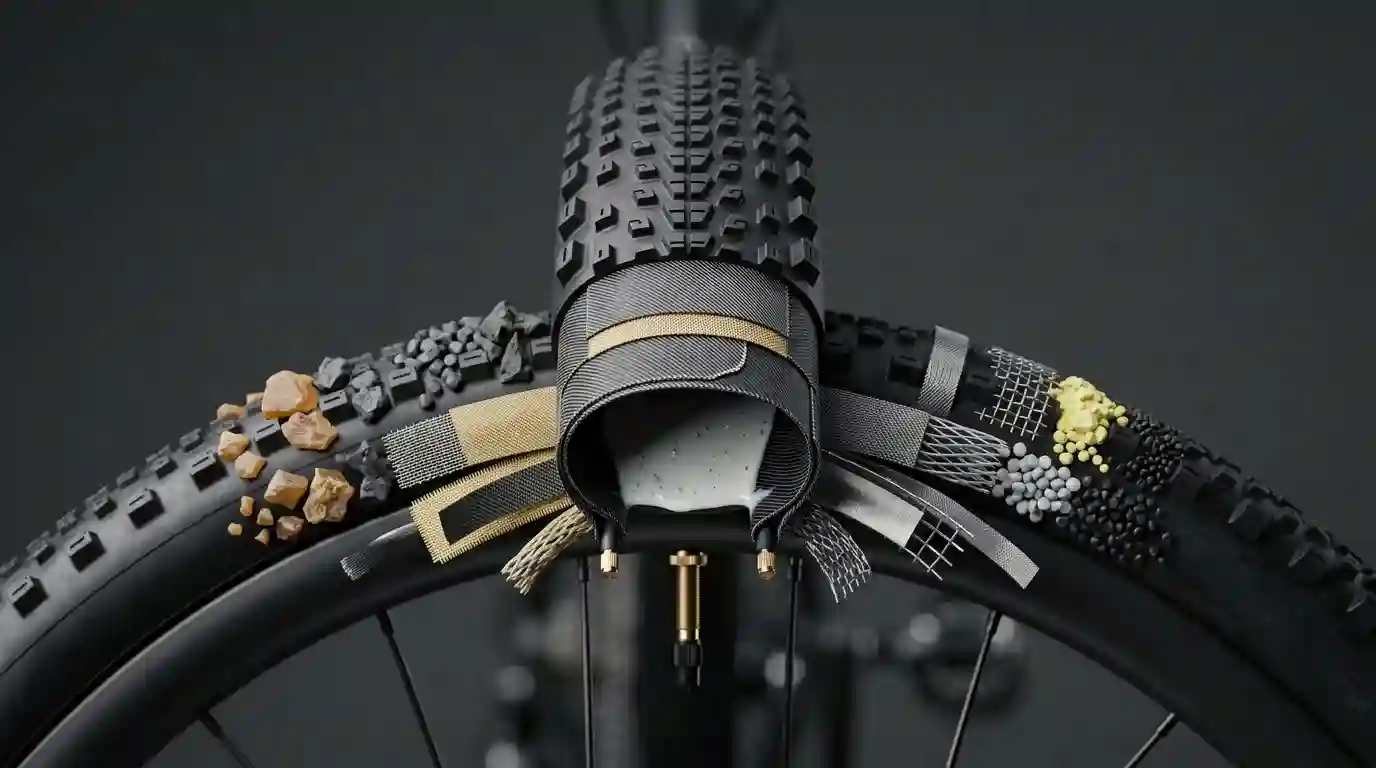
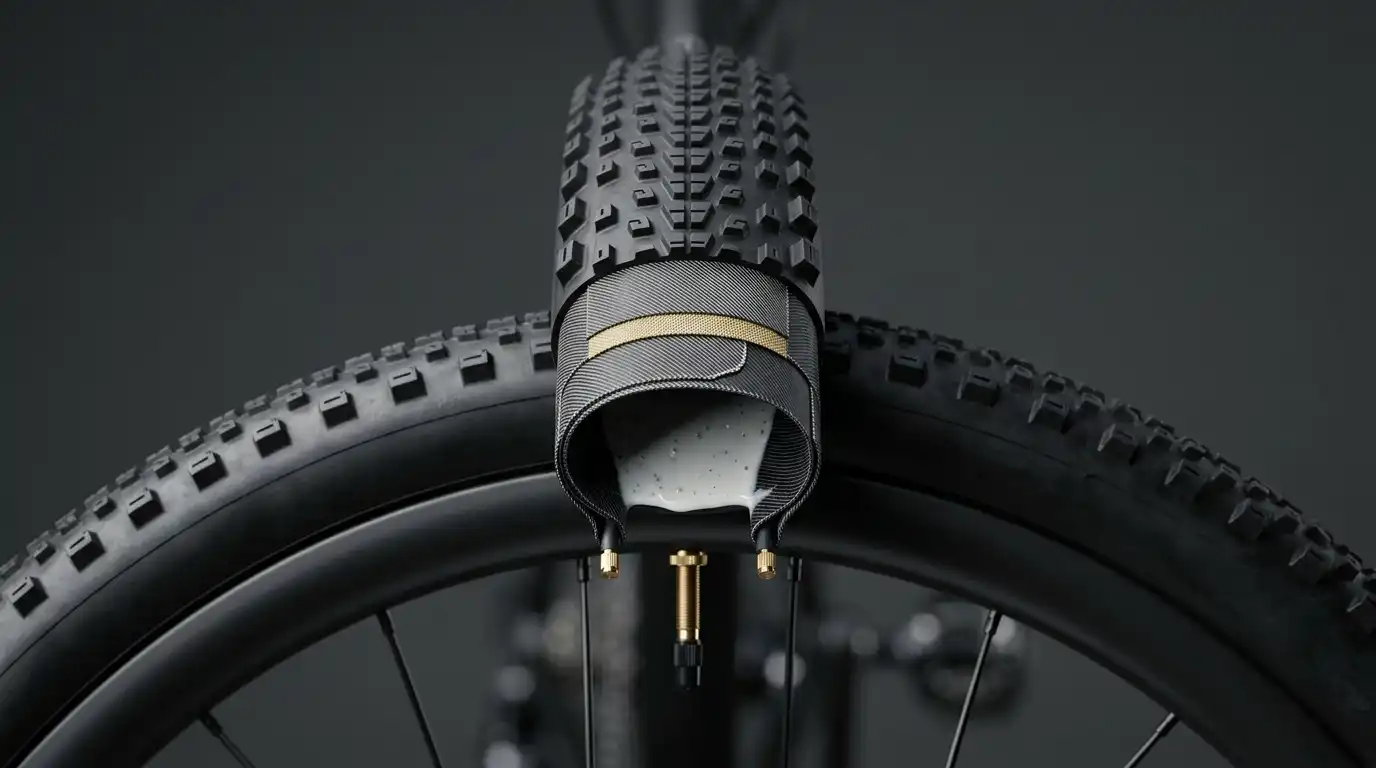
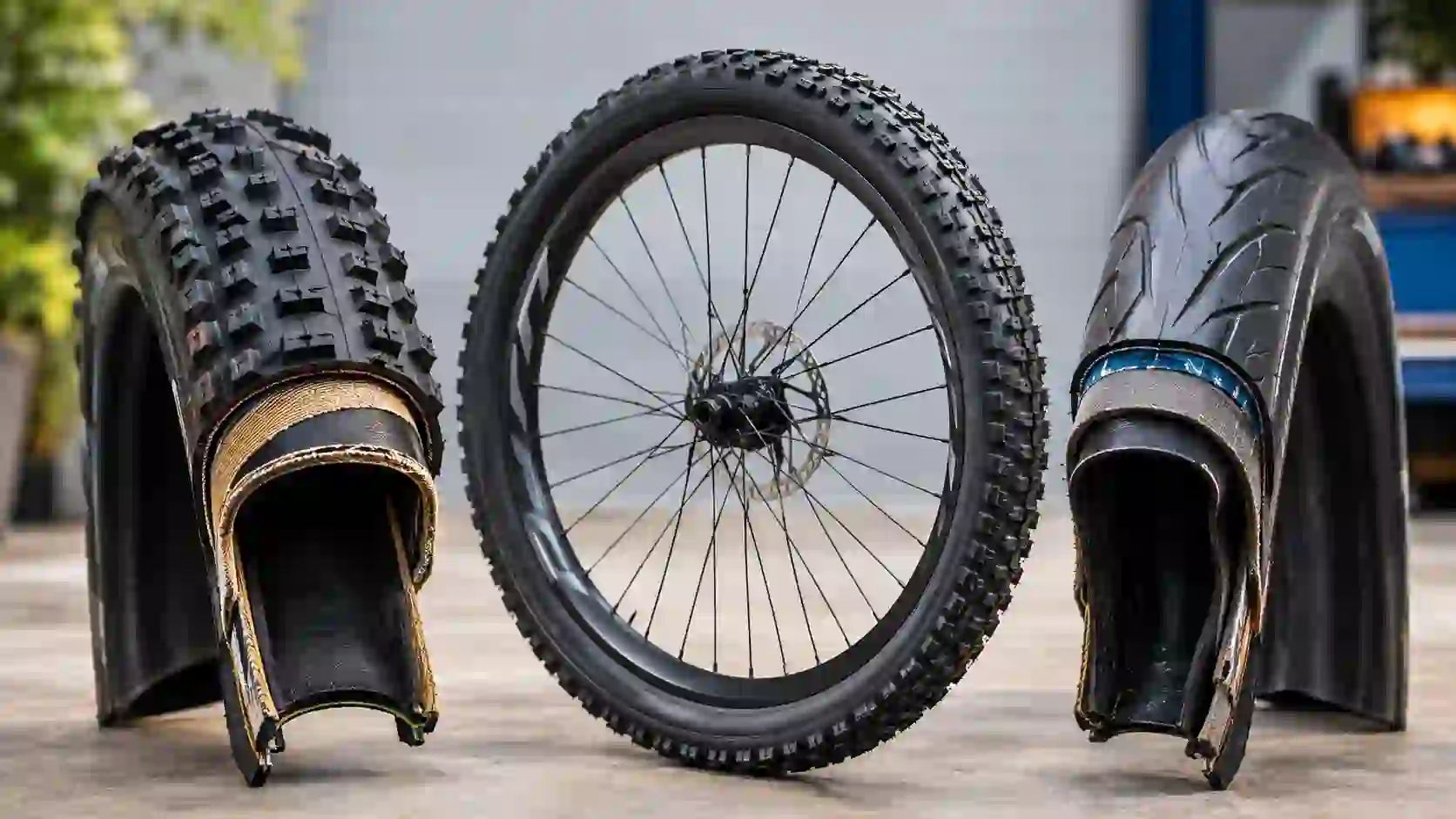
Tires are more than rubber and air. Casing, belts, compound, and tread all change how pressure feels.
Learn the basics in what bike tires are made of. The next four sections cover the main parts.
Does Casing TPI Affect the Best PSI?
TPI means threads per inch. It describes part of the casing, the fabric layer under the rubber.
TPI alone does not decide quality or ideal pressure. A flexible casing can mold to the ground differently than a stiff, reinforced one.
Look at the whole design: casing, compound, width, and use. Our guide on what a bike tire casing is explains it in more detail.
How Do Puncture Belts Affect Tire Pressure?
A puncture belt is a protective layer under the tread. It helps stop sharp debris from reaching the tube or casing.
Reinforced tires can feel different under load. Use the maker’s guidance as your start point.
Never raise PSI to make up for a worn or damaged tire. Replace it instead. See how often bike tyres should be replaced.
How Does Rubber Compound Affect Grip?
Durometer measures how hard rubber is. A lower number means softer rubber.
Softer compounds can grip better in some conditions but may wear faster. Harder compounds often last longer. Pressure and compound work together to shape grip, braking, and rolling resistance.
For more detail, read about bike tire rubber compound.
Does Tread Pattern Change the Ideal PSI?
Smooth or lightly treaded road tires work well when pressure is tuned for pavement and casing support.
Gravel and mountain tread patterns need pressure suited to loose ground, rocks, and roots. Deep tread cannot fix poor pressure, a mismatched rim, or worn rubber.
Learn why bike tires have different tread patterns. Then check how much tread a bike tyre should have.
How to Adjust Bike Tire Pressure for Speed, Comfort, and Grip
Pressure is a tuning tool. Small changes can shift your ride from fast and harsh to calm and grippy.
Use the sections below to tune for your own goals. Always stay under your limits.
Does Tire Pressure Affect Rolling Resistance?
Yes. Rolling resistance depends on tire flex, casing design, surface roughness, and pressure.
Higher PSI is not always faster. On rough pavement, vibration can steal speed.
For a fair test, ride the same route under similar conditions. Change only the pressure.
How Can You Improve Cornering Grip?
Pick a pressure that supports the tire but lets it follow the ground. That gives better cornering traction.
Watch for sidewall folding, squirm, and fuzzy steering. Those signs mean pressure may be too low.
Test changes in a safe area first. Then take them to faster or more technical corners.
What Pressure Works on Wet Roads?
There is no single wet-weather PSI. Aim for predictable grip and control.
Avoid very high pressure. It makes the bike feel harsh and unsettled on slick, uneven roads.
Check your tread and tire choice too. Pressure alone cannot promise traction. See how to choose bike tires for wet weather.
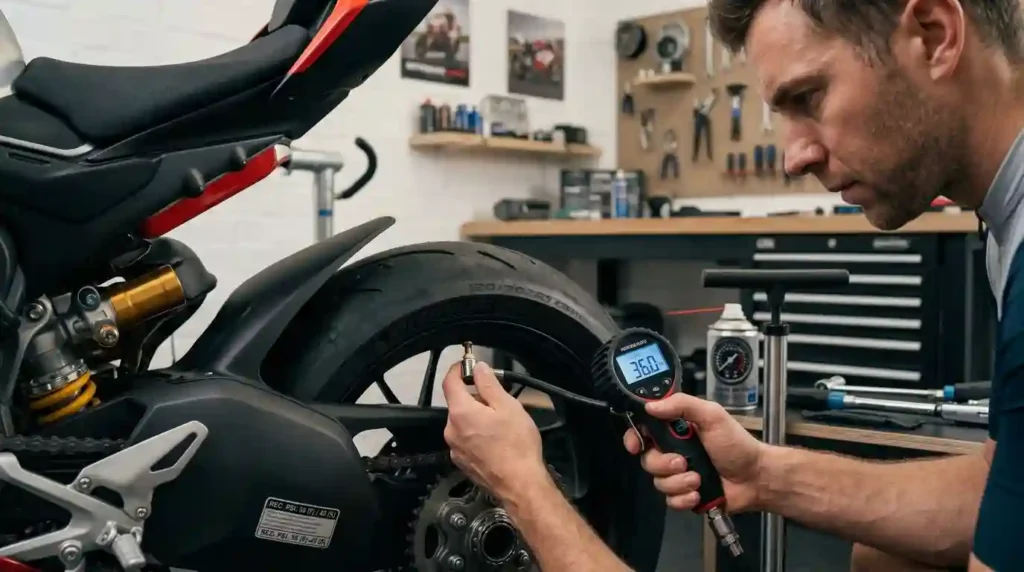
How to Check and Maintain Bike Tire Pressure
Good habits keep your pressure steady. A quick check takes less than a minute.
You need a decent gauge or pump. Then add a simple routine.
Which Bike Tire Pressure Gauge Should You Use?
Pick a reliable gauge or floor pump that reads the PSI range you need. Low-range gauges help mountain and gravel riders.
Digital and analog gauges both work when they are accurate and used the same way each time. Make sure the pump head fits your valve and does not leak much air when you remove it.
How Often Should You Check Tire Pressure?
Check before important rides. Commuters should build a weekly habit.
Narrow tires lose air faster in relative terms, so check them more often. Also inspect tires after long storage, big temperature swings, or a suspected puncture.
Our full guide covers how often to check bike tyres.
Does Temperature Affect Tire Pressure?
Yes. Air pressure rises as the tire warms and falls as it cools.
Check pressure near the temperature you will ride in. A cold garage in Minnesota and a hot Arizona afternoon will give different readings.
Never go over your tire or rim limit to make up for the weather.
How Do You Find and Fix Slow Leaks?
Inspect the tread, sidewalls, valve, and bead. Look for cuts, bulges, and embedded debris.
For tubeless, check sealant and bead seating. For tubes, inspect the tube and rim tape. Then repair or replace parts as the maker advises.
Common Bike Tire Pressure Mistakes to Avoid
Most pressure problems come from a few habits. Fix these and your ride improves fast.
- Using maximum PSI every time: The maximum is a limit, not a target.
- Ignoring tire width and rider load: The same PSI behaves differently across sizes and weights.
- Copying another cyclist’s setup: Wheels, casings, terrain, and style all change the best number.
Why Should You Avoid Guessing PSI by Feel Alone?
A tire can feel firm by hand and still be wrong for riding. Your thumb is not a gauge.
Use a gauge so your changes are repeatable. Then write down the settings that work for each route and weather.
Can You Use the Same PSI for Every Ride?
You can keep a baseline for familiar rides. But terrain and load often call for changes.
Gravel, smooth roads, wet paths, and technical trails can each need a different setup. Recheck pressure after a tire change, a wheel change, or a new load.
How to Test Bike Tire Pressure Like a Cycling Expert
Testing turns guesses into data. You do not need a lab to do it well.
- Start with the maker’s guidance. Record tire size, rim width, system weight, and starting PSI.
- Change pressure in small steps. Keep route, load, and conditions the same.
- Record comfort, grip, rolling feel, stability, and any punctures or rim strikes.
Repeat the process each season. Tires wear and routes change.
What Should You Measure During Pressure Testing?
Use repeatable lap times or power data to judge speed. Feel alone can mislead you.
Compare comfort and handling on the same road or trail section. After each test, inspect tire wear, casing damage, and pressure loss.
Which Testing Standards and Evidence Should You Trust?
Trust maker documents and recognized tire and rim compatibility guidance first.
Good tests state the tire, rim, load, pressure, and surface. Be wary of claims that one PSI is the fastest or safest for everyone. Those claims need real test data.
Frequently Asked Questions About Bike Tire Pressure
These answers cover the questions riders ask most. Each one builds on the guide above.
1. How Do I Find the Correct Bike Tyre Pressure?
Check the sidewall. Then confirm the allowed range with the tire and rim makers.
Consider tire width, system weight, terrain, and whether you run tubeless. Start with a sound recommendation and fine-tune it with a gauge. If you need your size first, see how to find bike tyre size.
2. What PSI Should I Use for My Weight?
Heavier loads need more pressure for the same setup. Tire width, load split, casing, and terrain also matter.
Use a trusted calculator or maker chart rather than weight alone. The table earlier in this guide gives illustrative starting points.
3. Is Higher Tire Pressure Always Faster?
No. Higher pressure can help on smooth surfaces. On rough roads it can add vibration losses.
Casing, width, and surface all change rolling resistance. Test under similar conditions to see what works for you.
4. Should Tubeless Tires Have Lower Pressure Than Inner Tube Tires?
Often, yes. Tubeless setups avoid tube pinch flats.
Safe pressure still depends on tire, rim, load, and terrain. Follow system limits to prevent burping, rim strikes, or instability.
5. How Often Should I Inflate My Bike Tires?
Check before rides when steady performance matters. Check more often if your tires lose air fast or have narrow casings.
If you keep adding air, look for the cause. See bike tyres losing air for common culprits.
6. Can the Wrong PSI Cause a Flat Tire?
Yes. Low pressure can cause pinch flats with tubes, or rim strikes on rough ground.
High pressure adds harshness and may pass your tire or rim limits. Sharp debris, damaged tires, and bad rim tape can also cause flats. For e-bikes, also check the tire’s load rating.
7. How Do I Know When My Bike Tires Need Replacing?
Look for worn tread, exposed casing, cracks, bulges, or repeat punctures. Follow any wear marks on the tire.
Correct PSI helps performance, but it cannot make a damaged tire safe. Not sure what to buy next? Our guide on how to choose bike tyres can help.
8. Does Rim Width Affect Bike Tire Pressure?
Yes. Inner rim width changes tire shape and sidewall support.
Check compatibility charts before changing tire width or pressure. Never exceed the limit set for the whole wheel setup. Curious about swaps? Read whether you can change bike tire width.
Conclusion: Find Your Ideal Bike Tire Pressure
The correct pressure depends on tire size, total load, rim width, tire build, and conditions. There is no one number for everyone.
A good setup balances rolling resistance, cornering grip, comfort, and puncture protection. Regular checks and careful testing keep your ride safe and steady.
Here are the key takeaways:
- Start with the sidewall and the rim limits.
- Use system weight and tire width to pick a start point.
- Adjust in small steps and record what works.
- Check pressure often, and fix leaks early.
New to all this? Our list of best bike tyres for beginners is a friendly next read. You can also learn more about our team.
Get Your Exact PSI in Seconds
Do not guess. Enter your weight, tire size, and riding style into the Free Bike Tire Pressure Calculator and Tire Finder Tool at TheBikeTires.com. Get a trusted starting pressure for your exact setup, then fine-tune it on your next ride.

Mohidul Islam is a leading cycling technology specialist and bike tire consultant with over 15 years of hands-on experience in the bicycle industry. He holds a Bachelor of Science in Mechanical Engineering from Penn State University, where he focused heavily on material science, tread mechanics, and rubber compound performance. Over the past decade and a half, Alex has conducted extensive field testing, tubeless setup evaluations, and tire pressure modeling for road, mountain, and e-bikes. His practical insights and data-driven approach help cyclists of all levels optimize grip, speed, and durability on every ride.