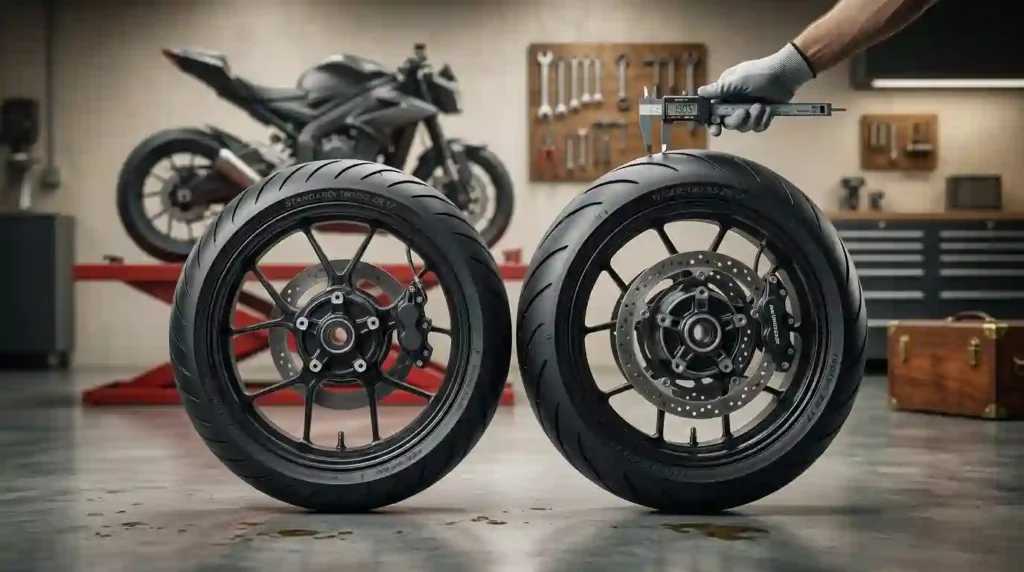
Yes, you can change your bike tire width without replacing your wheels. The key is ensuring your new tire matches your wheel’s bead-seat diameter, fits your internal rim width, and leaves adequate frame and fork clearance.
Swapping tire width alters your bike’s contact patch, air volume, and handling characteristics. A wider tire offers increased compliance and cornering traction, while a narrower tire reduces weight and aerodynamic drag. However, pushing beyond manufacturer compatibility limits risks frame rub, altered steering geometry, or tire blowouts.
Can You Change Bike Tire Width?
Quick Answer: Featured Snippet
Yes, you can change bike tire width while keeping your original wheels, provided the replacement tire shares the exact bead-seat diameter (e.g., ISO 622 for 700c/29er) and falls within your rim’s approved internal rim width range. You must also maintain at least 3 mm to 6 mm of physical clearance between the tire, frame, fork, and brakes.
Changing tire width is not the same as changing your wheel diameter. While wheel diameter refers to the rim’s total size, tire width refers to the tire casing’s cross-sectional measurement.
+-----------------------------------------------------------------+
|                       FRAME / FORK ARCH                         |
|                                                                 |
|     |<----------------- Frame Clearance ----------------->|     |
|     |                                                     |     |
|     |           /-----------------------------\           |     |
|     |          /        TIRE CASING            \          |     |
|     |         |    (Changes with width & PSI)   |         |     |
|     |          \                               /          |     |
|     |-- 4-6mm --|==== BEAD-SEAT DIAMETER =====|-- 4-6mm --|     |
|                 |         (Fixed Size)        |                 |
|                 |                             |                 |
|                 |==== INTERNAL RIM WIDTH =====|                 |
|                 \____      RIM FLANGE    ____/                  |
|                      \__________________/                       |
+-----------------------------------------------------------------+
When changing tire width, confirm these critical factors before purchasing:
- Bead-Seat Diameter: Must match your rim size perfectly.
- Internal Rim Width: Determines safe sidewall support and casing shape.
- Frame and Fork Clearance: Prevents frame rub from wheel flex or mud.
- Component Clearance: Ensures no interference with rim brakes, derailleurs, or fenders.
- Manufacturer Specifications: Sets maximum pressure and width limits.
What Can Change When You Change Tire Width?
Changing tire width fundamentally alters your bike’s performance:
- Air Volume and Pressure: Wider tires hold higher air volume, allowing for lower PSI without risking pinch flats.
- Compliance and Comfort: Lower pressures absorb high-frequency road vibrations and trail chatter.
- Rolling Resistance: Wider tires reduce casing deformation at equal pressures, lowering resistance over rough surfaces.
- Cornering Grip: A larger footprint provides consistent traction during lean angles.
- Handling and Steering: Wider casings can slow down steering response, making the bike feel more stable.
Is Changing Tire Width Safe?
Changing tire width is completely safe when the tire and rim dimensions are compatible. Danger arises when installing a tire that is too wide for the internal rim width, which can cause the bead to unseat under hard cornering.
Never allow a tire to rub against the frame or fork. Frame rub will wear through carbon fiber, aluminum, or steel, leading to structural failure. Always respect the lowest maximum pressure rating between your tire and rim.
What Determines the Tire Width You Can Use?
Three mechanical boundaries dictate the tire widths your bicycle can safely accept:
                  +-----------------------------------+
                  |  TIRE WIDTH SELECTION BOUNDARIES  |
                  +-----------------------------------+
                                    |
        +---------------------------+---------------------------+
        |                           |                           |
        v                           v                           v
+---------------+           +---------------+           +---------------+
|   RIM WIDTH   |           |    FRAME &    |           |  BEAD-SEAT    |
|               |           |FORK CLEARANCE |           |   DIAMETER    |
| Sets sidewall |           | Sets absolute |           |  Must match   |
| profile/shape |           | maximum size  |           | rim size 1:1  |
+---------------+           +---------------+           +---------------+
Rim Width
Your rim’s internal rim width determines the structural profile of the mounted tire. Measuring this distance inside the rim walls indicates which tire casing sizes receive proper support.
Mounting a wide tire on a narrow rim causes excessive sidewall bulge, leading to squirm under cornering loads. Conversely, mounting a narrow tire on a wide rim stretches the casing flat, exposing the rim edges to impact damage and squaring off the tread profile.
Frame Clearance
Frame clearance creates the absolute upper limit for tire width. You must measure the tightest pinch points on your bicycle:
- Chainstays: The lower frame tubes near the bottom bracket.
- Seatstays: The upper frame tubes near the rear brake mount.
- Fork Crown: The underside arch of the front fork.
- Brake Calipers or Derailleurs: Front derailleur clamps and rim brake arches.
Always leave a minimum safety margin of 3 mm on road bikes and 6 mm on gravel or mountain bikes for mud, wheel flex, and debris clearance.
Wheel Diameter
Wheel diameter and tire width are distinct measurements. A 700c wheel always requires a 700c (ISO 622) tire, regardless of whether you choose a 25 mm road slick or a 45 mm gravel tire.
| Marketing Name | ISO / ETRTO Standard | Common Usage |
| 26 Inch | 559 mm | Vintage MTB, Commuter |
| 27.5 Inch / 650b | 584 mm | Modern Trail, Gravel, E-Bike |
| 29 Inch / 700c | 622 mm | Road, Gravel, Cross-Country, Enduro |
How to Measure Your Current Bike Tire
Quick Guide: Tire Measurement Steps
- Read the nominal size markings on your tire’s sidewall.
- Measure the internal rim width using calipers.
- Inflate the tire and measure the actual mounted width.
- Check clearance at the chainstays, seatstays, and fork crown.
- Match your dimensions against manufacturer compatibility charts.
                      +---------------------------+
                      | MEASURING YOUR TIRE & RIM |
                      +---------------------------+
                                    |
    +-------------------------------+-------------------------------+
    |                               |                               |
    v                               v                               v
+-----------------------+ +-----------------------+ +-----------------------+
| 1. READ SIDEWALL      | | 2. MEASURE ACTUAL     | | 3. MEASURE INTERNAL   |
|                       | |    MOUNTED WIDTH      | |    RIM WIDTH          |
| Find ISO/ETRTO stamp  | | Use digital calipers  | | Measure inside rim  |
| (e.g., 28-622)        | | across widest casing  | | walls with tire off |
+-----------------------+ +-----------------------+ +-----------------------+
Read the Tire Sidewall
Tire sidewalls display several sizing systems:
- Imperial (MTB): e.g.,
29 x 2.4(29-inch outer diameter, 2.4-inch casing width). - Metric (Road/Gravel): e.g.,
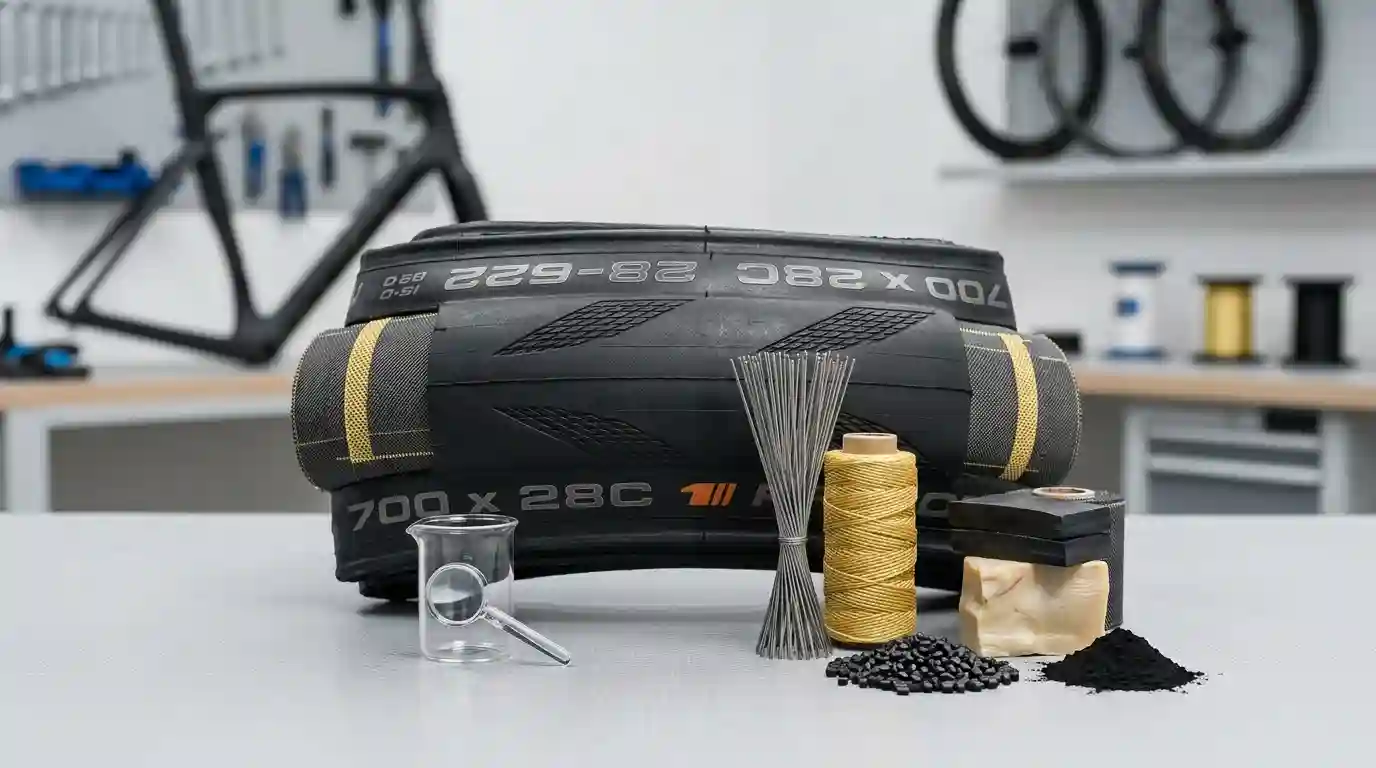
700 x 28c(700 mm outer diameter, 28 mm nominal width). - ETRTO / ISO Standard: e.g.,
28-622(28 mm width, 622 mm bead-seat diameter).
Always trust the ISO/ETRTO numbers over traditional marketing descriptions for precise fitment.
Measure Actual Tire Width
Tires rarely measure their exact printed size once inflated. A tire labeled “28 mm” may measure 30 mm wide when mounted to a modern, wide rim.
Use vernier calipers across the widest section of the tread or casing at your standard riding PSI. Base your frame clearance safety calculations on this actual measured width rather than the sidewall label.
How Much Can You Change Bike Tire Width?
There is no single universal increment for every bike. Permissible width changes depend on your current rim profile, frame design, and component brake limits.
+-------------------------------------------------------------------+
|               TYPICAL TIRE WIDTH UPGRADE PATHS                    |
+-------------------------------------------------------------------+
| ROAD     |  25 mm  ===>  28 mm  ===>  30/32 mm (Disc Bikes)       |
+----------+--------------------------------------------------------+
| GRAVEL   |  35 mm  ===>  40 mm  ===>  45/50 mm (High Clearance)   |
+----------+--------------------------------------------------------+
| MTB      |  2.2 in ===>  2.4 in ===>  2.5/2.6 in (Wide Rims)       |
+-------------------------------------------------------------------+
Common Road Bike Width Changes
Road cycling has shifted from ultra-narrow, high-pressure setups toward wider, high-volume options:
- 25 mm to 28 mm: The most common road upgrade. Adds compliance, lowers rolling resistance over real-world asphalt, and fits most modern rim-brake or disc-brake road frames.
- 28 mm to 30 mm/32 mm: Excellent for endurance riding. Delivers vibration damping on chip-seal roads. Generally requires a disc-brake frame.
Common Gravel Tire Changes
Gravel riding demands flexibility based on local terrain:
- 35 mm to 40 mm: Increases cornering traction and rim protection on coarse aggregate, loose fire roads, and Midwest gravel.
- 40 mm to 45 mm+: Ideal for loose sand, singletrack, and technical descents. Verify clearance with front derailleurs and full-coverage fenders.
Common MTB Width Changes
Mountain bikers alter casing widths to balance acceleration and traction:
- 2.2″ to 2.4″ (Cross-Country): Enhances impact absorption and grip over technical roots without adding excess weight.
- 2.4″ to 2.5″/2.6″ (Trail/Enduro): Provides aggressive cornering support and protection against rim strikes on rocky descents like those in the American Southwest.
Can You Change Tire Width Without Changing the Wheels?
Yes, you can keep your existing wheels when changing tire width. As long as the tire’s bead diameter matches your wheel’s bead seat, the wheel itself does not need to be replaced.
Changing 700c Tire Width
A single 700c road or gravel wheelset can accommodate multiple widths, provided the internal rim width is compatible:
   700c Rim (e.g., 21mm Internal Width)
   ├── 28 mm Width  -->  High-speed pavement
   ├── 32 mm Width  -->  Rough roads & chip-seal
   ├── 38 mm Width  -->  Light gravel & dirt roads
   └── 42 mm Width  -->  Technical gravel
Always recalculate your PSI when changing widths on the same wheelset. Larger tire volumes require lower pressures to maintain stability and ride quality.
Changing 29er Tire Width
A 29-inch mountain bike wheel uses the exact same 622 mm bead-seat diameter as a 700c road wheel. You can mount a 2.2″ XC tire or a 2.5″ Enduro casing onto the same 29er rim, provided the rim width supports both options.
On full-suspension mountain bikes, compress the rear shock completely without air to ensure the wider tire does not contact the seat tube at full travel.
Does Rim Width Matter When Changing Tire Width?
Rim Width Principle
Yes, rim width dictates tire profile, cornering stability, and bead security. Always select a tire width that falls within your rim manufacturer’s approved sizing chart.
+-------------------------------------------------------------------+
|                      TIRE PROFILE ON RIMS                         |
+-------------------------------------------------------------------+
|  TOO NARROW RIM            CORRECT FIT             TOO WIDE RIM   |
|   (Lightbulb Profile)    (Supported Profile)     (Square Profile) |
|         /---\                   /---\                 |-------|   |
|        (     )                 /     \                |       |   |
|         \___/                 /_______\               |_______|   |
|         |   |                  |     |                |       |   |
+-------------------------------------------------------------------+
Narrow Tire on a Wide Rim
Mounting a narrow tire onto a wide rim flattens the casing tread arch, creating a squared-off profile:
- Exposes fragile sidewalls to sharp rocks and debris.
- Causes sudden, unpredictable loss of grip when leaning into corners.
- Increases the risk of rim damage on hard impacts.
Wide Tire on a Narrow Rim
Mounting an overly wide tire onto a narrow rim creates a “lightbulb” profile:
- Causes tire squirm, where the casing folds laterally under cornering loads.
- Forces you to run higher PSI to maintain stability, negating comfort gains.
- Increases the risk of the tire bead unseating from the rim flange.
Hooked vs. Hookless Rims
Understanding your rim flange design is critical for safe width and pressure adjustments:
HOOKED RIM (Crochet)                 HOOKLESS RIM (Straight-Side)
  |  /                                 |  |
  | (   <-- Retention Hook             |  |   <-- Straight Wall
  |  \                                 |  |
  |___|                                |__|
- Hooked (Crochet) Rims: Feature an inward-curving lip that locks the tire bead in place. Compatible with standard tube-type and tubeless tires up to higher pressure limits (often 110+ PSI).
- Hookless (Straight-Side) Rims: Feature flat, straight sidewalls common on modern carbon wheels. They require tubeless-specific tires with stiff beads. Never exceed 73 PSI (5 BAR) on a hookless rim.
Rim Width to Tire Width Compatibility Table
Use this reference table to match your rim’s internal rim width to an appropriate tire size range:
| Internal Rim Width | Recommended Minimum Tire Width | Recommended Maximum Tire Width |
| 15 mm | 23 mm | 32 mm |
| 17 mm | 25 mm | 38 mm |
| 19 mm | 28 mm | 45 mm |
| 21 mm | 30 mm | 50 mm / 2.0″ |
| 23 mm | 32 mm | 2.25″ |
| 25 mm | 38 mm / 1.5″ | 2.4″ |
| 30 mm | 2.25″ | 2.6″ |
| 35 mm | 2.4″ | 2.8″ |
How Changing Tire Width Affects PSI
The PSI Relationship
Wider tires require lower air pressure than narrower tires to support the same total system weight. Increasing air volume allows you to drop pressure, improving comfort and traction while protecting against rim strikes.
                    +---------------------------+
                    | AIR VOLUME VS. PRESSURE   |
                    +---------------------------+
                                  |
        +-------------------------+-------------------------+
        |                                                   |
        v                                                   v
+-------------------------------+   +-------------------------------+
|    NARROW TIRE (25 mm)        |   |     WIDER TIRE (32 mm)        |
|  - Small internal air volume  |   |  - Large internal air volume  |
|  - Requires HIGHER PSI        |   |  - Requires LOWER PSI         |
|  - Less vertical compliance   |   |  - Superior impact damping    |
+-------------------------------+   +-------------------------------+
Wider Tire = Lower PSI?
Yes. Air pressure is defined as force per unit area. Because a wider tire has a larger surface area inside the casing, it requires less internal pressure ($P = F / A$) to support the combined weight of the bike and rider.
Lowering pressure in a high-volume tire expands the contact patch laterally rather than longitudinally, improving compliance and traction without increasing energy loss.
Narrower Tire = Higher PSI?
A narrower tire holds less air volume, requiring higher pressure to keep the rim from hitting the road surface over bumps.
However, overinflating a narrow tire causes “suspension losses.” Instead of flexing over road imperfections, the overinflated tire bounces up and over obstacles, wasting forward momentum and causing rider fatigue.
How Rider Weight Changes PSI
Air pressure must be tailored to your total system weight:
$$\text{Total System Weight} = \text{Rider Weight} + \text{Bike Weight} + \text{Gear/Cargo Weight}$$
Because the rear wheel carries roughly 60% of total system weight while the front carries 40%, always run 2 to 3 PSI higher in the rear tire than in the front.
+-----------------------------------------------------------------------+
|              STARTING PSI GUIDE FOR 700c ROAD TIRES                   |
+-----------------------------------------------------------------------+
| Total Weight   | 25 mm Tire (F/R) | 28 mm Tire (F/R) | 32 mm Tire (F/R)|
+----------------+------------------+------------------+----------------+
| 150 lbs (68kg) | 72 / 75 PSI      | 60 / 63 PSI      | 46 / 48 PSI    |
| 180 lbs (82kg) | 82 / 85 PSI      | 70 / 73 PSI      | 54 / 57 PSI    |
| 210 lbs (95kg) | 93 / 96 PSI      | 80 / 83 PSI      | 63 / 66 PSI    |
+-----------------------------------------------------------------------+
Does Changing Tire Width Affect Speed?
Switching to wider tires does not automatically make your bicycle slower. Modern testing demonstrates that wider tires at optimal pressures roll faster over real-world road surfaces than narrow tires at maximum pressure.
Rolling Resistance
Rolling resistance is caused by hysteresis—energy lost as the casing flexes and deforms under load.
NARROW TIRE CONTACT PATCH            WIDER TIRE CONTACT PATCH
(Long, deep deflection)              (Short, wide deflection)

       |   |                                |       |
       |   |                                |       |
     (_______)                            (___________)
At equal pressures, a wider tire forms a shorter, broader contact patch. This shorter patch reduces structural casing deformation, resulting in less energy lost to internal friction.
Tire Weight
Wider tires require more rubber, casing material, and puncture protection layer, which increases rotational mass:
- Impact on Acceleration: Extra mass requires more effort during sharp acceleration and steep climbs.
- Impact on Inertia: Once up to speed on flat terrain, minor weight increases have a minimal effect on rolling momentum.
Aerodynamics
At speeds above 18 mph (29 km/h), aerodynamic drag becomes the dominant resistive force:
- A wider tire increases the frontal surface area of the bike.
- For optimal aerodynamic efficiency, pair your tire with a rim whose outer width is at least 105% of the mounted tire’s width (the 105% Rule).
How Tire Width Affects Comfort and Cornering Grip
+-------------------------------------------------------------------+
|               TIRE WIDTH PERFORMANCE TRADEOFFS                    |
+-------------------------------------------------------------------+
|   FEATURE          | NARROW TIRE (23-25mm) | WIDE TIRE (30-35mm+) |
+--------------------+---------------------+------------------------+
| Ride Comfort       | Low (Harsh)         | High (Plush)           |
| Cornering Traction | Moderate            | High                   |
| Vibration Absorption| Poor               | Excellent              |
| Rotational Weight  | Low                 | Higher                 |
| Aerodynamics       | High                | Moderate               |
+-------------------------------------------------------------------+
Comfort
High-frequency vibrations from unpaved trails or broken pavement cause physical fatigue. A wider tire at lower pressure acts as an un-damped pneumatic suspension layer, filtering out road chatter before it reaches your hands, feet, and saddle.
Cornering Grip
Grip is determined by contact patch area, rubber compound durometer, and tread profile. A wider tire allows lower pressures, enabling the casing to conform over pavement micro-textures and loose trail debris for reliable grip during aggressive leaning.
Handling
- Narrow Tires: Provide fast, responsive steering input, making the bike feel lively and agile.
- Wide Tires: Provide increased self-centering stability, damping quick steering corrections. This can feel grounded on high-speed descents, but sluggish if the tire width exceeds rim support limits.
Can You Change Tire Width on Different Bike Types?
Can You Change Tire Width on a Road Bike?
Modern disc-brake road bikes often clear up to 32 mm or 35 mm tires, whereas older rim-brake road frames are limited by caliper arch height:
  Rim Brake Limit:  Typically 28 mm Max
  Disc Brake Limit: Typically 32 mm to 38 mm Max
Upgrading an older rim-brake road bike from 25 mm to 28 mm tires provides an immediate improvement in compliance. Always check brake caliper arm clearance when the brake is open and closed.
Can You Change Tire Width on a Mountain Bike?
- Cross-Country (XC): Riders often switch between 2.25″ and 2.4″ tires. A wider casing allows lower pressure over technical rock gardens without sacrifice to rolling efficiency.
- Trail and Enduro: Swapping from 2.4″ to 2.5″ or 2.6″ front tires improves lean angle stability and offers rim protection on high-speed descents.
- Full-Suspension Travel: Always verify clearance at full suspension compression to prevent the tire from hitting the seat tube.
Can You Change Tire Width on a Gravel Bike?
Gravel bikes feature generous clearance designed for versatile tire setups:
- Fast Gravel (Pavement/Hardpack): 35 mm to 38 mm semi-slick tires reduce rotational mass and improve aerodynamic efficiency.
- Rough Gravel (Loose Rock/Mud): 42 mm to 50 mm treaded tires provide the flotation and traction required for technical off-road conditions.
Can You Change Tire Width on an E-Bike?
E-bikes feature higher overall system mass and generate high motor torque, placing elevated stress on tire casings:
+-------------------------------------------------------------------+
|                   E-BIKE TIRE REQUIREMENTS                        |
+-------------------------------------------------------------------+
| Requirement   | Specification Details                             |
+---------------+---------------------------------------------------+
| Rating        | ECE-R75 certified for speeds up to 30 mph (50km/h)|
| Construction  | Reinforced carcass to resist torque shear         |
| Pressure      | Maintained strictly within rated sidewall ranges  |
+-------------------------------------------------------------------+
Installing wider tires on an e-bike can improve traction, provided the casing is explicitly rated for the bike’s load and torque outputs.
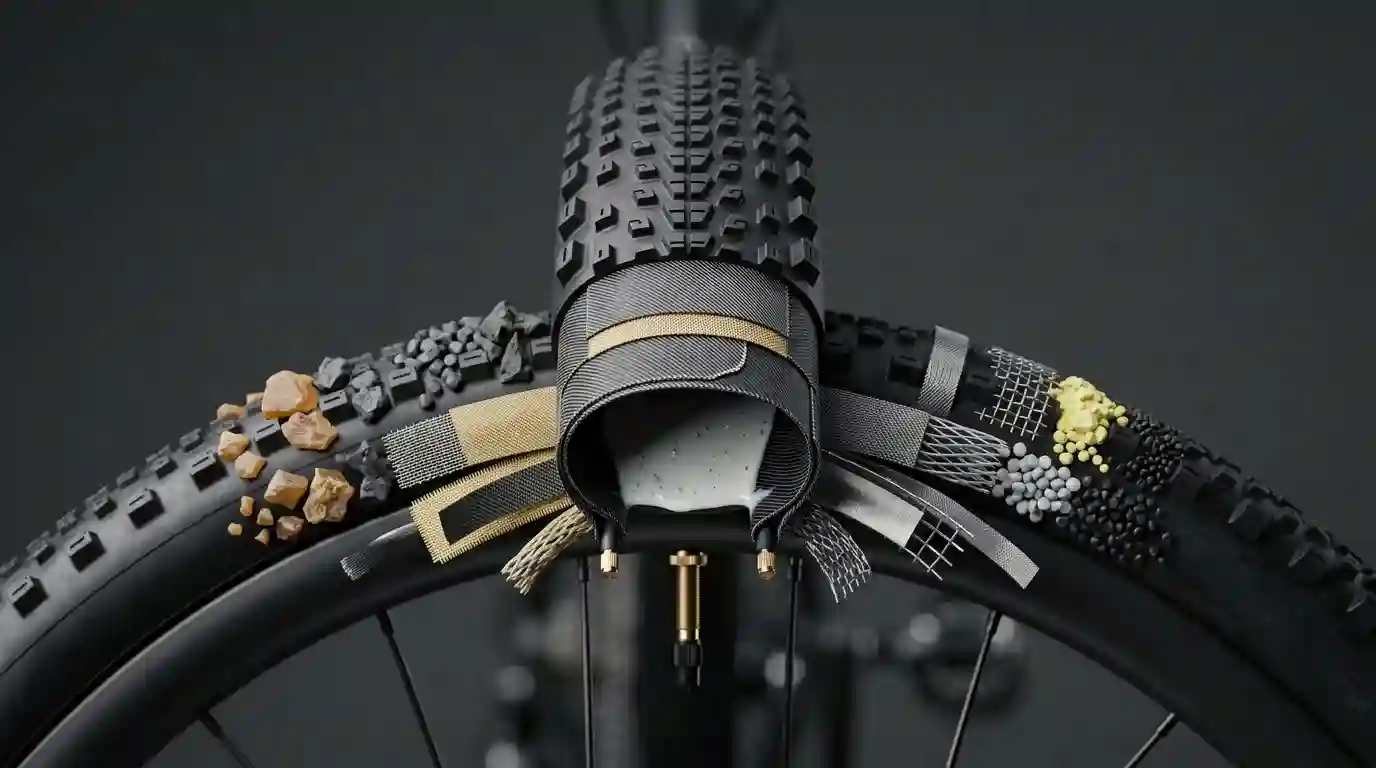
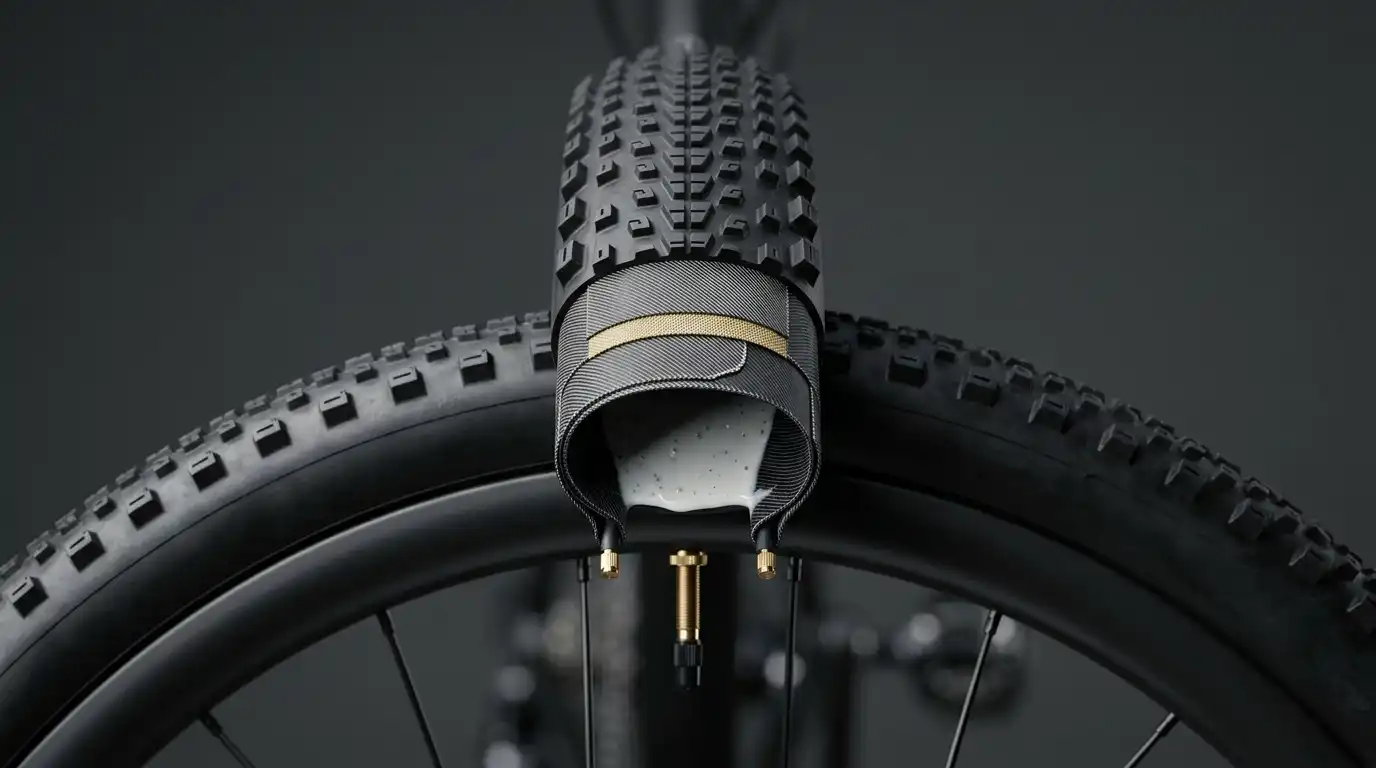
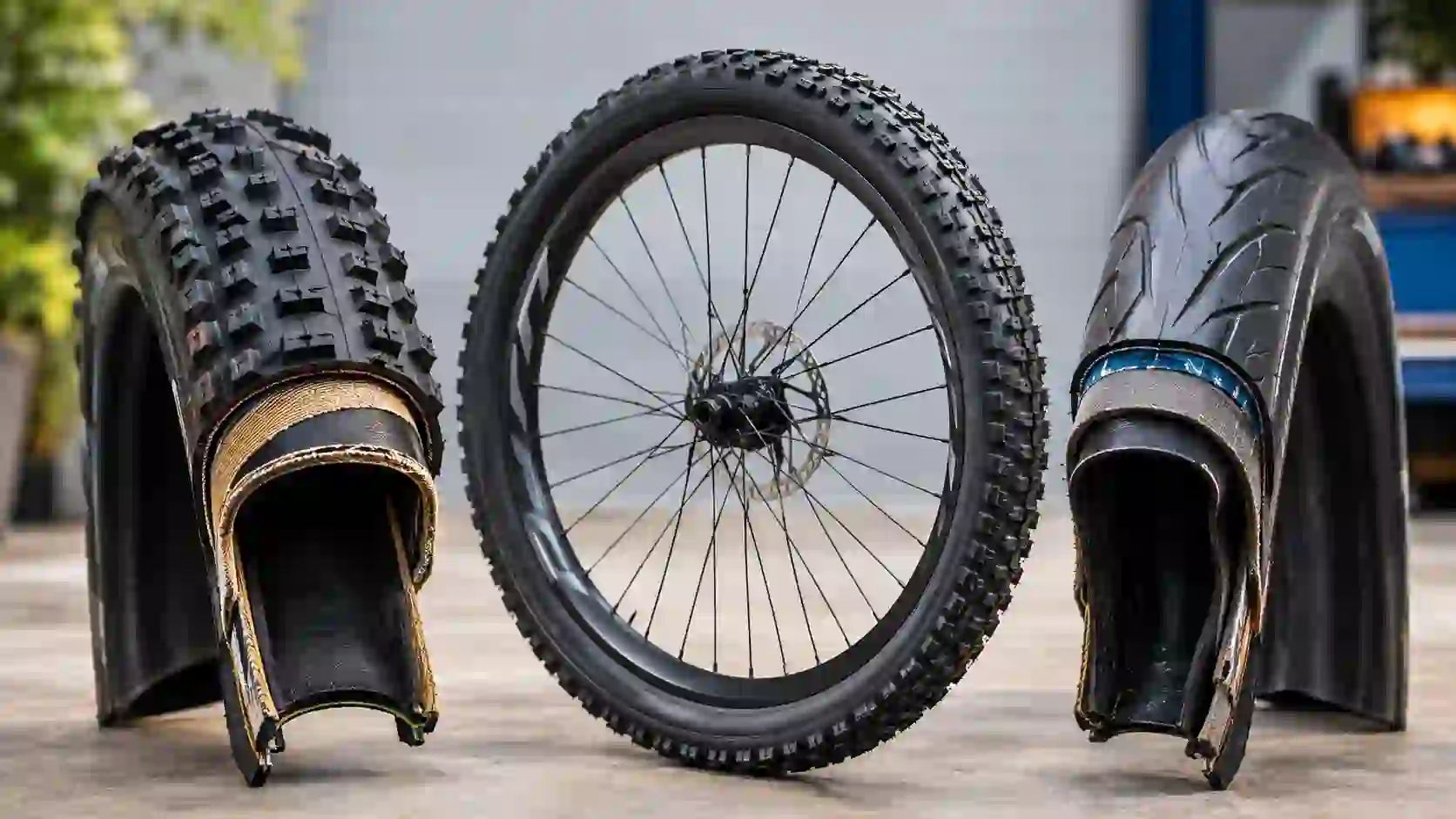
How Tread, Casing TPI, and Puncture Protection Change With Width
Changing tire width often means choosing a different tire construction:
+--------------------------------------------------------------------+
|                      CROSS SECTION OF A TIRE                       |
+--------------------------------------------------------------------+
|                   |=== TREAD RUBBER ===|                           |
|         /--------|--- PUNCTURE BELT ---|--------\                  |
|        /  |========= CASING TPI ========|  \                 |
|       /  /                                \  \                 |
|      (  (                                  )  )                |
|       \  \                                /  /                 |
|        \__|\_ RETENTION BEAD (Hooked) _/|__/                  |
+--------------------------------------------------------------------+
Tread Pattern
- Slick Tread: Maximizes surface contact area on dry, paved roads.
- Semi-Slick Tread: Features a smooth center strip for low rolling resistance on asphalt, flanked by side knobs for traction in loose corners.
- Knobby Tread: Uses tall, spaced tread lugs to bite into soft dirt, gravel, and mud.
Casing TPI
TPI (Threads Per Inch) measures the woven thread density within the tire carcass:
- 60 TPI Casing: Uses thick nylon threads. Offers high cut resistance and stiffer sidewalls, but increases rolling resistance and weight.
- 120+ TPI Casing: Uses fine, tightly packed threads. Yields a supple casing that deforms easily over obstacles for reduced rolling resistance, but requires additional puncture belts for protection.
Puncture Belt
Puncture layers (such as woven Aramid or sub-tread rubber belts) prevent debris from piercing the casing:
- Pros: Reduces flat tires from glass, thorns, and wire.
- Cons: Adds rotational weight and stiffens the tire casing, slightly increasing rolling resistance.
Can You Change Tire Width With a Tubeless Setup?
Switching tire widths on a tubeless setup follows the same wheel diameter and rim width rules, with added attention to bead compatibility and air sealing.
                       +---------------------------+
                       |  TUBELESS FITMENT CHECK   |
                       +---------------------------+
                                     |
    +--------------------------------+--------------------------------+
    |                                |                                |
    v                                v                                v
+------------------------+ +------------------------+ +------------------------+
| 1. RIM TAPE CHECK      | | 2. SEALANT QUANTITY    | | 3. PRESSURE CAPS       |
| Must cover all spoke   | | Scale volume with tire | | Max 73 PSI for       |
| holes with 2mm overlap | | width (e.g. 2oz->4oz) | | hookless rim design  |
+------------------------+ +------------------------+ +------------------------+
Tubeless Compatibility
Ensure both the new tire casing and your rim are explicitly labeled Tubeless-Ready (TR) or Tubeless-Compatible (TC). Mounting a non-tubeless tire without an inner tube can result in sudden air loss, as standard tube-type beads stretch under pressure.
Tubeless Sealant Quantity
Larger tire casings require more liquid sealant to coat the increased internal surface area:
- 28 mm Road Tire: 1.5 – 2.0 oz (45 – 60 ml)
- 40 mm Gravel Tire: 2.5 – 3.0 oz (75 – 90 ml)
- 2.4″ MTB Tire: 3.5 – 4.0 oz (100 – 120 ml)
Pressure and Tire Burping
Running pressures that are too low for your casing width can cause tire burping, where the tire bead temporarily pulls away from the rim flange during heavy cornering, releasing sealant and air pressure. Always maintain adequate PSI to keep the bead securely locked.
Step-by-Step Guide to Changing Bike Tire Width
Installation Checklist
- Verify replacement tire width fits internal rim width and frame clearance.
- Inspect rim tape for tears, gaps, or spoke-hole exposure.
- Check directional arrows printed on the tire sidewall before mounting.
- Mount the first tire bead inside the center rim channel.
- Insert tube (or tubeless valve stem) without twisting.
- Work the second bead over the rim wall using hands only—avoid tire levers near tubes.
- Inflate slowly until the bead seats with an audible pop.
- Check sidewall reveal lines to verify uniform seating around the rim.
- Check frame, fork, derailleur, and brake clearance across the wheel rotation.
- Perform a low-speed test ride to evaluate handling and response.
Signs Your New Tire Width Is Wrong
                       +---------------------------+
                       |    FITMENT ERROR SIGNS    |
                       +---------------------------+
                                     |
        +----------------------------+----------------------------+
        |                                                         |
        v                                                         v
+--------------------------------+       +--------------------------------+
|      TIRE TOO WIDE SIGNS       |       |      TIRE TOO NARROW SIGNS     |
|  - Paint rub on stays/fork     |       |  - Squared profile on wide rim |
|  - Tire squirm in corners      |       |  - Rim edge damage over bumps  |
|  - Mud buildup locks wheel     |       |  - Harsh, jarring ride quality |
+--------------------------------+       +--------------------------------+
Bike Signs the Tire Is Too Wide
- Frame Contact: Noise or wear marks on the inside of the frame stays or fork legs.
- Tire Squirm: A soft, shifting feeling while leaning into corners, caused by insufficient sidewall support on a narrow rim.
- Debris Jamming: Small rocks or mud locking up against the fork arch during rides.
Signs the Tire Is Too Narrow
- Exposed Rim Flange: The outer metal or carbon lip of the rim extends past the tire sidewall.
- Harsh Vibration: Excessive road shock transmitted through the handlebars despite running rated pressure.
- Rim Impacts: Frequent rim strikes over small sharp bumps or potholes.
Common Mistakes When Changing Bike Tire Width
- Ignoring Internal Rim Width: Assuming any 700c tire fits your rim without checking the inside rim dimension.
- Reusing Old PSI Settings: Carrying over high pressure from a 25 mm tire into a 32 mm tire, resulting in a harsh, skittish ride.
- Neglecting Frame Flex: Forgetting that rear stays flex under heavy pedaling, causing a tight tire to rub the frame even if static clearance looks fine.
- Ignoring Fender and Brake Limits: Installing wider tires without verifying space beneath rim brake calipers or full-coverage fenders.
- Overinflating Hookless Rims: Exceeding the 73 PSI limit on hookless carbon rims with smaller width tires.
Frequently Asked Questions
Can you change bike tire width without changing the wheel?
Yes. You can mount different tire widths on the same wheel as long as the tire matches the wheel’s bead-seat diameter (e.g., ISO 622) and falls within the rim’s internal width limits.
Can I put wider tires on my bike?
Yes, provided your frame, fork, brake calipers, and fenders have sufficient clearance. You must maintain at least 3 mm of open space on road bikes and 6 mm on off-road bikes to prevent frame damage.
Can I put narrower tires on my bike?
Yes, but the tire width must be wide enough to properly seat on your rim’s internal width. Mounting an overly narrow tire on a wide rim exposes the rim edges to impact damage and creates unpredictable cornering characteristics.
Do wider tires need lower PSI?
Yes. Because wider tires hold a larger volume of air, they require lower pressure to carry the same rider load. Lower PSI improves compliance and grip without increasing rolling resistance on uneven terrain.
Does tire width affect rolling resistance?
Yes. At identical inflation pressures, a wider tire flexes less at the contact patch, resulting in lower hysteresis losses. On real-world roads, wider tires at optimal (lower) pressures roll faster than narrow, overinflated tires.
Can I change tire width on a tubeless setup?
Yes. Verify that both the new tire and rim are tubeless-compatible. Be sure to re-tape the rim if damaged, scale up sealant volume for larger casings, and confirm bead-seat compatibility.
How do I know when my tire is worn out?
Replace your tire if you notice flat-spotting along the center tread, exposed casing threads, repeated punctures in the same area, sidewall cuts, or bulging when inflated.
Quick Bike Tire Width Compatibility Checklist
Run through this quick-reference checklist before buying a new tire set:
[ ] Wheel Diameter: Matches ISO size (e.g., 622 mm for 700c/29er)
[ ] Internal Rim Width: Approved for desired tire casing width
[ ] Frame Clearance: Minimum 3mm (road) or 6mm (gravel/MTB) clearance
[ ] Fork Clearance: No contact with fork arch or crown
[ ] Brake Clearance: Calipers/pads clear tire tread with open quick-release
[ ] Pressure Limits: Selected PSI stays within tire and rim maximums
[ ] Tubeless Setup: Tire, rim, tape, and sealant are fully compatible
Final Verdict: Can You Change Bike Tire Width?
Changing your bike tire width is one of the most cost-effective ways to improve your ride. Upgrading to a wider tire casing provides increased vibration damping, superior traction, and lower rolling resistance on rough roads. Conversely, moving to a narrower tire can reduce rotational mass and improve aerodynamic integration on smooth terrain.
To ensure a successful upgrade:
- Verify your rim’s internal rim width against manufacturer sizing guides.
- Measure your frame, fork, and component clearances to ensure adequate room for tire expansion and flex.
- Lower your inflation pressure to account for the increased air volume of wider casings.
Optimize Your Tire Setup Today
Fine-tune your bicycle’s pressure, width, and fitment using the free digital tools at TheBikeTires.com:
- Free Bike Tire Pressure Calculator: Calculate precise front and rear PSI recommendations tailored to your rider weight, tire width, casing type, and surface terrain.
- Bicycle Tire Finder Tool: Search for compatible road, gravel, or mountain bike tires designed for your wheel dimensions and clearance boundaries.
Try the Free Bike Tire Pressure Calculator and Tire Finder Tool at TheBikeTires.com

Mohidul Islam is a leading cycling technology specialist and bike tire consultant with over 15 years of hands-on experience in the bicycle industry. He holds a Bachelor of Science in Mechanical Engineering from Penn State University, where he focused heavily on material science, tread mechanics, and rubber compound performance. Over the past decade and a half, Alex has conducted extensive field testing, tubeless setup evaluations, and tire pressure modeling for road, mountain, and e-bikes. His practical insights and data-driven approach help cyclists of all levels optimize grip, speed, and durability on every ride.