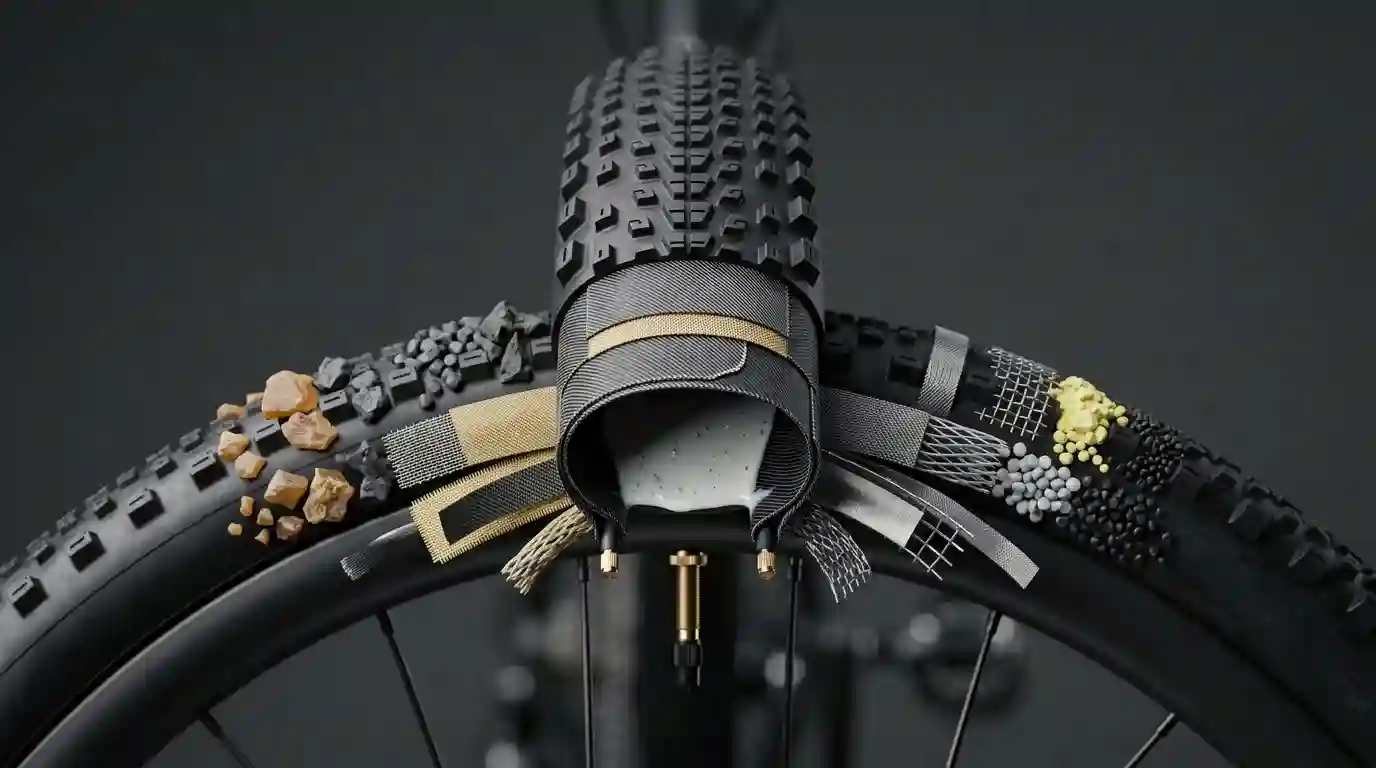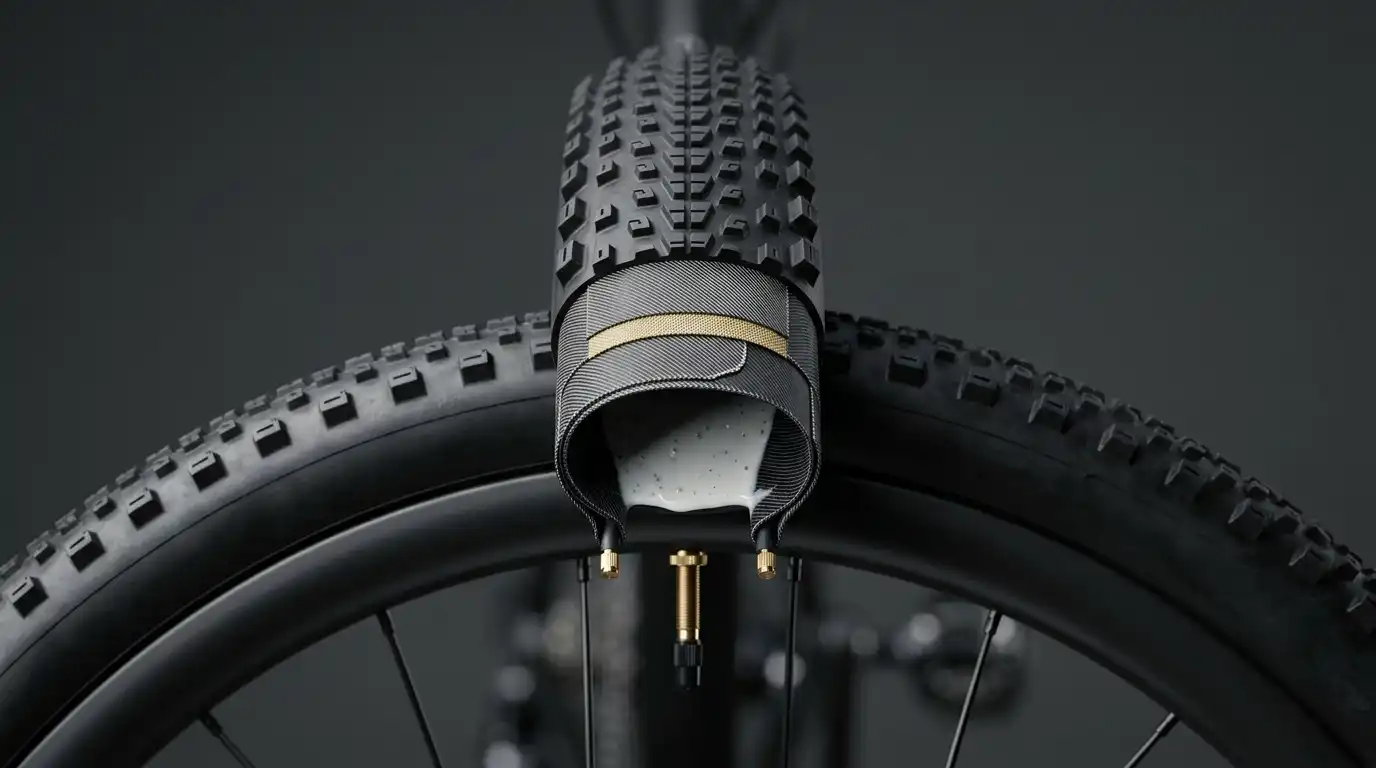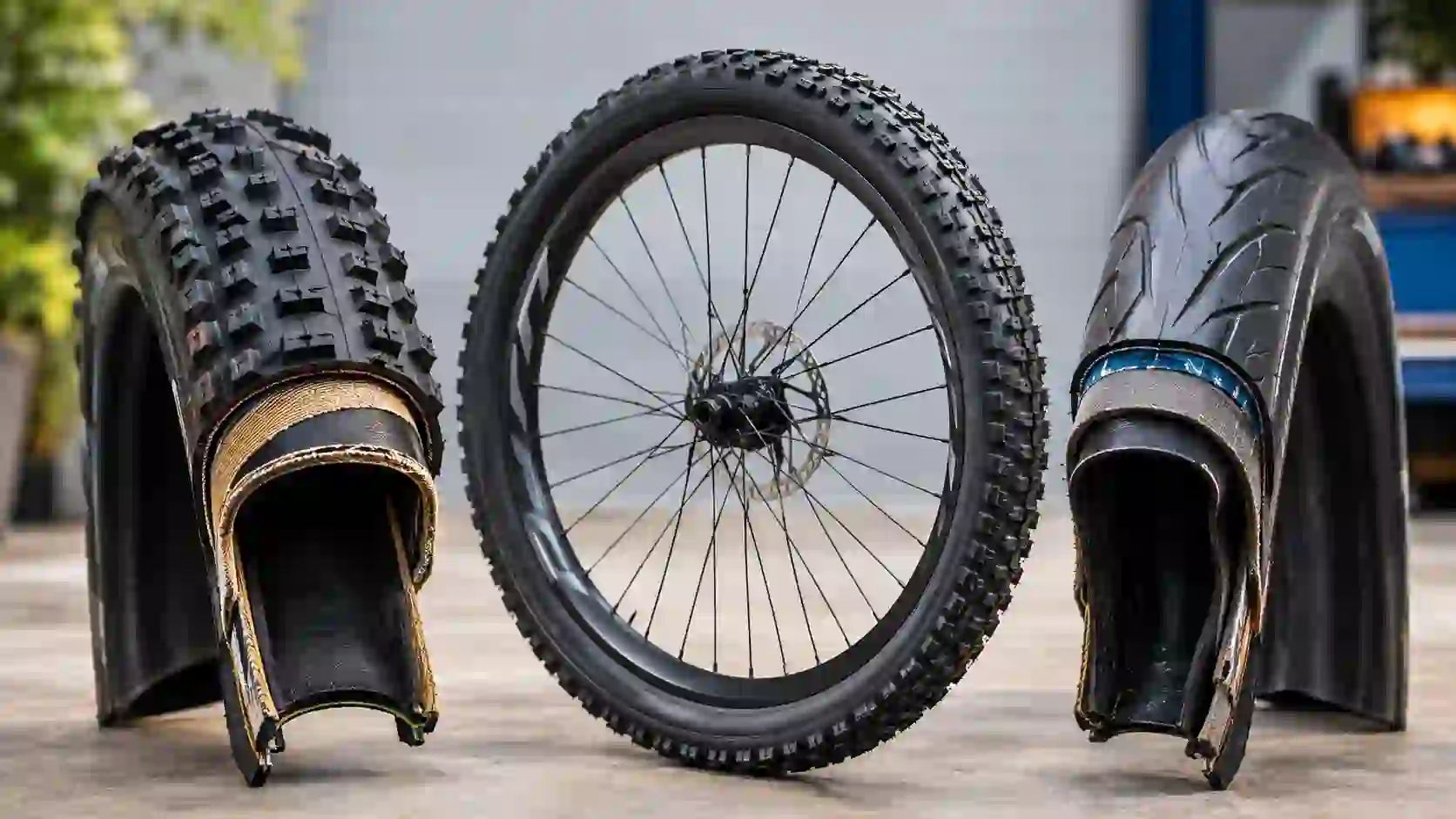
You clip a pothole edge on your commute. Or you slam a rock on a desert trail. A second later, the tire goes soft. Understanding pinch flat bike tyre causes can stop this from happening again.
US cyclists deal with plenty of tire trouble. Flats, weak cornering grip, wrong tire pressure (PSI), and quick tread wear top the list. The right tire and the right PSI shape your safety, your speed, and your comfort. If you are choosing new tires, start with our guide on how to choose bike tyres.
Pinch flats are common, and they are often avoidable. They come down to pressure, impact, load, and setup.
This guide explains why pinch flats happen. You will learn how to diagnose the damage, set the right PSI, and cut your risk of future flats.
Quick answer: A pinch flat happens when the tire squashes against the rim and pinches the tube. Low pressure plus a hard hit is the usual cause.
What Is a Pinch Flat on a Bike Tire?
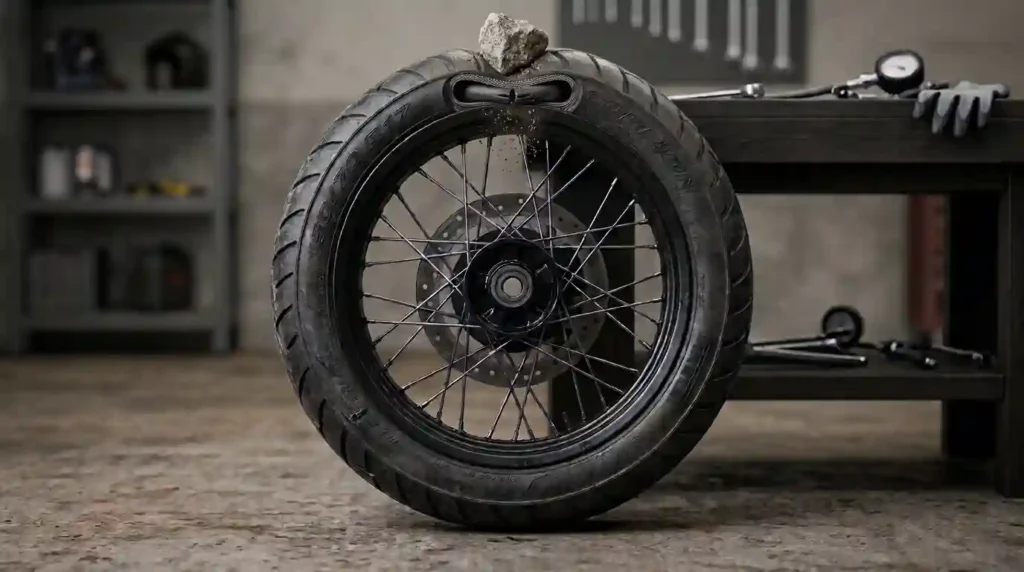
A pinch flat is inner-tube damage caused when the tire compresses against the rim during an impact. The tube gets trapped and cut.
It often leaves two nearby holes, called a snakebite puncture. This differs from a thorn, glass, or debris that pierces the tire. Learn how tires hold their shape in what a bike tire casing is.
What Does a Pinch Flat Look Like?
Look for two small cuts or holes close together on the tube. Check the tire sidewall and tread for impact marks, cuts, or bulges.
Inspect the rim for dents or damage that could cause another flat. A habit of checking your bike tyres often helps you spot these signs early.
Pinch Flat vs. Regular Puncture
A pinch flat usually follows a hard impact and may leave two tube holes. A regular puncture often comes from a sharp object and leaves one hole.
Match the tube damage to the tire’s position before you decide on a repair. Slow leaks have other causes too, as why bike tyres lose air explains.
| Feature | Pinch Flat | Regular Puncture |
|---|---|---|
| Hole pattern | Two parallel slits | Single small hole |
| Trigger | Hard hit, low PSI | Glass, thorn, wire |
| Tire damage | Often none | Object in tire |
| First fix | Check PSI and rim | Remove the object |
What Are the Main Pinch Flat Bike Tyre Causes?
Three causes lead the list:
- Low tire pressure: The tire compresses too far under impact. The tube gets trapped against the rim.
- Hard impacts: Potholes, curbs, rocks, and sharp road edges can squash the tire past its safe range.
- Excessive load: Rider weight, luggage, and e-bike cargo raise the force on the tires.
Setup matters too. Tire width, rim fit, and casing build all change how much the tire can absorb.
Riding Over Potholes and Curbs
Hitting an obstacle at speed causes sudden tire compression. Speed, body position, and the shape of the obstacle all change the force.
Slow down when it is safe, and avoid sharp edges you can see. Never swerve into traffic to dodge a hole. See how to choose bike tires for rough roads if your routes are rough.
Incorrect Tire Pressure (PSI)
Pressure that is too low for the rider, load, tire width, and terrain raises pinch-flat risk. Very high pressure can cut comfort and grip without guaranteeing protection.
Use a reliable gauge. Follow the tire and rim makers’ limits. Read what happens if bike tire pressure is too high and how much air to put in a bike tire.
Heavy Riders, Cargo, and E-Bikes
Higher system weight can call for more pressure or a wider tire, within approved limits. E-bike torque affects acceleration and traction. But impacts and load are the more direct pinch-flat factors.
Check pressure more often when you carry cargo or a passenger. Read how to choose durable bike tyres and bike tyre markings explained for beginners for load ratings.
How to Tell If You Have a Pinch Flat
Inspect the tube for two small holes or cuts close together. Check the casing, bead, rim tape, and rim edges for signs of impact.
If the tube has a single hole, look for glass, thorns, or wire before you reinstall it. The pattern of damage points to the cause.
How to Find the Damage
Remove the wheel and tire with the right tools for your bike. Inflate the tube slightly. Listen and feel for escaping air, or use soapy water to show bubbles.
Keep the tube lined up with the tire. That shows where the damage happened. On a disc-brake bike, do not squeeze the brake lever while the wheel is out.
When Should You Replace the Tire or Rim?
Replace a tire with a damaged casing, exposed threads, a serious cut, or a bulge. A dented or cracked rim may need a pro to inspect or replace it.
Do not ride on a tire or rim with structural damage, even after a new tube. See how often bike tyres should be replaced and how much tread a bike tyre should have.
How to Fix a Pinch Flat Bike Tire
Follow these steps:
- Remove the wheel and lift off one side of the tire bead.
- Take out the damaged tube. Inspect the inside of the tire and the rim tape.
- Patch the tube if it is repairable, or fit a compatible new one.
- Check that the bead sits evenly and the tube is not trapped beneath it.
- Inflate to a suitable PSI within the tire and rim limits, then check for leaks.
Our guide on how to inflate a bike tire correctly covers step 5 in detail.
Can You Patch a Pinch-Flat Inner Tube?
Small, clean holes may be repairable with a compatible patch. A snakebite pair of holes is often quicker to fix with a fresh tube.
Large tears, cuts near the valve, or damage that will not hold a patch usually need a new tube. Follow the kit’s steps, then check the repair before you ride. Make sure the new tube fits, using will this bike tire fit my wheel and what bike tire size you need.
Avoid Another Flat During Installation
Check the tire interior with a cloth or glove only when it is safe. Sharp debris can cut skin.
Make sure the tube is not twisted, folded, or caught between the bead and the rim. Levers can pinch a tube on the last bit of bead, so finish by hand when you can. Inflate slowly and look at both sides of the tire. If sizes confuse you, learn how to read bike tire size.
How to Prevent Pinch Flats With the Right Tire Pressure
Start with the tire maker’s range and the rim maker’s limits. Adjust PSI for tire width, rider and cargo weight, surface, and front-to-rear load balance.
Use a gauge, not thumb pressure. A tire that feels firm can still be far below your target.
Choose the Correct PSI
Use the tire maker’s guide as a starting point, not a single rule for every bike. Wider tires often work at lower pressure under similar conditions, if the setup is compatible.
Here is a quick starting estimate. It is a rule of thumb, not a standard.
- Add rider, bike, and gear weight in pounds.
- Front load is about 47% of that. Rear load is about 53%.
- Multiply each load by the width factor below.
- Subtract about 10% for tubeless, 5% for wet roads, and 10% for rough ground.
| Tire Width | Width Factor |
|---|---|
| 28 mm (1.1 in) | 0.80 |
| 32 mm (1.25 in) | 0.68 |
| 40 mm (1.6 in) | 0.40 |
| 2.1 in (53 mm) MTB | 0.30 |
| 2.4 in (61 mm) MTB | 0.22 |
Example for 32 mm tubed tires:
| System Weight | Front PSI | Rear PSI |
|---|---|---|
| 150 lb | 48 | 54 |
| 180 lb | 58 | 65 |
| 210 lb | 67 | 76 |
| 250 lb | 80 | 90 |
Never pass the tire or rim limit. For more detail, read how to find the correct bike tire pressure.
How Often Should You Check Bike Tire Pressure?
Check before important rides and at regular intervals, especially with narrow high-pressure tires. Check more often with tubeless setups, rough terrain, or heavy loads.
Use the same gauge each time for repeatable readings. See how to check bike tire pressure and how often to inflate bike tires.
Can Tire Pressure Be Too High?
Yes. Excess pressure can make the ride harsh and cut grip on rough or uneven ground. It does not stop all flats, cuts, or impact damage.
Never exceed the lowest applicable limit for the tire, rim, and wheel system. Learn whether you can overinflate a bike tire.
Does Tire Width Affect Pinch Flats?
Wider tires hold more air volume. At a suitable pressure, they can absorb impacts better. Width must still match the rim’s internal width and the frame and fork clearance.
A wider tire is not automatically safer. If pressure is too low or the setup is incompatible, it can still pinch. Read bike tire width explained.
Tire Width, Rim Width, and Compatibility
Check the tire and rim makers’ charts before you change sizes. Confirm that the tire clears the frame, fork, brakes, and mudguards.
A tire’s labeled width is not always its true width. Inner rim width changes the final measure. Our guides on how to measure bike tire size and bike tire size compatibility can help.
| Inner Rim Width | Typical Tire Range |
|---|---|
| 17 mm | 25 to 32 mm |
| 21 mm | 28 to 40 mm |
| 25 mm | 35 to 50 mm |
| 30 mm | 2.1 to 2.6 in |
These are common guides. Follow your rim maker. Hooked rims have a lip that grips the bead. Hookless rims do not, and many cap pressure near 72 PSI. See how much wider a tire you can fit and whether you can use wider tires on your bike.
Road, Gravel, and Mountain Bike Differences
Road, gravel, and trail bikes each manage pinch risk in their own way.
- Road tires: Narrower tires may need more pressure. The right value depends on load and tire size.
- Gravel tires: Moderate widths and terrain-based PSI balance comfort, grip, and impact protection.
- Mountain bike tires: Large air volume absorbs trail hits. But rocky ground and low pressure can still cause pinch flats.
Read how to choose bike tires for gravel roads and how to choose tires for mixed surfaces. Wet Pacific Northwest mud and dry Southwestern loose rock ask for different setups.
Can Tubeless Tires Prevent Pinch Flats?
Tubeless tires remove the inner tube, so a classic tube pinch cannot happen. Tubeless sealant can seal many small tread punctures. It cannot fix every cut or casing failure.
Tubeless setups can still suffer impact damage, burping, bead trouble, and rim strikes. Do not treat them as flat-proof.
Tubeless vs. Inner Tube for Flat Prevention
Inner tubes are simple and cheap to repair or replace. Tubeless setups can cut some punctures and allow lower pressure, depending on the tire and rim system.
Pick based on fit, upkeep, riding style, and terrain.
| Factor | Inner Tube | Tubeless |
|---|---|---|
| Pinch flat risk | Higher | Lower, rim strikes remain |
| Small puncture | Patch or swap | Often self-seals |
| Upkeep | Low | Refresh sealant |
| Roadside fix | Simple | May need a tube |
What About Tire Liners and Puncture Belts?
Tire liners and puncture belts mainly guard against sharp objects piercing the tread. They do not remove pinch-flat risk from hard impacts and wrong PSI.
Added weight and stiffer casings can change rolling resistance and ride feel. See puncture protection vs. rolling resistance and how to choose puncture-resistant bike tyres.
How Tire Construction Affects Pinch-Flat Resistance
Casing thickness, sidewall support, rubber compound, and tire volume all shape how a tire handles impacts. Casing TPI is one detail. A higher TPI alone does not guarantee better impact protection.
Look for a tire made for your terrain, load, and use. Do not rely on one spec. Read what bike tires are made of and see our list of the best bike tyres for puncture protection.
Tread Pattern and Rubber Compound
Tread pattern mainly affects traction on different surfaces. It is not a direct measure of pinch-flat resistance. Rubber compounds shape grip, wear, and rolling resistance.
Match tread and compound to road, gravel, or trail. Learn why bike tires have different tread patterns, what a rubber compound is, and how much bike tires affect grip. Durometer measures rubber hardness, and lower numbers feel softer.
Choosing Durable Tires for Commuting and E-Bikes
Consider reinforced casings and suitable puncture layers for frequent city riding. Check that the tire suits your wheel system and intended e-bike use.
Balance durability, weight, rolling resistance, and comfort. The thickest tire is not always the best. See how to choose tyres for a commuter bike, the best bike tyre size for commuting, and our picks of bike tyres for daily commuting.
How to Test and Compare Tires for Impact Protection
Compare maker specs, approved pressure ranges, tire width, casing design, and protection features. Prefer repeatable tests with the same impact, pressure, load, and rim setup.
Treat lab results and product claims as useful evidence. They do not guarantee you will avoid real-world flats. See our testing process and editorial policy for how we approach reviews.
What Should a Reliable Tire Test Measure?
Record the tire model, true width, rim inner width, PSI, and system weight. Test across similar surfaces. Note impacts, damage, grip, and rolling resistance.
Repeat tests and state limits. No single tire is best for every rider. Comfort and speed matter too, so see how much bike tires affect comfort and speed.
Common Mistakes That Cause Repeat Pinch Flats
Watch for these habits:
- Running pressure that is too low for the load and terrain.
- Reinstalling a tube without checking for rim tape issues, sharp edges, or tire damage.
- Using tire and rim sizes that do not match, or ignoring pressure limits.
Wet roads add risk, since riders often drop pressure and then hit hidden holes. See how to choose bike tires for wet weather.
Quick Pre-Ride Checklist
- Check pressure, and look for cuts, bulges, and stuck debris.
- Confirm the bead sits evenly and the wheel is secure.
- Carry a spare tube or repair kit, tire levers, and a pump.
Frequently Asked Questions About Pinch Flat Bike Tyre Causes
What is the most common cause of a pinch flat?
Low pressure combined with a hard hit is the most common cause. Heavy loads and rough terrain raise the risk further.
How do I know if my bike flat is a pinch flat?
Look for two nearby holes or cuts in the tube. Check for impact marks, and match the damage to the tire and rim.
Will higher tire pressure stop pinch flats?
More pressure may cut tire compression, but too much hurts comfort and grip. Pick PSI by tire, rim, load, terrain, and maker limits.
Are tubeless tires immune to pinch flats?
No. They remove the classic tube pinch, but rim strikes, cuts, burping, and bead damage can still happen.
Do wider bike tires get fewer pinch flats?
They can, since they hold more air and cushion impacts when set up well. Fit and correct pressure matter as much as width.
Can I ride with a damaged tire after fixing the tube?
Do not ride if the casing is bulging, cut through, or showing threads. Replace a structurally damaged tire, and inspect the rim before you ride.
Do tire liners prevent pinch flats?
Liners mainly protect against some sharp-object punctures. They cannot reliably stop tube damage from hard hits and low pressure.
How often should I check tire pressure to prevent flats?
Check before key rides and regularly between them. Check high-pressure tires more often. Use a gauge and follow the tire and rim limits.
Conclusion: Prevent Pinch Flats With the Right Setup
Most pinch flats can be cut by matching PSI to rider load, tire width, terrain, and wheel fit. The cause is usually pressure and impact, not bad luck.
Here are the key takeaways:
- Inspect the tube, casing, rim tape, and rim after every flat.
- Use a gauge, and set PSI within tire and rim limits.
- Pick tires built for your terrain, load, and use.
- Check pressure before you head out.
Test your exact setup. Do not guess your pressure or your tire fit. Use the Free Bike Tire Pressure Calculator / Tire Finder Tool at TheBikeTires.com to match PSI and tire size to your weight, rim, and riding style. It takes a minute, and it can end the pinch-flat cycle.
A pinch flat is a message about pressure and setup. Read it, fix it, and enjoy the ride.

Mohidul Islam is a leading cycling technology specialist and bike tire consultant with over 15 years of hands-on experience in the bicycle industry. He holds a Bachelor of Science in Mechanical Engineering from Penn State University, where he focused heavily on material science, tread mechanics, and rubber compound performance. Over the past decade and a half, Alex has conducted extensive field testing, tubeless setup evaluations, and tire pressure modeling for road, mountain, and e-bikes. His practical insights and data-driven approach help cyclists of all levels optimize grip, speed, and durability on every ride.