Commuting is hard on tires. You ride the same streets every day, through potholes, glass, metal grates, and rain. One flat on a work morning can wreck your schedule, and worn tread can make a wet corner scary.
The right bike tyres for daily commuting fix most of these problems. They protect against flats, grip in the wet, and keep you comfortable on rough pavement. Correct tire pressure (PSI) also matters for safety, speed, and comfort. A well-set tire corners with more confidence, brakes in a shorter distance, and softens every pothole.
Many US commuters ride with the wrong pressure or the wrong width without knowing it. This guide covers width, PSI, puncture protection, rolling resistance, tubeless setups, tread, and care. You will also find two tables and a simple PSI formula.
New to tire basics? Start with what makes a good bike tire and how bike tires work.
What Are the Best Bike Tires for Daily Commuting?
Commuter tires are built for regular trips across common urban and suburban surfaces. Durability, comfort, puncture protection, and predictable handling matter most for daily rides. You use these tires in all weather, in traffic, and often in a hurry, so reliability beats raw speed.
Quick answer: Choose tires that fit your bike, match your route, and balance grip with reliability.
What Makes a Good Commuter Bike Tire?
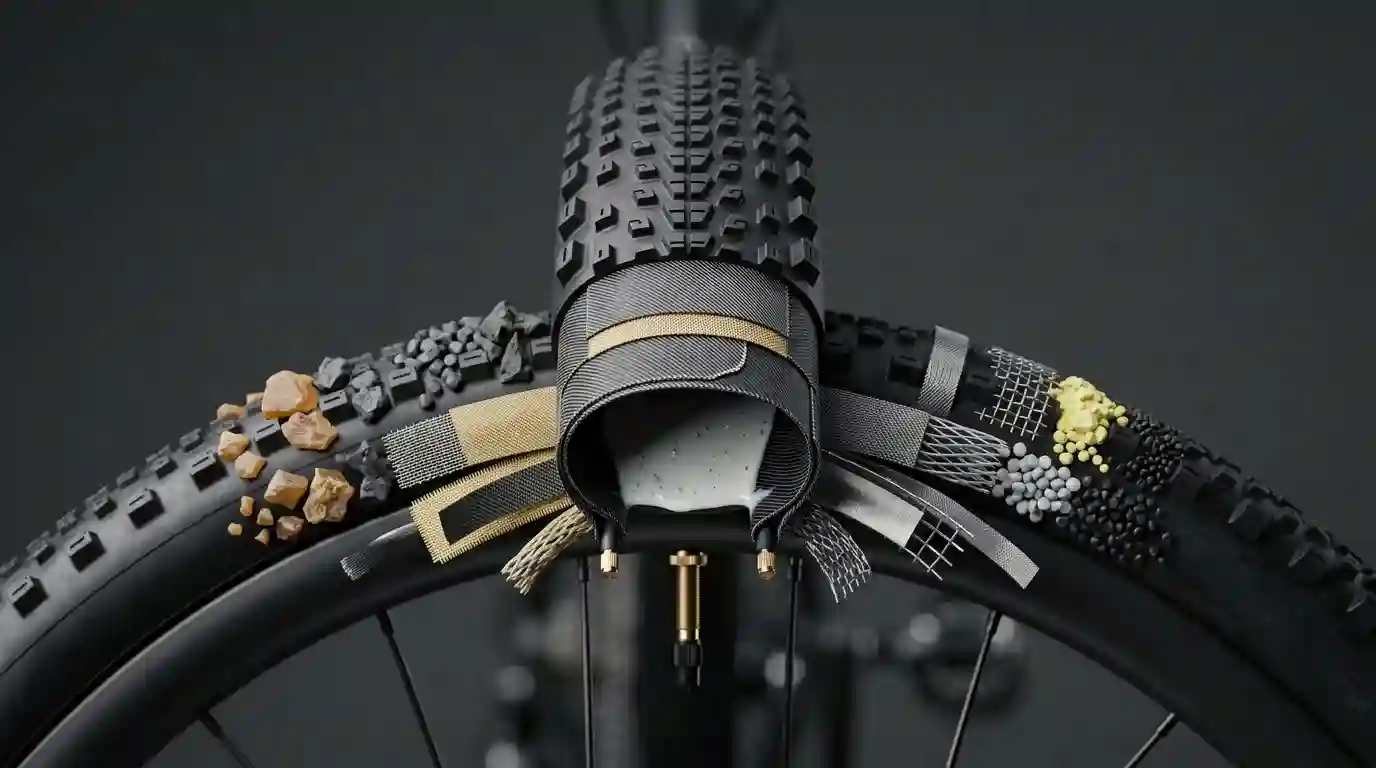
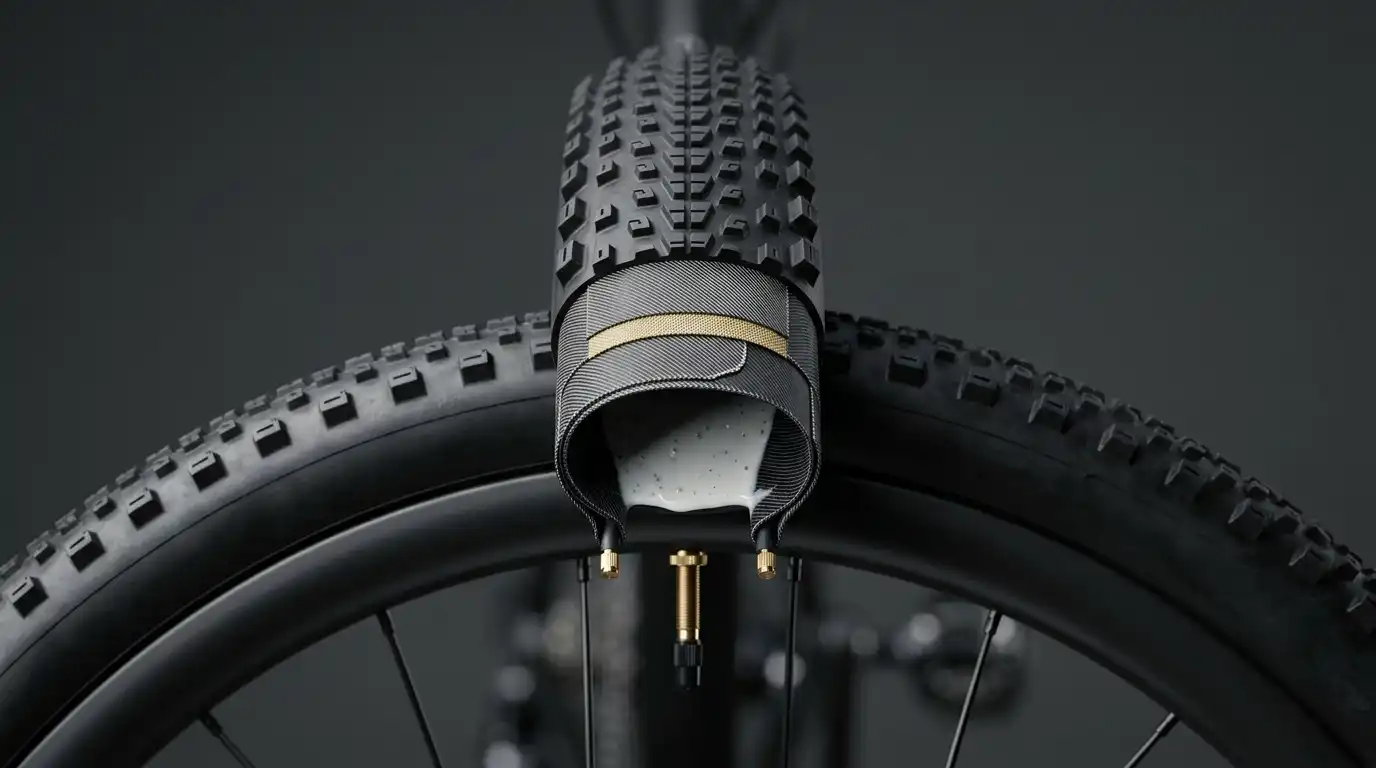
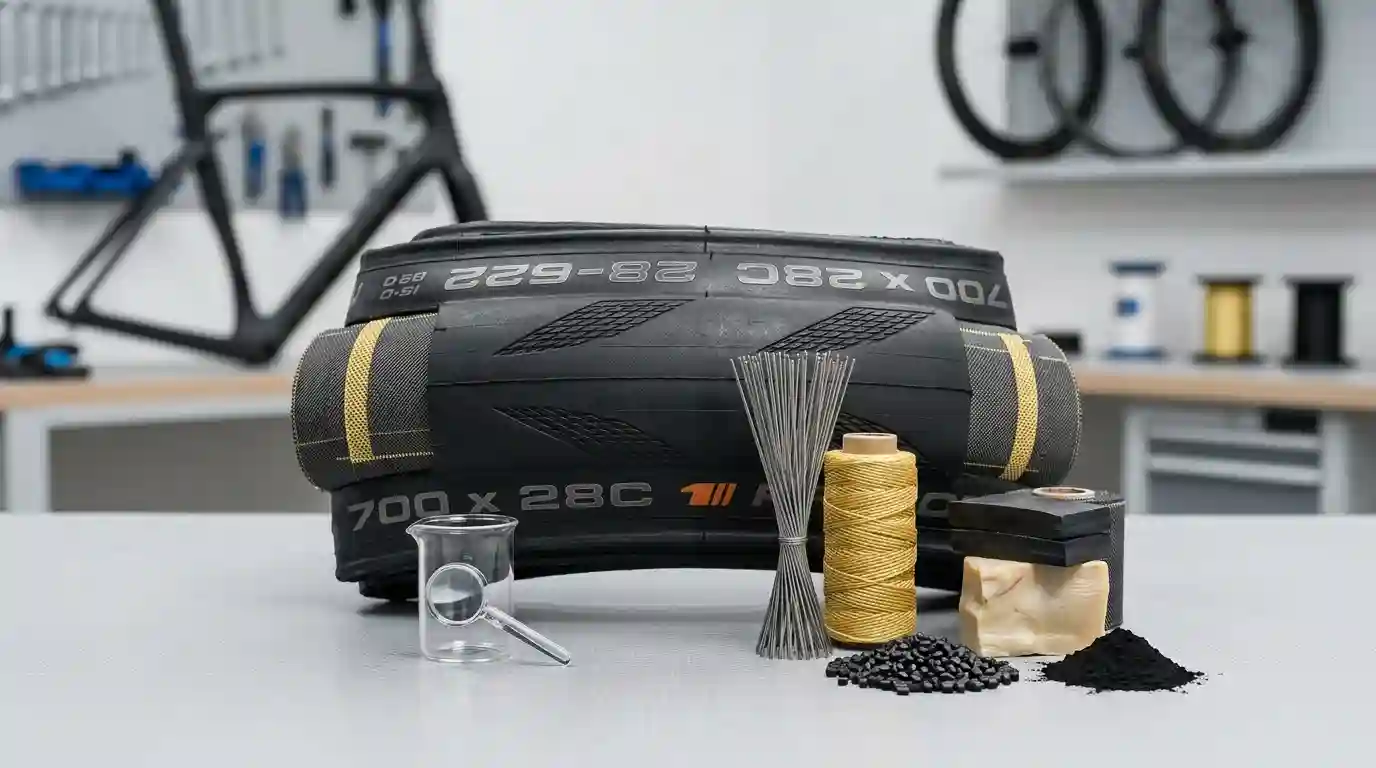
Look for a durable casing, useful puncture protection, and reliable wet and dry grip. The casing is the fabric body of the tire, and it sets how the tire flexes and resists cuts. Pick a tread pattern that suits pavement, bike paths, or occasional gravel.
Reflective sidewalls, practical weight, and easy roadside repair also help. Reflective strips make you easier to see at dusk, which matters on shorter winter days. Our guide to what bike tires are made of explains the materials behind these features.
Tire Types That Work Best for Commuting
- Urban tires: suited to paved streets and regular city travel.
- Road or endurance tires: useful for commuters who want efficient rolling on smooth pavement.
- Gravel or hybrid tires: better for routes with rough pavement, packed dirt, or mixed surfaces.
For a broader view, see how to choose bike tyres and best bike tyres for everyday riding.
Factors to Weigh Before Buying
- Check tire size, rim compatibility, frame clearance, and pressure limits.
- Match puncture protection to road debris and your patience for flats.
- Balance purchase price with expected lifespan and replacement cost.
Think about your full route, not just the best street on it. A cheap tire that flats often costs more in the long run. Read best bike tyres for beginners if you are buying your first set.
How to Choose the Right Tire Width for Commuting
Width affects comfort, traction, handling, and pressure. Wider tires are not always slower, because casing design and road conditions matter too.
Always check rim width and bike clearance before changing size. Commuter bikes with fenders have less room, so measure first. See bike tire width explained for the basics.
Are Wider Tires Better for City Riding?
Wider tires can improve comfort on cracked pavement and rough streets. They may also add grip and stability when run at a suitable pressure.
More air volume absorbs bumps and can reduce hand and back fatigue. Check frame and fork clearance before upgrading. A wider tire that rubs a fender or frame can cause damage and unsafe handling. See what tyre width should I choose.
Road Commuting Width Picks
- Narrower tires (25 to 28 mm, or 1.0 to 1.1 in) suit smooth roads and speed-focused commutes.
- Mid-width tires (30 to 35 mm, or 1.2 to 1.4 in) balance comfort and efficiency.
- Wider tires (38 mm and up, or 1.5 in and up) fit rough roads or mixed pavement when the bike allows them.
For more help, see best tyre width for road and city riding and best bike tyre size for commuting.
Checking Tire and Rim Compatibility
- Read the tire size printed on the sidewall.
- Check the rim’s inner rim width and approved tire range.
- Confirm frame, fork, brake, and mudguard clearance before fitting the tire.
Hooked rims have a lip that holds the tire bead. Hookless rims have straight walls and often cap pressure near 72.5 PSI (5 bar).
| Inner rim width | Typical tire width range |
|---|---|
| 17 mm (0.67 in) | 25 to 32 mm (1.0 to 1.3 in) |
| 19 mm (0.75 in) | 25 to 35 mm (1.0 to 1.4 in) |
| 21 mm (0.83 in) | 28 to 42 mm (1.1 to 1.7 in) |
| 25 mm (1.0 in) | 32 to 50 mm (1.3 to 2.0 in) |
| 30 mm (1.2 in) | 40 to 61 mm (1.6 to 2.4 in) |
These are typical ranges. Your rim maker’s chart always wins. See bike tire size compatibility explained, will this bike tire fit my wheel, and how to measure bike tire size.
How Tire Pressure (PSI) Affects Daily Commuting
Correct pressure supports comfort, rolling efficiency, and control. Too much pressure makes rough streets harsh. Too little raises the risk of pinch flats and rim strikes.
Choose PSI based on tire width, total weight, rim requirements, and road surface.
What PSI should commuter tires use? Start with a calculator or maker chart based on system weight and tire width. Stay within tire and rim limits. Then adjust in small steps.
Many riders trust the number printed on the sidewall. That number is a limit, not a target. Tires also lose air even when you do not ride. See why bike tyres lose air.
Finding the Right PSI for Your Commute
- Check the tire and rim pressure limits printed on each.
- Use a pressure calculator or maker chart based on system weight and tire width.
- Test the setup and adjust in small steps while checking comfort and handling.
For a rough cross-check, use this rule of thumb:
Rear PSI = (system weight in lb x 0.55 / tire width in mm) x K
Front PSI = (system weight in lb x 0.45 / tire width in mm) x K
Use K = 19 for smooth pavement, 14 for rough roads or gravel paths, and 13 for trails.
Example: A 190 lb rider, 28 lb bike, and 12 lb of bag and lock make 230 lb. On 35 mm tires over smooth city streets, rear is 230 x 0.55 = 126.5, divided by 35 = 3.61, times 19 = 69 PSI. Front is 230 x 0.45 = 103.5, divided by 35 = 2.96, times 19 = 56 PSI.
Rider Weight and Tire Pressure
Total system weight includes the rider, bike, bag, lock, clothing, and other gear. Higher loads often need higher pressure within the approved range.
Front and rear tires may need different PSI because their loads differ. A heavy rear rack bag shifts more weight to the back. Weigh yourself with your usual bag and lock to get a better estimate.
| System weight | Urban 700×32 (1.3 in) | Hybrid 700×40 (1.6 in) |
|---|---|---|
| 150 lb (68 kg) | 49 / 40 | 29 / 24 |
| 180 lb (82 kg) | 59 / 48 | 35 / 28 |
| 210 lb (95 kg) | 69 / 56 | 40 / 33 |
| 240 lb (109 kg) | 78 / 64 | 46 / 38 |
| 270 lb (122 kg) | 88 / 72 | 52 / 43 |
Values are starting PSI, shown as rear / front, for tubeless setups. With inner tubes, add about 10 percent. Always follow the lowest limit printed on your tire or rim.
Should You Use Lower PSI for City Riding?
A suitable lower pressure can improve comfort on rough pavement. Excessively low PSI can cause tire squirm, rim strikes, or damage.
Use tire width, load, construction, and surface to guide changes. Change pressure by 2 to 3 PSI at a time so you can feel the effect on your ride. On wet days, many riders drop 2 to 5 PSI for extra traction. See how to choose bike tires for wet weather.
Puncture Protection for Commuter Bike Tires
Glass, metal fragments, thorns, and road debris are common flat-tire hazards. City bike lanes and road shoulders collect them.
Puncture belts, reinforced casings, and thicker tread all add protection. Riding a little away from the curb helps too, since debris collects along the edge. Extra protection can add weight or stiffness, but the trade-off varies by model.
Are Puncture-Resistant Tires Worth It for Commuting?
The can reduce flats caused by common tread punctures. They help frequent riders who travel through debris-heavy streets.
They cannot prevent every puncture, sidewall cut, or pinch flat. Protection lowers risk. It does not remove it.
Puncture Belts Explained
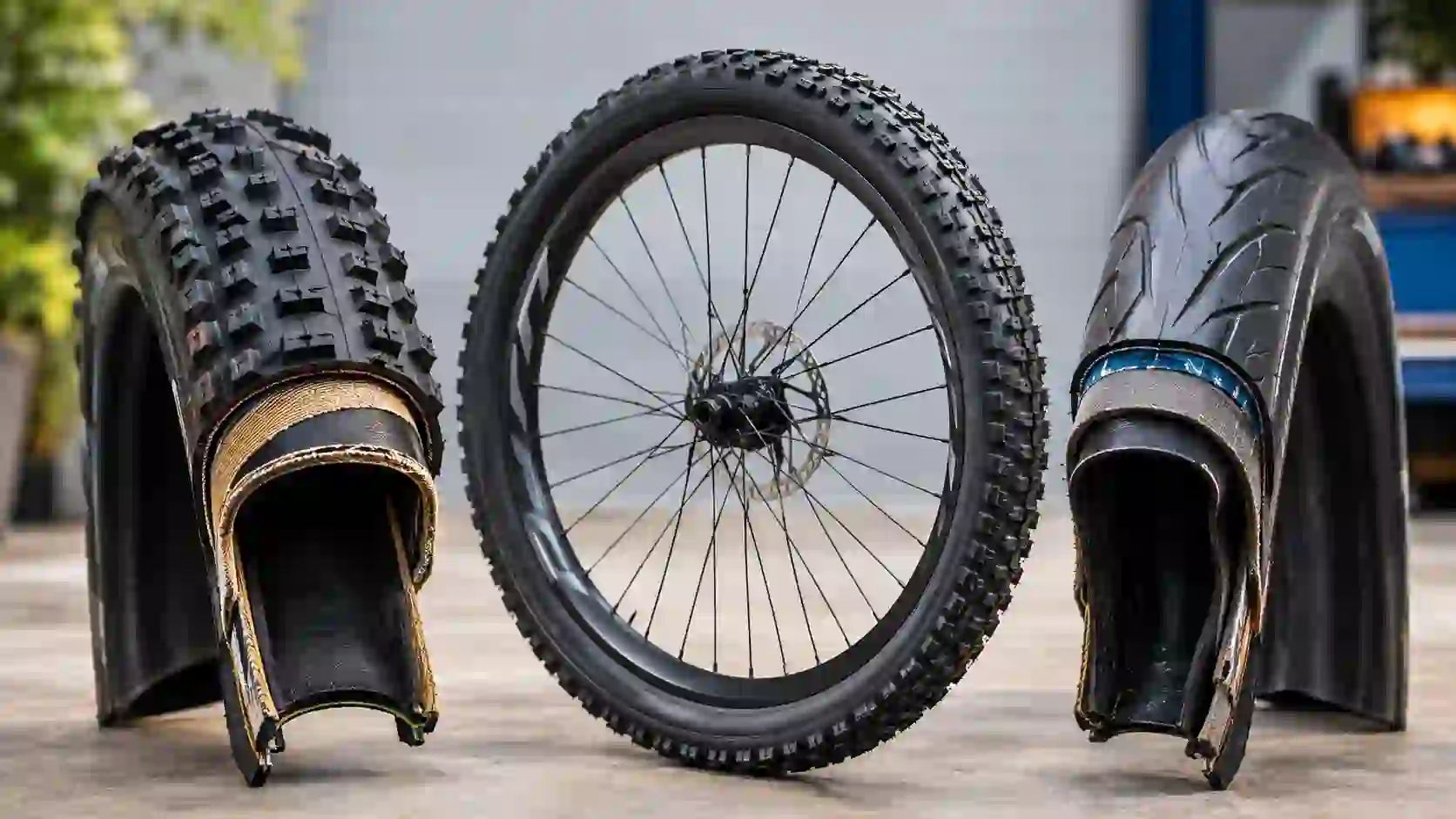
A puncture belt is a protective layer under the tread that helps resist sharp objects. Different tire models use different materials and protection levels.
Check whether the tire also offers sidewall reinforcement if your routes include rough roads. Some belts cover only the tread center, while others reach the shoulders, so read the maker’s notes. Learn to read labels in bike tyre markings explained for beginners.
Reducing Flat Tires on Your Commute
Inspect tires for embedded glass, cuts, and worn tread. Check pressure regularly and replace damaged tires promptly.
Carry a spare tube, tire levers, a pump, and a patch kit. Learn to use them at home, since a roadside repair is a poor time to practice. If you flat, follow these steps:
- Find and remove the cause, such as glass or a thorn.
- Patch or replace the tube, or plug the tubeless hole.
- Reinflate to your target PSI and check that the tire sits evenly.
Rolling Resistance and Speed for Daily Commuters
Rolling resistance is the energy lost as a tire deforms while rolling. Casing flexibility, rubber compound, tread, and pressure all affect it.
A fast tire still needs enough grip and protection for everyday road conditions. A tire that saves a few seconds but flats weekly is not a good deal. Over a year of commuting, small gains in efficiency add up, but only if the tire stays reliable.
Do Smooth Tires Roll Faster on Pavement?
Smooth or lightly textured tires often work well on paved roads. Aggressive tread can add resistance on smooth surfaces, depending on tire design.
Choose more tread when regular gravel, dirt, or loose surfaces need extra traction. Otherwise, a smoother tire is usually quieter and faster on city streets. See why bike tires have different tread patterns.
Casing TPI and Tire Performance
Casing TPI means threads per inch, and it describes one part of casing construction. Higher TPI may go with a more flexible casing, but it does not guarantee better performance.
A thin, supple casing often feels fast and smooth. A thicker casing may last longer on rough streets. Compare casing materials, puncture layers, weight, and independent test results together. Our bike tire casing guide and guide to the numbers on bike tires help here.
Improving Commuting Efficiency
- Keep suitable tire pressure and inspect tires for damage.
- Select a tread pattern that fits your usual route. Clean tires roll better, so wipe off grit and debris after wet rides.
- Replace badly worn tires and avoid carrying extra weight.
Not sure how often to check? Read how often to check bike tyres.
Tubeless Tires vs. Inner Tubes for Daily Commuting
Tubeless sealant is a liquid that can close some small punctures without an inner tube. Tubes are simple, cheap, and easy to swap.
Compare repair time, maintenance, cost, and flat protection. The right choice depends on wheel compatibility, commute distance, and repair preferences.
Is Tubeless Good for Commuting?
Sealant can close many small holes and cut down on interruptions from minor punctures. A compatible setup can run lower pressure without tube pinch flats.
Large cuts and failed seals may still need roadside repairs. Tubeless also needs regular sealant checks. It costs more to set up, so weigh the benefits against your budget and how often you flat.
When Are Inner Tubes the Better Choice?
Inner tubes are easy to replace and sold almost everywhere. They suit riders who prefer simple maintenance and familiar repairs.
Carry a spare tube that matches your tire size and valve type. Our ETRTO bike tire sizes guide helps you decode sizes.
Maintaining a Tubeless Commuter Setup
- Confirm tire, rim, valve, and rim tape compatibility.
- Check sealant levels at the interval the maker recommends.
- Inspect for leaks, check pressure, and carry plugs or a backup tube. If a leak persists after a few minutes of spinning the wheel, add a plug.
Hot, dry weather dries sealant faster, so check more often in summer. Test the setup at home first, and carry a spare tube until you trust it.
Choosing Tires for Different Commuting Conditions
Match tire construction and tread to the surfaces you ride most. A route that mixes bike paths, busy streets, and a short dirt cut needs a flexible, all-round tire. Consider rain, road debris, potholes, and seasonal changes.
Choose predictable handling over aggressive tread that does not suit your daily route.
Urban Street Picks
Prioritize puncture protection and dependable grip on pavement. Streetcar tracks, storm grates, and broken asphalt are common in US cities, so strong sidewalls help. Look for durable sidewalls and reflective details if you ride in low light.
Choose an efficient tread that works well on your typical streets. See how to choose tires for daily cycling.
Wet Weather Commuting Picks
Choose a tire with dependable wet grip and predictable cornering. Keep suitable pressure and avoid worn or damaged tread.
Ride carefully over painted road markings, metal covers, and slick surfaces. Wet metal and paint can be as slippery as ice, so stay upright and brake early. Pacific Northwest riders in particular face months of wet pavement.
Gravel Paths and Mixed Route Picks
Consider hybrid or gravel tires with tread suited to loose surfaces. Look for sidewall protection if sharp stones are common, as on Southwestern trails.
Balance grip with efficiency for the paved parts of your commute. See how to choose bike tires for gravel roads and how to choose tires for mixed surfaces.
E-Bike Commuter Priorities
Check tire load capacity and any required speed rating. Consider e-bike torque, added weight, and frequent acceleration when choosing durable tires.
Confirm the tire is approved for the bike and intended use. E-bikes also brake with more force, so look for strong sidewalls and good wet grip. E-bikes can wear tread faster than regular bikes.
Tire Rubber Compounds, Tread Patterns, and Cornering Grip
Rubber compounds affect grip, wear, and rolling resistance. Premature tread wear is a common complaint among daily riders, so durability matters. Tread shapes how a tire handles pavement, dirt, and wet roads.
Reliable cornering traction and braking control matter most in busy traffic. Our rubber compound guide explains the basics.
Which Rubber Compound Is Best for Commuting?
Look for a compound that balances wet grip, durability, and efficiency. Softer compounds may improve grip in some conditions but can wear faster.
Durometer measures rubber hardness, and lower numbers feel softer. Consider your local climate and road surfaces when comparing designs.
Tread Pattern and City Riding
Smooth tread often works well on clean pavement. Light tread can suit paths with occasional dirt or loose material.
More aggressive tread may help on rough routes but can feel slower on pavement. See how much tread a bike tire should have.
Cornering Grip Tips
- Use a suitable pressure for your tire, weight, and route.
- Replace tires with worn tread or damaged sidewalls.
- Slow down on wet, loose, or uneven surfaces and avoid sudden steering inputs. Gravel on a corner or a patch of leaves can slide a tire out fast.
Brake before the corner, not in it, and keep your weight low and steady. Fresh, correctly inflated tires give the best cornering traction in the rain.
Maintaining Commuter Tires and Knowing When to Replace Them
Routine checks reduce flats and improve handling. Do a quick inspection before regular rides and a deeper check at suitable intervals.
Structural damage calls for a new tire, not just a patch or more sealant. A bulge or exposed thread can fail suddenly in traffic.
Checking Tires Before Riding
- Inspect the tread and sidewalls for cuts, bulges, and embedded debris.
- Check PSI with a reliable gauge.
- Make sure the tire sits evenly on the rim and the wheel spins freely.
When Should You Replace Commuter Bike Tires?
Replace tires with exposed casing, major cuts, bulges, or structural damage. Watch for wear indicators, flattened tread, and repeated punctures.
Do not rely on mileage alone, because tire life varies with road conditions and care. See how often bike tyres should be replaced.
Flat Tire Kit Essentials
- Tire levers, a spare tube, a pump or inflator, and a patch kit.
- Compatible plugs and a backup tube if you ride tubeless.
- Practice removing the wheel and repairing a flat at home first. Keep the kit in a small bag so it is always on the bike.
Testing Commuter Tires for Durability and Efficiency
Good reviews test puncture resistance, rolling resistance, grip, comfort, and wear separately. They report pressure, tire size, load, and surface.
Lab measurements and real-world impressions are different things. See our testing process for how we approach tire evaluation.
Measuring Rolling Resistance
Lab drum tests measure energy loss under controlled conditions. They give a clean comparison, but they cannot copy every pothole on your route. Pressure, load, speed, temperature, and tire size can change the result.
Rough roads may produce different rankings than smooth test surfaces.
Tread Puncture Tests
Controlled tests measure the force needed to push a defined object through the tread. They do not fully measure sidewall cuts or pinch-flat resistance.
Compare results only when methods and conditions are similar. A score from one lab cannot be compared directly with a score from another.
Trustworthy Tire Review Checklist
- Tire size, measured width, weight, pressure, and test conditions.
- Measured performance reported apart from rider impressions.
- Transparent methods, maker specifications, and repeatable tests.
Our editorial policy explains the standards we follow.
Frequently Asked Questions
Quick answers to common commuter tire questions. Find more on our FAQs page.
Which bike tires are best for daily commuting?
Look for a balance of puncture protection, rolling efficiency, comfort, and wet grip. A mid-width urban tire with a puncture belt suits many US commutes. Choose urban, road, hybrid, or gravel tires based on your route and bike compatibility.
Best PSI for commuter bike tires?
PSI depends on total system weight, tire width, rim compatibility, and road conditions. Start with a calculator or maker chart and stay within limits. In wet weather, many riders lower pressure by 2 to 5 PSI.
Do wider tires work better for commuting?
Often, yes. Wider tires can improve comfort and control on rough roads when matched to the rim. They also allow lower pressure, which helps with cracked pavement. Check frame clearance and pressure needs first.
Is tubeless better than inner tubes for commuting?
Sealant can close many small punctures and reduce some flat-related stops. Tubes are often simpler to repair and replace, which suits many riders. If you ride short city trips and like simple fixes, tubes still work well.
Pressure checks: how often are enough?
Check PSI before regular rides, especially after the bike sat unused for several days. Check more often with tubeless tires or if handling changes.
Expected life of commuter bike tires?
Life depends on design, riding frequency, road conditions, load, and care. Replace tires when wear indicators, exposed casing, bulges, or serious cuts show unsafe wear.
Can I use gravel tires for daily commuting?
Yes, especially if your route has rough pavement, dirt paths, or loose gravel. Pick a tread that stays efficient on the paved parts.
Can I install wider tires on my commuter bike?
Only when the rim, frame, fork, and brakes allow enough clearance. Check maker specs for approved widths and pressure limits. See how much wider a tire can fit and can I use wider tires on my bike.
Conclusion: Choose the Right Tires for Your Daily Commute
Puncture protection, tire width, PSI, tread, grip, and rolling resistance all work together. The best tire suits your route, bike, weather, and maintenance habits.
Remember these key points:
- Match width and tread to your streets and bike clearance.
- Check pressure and inspect tires regularly to prevent flats.
- Choose reliability first, then speed, for dependable daily rides.
Test Your Exact Setup Today
Ready to dial in your setup? Use the Free Bike Tire Pressure Calculator / Tire Finder Tool at TheBikeTires.com. Enter your weight, tire size, and riding surface to get a clear starting point.
Test it on your next commute, then fine-tune your PSI. Learn about the team behind these guides on our about page.

Mohidul Islam is a leading cycling technology specialist and bike tire consultant with over 15 years of hands-on experience in the bicycle industry. He holds a Bachelor of Science in Mechanical Engineering from Penn State University, where he focused heavily on material science, tread mechanics, and rubber compound performance. Over the past decade and a half, Alex has conducted extensive field testing, tubeless setup evaluations, and tire pressure modeling for road, mountain, and e-bikes. His practical insights and data-driven approach help cyclists of all levels optimize grip, speed, and durability on every ride.