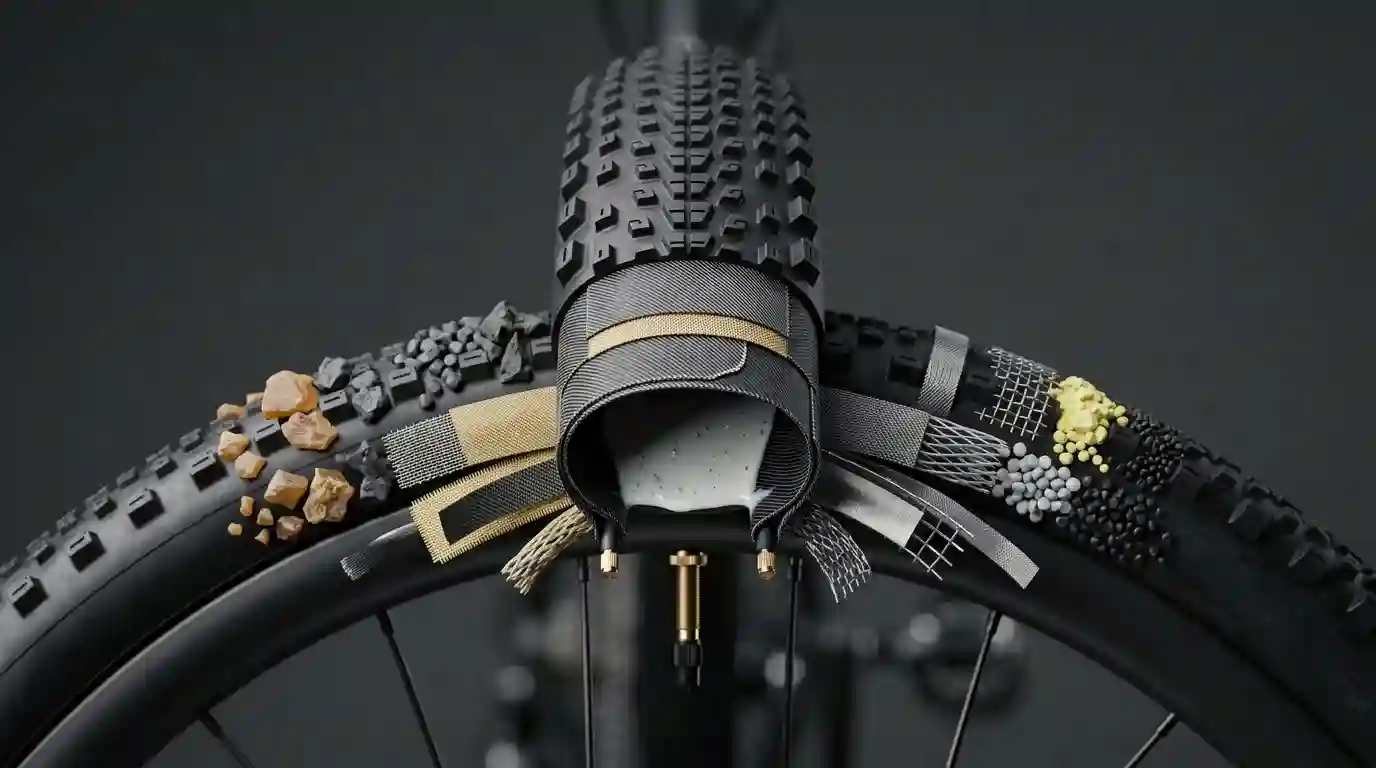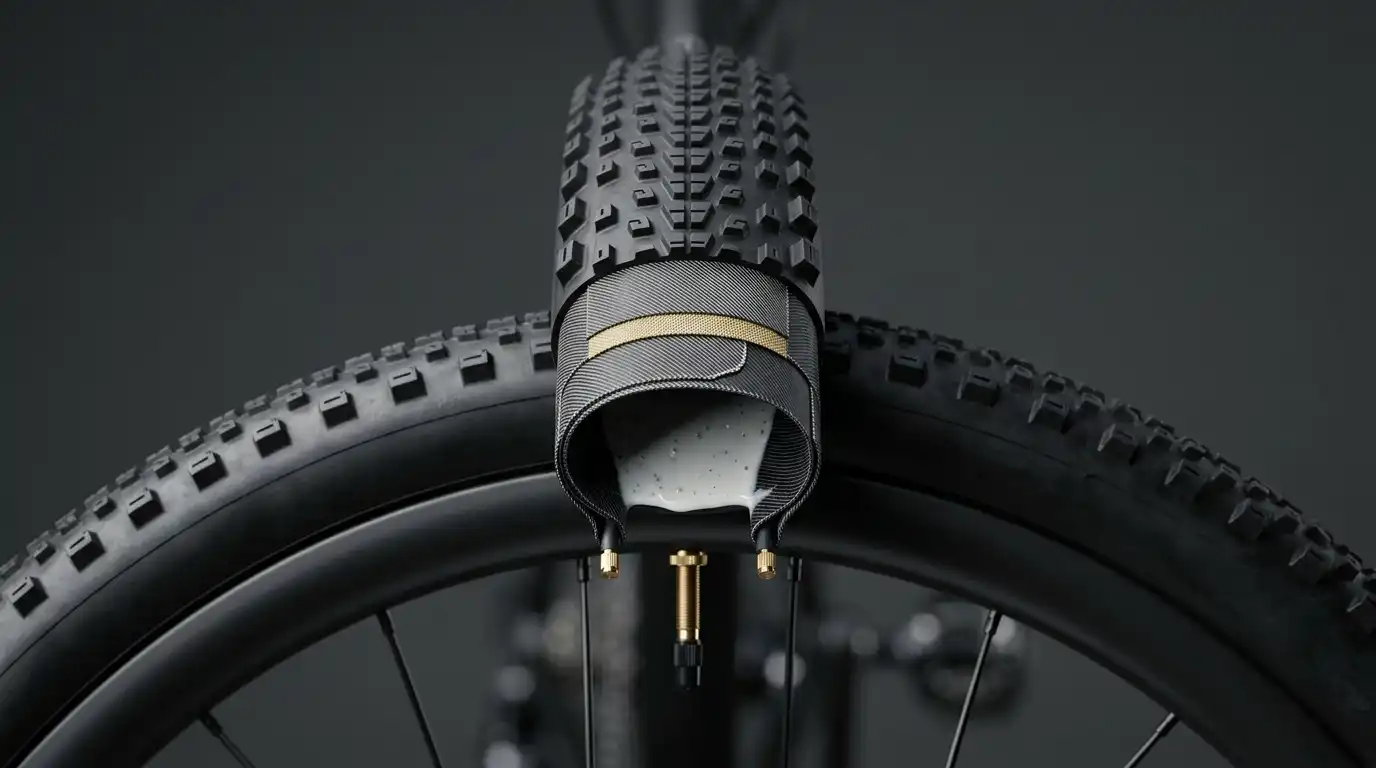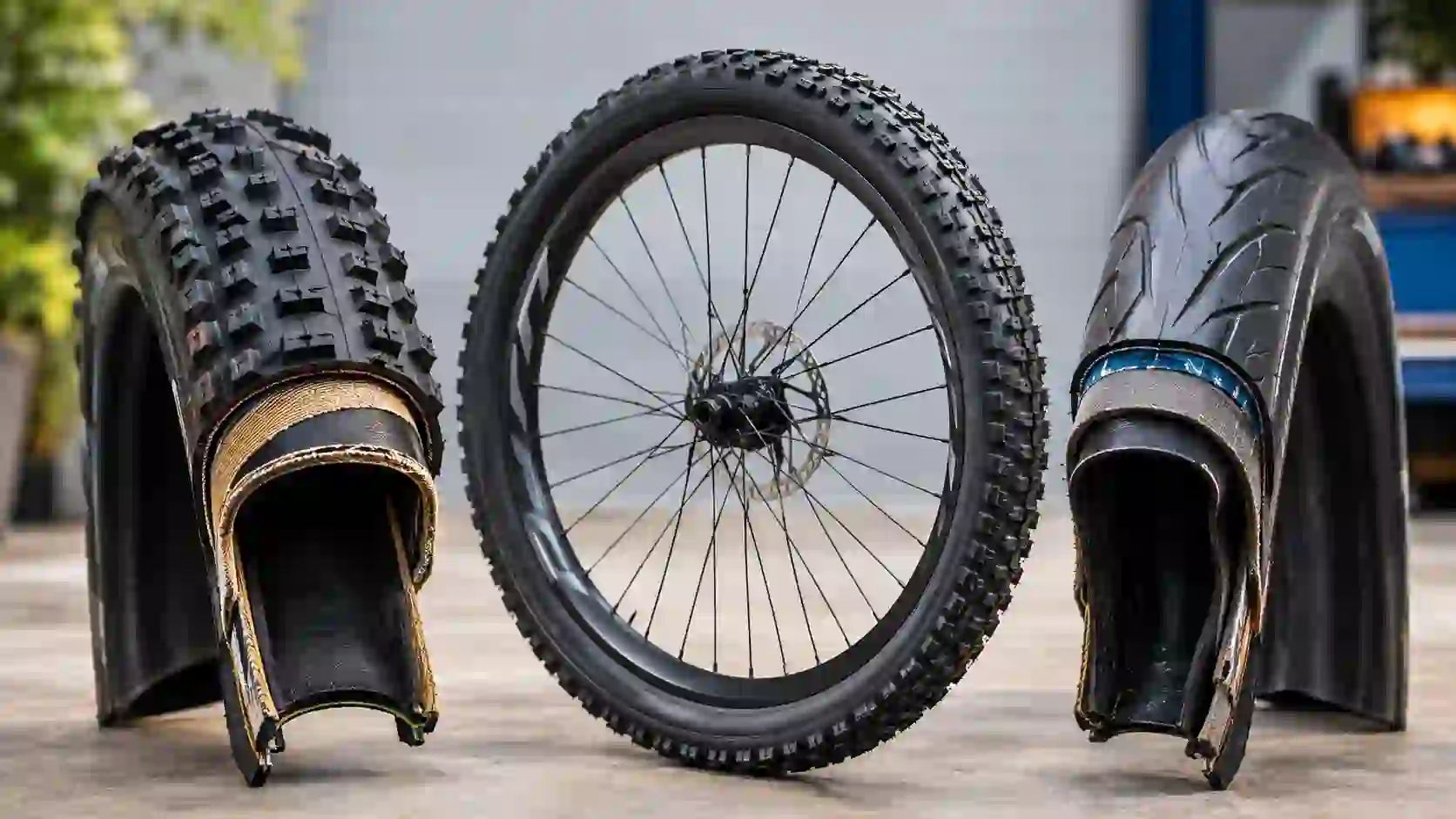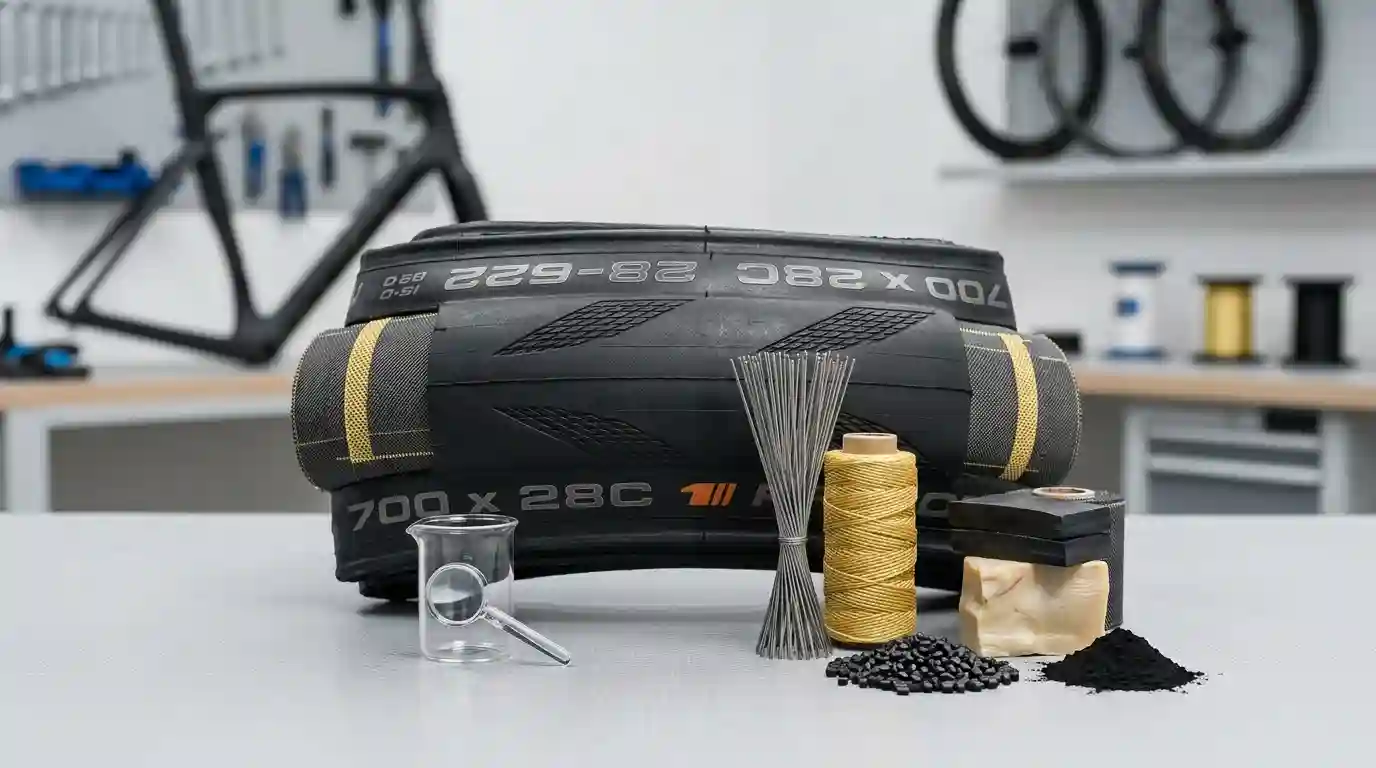
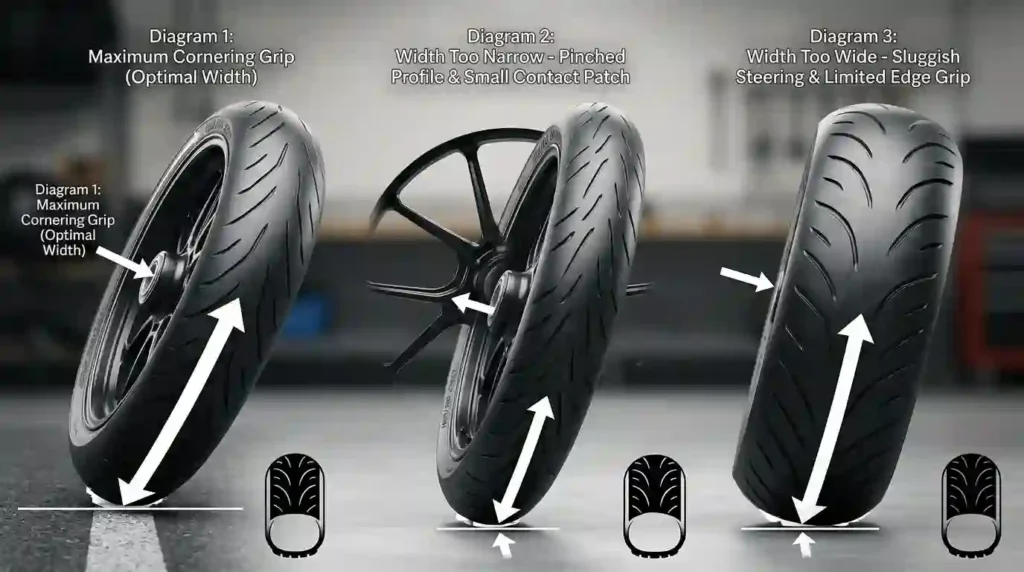
Choosing the ideal bicycle tire width directly influences how your bike accelerates, turns, absorbs bumps, and grips the road or trail. Whether navigating city streets, gravel fire roads, or technical singletrack, your tire choice serves as the sole contact point between your bike and the ground.
A single tire size cannot excel across every surface. Operating tires that are too narrow for rough roads leads to harsh vibration, frequent pinch flats, and poor cornering confidence. Conversely, running excessively wide tires on narrow rims creates unstable handling, sidewall squirm, and dangerous frame rubbing.
Selecting the optimal width requires evaluating your complete wheel and frame system. True performance depends on balancing tire width with internal rim width, tire pressure (PSI), frame clearance, terrain demands, and total system weight.
What Does Bike Tire Width Mean?
Bicycle tire width measures the total nominal distance across an inflated tire casing at its widest point, expressed either in millimeters or inches.
[ TIRE CASING CROSS-SECTION ]
/—————–\
/ Tread Channel \
| |
Left Sidewall | <– WIDTH –> | Right Sidewall
\ /
\–+ +–/
| Bead Seat |
+————+
Common standard sizes vary significantly depending on riding discipline:
- Road Bikes: 25 mm−30 mm
- Commuter & Hybrid Bikes: 32 mm−38 mm
- Gravel & Adventure Bikes: 40 mm−50 mm
- Mountain Bikes (MTB): 2.25 in−2.6 in (57 mm−66 mm)
A tire’s printed sidewall width serves as an approximation. Real-world mounted width varies based on internal rim channel width, operating pressure, and casing construction.
How Bike Tire Width Is Measured
Tire width measurements reflect the maximum distance across the inflated casing when seated on a standard test rim at operating pressure.
A tire labeled 700c×40 mm will not measure exactly 40 mm across every rim. Mounting that tire on a narrow 17 mm internal rim yields an actual width near 38 mm. Mounting the same tire on a wide 25 mm internal rim expands the mounted casing width to roughly 42 mm.
Always measure actual inflated width using digital calipers before evaluating frame and fork clearance limits.
Millimeters vs. Inches
The cycling industry relies on two primary measurement systems to denote tire size based on wheel category:
- Metric System (mm): Standard for road, gravel, endurance, and city commuter tires (e.g., 700c×28 mm or 650b×47 mm).
- Imperial System (Inches): Standard for mountain bikes, fat bikes, and dirt jumpers (e.g., 29×2.4 in or 27.5×2.5 in).
To convert mountain bike inch ratings into metric millimeter equivalents, multiply the inch value by 25.4:
2.4 inches×25.4=60.96 mm
Why Does Bike Tire Width Matter?
Tire width dictates total internal casing air volume. Higher air volume allows lower operating tire pressure (PSI), expanding the tire footprint without risking rim strikes.
Tire Width and Comfort
Higher air volume acts as a natural pneumatic shock absorber. Increasing tire volume allows lower pressure, absorbing high-frequency road buzz and trail impacts before vibrations reach your hands, feet, and saddle.
Tire Width and Grip
Traction depends on contact patch deformation. A wider, properly inflated tire conforms over road imperfections, gravel, and wet roots, maintaining consistent traction through turns and off-camber sections.
Tire Width and Rolling Resistance
Rolling resistance results from energy lost to casing deformation (hysteresis). On smooth surfaces, a wider tire operated at appropriate pressures reduces vertical vibration losses, matching or exceeding narrow race tires in speed over real-world pavement.
Common Bike Tire Widths Explained
| Tire Width Range | Standard Category | Primary Application | Key Performance Benefit |
| 23 mm−25 mm | Road Racing | Smooth asphalt, criterium racing | Low aerodynamic drag, minimal weight |
| 28 mm−32 mm | Endurance Road | Rough pavement, chip-seal roads | High vibration absorption, lower PSI |
| 35 mm−40 mm | Commuter / Light Gravel | City streets, hardpack dirt | Balanced speed, flat resistance, comfort |
| 42 mm−50 mm | Gravel / Bikepacking | Coarse gravel, forest service roads | High air volume, off-road traction |
| 2.1 in−2.35 in | Cross-Country (XC) | Fast dirt trails, light singletrack | Rapid acceleration, predictable grip |
| 2.4 in−2.6 in | Trail / Enduro MTB | Technical rocks, roots, steep descents | Maximum cornering traction, rim protection |
How Bike Tire Width Affects Tire Pressure
Larger tire casings hold greater total air volume, requiring less pressure (PSI) to support rider weight safely compared to smaller tires.
+——————————————————-+
| THE CASING VOLUME & PRESSURE RELATIONSHIP |
+——————————————————-+
Smaller Casing Width –> Requires Higher Baseline PSI |
| Larger Casing Width –> Requires Lower Baseline PSI |
+——————————————————-+
Overinflating wide tires defeats their primary purpose, causing harsh ride quality, high rolling resistance over bumps, and reduced cornering traction.
Wider Tires and Lower PSI
Operating appropriate, lower tire pressure delivers several structural performance benefits:
- Expanded Contact Patch: The tire footprint widens sideways rather than lengthening, improving cornering bite.
- Trail Conformity: The casing deforms around sharp obstacles rather than deflecting the entire bicycle upward.
- Impact Cushioning: Reduces shock transfer to the wheel rim during sharp square-edge hits.
Running excessively low pressure leads to unstable sidewall squirm, rim strikes, or tubeless tire burping.
A Simple PSI Starting Point
Follow this step-by-step workflow to determine your baseline tire pressure:
- Check Sidewall Limits: Locate the manufacturer’s printed minimum and maximum PSI ratings.
- Calculate Combined Weight: Add rider weight, bike weight, and carried gear weight together.
- Set Baseline Front and Rear Pressure: Apply system weight calculations to distribute pressure appropriately.
- Adjust Front-to-Rear Bias: Set front tire pressure 2 to 3 PSI lower than the rear tire to match weight distribution.
- Adjust for Surface Type: Drop pressure 2−4 PSI for loose terrain; add 2−3 PSI for high-speed asphalt.
- Evaluate Ride Quality: If the tire squirms in turns, add 2 PSI. If the ride feels harsh or bouncy, drop 2 PSI.
System Weight Tire Pressure Formula
To estimate baseline inflation targets based on total combined load (rider weight + bike weight + gear weight), apply this calculation:
Baseline Rear Pressure (PSI)=(4Total System Weight (lbs))×(Mounted Tire Width (mm)28)
Baseline Front Pressure (PSI)=Baseline Rear Pressure−3 PSI
Practical Example
A 170 lb rider on a 22 lb gravel bike with 8 lbs of gear (Total System Weight = 200 lbs) running 38 mm tires:
Rear PSI=(4200)×(3828)=50×0.736=36.8 PSI
- Rear Baseline Target: 37 PSI
- Front Baseline Target: 34 PSI
Recommended Baseline PSI by Weight & Category
| Total System Weight | 28mm Road | 38mm Gravel | 45mm Gravel | 2.4 in MTB (Tubeless) |
| 150 lbs (68 kg) | 58 PSI | 33 PSI | 26 PSI | 18 PSI |
| 180 lbs (82 kg) | 68 PSI | 38 PSI | 30 PSI | 21 PSI |
| 210 lbs (95 kg) | 78 PSI | 44 PSI | 35 PSI | 24 PSI |
| 240 lbs (109 kg) | 88 PSI | 50 PSI | 40 PSI | 27 PSI |
Front vs. Rear Tire Pressure
Bicycles carry an unequal weight bias, typically distributing approximately 60% of total system weight to the rear wheel and 40% to the front wheel.
[ WEIGHT DISTRIBUTION BIAS ]
Front Wheel: 40% Rear Wheel: 60%
(34 PSI) (37 PSI)
+—–+ +—–+
| o |==================| O |
+—–+ +—–+
Because the rear wheel supports greater load, it requires 2 to 4 PSI higher pressure to prevent pinch flats, casing deformation, and rim strikes. The lower front pressure improves front-wheel cornering traction and steering compliance.
Does Rim Width Affect Bike Tire Width?
Yes. Internal rim width directly alters an inflated tire’s shape, sidewall angle, and measured width.
Narrow Rim Channel Wide Rim Channel
(Pinched / Bulb Shape) (Supported Sidewalls)
+———–+ +———–+
/ \ / \
| Rounded | | Structured |
\ / \ /
+–+ +–+ +—–+ +—–+
| | | |
+—–+ +—–+
[Narrow Channel] [Wide Channel]
Mounting a wide tire on a narrow rim pinches the casing beads close together, creating a round “lightbulb” profile. This profile squirm under cornering forces, encouraging tire instability.
Mounting the same tire on an appropriately wide rim allows the sidewalls to extend straight down, stabilizing the tire shoulder under lateral loads.
Tire Width and Internal Rim Width Compatibility
Pair internal rim channel dimensions with compatible tire widths following updated ETRTO standards:
| Internal Rim Width (mm) | Minimum Safe Tire Width | Recommended Optimal Tire Range | Maximum Safe Tire Width |
| 17 mm | 23 mm | 25 mm−28 mm | 32 mm |
| 19 mm−21 mm | 25 mm | 28 mm−35 mm | 42 mm |
| 23 mm−25 mm | 30 mm | 38 mm−45 mm | 50 mm |
| 27 mm−30 mm | 2.0 in (50 mm) | 2.25 in−2.5 in | 2.6 in |
| 35 mm | 2.35 in | 2.6 in−2.8 in | 3.0 in |
Bike Tire Width by Bike Type
Selecting the right tire width depends heavily on your bicycle’s core frame category and intended use:
Road: [25mm] =======> [28mm] =======> [30mm]
Commuter: [32mm] ===============> [38mm]
Gravel: [40mm] =======================> [45mm] =======> [50mm]
MTB: [2.25 in] ====================================> [2.5 in]
Road Bike Tire Width
Modern performance road bikes have moved from narrow 23 mm tires toward 28 mm−32 mm options. Modern endurance road frames easily clear up to 32 mm−35 mm tires, delivering superior compliance on rough pavement without sacrificing speed.
Commuter Bike Tire Width
City commuters prioritize flat protection and vibration dampening. Widths between 32 mm and 38 mm strike an ideal balance, offering high air volume to cushion city curb drops and potholes while supporting heavy commuter loads.
Gravel Bike Tire Width
Gravel tires generally range from 40 mm to 50 mm. A 40 mm tire balances speed on pavement with dirt capability, whereas 45 mm−50 mm options excel over rocky fire roads and technical forest trails.
Mountain Bike Tire Width
Trail mountain bikes utilize 2.35 in−2.6 in tires. Cross-country (XC) racers use lighter 2.25 in−2.35 in tires for fast rolling speed, while downhill and enduro riders rely on 2.4 in−2.5 in casings for cornering stability.
E-Bike Tire Width
E-bikes require wider tires (38 mm−2.6 in) featuring reinforced multi-ply casings to manage heavy system weight (45 lbs+) and immediate electric motor torque without rapid tread wear or casing flex.
Wider vs. Narrower Bike Tires
TIRE WIDTH PERFORMANCE TRADEOFFS
+—————————————————————+
WIDER TIRES –> Higher Comfort, Greater Traction, Lower PSI |
| NARROW TIRES –> Lower Weight, Better Aerodynamics, Sleek |
+—————————————————————+
Bike Advantages of Wider Tires
- Higher air volume suppresses rough road buzz.
- Lower safe operating pressures.
- Expanded contact patch improves wet-weather grip and off-road stability.
- Reduces pinch-flat risks over sharp hits.
Advantages of Narrower Tires
- Lower overall rotating mass, aiding rapid acceleration.
- Reduced aerodynamic drag at speeds above 22 mph (35 km/h).
- Fits within restrictive frame stays on older rim-brake road frames.
How Tire Width Affects Tread and Rubber Performance
Tire performance depends as much on tread layout and rubber construction as it does on width dimensions.
[ CROSS-SECTION OF TIRE CONSTRUCTION ]
+———————————+ <– Tread Cap (Slick/Knob)
|=================================| <– Puncture Belt
|———————————| <– Casing Threads (TPI)
/ \
| Inner Rubber Air Barrier Sheath |
Tread Pattern
- Slick Tread: Maximizes dry rubber contact on smooth asphalt.
- Semi-Slick Tread: Smooth center strip for straight-line pavement speed, paired with side knobs for cornering grip on dirt.
- Knobby Tread: Open tread lugs bite into loose soil and mud to clear debris.
Rubber Compound & Durometer
Rubber hardness is measured in durometer Shore A ratings:
- Soft Rubber (45a−50a): Conforms around wet rocks and roots for high grip; wears faster.
- Hard Rubber (60a−70a): Lowers rolling resistance and extends tread life; less grip on wet metal or wet wood.
Casing TPI (Threads Per Inch)
- 30−60 TPI: Thick nylon threads. Heavy, stiff, but highly cut-resistant.
- 120−320 TPI: Very fine threads. Supple, lightweight, fast-rolling casing that conforms smoothly to terrain.
Does Tire Width Affect Puncture Resistance?
Tire width alone does not dictate puncture resistance. Flat prevention depends on casing construction, internal puncture belts, tire pressure, and setup type (tubeless vs. tubes).
+——————————————————-+
| PRIMARY PUNCTURE CAUSES |
+——————————————————-+
| 1. Penetration Flats: Glass, thorns, nails |
| 2. Pinch Flats: Rim pinches tube over square edges |
+——————————————————-+
Wider tires reduce pinch flats by providing a taller pneumatic cushion that prevents the rim from crushing an inner tube against obstacles. However, sharp thorns or glass can penetrate narrow and wide tires equally if the tread lacks a protective woven belt (e.g., Kevlar mesh).
Bike Tire Width and Tubeless Setups
Wider gravel and mountain bike tires perform exceptionally well when converted to tubeless systems.
Tubeless Convertible System
+———————————+
Tubeless-Ready Tire Casing |
| Liquid Latex Sealant |
+———————————+
| Airtight Rim Tape & Valve |
+———————————+
(Eliminates Inner Tube Friction & Pinch Flats)
Tubeless setups replace traditional inner tubes with liquid latex sealant, airtight tape, and a dedicated valve.
Benefits of Wider Tubeless Tires
- Zero Pinch Flats: Eliminates inner tube pinch cuts completely.
- Lower Operating PSI: Run lower pressure safely for enhanced trail grip.
- Puncture Self-Healing: Liquid latex coats punctures up to 1/8 in (3 mm) instantly while riding.
Tubeless Installation Guide
Step-by-step guide to installing a tubeless setup on your bicycle:
- Verify Tubeless Standards: Confirm both your rim and tire are explicitly marked “Tubeless Ready” (TLR or TC).
- Apply Tubeless Rim Tape: Clean the internal rim channel using isopropyl alcohol. Apply tubeless tape tightly over all spoke holes, stretching firm to prevent air bubbles.
- Install Tubeless Valve Stem: Insert the valve stem through the rim hole and tighten the locking nut securely by hand.
- Mount Tire Beads: Push one tire bead into the center rim channel. Work the second tire bead onto the rim using hand pressure.
- Add Liquid Latex Sealant: Pour 2−3 oz (60−90 ml) of sealant for road/gravel tires, or 3−4 oz (90−120 ml) for MTB tires through the valve stem.
- Seat the Tire Bead: Inflate rapidly using a high-volume floor pump or air compressor until the tire beads lock onto the rim with an audible snap.
- Check Seal and Pressure: Rotate and shake the wheel to coat all internal casing surfaces with sealant. Set target pressure and inspect for air leaks.
How to Choose the Right Bike Tire Width
Follow this complete selection guide to pick your ideal tire width:
[Determine Bike Type] -> [Check Frame Clearance] -> [Match Rim Width] -> [Set Target PSI]
- Identify Primary Riding Terrain: Define the surface percentage breakdown (e.g., 70% asphalt / 30% gravel).
- Check Frame & Fork Clearance Limits: Locate the narrowest physical pinch points around your current tires.
- Measure Internal Rim Channel Width: Ensure your preferred tire width falls within approved ETRTO compatibility ranges.
- Account for Rider System Mass: Heavier loads require wider casings or higher pressures to protect rims.
- Select Appropriate Tread Pattern: Choose a smooth center cap for pavement speed or open knobs for dirt traction.
- Calculate Target Operating Pressure: Fine-tune starting front and rear pressure based on volume and system load.
How to Check if a Wider Tire Will Fit
Follow this step-by-step procedure to measure frame clearance before purchasing wider tires:
- Locate Tight Frame Junctions: Inspect the chainstays, seatstays, fork crown, and front derailleur cage.
- Measure Space with Calipers: Insert digital calipers between your current tire casing and the tightest frame obstacle.
- Account for Lateral Wheel Flex: Maintain at least 4 mm−6 mm of clear safety gap around all sides of the tire.
- Account for Debris Clearance: Ensure adequate space remains for sticky mud and gravel buildup on wet rides.
- Test Spin the Installed Wheel: Spin the wheel in the frame, watching for wobbles or frame contact under hand pressure.
+——————————————————-+
| RECOMMENDED MINIMUM FRAME SAFETY CLEARANCE |
+——————————————————-+
Pavement / Road Riding: 3mm – 4mm minimum |
| Gravel & Off-Road: 6mm minimum |
| Wet Trail / Mud Riding: 8mm – 10mm minimum |
+——————————————————-+
Common Bike Tire Width Mistakes to Avoid
- Assuming Wider Is Always Better: Running excessively wide tires on narrow rims causes tire squirm and heavy, sluggish steering.
- Ignoring Internal Rim Width: Pairing wide tires with narrow rims distorts the tire casing shape, creating an unstable “lightbulb” profile.
- Overinflating High-Volume Tires: Inflating wide tires to maximum sidewall PSI causes a harsh ride and high rolling resistance over bumps.
- Ignoring Dynamic Frame Flex: Failing to leave extra frame clearance causes tires to rub carbon chainstays during out-of-saddle efforts.
How Tire Width Is Tested in Real-World Cycling
Cycling laboratories and testing facilities evaluate tire performance using controlled, repeatable procedures:
Rolling Resistance Drum Tests
Tires are mounted onto motorized steel drums to measure mechanical power loss (watts) across varying speeds, pressures, and loads.
[ MOTORIZED STEEL TESTING DRUM ]
+—————+
| Tire Casing |
+—————+
|
================= <– Rotating Steel Drum
Rough-Surface Laboratory Testing
Tires are tested over textured plates that simulate rough chip-seal pavement and cobblestones to measure vibration energy absorption.
Real-World Field Testing
Riders equipped with dual-sided power meters execute coast-down and roll-out runs over real road and trail surfaces to measure efficiency gains under natural riding conditions.
Frequently Asked Questions
What is the best tire width for a bike?
There is no single best width. A 28 mm tire is ideal for smooth road riding, 40 mm excels on mixed gravel, and 2.4 in works best for trail mountain biking.
Are wider bike tires better?
Wider tires provide greater comfort, traction, and impact protection. However, they add minor rotating weight and aerodynamic drag at high speeds.
Does a wider tire need less PSI?
Yes. Because wider tires hold greater air volume, they require lower internal pressure (PSI) to support the same system weight safely.
Does a wider tire slow you down?
Not necessarily. On rough asphalt, chip-seal, or gravel, a wider tire operated at appropriate pressure rolls faster because it absorbs impacts rather than deflecting upward.
Can I put wider tires on my bike?
Yes, provided your frame, fork arch, brake calipers, and internal rim width provide adequate clearance. Always maintain a minimum safety clearance of 4 mm−6 mm.
What tire width is best for gravel?
Tires measuring 40 mm−45 mm offer the ideal balance of speed on pavement and traction across coarse gravel roads.
How do I know when to replace my bike tires?
Replace tires showing flattened center treads, exposed casing threads, rubber cracking, sidewall tears, or repeated puncture failures.
Do wider bike tires help heavier riders?
Yes. Wider tires hold more air volume, allowing heavier riders to achieve proper support without running harsh, maximum pressures.
Final Tire Width Checklist
- [ ] Checked frame, fork, and brake clearance limits.
- [ ] Confirmed internal rim width compatibility using ETRTO charts.
- [ ] Accounted for total rider, bike, and gear weight.
- [ ] Selected an appropriate tread pattern for your local terrain.
- [ ] Verified tubeless or tube-type component compatibility.
- [ ] Calculated starting pressure based on total system weight.
- [ ] Conducted spin clearance tests before riding at speed.
Find Your Ideal Tire Width and PSI
Stop guessing your tire setup. Pairing the right tire width with correct operating pressure improves ride comfort, cornering grip, and rolling speed.
Ready to dial in your setup? Visit TheBikeTires.com and use our Free Bike Tire Pressure Calculator and Tire Finder Tool to calculate your starting pressure (PSI) and find the ideal tire size for your bike and riding style!

Mohidul Islam is a leading cycling technology specialist and bike tire consultant with over 15 years of hands-on experience in the bicycle industry. He holds a Bachelor of Science in Mechanical Engineering from Penn State University, where he focused heavily on material science, tread mechanics, and rubber compound performance. Over the past decade and a half, Alex has conducted extensive field testing, tubeless setup evaluations, and tire pressure modeling for road, mountain, and e-bikes. His practical insights and data-driven approach help cyclists of all levels optimize grip, speed, and durability on every ride.