Most beginner cyclists benefit from a durable, versatile tire featuring a moderate width, predictable cornering traction, dependable rubber compound, and robust puncture protection.
The ideal choice depends on your primary riding surface, bike style, total rider weight, regional weather, and riding goals. Finding the right balance requires evaluating tire size, tread pattern, inflation pressure (PSI), casing construction, rubber compound, puncture protection belts, and rim compatibility.
Featured Snippet Quick Answer: A beginner-friendly bike tire offers predictable cornering grip, low rolling resistance, reliable puncture protection, and a size profile matched to your bicycle’s frame, fork, and inner rim width.
What Makes a Bike Tire Good for Beginners?
Beginners benefit most from predictable handling, vibration absorption, and flat prevention rather than ultra-light, razor-thin race tires.
  RACER TIRE                         BEGINNER TIRE
+-------------------------+        +-------------------------+
| Ultra-thin rubber       |        | Thick tread rubber      |
| Supple, fragile casing  |        | Puncture protection belt|
| High pressure, firm ride|        | Moderate air volume     |
| Fast, but flat-prone    |        | Durable & forgiving     |
+-------------------------+        +-------------------------+
Prioritizing durability, comfort, wet grip, and simple roadside maintenance creates a confidence-inspiring ride. A balanced, all-around tire keeps you spending more time riding and less time fixing roadside flats.
Key Features Beginners Should Look For
- Moderate Tire Width: Expands air volume to absorb road impacts and increase contact patch stability.
- Simple Tread Pattern: Uses smooth center strips for speed, combined with micro-siping or small side lugs for predictable traction.
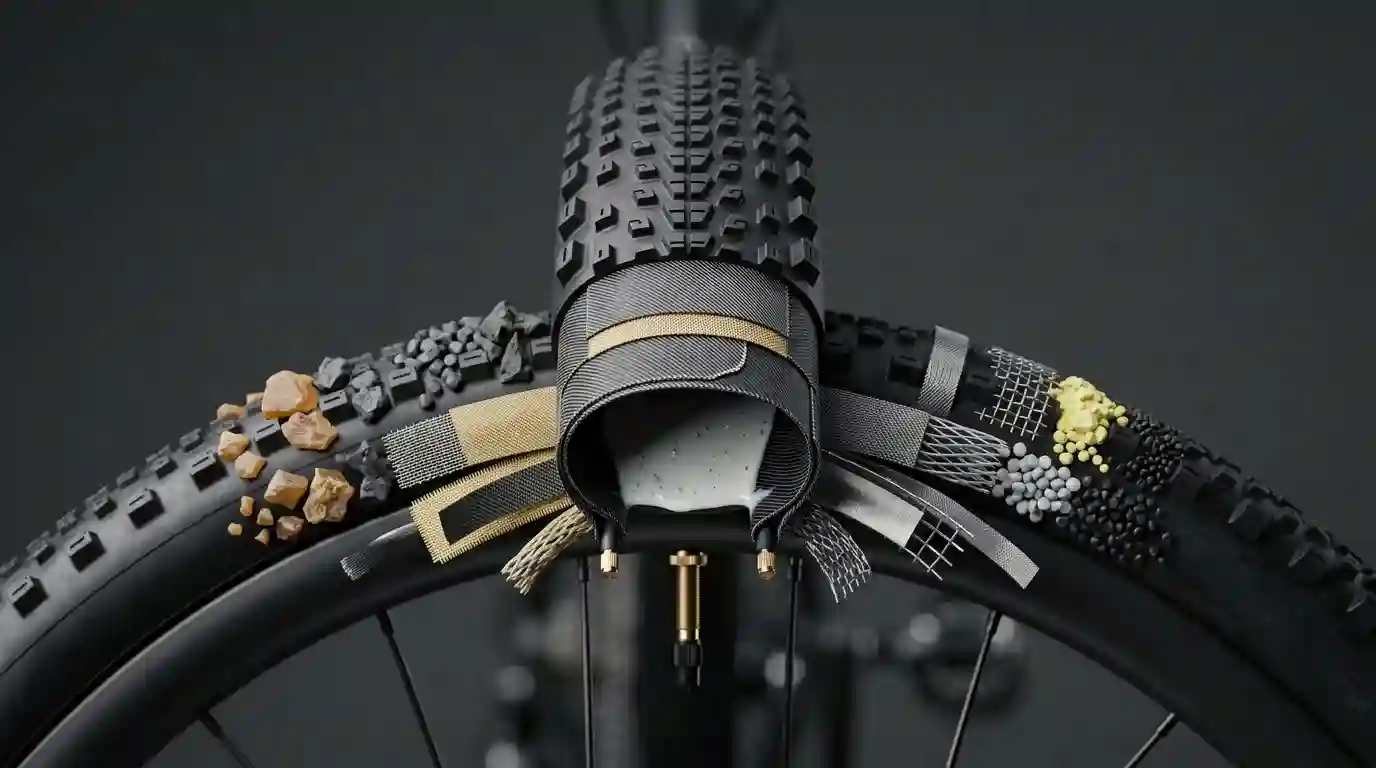
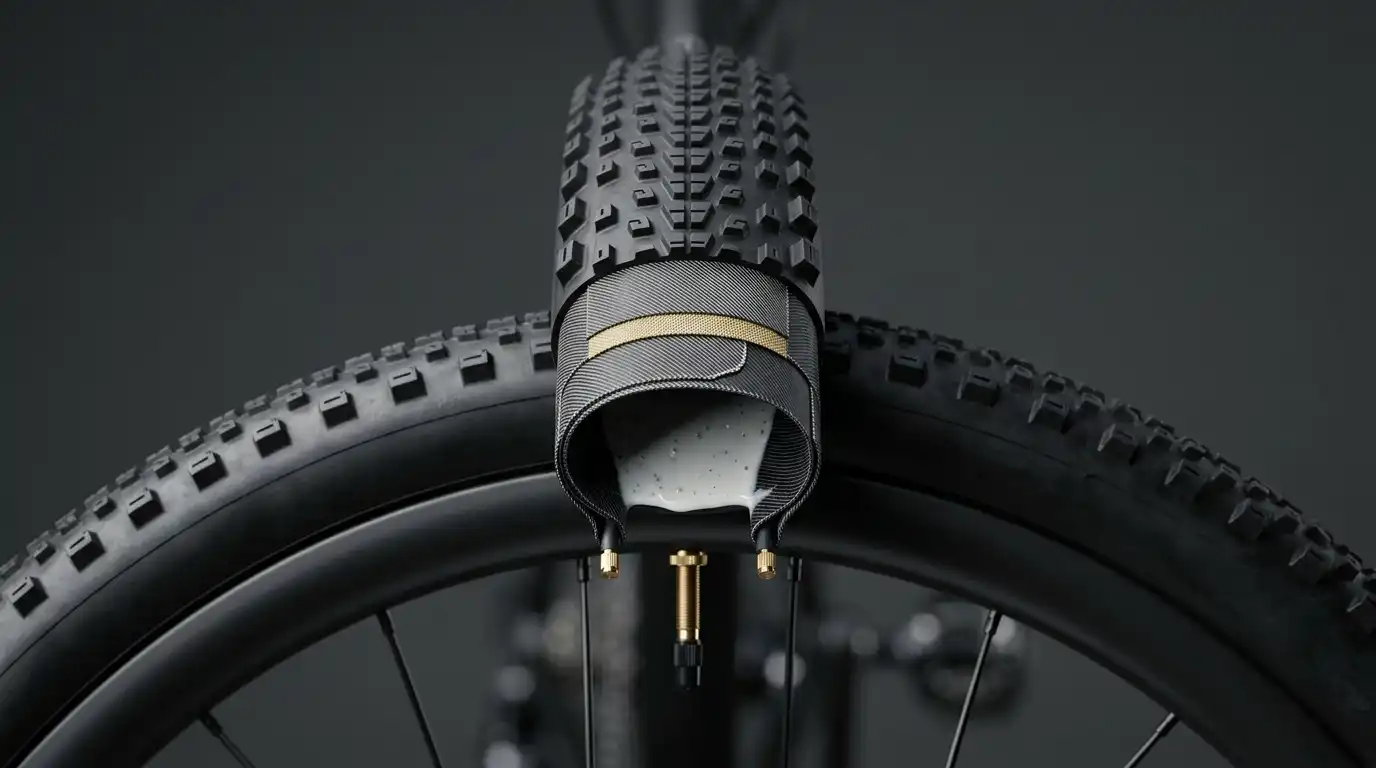
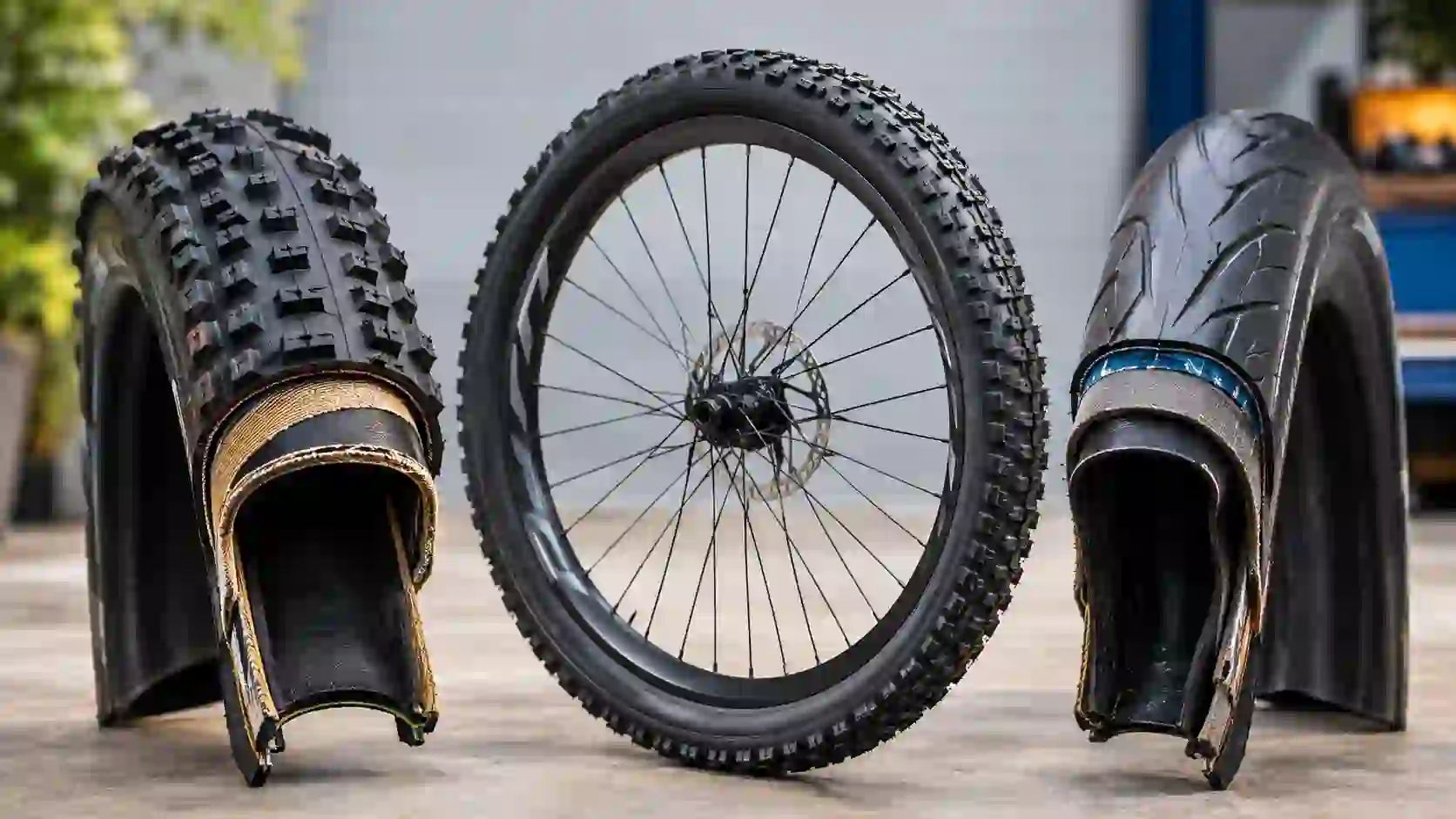
- Integrated Puncture Protection: Features woven sub-tread belts (such as Kevlar or Aramid) to stop sharp glass and thorns from piercing the inner tube.
Beginner Tire vs. Performance Tire
Race-oriented performance tires use ultra-thin rubber and supple casings to minimize weight and lower rolling drag. However, they sacrifice flat resistance and wear out quickly.
+------------------------+-------------------+-------------------+
| Feature                | Beginner Tire     | Performance Tire  |
+------------------------+-------------------+-------------------+
| Flat Defense           | High (Thick Belt) | Low (Minimal)     |
| Casing Durability      | Heavy-Duty Nylon  | Thin High-TPI     |
| Tread Life             | 2,500 - 4,000 mi  | 1,000 - 1,800 mi  |
| Ride Feel              | Stable & Forgiving| Firm & Ultra-Fast |
+------------------------+-------------------+-------------------+
Beginner tires prioritize thicker tread rubber and reinforced sidewalls, offering long-term reliability and predictable handling across diverse pavement conditions.
What Type of Bike Tire Should a Beginner Buy?
Match your tire choice directly to the terrain you plan to ride. Whether navigating city pavement, suburban bike paths, gravel trails, or singletrack dirt, your tire’s construction should support your environment.
       ROAD                 HYBRID/COMMUTE             GRAVEL                 MOUNTAIN
+-----------------+       +-----------------+    +-----------------+    +-----------------+
| Smooth Tread    |       | Slick Center    |    | Semi-Slick      |    | Aggressive Lugs |
| 28 mm - 32 mm   |       | 35 mm - 42 mm   |    | 38 mm - 45 mm   |    | 2.2" - 2.5"     |
| Fast on Asphalt |       | Comfort & Flats |    | Pavement + Dirt |    | Rocks & Mud     |
+-----------------+       +-----------------+    +-----------------+    +-----------------+
The Best Tires for Beginner Road Cyclists
- Tread Type: Smooth slick or lightly micro-textured surface for maximum contact patch on asphalt.
- Recommended Width: 28 mm to 32 mm to improve comfort over rough road seams.
- Key Focus: Predictable cornering grip in wet or dry conditions, paired with an integrated anti-puncture belt.
Best Tires for Beginner Mountain Bikers
- Tread Type: Widely spaced knobs that bite into loose dirt, mud, and Southwestern rocks.
- Recommended Width: 2.2 inches to 2.4 inches (55 mm to 60 mm).
- Key Focus: Broad contact patch and reinforced sidewalls to prevent pinch flats when rolling over roots and square-edged rocks. Avoid running heavy off-road tires if most of your route is paved.
The Best Tires for Beginner Commuters
- Tread Type: Slick or semi-slick pattern with center tread for effortless rolling.
- Recommended Width: 35 mm to 42 mm to handle potholes and urban debris.
- Key Focus: Maximum puncture defense, thick tread rubber, and low rolling resistance.
Best Tires for Beginner Gravel Riders
- Tread Type: Semi-slick or fine-file tread center with shoulder knobs for cornering traction on loose paths.
- Recommended Width: 38 mm to 45 mm to cushion impacts from sharp stones.
- Key Focus: Tubeless compatibility and durable side casings to prevent sharp rock cuts.
How Wide Should a Beginner Bike Tire Be?
Tire width must be selected to match your wheel’s inner rim width, frame clearance, fork clearance, fender space, and terrain type.
NARROW (23-25 mm)          MEDIUM (28-35 mm)          WIDE (38-45 mm+)
+--------------+           +--------------+           +--------------+
| Low Volume   |           | Balanced Air |           | High Volume  |
| Firm/Harsh   |           | Vibration Damper         | Max Comfort  |
| Smooth Roads |           | All-Rounder  |           | Rough/Gravel |
+--------------+           +--------------+           +--------------+
Greater air volume acts as natural suspension, smoothing out vibrations and improving cornering traction.
Narrow Tires (23–25 mm)
- Characteristics: Lightweight, highly responsive, aerodynamic.
- Rider Impact: Transmits heavy road vibrations, requires higher inflation pressure, and offers less compliance on rough city pavement.
Medium-Width Tires (28–35 mm)
- Characteristics: The ideal sweet spot for modern road, hybrid, and commuter bikes.
- Rider Impact: Delivers balanced rolling efficiency, vibration absorption, cornering stability, and flat protection.
Wide Tires (38 mm to 2.5 inches)
- Characteristics: High-volume air chamber for rough terrain, dirt trails, and gravel.
- Rider Impact: Excellent traction and comfort; requires checking frame, fork, and rim clearance before installation.
What Tread Pattern Is Best for Beginners?
Tread design should match the riding surface rather than relying on deep lugs for visual grip.
       SLICK                 SEMI-SLICK               KNOBBY
  +--------------+        +--------------+      +--------------+
  |              |        |  ||||||||||  |      |  #  #  #  #  |
  | Smooth       |        | Smooth       |      | Aggressive   |
  | Center       |        | Center       |      | Lugs         |
  |              |        | + Side Lugs  |      |              |
  +--------------+        +--------------+      +--------------+
  Paved Roads             Mixed Pavement/Gravel Off-Road Dirt/Mud
Bicycle tires do not hydroplane on wet asphalt due to their narrow, rounded profile. Micro-textured rubber provides better pavement traction than deep tread blocks.
Slick Bike Tires
- Best Surface: Smooth asphalt, concrete, and urban bike paths.
- Benefits: Lowest rolling resistance, maximum rubber contact patch, silent rolling.
Semi-Slick Bike Tires
- Best Surface: Mixed commuting, city streets, smooth dirt paths, and canal towpaths.
- Benefits: Fast-rolling smooth center strip combined with outer lugs that grip when leaning into turns on loose surfaces.
Knobby Bike Tires
- Best Surface: Off-road singletrack dirt, mud, sand, and loose gravel.
- Benefits: Deep rubber lugs dig into soft ground for braking and climbing traction, though they buzz and squirm on dry pavement.
What Tire Pressure Should Beginners Use?
Correct tire pressure (PSI) depends on total system weight (rider + bike + gear), tire casing width, internal rim width, and terrain type.
Running inflation pressure too high leads to a harsh, bouncy ride and reduced cornering traction. Running pressure too low risks rim strikes, squirmy cornering, and pinch flats.
Total Weight    28 mm Width    35 mm Width    42 mm Width    2.25" MTB
----------------------------------------------------------------------
150 lbs         60 / 63 PSI    40 / 42 PSI    28 / 30 PSI    22 / 24 PSI
180 lbs         70 / 74 PSI    48 / 51 PSI    34 / 36 PSI    25 / 27 PSI
210 lbs         80 / 85 PSI    55 / 59 PSI    40 / 43 PSI    28 / 31 PSI
240 lbs         90 / 95 PSI    63 / 67 PSI    45 / 48 PSI    32 / 35 PSI
*(Values formatted as Front PSI / Rear PSI)*
How Rider Weight Affects PSI
Calculate your total system weight using this formula:
Total System Weight=Rider Weight+Bicycle Weight+Cargo/Gear Weight
Because weight shifts toward the rear wheel during riding (roughly 40% front / 60% rear), always inflate your rear tire 3 to 5 PSI higher than your front tire.
                  FRONT WHEEL (40% Load)       REAR WHEEL (60% Load)
                  Lower Pressure (e.g. 50 PSI) Higher Pressure (e.g. 55 PSI)
What Happens if PSI Is Too High?
- Harsh ride quality that transmits road buzz directly into your hands and saddle.
- Reduced tire contact patch on uneven pavement, decreasing cornering grip.
- Increased deflection over small bumps, wasting forward energy.
What Happens if PSI Is Too Low?
- High risk of pinch flats (“snakebite” tube punctures) when hitting square-edged potholes.
- Unstable, squirmy cornering as the tire casing flexes under turning loads.
- Increased rolling drag and potential rim edge damage on hard impacts.
Should Beginners Use Tubeless or Inner-Tube Tires?
+---------------------+-----------------------------------+-----------------------------------+
| Feature             | Inner Tube System                 | Tubeless System                   |
+---------------------+-----------------------------------+-----------------------------------+
| Setup Complexity    | Simple, basic hand tools          | Requires tape, valves, sealant    |
| Maintenance         | Low (top off air weekly)          | Medium (replenish sealant 3-6 mos)|
| Small Flat Defense  | Poor (punctures cause flats)      | Excellent (sealant plugs holes)   |
| Pinch Flat Risk     | High if under-inflated            | None (no tube to pinch)           |
| Roadside Repair     | Quick tube swap                   | Tubeless plug or emergency tube   |
+---------------------+-----------------------------------+-----------------------------------+
Advantages of Inner Tubes
- Familiar & Simple: Straightforward mounting with standard tire levers and a floor pump.
- Low Maintenance: No liquid sealant to check, top off, or clean out.
- Ideal Starting Point: Recommended for riders learning foundational bicycle care.
Advantages of Tubeless Tires
- Puncture Protection: Liquid sealant automatically plugs small thorns and glass punctures up to 1/8 inch (3 mm).
- Lower Pressures: Runs at lower PSI for enhanced traction and comfort without risking pinch flats.
- Lower Rolling Drag: Eliminates friction between the inner tube and tire casing.
Beginner Tubeless Setup
1. Tape Rim Channel --> 2. Install Valve --> 3. Mount Tire Beads --> 4. Add Liquid Sealant --> 5. Seat Bead
- Confirm both the rim bed and tire are labeled Tubeless-Ready (TR) or Tubeless-Compatible (TC).
- Apply airtight tubeless rim tape across the rim channel, overlapping past the valve hole by 2 to 4 inches.
- Insert the tubeless valve stem and tighten the retaining nut securely by hand.
- Mount the tire beads into the rim channel and inject 2 to 3 oz (60 to 90 ml) of liquid sealant.
- Inflate rapidly using a tubeless pump or compressor until the tire beads snap into place.
How Important Is Puncture Protection for Beginners?
Puncture protection prevents roadside breakdowns and reduces maintenance headaches.
+-----------------------------------------------------------------------+
|  [ Outer Rubber Tread Surface ]                                       |
+-----------------------------------------------------------------------+
|  [ Anti-Puncture Belt: Kevlar / Aramid / High-Density Nylon ]         |
+-----------------------------------------------------------------------+
|  [ Flexible Casing Plies (TPI) ]                                      |
+-----------------------------------------------------------------------+
Anti-puncture features include woven Aramid belts under the tread, high-density nylon sidewall grids, and extra rubber thickness. While protective layers add a small amount of rotating weight, the reliability benefit makes them a smart choice for beginner cyclists.
When Should Beginners Choose a Puncture-Resistant Tire?
- Daily commuting on streets with glass, nails, or gravel debris.
- Riding in regions with thorny plants like goatheads or cactus burs.
- Long-distance touring where roadside flat repairs are difficult.
Does Casing TPI Matter for Beginner Tires?
TPI measures the number of Threads Per Inch in the woven fabric casing underneath the tread rubber.
LOW TPI (30 - 60 TPI)                 HIGH TPI (120+ TPI)
Thick threads, more rubber            Fine threads, less rubber
+-----------------------+             +-----------------------+
|  |||   |||   |||   || |             | ||||||||||||||||||||| |
+-----------------------+             +-----------------------+
Stiff, heavy, highly cut-resistant   Flexible, lightweight, smooth ride
Low vs. High TPI
- Low TPI (30–60 TPI): Uses thicker nylon threads coated in extra rubber. Durable, cut-resistant, and budget-friendly, though stiffer.
- High TPI (120+ TPI): Uses fine threads for a supple, shock-absorbing ride with lower rolling resistance, though it requires an integrated protective breaker strip to resist cuts.
How Does Rubber Compound Affect Beginner Tires?
Tire performance relies on rubber compound formulations rated by durometer hardness:
- Hard Rubber Compounds (60a–70a): Resist tread wear and roll efficiently, ideal for high-mileage rear tires.
- Soft Rubber Compounds (42a–50a): Conform to road surface texture for maximum wet cornering grip, but wear faster.
- Dual-Compound Formulations: Feature hard rubber along the center strip for wear life, paired with soft rubber along the shoulder edges for cornering stability.
Choosing Grip vs. Durability
- Wet & Cold Climates: Prioritize softer, silica-infused rubber for reliable braking traction on slick asphalt.
- Dry & High-Mileage Routes: Choose durable, dual-compound options to maximize tread life over thousands of miles.
How Do Beginners Choose the Right Bike Tire Size?
Check the tire sidewall markings to verify your wheel diameter and casing width before ordering replacements.
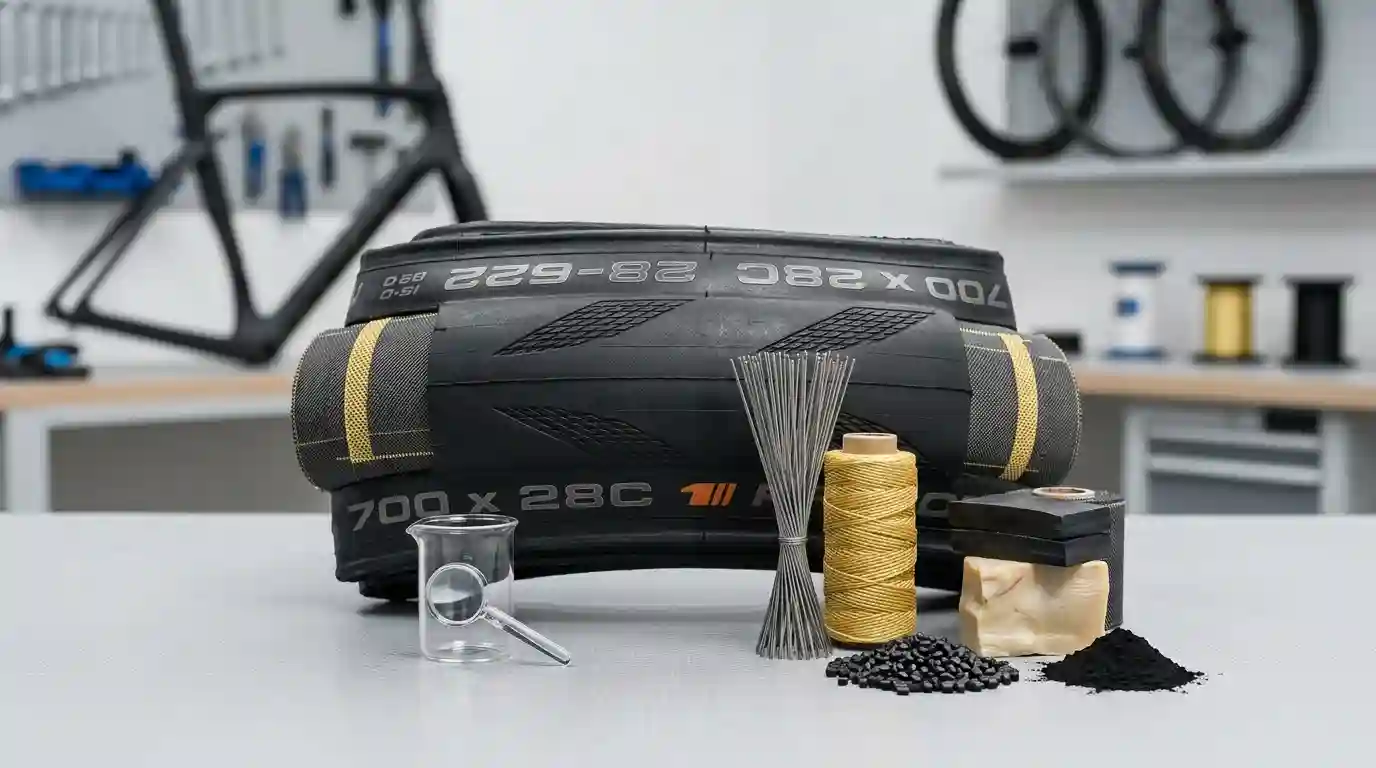
ISO Sizing Standard: [ Casing Width in mm ] - [ Bead Seat Diameter in mm ]
Example: 32-622 = 32 mm Wide Casing on a 700c (622 mm Diameter) Rim
Why Rim Width Matters
Internal rim width dictates your tire’s mounted shape and sidewall support:
NARROW RIM (Bulbous Shape)             WIDE RIM (Optimal Profile)
       /   \                                 |   |
      (     )                                (   )
     --[   ]--                              ---[   ]---
   Squirmy in corners                    Stable sidewalls
- Narrow Rims (<17 mm ID): Squeeze wider tires into a round, squirmy profile during cornering.
- Wide Rims (19–23 mm ID): Support sidewalls vertically for stable cornering and predictable handling.
How to Check Tire Compatibility
- Read the current tire size printed on your sidewall (e.g.,
700x32cor29x2.25). - Measure internal rim width using calipers or consult your wheel manufacturer’s spec sheet.
- Check frame and fork clearance at the seatstays, chainstays, fork crown, and fenders, leaving at least 4 to 6 mm of clear space.
Do E-Bikes Need Special Beginner Tires?
Electric bicycles deliver high motor torque, carry heavier battery/motor loads, and reach higher speeds, putting greater stress on tires.
STANDARD BICYCLE                   E-BIKE COMMUTER
Weight: 20 - 30 lbs                Weight: 50 - 75 lbs
Speeds: 10 - 15 mph                Speeds: 20 - 28 mph
Standard Casing                    ECE-R75 Certified Reinforced Casing
Look for tires with official safety ratings:
- E-25 Rating: Rated for pedal-assist e-bikes up to 15.5 mph (25 km/h).
- E-50 Rating (ECE-R75): Certified for high-speed Class 3 e-bikes up to 28 mph (50 km/h).
Best Tire Features for Beginner E-Bike Riders
- Reinforced Sidewall Plies: Prevents tire squirm under heavy battery weight and torque load.
- High Load Rating: Supports combined bike, rider, and cargo loads safely.
- Sticky Rubber Compound: Delivers firm stopping power under high-speed braking.
How to Install a Bike Tire for the First Time
1. Position Bead 1 --> 2. Insert Partially Inflated Tube --> 3. Push Bead 2 On --> 4. Inflate & Check Line
- Remove the wheel from your bicycle frame and deflate the old inner tube completely.
- Unseat the tire beads using hand pressure or tire levers, taking care not to scratch the rim bed.
- Inspect internal rim tape for tears, holes, or exposed spoke holes.
- Mount the first tire bead onto the rim channel.
- Inflate a new inner tube slightly until it holds shape, tucking it neatly inside the casing.
- Push the second tire bead onto the rim using your thumbs, finishing opposite the valve stem.
- Check that the inner tube is not pinched beneath the tire bead.
- Inflate to 20 PSI, verify the bead alignment line is even around the entire rim circumference, then inflate to final target pressure.
Beginner Inner-Tube Installation Tips
- Avoid using sharp metal tire levers that can pinch or puncture the new inner tube.
- Push the valve stem upward into the tire before seating the final section of bead to prevent tube binding.
Beginner Tubeless Installation Tips
- Ensure rim tape covers all spoke holes without bubbles or gaps.
- Use a tubeless sealant injector to add sealant through the valve stem cleanly.
How to Fix a Flat Bike Tire as a Beginner
ROADSIDE TUBE REPAIR PROCEDURE

1. Remove Wheel & Tire  -->  2. Locate Cause in Casing  -->  3. Patch or Swap Tube  -->  4. Inflate to PSI
Fixing a Tube-Type Flat
- Remove the wheel and unseat one side of the tire casing using tire levers.
- Remove the punctured inner tube and inflate it to locate the leak.
- Carefully run your fingers along the inside of the tire casing to find and remove embedded glass, wire, or thorns.
- Apply a self-adhesive patch over the hole, or swap in a fresh spare inner tube.
- Reinstall the tire bead, inflate to target pressure, and reinstall the wheel on your bike.
Fixing a Tubeless Puncture
- Locate the puncture site indicated by bubbling liquid sealant.
- Thread a rubber tubeless plug (“bacon strip”) into the insertion tool fork.
- Push the plug tool directly into the hole and pull it back smoothly, leaving the rubber plug behind to seal the hole.
- Top off air pressure with a frame pump or CO2 inflator, spin the wheel to distribute sealant, and resume riding.
Common Bike Tire Mistakes Beginners Should Avoid
+----------------------------------+------------------------------------+
| Common Mistake                   | Correct Approach                   |
+----------------------------------+------------------------------------+
| Buying knobs for road riding     | Use smooth slicks on asphalt       |
| Inflating to maximum sidewall PSI| Adjust PSI based on system weight  |
| Sizing up without checking space | Keep 4-6 mm frame & fork clearance |
| Riding on dry-rotted rubber      | Replace tires with cracked casings |
+----------------------------------+------------------------------------+
- Buying Aggressive Knobbies for City Riding: Causes noisy vibration, rapid wear, and high rolling drag on pavement.
- Inflating to Maximum Sidewall PSI: Creates a harsh ride, reduces cornering traction, and increases rolling vibration drag.
- Ignoring Frame Clearances: Installing wide tires without measuring clearance at fenders, brakes, and stays.
- Riding Damaged Rubber: Ignoring visible cuts, bulging sidewalls, or exposed casing threads.
How to Choose the Best Beginner Bike Tire in 5 Steps
[ Step 1: Terrain Surface ] ---> [ Step 2: Match Size/Rim ] ---> [ Step 3: Select Tread ]
                                                                        |
[ Step 5: Calculate PSI ]   <--- [ Step 4: Pick Protection Level ] <----+
- Identify Primary Surface: Determine whether you ride on smooth asphalt, gravel paths, urban streets, or off-road dirt.
- Confirm Wheel and Rim Size: Match tire diameter (
700c,27.5", or26") and inner rim width requirements. - Choose Tread Design: Pick smooth center slicks for street efficiency, or knobby blocks for off-road dirt traction.
- Select Protection Level: Choose integrated sub-tread belts or tubeless setups for high flat defense.
- Calculate Inflation Pressure: Adjust operating PSI based on total system weight (rider + bike + gear).
Best Beginner Bike Tire by Riding Style
+-------------------+-----------------------+------------------------+
| Riding Style      | Recommended Type      | Main Priority          |
+-------------------+-----------------------+------------------------+
| Road Cycling      | 28–32 mm Smooth Slick | Low Drag & Corner Grip |
| Urban Commuting   | 35–40 mm Semi-Slick   | Puncture Belt Defense  |
| Gravel Riding     | 38–45 mm Low-Profile  | Versatility & Comfort  |
| Mountain Biking   | 2.25–2.4" Knobby MTB  | Traction & Rim Defense |
| E-Bike Commuting  | Reinforced ECE-R75    | Load & Wear Endurance  |
| Recreational      | 32–38 mm All-Rounder  | Comfort & Stability    |
+-------------------+-----------------------+------------------------+
Frequently Asked Questions About Beginner Bike Tires
What type of bike tyre is best for beginners?
A durable, moderately wide tire with a versatile tread pattern, predictable cornering grip, and an integrated puncture belt is ideal. Match the specific size and tread pattern to your terrain.
Are wider tires better for beginners?
Yes. Wider tires hold larger air volume, allowing lower inflation pressures that absorb bumps, increase comfort, and expand your contact patch for cornering grip.
What PSI should a beginner use?
Base inflation pressure on total system weight, tire width, and rim width. Start in the lower-to-middle range printed on your tire sidewall, setting the rear tire 3 to 5 PSI higher than the front.
Are tubeless tires good for beginners?
Tubeless setups reduce small punctures and allow lower inflation pressures without pinch flats, but require more installation effort. Inner tubes remain a simple, low-maintenance option for riders learning basic bike care.
How long should beginner bike tires last?
A quality commuter or road tire typically lasts between 2,000 and 4,000 miles (3,200 to 6,400 km). Rear tires wear down roughly twice as fast as front tires due to weight distribution and braking forces.
Does higher TPI mean a better bike tire?
Not necessarily. Higher TPI casings offer a flexible, smooth ride, while lower TPI casings prioritize thick, cut-resistant durability. Evaluate TPI alongside puncture belts and rubber compound.
Can beginners use gravel tires on the road?
Yes. Semi-slick gravel tires with smooth center strips perform efficiently on asphalt while providing side lugs for unpaved shortcuts.
How do I know if a tire fits my bike rim?
Check your wheel diameter, inner rim width, and tire width casing specifications. Always follow your tire manufacturer’s approved rim width matrix.
Choose a Tire That Makes Riding Easier
The best beginner bike tire balances durability, comfort, cornering traction, flat defense, and exact frame clearance. Selecting a tire tailored to your daily route and maintaining proper inflation pressure creates a smooth, fast, and enjoyable ride.
Ready to optimize your tire setup? Use the free Bike Tire Pressure Calculator / Tire Finder Tool at TheBikeTires.com to determine your precise inflation pressure based on total system weight, rim width, and tire casing size.

Mohidul Islam is a leading cycling technology specialist and bike tire consultant with over 15 years of hands-on experience in the bicycle industry. He holds a Bachelor of Science in Mechanical Engineering from Penn State University, where he focused heavily on material science, tread mechanics, and rubber compound performance. Over the past decade and a half, Alex has conducted extensive field testing, tubeless setup evaluations, and tire pressure modeling for road, mountain, and e-bikes. His practical insights and data-driven approach help cyclists of all levels optimize grip, speed, and durability on every ride.