Long rides test your tires in ways short trips never do. A flat 40 miles from home, numb hands from harsh pressure, or a tire that wears out early can ruin a big day. US riders also face glass on road shoulders, loose rocks in the Southwest, and wet pavement in the Pacific Northwest.
The right bike tyres for long distance cycling keep you comfortable, quick, and safe for hours. Correct tire pressure (PSI) matters as much as the tire itself. It shapes grip, rolling speed, and how your body feels at mile 80.
This guide covers width, pressure, rolling resistance, puncture protection, tubeless setups, and care. You will also find two tables and a simple PSI formula. Good tire choices also protect your safety. A tire with poor grip or low pressure can slip in a corner or fail far from help. If you are new to tires, start with what makes a good bike tire and how bike tires work.
What Are the Best Bike Tires for Long Distance Cycling?
Long distance cycling tires balance comfort, efficiency, grip, and durability over extended rides. The right pick depends on road surface, distance, rider weight, bike type, and weather.
Quick answer: The best tire fits your bike and route, and stays comfortable and reliable for hours.
What Makes a Tire Good for Long Rides?
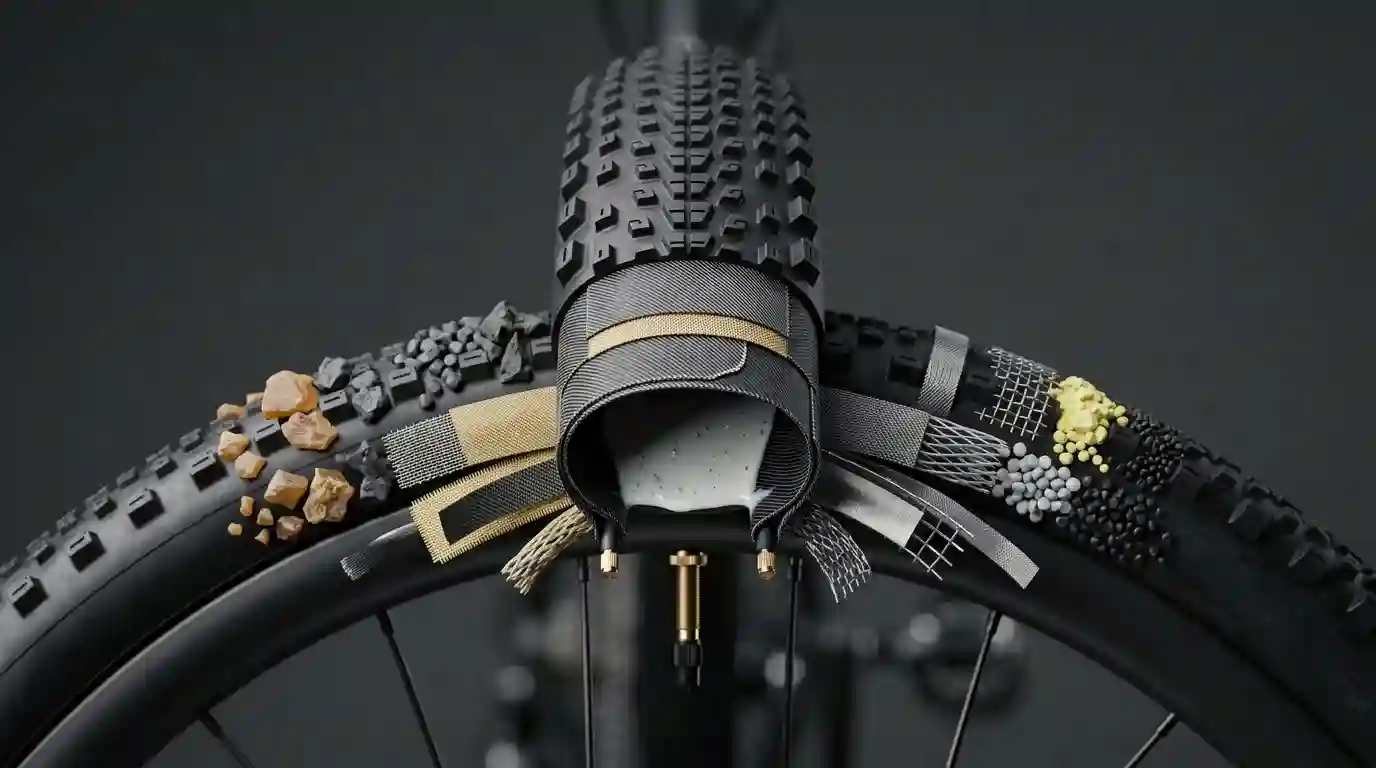
Look for a durable casing, suitable puncture protection, and a rubber compound with reliable grip. Check the casing first, since it sets how the tire flexes, rides, and resists cuts. Choose a width that balances comfort, handling, and rolling efficiency.
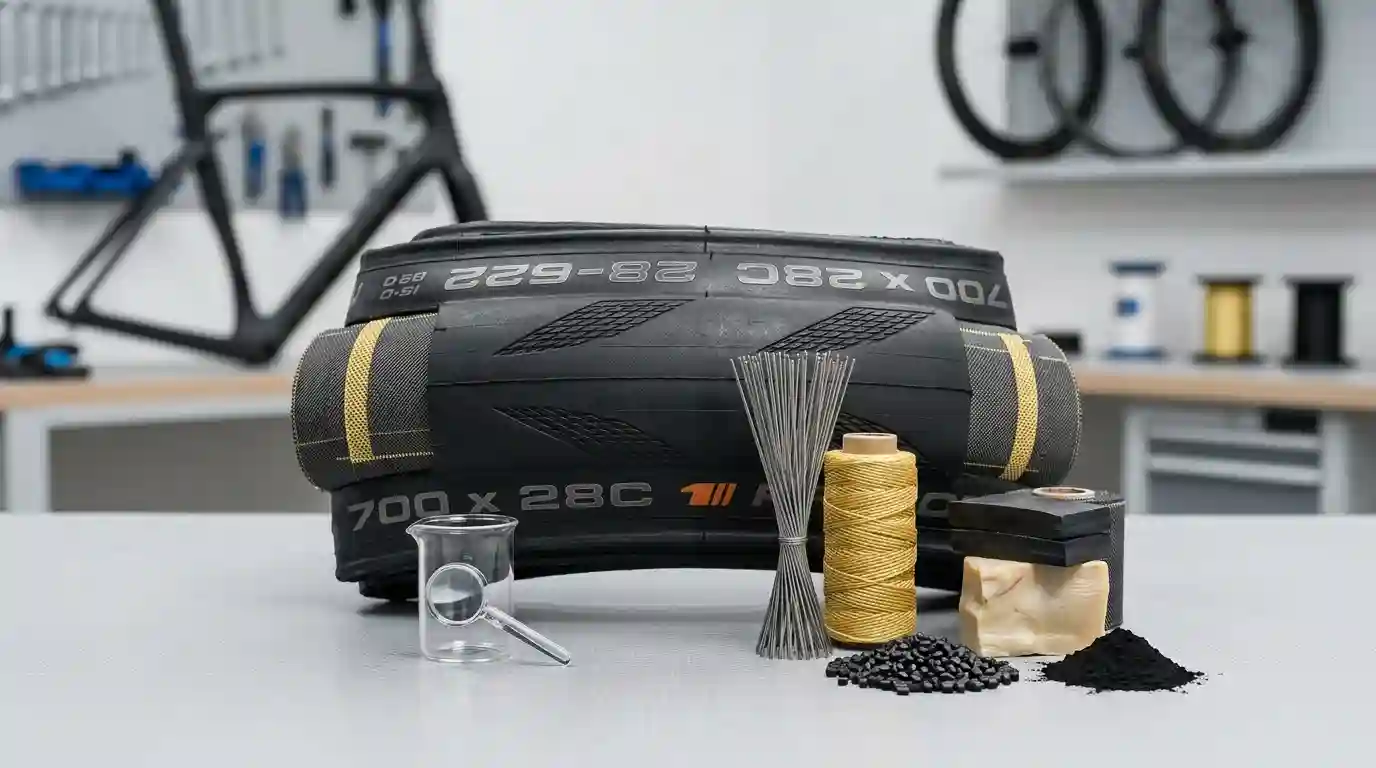
Easy repairs matter too when you ride far from home. Think about your longest day, not your average ride. A tire that feels fine for 20 miles can feel harsh or slow after 100. Our guide to what bike tires are made of explains the materials.
Tire Types That Work Best for Long Distances
- Road tires: best for paved routes where efficient rolling and low weight matter.
- Endurance and touring tires: useful when you value comfort, durability, and puncture protection.
- Gravel tires: ideal for mixed pavement, packed dirt, and rough roads when tread and casing suit the terrain.
Many riders mix types. A fast gravel tire on a road bike can handle a broken-pavement detour with ease. For a wider view, see how to choose bike tyres for road and off-road.
Priorities When Choosing Tires
Rank what matters most before you shop. A commuter who rides at dusk needs different traits than a weekend rider on dry roads.
- Comfort over hours of riding, not just a short test.
- Puncture protection that matches the route and expected debris.
- Predictable cornering grip, stable handling, and easy maintenance.
Our how to choose bike tyres guide helps you rank these for your own rides.
How Tire Width Affects Long Distance Cycling
Width changes air volume, comfort, handling, and pressure needs. Wider tires are not always slower, because casing, pressure, and road surface matter too.
Always check frame clearance and rim width before going wider. Mud and debris can pack in tight gaps, so leave some room around the tire. See bike tire width explained for the basics.
Are Wider Tires Better for Long Rides?
Wider tires can improve comfort on rough pavement by allowing a suitable lower pressure. They may also give better control on uneven roads and light gravel.
A bigger air volume lets the tire absorb bumps, which can reduce hand and back fatigue. The ideal width depends on the bike, rim, route, and your preferences. Read what tyre width should I choose to narrow your range.
Road Touring Width Picks
- Narrower road tires (25 to 28 mm, or 1.0 to 1.1 in) suit smooth pavement and traditional road setups.
- Mid-width endurance tires (30 to 35 mm, or 1.2 to 1.4 in) balance comfort, grip, and efficiency on varied pavement.
- Wider tires (38 mm and up, or 1.5 in and up) work well on rough roads and light gravel if the bike allows them.
For more, see best tyre width for road and city riding and best 700c bike tyres for comfort.
Checking Tire and Rim Compatibility
Read the printed tire size and check the inner rim width. Confirm approved tire widths with the rim and bike makers. Check clearance at the fork, frame, brakes, and mudguards before installing.
Hooked rims have a lip that holds the tire bead. Hookless rims have straight walls and often cap pressure near 72.5 PSI (5 bar).
| Inner rim width | Typical tire width range |
|---|---|
| 17 mm (0.67 in) | 25 to 32 mm (1.0 to 1.3 in) |
| 19 mm (0.75 in) | 25 to 35 mm (1.0 to 1.4 in) |
| 21 mm (0.83 in) | 28 to 42 mm (1.1 to 1.7 in) |
| 25 mm (1.0 in) | 32 to 50 mm (1.3 to 2.0 in) |
| 30 mm (1.2 in) | 40 to 61 mm (1.6 to 2.4 in) |
These are typical ranges. Your rim maker’s chart always wins. See bike tire size compatibility explained, will this bike tire fit my wheel, and how to measure bike tire size.
How Tire Pressure (PSI) Affects Long Distance Comfort
Correct pressure balances rolling resistance, grip, and comfort. Too much pressure makes rough roads feel harsh. Too little raises the risk of pinch flats and rim strikes.
Many riders in the US still ride the number printed on the sidewall. That number is a limit, not a target. Use pressure guidance suited to your weight, tire width, rim, and riding surface.
What PSI should I use for long rides? Start with a calculator or maker chart based on total system weight and tire width. Stay within tire and rim limits. Then adjust in small steps. Change pressure by 2 to 3 PSI at a time so you can feel the difference.
Tires also lose air over time. See why bike tyres lose air.
Finding the Right PSI for Long Rides
- Check the tire and rim pressure limits. These are printed on the tire sidewall and the rim.
- Use a pressure calculator or maker chart based on total system weight and tire width.
- Adjust in small steps while checking comfort, grip, and handling. Note the PSI that felt best for later rides.
For a rough cross-check, use this rule of thumb:
Rear PSI = (system weight in lb x 0.55 / tire width in mm) x K
Front PSI = (system weight in lb x 0.45 / tire width in mm) x K
Use K = 19 for smooth pavement, 14 for gravel or rough roads, and 13 for trails.
Example: A 220 lb system on 38 mm tires, rough road. Rear: 220 x 0.55 = 121, divided by 38 = 3.18, times 14 = 45 PSI. Front: 220 x 0.45 = 99, divided by 38 = 2.61, times 14 = 36 PSI.
Rider Weight and Tire Pressure
Total system weight includes the rider, bike, clothing, water, tools, and luggage. Heavier loads often need higher pressure within the approved range.
Front and rear tires may need different pressures because wheel loads differ. Rear panniers shift more weight back, so the rear tire may need a bit more. Weigh your loaded bike once so you are not guessing.
| System weight | Road 700×32 (1.3 in) | Gravel 700×40 (1.6 in) |
|---|---|---|
| 160 lb (73 kg) | 52 / 43 | 31 / 25 |
| 190 lb (86 kg) | 62 / 51 | 37 / 30 |
| 220 lb (100 kg) | 72 / 59 | 42 / 35 |
| 250 lb (113 kg) | 82 / 67 | 48 / 39 |
| 280 lb (127 kg) | 91 / 75 | 54 / 44 |
Values are starting PSI, shown as rear / front, for tubeless setups. With inner tubes, add about 10 percent. Always follow the lowest limit printed on your tire or rim.
Should You Use Lower PSI for Long Distance Cycling?
Lower pressure can improve comfort and grip on rough surfaces when your setup supports it. Excessively low pressure can cause tire squirm, rim strikes, or damage.
Use the tire’s build, width, load, and surface to guide changes, not a fixed PSI rule. On wet roads, many riders drop 2 to 5 PSI for traction. See how to choose bike tires for wet weather.
Rolling Resistance and Tire Efficiency on Long Rides
Rolling resistance is the energy lost as a tire deforms and recovers while rolling. Casing flexibility, rubber compound, pressure, and surface roughness all affect it.
A tire that feels fast on smooth pavement may not be the most efficient on rough roads. Over many hours, small gains add up. A tire that saves a few watts can leave you fresher at the finish. Comfort also counts, because a harsh ride wastes your energy too.
Do Smooth Tires Roll Faster Than Treaded Tires?
Smooth or lightly textured road tires often work well on pavement. Gravel and mountain bike tread can improve traction on loose surfaces.
Fast road tires often have a fine file or slick center for low drag. Choose tread based on your actual route. Extra knobs may add resistance on pavement. See why bike tires have different tread patterns.
Casing TPI and Long Ride Performance
Casing TPI means threads per inch in a tire casing. Higher TPI can point to a more supple casing, but TPI alone does not decide quality or speed.
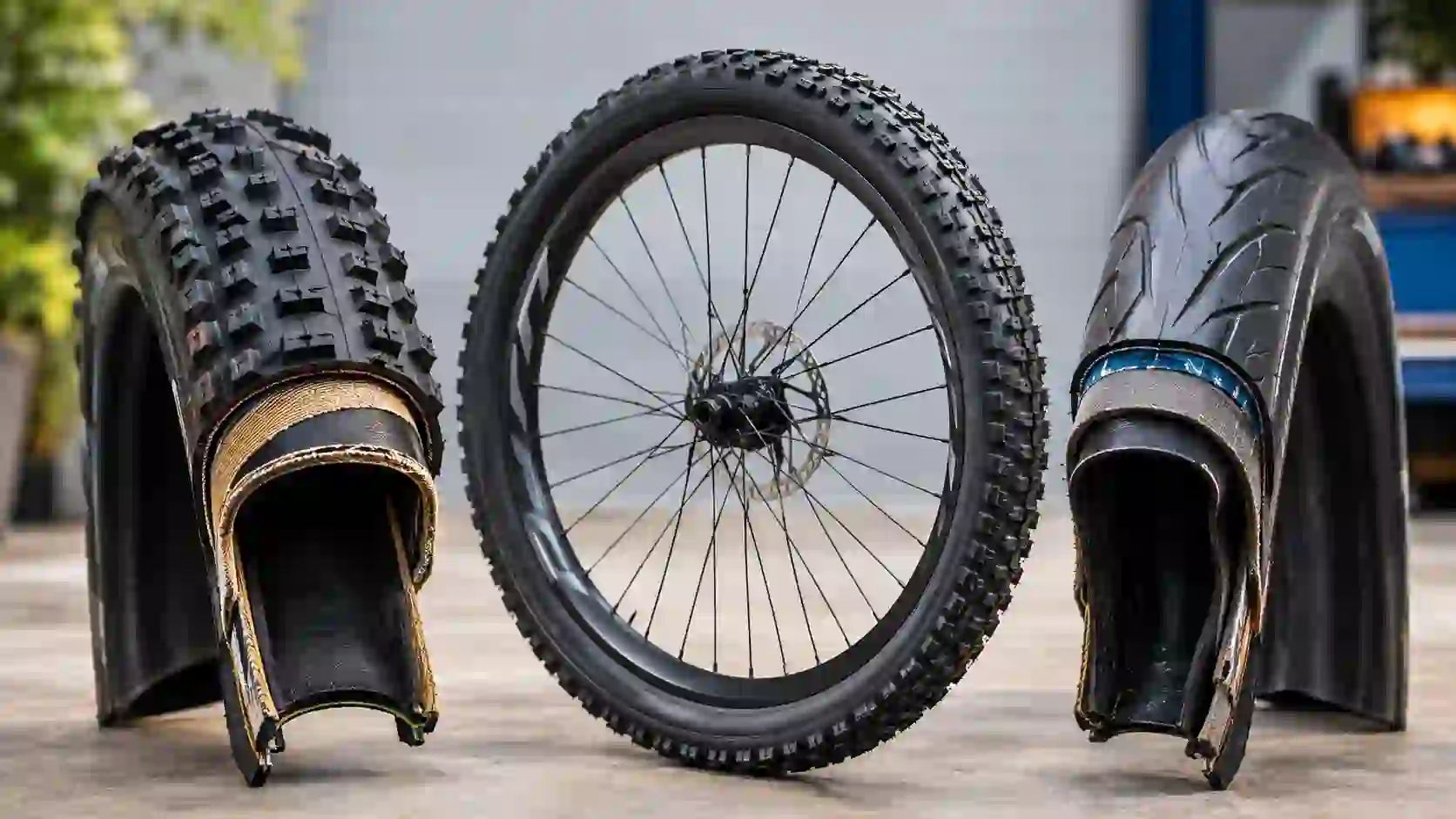
A thin, supple casing can feel fast and smooth. A thicker casing can last longer on rough routes. Compare casing materials, ply construction, puncture protection, and independent test results together. Our bike tire casing guide goes deeper.
Ways to Reduce Rolling Resistance
- Keep suitable tire pressure and check it before long rides.
- Pick a compound and tread that match the riding surface.
- Keep tires in good condition and avoid carrying extra weight.
Not sure how often to check? Read how often to check bike tyres.
Puncture Protection for Long Distance Cycling
A flat is far more disruptive when repair shops are miles away. Puncture belts, reinforced casings, and sidewall protection all help.
Balance durability with comfort, weight, and rolling efficiency. The heaviest tire is not always the best choice.
Are Puncture-Resistant Tires Worth It for Touring?
They can reduce the risk of common tread punctures from glass, thorns, and small sharp objects. They suit commuters, touring cyclists, and riders on debris-heavy roads.
No tire can prevent every puncture, cut, or pinch flat. Riding a few inches away from the road edge also helps, since debris collects there. Protection lowers risk. It does not remove it.
Puncture Belts Explained
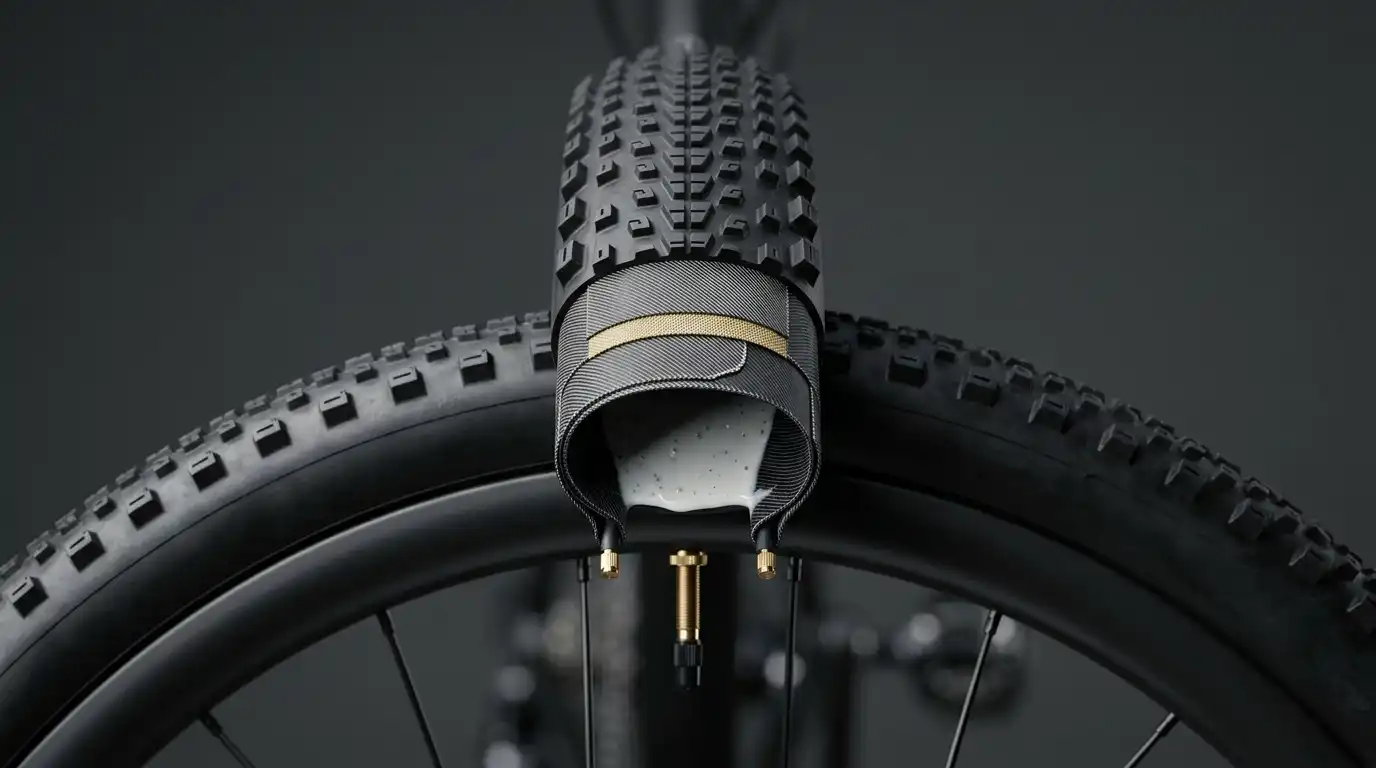
A puncture belt is a protective layer beneath the tread that resists sharp objects. Different tires use different materials and levels of protection.
Check whether protection covers only the tread or also reinforces the sidewalls. Sidewall cuts are common on rocky Southwestern routes.
Reducing Flat Tires on Long Rides
Inspect the tread and remove embedded debris before you set off. Carry a spare tube, tire levers, a compatible pump or inflator, and a patch kit. Learn to use them at home first, since a roadside repair is no time to practice.
If you do flat, follow these steps:
- Find and remove the cause, such as glass or a thorn.
- Patch or replace the tube, or plug the tubeless hole.
- Reinflate to your target PSI and recheck the seat.
For tubeless setups, carry plugs and check the sealant before you ride.
Tubeless Tires vs. Inner Tubes for Long Distance Cycling
Tubeless sealant is a liquid that closes some small punctures as air escapes. Tubes are simple and easy to swap.
Compare maintenance, roadside repair, weight, and puncture behavior. Tubeless setups often shine on rough roads, while tubes win on simplicity. Neither is perfect, so think about how far you ride from help. The best system depends on tire compatibility, conditions, and your repair skills.
Is Tubeless Better for Long Rides?
Sealant can close many small holes without a tube change. Suitable tubeless setups can run lower pressure without tube pinch flats.
Large cuts, damaged sidewalls, and failed seals can still cause air loss. Tubeless also needs regular sealant checks, especially in hot, dry climates.
When Are Inner Tubes the Better Option?
Tubes are simple to replace and sold in bike shops everywhere, even in small towns on a cross-country route. They suit riders who prefer straightforward repairs.
Carry a correctly sized spare tube and check valve compatibility. Our ETRTO bike tire sizes guide helps you decode sizes.
Preparing a Tubeless Setup for Touring
- Confirm that the tire, rim, valve, and rim tape are tubeless-compatible.
- Add the sealant amount the tire or sealant maker recommends.
- Check for leaks, verify pressure, and carry a plug kit and a backup tube.
Test the setup at home before a big trip. Ride a few miles, then check for slow leaks overnight. A bad seal is easier to fix in your garage than on a remote road. Top up sealant every few months.
Choosing Tires for Road, Gravel, Touring, and E-Bikes
Match tire construction and tread to the surface you ride most. Consider load capacity, puncture protection, and cornering grip when you carry luggage or ride an e-bike.
Check the bike maker’s recommendations before changing tire type or width. A tire that does not fit well can rub the frame or fail under load.
Long Distance Road Cycling Picks
Choose efficient tires with reliable wet and dry grip. Consider endurance models when comfort and puncture protection matter more than minimum weight.
Select a width that fits the bike and suits the road surface. Many riders find that 28 to 32 mm tires (1.1 to 1.3 in) offer a smart blend of speed and comfort. If you ride mixed pavement, see how to choose bike tires for rough roads.
Gravel and Mixed Surface Picks
Choose a tread pattern that suits the mix of loose gravel, dirt, and pavement. Consider stronger sidewalls for rocky routes and remote rides.
Balance grip and rolling efficiency instead of choosing the deepest tread. See how to choose bike tires for gravel roads and how to choose tires for mixed surfaces.
Touring With Luggage Picks
Look for durable casings and suitable load ratings. Bikepacking and touring bikes can carry 30 lb or more of gear, which changes the pressure you need. Set pressure based on total weight and front-to-rear load distribution.
Prioritize reliable flat protection and tires that are easy to repair away from home. Loaded bikes carry more weight over bumps, so strong sidewalls help prevent pinch flats. Wider tires with strong sidewalls often suit loaded bikes.
E-Bike Rider Priorities
Check tire load and speed ratings where the bike and tire makers require them. Consider e-bike torque, added system weight, and frequent acceleration when judging durability.
Choose tires with reliable grip and protection, and stay within compatibility limits. E-bikes accelerate hard, so tread and casing may wear faster than on a regular bike. Learn to read sidewall labels in bike tyre markings explained for beginners.
Tire Rubber Compounds, Tread, and Cornering Grip
Rubber compounds influence grip, wear, and energy loss. Tread pattern shapes handling on pavement, dirt, and gravel.
Predictable cornering grip matters most when you are tired late in a long ride. Fatigue slows your reactions, so a forgiving tire adds a safety margin. Our rubber compound guide explains the basics.
Which Rubber Compound Is Best for Long Rides?
A balanced compound gives useful grip and long tread life. Softer compounds may improve traction in some conditions but can wear faster.
Durometer measures rubber hardness, and lower numbers feel softer. Consider temperature, wet roads, and terrain when comparing compounds.
Tread Pattern and Handling
Smooth or lightly textured tread suits paved roads. Small, closely spaced knobs help on hard-packed dirt and mixed surfaces.
More aggressive tread helps on loose ground, such as Pacific Northwest mud, but may feel slower on smooth pavement. See how much tread a bike tire should have.
Improving Cornering Grip
Use a suitable pressure and tire width for the surface and load. Too much pressure shrinks the contact patch, which can make the tire feel skittish on wet or dusty roads. Inspect the tread and sidewalls for wear or damage.
Avoid abrupt turns and hard braking on loose or wet surfaces. Brake before the corner, lean the bike, and keep your weight low and steady. Good cornering traction starts with smooth, steady inputs.
Inspecting and Maintaining Tires Before a Long Ride
Basic checks can prevent avoidable flats and handling problems. Do a quick inspection before every long ride and a deeper check at regular intervals. Five minutes in the driveway can save hours on the road.
Replace damaged tires instead of relying on sealant or patches to fix structural problems. A bulge or exposed thread can fail suddenly at speed.
Checking Tires Before Setting Off
- Inspect the tread and sidewalls for cuts, bulges, and embedded debris.
- Check tire pressure with a reliable gauge.
- Confirm the tire is seated evenly and the wheel spins without rubbing.
When Should You Replace Bike Tires?
Replace tires with exposed casing, serious cuts, bulges, or structural damage. Watch for worn tread, wear indicators, and repeated punctures in one spot.
Do not rely on mileage alone, because life depends on use and conditions. Heavy riders, rough roads, and hot weather can all shorten tread life. See how often bike tyres should be replaced.
Gear to Carry on a Long Ride
- A spare tube, tire levers, a pump or inflator, and a patch kit.
- Compatible plugs and a backup tube if you ride tubeless.
- Tools to remove the wheel and repair the tire on the road.
Testing Tires for Long Distance Performance
Reliable reviews test speed, puncture resistance, grip, comfort, and durability separately. They also use consistent conditions and report tire size, pressure, load, and surface.
Lab results and real-world feedback are different things. Both are useful, but neither tells the whole story alone. See our testing process for how we approach tire evaluation.
Measuring Rolling Resistance
Lab drum tests measure energy loss under controlled conditions. Pressure, load, speed, temperature, and tire size can change the results.
Rough real-world roads may produce different rankings than smooth lab surfaces.
Tread Puncture Tests
Controlled tests measure the force needed to push an object through the tread. They do not fully measure sidewall cuts or pinch-flat resistance.
Compare results only when methods and conditions are similar.
Trustworthy Tire Review Checklist
- Tire model, size, measured width, weight, pressure, and test conditions.
- Measured results kept separate from personal impressions.
- Repeatable tests, maker specifications, and clear limits.
Our editorial policy explains the standards we follow.
Frequently Asked Questions
Quick answers to common long distance tire questions. Find more on our FAQs page.
Which bike tires are best for long distance cycling?
The best tires balance comfort, rolling efficiency, grip, and puncture protection for your route. Road endurance tires suit paved rides. Touring and gravel tires suit heavier loads or mixed surfaces.
Best PSI for long distance cycling?
PSI depends on rider and luggage weight, tire width, rim compatibility, and surface. Start with a calculator or maker chart and stay within limits. In wet weather, many riders lower pressure by 2 to 5 PSI.
Do wider tires feel more comfortable on long rides?
Often, yes. Wider tires can improve comfort on rough roads when paired with suitable rims and pressure. Check frame clearance and compatibility first.
Is tubeless better than inner tubes for touring?
Sealant can close many small punctures and may allow lower pressure without pinch flats. Tubes are easy to replace. The better option depends on your route and repair preferences.
Pressure checks: how often should you do them?
Check before long rides and after big changes in temperature or load. Tires naturally lose air, so regular checks protect handling and efficiency.
Expected tire life on long distance rides?
Life varies with compound, surface, load, pressure, and care. Replace tires when wear indicators, exposed casing, bulges, or serious cuts show they are unsafe.
Can I use gravel tires for long road rides?
Yes. Fast-rolling gravel tires work well on mixed routes and rough pavement. Choose tread depth and casing based on how much loose terrain you expect.
Can I fit wider tires for more comfort?
Only if the tire suits the rim and the bike has enough clearance. Check maker specifications for width, pressure, and rim compatibility. See how much wider a tire can fit and can I use wider tires on my bike.
Conclusion: Choose Tires That Keep You Riding Longer
Long distance tire choice is about comfort, reliable grip, rolling efficiency, and puncture protection working together.
Remember these key points:
- Match width, tread, casing, and pressure to your route, load, and bike.
- Run a pre-ride inspection and carry a practical repair kit.
- Choose measured performance over a single spec or marketing claim.
Test Your Exact Setup Today
Ready to dial in your setup? Use the Free Bike Tire Pressure Calculator / Tire Finder Tool at TheBikeTires.com. Enter your weight, tire size, and riding surface to get a clear starting point.
Test it before your next big ride, then fine-tune your PSI. Learn about the team behind these guides on our about page.

Mohidul Islam is a leading cycling technology specialist and bike tire consultant with over 15 years of hands-on experience in the bicycle industry. He holds a Bachelor of Science in Mechanical Engineering from Penn State University, where he focused heavily on material science, tread mechanics, and rubber compound performance. Over the past decade and a half, Alex has conducted extensive field testing, tubeless setup evaluations, and tire pressure modeling for road, mountain, and e-bikes. His practical insights and data-driven approach help cyclists of all levels optimize grip, speed, and durability on every ride.