
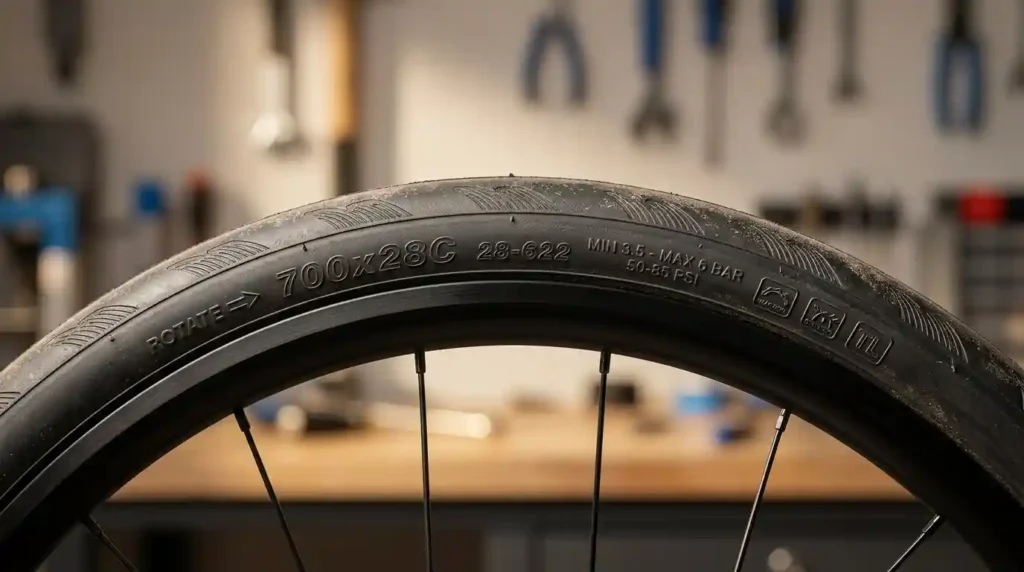
Stepping into a bike shop or browsing online for replacement bike tires can quickly feel overwhelming. You are met with a dizzying wall of numbers, letters, and technical jargon embossed directly into the sidewall rubber. Codes like 700×28C, 29×2.25, 40-622, 60 TPI, and MAX 85 PSI leave many US cyclists guessing.
Choosing the wrong size can lead to dangerous rim pop-offs, frame rub, or an improperly seated tire bead. Furthermore, running incorrect tire pressure (PSI) directly causes high rolling resistance, harsh ride quality, poor cornering grip, and frequent pinch flats.
Understanding these sidewall codes empowers you to buy the correct tire size, set accurate tire pressure, and optimize your bike’s handling across any surface—from smooth city asphalt to rocky trail singletrack.
Featured Snippet Summary:
Bike tire markings identify important details such as tire size, width, bead-seat diameter (BSD), recommended pressure (PSI), thread density (TPI), and casing construction. These sidewall codes ensure proper wheel fitment, frame clearance, and rider safety.
What Are Bike Tire Markings?
Bike tire markings are standardized numbers, letters, codes, and graphic logos stamped directly into the rubber sidewall during manufacturing.
TYRE SIDEWALL MARKINGS
┌───────────────────────────────────────────────────────┐
│ 700 x 28C 28 – 622 50 – 85 PSI │
│ [French Code] [ISO / ETRTO] [Pressure Range] │
│ │
│ 120 TPI ROTATION —> TUBELESS READY │
│ [Casing Density] [Direction Flag] [System Spec] │
└───────────────────────────────────────────────────────┘
These markings serve as a user manual for your tire, revealing its exact physical dimensions, structural limits, and performance design.
Where Can You Find Bike Tire Markings?
Look closely along the smooth rubber sidewall of the tire, positioned between the outer tread edge and the inner metal or aramid tire bead.
- Embossed Markings: Raised black-on-black lettering that blends into the tire rubber.
- Printed Logos: Bright yellow, white, or silver painted graphics highlighting brand tech (e.g., Maxxis, Continental, Schwalbe).
- Pro Tip: Use your smartphone camera with the flash turned on to capture a clear, zoomed-in photo of faint sidewall text.
Which Tire Markings Matter Most?
When shopping for or maintaining your bike, prioritize these core technical markings in order:
- Bead-Seat Diameter (ISO/ETRTO): Guarantees the tire physically fits onto your wheel rim.
- Tire Width: Ensures the tire clears your bike frame, fork, and brakes.
- Pressure Limits (PSI / BAR): Prevents over-inflation blowouts and pinch flats.
- Tubeless / Tube Type: Specifies whether inner tubes or liquid sealant are required.
- Casing Density (TPI): Indicates suppleness, weight, and cut resistance.
How to Read Bike Tire Size Markings
Bike tire sizing can confuse beginners because three distinct regional systems exist: French Metric, US Imperial (Inches), and ISO/ETRTO (Millimeters).
THREE COMMON SIZING SYSTEMS
┌────────────────────────────────────────────────┐
│ System Example Primary Usage │
├────────────────────────────────────────────────┤
│ French Metric 700 x 28C Road & Gravel │
│ US Imperial 29 x 2.25 MTB & Cruisers │
│ ISO / ETRTO 40 – 622 Global Standard │
└────────────────────────────────────────────────┘
What Does 700×28C Mean?
The 700C marking is the traditional French system used predominantly on road, gravel, and commuter bikes.
- 700: Represents the historic outside diameter of the inflated tire in millimeters (~700 mm).
- 28: Denotes the approximate width of the inflated tire in millimeters (28 mm).
- C: A legacy French rim width code (A, B, or C). Today, “C” simply indicates a standard 622 mm bead-seat diameter.
What Does 29×2.25 Mean?
The 29-inch marking uses the US Imperial system common on mountain bikes (MTB) and cruisers.
- 29: Refers to the overall outer diameter of the tire in inches (29″).
- 2.25: Represents the inflated tire casing width in inches (2.25 inches, or ~57 mm).
A 29-inch mountain bike tire uses the exact same 622 mm rim diameter as a 700C road bike tire. However, the wider 2.25-inch casing requires a wider internal rim width and significantly larger frame clearance.
What Does 26×1.95 Mean?
- 26: Refers to traditional 26-inch mountain bike wheels, popular on older MTBs and beach cruisers.
- 1.95: Indicates a tire width of 1.95 inches (~50 mm).
Older 26-inch bikes require careful sizing double-checks. Decimal sizes (e.g., 26×1.95) use a 559 mm rim, whereas fractional sizes (e.g., 26×1-3/8) use a completely different, non-interchangeable 590 mm rim.
What Does ISO or ETRTO Mean on a Bike Tire?
The International Organization for Standardization (ISO), operating alongside the European Tyre and Rim Technical Organisation (ETRTO), created a single, foolproof millimeter-based standard.
40 – 622
──── ─────
│ └─ Bead-Seat Diameter (BSD) in mm
└────────── Inflated Width in mm
How to Read 40-622
- 40: The approximate inflated tire width in millimeters (40 mm).
- 622: The exact bead-seat diameter (BSD) of the wheel rim in millimeters.
This ISO code tells you that a 40-622 gravel tire, a 700x40C road tire, and a 29×1.5 hybrid tire all share the exact same 622 mm rim mounting diameter.
Why ISO Sizing Matters
ISO/ETRTO measurements remove marketing ambiguity. Matching the second number (BSD) of your new tire to the BSD printed on your wheel rim guarantees the tire bead will physically lock into place.
| Tire Labeling | Traditional Marking | ISO/ETRTO Marking | Bead-Seat Diameter (BSD) |
| Road / Gravel | 700×28C | 28-622 | 622 mm |
| Gravel / Adventure | 700×40C | 40-622 | 622 mm |
| Modern MTB | 29×2.25 | 57-622 | 622 mm |
| Trail / Enduro | 27.5×2.40 (650B) | 61-584 | 584 mm |
| Legacy MTB | 26×2.10 | 54-559 | 559 mm |
PAA Target: What does 40-622 mean on a bike tire?
A 40-622 marking indicates an ISO/ETRTO standardized tire size where 40 is the tire width in millimeters (~1.57 inches) and 622 is the rim bead-seat diameter in millimeters (matching standard 700C road or 29-inch mountain bike wheels).
What Does Bike Tire Width Mean?
Tire width determines the total air volume beneath you. Air volume dictates cornering traction, impact absorption, rolling efficiency, and rider comfort.
TIRE WIDTH COMPARISON
┌─────────────────────────────────────────────────────────┐
│ 25 mm ─ Road Racing (High PSI, Firm, Aerodynamic) │
│ 32 mm ─ All-Road (Balanced, Smooth, Fast) │
│ 42 mm ─ Gravel / Commute(High Comfort, Rough Surface) │
│ 2.4″ ─ Trail MTB (Maximum Grip, Low Air Vol PSI)│
└─────────────────────────────────────────────────────────┘
Narrow vs. Wide Bike Tires
- Narrow Tires (23 mm–25 mm): Ultra-lightweight and aerodynamic, but require high inflation pressure. They transmit significant road vibration to the rider.
- Wider Tires (28 mm–45 mm+): Hold substantially more air volume. This enables lower operating tire pressures, allowing the rubber to conform over rough pavement, rocks, and cracks for a smoother, faster real-world ride.
How Rim Width Changes Tire Width
A tire stamped “28 mm” will not measure 28 mm on every wheel. Mounting a tire on a modern wide inner rim width spreads the tire beads apart, making the casing measure 1 mm to 3 mm wider than its printed label.
Always select tire widths that fall within your rim manufacturer’s approved inner rim width compatibility range.
What Does PSI Mean on a Bike Tire?
PSI stands for Pounds per Square Inch. It is the standard imperial unit used across the US to measure air pressure inside pneumatic tires.
SIDEWALL PRESSURE RANGE
┌─────────────────────────────────┐
│ MIN 3.5 BAR – MAX 6.0 BAR │
│ 50 – 85 PSI ROTATION —> │
└─────────────────────────────────┘
How to Read PSI Markings
Sidewalls typically feature markings like 50–85 PSI or MAX 110 PSI.
- Minimum PSI: The lowest pressure required to keep the tire bead seated and prevent internal tube pinch flats.
- Maximum PSI: The structural limit of the tire sidewall rubber. Never inflate your tire to the maximum PSI printed on the sidewall.
How Rider Weight Affects Tire Pressure
Air pressure supports rider weight. Heavier system weights (rider + bike + gear) require higher air pressure to maintain casing structure and prevent rim strikes.
Wider tires require lower air pressure than narrow tires to support the exact same weight load because of their larger internal volume.
Featured Snippet Target: What PSI should I put in my bike tires?
Ideal bike tire pressure depends on rider weight, tire width, and surface terrain. Recommended starting baseline ranges for average 160–180 lb riders include:
- Road Tires (700×28c): 65–75 PSI
- Gravel Tires (700×40c): 35–42 PSI
- MTB Tires (29×2.4 Tubeless): 20–24 PSI
Recommended PSI Chart by Total System Weight (Rider + Bike)
| System Weight (lbs) | Road (700x28c Tube) | Gravel (700x40c Tubeless) | MTB (29×2.4 Tubeless) |
| 120 – 145 lbs | 58 – 64 PSI | 28 – 32 PSI | 16 – 19 PSI |
| 146 – 175 lbs | 65 – 72 PSI | 33 – 37 PSI | 19 – 22 PSI |
| 176 – 205 lbs | 73 – 80 PSI | 38 – 42 PSI | 22 – 25 PSI |
| 206 – 235+ lbs | 81 – 88 PSI | 43 – 48 PSI | 25 – 29 PSI |
What Does TPI Mean on a Bike Tire?
TPI stands for Threads Per Inch. It measures the density of the woven nylon or cotton fabric thread casing underneath the outer rubber layer.
LOW TPI (30 – 60 TPI) HIGH TPI (120 – 320 TPI)
┌───────────────────┐ ┌───────────────────────┐
│ Heavy Threads │ │ Fine Threads │
│ Thick Rubber │ │ Thin Rubber │
│ Cut Resistant │ │ Supple & Fast │
└───────────────────┘ └───────────────────────┘
Is Higher TPI Better?
- High TPI (120–320 TPI): Uses finer, thinner threads woven tightly together. The casing is thin and supple, allowing it to flex easily over road bumps. This reduces rolling resistance and improves cornering grip, but offers less sidewall cut protection.
- Low TPI (30–60 TPI): Uses thicker, heavier nylon threads coated with thicker rubber. These tires are heavier and stiffer, but offer high durability and resistance to sidewall cuts—making them ideal for commuting and e-bikes.
PAA Target: What does TPI mean on bicycle tires?
TPI stands for Threads Per Inch, indicating the thread count in the tire casing fabric. High TPI (120+) tire casings are light, flexible, and fast-rolling, while low TPI (30–60) casings are heavy, stiff, and highly durable.
What Do Tread Patterns Mean?
Tread design governs how your rubber interacts with different riding surfaces, controlling acceleration, braking traction, and cornering grip.
TREAD TYPES EXPLAINED
┌────────────────────────────────────────────────────────┐
│ Slick: Smooth center for dry asphalt efficiency │
│ Semi-Slick: Smooth center ridge + raised shoulder knobs│
│ Knobby: Tall, open block tread for dirt & mud │
└────────────────────────────────────────────────────────┘
What Does a Slick Bike Tire Mean?
Slick tires feature smooth center rubber with minimal water dispersion siping. On paved surfaces, bicycle tires do not hydroplane because of their narrow contact patch. Smooth slick rubber maximizes surface contact and minimizes rolling resistance.
What Do Knobby Tires Mean?
Knobby tires feature raised rubber blocks designed to penetrate soft terrain like dirt, mud, sand, and loose gravel.
- Tall, Spaced Knobs: Found on mud tires; dig deep and clear wet mud quickly.
- Short, Fast Knobs: Found on hardpack XC race tires; roll quickly on dry dirt singletrack.
What Are Gravel Tire Tread Patterns?
Gravel tires feature hybrid designs:
- Center Tread: Smooth, file-tread, or micro-knobs for fast rolling on flat paved roads.
- Shoulder Knobs: Larger side knobs that dig into dirt when you lean the bike into loose gravel turns.
What Do Tire Rubber Compound Markings Mean?
Rubber compound formulations balance cornering grip against tread longevity.
DUROMETER SCALE (SHORE A)
┌────────────────────────────────────────────────────────┐
│ 42a – 50a (Soft) ───▶ High Grip, Faster Wear (MTB Sides)│
│ 60a – 70a (Hard) ───▶ High Mileage, Fast Roll (Center) │
└────────────────────────────────────────────────────────┘
Soft vs. Hard Rubber
Rubber hardness is measured using the Shore A Durometer rating scale:
- Soft Rubber (42a–50a): Conforms over wet rocks and roots for high cornering traction, but wears down quickly under heavy braking.
- Hard Rubber (60a–70a): Resists abrasion and rolls quickly, prioritizing high tread mileage for commuters and touring riders.
- Dual/Triple Compound: Blends hard rubber in the center for mileage with soft rubber on the shoulders for cornering confidence.
What Do Puncture Protection Markings Mean?
To prevent flats from goathead thorns, urban glass, and sharp rocks, manufacturers weave protective breaker belts beneath the tread cap.
PUNCTURE BELT ANATOMY
┌────────────────────────────────────────────────────────┐
│ [ OUTER TREAD RUBBER ] │
│ ░░░░░░░░░░░░░ [ KEVLAR / ARAMID BELT ] ░░░░░░░░░░░░░░ │
│ ═══════════════ [ CASING FABRIC (TPI) ] ══════════════ │
└────────────────────────────────────────────────────────┘
Do Puncture-Proof Bike Tires Exist?
No pneumatic tire is completely puncture-proof, but tire technology can dramatically lower flat rates:
- Aramid / Kevlar Belts: Woven fabrics installed beneath road or gravel tread to catch sharp debris before it pierces the inner tube.
- Thick Elastomer Layers: Heavy-duty flexible rubber belts (up to 5 mm thick) embedded inside urban commuter tires (e.g., Continental Hardshell, Schwalbe Marathon Plus).
- Sidewall Armor: High-density woven fabric sheets (e.g., Maxxis EXO, Vittoria TNT) embedded into mountain bike tire sidewalls to prevent slash cuts from sharp rocks.
What Do Tubeless Markings Mean?
Tubeless tires feature specialized bead profiles designed to lock airtight against tubeless-ready rims without requiring an inner tube. Liquid sealant is injected directly inside the tire casing to seal punctures automatically.
TUBELESS COMPONENT SYSTEM CHECK
┌────────────────────────────────────────────────────────┐
│ [ TLR Tire Bead ] ──▶ Seals against ──▶ [ TLR Rim ] │
│ [ Rim Tape ] ──▶ Seals Spoke Holes │
│ [ Sealant ] ──▶ Clogs Active Punctures Instantly│
└────────────────────────────────────────────────────────┘
What Does Tubeless Ready Mean?
Markings like TLR (Tubeless Ready), TR, TLE (Tubeless Easy), or 2Way-Fit indicate the tire features a tubeless bead, but requires liquid sealant to seal porous casing sidewalls.
How to Install a Tubeless Bike Tire
- Tape Rim: Wrap tubeless-specific rim tape tightly across the inner rim bed to cover all spoke holes completely.
- Install Valve Stem: Insert a tubeless valve through the rim valve hole and tighten the locking nut.
- Mount Tire: Work the first tire bead over the rim, then pop the second bead into place (leaving a 6-inch opening).
- Add Sealant: Pour liquid latex sealant into the opening (2 oz for road/gravel, 3–4 oz for MTB) and finish mounting the bead.
- Inflate and Seat: Use a rapid blast of air from a floor pump or tubeless chamber pump until you hear the beads snap securely onto the rim hooks.
- Distribute Sealant: Shake, rotate, and ride the wheel to coat the entire internal casing surface with sealant.
How Bike Tire Markings Affect Rolling Resistance
Rolling resistance is the mechanical energy lost as the tire casing continuously deforms and flexes while rolling over the ground.
TRACTIVE EFFICIENCY VS IMPEDANCE
┌────────────────────────────────────────────────────────┐
│ Under-Inflated: Too much casing flex (Slow) │
│ Over-Inflated: Bounces over surface chatter (Slow) │
│ Optimal PSI: Flexes smoothly over bumps (Fast) │
└────────────────────────────────────────────────────────┘
Tire Pressure and Rolling Resistance
- The Over-Inflation Trap: Running maximum PSI does not make your bike faster on real-world roads. Excessive pressure causes the bike to bounce over micro-imperfections in the road surface, transferring vibration energy into your body rather than driving forward momentum (known as impedance loss).
- The Low-Pressure sweet spot: Running optimized lower pressure lets the tire deform smoothy over bumps, absorbing road chatter and maintaining steady forward velocity.
How Bike Tire Markings Affect Cornering Grip
Cornering traction relies on a balanced combination of tire casing width, internal rim support, tread compound softness, and inflation pressure.
CORNERING PROFILE STABILITY
┌─────────────────────────────┐ ┌─────────────────────────────┐
│ Low PSI / Narrow Rim │ │ Correct PSI / Modern Rim │
│ (Tire Squirms & Rolls Off) │ │ (Firm Sidewall Support) │
│ ( ) │ │ ( ) │
│ \ / │ │ │ │ │
│ └───┘ │ │ └─────┘ │
└─────────────────────────────┘ └─────────────────────────────┘
Why Tire Pressure Matters for Cornering
- Too High Pressure: Reduces your contact patch area, causing the bike to skid over loose road grit or rain-slicked pavement.
- Too Low Pressure: Causes sidewall “tire squirm,” where the casing folds over under cornering forces, making steering feel unstable.
Bike Tire Markings for Road, Gravel, MTB, and E-Bikes
Different cycling disciplines prioritize unique sidewall characteristics.
CATEGORICAL TIRE FOCUS
┌─────────────────────────────────────────────────────────┐
│ Road: 700x28c ──▶ High TPI, Smooth Tread, Light │
│ Gravel: 700x40c ──▶ TLR, Puncture Belt, Side Knobs │
│ MTB: 29×2.4″ ──▶ Reinforced Sidewalls, Soft Rubber │
│ E-Bike: E-50 Rated──▶ Stiff Casing, High Load Capacity │
└─────────────────────────────────────────────────────────┘
Road Bike Tire Markings
Look for sizes like 700×28C or 28-622, high TPI counts (120–320 TPI), lightweight puncture belts, and tubeless-ready (TLR) designations.
Gravel Tire Markings
Look for sizes like 700×40C (40-622) or 650B×47 (47-584), durable puncture casing belts (e.g., EXO, SG2), semi-slick tread patterns, and mandatory tubeless capability.
Mountain Bike Tire Markings
Look for inch markings like 29×2.40 or 27.5×2.50, wide-trail optimization badges (e.g., WT), double-ply or reinforced downhill casings (e.g., DD, Downhill), and soft rubber durometer callouts (e.g., MaxxGrip, Addix Soft).
E-Bike Tire Markings
Electric bicycles generate high motor torque and carry heavier bike-and-battery weights. Look for E-25 or E-50 / ECE-R75 official certification badges on the sidewall, indicating the tire is structural safety-rated for electric bikes capable of speeds up to 31 mph (50 km/h).
How to Check Bike Tire and Rim Compatibility
Before buying a new set of tires, run through this step-by-step checklist to avoid compatibility mistakes:
FITMENT CHECKLIST
┌──────────────────────────────────────────────┐
│ [1] Match ISO Rim BSD (e.g., 622 mm) │
│ [2] Check Inner Rim Width vs. Tire Width │
│ [3] Measure Frame, Fork & Brake Clearance │
│ [4] Confirm Hooked vs. Hookless Rim Rules │
└──────────────────────────────────────────────┘
Beginner Compatibility Checklist
- Check Rim Bead Diameter: Read the ISO number on your rim (e.g., 622 mm). Your new tire must match this exact bead-seat diameter.
- Measure Inner Rim Width: Locate the internal rim measurement printed on your rim label (e.g., 622 x 21C means a 21 mm inner rim width).
- Verify Approved Range: Confirm your target tire width is recommended for your specific inner rim width.
- Measure Frame Clearance: Ensure you have at least 4 mm to 6 mm of open clearance between the inflated tire and your frame’s chainstays, fork crown, and brake calipers.
PAA Target: How do I know if a bike tire will fit my rim?
Check the ISO/ETRTO rating printed on your current tire or rim. Ensure the wheel rim bead-seat diameter (e.g., 622 mm) matches the tire’s diameter rating. Then, verify that the tire width falls within the rim manufacturer’s safe inner rim width compatibility matrix.
Common Bike Tire Marking Mistakes Beginners Make
- Confusing 27-inch with 27.5-inch: Vintage 27-inch road wheels use a 630 mm BSD. Modern 27.5-inch mountain bike wheels use a 584 mm BSD. They are not interchangeable.
- Inflating to Maximum Sidewall PSI: Treating the maximum safety pressure stamped on the rubber as your daily target inflation pressure results in a rough ride and poor traction.
- Ignoring Frame Clearance: Buying a wide 45 mm gravel tire without measuring frame chainstay clearance leads to frame rub and paint damage.
- Mixing Hookless Rims with Incompatible Tires: Straight-side “hookless” carbon rims require tubeless tires specifically approved for hookless use, inflated below 73 PSI (5.0 BAR).
How to Read a Bike Tire Sidewall Step by Step
Here is a practical workflow to decode any bicycle tire sidewall in under two minutes:
STEP-BY-STEP WORKFLOW
┌────────────────────────────────────────────────────────┐
│ Step 1: Locate ETRTO Code ──▶ Confirm Fit (e.g. 28-622)│
│ Step 2: Read Pressure Limits▶ Find Range (e.g. 50-85) │
│ Step 3: Check Tech Badges ──▶ Identify TLR / TPI │
│ Step 4: Locate Direction ──▶ Note Rotation Arrow │
└────────────────────────────────────────────────────────┘
Step 1 — Find the Size
Look for the primary size markings: a traditional label like 700x32C or 29×2.30, followed by the ISO/ETRTO code like 32-622 or 58-622.
Step 2 — Find the Pressure Range
Locate the pressure markings stamped into the rubber, such as MIN 45 – MAX 70 PSI (or listed in BAR, where 1 BAR ≈ 14.5 PSI).
Step 3 — Check Construction Features
Scan for casing technology badges: look for TPI ratings, Tubeless Ready callouts, and proprietary puncture protection labels.
Step 4 — Check Directional Rotation
Search for a directional arrow stamped on the sidewall alongside the word ROTATION or FORWARD. Mount the tire so the arrow points in the direction of forward wheel rotation.
How to Choose the Right Bike Tire From Its Markings
Match sidewall markings directly to your primary riding environment:
- Paved Road Riders: Choose 700x28C to 700x32C (28-622 to 32-622), high thread counts (120+ TPI), slick center tread, and folding aramid beads.
- Daily City Commuters: Choose 700x35C or 26×1.75, durable low thread counts (30–60 TPI), thick elastomeric puncture belts, and high-visibility reflective sidewall strips.
- Gravel & Adventure Riders: Choose 700x40C to 700x45C, tubeless-ready (TLR) casings, flexible puncture belts, and fast-rolling center knobs with raised shoulder knobs.
- Trail Mountain Bikers: Choose 29×2.40 or 27.5×2.50, reinforced sidewall casings (e.g., Maxxis EXO+, Schwalbe Super Trail), dual-compound soft rubber, and aggressive knobby tread.
- E-Bike Owners: Choose E-50 / ECE-R75 certified tires with reinforced casings and wear-resistant rubber compounds designed for electric motor torque.
Bike Tire Testing and EEAT Considerations
Evaluating bicycle tires requires balancing lab-tested data with real-world trail performance.
EVALUATION METRICS
┌────────────────────────────────────────────────────────┐
│ Laboratory Data │ Real-World Observations │
├───────────────────────┼────────────────────────────────┤
│ Rolling Resistance (W)│ Cornering Grip Confidence │
│ Casing Puncture Force │ Wet Rock & Root Traction │
│ Exact Weight (Grams) │ Vibration Damping Quality │
└───────────────────────┴────────────────────────────────┘
When evaluating tire reviews, distinguish between manufacturer claims and verified performance metrics:
- Laboratory Drum Tests: Measure straight-line casing rolling resistance in Watts and puncture resistance using steel pin penetration force.
- Real-World Trail Testing: Measures cornering traction, wet rock grip, tire squirm, and overall ride comfort across varied surface terrain.
Frequently Asked Questions
What do the numbers on a bike tire mean?
Sidewall numbers define the tire’s inflated width, wheel bead-seat diameter, recommended operating pressure range (PSI/BAR), and thread density (TPI).
What does 700×28C mean?
It describes a traditional French road tire size that fits a standard 622 mm bead-seat diameter road wheel and measures roughly 28 millimeters wide when inflated.
What does 40-622 mean?
This is the standardized ISO/ETRTO measurement specifying that the tire is 40 millimeters wide and fits a wheel rim with an exact 622 millimeter bead-seat diameter.
What PSI should I use based on my weight?
Setting PSI requires accounting for total weight (rider + bike + gear) and tire width. Lighter riders and wider tires run lower pressures, while heavier riders and narrower tires require higher pressures to avoid pinch flats.
Is a higher TPI tire always better?
No. Higher TPI (120+) casings offer lower rolling resistance, light weight, and a smooth ride, but low TPI (30–60) tires offer greater cut resistance and long-term durability for commuting and e-bikes.
Can I put a wider tire on my current rim?
Yes, provided your wheel’s inner rim width safely supports the wider tire profile and your bike frame and fork offer at least 4 mm to 6 mm of clearance around the inflated tire.
Are tubeless tires better than tires with inner tubes?
Tubeless tires allow you to run lower tire pressures for increased traction and comfort without risking pinch flats, while liquid sealant automatically patches small punctures from thorns and glass.
How do I know when my bike tire needs replacing?
Replace your tire if the center tread is worn flat, rubber dry-rot cracking appears, internal casing threads show through the tread, or persistent sidewall bulges appear.
Final Takeaways: Bike Tire Markings Made Simple
Deciphering bike tire sidewalls comes down to a few basic principles:
- Matching ISO Numbers (BSD) guarantees the tire fits securely onto your rim.
- Selecting Casing Width matches your bike frame’s clearance limits and terrain demands.
- Setting PSI based on Weight balances rolling speed, comfort, and flat protection.
Ready to Find Your Perfect Tire Setup?
Stop guessing your tire pressure! Use our Free Bike Tire Pressure Calculator & Tire Finder Tool at TheBikeTires.com to calculate your custom PSI based on your exact weight, tire width, and surface terrain.

Mohidul Islam is a leading cycling technology specialist and bike tire consultant with over 15 years of hands-on experience in the bicycle industry. He holds a Bachelor of Science in Mechanical Engineering from Penn State University, where he focused heavily on material science, tread mechanics, and rubber compound performance. Over the past decade and a half, Alex has conducted extensive field testing, tubeless setup evaluations, and tire pressure modeling for road, mountain, and e-bikes. His practical insights and data-driven approach help cyclists of all levels optimize grip, speed, and durability on every ride.



