A tire that flies on smooth asphalt can feel dead on a dirt road. A knobby trail tire can feel slow and noisy on pavement. Add flats, poor cornering grip, and the wrong PSI, and the ride gets frustrating fast. That is why you need a plan for how to choose bike tyres for road and off road.
Road and off-road surfaces ask for different tire traits. The main decision factors are width, tread, casing, rubber compound, PSI, rim compatibility, and riding conditions. Hybrid and all-road tires can bridge the gap for riders who switch between pavement and dirt.
Quick answer: For mixed road and off-road riding, choose a tire that fits your bike and rims, then match width, tread, casing, and PSI to the roughest surface you ride regularly.
Good tire choice and correct pressure shape your safety, speed, and comfort. They also decide how much fun you have on the ride. Your tires are the only parts touching the ground, so every bit of braking, steering, and traction passes through them. Learn how we work in our testing process and editorial policy.
What Is the Difference Between Road and Off-Road Bike Tires?
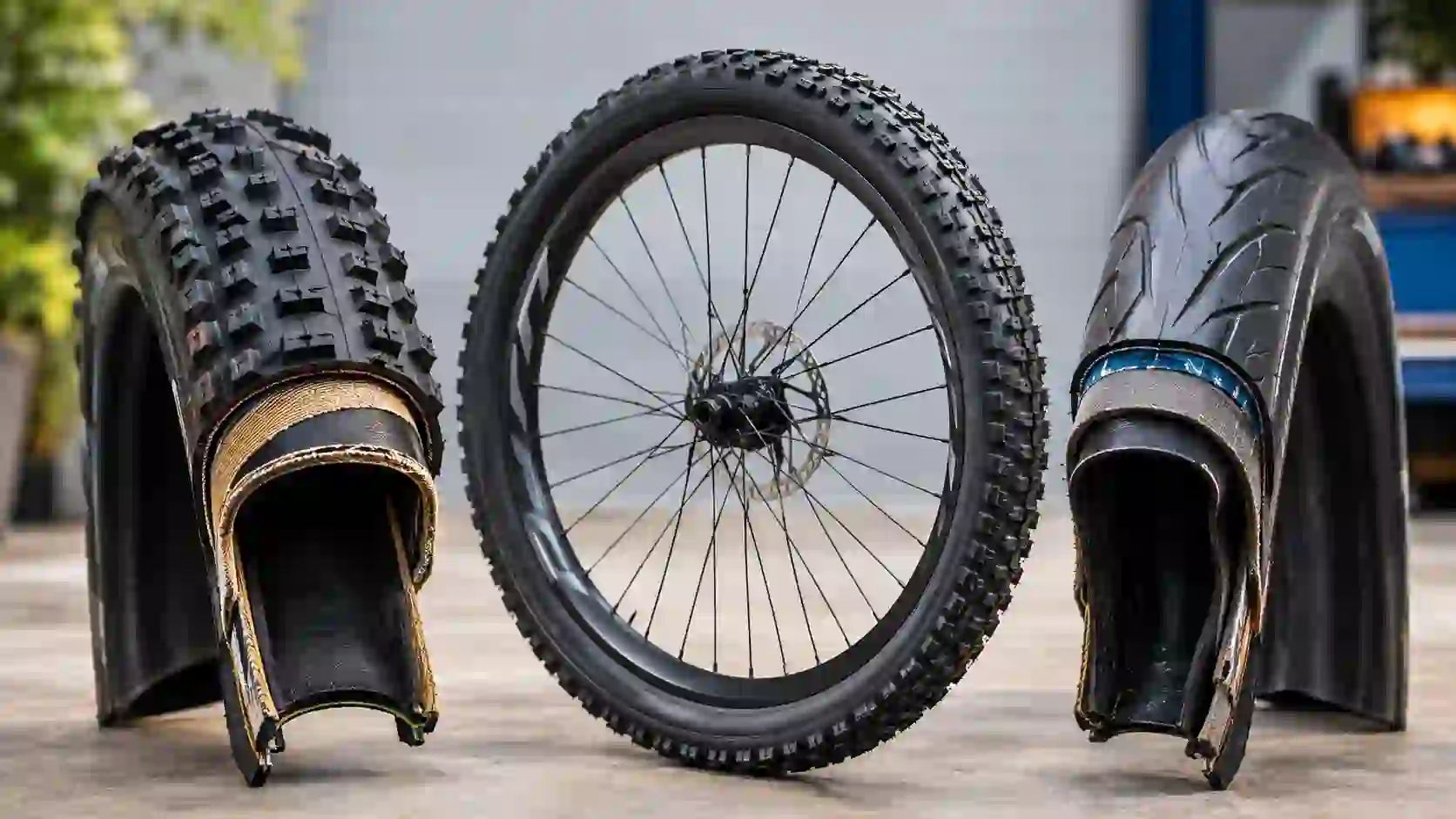
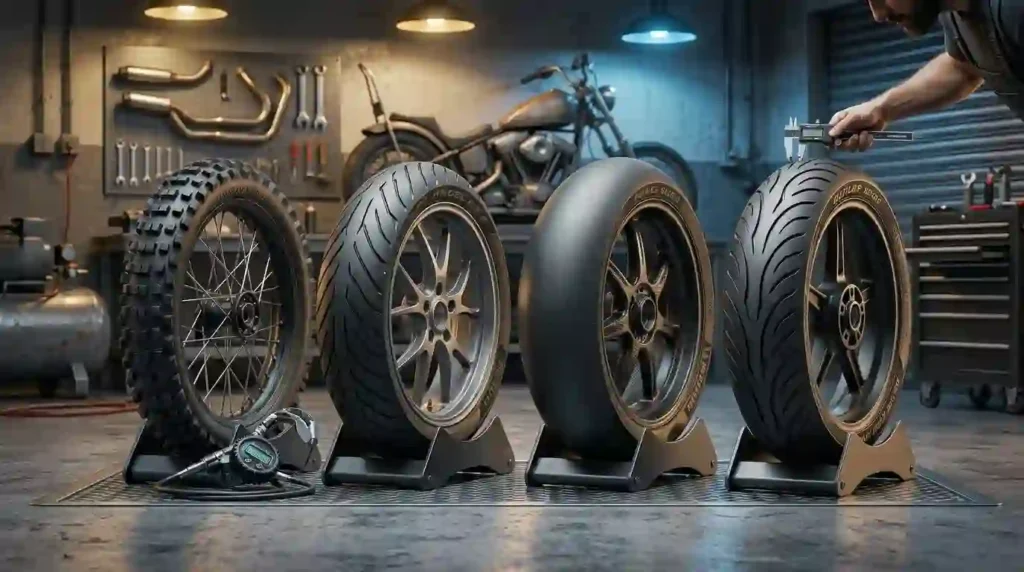
Road tires put low rolling resistance and efficient pavement riding first. Off-road tires put traction, casing protection, and impact control first. Mixed-surface tires aim for a balance of both. Think of it as a sliding scale from fast and smooth to grippy and tough.
To see what separates a great tire from an average one, read what makes a good bike tyre.
Road Tire Characteristics
Road tires usually have smoother tread and lower rolling resistance. Narrow widths are common, but modern road bikes can run wider tires. Flexible casings improve comfort and road feel. A good road tire hums along and feels light under power.
Off-Road Tire Characteristics
Off-road tires have deeper or more open tread for loose ground. They carry more air volume for impacts and rough terrain. Stronger casings and sidewalls improve durability. They shrug off sharp rocks and roots that would shred a thin road tire.
All-Road and Gravel Tire Characteristics
These tires often have a smooth or semi-slick center for pavement. Side knobs add cornering grip on dirt. Tubeless compatibility is common, which allows lower-pressure riding. These tires suit riders who explore backroads, fire roads, and rail trails on one bike.
How Do I Choose Bike Tires for Both Road and Off-Road?
Quick steps:
- Identify your most common surfaces.
- Check your bike’s maximum tire clearance.
- Confirm rim width compatibility.
- Choose an appropriate tire width.
- Match tread to the terrain.
- Select casing and puncture protection.
- Set a starting tire pressure.
- Test and adjust the setup.
Choose for the surface you ride most often, not the most extreme ride you may do once a year. For mixed riding, put versatility ahead of peak road or trail performance. If your riding shifts heavily between road and technical off-road terrain, consider a second wheelset. Swapping wheels takes a minute, and each set can be tuned to its job.
Our broader guides on how to choose bike tires for everyday riding and what tyre width you should choose can help.
How Tire Width Affects Road and Off-Road Performance
Wider tires add air volume, which can improve comfort and traction. Narrower tires cut weight and suit smooth, road-focused setups. Width must always match frame, fork, brake, and rim clearance. Leave a few millimeters of space around the tire for mud, debris, and wheel flex.
For the full background, see bike tire width explained.
Best Tire Width for Road Riding
About 28-32mm suits many modern road bikes. Smooth pavement may favor efficient slick or lightly treaded tires. Correct PSI matters more than simply choosing the narrowest tire. A supple 30mm tire at the right pressure often feels faster than a stiff 25mm tire pumped too hard.
Read the best tyre width for road and city riding for more detail.
Ideal Tire Width for Mixed Road and Gravel
About 35-45mm offers a useful balance. More air volume improves comfort on rough roads and hardpack. If clearance is tight, check the actual width after mounting. A labeled 40mm tire can measure 42mm or more on a wide rim. Riders on Midwest limestone roads and Appalachian dirt roads often like this size.
Ideal Tire Width for Off-Road Riding
Gravel often favors about 40-50mm+. MTB tires commonly run about 2.1-2.5 inches, depending on terrain. Technical ground may call for extra casing and sidewall protection. Riders in places like Moab or Sedona see sharp rock that punishes thin tires.
Not sure what the sizes mean? See what 26×2.1 means and what 650B means.
How to Choose the Right Tire Tread Pattern
Tread controls traction, rolling resistance, and handling. Smooth tread is efficient on pavement. Open or aggressive tread grips better on loose terrain.
Learn why designs differ in why bike tires have different tread patterns and how much tread a bike tyre should have.
Slick Tires for Road Riding
Slick tires have low rolling resistance on paved surfaces. They suit road bikes and fast commuters. They also wear evenly and run quietly, which many riders enjoy on long rides. Rubber compound still matters most for wet-weather grip.
Semi-Slick Tires for Mixed Surfaces
A smooth center reduces pavement rolling resistance. Side tread adds cornering grip on dirt. This is a strong option for gravel, commuting, and all-road bikes. It is the most popular choice for riders who want one tire for most rides.
Knobby Tires for Off-Road Riding
Larger knobs bite into dirt, mud, and loose gravel. Open tread clears mud and debris. Aggressive tread generally raises rolling resistance on pavement.
Pacific Northwest mud needs open, self-cleaning knobs. Dry desert trails often suit a tighter, faster-rolling pattern.
How Tire Pressure (PSI) Changes Road vs Off-Road Performance
Road riding benefits from a pressure that balances efficiency and comfort. Too hard and the bike buzzes over bumps. Too soft and it feels sluggish. Off-road riding needs enough compliance to keep traction over rough ground. System weight, tire width, casing, rim width, and terrain all change the right PSI.
Tires also leak air over time. See why bike tyres lose air and how often to check bike tyres.
How to Find a Starting PSI
- Check the tire’s pressure range.
- Add rider, bike, and cargo weight.
- Consider tire width and rim width.
- Choose a pressure that suits the surface.
- Test and adjust in small steps of 2 to 3 PSI.
Use a real gauge, because many pump dials are off by several PSI. Check pressure before every ride, since tires lose a few PSI each day.
Simple PSI Formula by System Weight
Add rider, bike, and cargo weight in pounds. This is your system weight. Put about 45% on the front wheel and 55% on the rear. Multiply each load by a width factor: 0.78 (25mm), 0.66 (28mm), 0.52 (32mm), 0.34 (40mm), 0.22 (50mm), or 0.19 (2.4 in MTB).
Then adjust for conditions. Subtract 5 to 10% on rough or loose ground. Subtract about 10% for tubeless. Add 5 to 10% for inner tubes.
Example: A 175 lb rider on a 20 lb bike makes 195 lb. The rear carries about 107 lb and the front about 88 lb. On 40mm tires, that is about 36 PSI rear and 30 PSI front.
PSI Starting Points by Weight
This table shows starting PSI (front / rear) for tubeless setups.
| System Weight | 28mm Road | 40mm Gravel | 2.4 in MTB |
|---|---|---|---|
| 150 lb | 45 / 54 | 23 / 28 | 13 / 16 |
| 175 lb | 52 / 64 | 27 / 33 | 15 / 18 |
| 200 lb | 59 / 73 | 31 / 37 | 17 / 21 |
| 225 lb | 67 / 82 | 34 / 42 | 19 / 24 |
| 250 lb | 74 / 91 | 38 / 47 | 21 / 26 |
These are first guesses. Never exceed the limit printed on the tire or rim.
Road Tire Pressure
Smooth pavement may allow moderately higher pressure. Rough pavement, such as chip seal, may benefit from lower suitable pressure. Never exceed tire or rim limits.
In wet weather, drop a few PSI for more grip. Stay above the point where the tire squirms.
Off-Road Tire Pressure
Lower appropriate pressure improves traction and comfort. The tire molds around rocks and roots instead of bouncing off them. Too little PSI causes rim strikes and sidewall instability. Tubeless setups help when you run lower pressure within safe limits.
How Rim Width Affects Tire Choice
Inner rim width changes the mounted tire profile. A tire should sit within its maker’s recommended rim range. Always check the label on both the tire and the rim. Rim compatibility matters most when you move to wider gravel or MTB tires.
| Internal Rim Width | Typical Road/Gravel Tire | Typical MTB Tire |
|---|---|---|
| 15-17mm | 23-32mm | Not common |
| 19mm | 25-40mm | Not common |
| 21-23mm | 28-50mm | 2.1-2.3 in |
| 25mm | 32-55mm | 2.2-2.5 in |
| 30-35mm | Not common | 2.3-2.6 in |
Treat these as rough guides and confirm with your rim maker.
Hooked vs. hookless: A hooked rim has a small lip that locks the bead in place. A hookless rim has a straight wall and relies on a tight bead fit. Many hookless rims cap pressure near 72 PSI (5 bar), so check your rim label.
Why Rim Width Matters
A suitable rim supports the tire sidewalls correctly. A poor match can change steering and cornering feel. Actual mounted width may differ from the label.
How to Check Rim Compatibility
Find the wheel maker’s internal rim width. Check the tire maker’s compatible rim range. Confirm the mounted tire will clear the frame and fork.
See bike tire size compatibility and bike wheel size vs tire size. The ETRTO sizing standard adds technical detail.
How Casing TPI Affects Road and Off-Road Tires
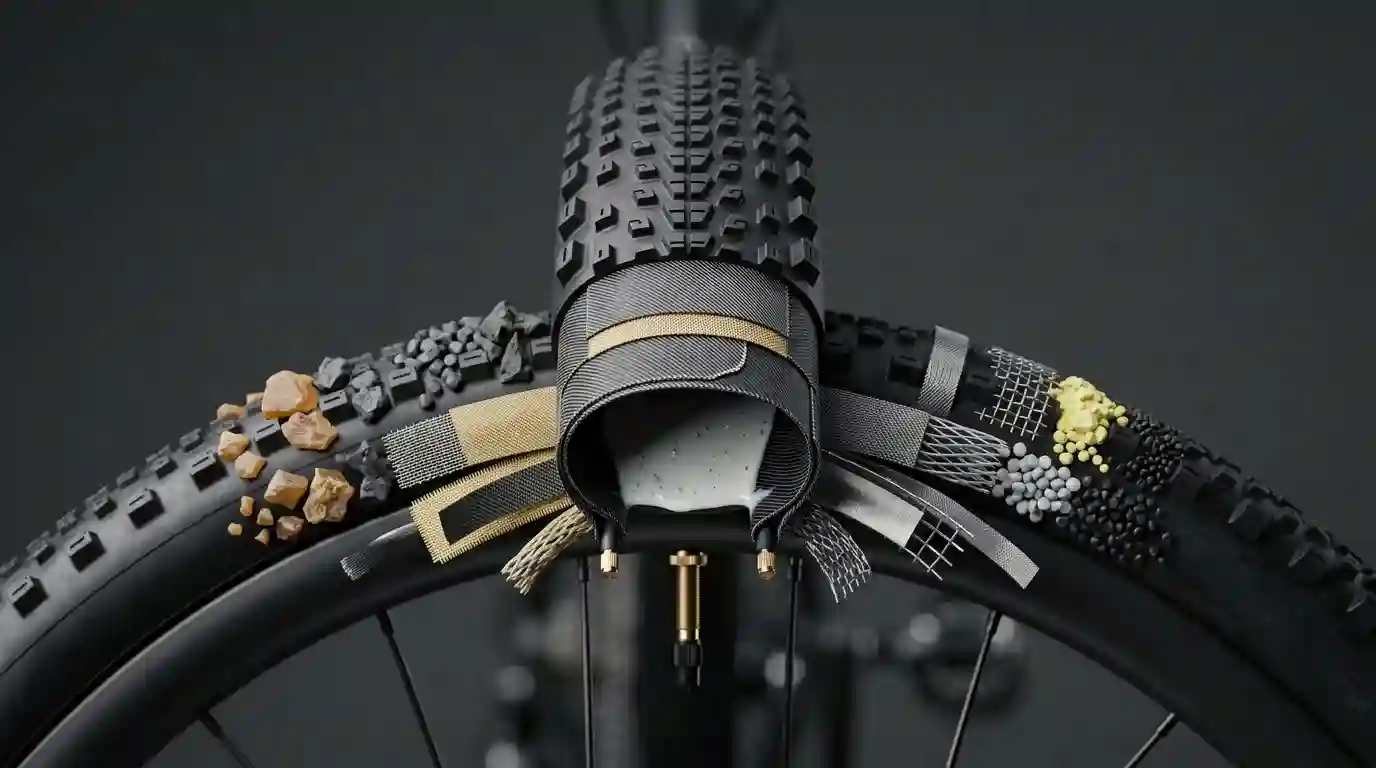
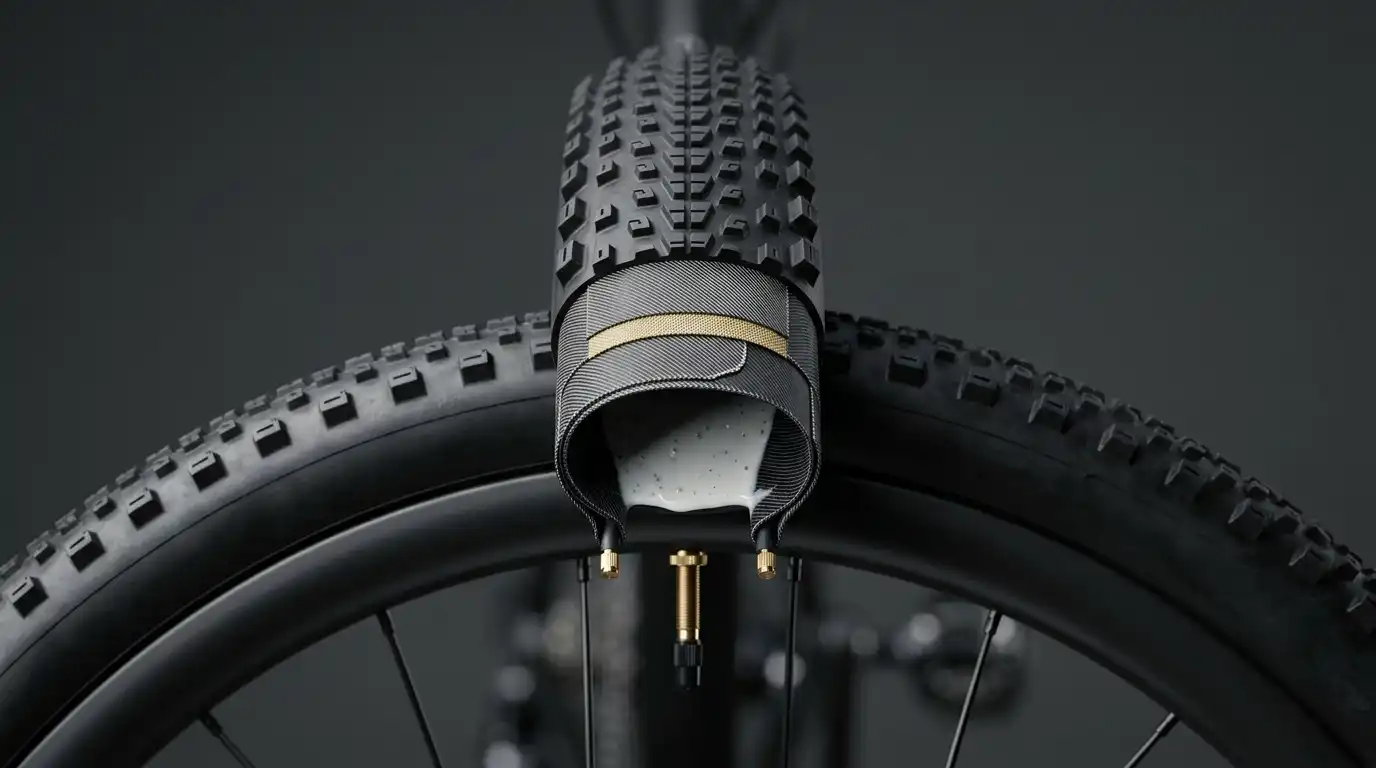
Casing build changes ride feel, durability, weight, and rolling performance. TPI means threads per inch. Higher TPI can signal a finer, more flexible casing in some designs.
Never judge a tire by TPI alone. Our guide to bike tire casing explains the details.
Flexible Road Casings
A flexible casing improves vibration damping and road feel. It often comes on lightweight performance tires. Daily commuters may want extra puncture protection with it.
Strong Off-Road Casings
Strong casings resist cuts, impacts, and sidewall damage. They often use extra layers or a tough weave on the sidewalls. They help on rocky trails and rough gravel. The extra protection adds weight and stiffness.
How Rubber Compound Affects Road and Off-Road Grip
Softer rubber improves traction but may wear faster. It shines on cold, damp, or rocky ground. Harder compounds last longer and resist tread wear. Dual-compound designs mix durability with cornering grip.
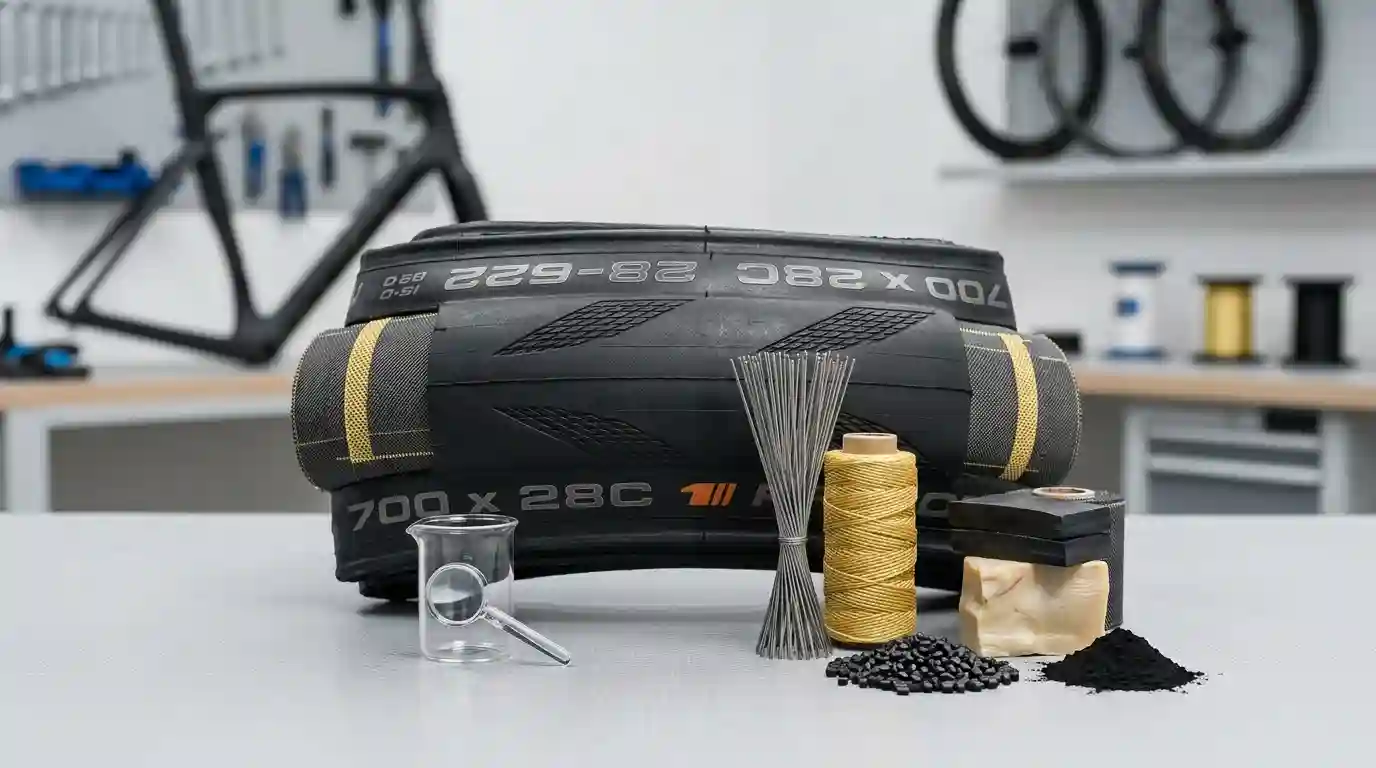
Durometer measures rubber hardness, and a lower number means softer rubber. See what bike tire rubber compound is and what bike tyres are made of.
Rubber Compound for Road Riding
Put low rolling resistance and reliable wet grip first. Smooth tread does not mean poor wet performance. Look for independent tests when comparing compounds.
Rubber Compound for Off-Road Riding
Put traction on dirt, rocks, roots, and loose ground first. Wet roots and slick rock punish hard rubber. Softer compounds improve cornering grip. Think about your mileage before choosing an extremely soft blend.
How to Choose Puncture Protection
Road commuters face glass, wire, and road debris. Gravel riders meet sharp rocks, flint, and thorns. Goathead thorns in the Southwest are a classic example. MTB riders need protection from cuts and impacts.
What Is a Puncture Belt?
A puncture belt is a protective layer under the tread. It helps resist punctures from common road debris. Added protection raises weight and can stiffen the casing.
Road vs Off-Road Puncture Protection
Road tires often rely on tread-based protection. Gravel tires may need both tread and sidewall protection. MTB tires often need stronger casings and reinforced sidewalls.
Tubeless vs Inner Tubes for Road and Off-Road Riding
Tubeless systems cut pinch flat risk and allow suitable lower pressure. Inner tubes are easier for many beginners to install and repair. Tire, rim, rim tape, valve, and sealant must all be compatible.
Benefits of Tubeless
Tubeless sealant closes many small punctures. Lower pressure improves off-road traction. Tubeless also reduces the risk of pinch flats, which happen when the tire squashes against the rim and cuts the tube.
Benefits of Inner Tubes
Setup and upkeep are simple. Repairs are easy on the road or trail. Tubes are practical for many road and commuter bikes. A spare tube weighs little and fits in any saddle bag.
Basic Tubeless Setup
- Install compatible rim tape.
- Install the tubeless valve.
- Mount one side of the tire.
- Add the recommended sealant.
- Mount the second bead.
- Inflate until the beads seat.
- Check for leaks and spread the sealant.
Top up sealant every few months, since it dries out over time.
How to Choose Tires for Different Road and Off-Road Surfaces
Smooth Asphalt
Choose slick or lightly treaded tires. Put rolling resistance and comfort first. Widths of 28-32mm work well where compatible. Fresh blacktop rewards a fast, supple tire.
Rough Pavement
Consider 30-40mm tires. Use suitable lower PSI for extra comfort. A durable casing helps with potholes and debris. Cracked asphalt and frost heaves are common in the Northeast and Midwest.
Hardpack Gravel
Consider 35-45mm semi-slick gravel tires. A low-profile tread keeps pavement efficiency. Tubeless helps on rougher sections.
Loose Gravel
Consider 40-50mm+ tires. More pronounced tread improves cornering traction. Lower suitable PSI adds surface contact.
Mud and Soft Dirt
Use open tread with plenty of space between knobs. Avoid overly slick center sections if you need steady mud traction. Casing strength matters when rocks and roots are present.
Rocky MTB Trails
Use wider MTB tires with strong sidewalls. Put impact protection and cornering grip first. Tubeless setups support lower pressure.
Sharp Southwestern rock can slice a thin casing in one ride, so do not skimp on protection.
Should You Use One Tire for Road and Off-Road?
One all-road tire is convenient for mixed riding. Separate road and off-road tires give better specialized performance. Your share of pavement versus dirt should decide.
When One Tire Makes Sense
You regularly switch between pavement and gravel. Convenience matters more than top performance. A semi-slick gravel or all-road tire may be ideal.
When Two Tire Sets Are Better
When often ride both fast road routes and technical trails. You want optimized rolling resistance on pavement. You need aggressive tread and a stronger casing for serious off-road use.
How E-Bikes Change Road and Off-Road Tire Choice
E-bike systems add weight and e-bike torque. Rear tires see more acceleration and braking wear. Check load and speed ratings where they apply. Many e-bikes assist up to 20 or 28 mph, and the tire must be rated for that speed.
For wear timing, see how often bike tyres should be replaced.
Best E-Bike Tire Features
- Strong casing.
- Good puncture protection.
- Suitable load rating.
- Durable rubber compound.
- Tread that suits the riding surface.
E-Bike PSI Considerations
Count total system weight. Avoid very low pressure that causes rim impacts. Heavy bikes hit rims harder than light ones. Follow tire and rim pressure limits.
How to Balance Rolling Resistance and Off-Road Grip
Smooth tread and flexible casings cut road rolling resistance. Aggressive tread improves traction but adds rolling losses. Pressure also shifts the balance between speed and grip.
Best Setup for Mostly Road Riding
Choose a slick or semi-slick tire. Favor a supple casing. Use moderate width and tuned PSI.
Ideal Setup for Mostly Off-Road Riding
Choose a stronger casing. Pick tread to match surface conditions. Put traction and impact protection ahead of minimum rolling resistance.
Top Setup for 50/50 Riding
Choose a fast-rolling semi-slick or all-road tire. Use enough width for your roughest regular terrain. A 38 to 42mm tire handles most mixed rides well. Consider tubeless for versatility. Lower pressure on dirt and a quick bump on pavement gives you the best of both.
How to Choose Road and Off-Road Tires Step-by-Step
Quick how-to:
- Identify your bike type.
- Identify your most common terrain.
- Measure current tire width.
- Check maximum tire clearance.
- Confirm rim width.
- Select tire width.
- Choose tread pattern.
- Compare rubber compounds.
- Compare casing TPI and protection.
- Decide between tubeless and tubes.
- Set starting PSI.
- Test the tire and adjust.
Need a hand with measuring? Try how to measure bike tire size, how to read bike tire size, and how to find bike tyre size.
First, Identify Your Riding Split
Estimate how much of your riding is pavement, gravel, dirt, or trails. Choose a tire that matches what you meet most. If you ride 70% pavement and 30% hardpack, lean toward a fast semi-slick.
Next, Check Bike and Wheel Compatibility
Confirm wheel diameter and frame clearance. Check internal rim width. Verify tire and rim compatibility before you install anything.
Our guides on whether a bike tire will fit your wheel and what bike tire size you need walk through it. Codes like 700×28 and 700c are covered too.
Finally, Fine-Tune Tire Pressure
Start within the maker’s pressure range. Account for system weight. Test on the real surface and adjust gradually. Ride the same loop each time so you can compare comfort and grip fairly.
How We Evaluate Road and Off-Road Tires
We look at four areas:
- Rolling resistance: Compare controlled tests under consistent load and PSI.
- Puncture resistance: Review standard puncture-force data where available.
- Durability: Assess tread wear, casing strength, and long-term use.
- Grip: Consider wet pavement, loose gravel, braking, and cornering.
Rolling Resistance Testing
Keep pressure and load consistent between comparable tires. Smooth lab surfaces may not represent rough roads. Use independent testing alongside maker claims.
Puncture and Casing Testing
Compare puncture-force numbers where standard tests exist. Consider tread thickness and protective belts. Check sidewall protection on gravel and MTB tires.
Real-World Testing
Test tires on pavement, gravel, and typical off-road surfaces. Record comfort, steering, grip, noise, and rolling feel. Test at real rider weight and pressure.
Common Mistakes When Choosing Road and Off-Road Tires
- Choosing a tire that does not fit the rim or frame.
- Picking aggressive tread for mostly paved riding.
- Running the same PSI on pavement and dirt.
- Choosing width without checking rim width.
- Assuming high TPI means better performance.
- Ignoring casing protection on rocky terrain.
- Choosing maximum puncture protection when low weight and speed matter most.
Planning a change? Read can I use wider tires on my bike, can you put narrower tires on a bike, and can you change bike tire width.
Frequently Asked Questions
More answers live on our site FAQs page.
What is the best bike tire for both road and off-road?
A semi-slick all-road or gravel tire offers a strong balance of speed and traction. Pick width and tread for your roughest regular terrain.
What tire width is best for road and gravel?
Around 35-45mm is a useful starting range for many mixed-surface bikes. Always confirm frame and rim compatibility.
Are wider tires better for off-road riding?
Wider tires can improve comfort, traction, and impact control. The right width depends on terrain, rim width, and bike clearance.
Should road and gravel tires have different PSI?
Yes. Adjust pressure for the surface, tire width, rider weight, and casing. Gravel often suits lower pressure than smooth pavement.
Are tubeless tires better for off-road riding?
Tubeless can cut pinch-flat risk and allow lower pressure. Tire, rim, sealant, and pressure must all be compatible.
Can I use road tires on gravel?
Smooth road tires can work on clean hardpack but may lack grip on loose gravel. A wider semi-slick is often a better mixed-surface choice.
How often should bike tires be replaced?
Replace tires when you see heavy tread wear, cracks, cuts, bulges, exposed casing, or repeated punctures. Lifespan depends on mileage, rider weight, surface, compound, and care.
Can I put wider tires on my road bike?
Only if the frame, fork, brakes, wheels, and rims support them. Check the maker’s maximum tire clearance first. See how much wider a tire you can fit and can I put a different size tire on my bike.
Final Verdict: Choosing Bike Tires for Road and Off-Road
Here is the short version:
- Mostly road: Put low rolling resistance, efficient tread, a supple casing, and suitable width first.
- Mostly off-road: Put traction, air volume, casing strength, and puncture protection first.
- Mixed riding: Choose a versatile semi-slick or all-road tire with enough width for your roughest regular surface.
Always match tire width, rim width, tread, casing, and PSI to your bike and riding conditions. New to all this? Our list of the best bike tyres for beginners and best bike tyres for everyday riding are good next steps. You may also like what bike tyre to buy for commuting.
For the basics, read how bike tires work and the difference between bike tyres and car tyres.
Test Your Exact Setup With Our Free Calculator
Ready to pick tires for the road and the dirt? Enter your bike type, tire width, rim width, and weight into the Free Bike Tire Pressure Calculator / Tire Finder Tool at TheBikeTires.com. You will get a clear starting PSI and tire ideas that fit your bike.
Do not guess. Check your setup today and ride with more grip, comfort, and confidence.

Mohidul Islam is a leading cycling technology specialist and bike tire consultant with over 15 years of hands-on experience in the bicycle industry. He holds a Bachelor of Science in Mechanical Engineering from Penn State University, where he focused heavily on material science, tread mechanics, and rubber compound performance. Over the past decade and a half, Alex has conducted extensive field testing, tubeless setup evaluations, and tire pressure modeling for road, mountain, and e-bikes. His practical insights and data-driven approach help cyclists of all levels optimize grip, speed, and durability on every ride.