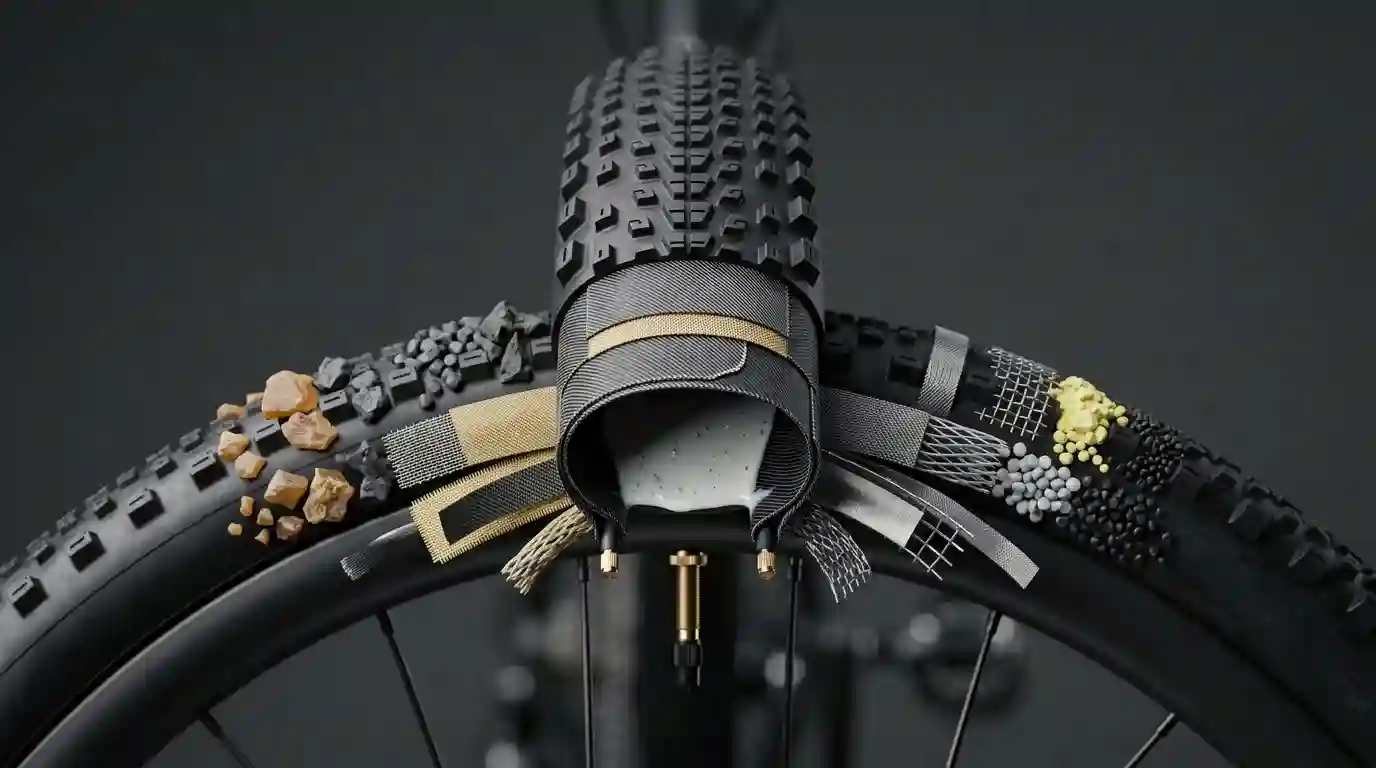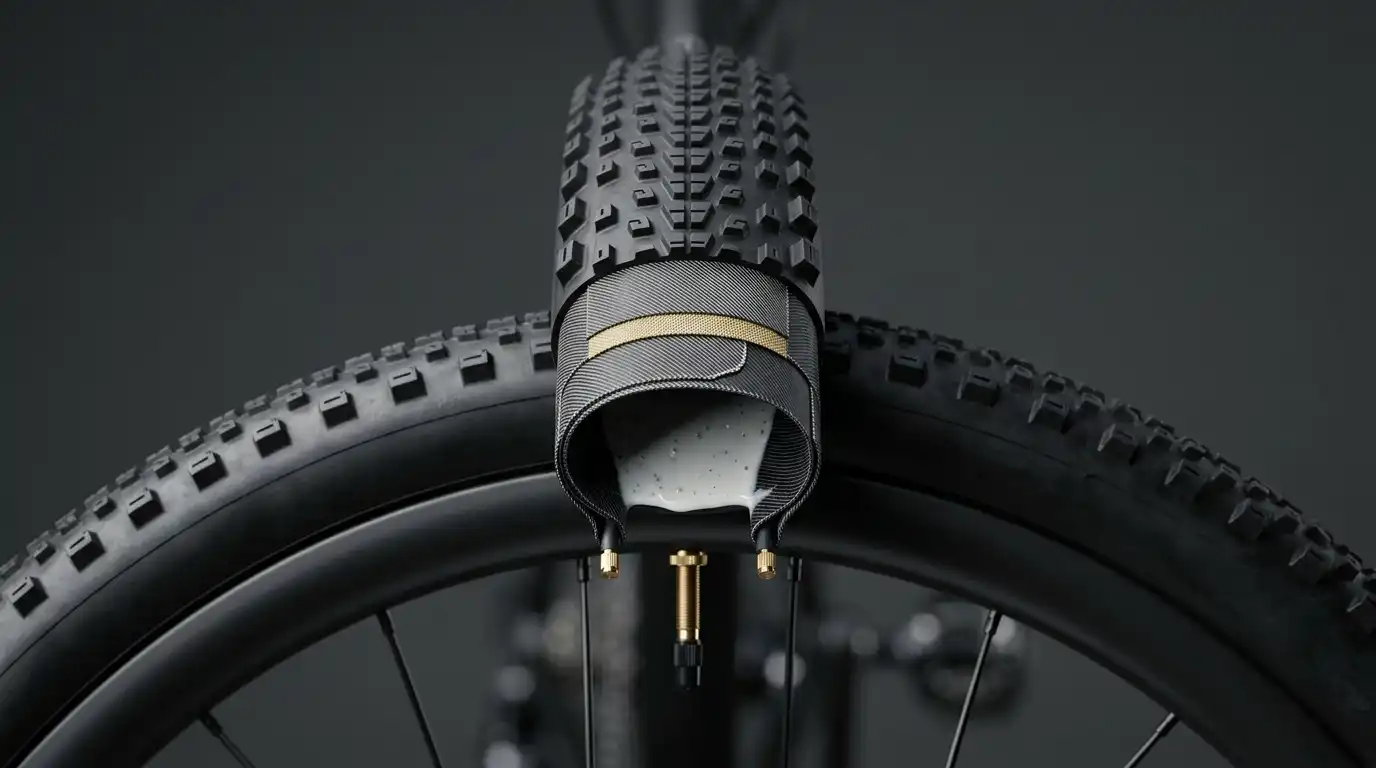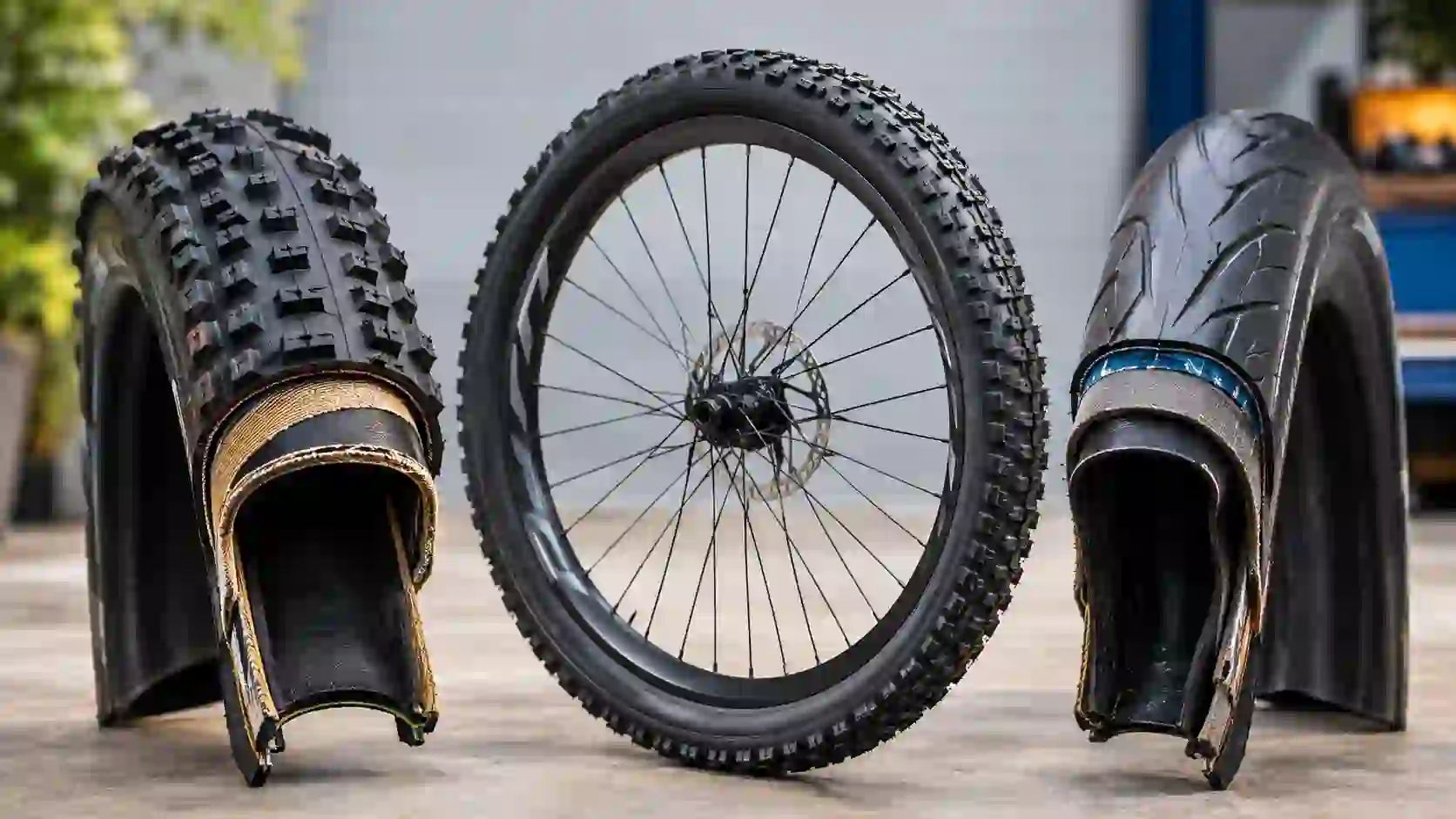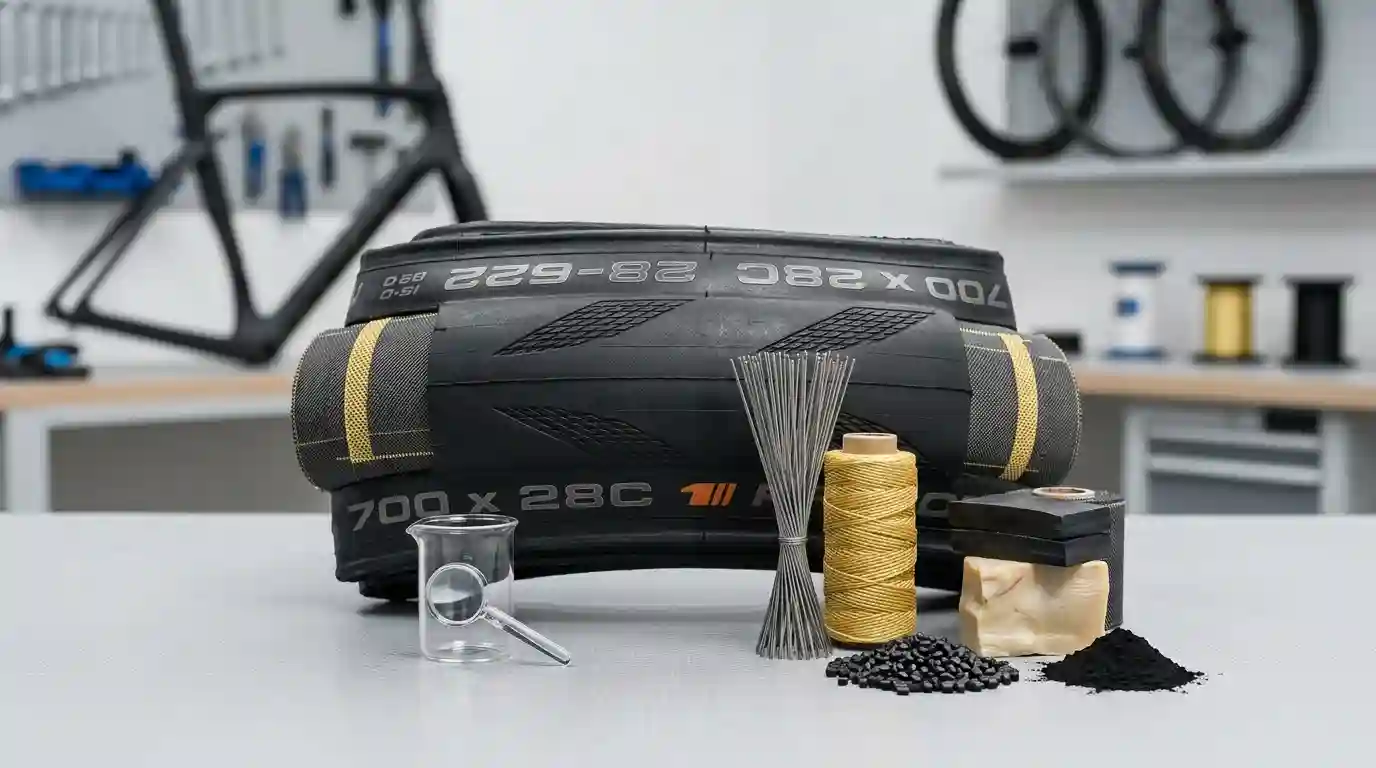
Finding the correct tire size depends on your wheel diameter, rim width, frame clearance, riding style, and tire type. Whether you are dealing with frequent pinch flats on urban roads or seeking better cornering traction on loose trails, choosing the right rubber changes your ride.
Bicycle tires come in traditional and modern standards, including 26″, 27.5″, 29″, 700c, and 650b. Navigating these names can feel overwhelming.
Your primary goal is simple: match the tire to the wheel, rim, bike frame, and intended terrain. This complete guide breaks down tire sizing, measurements, pressure modeling, and tread selection so you can buy your next set with confidence.
What Bike Tire Size Do I Need?
Quick Answer: Finding Your Bike Tire Size
The right bike tire size is determined mainly by your wheel diameter and the tire width your frame and rims can safely accept. Check the size printed on your current tire and compare it with your rim, frame clearance, and manufacturer recommendations.
- Check the numbers printed on your existing tire sidewall.
- Confirm the wheel diameter and tire width before buying.
- Make sure the new tire is compatible with your rim width and frame clearance.
The Two Numbers That Matter Most
Every bicycle tire relies on two main measurements: wheel diameter and tire width. You will typically see these formatted in two ways:
- Metric (Road & Gravel):
700 × 32c - Imperial (Mountain Bike):
29 × 2.4
The first number identifies the approximate wheel diameter or wheel standard. The second number indicates the tire’s width when inflated.
Sizing can vary between traditional and modern measurement systems. Imperial labels (like 26″ or 29″) describe the approximate outer diameter of the inflated tire. Metric system labels (like 700c) derive from older French standards. Always verify both numbers before ordering a replacement.
Tire Size vs. Wheel Size
A 29-inch mountain bike tire and a 700c road tire share the exact same bead-seat diameter: 622 mm.
However, they are not interchangeable on every bike. The 29-inch mountain tire features a much larger volume and wider casing, requiring a wider rim and significantly more frame clearance.
+-----------------------------------------------------------------------+
|                       BEAD-SEAT DIAMETER: 622 mm                       |
|                                                                       |
|   [ 700 × 28c Road Tire ]             [ 29 × 2.4" MTB Tire ]          |
|   - Low casing volume                 - Massive casing volume         |
|   - Narrow rim needed                 - Wide rim needed               |
|   - Tight frame clearance             - Ample frame clearance         |
+-----------------------------------------------------------------------+
To avoid buying errors, rely on ETRTO/ISO sizing. Standardized markings like 32-622 or 61-622 provide exact metric measurements for width and wheel seat diameter. Do not rely solely on fractional labels like “27-inch” or “29-inch.”
How to Read Bike Tire Sizes
What Does 700 × 32c Mean?
The format 700 × 32c is standard for road, hybrid, and gravel bikes:
- 700c: Represents the overall wheel standard (a 622 mm bead-seat diameter). The “c” is a historical French classification code.
- 32: Represents the nominal width of the tire in millimeters (32 mm).
                      700  ×  32c
                       │      │
                       │      └─ Tire Width (32 mm)
                       └──────── Wheel Standard / Class
Common road and gravel setups range from fast 700 × 25c road slicks up to 700 × 45c gravel tires. Note that the actual mounted width can vary based on your wheel’s inner rim width and casing design.
What Does 29 × 2.4 Mean?
Mountain bike tires use imperial measurements in inches:
- 29: Represents the overall outer wheel diameter in inches.
- 2.4: Represents the tire width in inches (2.4 inches, or ~61 mm).
A 29 × 2.4 tire is substantially wider than a 29 × 2.1 cross-country (XC) option. Wider trail casings expand your contact patch, giving you increased cornering grip, improved traction, and lower tire pressure options over technical terrain.
What Is ETRTO Tire Sizing?
The European Tyre and Rim Technical Organisation (ETRTO) created an absolute measurement system formatted as two numbers separated by a hyphen, such as 40-622.
| Marking | What It Measures | Example: 40-622 |
| First Number | Inflated tire width in millimeters | 40 mm |
| Second Number | Exact bead-seat diameter (BSD) in millimeters | 622 mm |
Using ETRTO markings eliminates confusion caused by conflicting inch fractions or traditional French standards. If the BSD number on your new tire matches the BSD number on your rim, the tire will fit onto the wheel seat properly.
Common Bike Tire Sizes Explained
           [ ROAD / GRAVEL ]                  [ MOUNTAIN / COMMUTE ]

         700c          650b / 27.5"               26"         29er
      (BSD 622mm)      (BSD 584mm)            (BSD 559mm)  (BSD 622mm)
           │                │                      │            │
  Road, Endurance,    Gravel, Bikepacking,   Vintage MTB,   Modern MTB,
    Gravel Racing      Aggressive Trail      Youth Bikes    Trail, Downhill
26-Inch Tires
- Bead-Seat Diameter: 559 mm
- Primary Use: Older mountain bikes, beach cruisers, cargo bikes, and youth bicycles.
- Common Widths: 1.75″ to 2.4″
- Characteristics: Highly maneuverable and stiff, though replacement options in premium performance compounds are less common today than modern standards.
27.5-Inch Tires (650b)
- Bead-Seat Diameter: 584 mm
- Primary Use: Modern trail, enduro, mountain bikes, gravel bikes, and smaller frame sizes.
- Common Widths: 47 mm (gravel) up to 2.6″ (MTB)
- Characteristics: Strikes a balance between rapid acceleration, agile cornering, and smooth obstacle rollover.
29-Inch Tires
- Bead-Seat Diameter: 622 mm
- Primary Use: Modern cross-country, trail, enduro, and downhill mountain bikes.
- Common Widths: 2.2″ to 2.6″
- Characteristics: Excellent rollover performance, maximum momentum preservation, and a large contact patch for off-road traction.
700c Tires
- Bead-Seat Diameter: 622 mm
- Primary Use: Modern road racing, endurance road, commuting, and gravel bikes.
- Common Widths: 25 mm, 28 mm, 30 mm, 32 mm, 38 mm, and 42+ mm
- Characteristics: The dominant pavement and light off-road standard globally, offering low rolling resistance and fast rolling performance.
How to Choose the Right Bike Tire Width
Tire width impacts ride comfort, cornering grip, rolling resistance, and puncture protection. Selecting wider tires increases overall air volume, enabling lower tire pressure without risking pinch flats.
However, wider is not always better. Excessively wide casings add rotational weight and may drag against your frame stays or fork legs if clearance is insufficient.
       NARROW TIRE (e.g., 25 mm)             WIDE TIRE (e.g., 45 mm)

              /───────\                             /───────────\
             │         │                           │             │
             │   PSI   │                           │    LOWER    │
             │   HIGH  │                           │     PSI     │
              \───────/                             \───────────/
              =========                             =============
          Narrow Contact Patch                   Wide Contact Patch
          - Less compliance                      - High compliance
          - Faster on smooth asphalt             - Max traction on rough roads
The Best Tire Width for Road Bikes
- Standard Spec: 700 × 28c to 700 × 32c
- Key Considerations: Modern endurance road bikes have shifted away from narrow 23 mm tires. Running a 28 mm or 32 mm tire at moderate pressure yields smoother compliance over rough pavement and maintains momentum without sacrificing efficiency.
Best Tire Width for Mountain Bikes
- Standard Spec: 29 × 2.3″ to 29 × 2.5″
- Key Considerations: Cross-country (XC) riders prefer lighter 2.25″ to 2.35″ options for acceleration. Aggressive trail, enduro, and downhill riders use 2.4″ to 2.6″ casings with reinforced sidewalls to maximize cornering grip and impact protection.
The Best Tire Width for Gravel Bikes
- Standard Spec: 700 × 38c to 700 × 45c (or 650b × 47c)
- Key Considerations: Smooth dirt paths require minimal tread and 38 mm widths. Technical, rocky gravel routes benefit from 42–45 mm high-volume casings, tubeless setups, and lower working PSI.
Best Tire Width for Commuters
- Standard Spec: 700 × 32c to 700 × 40c (or 27.5 × 2.0″)
- Key Considerations: Daily urban commutes demand thick rubber compounds, built-in puncture belts, and reflective sidewall strips. Moderate widths balance comfort over potholes with rolling efficiency.
Best Tire Width for E-Bikes
- Standard Spec: 27.5″ or 29″ × 2.4″ to 2.6″ (or 700 × 40–50c)
- Key Considerations: Electric bikes produce higher system weight and instant e-bike torque. Look for tire models rated explicitly for E-25 or E-50 speeds with reinforced sidewalls and durable rubber compounds.
How to Check What Tire Size Your Bike Needs
Step-by-Step: Determining Tire Compatibility
- Read your sidewall: Find the printed size (e.g., 700 × 32c or 40-622) on your current tire.
- Check your rim width: Measure internal rim width to confirm match.
- Measure frame clearance: Check space at the fork, chainstays, and seatstays.
- Review limits: Check manufacturer maximum tire width specifications.
- Verify brake clearance: Confirm rim or disc brake spacing.
                  FRAME CLEARANCE CHECKPOINTS

                       /───────\   <- Fork Crown / Arch
                      │  TIRE   │
     Left Stay ->   |||  32mm   ||| <- Right Stay
                     │          │
                      \────────/
                     ▲          ▲
                     │          │
                 [ Minimum 4-6mm Gap Required ]
Check the Existing Tire Sidewall
Inspect both sides of your current tire under bright light. Locate the raised lettering. Record the metric, imperial, and ETRTO numbers before purchasing replacement rubber.
Measure Your Rim Width
Distinguish between external rim width and internal rim width. Internal width dictates how the tire seats and profiles.
       |<------ External Rim Width ------>|
       |  |<--- Internal Rim Width --->|  |
       |  |                            |  |
       ├──┘                            └──┤
       │                                  │
Pairing an ultra-wide 2.5″ tire with a narrow 17 mm internal rim causes the casing to balloon into a lightbulb shape, folding under hard cornering. Refer to standard rim compatibility ranges before sizing up.
Measure Frame and Fork Clearance
When fitting a larger tire, measure the physical gap between your current tire and the frame at three critical points:
- Fork Arch / Crown
- Chainstays (near the bottom bracket)
- Seatstays (near the rear brake mount)
Maintain a minimum clearance gap of 4 mm to 6 mm on all sides to allow for wheel flex, debris, and sticky mud.
How Rim Width Affects Tire Size
Internal rim width alters the mounted shape, effective width, and overall volume of your bicycle tire.
  NARROW RIM (Tire Lightbulbs)           WIDE RIM (Optimal Profile)

          /───────────\                          /───────────\
         (    TIRE     )                        │    TIRE     │
          \           /                          \           /
           └───┐   ┌──┘                           └───┐ │ ┌──┘
               │   │                                  │   │
           [19mm Rim]                             [25mm Rim]
  - Squirmy under cornering               - Stable sidewall support
  - Higher risk of pinch flats            - Lower safe operating PSI
Tire-to-Rim Compatibility
| Internal Rim Width | Recommended Road Tire Width | Recommended Gravel Tire Width | Recommended MTB Tire Width |
| 17 mm – 19 mm | 23 mm – 28 mm | 28 mm – 32 mm | Not Recommended |
| 21 mm – 23 mm | 28 mm – 34 mm | 32 mm – 45 mm | 2.0″ – 2.25″ |
| 25 mm – 30 mm | 30 mm – 38 mm | 38 mm – 50 mm | 2.3″ – 2.6″ |
| 35 mm+ | Not Recommended | Not Recommended | 2.6″ – 3.0″ (Plus) |
Pay attention to whether your wheels feature hooked rims or hookless rims (straight-side design). Hookless carbon rims require hookless-compatible tubeless tires and carry a strict maximum inflation limit of 73 PSI (5 bar).
Why Actual Tire Width Can Differ
A tire stamped 700 × 40c rarely measures exactly 40.0 mm on every wheel setup.
Casing TPI (threads per inch), tire pressure, rubber thickness, and internal rim width affect real-world dimensions. Mounting a 40 mm tire on a modern 25 mm internal rim can push the actual measured width closer to 42 mm.
How Tire Size Affects Tire Pressure
Safe Operating Tire Pressure
Wider tires allow lower pressures than narrower tires. However, correct PSI depends on tire volume, system weight (rider + bike), rim design, casing construction, and terrain conditions.
- Always stay within the min/max PSI range printed on your tire sidewall and rim.
- Higher total weight requires higher pressure to prevent rim damage.
- Lower pressure increases off-road traction but requires sufficient casing volume.
What PSI Should I Use for My Bike Tires?
Finding the ideal tire pressure requires balancing grip, comfort, rolling resistance, and flat protection.
                        PSI ADJUSTMENT FACTORS

    INCREASE PSI FOR:                   DECREASE PSI FOR:
    • Heavy total system weight         • Lighter riders
    • Narrower tire casings             • Wider tire casings
    • Inner-tube configurations         • Tubeless configurations
    • Smooth, clean asphalt             • Loose off-road terrain / wet roads
Does Rider Weight Affect Tire Pressure?
System weight includes rider weight, bicycle weight, gear, and water bottles. Distribute pressure appropriately between wheels: the rear wheel typically carries 55% to 60% of total load, requiring 2 to 4 PSI more than the front tire.
Baseline PSI Reference Guide (Total System Weight: ~180 lbs / 82 kg)
| Bike Type | Tire Dimension | Front Pressure (PSI) | Rear Pressure (PSI) |
| Road Bike (Tube) | 700 × 28c | 68 PSI | 72 PSI |
| Road Bike (Tubeless) | 700 × 28c | 60 PSI | 64 PSI |
| Gravel Bike (Tubeless) | 700 × 40c | 33 PSI | 36 PSI |
| MTB Trail (Tubeless) | 29 × 2.4″ | 22 PSI | 24 PSI |
| E-Bike Commuter | 27.5 × 2.2″ | 42 PSI | 46 PSI |
Note: For every 10 lbs increase in total system weight, add approximately 1 to 2 PSI.
How Tire Size Affects Riding Performance
                    PERFORMANCE TRADEOFF MATRIX

  Metric                 Narrower Tire              Wider Tire
  ─────────────────────────────────────────────────────────────────
  Rotational Mass        Lower (Faster spin-up)     Higher
  Air Resistance         Lower aerodynamic drag    Slightly higher
  Compliance & Comfort   Lower                      Higher (Vibration dampening)
  Cornering Traction     Lower contact area         Higher contact area
  Rolling Resistance     Lower on smooth track      Lower on rough surfaces
Rolling Resistance
Rolling resistance comes from energy lost through casing deformation (hysteresis).
On perfectly smooth track surfaces, narrower high-pressure tires roll efficiently. On real-world roads and trails, wider tires at moderate pressure conform to rough surfaces rather than bouncing upward, conserving forward momentum.
Cornering Grip
A larger tire volume produces a wider contact patch with the road or dirt. Combined with supple casing compounds, wider tires allow side knobs or shoulder rubber to dig in securely during aggressive leaning.
Comfort and Vibration
High-frequency road chatter causes rider fatigue over long distances. High-volume tires act as active pneumatic suspension, absorbing micro-impacts before they transmit to your handlebars and saddle.
How Tire Tread and Compound Affect Size Choice
Tire casing size works in tandem with tread pattern and rubber formulation:
  SLICK TREAD              SEMI-SLICK              AGGRESSIVE KNOBBY

   ┌─────────┐             ┌─────────┐               ┌───┐   ┌───┐
   │         │             │░░░░░░░░░│               │   │   │   │
  ─┴─────────┴─           ─┴─────────┴─             ─┴───┴───┴───┴─
  Smooth Asphalt           Paved + Hardpack          Mud, Loose Dirt & Rocks
- Slick Tires: Feature smooth tread surfaces for maximum rubber-to-asphalt contact on dry pavement. Tread depth is not required to prevent hydroplaning on bicycle-width tires.
- Knobby MTB Tires: Feature pronounced tall knobs designed to mechanical-lock into loose soil, mud, and gravel. Match knob height to terrain density rather than simply buying a wider casing.
- Gravel Tread Patterns: Often feature flat center tread for speed on pavement, framed by raised shoulder knobs that engage when leaning into unpaved corners.
- Casing TPI (Threads Per Inch): High-TPI casings (e.g., 120 TPI) use finer threads, creating a supple, fast-rolling ride. Low-TPI casings (e.g., 30 TPI or 60 TPI) use thicker nylon threads that offer higher cut resistance and sidewall stiffness.
Tubeless vs. Inner Tube: Which Tire Setup Is Right?
      INNER TUBE SETUP                       TUBELESS SETUP

       /───────────\                          /───────────\
      │  /───────\  │                        │  LIQUID    │
      │ │ TUBE    │ │                        │  SEALANT   │
      │  \───────/  │                        │  ~~~~~~~   │
       \─────┬─────/                          \─────┬─────/
             │ Valve                                │ Airtight Valve
             ▼                                      ▼
   - Prone to pinch flats                 - Self-seals small punctures
   - Easy, low-cost repairs               - Runs lower safe pressure
The Tubeless Tires
Tubeless setups eliminate the inner tube entirely. Liquid tubeless sealant coats the inside of the casing, automatically sealing small thorn punctures and cuts on the fly. Without an inner tube to pinch against the rim, you can safely drop tire pressures for increased traction and compliance.
Inner-Tube Tires
Standard clincher tires with inner tubes remain affordable, accessible, and simple to maintain. Field repairs require only a spare tube, tire levers, and a hand pump. However, running low pressure with inner tubes increases the risk of pinch flats (snakebites) when hitting sharp obstacles.
Can Any Bike Tire Be Used Tubeless?
No. You must pair a Tubeless-Ready (TR / TLE) tire with a tubeless-ready rim, airtight rim tape, a tubeless valve stem, and liquid sealant. Never attempt to set up non-tubeless standard tires without tubes on hookless or high-pressure systems.
How to Choose a Bike Tire for Your Riding Style
                                SELECT YOUR RIDING STYLE
                                           │
         ┌───────────────────┬─────────────┴─────────────┬──────────────────┐
         ▼                   ▼                           ▼                  ▼
    ROAD CYCLING      MOUNTAIN BIKING              GRAVEL RIDING          COMMUTING
    • 700 × 28-32c    • 29 × 2.3-2.5"              • 700 × 38-45c         • 700 × 32-38c
    • High TPI        • Reinforced Sidewalls      • Dual-Compound        • Puncture Belt
    • Low Resistance  • Deep Tread Knobs          • Moderate Tread       • Durable Rubber
Road Cycling
Focus on smooth rolling efficiency and cornering grip. Modern road setups favor 700 × 28c or 700 × 32c supple casings mounted on wide rims for comfort and control.
Mountain Biking
Focus on casing durability and terrain-specific tread depth. Heavy trail or downhill riding requires reinforced casing layers (such as Exo+, Doubledown, or SuperGravity) to prevent pinch flats and sidewall slashes.
Gravel Riding
Choose your size based on your local road surface ratios. If your rides consist of 70% pavement and 30% dirt, a semi-slick 700 × 38c tire keeps momentum high. For coarse rock or forest doubletrack, move up to a 700 × 45c aggressive tread.
Daily Commuting
Prioritize heavy-duty puncture resistance, wet grip, and long rubber life. Slicks or light grooved treads with thick sub-tread protective layers reduce flat tires on city streets.
E-Bikes
Account for weight distribution and motor torque. Select tires certified for e-bike usage with heavy-duty casings and wear-resistant rubber formulations.
Common Bike Tire Size Mistakes to Avoid
- Buying based only on labeled wheel diameter: Ignoring BSD millimeter dimensions can lead to buying non-fitting tires (e.g., confusing old 27-inch 630 mm rims with modern 27.5-inch 584 mm wheels).
- Ignoring internal rim width limits: Mounting wide tires on narrow rims creates handling squirm and bead instability.
- Overlooking frame clearance: Failing to leave 4–6 mm of mud clearance around fork crowns, chainstays, and front derailleurs.
- Forgetting fender limits: Installing full-coverage fenders reduces available frame tire width clearance by 6 mm to 10 mm.
- Exceeding hookless PSI maximums: Inflating hookless rim setups above 73 PSI (5.0 bar) can cause the tire bead to blow off the rim seat.
How to Install a New Bike Tire
Step-by-Step Installation
- Confirm tire and rim ISO/ETRTO sizes match.
- Check the directional rotation arrow printed on the tire sidewall.
- Inspect the internal rim surface and rim tape alignment.
- Mount the first bead fully into the center rim channel.
- Insert the inner tube (or tubeless valve and sealant).
- Work the second tire bead over the rim wall without using sharp tools.
- Inflate gradually, confirming the tire bead seats evenly around the rim circumference.
                   BEAD SEATING IN RIM CHANNEL

     INCORRECT (Bead on Edge)               CORRECT (Bead in Center)

        ├──┐     ┌──┤                          ├──┐     ┌──┤
        │  │█   █│  │                          │  │     │  │
        │  └─────┘  │                          │  └─███─┘  │
        └───────────┘                          └───────────┘
     Hard to push over rim                 Easiest installation depth
Installing a Tire With an Inner Tube
- Lightly inflate the inner tube with a hand pump until it holds a soft round shape before slipping it into the casing. This prevents the tube from twisting or catching beneath the tire bead during installation.
- Avoid using metal tire levers to force the final section of tire bead over the rim wall, as this can pinch and puncture the new inner tube.
Installing a Tubeless Tire
- Ensure your rim tape smoothly covers every spoke hole without bubbles or tears.
- Push both tire beads down into the deepest center channel of the rim well while mounting. This provides maximum slack to roll the final section of bead over the rim edge by hand.
When Should You Replace Your Bike Tires?
                      TIRE WEAR CHECKLIST

   [ ] Tread flattening along the center crown
   [ ] Visible casing threads / woven fabric showing
   [ ] Cracking, dry rot, or weather checking on sidewalls
   [ ] Raised bulges or deformities in casing structure
   [ ] Unusually frequent puncture flat tires
How Many Miles Do Bike Tires Last?
Tire lifespan depends heavily on compound softness, system load, road surface abrasiveness, and rear-wheel drive wear:
- High-Performance Road Tires: 1,500 – 3,000 miles
- Durable Commuter Tires: 3,000 – 6,000 miles
- Mountain Bike Tires: 500 – 1,500 miles (off-road wear varies by terrain)
Bike Tire Size FAQ
What bike tire size do I need?
Check your current tire sidewall for printed numbers (e.g., 700 × 32c or 29 × 2.4). Match these to your rim diameter and ensure your frame offers adequate clearance for your desired width.
How do I know what size tires fit my bike?
Locate your bike’s original specs or measure your frame clearance at the narrowest points between the fork legs and frame stays. Subtract at least 8–10 mm from total measured space to determine maximum tire width.
Is a bigger bike tire better?
Wider tires provide superior traction, improved vibration damping, and better comfort by allowing lower air pressure. However, they add rotational weight and require wider frame clearance.
Can I put wider tires on my bike?
Yes, provided your internal rim width supports the wider dimension and your frame, fork, and brake calipers maintain a safe 4–6 mm clearance margin.
What PSI should bike tires have for my weight?
Optimal pressure depends on rider weight, tire volume, terrain, and tubeless configuration. Heavier riders need higher pressure to prevent rim strikes, while lighter riders run lower PSI for traction.
Are tubeless tires better than tubes?
Tubeless setups lower flat risks by self-sealing small punctures and allow lower working pressures for off-road grip. Inner tubes remain easier to set up initially without sealant maintenance.
Does rim width matter for bike tires?
Yes. Matching internal rim width to tire casing width prevents cornering squirm and maintains proper tire profile shape.
How do I know when my bike tire is worn out?
Replace tires when the center tread flattens out, cut marks expose internal casing threads, or sidewall rubber develops deep cracks.
How to Pick the Perfect Bike Tire Size: Quick Checklist
Final Compatibility Checklist
- Wheel: Confirm ISO/ETRTO diameter (e.g., 622 mm, 584 mm, 559 mm).
- Width: Confirm frame, fork, and fender clearance margins (4–6 mm minimum).
- Rim: Check internal rim width compatibility ranges.
- Pressure: Note tire and rim maximum pressure limits (73 PSI max for hookless).
- Terrain: Select tread aggressiveness matching your surface conditions.
- System: Factor total rider + bike weight into casing choices.
- Setup: Decide between inner tubes and self-sealing tubeless.
- Casing: Choose supple high-TPI or puncture-resistant reinforced options.
Final Verdict: Choosing the Right Bike Tire Size
Selecting the proper bike tire size comes down to matching your wheel diameter, internal rim width, frame clearance limits, and riding surface preferences. By taking precise measurements and ignoring confusing non-standardized labels, you ensure your new rubber fits right the first time.
Tire size directly impacts ride comfort, traction, rolling resistance, and flat protection.
Find Your Ideal Tire Setup
Before investing in your next set of rubber, calculate the exact pressure and tire dimensions tailored to your body weight, rim dimensions, and local conditions.
Test your setup using the Free Bike Tire Pressure Calculator & Tire Finder Tool at TheBikeTires.com to dial in optimal performance on your next ride.

Mohidul Islam is a leading cycling technology specialist and bike tire consultant with over 15 years of hands-on experience in the bicycle industry. He holds a Bachelor of Science in Mechanical Engineering from Penn State University, where he focused heavily on material science, tread mechanics, and rubber compound performance. Over the past decade and a half, Alex has conducted extensive field testing, tubeless setup evaluations, and tire pressure modeling for road, mountain, and e-bikes. His practical insights and data-driven approach help cyclists of all levels optimize grip, speed, and durability on every ride.