700C is a bicycle wheel and tire size designation based on a 622 mm bead-seat diameter (BSD). The “700C” label identifies the rim diameter standard, while the tire’s actual width is specified separately (such as 700 x 28C or 700 x 40C).
What Does 700C Mean on a Bike Tire?
Riding on under-inflated or mismatched bicycle tires causes common issues like pinch flats, poor cornering grip, squishy handling, and accelerated tread wear.
Understanding sidewall markings ensures proper tire installation, maximum speed, and rider safety across pavement, gravel, and commuter routes.
The term 700C refers to the rim diameter standard rather than an absolute, exact measurement of total wheel height.
The critical metric behind every 700C tire is its 622 mm bead-seat diameter (BSD), which dictates physical rim-to-tire compatibility.
+-------------------------------------------------------------------+
|                        OUTER TIRE DIAMETER                        |
|<----------------------------------------------------------------->|
|                                                                   |
|         +-----------------------------------------------+         |
|         |           BEAD-SEAT DIAMETER (BSD)            |         |
|         |<--------------------------------------------->|         |
|         |                                               |         |
|   |=====|===============================================|=====|   |
|   | TIRE|                   622 mm RIM                  | TIRE|   |
|   |=====|===============================================|=====|   |
|         |                                               |         |
|         +-----------------------------------------------+         |
|                                                                   |
+-------------------------------------------------------------------+
| Size Terminology | Standard Application | Metric BSD | Primary Usage |
|---|---|---|---|
| 700C | Road, Gravel, Hybrid, Commuter | 622 mm | Standard adult bicycle wheels |
| 29-Inch (29er) | Mountain Bike (MTB) | 622 mm | Off-road, Trail, Enduro |
| ETRTO / ISO 622 | Universal Technical Standard | 622 mm | Precise engineering compatibility |
What Does “700” Mean?
The number “700” comes from a legacy French sizing standard that estimated the total outer diameter of an inflated wheel in millimeters.
Under this historical classification, a wheel with its inflated tire was expected to measure roughly 700 mm from the ground to the top of the tread.
Modern tire widths vary dramatically, so the number 700 does not represent the precise outer height of modern tires.
What Does the “C” Mean?
In the original French system, letters (A, B, C, and D) indicated different rim widths and diameters designed to maintain an overall 700 mm outer height.
A “700A” tire was narrow on a larger rim, whereas a “700C” tire was wider on a slightly smaller rim to reach the same height.
Today, the “C” does not denote tire width; it remains a historical suffix indicating the standard 622 mm rim bead seat.
What Is the Modern 700C Measurement?
In modern standards, every 700C tire corresponds directly to a 622 mm bead-seat diameter (BSD).
The true outer diameter of a mounted 700C tire expands or shrinks depending on tire width, casing volume, and tread aggressiveness.
Checking the standardized ETRTO/ISO code (such as 28-622) is the most reliable way to confirm tire-to-rim fitment.
What Size Is a 700C Bike Tire?
700C specifies rim diameter, but actual tire width varies widely across disciplines:
- 700 x 25C: Standard narrow road tire for smooth asphalt.
- 700 x 28C: Modern endurance road tire balancing speed, compliance, and grip.
- 700 x 32C: Fast commuter, urban, or light all-road tire with high air volume.
- 700 x 38C: All-around gravel tire for dirt roads, light trails, and rough pavement.
- 700 x 45C: Wide adventure gravel tire built for loose surfaces and rough fire roads.
Installing wider tires increases the overall wheel-and-tire outer height and requires adequate frame clearance.
What Does 700 x 25C Mean?
- 700C: Identifies the 622 mm bead-seat diameter wheel standard.
- 25: Represents the nominal tire width of 25 mm when fully inflated.
The exact mounted width can vary by 1–2 mm depending on the internal width of your rim.
What Does 700 x 28C Mean?
A 700 x 28C designation indicates a 28 mm nominal tire width on a 622 mm rim standard.
This size is a common standard for road cyclists in the US due to its balance of low rolling resistance, vibration damping, and cornering traction.
Slight variations in actual width occur when mounting 28C tires on wider modern rim profiles.
What Does 700 x 32C Mean?
A 700 x 32C tire measures approximately 32 mm wide and fits standard 622 mm BSD rims.
This volume is popular for daily commuting, touring, and endurance riding, operating comfortably at lower inflation pressures.
Always check frame clearance and caliper brake dimensions before upgrading from narrow 25 mm tires to 32 mm options.
700C vs 29-Inch Bike Wheels
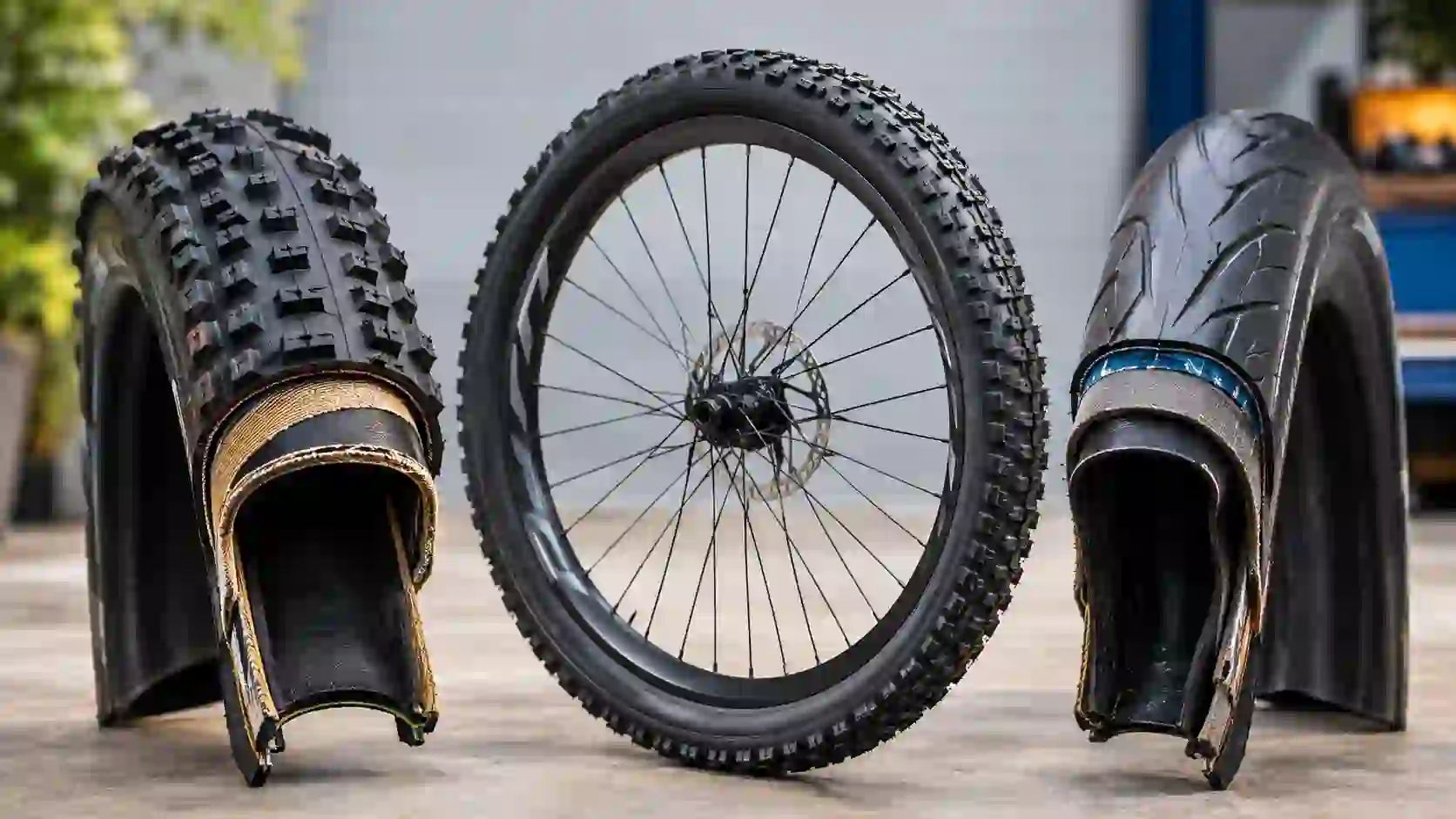
Both 700C and 29-inch (29er) bicycle wheels share the same 622 mm bead-seat diameter.
                           BSD COMPARISON

     700C Road / Gravel                             29-Inch Mountain
   (622 mm Rim Dia)                               (622 mm Rim Dia)

     +-----------+                                 +-----------+
    /             \                               /             \
   |    622 mm     |                             |    622 mm     |
    \             /                               \             /
     +-----------+                                 +-----------+
   Narrow Casing (25-45 mm)                   Wide Casing (2.1-2.6 in)
The difference between them lies in casing volume, tire width, and intended discipline rather than rim diameter.
A 29-inch mountain bike tire uses a significantly wider casing (e.g., 2.3 inches / 58 mm) than a 700C road tire.
Are 700C and 29-Inch Wheels the Same Size?
They share an identical 622 mm rim seat, meaning their mechanical bead diameter is the same.
However, a 29er tire has a much larger outside diameter because of its thick tread blocks and higher casing volume.
Frame clearance, fork width, and internal rim width dictate whether a 29er tire can fit on a specific bike.
Can You Put a 29er Tire on a 700C Rim?
Yes, provided the internal rim width is wide enough (typically 21 mm–30 mm) and your bike frame offers adequate tire clearance.
Attempting to mount a 2.3-inch 29er tire onto a narrow 15 mm road rim creates an unstable “lightbulb” profile, increasing squirm during cornering.
700C vs 650B: What’s the Difference?
The fundamental mechanical distinction is rim size: 700C uses a 622 mm BSD, while 650B uses a 584 mm BSD.
| Feature | 700C (622 mm BSD) | 650B (584 mm BSD) |
|---|---|---|
| Bead-Seat Diameter | 622 mm | 584 mm |
| Common Uses | Road, Fast Gravel, Hybrid, Commuter | Rough Gravel, Trail MTB, Bikepacking |
| Rollover Capability | Superior rollover on pavement and bumps | Slightly lower rollover height |
| Tire Volume Potential | Restricted by frame limits | Higher volume inside standard frame dimensions |
| Acceleration Dynamics | Holds high-speed momentum | Faster acceleration from lower rotational weight |
700C vs 650B for Road Riding
700C is the standard for paved road riding due to its extensive wheel choice and rolling efficiency.
Narrow 700C road tires (25 mm–30 mm) maintain speed and lower aerodynamic drag on asphalt.
650B is rarely used for pure road racing, though it offers high air volume on smaller frames or gravel conversions.
700C vs 650B for Gravel
- Choose 700C if your gravel frame fits 40 mm–45 mm tires and you prioritize speed and momentum on hardpack dirt and fire roads.
- Choose 650B if you need 47 mm–50 mm tires for rocky trails, mud, or rough singletrack without changing your overall wheel height.
Which Is Faster: 700C or 650B?
Neither wheel size is universally faster on all surfaces.
700C holds momentum better on smooth pavement and hardpack, while high-volume 650B tires lower rolling resistance on rough gravel by absorbing impacts.
How to Read 700C Tire Markings
Tire sidewalls display multiple measurement systems alongside inflation parameters.
                        SIDEWALL MARKINGS EXPLAINED

       Metric French Format                  ETRTO / ISO Format

           700 x 28C                              28 - 622
           |     |                                |    |
   Standard   Nominal Width               Nominal Width   Exact Bead-Seat
   Rim Class    (in mm)                      (in mm)      Diameter (in mm)
What Is the ETRTO/ISO Size for 700C?
The ETRTO/ISO standard uses a Width-BSD format:
- 28-622: A 28 mm wide tire matching a 622 mm rim.
- 40-622: A 40 mm wide tire matching a 622 mm rim.
Why Is 622 Important?
The number 622 defines the exact bead seat.
Matching this number prevents purchasing mistakes across confusing legacy terms like 28-inch, 29-inch, or French 700 designations.
Why Are 700C Tires So Popular?
700C is the globally dominant wheel size for road, endurance, hybrid, and gravel bicycles.
Its diameter offers a balanced roll-over angle, maintaining momentum efficiently on paved surfaces.
Benefits of 700C Tires
- Wide Availability: Extensive selection of tread patterns, rubber compounds, and casings.
- Speed & Efficiency: Larger diameter maintains speed on flat terrain and rolling hills.
- Modern Standards: Broad support for tubeless setups, hookless rims, and disc-brake clearance.
Potential Drawbacks
- Frame Clearance Constraints: Wide 700C tires can contact chainstays or seat tubes on narrow road frames.
- Toe Overlap: Smaller frame sizes using 700C wheels can experience shoe clearance issues with the front wheel during tight, low-speed turns.
How to Choose the Right 700C Tire Width
Selecting tire width requires balancing rider weight, surface roughness, rim width, and frame clearance.
                            TIRE WIDTH APPLICATION

   Narrow (25mm-28mm)          Medium (30mm-35mm)          Wide (38mm-45mm+)
  +------------------+        +------------------+        +---------------------+
  | Smooth Asphalt   |        | Rough Pavement   |        | Coarse Gravel       |
  | Fast Road Groups |        | City Commuting   |        | Fire Roads          |
  | Aerodynamics     |        | Light Gravel     |        | Bikepacking / Mud   |
  +------------------+        +------------------+        +---------------------+
Best 700C Width for Road Bikes
- 25 mm: Suitable for smooth pavement and narrow rim profiles.
- 28 mm: Standard for modern endurance road riding, offering speed and bump absorption.
- 30 mm–32 mm: Ideal for rough roads, chip-seal asphalt, and long-distance rides.
Best 700C Width for Commuting
Select widths between 32 mm and 38 mm with slick or light tread profiles.
Look for integrated sub-tread puncture protection belts (such as Kevlar or nylon layers) to prevent flats from glass and road debris.
Best 700C Width for Gravel
- 38 mm–40 mm: Fast-rolling option for light gravel and hardpack dirt.
- 42 mm–45 mm: Ideal for coarse gravel, loose rocks, sand, and bikepacking loads.
How to Check if a 700C Tire Fits Your Bike
Before upgrading to wider tires, verify three key technical parameters:
Step 1: Check the Internal Rim Width
Tires must be paired with compatible internal rim widths to maintain proper casing shape.
| Internal Rim Width | Recommended Tire Width Range |
|---|---|
| 15 mm – 17 mm | 23 mm – 28 mm |
| 19 mm – 21 mm | 28 mm – 42 mm |
| 23 mm – 25 mm | 35 mm – 50 mm |
| 27 mm – 30 mm (MTB) | 2.0 in – 2.5 in (50 mm – 64 mm) |
Step 2: Check Frame and Fork Clearance
Measure the tightest gaps around your current tires, specifically near the chainstays, seatstays, fork crown, and front derailleur clamp.
Maintain at least 4 mm to 6 mm of clear space on all sides of the tire to account for rim flex and mud accumulation.
                        FRAME CLEARANCE CHECK

                         /===============\
                        /  FORK / FRAME   \
                       |  +---------------+  |
                       |  | 4-6mm GAP MIN |  |
                       |  |   +-------+   |  |
                       |  |   | TIRE  |   |  |
                       |  |   +-------+   |  |
                       |  +---------------+  |
                      ---                   ---
Step 3: Check Brake and Fender Clearance
- Disc Brakes: Frame and fork clearances are the primary limiting factors.
- Rim Brakes: Check side-caliper height and arm width, which often restrict tires to 28 mm maximum.
- Fenders: Allow an extra 10 mm of internal clearance when running full-coverage fenders.
What Tire Pressure Should a 700C Tire Have?
There is no single correct PSI for every 700C tire.
Inflation pressure depends on total system weight, tire volume, casing flexibility, surface conditions, and whether you run inner tubes or tubeless.
Baseline Tire Pressure Chart (Total System Weight: 180 lbs / 82 kg)
| Tire Size | Front Pressure (Tubeless) | Rear Pressure (Tubeless) | Inner Tube Adjustment |
|---|---|---|---|
| 700 x 25C | 68 PSI | 72 PSI | Add +5 PSI |
| 700 x 28C | 58 PSI | 62 PSI | Add +5 PSI |
| 700 x 32C | 44 PSI | 48 PSI | Add +4 PSI |
| 700 x 38C | 32 PSI | 35 PSI | Add +3 PSI |
| 700 x 42C | 27 PSI | 30 PSI | Add +3 PSI |
How to Calculate Your Starting PSI
Use this base formula to calculate rear tire pressure for standard road and gravel setups:
Base Rear PSI=(4Total System Weight (lbs))×(Tire Width (mm)40)
Set front tire pressure to roughly 90% of the rear pressure:
Front PSI=Rear PSI×0.90
Calculation Example: For a 200 lb total system weight on 700 x 28C tires:
- Base Rear PSI = (200/4)×(40/28)=50×1.42=71 PSI
- Apply tubeless efficiency factor (-10% adjustment for wide rims): ≈64 PSI Rear
- Front PSI = 64×0.90=57.5 PSI Front
Are 700C Tires Good for Tubeless Riding?
Modern 700C road, gravel, and commuter tires frequently feature tubeless-ready beads.
Eliminating inner tubes reduces friction between casing layers, lowers rolling resistance, and allows lower pressures without pinch flats.
                          TUBELESS vs TUBED

         Tubed Setup                           Tubeless Setup
   +---------------------+               +---------------------+
   | Outer Tire Casing   |               | Outer Tire Casing   |
   |   +-------------+   |               |   ~~~~~~~~~~~~~~~~~ |
   |   | Inner Tube  |   |               |   | Liquid Sealant| |
   |   +-------------+   |               |   ~~~~~~~~~~~~~~~~~ |
   | Rim               |               | Rim + Airtight Tape |
   +---------------------+               +---------------------+
   Pinch flat risk on impacts            Self-healing puncture protection
How to Set Up a 700C Tubeless Tire
- Tape the Rim: Install airtight tubeless rim tape that is 2 mm wider than your internal rim width.
- Install Tubeless Valve: Insert the valve through the rim hole and hand-tighten the rubber locknut.
- Mount One Bead: Push the first tire bead into the deep center channel of the rim bed.
- Add Liquid Sealant: Pour sealant directly into the casing cavity before seating the final section.
- Seat the Tire Bead: Inflate rapidly using a tubeless floor pump or compressor until the tire beads snap into the rim shoulders.
- Distribute Sealant: Rotate and shake the wheel horizontally to coat the internal tire walls.
How Much Tubeless Sealant Do You Need?
- 700 x 25C–28C: 1.5 fl oz (45 ml)
- 700 x 30C–35C: 2.0 fl oz (60 ml)
- 700 x 38C–45C: 3.0 fl oz (90 ml)
Inspect liquid sealant every 2 to 4 months and top up as needed.
How 700C Tire Design Affects Performance
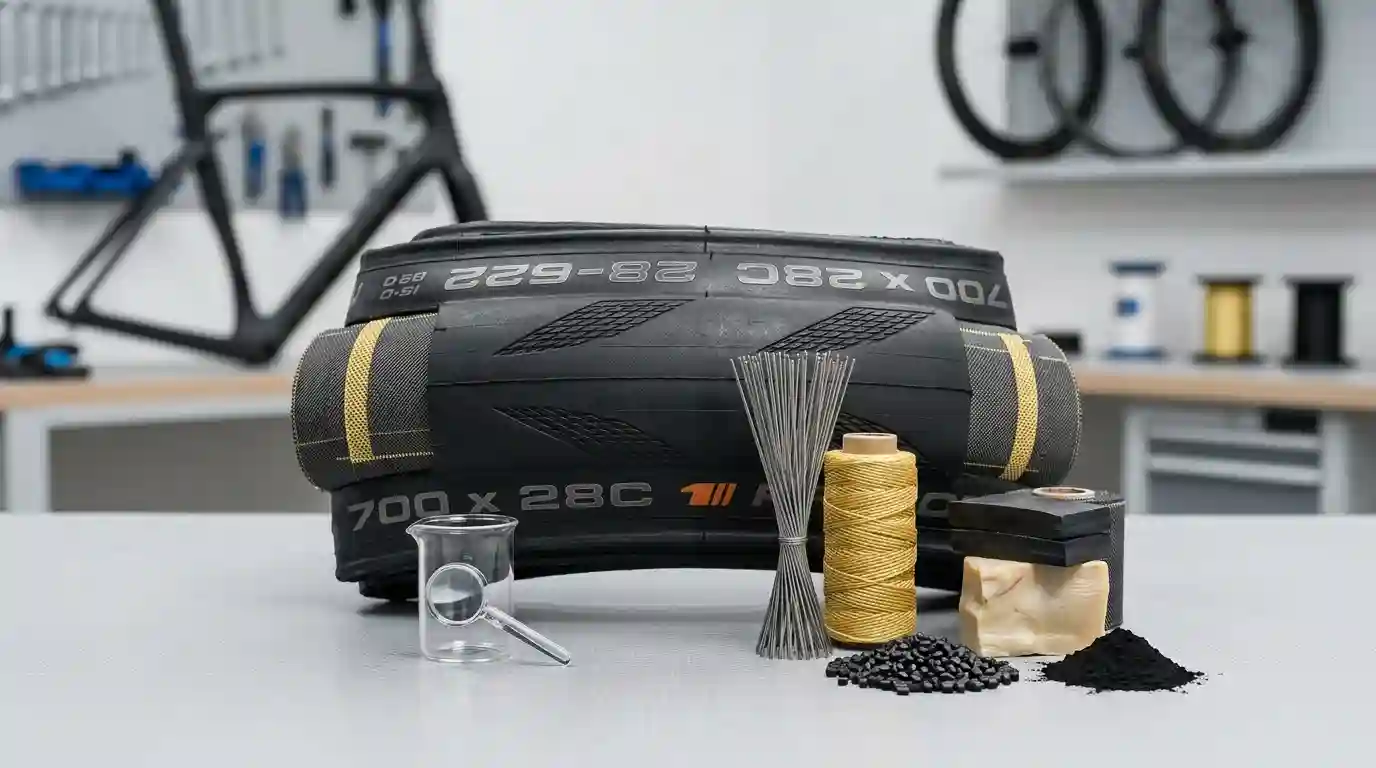
Tire performance is shaped by casing density, rubber compound formulation, and tread architecture.
                     PERFORMANCE INFLUENCE FACTORS

   Casing Thread Count (TPI) --+
   Rubber Durometer -----------+---> Real-World Performance
   Puncture Belt Layer --------+
   Tread Profile Design -------+
Casing TPI
Casing density is measured in TPI (Threads Per Inch):
- 60 TPI Casing: Uses thicker nylon cords, offering high durability and sidewall protection at the expense of stiffness.
- 120+ TPI Casing: Uses fine, flexible threads, conforming smoothly to road surface imperfections for lower rolling resistance and improved compliance.
Rubber Compound
- Single Compound: Standard rubber formulation prioritizing wear life.
- Dual / Triple Compound: Uses harder rubber (60a durometer) along the center line for efficiency and softer rubber (50a durometer) on shoulder knobs for cornering grip.
Puncture Protection
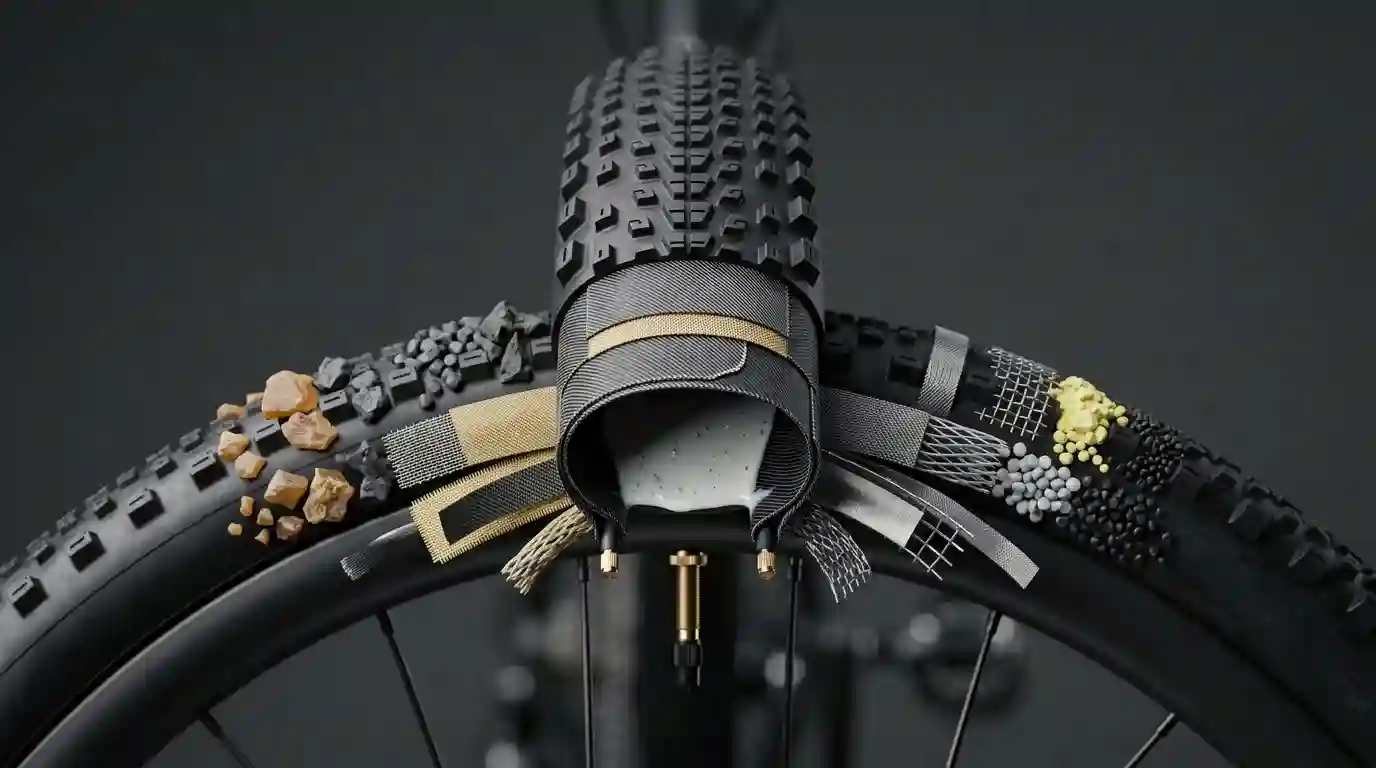
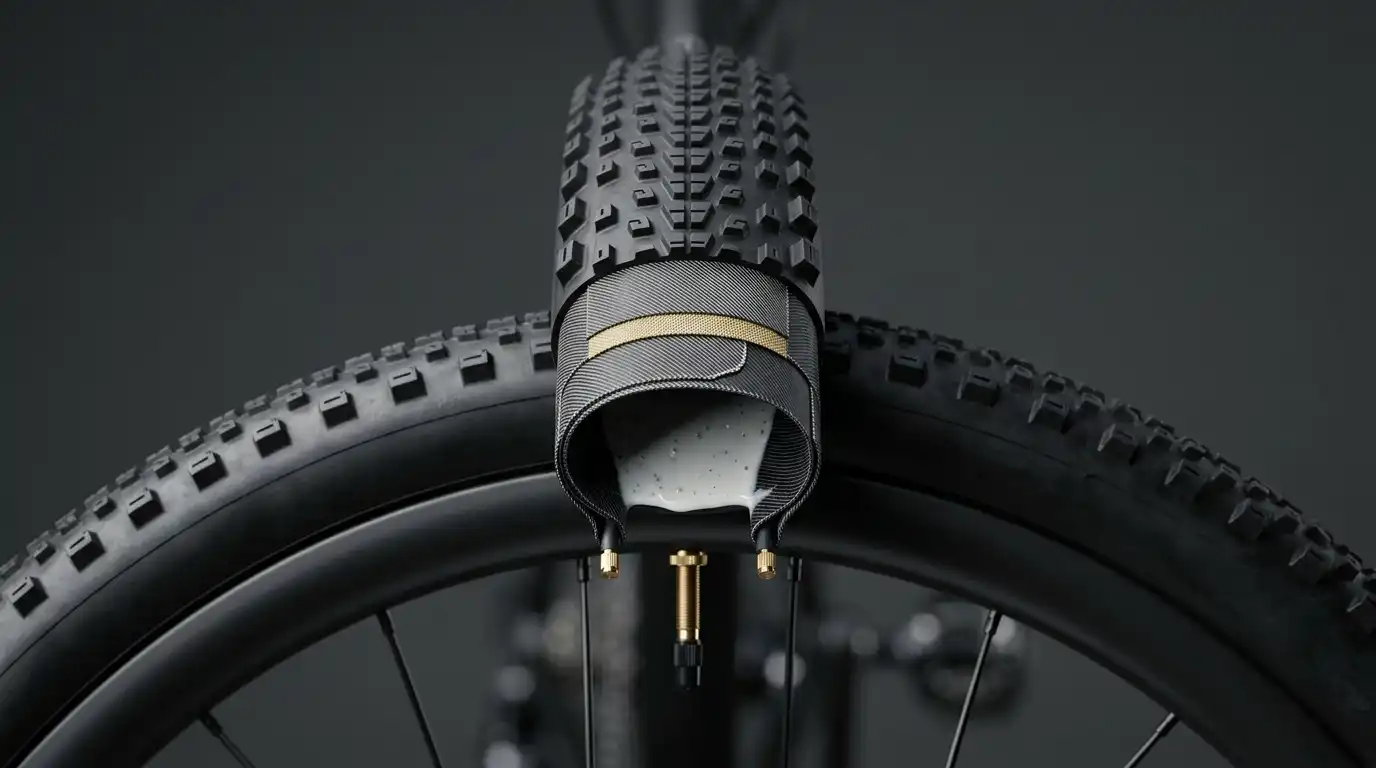
High-end road and commuter tires integrate sub-tread protective layers made from woven aramid, Kevlar, or nylon mesh.
These belts prevent sharp objects from puncturing the casing without compromising rolling efficiency.
Does 700C Tire Width Affect Rolling Resistance?
At identical tire pressures, a wider tire exhibits a shorter, wider contact patch, which reduces casing deformation losses compared to a long, narrow contact patch.
                          CONTACT PATCH SHAPE

       Narrow Road Tire                      Wider Road/Gravel Tire
          (Higher PSI)                            (Lower PSI)

             +---+                                  +------+
             |   |                                  |      |
             |   |                                  +------+
             |   |                            Shorter, wider patch
             +---+                            reduces casing deformation
     Long, narrow patch                       losses at speed
Lowering tire pressure on wider tires allows the casing to absorb road chatter, preventing energy loss caused by frame vibration.
Are 700C Tires Good for E-Bikes?
700C tires are widely used on urban e-bikes, commuter e-bikes, and electric gravel bikes.
Electric drive systems produce high torque and carry heavier overall bike weights, increasing wear on tire treads and casings.
700C E-Bike Tire Considerations
- ECE-R75 Certification: Ensure tires are certified for e-bike speeds up to 28 mph (45 km/h).
- Reinforced Casings: Opt for multi-ply casings to prevent pinch flats and rim impacts under higher loads.
- Slightly Higher Pressure: Add 3 to 5 PSI above normal recommendations to support the added weight of the motor and battery.
How to Fix a Flat 700C Bike Tire
Fixing a 700C Tire With an Inner Tube
- Remove the wheel and unseat one tire bead using tire levers.
- Remove the punctured inner tube and inspect the inside of the tire casing carefully for glass, thorns, or wire.
- Install a replacement tube with a small amount of air to prevent twisting.
- Push the tire bead back over the rim edge, avoiding pinch points, and inflate to your target PSI.
Fixing a Tubeless 700C Tire
- Locate the puncture site where liquid sealant is escaping.
- Insert a tire plug (bacon strip) into the puncture using an insertion tool.
- Trim excess plug material flush with the tread blocks.
- Reinflate the tire using a CO₂ inflator or hand pump and rotate the wheel to distribute internal sealant.
                       TUBELESS PUNCTURE REPAIR

   1. Locate Leak          2. Insert Tire Plug        3. Trim & Reinflate
   +--------------+        +------------------+       +-------------------+
   |   Puncture   |        |   Tire Plug      |       |   Plug Trimmed    |
   |      ||      |        |      ||          |       |      ||           |
   |   =======    |  --->  |   ===||====      | --->  |   ===||====       |
   |  Tire Casing |        |  Tire Casing     |       |  Tire Casing      |
   +--------------+        +------------------+       +-------------------+
Expert Testing Standards for 700C Tires
Professional tire testers evaluate performance using standardized laboratory and field testing procedures:
- Rolling Resistance Testing: Measured in Watts using motorized drum rollers under controlled loads (e.g., 40 kg load at 18 mph / 29 km/h).
- Puncture Resistance Testing: Penetration force measured in Newtons using steel needles pressed into tread and sidewall sections.
- Wet / Dry Grip Testing: Measuring friction coefficient on slick concrete and asphalt surfaces at variable lean angles.
Common 700C Tire Compatibility Mistakes
1. Assuming Every 700C Tire Fits Every 700C Rim
While the 622 mm BSD is consistent, mounting a wide 45 mm tire onto an ultra-narrow 14 mm rim compromises stability and safety.
2. Confusing 700C With 700 mm Outer Diameter
700C describes the rim standard, not the true outer diameter. Outer dimensions vary depending on tire casing volume and tread profile.
3. Ignoring Actual Mounted Width
Tires can measure wider or narrower than their printed size depending on internal rim width. Always account for mounted dimensions when verifying frame clearance.
People Also Ask About 700C Bike Tires
Is 700C the Same as 29 Inches?
Yes, both share the same 622 mm bead-seat diameter. The distinction is casing width; 29-inch mountain bike tires are significantly wider and taller than typical 700C road or gravel tires.
Is 700C the Same as 28 Inches?
In many European markets, “28-inch” refers to standard 622 mm BSD city or touring tires. Always check the ETRTO code (e.g., 37-622) to confirm compatibility.
Is 700C Better Than 650B?
Neither size is universally superior. 700C provides efficient rollover speed on pavement and hardpack, whereas 650B accommodates wider tires on smaller frame clearances for rough terrain.
Can You Put Wider Tires on a 700C Bike?
Yes, provided your internal rim width supports the tire casing and your frame, fork, and brakes maintain at least 4–6 mm of tire clearance.
What PSI Should a 700C Road Tire Have?
Ideal pressure depends on rider weight, tire volume, and surface conditions. A 180 lb rider on 700 x 28C tubeless tires typically runs around 58 PSI front / 62 PSI rear.
Can 700C Tires Be Tubeless?
Yes, provided both the tire casing and wheel rim are certified tubeless-compatible and installed with proper rim tape, valves, and sealant.
Frequently Asked Questions About 700C Tires
What does 700C mean on a bike tire?
700C identifies a bicycle wheel standard based on an exact 622 mm bead-seat diameter. Tire width is printed separately.
What is the most common 700C tire size?
Common sizes include 700 x 28C for road bikes, 700 x 35C for commuter and hybrid bikes, and 700 x 40C for gravel setups.
Can I put a 700C tire on a 29-inch rim?
Yes, because both share a 622 mm BSD. Ensure the tire width is appropriate for the rim’s internal width.
Can I put a 650B tire on a 700C rim?
No. 650B tires use a 584 mm BSD, which is physically smaller than a 622 mm 700C rim.
What is the best 700C tire pressure?
Target PSI depends on system weight, tire volume, and surface roughness. Use a tire pressure formula or calculator rather than max sidewall ratings.
How often should I replace a 700C tire?
Replace your tire when the center tread wears thin, puncture frequency increases, casing threads become exposed, or sidewall cracks appear.
Are wider 700C tires more comfortable?
Yes. Wider tires contain larger air volume, allowing lower pressures that absorb road impacts and surface vibrations.
Do wider 700C tires have more rolling resistance?
Not necessarily. At appropriate pressures, wider tires reduce casing distortion and vibration losses over rough pavement, matching or beating narrower options.
Final Takeaways: Understanding 700C Tires
- 622 mm Bead-Seat Diameter: 700C identifies the 622 mm BSD rim standard, shared with 29-inch mountain bike rims.
- Width Is Specified Separately: The 700C label indicates rim size, while width is listed in millimeters (such as 28C, 35C, or 40C).
- System Optimization: Performance depends on pairing internal rim width, frame clearance, casing construction, and tire pressure (PSI) appropriately.
Optimize Your 700C Tire Pressure
Correct tire pressure improves comfort, cornering grip, and rolling speed while helping prevent flats.
Stop relying on generic sidewall maximums. Use the Free Bike Tire Pressure Calculator / Tire Finder Tool at TheBikeTires.com to compute precise starting pressures based on your weight, tire width, and surface conditions.

Mohidul Islam is a leading cycling technology specialist and bike tire consultant with over 15 years of hands-on experience in the bicycle industry. He holds a Bachelor of Science in Mechanical Engineering from Penn State University, where he focused heavily on material science, tread mechanics, and rubber compound performance. Over the past decade and a half, Alex has conducted extensive field testing, tubeless setup evaluations, and tire pressure modeling for road, mountain, and e-bikes. His practical insights and data-driven approach help cyclists of all levels optimize grip, speed, and durability on every ride.