Flats on the way to work, bald tread after one season, and sidewall cuts on a rocky trail cost US riders time and money. Poor cornering grip and the wrong tire pressure (PSI) make things worse. If you want to know how to choose durable bike tyres, the answer starts with smart construction and ends with correct pressure.
A tough tire does more than last longer. It protects you from sudden flats, holds its grip as it wears, and keeps your bike predictable at speed. Correct PSI protects the casing and rim, so every ride is safer, faster, and more comfortable.
This guide explains casing, rubber, puncture belts, tread, pressure, and tubeless setups in plain English. You will find tables, a PSI formula, and step-by-step checklists. It builds on what makes a good bike tire and what bike tires are made of. For the basics, see our general guide to choosing bike tires. Every tip follows our testing process.
Quick takeaway: The most durable tire is the one built for your roads and set to the right pressure. Heavy does not always mean tough.
What Makes a Bike Tire Durable?
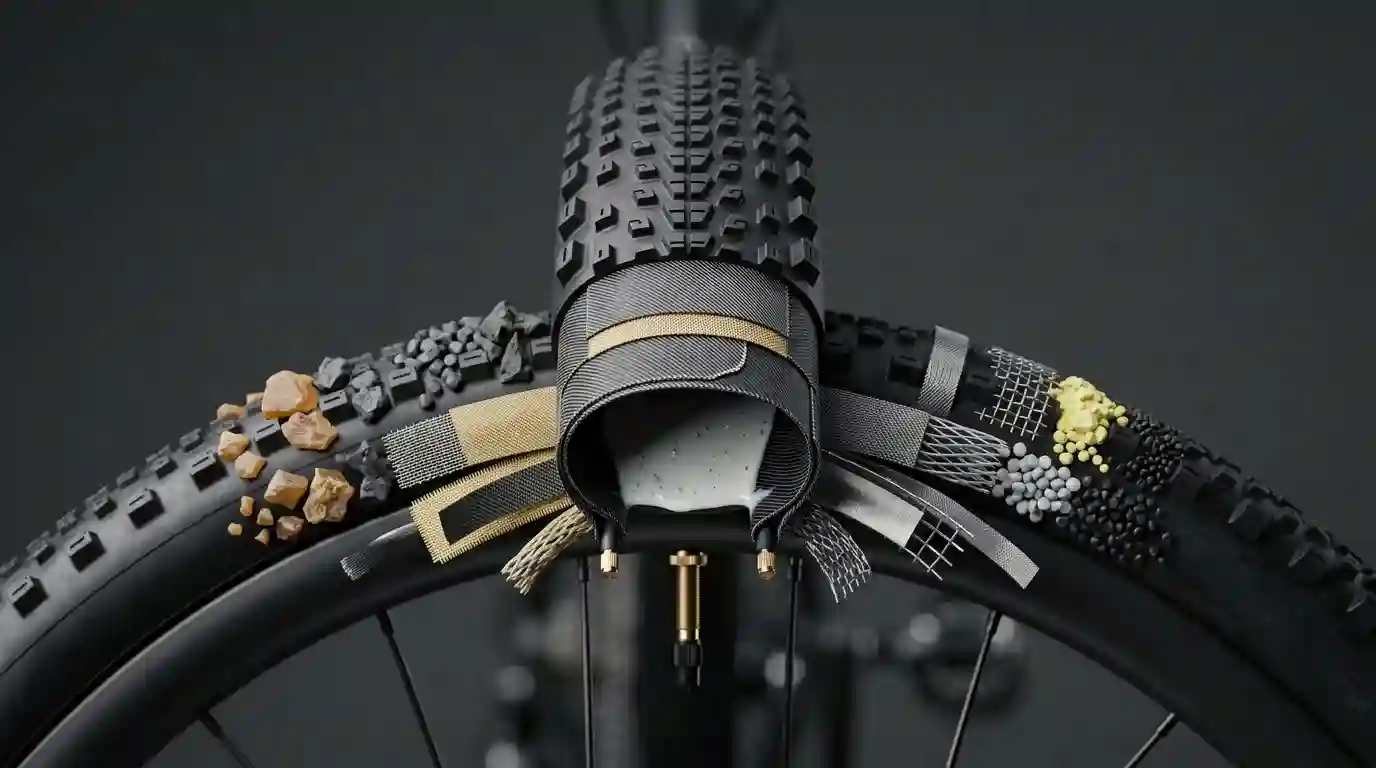
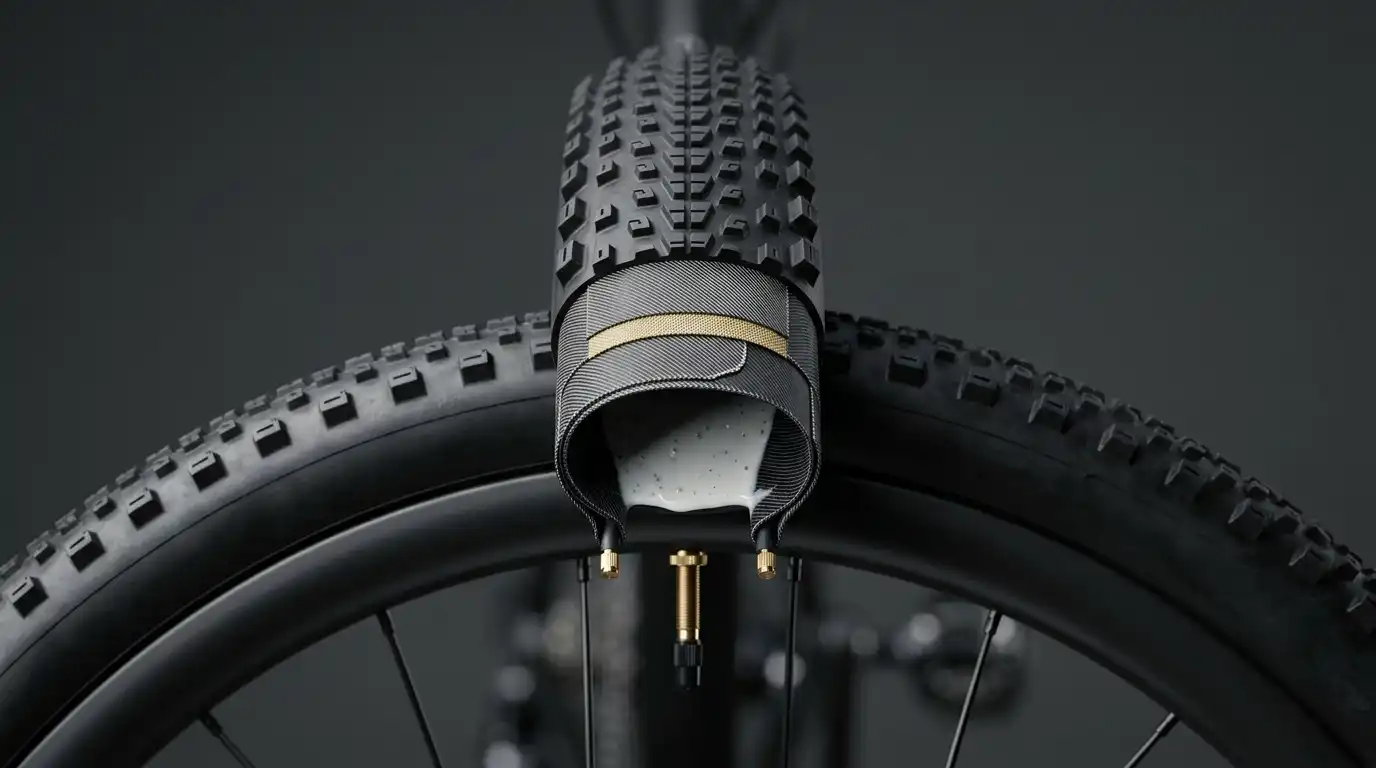
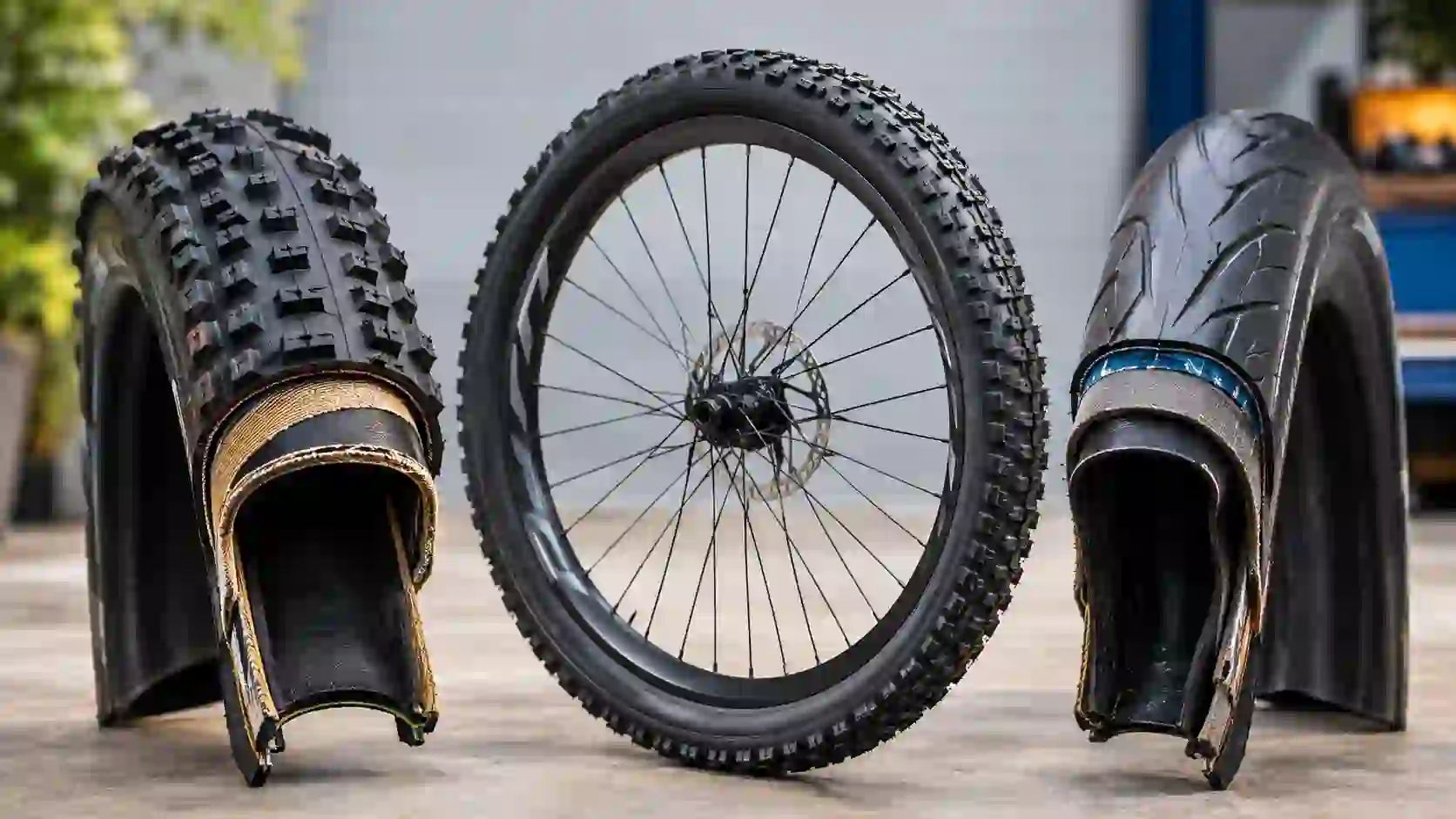
Durable bike tires resist tread wear, punctures, cuts, and casing damage during regular use. They usually combine a tough casing, a wear-resistant compound, a puncture belt, and reinforced sidewalls. The most durable tire is not always the heaviest, because the best build depends on your road, weight, pressure, and habits.
Key features that help a tire last longer:
- A strong casing with enough layers for your terrain
- A wear-resistant rubber compound
- A puncture belt under the tread
- Reinforced sidewalls for rough ground
- The right size and PSI for your load
Tire life also depends on road surface, rider weight, and braking style. Hard braking and sharp cornering scrub rubber off the tread, so smooth riding habits extend life too. Learn the basics in how bike tires work.
How Long Should Bike Tires Last?
Road tires may wear faster under heavy use, while some commuter tires are built for long service. Gravel and mountain bike tire life changes with terrain, braking, cornering, and compound. The rear tire usually wears out first.
Use the table as a rough guide only, then inspect your tires often.
| Tire Type | Rough Life (miles) | What Shortens It |
|---|---|---|
| Road | 1,500 to 4,000 | Heavy loads, hot pavement |
| Commuter | 2,000 to 5,000 | Glass, potholes |
| Gravel | 1,500 to 3,500 | Sharp rock, low PSI |
| Mountain bike | 500 to 2,000 | Braking, rocks, soft rubber |
Regular checks catch problems early. See how often to check your bike tires.
What Is the Difference Between Puncture Resistance and Durability?
Puncture resistance protects against sharp objects such as glass, thorns, and wire. It is one part of the picture.
Overall durability also covers tread life, sidewall strength, and resistance to cuts and aging. Compare both when you shop for daily commuting or rough trails. Rough surfaces test every layer, so read how to choose bike tires for rough roads.
How to Choose Durable Bike Tyres for Your Riding Style
Match tire construction to your main riding surface and weekly mileage. Balance puncture protection, grip, rolling resistance, and comfort.
Check tire size, rim width fit, and frame clearance before you buy. If you ride more than one surface, see how to choose tires for road and off-road.
| Riding Style | Key Durability Feature | Typical Width |
|---|---|---|
| Commuting | Puncture belt, strong casing | 35 to 42 mm (1.4 to 1.65 in) |
| Road | Wear-resistant compound | 28 to 32 mm (1.1 to 1.25 in) |
| Gravel | Reinforced sidewalls | 38 to 50 mm (1.5 to 2.0 in) |
| Mountain bike | Tough casing, strong side knobs | 2.25 to 2.5 in (57 to 64 mm) |
| E-bike | Load-rated, reinforced casing | 40 to 55 mm (1.6 to 2.2 in) |
Best Durable Tires for Daily Commuting
Choose a strong casing and a puncture belt to resist road debris. Look for smooth or lightly textured tread for paved roads and bike paths.
Reflective sidewalls add visibility during early or late rides. Read how to choose tires for a commuter bike and how to choose tires for daily cycling. Our picks for what bike tire to buy for commuting and the best bike tire size for commuting help narrow the list.
Best Durable Tires for Road Cycling
Look for a wear-resistant compound and a casing suited to your road conditions. Consider wider road tires if your frame and rims allow and comfort matters.
Balance tread life with rolling resistance and wet-road cornering traction. See the best tire width for road and city riding and the best 700c tires for comfort. Not sure what the code means? Read what 700×28 means.
Durable Tires for Gravel Riding
Choose reinforced sidewalls if your routes include sharp rocks or rough trails. Pick a tread pattern with enough grip for loose gravel and dirt.
Consider tubeless gravel tires to cut pinch flats and seal some small punctures. Read how to choose bike tires for gravel roads and how to choose tires for mixed surfaces.
Best Durable Tires for Mountain Biking
Look for reinforced casings and sidewalls on rocky or technical trails. Pick compounds and side knobs that support braking and cornering grip.
Match construction to trail difficulty, rider weight, and bike setup. Southwestern loose rocks punish thin sidewalls, while Pacific Northwest mud needs open tread. Older bikes may use 26×2.1 sizing, so see what 26×2.1 means and what 650b means.
Best Durable Tires for E-Bikes
Check that the tire is approved for the bike’s load and intended speed. E-bike torque and extra weight add stress to the casing and tread.
Prioritize puncture protection and predictable grip for heavy bikes and frequent stops. Confirm a safe fit with the ETRTO tire size system and what the numbers on bike tires mean.
Which Tire Construction Features Improve Durability?
Casing layers, rubber compounds, and protective belts all shape tire life. Added protection may increase weight or rolling resistance, depending on the design.
Compare full tire models instead of one spec. The table shows what each feature does and what it costs.
| Feature | Helps With | Trade-Off |
|---|---|---|
| Extra casing layers | Cut and sidewall strength | More weight |
| Harder compound | Tread life | Less wet grip |
| Puncture belt | Glass and thorn flats | Slight stiffness |
| Sidewall reinforcement | Rock and abrasion damage | Less flex |
Understand Casing TPI and Tire Strength
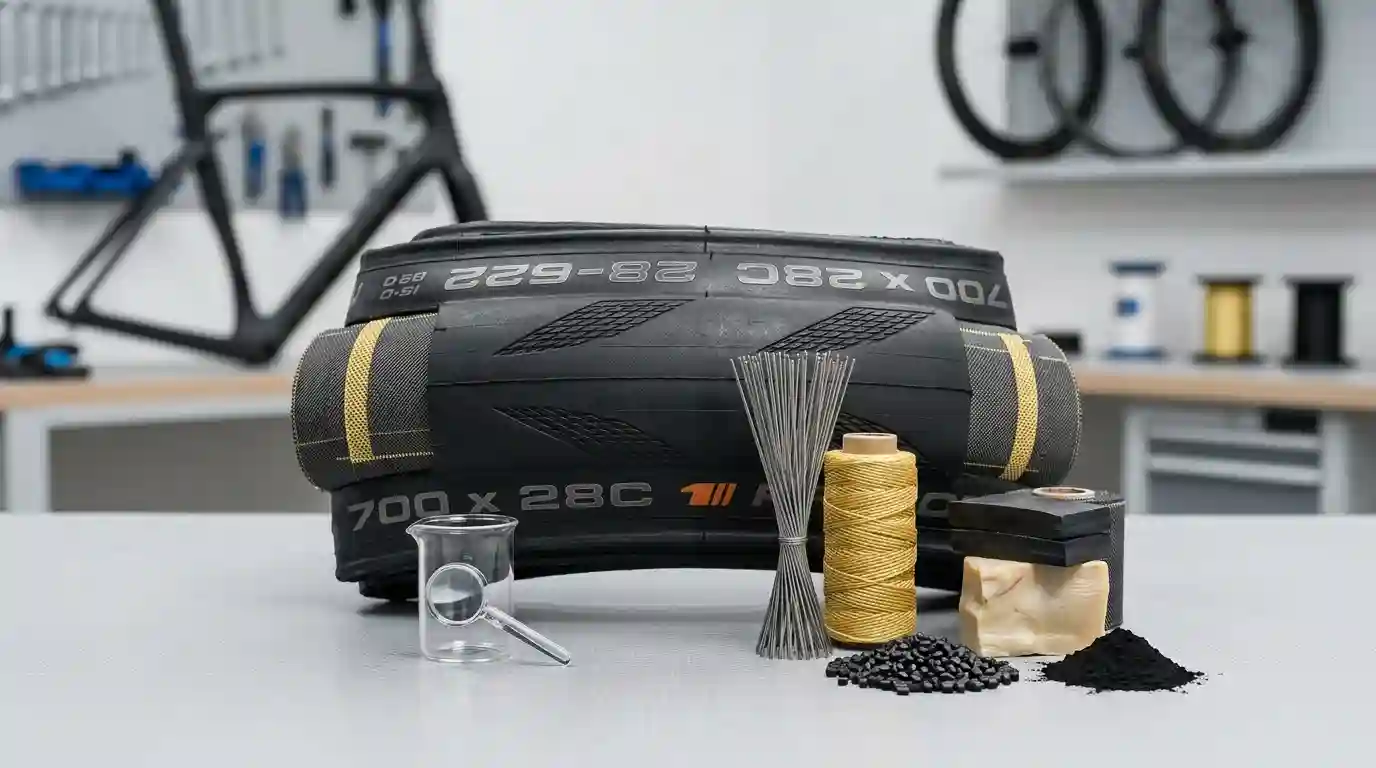
TPI means threads per inch in the tire casing. It describes only part of the tire’s construction.
Higher TPI can allow a supple casing, but it does not automatically make a tire weaker or stronger. Consider casing layers, thread material, and sidewall reinforcement. Our guide to bike tire casing explains more.
Choose the Right Rubber Compound
Harder compounds often offer good wear life, but grip depends on the formula and tire design. Softer compounds may improve traction but can wear faster in some conditions.
Rubber hardness is measured by durometer on the Shore A scale. Lower numbers mean softer rubber. Look for tests that compare tread wear, wet grip, and rolling resistance, and read what a bike tire rubber compound is.
Look for a Puncture Protection Belt
A puncture belt adds a protective layer beneath the tread to help block sharp debris. Different designs stop different threats, and no belt prevents every flat.
Choose protection based on your routes. City glass, rural thorns, and Southwestern goatheads each call for a strong belt. Extra layers add some weight, which is a fair trade for fewer roadside repairs.
Check Sidewall Reinforcement
Strong sidewalls resist cuts, abrasion, and rough terrain damage. Extra reinforcement may add weight and reduce flex.
Consider reinforced sidewalls for loaded touring, gravel riding, and technical mountain biking. These uses push sideways loads into the casing, which is where cuts and tears often start. If you ride far with gear, see how to choose tires for long distance.
How to Choose the Right Tire Tread for Long Life
Match tread design to the surfaces you ride most. Aggressive tread can wear faster on pavement, depending on compound and use.
Do not choose a tire by tread depth alone. Learn why bike tires have different tread patterns and how much tread a bike tire should have.
Are Smooth Tires More Durable Than Knobby Tires?
Smooth tires can last well on pavement when their compound and casing suit road use. Knobby tires can wear quickly on hard surfaces if the knobs flex or scrub in turns.
On dirt and trails, the right knobs add grip and cut unwanted sliding. Use the tread that matches your main surface.
What Tread Pattern Works Best for Commuting?
Use a smooth center tread for efficient rolling on pavement. Choose mild shoulder tread if your commute includes gravel paths or loose shoulders.
Think about wet-weather grip and water drainage instead of assuming deep tread is safer. For rainy routes, read how to choose bike tires for wet weather.
Wet Roads and Tread Wear
Rain does not wear tires faster by itself. Grit, sand, and road grime carried by water do, since they act like sandpaper on the tread.
Wipe your tires after wet rides and check for small cuts. Wet roads also lower grip, so a tire that is nearly bald is riskier in the rain.
How Tire Pressure Affects Durability
Tire pressure (PSI) changes deformation, heat, grip, and the risk of rim strikes or pinch flats. Too much pressure reduces comfort and control on rough roads.
Too little pressure raises casing stress, tire instability, and rim damage risk. All tires leak slowly, as we explain in why bike tires lose air.
How to Choose PSI for Your Weight
Start with total system weight: rider, bike, gear, and cargo. Then consider tire width, inner rim width, front-to-rear balance, and riding surface.
Stay within the limits set by both tire and rim makers. The table shows rear tire starting points for tubeless setups. Subtract 3 to 4 PSI for the front.
| Total Weight | 28 mm | 32 mm | 40 mm | 2.25 in MTB |
|---|---|---|---|---|
| 150 lb (68 kg) | 51 PSI | 41 PSI | 31 PSI | 18 PSI |
| 175 lb (79 kg) | 60 PSI | 48 PSI | 37 PSI | 21 PSI |
| 200 lb (91 kg) | 68 PSI | 55 PSI | 42 PSI | 24 PSI |
| 225 lb (102 kg) | 77 PSI* | 62 PSI | 47 PSI | 27 PSI |
| 250 lb (113 kg) | 85 PSI* | 69 PSI | 52 PSI | 30 PSI |
Note: Values marked with * pass the 72.5 PSI (5 bar) cap that many hookless rims carry. Choose a wider tire or a hooked rim in those cases.
The PSI Formula for Total System Weight
This is a rule of thumb, not a manufacturer spec. Never exceed the maximum printed on your rim or tire.
- Add rider, bike, and gear weight in pounds.
- Multiply by 0.55 for road, gravel, and commuter bikes. Use 0.60 for mountain bikes.
- Multiply that rear load by the width factor: 0.62 for 28 mm, 0.50 for 32 mm, 0.38 for 40 mm, and 0.20 for 2.25 in.
- Subtract 3 to 4 PSI for the front tire.
- Add 5 to 10 percent for inner tubes. Subtract 2 to 5 PSI on wet roads or loose rock.
Example: A 170 lb rider, 25 lb bike, and 5 lb bag total 200 lb. The rear load is 110 lb, so a 32 mm tire starts near 55 PSI rear and 52 PSI front.
Terrain Adjustments for US Roads and Trails
Local surfaces change the best PSI. Start from the formula, then adjust to fit where you ride.
- Pacific Northwest mud and wet roots: Run 2 to 5 PSI lower for grip, and favor open tread.
- Southwestern loose rocks: Keep enough pressure to avoid rim strikes and sidewall pinches.
- Northeast potholes and frost heaves: Use a wider tire and slightly more pressure to protect the rim.
- Midwest chip seal and gravel roads: Go lower with a tough casing to cut vibration and scrubbing.
Change one thing at a time, so you know which tweak helped.
Step-by-Step Guide to Setting Tire Pressure
Follow these four steps for a safe, durable setup.
- Check the pressure range marked on the tire and the rim maker’s guidance.
- Enter rider weight, bike weight, tire width, and riding surface into a tire pressure calculator.
- Measure pressure with a reliable gauge before riding.
- Test the bike’s comfort and handling, then make small adjustments within approved limits.
Tip: Skip the guesswork. Run your numbers through the Free Bike Tire Pressure Calculator for a tailored starting PSI.
Can Low Tire Pressure Damage a Tire?
Yes. Very low pressure can cause tire squirm, rim strikes, or pinch flats with inner tubes. The sidewalls flex too much, which weakens them over time.
Tubeless tires can also burp air or damage the rim if pressure is too low for the load and terrain. Use a suitable PSI for your tire width, load, and conditions.
Are Tubeless Tires More Durable Than Inner-Tube Tires?
Tubeless sealant can close some small punctures before much air escapes. Tubeless setups can still suffer cuts, large punctures, bead issues, or sealant failure.
Compare maintenance needs, repair options, and compatibility before you switch. Neither system is always better, so match the setup to your riding. Riders who log many miles on clean roads may prefer tubes for simplicity, while gravel and trail riders often gain more from sealant.
Benefits of Tubeless Tires
Sealant can help seal small holes in the tread. Tubeless setups cut pinch-flat risk compared with conventional tubes.
Lower, suitable pressures can improve grip and comfort on rough surfaces. Check sealant every 2 to 4 months, and sooner in hot, dry climates.
When Inner Tubes Are a Better Choice
Inner tubes are often simpler to install and repair. A spare tube gives you a practical backup after a large puncture.
Choose compatible tube sizes and valve types for your wheel and tire. Many tubeless riders still carry one for emergencies.
How to Set Up Tubeless Tires Safely
Follow these four steps for a clean setup.
- Confirm that both the rim and tire are approved for tubeless use.
- Install compatible rim tape and a tubeless valve.
- Add the recommended amount of sealant and seat the tire bead using a suitable method.
- Check for leaks, confirm pressure, and inspect the setup before riding.
Rim Width and Hookless Compatibility
A hooked rim has a small lip that grips the tire bead. A hookless rim has a smooth wall and often caps pressure at 72.5 PSI (5 bar). Always use tires approved for your rim type.
| Inner Rim Width | Typical Tire Range |
|---|---|
| 15 to 17 mm | 25 to 32 mm |
| 19 to 21 mm | 28 to 40 mm |
| 23 to 25 mm | 32 to 45 mm |
| 25 to 30 mm | 38 to 50 mm |
This is a general guide, so follow your rim maker’s chart. For help, see how to check if a tire will fit your wheel and bike tire size compatibility.
How to Compare Durable Bike Tires Before Buying
Compare weight, casing design, tread compound, puncture protection, and expected use. Review real-world wear reports next to lab results.
Check warranty terms and maker guidance, but do not assume a warranty guarantees a certain mileage. See how we review products in our editorial policy.
Which Tire Tests Matter Most?
Look for repeatable puncture and rolling resistance tests with clear methods. Review tread-wear tests where available, and remember that lab results may not match every road or trail.
Compare wet grip, casing strength, and performance under similar conditions. One test is evidence, not a promise.
Test dates matter too. Makers update compounds and casings, so a review from several years ago may not describe today’s tire.
How to Read Tire Reviews
Look for long-term reviews that report mileage, punctures, and visible wear. Check whether the reviewer rode similar surfaces and weather.
Separate measured results from opinions and marketing claims. A rider who weighs 120 lb and rides smooth paths will see different wear than a 230 lb rider on rough roads. Look for reviews from riders like you. New riders can also start with the best bike tires for beginners.
Common Mistakes When Choosing Durable Bike Tyres
Many riders buy the heaviest tire without checking whether its protection fits their needs. Others assume high TPI, thick tread, or a puncture belt alone guarantees long life.
Some ignore pressure, rim compatibility, and frame clearance. Each mistake can shorten tire life or hurt safety.
Another common slip is skipping the sidewall check. The printed size, load rating, and pressure limits tell you what the tire can safely handle, so read them before you buy.
How to Avoid These Buying Mistakes
Choose tires based on your routes, riding frequency, and typical hazards. Confirm the approved tire width for your rim and the space in your frame.
Compare durability with comfort, grip, rolling resistance, and upkeep. Check how much wider a tire you can fit before you go bigger.
How to Make Bike Tires Last Longer
Check pressure regularly and inspect tread and sidewalls for damage. Remove embedded debris carefully, and repair punctures following the tire maker’s guidance.
Store tires away from heat, sunlight, and chemicals. Clean, correctly inflated tires simply last longer. Rotating a tire from front to rear can even out wear, though many riders keep the stronger tire on the rear for grip and braking.
When Should You Replace Bike Tires?
Replace tires with exposed casing, serious cuts, bulges, or other structural damage. Look for worn-through tread, flat spots, repeated punctures, or maker wear indicators.
Do not rely on mileage alone. Replace a tire whenever its condition makes it unsafe. Our guide on how often to replace bike tires gives clear timelines.
Cleaning and Inspection Routine
A two-minute check every week can add months to tire life. Spin each wheel slowly and look at the full tread and both sidewalls.
- Pick out glass, thorns, and small stones with a pick or small screwdriver.
- Look for cuts that show the casing threads.
- Check for uneven wear, which can point to wrong PSI or a bent wheel.
- Wipe off oil and road grime with mild soap and water.
Fix small problems early, because small cuts grow fast under load.
How to Fix a Flat on the Road
Carry a spare tube, levers, a pump or CO2, and a small patch kit.
- Find and remove the cause, such as glass or a thorn.
- Take one side of the tire off and pull out the damaged tube.
- Run your fingers inside the tire to check for sharp bits.
- Fit the new tube with a little air, then seat the bead.
- Inflate to your target PSI and check the tire sits evenly.
Frequently Asked Questions
What are the most durable bike tires?
Durable tires often combine a suitable casing, puncture protection, and a wear-resistant compound. The best choice depends on your surface, bike type, and habits. Our everyday riding guide and the best bike tires for everyday riding are good places to start.
Are puncture-resistant tires slower?
Some protective layers add weight or stiffness, but the effect varies by design. Compare independent rolling resistance results instead of assuming every protected tire is slow.
Are tubeless tires more durable than tires with tubes?
Tubeless sealant can close some small punctures and reduce pinch flats. Inner tubes may be easier to replace after major damage, so durability depends on the full setup.
What PSI should I use for my weight?
Start with total system weight, tire width, rim width, and surface. Use a calculator as a guide and stay within maker limits. Lower pressure by 2 to 5 PSI in wet weather for more grip.
How do I know when my bike tires are worn out?
Check for worn tread, flat spots, cracks, cuts, bulges, and exposed casing. Follow wear indicators and replace damaged tires promptly.
Does a wider tire last longer?
Tire life depends more on compound, casing, use, and care than width alone. Choose a width that fits your rim and frame. See what tire width you should choose and bike tire width explained.
How do I check if a tire fits my rim?
Check the tire size and the rim maker’s approved width range. Confirm frame clearance and tubeless compatibility where needed. Learn how to measure bike tire size, how to read bike tire size, and how to find your bike tire size.
Can tire pressure make my tires wear out faster?
Yes. Wrong pressure raises tire stress, handling problems, and damage risk. Use a suitable PSI for your load, width, rim, and terrain.
Conclusion: Choose Durable Tires That Fit Your Ride
Prioritize casing strength, tread compound, puncture protection, and correct pressure. Match construction to your roads or trails while balancing grip, comfort, and rolling resistance.
Inspect tires often, and replace worn or damaged ones before they become unsafe. Small habits, such as weekly checks and correct PSI, add up to real savings over a season. For sizing help, read what bike tire size you need, why bike tires come in different sizes, bike wheel size vs tire size, what 700c means, and bike tire markings explained. You can also ask whether you can put a different size tire on your bike.
Ready to make your tires last? Enter your exact weight, tire size, and rim width into the Free Bike Tire Pressure Calculator and Tire Finder Tool at TheBikeTires.com. Get a safe starting PSI in seconds, then fine-tune it on your next ride.

Mohidul Islam is a leading cycling technology specialist and bike tire consultant with over 15 years of hands-on experience in the bicycle industry. He holds a Bachelor of Science in Mechanical Engineering from Penn State University, where he focused heavily on material science, tread mechanics, and rubber compound performance. Over the past decade and a half, Alex has conducted extensive field testing, tubeless setup evaluations, and tire pressure modeling for road, mountain, and e-bikes. His practical insights and data-driven approach help cyclists of all levels optimize grip, speed, and durability on every ride.