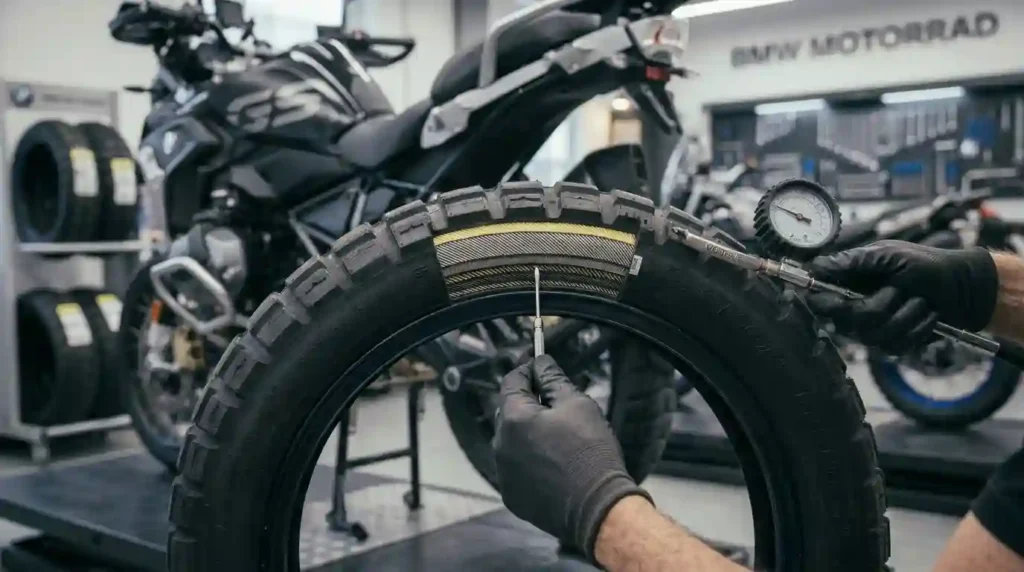
Few things sour a ride like a flat on a cold morning commute. You kneel on wet pavement, fumble with levers, and watch the clock. US riders deal with glass, thorns, rough pavement, wrong tire pressure, poor cornering grip, and tread that wears too fast. It is no wonder many riders ask if tougher tires are the answer. The honest reply is that it depends on where and how you ride.
So, are puncture resistant bike tyres worth it? For many commuters and rough-road riders, yes. For others, a lighter tire may serve better. We cover both sides, with costs, so you can decide with facts.
The right tire and the right tire pressure (PSI) protect your safety, speed, and comfort. This guide weighs the pros, cons, and costs. It follows our testing process and editorial policy.
Quick answer: Puncture-resistant bike tires are worth it for riders who often face sharp debris or want fewer flat repairs. They can add durability but may cost more or weigh more than lightweight tires. Choose based on your routes, riding style, and protection needs.
Are Puncture-Resistant Bike Tires Worth It?
Yes, they can be, in the right setting. They suit commuters and riders who often meet glass, thorns, and road debris.
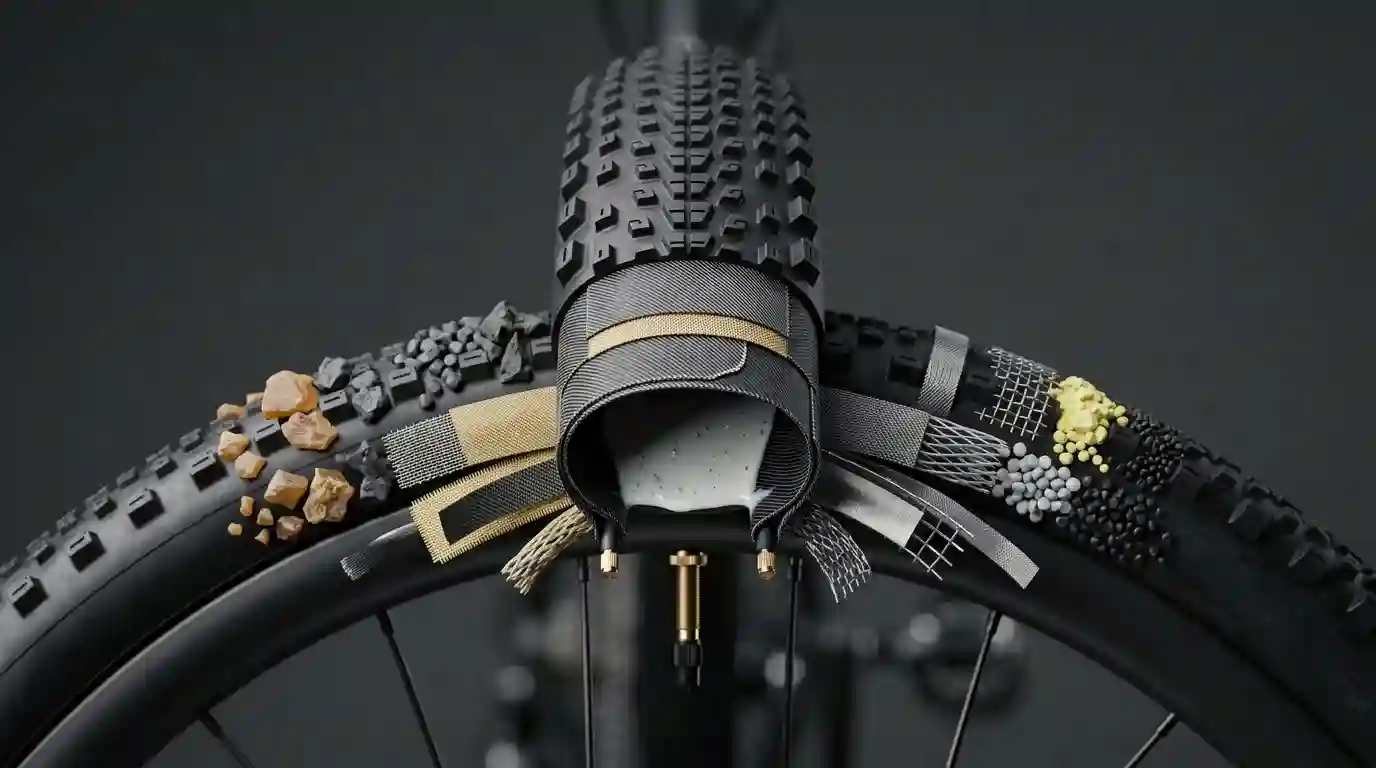
Reinforced casings and puncture belts can cut some flats. A puncture belt is a tough layer under the tread. They cannot stop every puncture or impact failure. Think of them as a strong layer of defense, not a force field.
The best choice depends on your riding style, PSI, terrain, budget, and need for speed or comfort. For a broader view, see how to choose bike tires.
Who Benefits Most From Puncture-Resistant Tires?
- Daily commuters may save time and money with fewer roadside repairs. A flat on the way to work can cost an hour.
- Touring and e-bike riders may value tough casings because their bikes carry more weight.
- Riders in thorn-heavy places, like parts of the Southwest, often see the biggest gain. Urban riders in cities with lots of broken glass see it too.
Road racers sit at the other end. They often prefer lighter tires with lower rolling resistance, even if protection is lower. Rolling resistance is the energy a tire wastes as it rolls.
When Are Puncture-Resistant Tires Not Worth It?
- They may weigh more or roll slower than some racing tires.
- Riders on clean roads may not gain enough to justify the cost.
- A protective tire still needs correct PSI, matching rims, and regular checks.
If your routes are smooth and short, a standard tire with good habits may be enough. Spend the savings on a quality pump and gauge. Good pressure habits prevent many flats on their own.
How Do Puncture-Resistant Bike Tires Work?
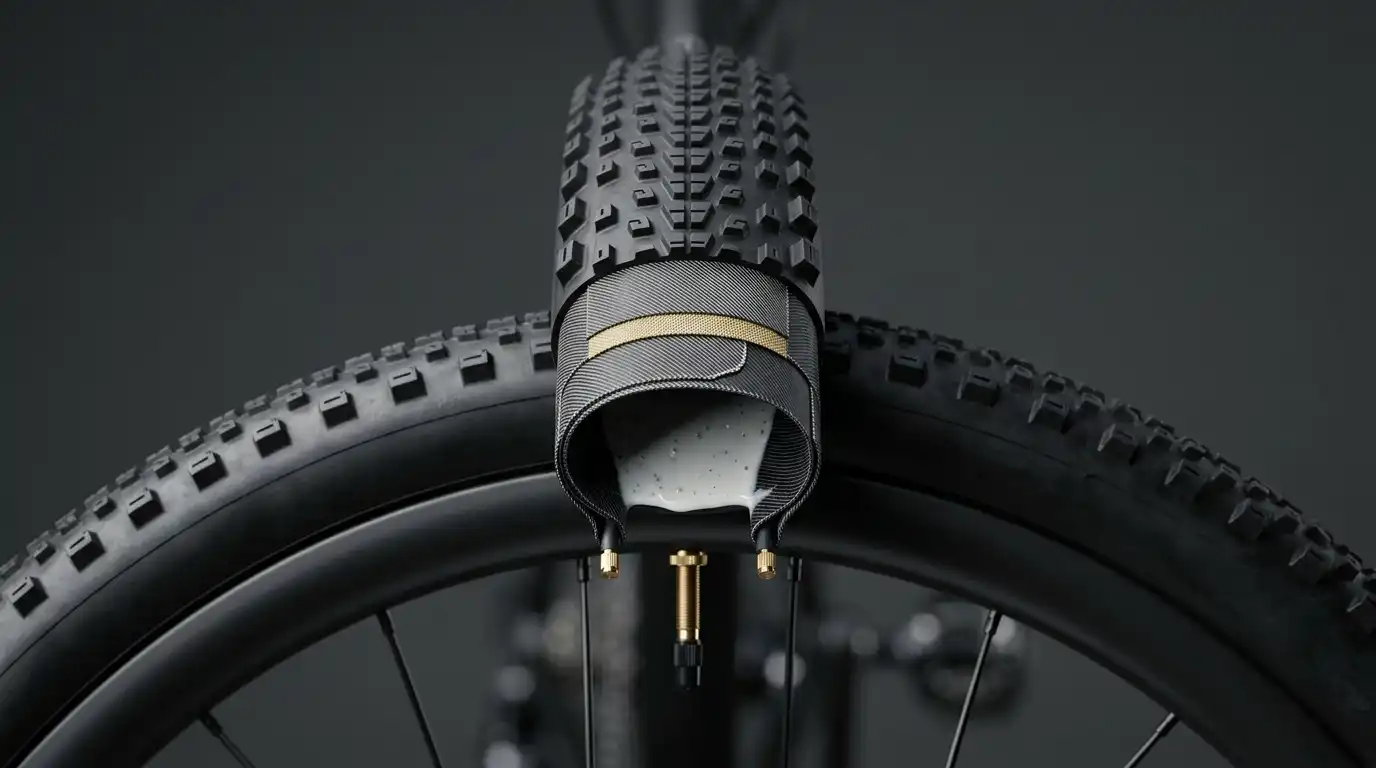
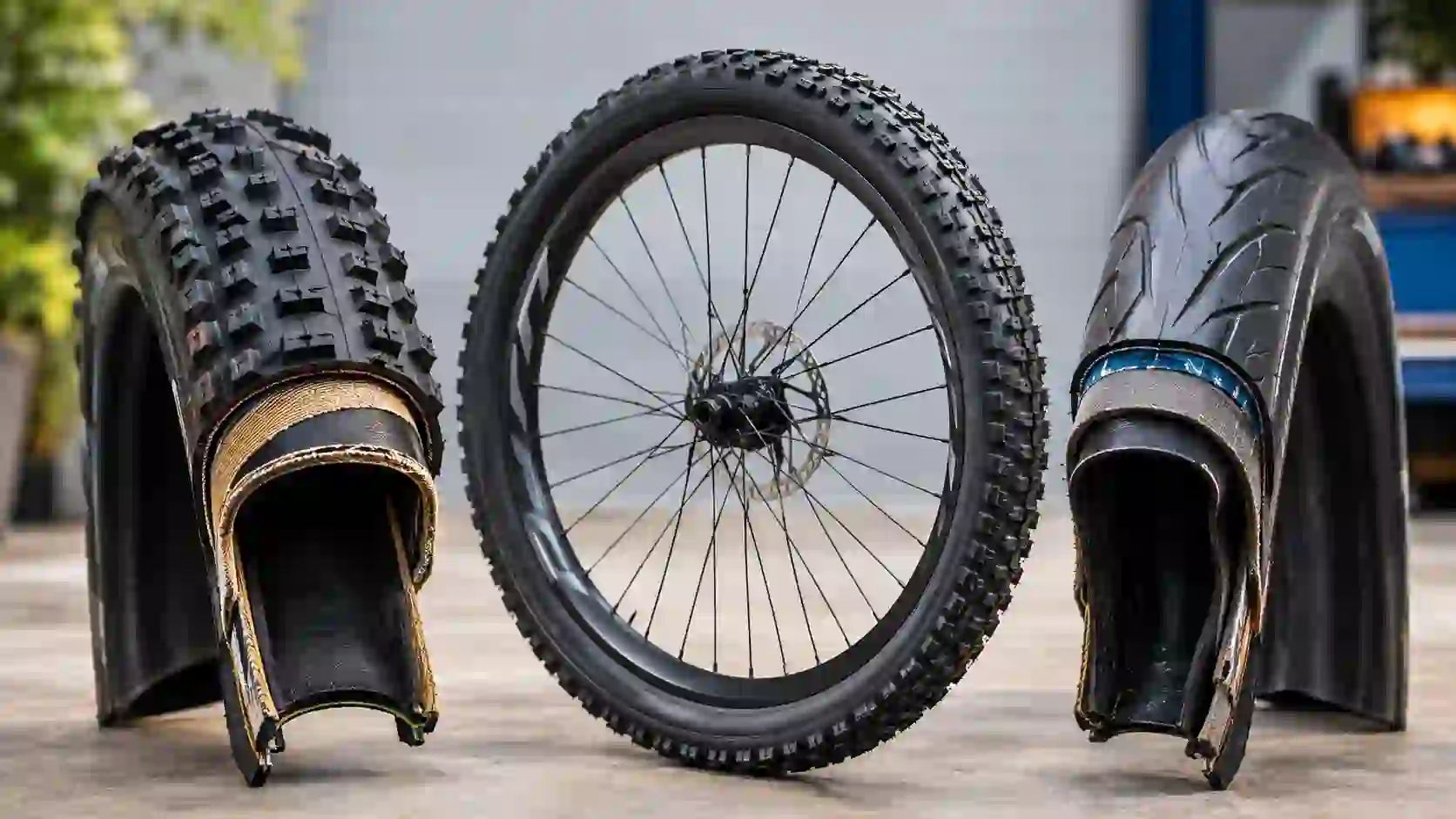
Many designs use extra rubber, reinforced casing layers, or a puncture belt under the tread. These layers help block sharp objects before they reach the tube or the tubeless air chamber. The tread rubber itself may also be thicker in the center, where most debris strikes.
Protection varies by design. Two tires with the same label can perform very differently. Compare build details, not just product names. Our guide on how to choose puncture-resistant bike tires shows what to look for.
For a refresher on tire basics, read how bike tires work and what bike tires are made of.
What Is a Puncture Belt?
A puncture belt is a protective layer beneath the tread. It helps stop sharp debris from reaching the tube. Materials and thickness differ by maker and model. Some belts run edge to edge, and others cover only the center.
A belt may cut tread punctures. It does not guarantee protection from sidewall cuts or pinch flats. A pinch flat happens when the rim traps the tube against the tire.
Does Casing TPI Affect Puncture Protection?
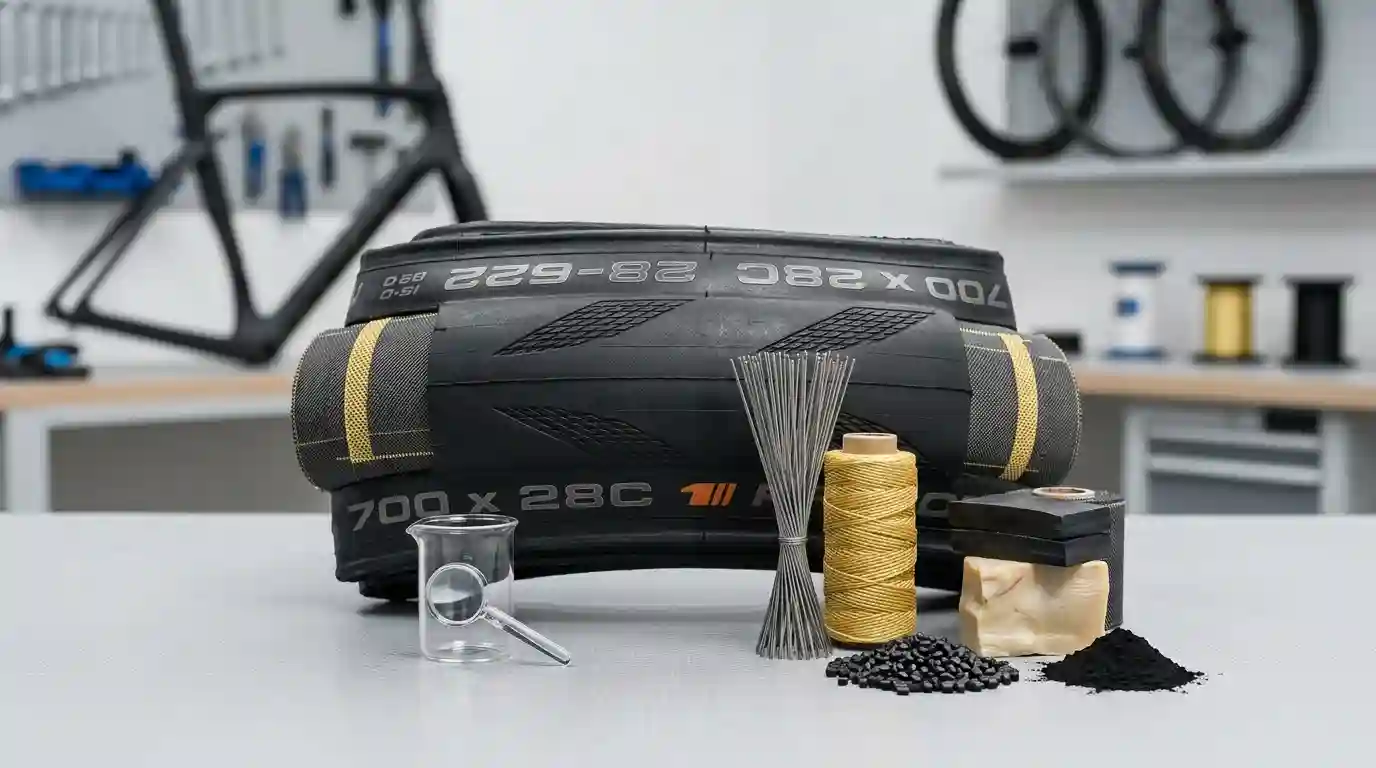
TPI means threads per inch. It describes part of the casing build. Higher TPI does not automatically mean a stronger or more puncture-resistant tire.
Compare the full casing design, protective layers, rubber compound, and intended use. A high-TPI casing is usually softer and lighter, which helps ride feel. Our bike tire casing guide explains the layers.
Can Rubber Compound Prevent Flats?
Rubber compounds affect grip, wear, and rolling resistance. Durometer is the scale for rubber hardness. A tougher compound may last longer, but tread rubber alone cannot stop every sharp object.
Tread matters here too. A smooth or lightly patterned tread suits pavement, while knobs help in mud and loose dirt. Our guide on tread patterns explains the trade-offs.
Pick a tire that balances wear life, wet grip, and puncture protection. Soft rubber grips wet roads well but wears faster, which matters in rainy Pacific Northwest weather. Read about bike tire rubber compound for more detail.
Do Puncture-Resistant Bike Tires Prevent All Flats?
No. They can reduce some tread punctures. Pinch flats, sidewall cuts, and impact damage can still happen.
A belt does little when a tube is crushed on a rim edge. Correct PSI and good riding lines still matter. Scan ahead and avoid debris where you can. See why bike tires lose air for other causes of flats.
Pros and Cons of Puncture-Resistant Bike Tires
The main benefit is lower risk from some common tread punctures. The main trade-offs are weight, cost, and rolling resistance.
Real results depend on road conditions, tire build, pressure, and riding habits. Weigh both sides before you buy. A fair choice looks at your routes, not at ads.
Main Benefits
The gains are easy to spot in daily life.
- Fewer flats mean less time on repairs and more time riding. You also carry less stress on every trip.
- Stronger builds suit commuting, touring, and rough city streets.
- Reliable tires help when repairs are hard, such as in bad weather or at night. They also help riders who lack the tools or skills for roadside fixes.
They also bring peace of mind. Riders who dread flats often ride more. That alone can be worth the price.
Main Drawbacks
No tire is perfect, and tough ones pay for their strength somewhere.
- Some models weigh more than performance-focused tires, which you may feel on climbs.
- Extra layers may raise rolling resistance, though the gap varies by model.
- Stiffer casings may feel less supple on some road surfaces, such as chip seal.
Cost can also be higher. Later we show how to judge if the price makes sense. Some riders also find that tough tires wear slower, which adds value.
Do Puncture-Resistant Tires Make You Slower?
Extra casing layers can add weight. But weight alone does not set how fast a tire rolls.
Rolling resistance depends on casing flexibility, rubber compound, tire pressure, load, and surface. Compare independent tests for similar sizes and conditions. A small gap on paper may be invisible on the road. See how much tires affect speed for more.
Puncture Protection vs. Rolling Resistance
Some tires balance strong protection with efficient rolling. Others favor durability over speed.
A suitable PSI can improve efficiency without passing tire or rim limits. Look for tests that report tire size, pressure, load, and surface. Aim for results from the same source, so the method stays the same. Without those details, numbers are hard to trust. Our article on puncture protection vs rolling resistance goes deeper.
Do Heavier Tires Affect Acceleration?
Extra rotating mass can change how a bike accelerates, mainly during repeated starts. The effect matters more to racers than casual commuters. Hills and stop-and-go riding make it easier to feel.
For e-bikes, consider total weight, motor help, battery range, and tire durability together. E-bike torque, the strong pull from the motor at low speed, can hide small weight gaps.
Are Puncture-Resistant Tires Harder to Pedal?
Sometimes, a little. A stiff casing or thick tread can add rolling resistance. The difference varies by model, size, and pressure.
Most casual riders will barely notice it. A headwind or a hill changes your speed far more. Racers and fast club riders may feel it more. Check test data for your tire size. Pressure also changes the feel, so test one setup at a time.
Are Puncture-Resistant Tires More Comfortable?
Comfort depends on tire volume, casing flexibility, pressure, and road surface. Some reinforced tires feel firm. Others ride well despite the extra protection.
Wider tires may allow lower pressure when the rim and load permit. This helps most on rough pavement. That can smooth rough roads. See how tires affect comfort and how to choose comfortable bike tires.
How Tire Width Affects Comfort and Grip
Wider tires often hold more air. They can soak up small bumps well at a suitable PSI. Many commuters now choose 32 to 40 mm (1.25 to 1.6 in) tires for this reason.
Check your inner rim width and the maker’s approved width range before upgrading. Do not assume wider is always better. Pick tread and casing for the terrain. A fast road tread may feel sketchy on loose gravel. Our tire width explained guide covers the basics, and how tires affect grip shows what to expect.
How Tire Pressure Affects Puncture Risk
Low pressure can raise the risk of pinch flats with tubes and rim strikes on rough ground. Too much pressure cuts comfort and cornering traction and may pass component limits.
Use a calculator as a starting point. Then fine-tune for rider weight, cargo, and terrain. Change pressure by small steps and note how the bike feels. See how to find the correct bike tire pressure.
Puncture-Resistant Tires vs. Tubeless Tires
Puncture-resistant tires use physical layers to resist some punctures. Tubeless tires use tubeless sealant, a liquid that plugs small holes, so no tube is needed.
The two ideas can work together. Neither makes a tire immune to damage. Ask what problem you want to solve: tread punctures, pinch flats, or both.
| Feature | Puncture-resistant tire with tube | Tubeless setup |
|---|---|---|
| Small tread punctures | Protective layers may reduce risk | Sealant may close the hole |
| Traditional pinch flats | Still possible | No inner tube to pinch |
| Maintenance | Tube and tire checks | Sealant, valve, bead, and casing checks |
| Setup cost | Often lower | Often higher |
| Sidewall damage | Still possible | Still possible |
Is Tubeless Better Than a Puncture Belt?
This is a common question from new riders.
Neither is always better. Sealant can close some small holes, while a belt helps resist penetration.
Tubeless needs compatible rims, tires, valves, rim tape, and regular sealant care. Your route, repair skills, and budget decide the best fit. Tubeless setups reward riders who enjoy tinkering.
Can You Combine Tubeless With Puncture Protection?
Yes. Some tubeless tires include reinforced casings or protection layers. That can help riders who face sharp debris or rough ground.
Check tire and rim compatibility before you convert a wheel. Not every rim and tire pair can run tubeless safely. See tire size compatibility first. Hookless rims need special care here.
Are Puncture-Resistant Tires Worth It for Different Riders?
Commuters often gain from durability and fewer roadside repairs. Performance riders may prefer a lighter tire. Gravel, mountain, and e-bike riders need protection that suits terrain and load.
Best for Daily Commuters
Pick durable tires if your route has broken pavement, glass, and frequent stops. Look for reflective sidewalls when you ride in traffic. Wide, durable tires also handle potholes and curbs better. Balance protection with comfort and efficiency for your commute length. A long commute rewards efficiency, while a short one favors toughness.
What is the best puncture-resistant tire for commuting? Match width, casing, and protection to your road. See commuter bike tires and the best bike tires for puncture protection.
Road Cyclists: What to Choose
Pick tires that match your speed goals, road conditions, and comfort with risk. A light tire may roll well but protect less than a reinforced model. Some riders keep a light pair for race days and a tough pair for training.
Check width, rim fit, and pressure advice before you buy. See best bike tires for speed.
Gravel and Mountain Bikers: What to Choose
Gravel tires need a balance of casing protection, tread pattern, and cornering grip on mixed ground. Mountain tires often need stronger sidewalls for rocks, roots, and hard hits. Sidewall cuts are a common cause of trail flats.
Use pressure that fits tire volume, rider load, terrain, and rim. Tubeless riders often run lower pressure for grip, but not so low that the rim hits. Southwestern loose rock and Pacific Northwest mud ask for different tires. See how to choose bike tires for gravel roads.
Best for E-Bike Riders
Can you use puncture-resistant tires on an e-bike? Yes, and many riders should. E-bikes often carry more weight and move faster than regular bikes.
Look for tires rated for the bike’s speed and load. Many e-bike tires list a max load and a speed class on the sidewall. Think about braking force, motor acceleration, and long-term wear. Extra grip under power also matters on wet streets. See how to choose durable bike tires.
How Much Do Puncture-Resistant Bike Tires Cost?
Prices vary by brand, size, build, and use. A higher price may pay off if it cuts repair time and replacement costs.
Compare total cost of ownership, not just the sticker price. A tire that lasts twice as long is cheaper per mile, even if it costs more. Think about tubes, patches, lost time, and worn tires. Also count the cost of getting stranded.
Calculate the Value of Puncture Protection
- Estimate your yearly punctures and the cost of tubes, patches, and repair supplies. Use your own records if you have them.
- Add the value of time spent fixing flats, especially on daily commutes.
- Compare that total with the price gap between standard and reinforced tires. If savings beat the gap, the upgrade pays off.
Example: A more protective tire costs an extra $30 per pair. It helps you avoid two $10 tube replacements and two $15 repair visits. That could offset the price gap. These are illustrative values, not guaranteed savings.
How to Choose the Right Puncture-Resistant Tire
Match the tire to your wheel diameter, rim width, load, and riding surface. Read the sidewall to confirm the size. Compare protection, casing build, rolling resistance, tread, and grip.
Lean on maker specs and independent tests. Be wary of claims with no numbers behind them. Learn what makes a good bike tire to judge claims.
Check Tire and Rim Compatibility
Confirm the tire diameter and approved width range for your rim. Bead type matters too, so match it to your wheel. Check pressure limits for both tire and rim, and follow the lower one. For tubeless, verify tire, rim, tape, and valve match.
| Inner rim width | Typical tire width range |
|---|---|
| 19 mm | 28 to 40 mm (1.1 to 1.6 in) |
| 21 mm | 32 to 45 mm (1.25 to 1.75 in) |
| 25 mm | 40 to 55 mm (1.6 to 2.2 in) |
Hooked vs. hookless: Hooked rims have a lip that holds the bead. Hookless rims do not and often have a lower pressure cap. Follow your rim maker.
See if a bike tire will fit your wheel.
Choose the Right Tire Pressure (PSI)
Start with rider weight, tire width, and cargo. Think about separate front and rear pressures, since the rear carries more load. Adjust with care for rough, wet, or gravel rides, within the maker’s limits.
For road, gravel, and hybrid tires, try this rough formula per wheel:
Starting PSI = 0.7 × wheel load (lb) × (28 ÷ tire width in mm) × (28 ÷ tire width in mm)
Use 55 percent of system weight (rider, bike, gear) for the rear and 45 percent for the front.
| System weight | 32 mm (1.25 in) | 40 mm (1.6 in) |
|---|---|---|
| 150 lb (68 kg) | 44 rear, 36 front | 28 rear, 23 front |
| 200 lb (91 kg) | 59 rear, 48 front | 38 rear, 31 front |
| 250 lb (113 kg) | 74 rear, 60 front | 47 rear, 39 front |
These are tube-setup starting points. Never exceed the printed limit. See how much air to put in bike tires.
Compare Independent Puncture Tests
Look for tests with steady methods that list tire size and conditions. Compare puncture resistance with rolling resistance and wet grip.
Treat real-world reviews as useful evidence. But no single test predicts every ride. A tire that does well on dry pavement may differ on wet or gravel roads.
How to Maintain Puncture-Resistant Tires
Check pressure often, and inspect tread and sidewalls. Remove stuck debris before it works deeper, using a small pick or the tip of a knife with care. Replace tires with bulges, exposed threads, damaged beads, or deep cuts.
Even tough tires wear out. Protection layers do not last forever. See how often bike tires should be replaced.
A Simple Weekly Tire Check
- Check PSI with a reliable gauge. See how to check bike tire pressure.
- Spin each wheel and inspect the tread and sidewalls.
- Look for glass, thorns, cuts, cracks, and uneven wear.
- Check the bead and rim for visible damage.
- Inspect sealant and valves as the maker advises.
Keep these rules in mind:
- Do not ride on a tire with structural damage, even if it holds air.
- Fix or replace a tube only after you find what caused the puncture.
- Carry a pump, a spare tube or tubeless kit, and tire levers.
Our guide on how often to check bike tires offers a full plan.
How Long Do Puncture-Resistant Bike Tires Last?
There is no fixed lifespan. Life depends on compound, mileage, pressure, surface, load, storage, and upkeep.
Replace a tire when wear or damage makes it unsafe. Cracks, bulges, and thin tread are all warning signs. Learn how much tread a bike tire should have.
How Experts Test Puncture-Resistant Bike Tires
Compare tires of similar size and use under repeatable conditions. Record PSI, rim width, casing design, load, and surface. Repeat each test more than once so one odd result does not skew things.
Keep measured results apart from feelings about comfort and handling. Both matter, but they are not the same kind of evidence. Our own approach is in our testing process.
What Should a Reliable Tire Test Measure?
- Measure puncture resistance and rolling resistance separately with documented methods.
- Assess cornering grip, wet performance, casing wear, and tread life where relevant.
- Cite independent data or maker data, and state the limits of the method. Honest tests say what they could not measure.
For wet roads, see how to choose bike tires for wet weather.
Frequently Asked Questions
1. Are puncture-resistant bike tires worth the extra cost?
They can be if you often ride over glass, thorns, or rough city roads. Fewer flats may save time and money, but value depends on your routes.
2. Do puncture-resistant tires make a bike slower?
Some models have higher rolling resistance or more weight. It varies by design, so compare independent test results.
3. Do puncture-resistant tires prevent all flats?
No. They reduce some tread punctures. Pinch flats, sidewall cuts, and impact damage can still occur.
4. Are tubeless tires better than puncture-resistant tires?
Neither always wins. Sealant can close some small holes, while reinforced tires resist certain punctures. Some tubeless tires add casing protection.
5. What tire pressure should I use with puncture-resistant tires?
Start from tire width, rider weight, cargo, terrain, and maker limits. A calculator helps but does not replace fit checks.
6. Are puncture-resistant tires good for e-bikes?
They can be a good choice for the higher loads and heavy use of e-bikes. Check the tire’s load and speed rating.
7. How long do puncture-resistant bike tires last?
There is no fixed life. It depends on compound, mileage, pressure, surface, load, and care. Replace the tire when wear or damage makes it unsafe.
8. Are puncture-resistant tires suitable for gravel roads?
Yes, if width, tread, casing, and rim fit the route. Balance protection with grip, comfort, and rolling resistance.
Are Puncture-Resistant Bike Tires a Smart Investment?
For many riders, yes. They suit commuters, touring riders, and cyclists who face frequent sharp debris. If your rides are mostly clean and fast, a lighter tire can still be the better pick.
- Their value depends on the balance of protection, cost, weight, rolling resistance, and comfort.
- Correct pressure and regular inspection remain essential, even with reinforced tires.
- Learn bike wheel size vs tire size and what the numbers on bike tires mean so every new part fits.
- Decode sidewall labels with our bike tire markings guide.
Ready to dial in your setup? Test your exact tire, rim, and weight with the Free Bike Tire Pressure Calculator and Tire Finder Tool at TheBikeTires.com. Get a safe PSI in seconds and ride with confidence.
Want to know who writes our guides? Meet the team on our about page. Also see the best bike tires for everyday riding.

Mohidul Islam is a leading cycling technology specialist and bike tire consultant with over 15 years of hands-on experience in the bicycle industry. He holds a Bachelor of Science in Mechanical Engineering from Penn State University, where he focused heavily on material science, tread mechanics, and rubber compound performance. Over the past decade and a half, Alex has conducted extensive field testing, tubeless setup evaluations, and tire pressure modeling for road, mountain, and e-bikes. His practical insights and data-driven approach help cyclists of all levels optimize grip, speed, and durability on every ride.