
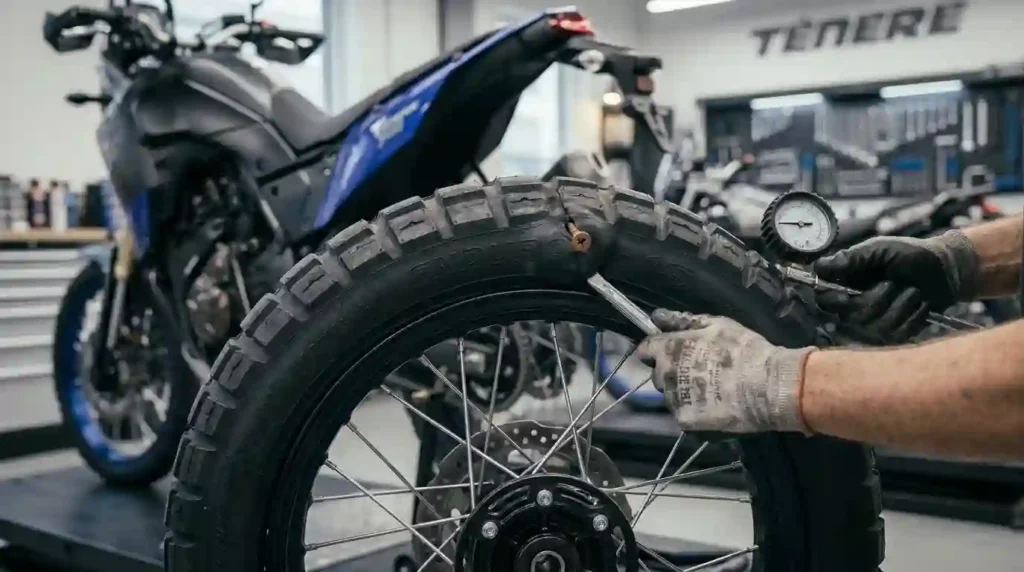
You feel the back end go soft, and the bike starts to wobble. Now you have a choice to make. Do you keep going or stop? US riders deal with flats, poor cornering grip, wrong tire pressure, and fast tread wear all the time. A puncture is the most common surprise of all.
So, can you ride a bike with a punctured tyre? Usually, no. The answer changes only a little with the type of bike, the tire, and the road. A flat or fast-leaking tire is unsafe, and riding on it can wreck your tire, tube, and rim.
The right tire and the right tire pressure (PSI) protect your safety, speed, and comfort. This guide shows you what to check, how to fix a flat, and when to replace parts. It follows our testing process and editorial policy.
Quick answer: A punctured bike tire should not be ridden if it is flat, losing air, or visibly damaged. Stop in a safe place, inspect the tire, and repair or replace the damaged parts before you continue.
Can You Ride a Bike With a Punctured Tyre?
It is usually unsafe to ride on a flat or badly punctured tire. Stop and inspect it before you go on. A quick look takes two minutes and can save your wheel.
Low pressure causes rim strikes and poor cornering traction. It can also damage the tire, the inner tube, or the rim. A small puncture in a tubeless tire may seal on its own, but check the pressure and the tire’s condition before you ride again.
If you want a refresher on how the parts work together, see how bike tires work.
Is It Safe to Ride a Short Distance With a Flat Tire?
Avoid it. On a fully flat tire, the rim can crush the casing or the inner tube. Even a short ride can harm the wheel, especially on rough roads or under a heavy load.
Walk the bike to a safe repair spot. If the tire cannot hold air, arrange a ride instead. A few minutes of walking costs far less than a new wheel.
Weigh the risk against the reward. You may save ten minutes by riding. You may lose a rim, a tire, and a day of riding.
What Happens If You Keep Riding With a Punctured Tire?
The damage adds up fast:
- The tire may slip on the rim, lose its shape, or become damaged beyond repair.
- Poor grip and shaky handling raise the risk of a crash.
- On an e-bike, extra weight, speed, and e-bike torque make a flat especially risky.
The tube can also twist and tear around the valve. That turns a simple patch job into a tube replacement.
How Far Can You Ride on a Flat Bike Tire?
There is no safe distance. Even a few blocks can cut the tube, bend the rim, or break casing threads. The distance matters less than the road surface and your weight.
Rough pavement and loose gravel make it worse. If you must move the bike, walk it. If you are close to home, walking is almost always the smarter choice.
Can You Ride a Bike With a Punctured Inner Tube?
No. A tube with a hole cannot hold the pressure needed to support you. The tire will go soft, and the rim will take the hits.
Replace the tube or patch it first. Then check the tire for the sharp object that caused the hole. Our guide on why bike tires lose air explains the common causes.
What Are the Signs of a Punctured Bike Tire?
Watch for a soft tire, a visible hole, stuck debris, or a sudden loss of pressure. Check whether the tire feels unstable or the rim seems close to the road.
Do not trust looks alone. A slow leak can be hard to spot. Southwestern riders often find tiny thorns, such as goatheads, that barely show.
Other clues help. You may hear a hiss, feel a vibration, or notice the bike pull to one side. Trust those signals and stop early.
How to Tell If Your Bike Tire Is Flat
- Press the tire gently and compare it to how firm it normally feels.
- Use a gauge to check PSI against your usual riding pressure. Our guide to checking bike tire pressure shows how.
- Look for cuts, thorns, glass, bulges, and exposed casing threads.
If you see a lump, it may point to casing damage. Learn how a bike tire casing is built.
How to Tell a Puncture From a Slow Leak
A sudden drop often means a larger hole or a failed tube. A tire that loses air over several hours may have a small puncture, a leaking valve, or damaged rim tape.
Check the tube, valve, tire, and rim tape before you fit a new tube. A rim tape gap can rub a hole through a fresh tube. Skipping this step means you may flat again within minutes.
Spin the wheel and listen for a faint hiss. You can also dab soapy water on the tire, tube, and valve. Bubbles show where the air escapes.
Also learn how often to inflate bike tires. Some loss is normal, especially with narrow road tires.
Can You Ride With a Slow Puncture?
A slow puncture can still drop your pressure during a ride. That means worse grip, more rim strikes, and a higher chance of a sudden flat.
Stop and check the tire as soon as you notice repeated loss or odd handling. Do not keep topping it up without finding the cause. The leak will only get worse.
A slow leak often hides a thorn or a sliver of glass. If you keep riding, that object works deeper with every turn of the wheel. It can also cut a second hole in the tube.
Is It Safe to Ride if the Tire Still Has Some Air?
Not always. Partial pressure does not mean the tire is safe.
Check for casing damage, a bulge, bead trouble, or a tire that is creeping off the rim. A soft tire can roll off the rim in a hard corner, and that is how many crashes start. If the tire cannot hold a suitable pressure, walk the bike and repair it.
Learn how much air to put in bike tires so you know what normal feels like.
Can You Ride With a Tubeless Tire That Has a Small Puncture?
Sometimes. Tubeless sealant is a liquid that plugs small holes while the wheel turns.
Stop if the sealant cannot seal the hole, the tire keeps losing air, or the casing is damaged. Recheck pressure and inspect the tire before you resume the ride.
What Damage Can Riding on a Flat Bike Tire Cause?
A flat tire lets the rim strike the road or trail. Continued riding can damage the casing, pinch or tear the tube, or dent the rim.
Even a short ride on a flat can ruin a wheel that was fine a minute earlier. Rim damage often hides under the tire until the next flat.
Swapping the tube alone may not solve things. If the tire or rim is damaged, the new tube can fail quickly.
Can Riding on a Flat Damage the Rim?
Yes. With too little air, the rim can hit rocks, potholes, or pavement directly.
- Check for dents, cracks, sharp edges, and damaged rim tape.
- Look at the braking surface if you use rim brakes.
- Do not ride on a cracked or badly bent rim.
Can a Puncture Damage the Tire Casing?
Yes. Sharp objects and hard hits can break casing threads or cut the sidewall. A bulge, exposed threads, or a deep cut may mean the tire needs replacing.
A tube patch cannot restore the strength of a damaged casing. See our bike tire casing guide for how the layers work. Also read how often bike tires should be replaced.
What Should You Do When Your Bike Tire Gets a Puncture?
A flat is stressful, but a calm routine makes it easy. Practice at home once so you know your tools.
Move away from traffic and find a safe place. Check the tire and wheel for visible damage before you remove anything. Carry a spare tube or a repair kit when you can. Add a small pump and a phone for emergencies.
Step-by-Step Guide to Handling a Flat Tire
So, how do you fix a punctured bike tire on the road? Follow these steps:
- Stop riding and move to a safe area.
- Check the tire for sharp debris, cuts, bulges, and bead damage.
- Remove the wheel if needed and fully deflate the tire.
- Find the puncture and inspect the tube or tubeless system.
- Patch or replace the tube, or repair a tubeless tire with a compatible method.
- Reinstall the tire, check bead seating, and inflate to a suitable PSI.
- Check for leaks and confirm the tire sits evenly before you ride.
Remove debris with care. Do not run your fingers blindly inside the tire. Follow the bike, tire, and rim maker’s instructions. See how to inflate a bike tire correctly for the last step.
Should You Patch or Replace the Inner Tube?
A small, clean hole in a sound tube may suit a proper patch. Replace the tube if it has a large tear, a damaged valve, several failed patches, or other serious damage.
Always inspect the inside of the tire first. Run a gloved hand or a cloth along the inner surface, and move slowly so you do not cut yourself. Otherwise the same sharp object can puncture the new tube.
When Should You Replace the Whole Tire?
- Replace tires with sidewall bulges, exposed threads, damaged beads, or deep cuts.
- Check tread wear, rubber condition, and age. See how much tread a bike tire should have.
- Pick a tire that matches your wheel diameter and approved rim width. Check the bead type, too. Mixing a wrong size can leave the tire loose on the rim.
Not sure about sizing? Read what the numbers on bike tires mean and how to read bike tire size.
Can You Ride a Bike With a Punctured Tubeless Tire?
It may be rideable after a small puncture if sealant seals the hole and the tire stays seated. A tire that loses pressure fast, burps air, or has a casing cut should not be ridden.
Tubeless setups still need regular sealant checks and correct pressure. Sealant dries out over time, so it does not last forever. Follow the maker’s schedule.
How Does Tubeless Sealant Work?
Sealant flows toward a small hole and can form a plug that slows or stops air loss. Larger cuts may need a compatible tire plug or another repair.
Sealant cannot fix a damaged bead, a cracked rim, or a failed casing.
Sealant works best when the tire spins, so a quick roll helps it spread. Always carry a spare tube anyway. A big cut can beat any sealant.
Tubeless vs. Inner Tube Punctures
| Feature | Inner-tube setup | Tubeless setup |
|---|---|---|
| Small puncture | Usually needs a patch or tube replacement | Sealant may seal it |
| Large cut | Tube and tire inspection needed | May need a plug or tire replacement |
| Flat tire safety | Unsafe to ride while flat | Unsafe if pressure or tire stability is compromised |
| Maintenance | Tube, tire, and rim tape checks | Sealant, valve, bead, and casing checks |
How Long Can You Ride After a Tubeless Tire Seals a Puncture?
There is no set time. A plug may hold for the rest of a ride, or it may fail on the next big hit.
Recheck pressure a few minutes after the seal. Look for fresh sealant spots on the tire, which show where air is still escaping. Ride gently and avoid hard cornering until you are sure it holds. Check again after the ride, and plan a proper repair or tire swap soon.
How Tire Pressure Affects Puncture Safety
Correct pressure supports you and lowers the risk of rim strikes. The right PSI depends on tire width, rider and cargo weight, terrain, casing, and rim fit.
Neither the maximum pressure nor very low pressure suits every bike.
Heat and cold change the numbers too. Pressure drops in cold weather and rises on hot pavement, so check it when the weather shifts. Read how to find the correct bike tire pressure for more.
What PSI Should You Use After Fixing a Puncture?
Check the tire and rim maker’s pressure range first. Use a calibrated gauge, and think about front and rear loads separately. A cheap pump gauge can be off by several PSI. Do not copy another rider’s PSI.
For road, gravel, and hybrid tires, try this rough starting formula for each wheel:
Starting PSI = 0.7 × wheel load (lb) × (28 ÷ tire width in mm) × (28 ÷ tire width in mm)
Use 55 percent of system weight (rider, bike, and gear) for the rear and 45 percent for the front.
| System weight | 32 mm (1.25 in) | 40 mm (1.6 in) |
|---|---|---|
| 150 lb (68 kg) | 44 rear, 36 front | 28 rear, 23 front |
| 200 lb (91 kg) | 59 rear, 48 front | 38 rear, 31 front |
| 250 lb (113 kg) | 74 rear, 60 front | 47 rear, 39 front |
These are tube-setup starting points. Never exceed the printed limit.
Can Low Tire Pressure Cause More Punctures?
Yes. Low pressure raises the risk of pinch flats, where the rim traps the tube against the tire. Very low pressure can also make tubeless tires burp or take rim strikes.
Pick a pressure that suits your load and terrain. Heavier riders and loaded e-bikes need more air than light road riders on smooth pavement. That balances protection, comfort, and cornering grip. Wet Pacific Northwest roads may call for slightly lower pressure, but only within safe limits. See wet weather tire advice.
Can High Tire Pressure Prevent Punctures?
No. High PSI does not stop sharp objects from piercing a tire. Extra pressure can cut grip and comfort, and it may pass tire or rim limits.
Puncture belts and reinforced casings can resist some sharp objects. They do not stop all damage. Learn about overinflating a bike tire and what happens if pressure is too high.
How to Choose a Replacement Tire After a Puncture
Match tire size, bead type, rim width, and pressure range to your wheel. Weigh puncture protection, casing strength, tread pattern, and rolling resistance. That last term means the energy a tire wastes as it rolls.
Choose for your riding conditions, not for one feature. Our guide on how to choose bike tires can help.
Check your inner rim width before you buy:
| Inner rim width | Typical tire width range |
|---|---|
| 19 mm | 28 to 40 mm (1.1 to 1.6 in) |
| 21 mm | 32 to 45 mm (1.25 to 1.75 in) |
| 25 mm | 40 to 55 mm (1.6 to 2.2 in) |
Hooked vs. hookless: Hooked rims have a lip that holds the bead. Hookless rims do not and often have a lower pressure cap. Follow your rim maker. See tire size compatibility.
Are Puncture-Resistant Tires Worth It?
Reinforced tires can cut flats from glass, thorns, and sharp debris. Extra protection may add weight or rolling resistance, depending on the design.
Daily commuters may value durability most. Road riders may chase speed and handling. See how to choose puncture-resistant bike tires and the best bike tires for puncture protection. Also see the tradeoff in puncture protection vs rolling resistance.
Do Casing TPI and Rubber Compound Matter?
TPI means threads per inch in the casing. It does not measure total tire strength on its own.
The rubber compound affects grip, wear, and rolling resistance. Durometer is the scale for rubber hardness. Softer rubber grips well but wears faster.
Judge the full build, based on terrain, expected hits, and riding style. No single number tells the whole story. Read about bike tire rubber compound and what bike tires are made of.
Which Tires Work Best for Gravel Bikes and E-Bikes?
- Gravel tires need a balance of tread, casing protection, and grip on mixed ground. See how to choose bike tires for gravel roads.
- E-bike tires must meet the bike’s speed and load needs.
- Think about e-bike torque, braking loads, and cargo when you pick a durable tire. See how to choose durable bike tires.
Commuters can also read about commuter bike tires. Riders on broken pavement can check tires for rough roads.
How to Prevent Future Bike Tire Punctures
- Check pressure before rides. Inspect tires for stuck debris and cuts.
- Use suitable puncture protection. Maintain the tire, tube, rim tape, and sealant.
- Avoid sharp debris, and slow down over potholes and rough surfaces. Watch the road edge and gutter, where glass and wire tend to collect.
Many flats come from small things done late. Old tires also crack and thin out, even with plenty of tread left. A quick check before each ride catches most of them. For more ideas, see the best bike tires for everyday riding.
Build a Simple Tire Maintenance Routine
- Check pressure before longer rides, and often for daily commuting.
- Inspect tread and sidewalls for wear, cuts, cracks, and bulges.
- Check sealant and valve condition on the maker’s schedule.
Our guide on how often to check bike tires offers a full plan. You can also learn why bike tires have different tread patterns.
What Should You Carry to Fix a Flat?
- Carry a spare tube or a matching tubeless repair kit.
- Bring tire levers, a pump or CO₂ inflator, and a patch kit that suits your setup.
- On long rides, pack the tools to remove your wheel and make a safe roadside repair.
Long-distance riders should read how to choose tires for long distance. New riders can start with the best bike tires for beginners.
How Experts Test Puncture Protection and Tire Durability
Compare tires of similar size under documented, repeatable conditions. Record PSI, rim width, tire build, load, and test surface.
Use published independent tests and maker specs. Avoid claims that have no support. Our own approach is in our testing process.
What Should a Tire Review Measure?
- Rate puncture resistance, casing durability, rolling resistance, and wet grip as separate traits.
- Check tire and rim fit against the maker’s written rules.
- State the method and its limits so readers can judge how results apply to their rides.
For more on grip, see how much tires affect grip. For mixed terrain, see the best bike tires for mixed road surfaces.
Frequently Asked Questions
1. Can you ride a bike with a punctured tire?
Usually not, if the tire is flat or losing air. Stop, inspect, and repair it first. A small tubeless puncture may seal, but check that it holds.
2. How far can you ride on a flat bike tire?
Do not ride on a fully flat tire, even a short way. It can harm the tire, tube, and rim. Walk the bike.
3. Can you ride with a slow puncture?
A slow puncture can still drop pressure mid-ride. Stop and inspect it instead of adding air again and again.
4. Can you ride a tubeless tire after a puncture?
Sometimes, if sealant closes the hole, pressure stays suitable, and the tire has no structural damage. Stop if air keeps escaping.
5. What PSI should I use after repairing a flat?
Follow the tire and rim limits, then account for width, rider weight, cargo, and terrain. A pressure calculator gives a sensible start.
6. Should I replace a tire after every puncture?
No. Replace it only if the casing, sidewall, or bead is damaged or it cannot hold pressure safely.
7. Are puncture-resistant tires better for commuting?
They can cut some flats from sharp debris. Compare durability, weight, rolling resistance, and wet grip.
8. How often should I check bike tire pressure?
Check it before rides, especially long rides and commutes. Inspect the tire after pressure loss or a hard hit.
Stay Safe and Fix Bike Tire Punctures the Right Way
Do not ride on a flat tire or one with visible structural damage. A short walk is cheap insurance.
A puncture is a normal part of cycling. With the right tools, the right pressure, and a calm plan, you can handle one in minutes and get back to your ride.
- Repair or replace damaged parts, check bead seating, and inflate to a suitable PSI before you ride again.
- Regular checks and the right puncture protection help cut flats and protect your wheels.
- Learn how bike wheel size vs tire size works so every part fits.
- Decode sidewall labels with our bike tire markings guide.
Ready to dial in your setup? Test your exact tire, rim, and weight with the Free Bike Tire Pressure Calculator and Tire Finder Tool at TheBikeTires.com. Get a safe PSI in seconds and ride with confidence.
Want to know who writes our guides? Meet the team on our about page.

Mohidul Islam is a leading cycling technology specialist and bike tire consultant with over 15 years of hands-on experience in the bicycle industry. He holds a Bachelor of Science in Mechanical Engineering from Penn State University, where he focused heavily on material science, tread mechanics, and rubber compound performance. Over the past decade and a half, Alex has conducted extensive field testing, tubeless setup evaluations, and tire pressure modeling for road, mountain, and e-bikes. His practical insights and data-driven approach help cyclists of all levels optimize grip, speed, and durability on every ride.



