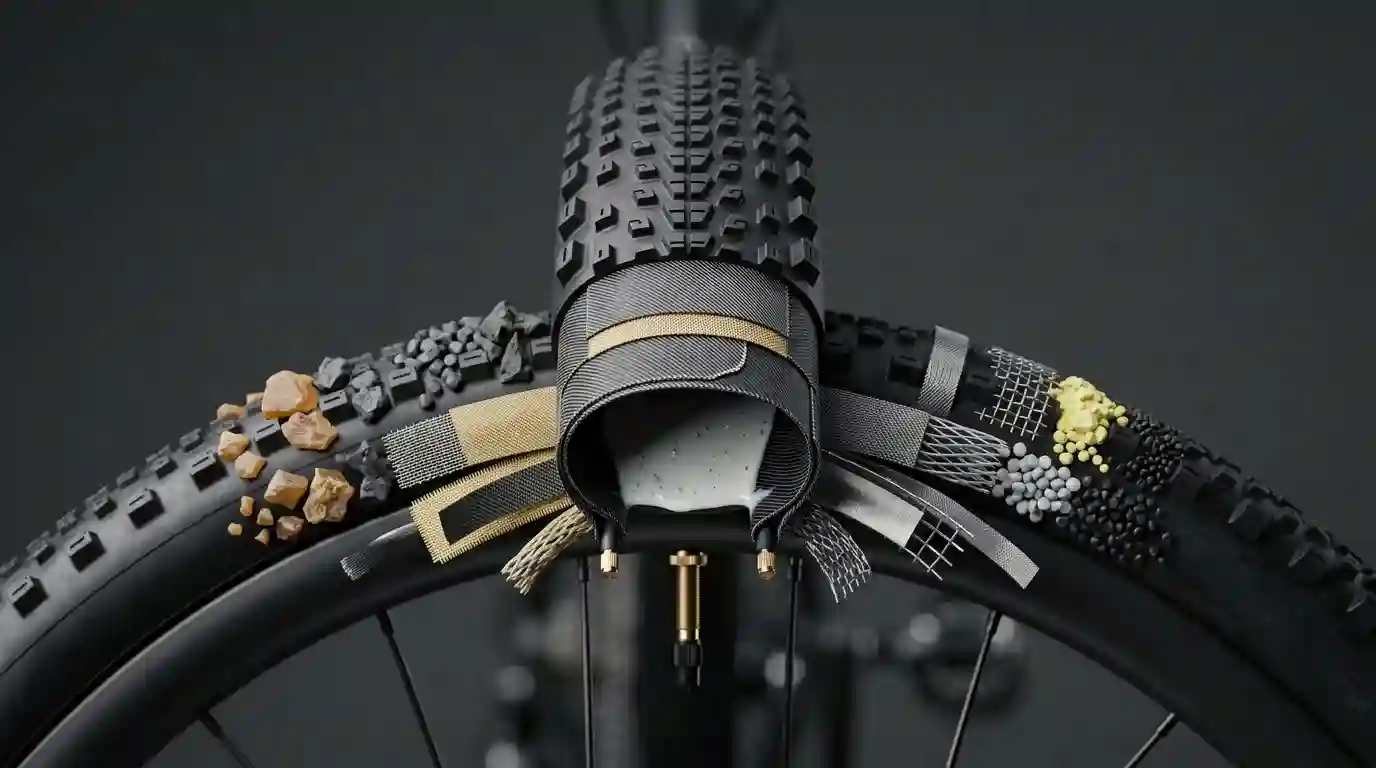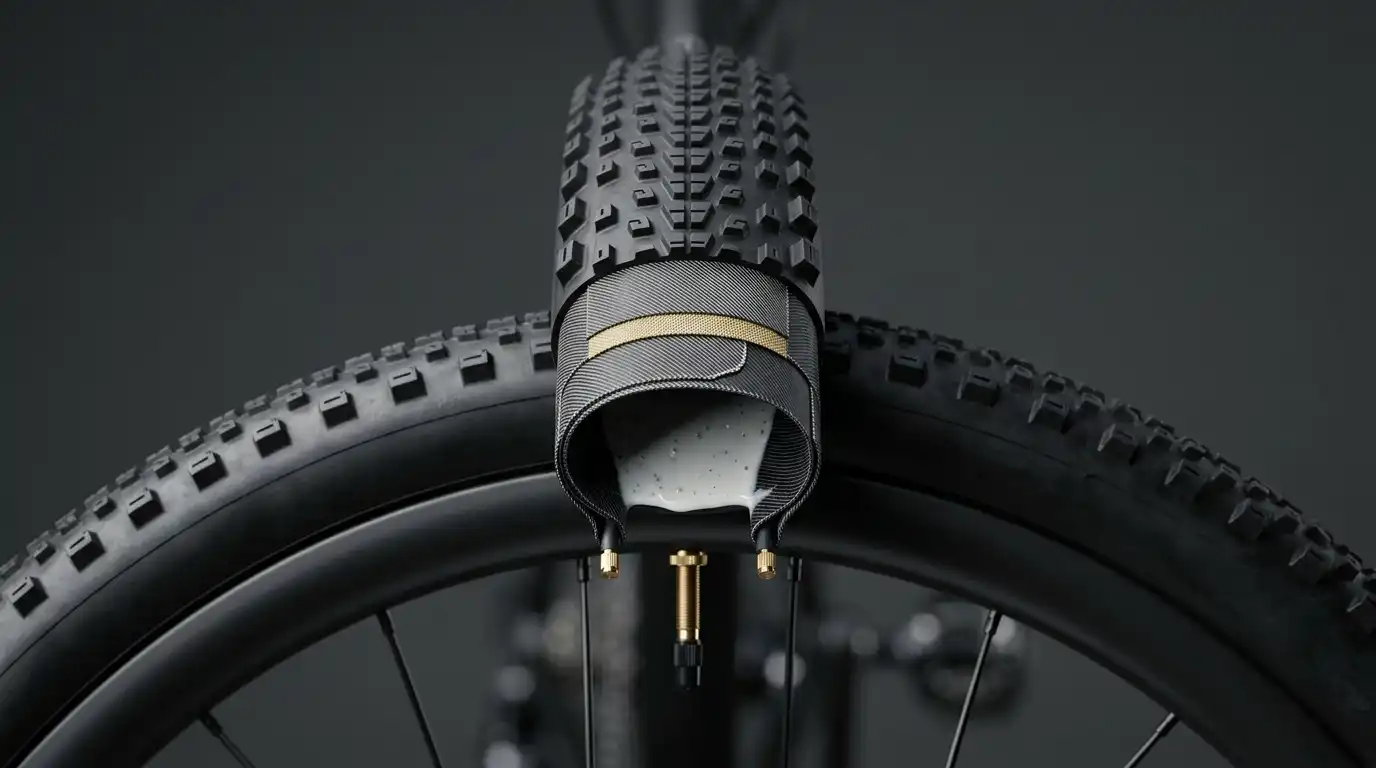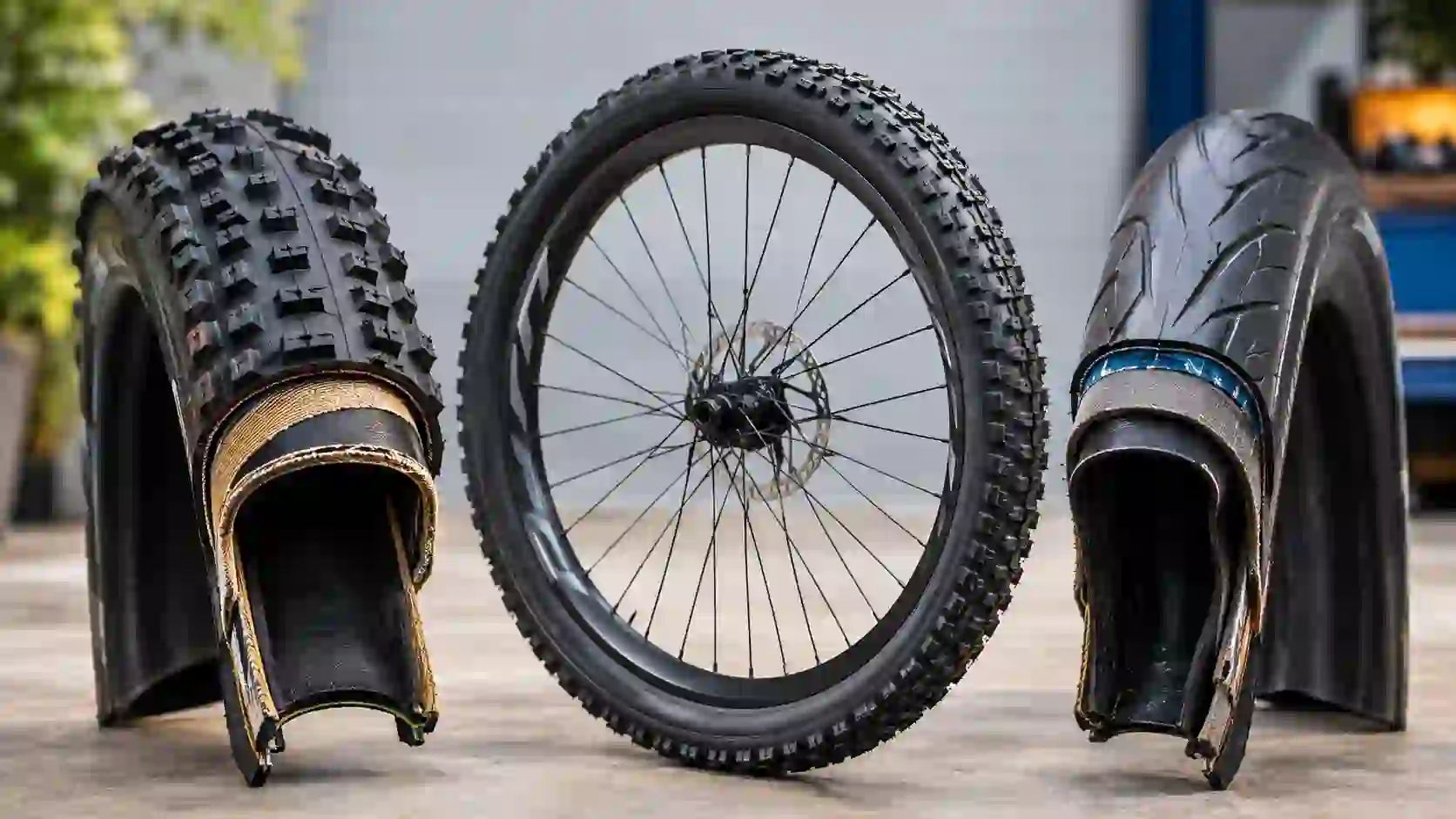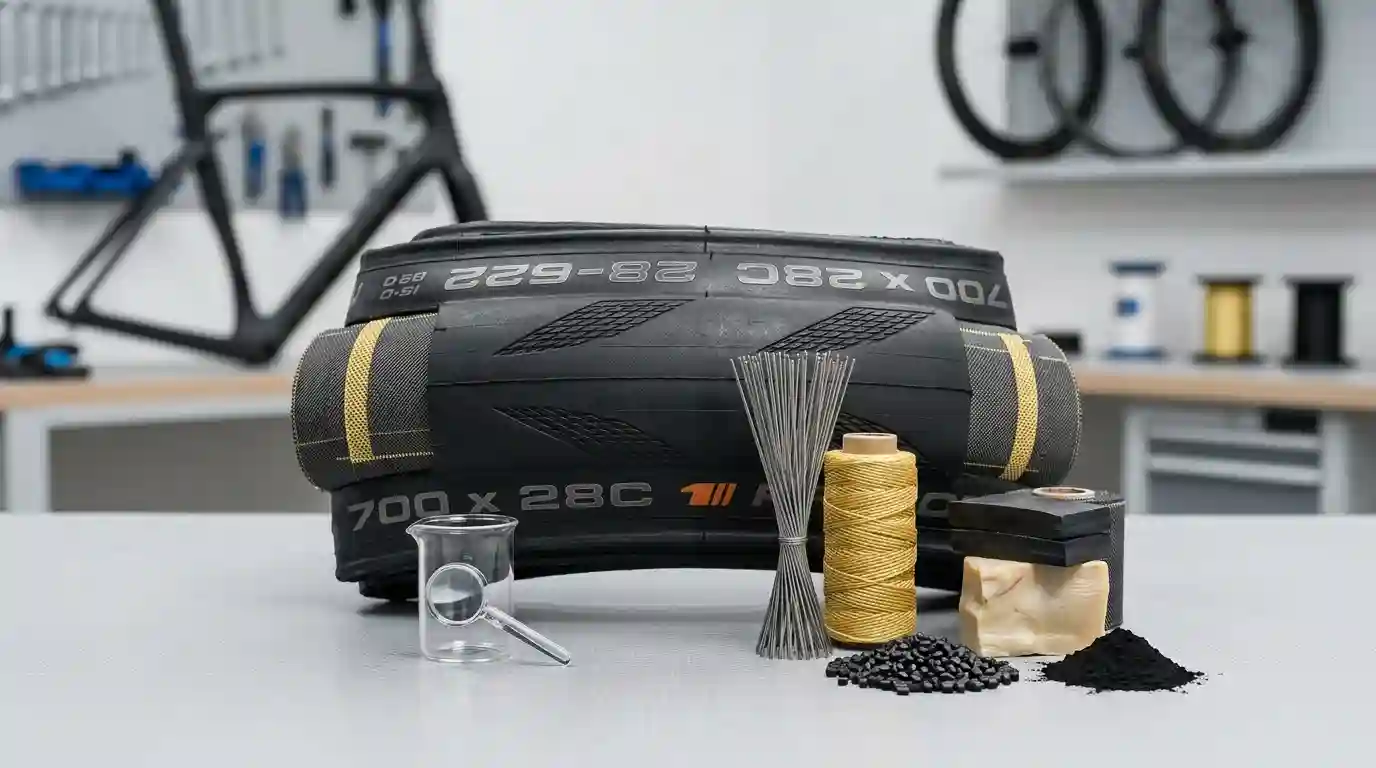
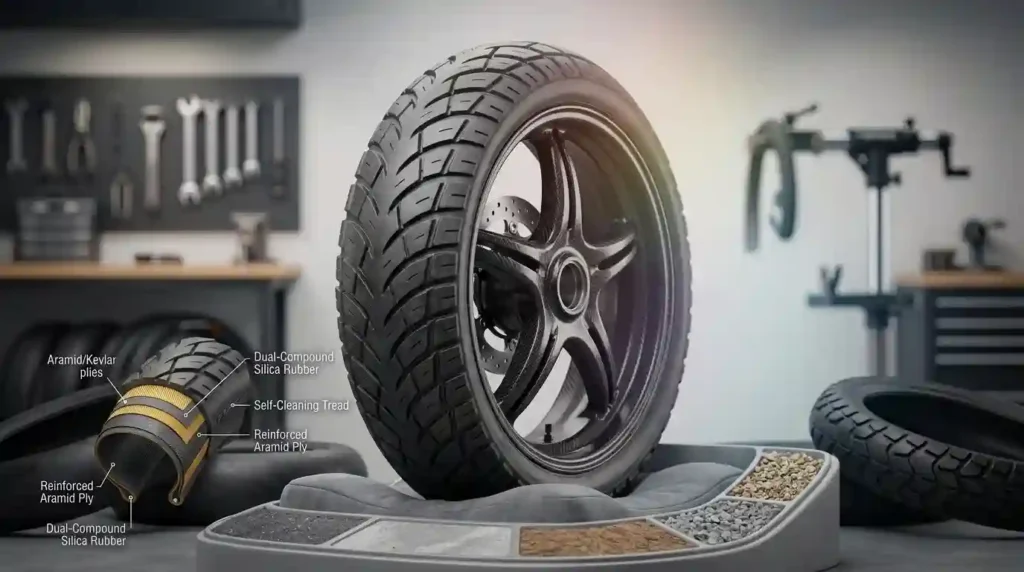
Your route rarely stays the same for long. You roll over smooth asphalt, then cracked patches, then a crushed limestone rail trail, then a short dirt connector. One tire has to handle all of it.
That is why picking the best bike tyres for mixed road surfaces is tricky. A race tire feels fast on pavement but slips on loose gravel. A knobby tire grips dirt but drags on asphalt. Add flats, weak cornering traction, wrong tire pressure, and fast tread wear, and the ride gets frustrating.
Four factors do most of the work. These are tire width, tread pattern, casing design, and tire pressure (PSI). Choose them well and you balance speed, comfort, cornering grip, and puncture protection.
New to tire basics? Start with how bike tires work and what makes a good bike tyre. See our testing process to learn how we judge tires. For a shorter overview, read how to choose tires for mixed surfaces.
Quick note: Pick tires for the roughest surface you ride often, not just the smoothest road on your route.
What Are Bike Tires for Mixed Road Surfaces?
Mixed-surface bike tires are built to handle more than one riding surface, such as pavement, hardpack, and light gravel. They usually pair a smooth or lightly textured center with grippy shoulders. A flexible casing and good air volume tie it together.
Tread design, casing flexibility, and width shape traction and rolling resistance. A tall knob grips dirt but slows you on asphalt. A smooth tread rolls fast but slides on loose stone.
The best choice depends on your roughest regular surface. If one section of your route is loose, choose for that section. Learn more in why tread patterns differ.
What Makes a Bike Tire Good on Mixed Surfaces?
A good mixed-surface tire balances four things. These are width, tread, casing, and rubber. Each one shifts the trade-off between speed and grip.
Tire Width and Air Volume
Wider tires hold more air. That helps smooth rough pavement when you inflate them well. It also adds grip on loose ground.
Check rim width, frame clearance, fork clearance, and brake clearance before upgrading. Match width to your route, bike design, and load.
See bike tire width explained and how much wider a tire you can fit for the details.
Tread Pattern and Cornering Grip
A smooth center rolls well on pavement. Textured shoulders bite when you lean into a turn on loose ground.
Small knobs suit light gravel. Deeper tread helps on softer or rougher trails, such as Pacific Northwest forest roads after rain.
Choose tread for your real terrain. Aggressive knobs add drag on smooth roads. You can also check how much tread a bike tyre should have.
Casing Construction and TPI
TPI means threads per inch in the casing. It describes one part of construction. Layers and materials matter too.
Flexible casings improve ride feel. Reinforced layers protect against cuts and punctures. Most mixed-surface riders need a mix of both.
TPI alone does not decide durability, comfort, or speed. See the guide to bike tire casing.
Rubber Compound and Rolling Resistance
The rubber compound affects grip, wear, and energy loss. Durometer is a hardness score on the Shore A scale. A lower number means softer rubber.
A pavement tire may feel fast on asphalt but lack traction on gravel. Look for a balance of efficient rolling, wet grip, and tough build.
Read about bike tire rubber compound for more.
Best Types of Bike Tires for Mixed Road Surfaces
Match the tire to your mix of surfaces. Use this table for a quick start. Sizes show metric and imperial units.
| Route mix | Suggested width | Tread | Casing feel |
|---|---|---|---|
| Mostly pavement, some hardpack | 28 to 35 mm (1.1 to 1.4 in) | Smooth or file tread | Supple |
| Half pavement, half gravel | 35 to 42 mm (1.4 to 1.65 in) | Smooth center, side knobs | Flexible, protected |
| Mostly gravel, some pavement | 40 to 50 mm (1.6 to 2.0 in) | Small knobs | Reinforced |
| Rough city streets | 32 to 42 mm (1.25 to 1.65 in) | Light tread | Durable |
| E-bike mixed use | 1.75 to 2.2 in (45 to 56 mm) | Light to moderate | Load rated |
Brand names are examples, not rankings. The Schwalbe G-One Allround, WTB Riddler, and Panaracer GravelKing SK are known all-road designs. Check current specs and independent tests before you buy.
All-Road Tires for Pavement and Light Gravel
Look for a smooth or lightly textured center with enough shoulder grip for loose sections. Choose a casing that balances road speed, comfort, and protection.
Check tire width and rim compatibility before buying. Many bikes now fit 35 mm to 40 mm tires with ease.
For size help, see what 700×28 means and our picks for 700c tires built for comfort.
Gravel Tires for Mixed Routes
Choose gravel tires with tread suited to hardpack, loose gravel, and dirt connectors. Wider options help on rough roads if your frame and rims allow them.
Balance grip and casing strength against rolling resistance on paved sections. Southwestern loose rock can punish thin casings.
Read how to choose bike tires for gravel roads for a deeper look.
Commuter Tires for Rough City Roads
Put durable tread, puncture protection, and reliable wet grip first. A moderately wide tire softens cracks and potholes.
Pick a tread that rolls well on streets and paved bike paths. Do not choose a tire so tough that it feels slow every day.
See how to choose tires for a commuter bike, the best tire size for commuting, and how to choose bike tires for rough roads.
Road Tires for Smooth Pavement and Occasional Rough Roads
Consider endurance road tires. They combine efficient rolling with added comfort and protection. Chip seal and patched asphalt are common US trouble spots.
Choose width and pressure based on road quality, rider load, and wheel specs. Do not assume narrow, high-pressure tires are always faster on rough pavement.
Our guide to the best tire width for road and city riding can help.
E-Bike Tires for Mixed Surfaces
Choose tires approved for your bike’s use, load, and speed category. Many list a rating such as 25 km/h (about 15.5 mph) or 45 km/h (about 28 mph).
E-bike torque, extra weight, and hard acceleration stress tread and traction. Look for stable cornering grip, dependable braking, and suitable puncture protection.
Class 3 e-bikes assist up to 28 mph, so check the rating before you buy. See how to choose tires for daily cycling.
Choosing the Right Tire Width for Mixed Roads
Width is the biggest single choice. It sets your air volume, comfort, and grip. Use this section to find the right size and make sure it fits.
Tire Width That Works Best
Then For smoother pavement and occasional hardpack, a road or all-road tire that fits your bike works well. For frequent gravel and broken pavement, a wider compatible tire improves comfort and control.
For rough gravel, choose enough volume and casing strength for the terrain and load.
Still unsure? Read what tire width to choose for a simple walk-through.
Rim Width and Tire Fit
Check the tire maker’s approved rim width range and the wheel maker’s specs. Mounted width can differ from the size printed on the sidewall.
Confirm frame, fork, brake, and fender clearance before fitting a wider tire. Use this table as a general guide, and confirm with the makers.
| Inner rim width | Common tire width range | Typical use |
|---|---|---|
| 17 to 19 mm | 25 to 32 mm (1.0 to 1.25 in) | Road, commuter |
| 19 to 21 mm | 28 to 40 mm (1.1 to 1.6 in) | Endurance, light gravel |
| 22 to 25 mm | 35 to 50 mm (1.4 to 2.0 in) | Gravel, all-road |
| 25 to 30 mm | 2.1 to 2.5 in (53 to 63 mm) | Trail mountain bike |
Use our will this tire fit my wheel checklist, the tire size compatibility guide, and ETRTO bike tire sizes.
Can You Use Road Tires on Gravel?
Smooth road tires may work on firm, dry hardpack if traction and clearance are enough. Loose, wet, or rocky gravel needs more tread and a tougher casing.
Choose for the hardest regular section of your route. A few smooth miles do not justify a tire that slides on the rest.
See whether you can use wider tires on your bike for extra grip.
Setting Tire Pressure for Mixed Road Surfaces
Pressure matters more on mixed routes, since surfaces change often. Too much hurts grip on gravel. Too little risks pinch flats on pavement edges. Here is how to find your number.
Rider Weight and PSI
Use total system weight. That means rider, bike, gear, and cargo. Tire width, casing, rim design, and surface also change your best pressure.
Use a calculator, and stay within tire and rim limits. This table shows tube-type starting points. Subtract about 10 percent for tubeless.
| Tire width | 120 lb | 150 lb | 180 lb | 210 lb | 240 lb |
|---|---|---|---|---|---|
| 28 mm | 46 PSI | 57 PSI | 68 PSI | 80 PSI | 91 PSI |
| 32 mm | 36 PSI | 45 PSI | 54 PSI | 63 PSI | 72 PSI |
| 35 mm | 31 PSI | 39 PSI | 47 PSI | 55 PSI | 62 PSI |
| 40 mm | 24 PSI | 30 PSI | 36 PSI | 42 PSI | 48 PSI |
| 45 mm | 20 PSI | 26 PSI | 31 PSI | 36 PSI | 41 PSI |
A PSI Formula for Total System Weight
This is a rule of thumb, not a factory spec. It gives a safe starting point.
Starting PSI = total system weight (lb) x width factor
Width factors: 28 mm = 0.38, 32 mm = 0.30, 35 mm = 0.26, 40 mm = 0.20, 45 mm = 0.17.
Then adjust:
- Tubeless setup: subtract about 10 percent.
- Front tire: subtract 2 to 3 PSI. Rear tire: add 2 to 3 PSI.
- Loose gravel or rough pavement: subtract 5 to 10 percent.
Example: A 175 lb rider on a 25 lb gravel bike weighs 200 lb. On tubeless 40 mm tires, 200 x 0.20 = 40 PSI. Subtract 10 percent for tubeless, then 5 percent for mixed surfaces. That gives about 34 PSI. Run about 32 front and 36 rear.
Finding Your Ideal Mixed-Surface Pressure
What tire pressure is best for mixed road surfaces? It is the pressure that keeps the tire stable on pavement and grippy on loose ground. That number differs for each rider, so follow these steps.
- Check the tire’s pressure range and the wheel maker’s limits.
- Enter rider weight, bike weight, tire width, and terrain into a suitable pressure calculator.
- Test the suggested PSI on a familiar route and adjust in small steps.
Use a reliable gauge, since many pump gauges can be off.
Signs Your Tire Pressure Is Too High or Too Low
Your bike tells you when pressure is wrong. Use this table.
| Sign | Likely cause | Fix |
|---|---|---|
| Harsh buzz on rough roads | Pressure too high | Drop 2 to 3 PSI |
| Tire skips on loose gravel | Pressure too high | Lower in small steps |
| Tire squirms in corners | Pressure too low | Add 2 to 3 PSI |
| Rim clunks on edges | Pressure too low | Add PSI right away |
| Pinch flats with tubes | Pressure too low | Add PSI or go tubeless |
Aim for stable handling and good traction, not the highest or lowest PSI. Air leaks over time, so read why bike tires lose air and how often to check bike tyres.
Hooked vs. Hookless Rims
Hooked rims have a small lip that locks the tire bead in place. Hookless rims have straight walls and no lip. Hookless rims often have lower pressure limits. Many cap near 72.5 PSI (5 bar), so read the rim label.
Use only tires approved for your rim type. Never go above the lower of the tire and rim limits. Most mixed-surface setups run well below these limits.
Wet Weather Pressure Adjustments
Wet roads and damp dirt call for a little less pressure. A softer tire grips better on slick surfaces. Drop about 5 to 10 percent, but stay above the range where rim strikes begin.
Wet weather also changes tire choice. See how to choose bike tires for wet weather for more.
Tubeless vs. Inner Tubes for Mixed-Surface Riding
Both setups work. Tubeless helps on rough routes. Tubes keep repairs simple. Compare the key points first.
| Factor | Tubeless | Inner tube |
|---|---|---|
| Small puncture sealing | Yes, with sealant | No |
| Pinch flat risk | Low | Higher |
| Low pressure use | Easier | Riskier |
| Roadside repair | Moderate | Easy |
| Upkeep | Sealant checks | Little |
Benefits of Tubeless Tires
Tubeless sealant can close many small punctures from thorns and sharp debris. Goathead thorns in the Southwest are a classic example.
A tubeless setup also cuts pinch flat risk, since there is no tube to pinch. That lets you run lower pressure on rough sections.
Check tire, rim, valve, rim tape, and sealant compatibility before installing.
Benefits of Tires With Inner Tubes
Tubes are easier to repair and replace during a ride. A suitable tube with a durable tire works well for commuting and mixed riding.
Check for trapped tubes, and confirm the bead sits correctly. New riders can start with our list of best bike tyres for beginners.
Which Setup Should You Choose?
Consider tubeless if you ride rough roads often and are comfortable with sealant upkeep. Choose tubes if you want simple repairs and easy roadside swaps.
Carry a pump and a repair kit that suits your setup, even if you run tubeless. Some cuts are too big for sealant.
Choosing Tread and Puncture Protection
Tread decides grip and drag. Protection decides how often you stop. Balance the two for your routes.
Smooth Center Tread vs. Knobby Tread
Smooth or lightly textured centers roll well on pavement and hardpack. Small knobs add grip on loose gravel and dirt.
Deeper tread can help on softer ground but adds drag on pavement. A file tread center with side knobs is a popular middle path.
Puncture Belts and Sidewall Protection
A puncture belt is a layer under the tread that helps resist sharp objects. Reinforced sidewalls suit rough roads, heavy loads, and debris-prone routes.
Extra protection can add weight or stiffness, depending on the design. Read what bike tires are made of to see how layers work.
Wet Roads and Cornering Grip
Look for dependable rubber and tread suited to wet pavement and loose surfaces. Slow down on painted lines, metal covers, and slick corners.
Do not assume tread alone guarantees grip. Pressure and compound matter just as much.
Installing and Maintaining Mixed-Surface Bike Tires
Good setup and care keep a tire safe and fast. Follow these steps from fit check to roadside repair.
Check Compatibility Before Installation
Confirm tire diameter, approved rim width, bead type, and frame clearance. Inspect the rim, bead, and rim tape for damage. Follow the tire and wheel makers’ instructions.
Not sure about size? See how to read bike tire size, how to measure bike tire size, and what bike tire size you need.
Install and Inflate Your Tires
- Check the tire’s rotation arrow, if one is present.
- Fit the tire and inner tube, or install the compatible tubeless parts.
- Inflate gradually, check bead seating, and verify pressure with a reliable gauge.
Sidewall codes help here. See what the numbers on bike tyres mean and bike tyre markings.
Maintain Tires for Better Performance
Inspect tread and sidewalls for cuts, embedded debris, bulges, and exposed casing. Check pressure before longer rides. Top up tubeless sealant as needed.
Replace tires with structural damage. Learn how often bike tyres should be replaced to avoid riding worn rubber.
Fix a Flat on a Mixed-Surface Ride
For a tube, remove the cause of the puncture, then patch or replace the tube. For tubeless, let sealant work on small holes, or use a compatible plug when it suits the damage.
Carry a spare tube and a pump. Some cuts cannot be sealed on the trail.
Testing and Comparing Mixed-Surface Bike Tires
Claims are easy to make. Fair testing is harder. Use these tips to judge tires well.
Rolling Resistance Tests
Compare results taken under similar loads, pressures, speeds, and tire sizes. Smooth lab drums may not match rough pavement or gravel.
Weigh rolling efficiency alongside grip, comfort, and puncture protection. A fast tire that slides on gravel is not fast for you.
Grip and Handling Tests
Assess cornering, braking, and traction on dry pavement, wet pavement, and loose gravel. Keep test conditions as steady as you can.
Describe the surface and conditions. Avoid broad claims about grip that ignore them.
Durability and Puncture Tests
Look for documented puncture tests, wear results, and clear methods. Compare casing strength, belts, sidewall durability, and long-term performance.
Separate lab data from rider feedback and brand claims. We explain our standards in our editorial policy and share more about our team on the about page.
Be careful with claims. No tire is best on every surface. Trust sources that state their test conditions and limits.
Common Mistakes When Choosing Tires for Mixed Roads
Many riders repeat the same errors. Avoid them to save money and miles.
- Picking aggressive knobs for mostly paved routes. They add drag you will feel every mile.
- Using the wrong PSI. Match pressure to load, width, and terrain.
- Ignoring fit. Rim width, clearance, wet grip, and protection all count. See bike wheel size vs tire size.
- Misreading size codes. Learn what 700c means and what 650b means.
- Skipping width checks. See if you can change your bike tire width or put narrower tires on a bike.
Frequently Asked Questions About Mixed-Surface Bike Tires
Which Bike Tires Are Best for Mixed Road Surfaces?
Look for an all-road or gravel tire with the right tread, casing, and width for your routes. Choose a smoother center for pavement and enough grip for loose sections. See the best bike tyres for everyday riding.
Is There a Best Tire Width for Mixed Road Riding?
It depends on your bike, rim, load, and route roughness. Check frame clearance and approved tire and rim pairs before upgrading. Many riders land between 35 mm and 42 mm.
Is There a Right PSI for Pavement and Gravel?
No single PSI fits every rider or tire. Start with a calculator, then adjust in small steps while checking comfort, grip, and stability.
Are Tubeless Tires Better for Mixed Surfaces?
Tubeless sealant can stop some small punctures and cut pinch flat risk. A tube setup can still work well, especially if you value simple roadside repairs.
Are Gravel Tires Slower on Pavement?
Aggressive tread can add drag on smooth roads, depending on the design. Smooth-center gravel tires often balance both surfaces well. See how to choose bike tires for everyday riding.
Can You Use Road Bike Tires on Gravel Roads?
Some can handle firm, dry gravel with enough clearance and build. Loose or rocky gravel calls for more tread, more volume, or a tougher casing. You can also see if you can put a different size tire on your bike.
How Can You Tell if Tires Fit Your Rims?
Check tire diameter, approved rim width, bead type, and pressure limits. Also confirm clearance around the frame, fork, brakes, and fenders. For long routes, see how to choose tires for long distance.
When Should You Replace Mixed-Surface Bike Tires?
Replace tires with exposed casing, deep cuts, bulges, damaged beads, or other structural defects. Check wear often and follow the maker’s advice.
Conclusion: Choose the Best Bike Tires for Mixed Road Surfaces
The best mixed-surface tires balance rolling resistance, comfort, grip, and puncture protection for your most common routes.
Key takeaways:
- Match width, tread, casing, and PSI to your bike, rim specs, load, and terrain.
- Choose for your roughest regular surface, not your smoothest one.
- Check pressure often, inspect for damage, and keep your setup in good shape.
Want a wider view? See how to choose bike tyres and choosing bike tires for road and off-road.
Find Your Best Mixed-Surface Tire Setup
Ready to Ride Any Road?
The right tires and pressure turn rough routes into smooth ones. A few PSI off can cost you grip and comfort.
Try it now: Visit TheBikeTires.com to use the Free Bike Tire Pressure Calculator and Tire Finder Tool. Enter your weight, bike, tire width, and terrain to get a starting pressure for your next ride.
Take two minutes today. Your next ride will feel steadier, faster, and a lot more fun.

Mohidul Islam is a leading cycling technology specialist and bike tire consultant with over 15 years of hands-on experience in the bicycle industry. He holds a Bachelor of Science in Mechanical Engineering from Penn State University, where he focused heavily on material science, tread mechanics, and rubber compound performance. Over the past decade and a half, Alex has conducted extensive field testing, tubeless setup evaluations, and tire pressure modeling for road, mountain, and e-bikes. His practical insights and data-driven approach help cyclists of all levels optimize grip, speed, and durability on every ride.