
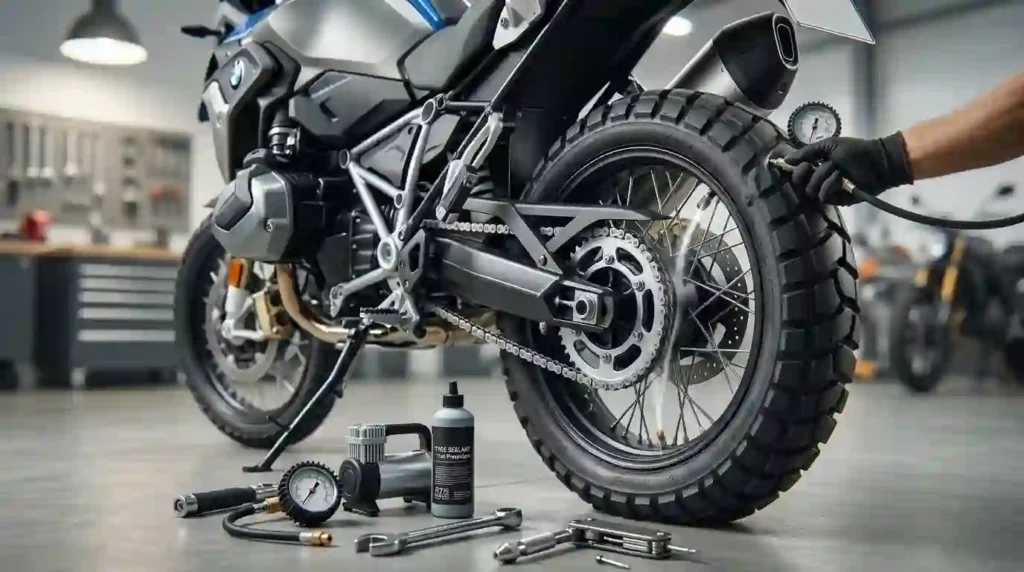
You pump the tire, ride home, and park the bike. By morning the tire is soft or completely flat. So why does my bike tyre go flat overnight, and what can you do about it?
US riders know this problem well. It joins other common headaches like wrong tire pressure, poor cornering grip, and tread that wears too fast. Many of them trace back to the same few causes.
Most overnight flats come from a slow leak. A tiny puncture, a bad valve, worn rim tape, or a weak tubeless seal can drain a tire while you sleep. Cold air can also drop pressure with no leak at all.
The right tire and the right tire pressure (PSI) protect your safety, speed, and comfort. A tire that holds air corners with confidence and rolls with less effort.
This guide shows you how to find the cause, fix it, and keep it from coming back. Every tip follows our testing process.
Why Does My Bike Tire Go Flat Overnight?
Quick answer: A bike tire usually goes flat overnight because of a slow leak from a tiny puncture, a faulty valve, a damaged tube, or a poor tubeless seal. Cold temperatures can also lower pressure without any leak.
A small hole may let air out so slowly that you never hear it. The tire feels firm after a ride but is soft by morning.
Temperature plays a part too. Air pressure falls when the air inside the tire cools. For a deeper look at air loss, read why bike tyres lose air and why bike tire pressure drops overnight.
Is It Normal for Bike Tires to Lose Air Overnight?
A small drop is normal. Narrow tires with high starting PSI lose air faster than wide, low-pressure tires. Latex tubes lose air faster than butyl tubes.
Riders often ask, “How long should a bike tire hold air?” Most butyl-tube road tires hold usable pressure for several days, but a quick top-off before each ride is smart.
| What You See | What It Often Means |
|---|---|
| A few PSI lower after a day or two | Normal air seep |
| Noticeably soft every morning | Slow leak |
| Completely flat overnight | Active leak that needs repair |
| Low only after a cold night | Temperature effect |
Tubeless tires can also lose air through the valve, the bead, or holes that sealant cannot close. If yours feels soft often, see why a bike tire feels soft.
The Most Common Causes of Overnight Flat Tires
Three groups of causes show up again and again. The first is tiny punctures from glass, thorns, wire, or sharp stones.
The second is a leak at the valve, tube, rim tape, or tubeless bead. The third is a mix of cold weather, worn tires, and poor installation that makes a tire hold air badly.
If the problem keeps returning, our guide on why a bike tire keeps losing air can help.
7 Reasons Your Bike Tire Goes Flat Overnight
Check the tire, valve, tube, and rim before you buy new parts. A slow leak is hard to spot, so test one area at a time.
Finding the exact cause saves money and stops repeat flats. Use this table as a quick guide.
| Cause | Common Clue | Quick Test |
|---|---|---|
| Small tube puncture | Soft by morning, no hiss | Inflate and listen, then water test |
| Faulty valve | Bubbles at the stem | Soapy water on the valve |
| Bad rim tape | Repeat flats, same spot | Inspect spoke holes |
| Tubeless seal failure | Sealant stains or dry sealant | Soapy water on bead and tread |
| Damaged casing | Cuts, cracks, bulges | Visual check |
| Cold temperature | Drop only on cold nights | Compare same-temperature readings |
| Bad installation | Leak after a new tube | Check bead and tube position |
1. A Small Puncture in the Inner Tube
Tiny holes let air escape without a hiss. Glass chips, thorns, and metal wire can stay stuck in the tire and keep poking the tube.
Always inspect the tube and tire together. Finding the object matters as much as patching the hole. Our guide on how to find a puncture in a bike tire walks you through it.
2. A Faulty Valve or Loose Valve Core
A damaged valve stem or loose valve core lets air creep out. Dirt or worn parts can stop a proper seal.
Many road bikes use thin Presta valves. Many hybrid and mountain bikes use wider Schrader valves, like a car. Brush soapy water around the valve and watch for bubbles.
3. Damaged Rim Tape or Rim Strip
Rim tape covers the spoke holes inside the rim. Without it, the tube can push into a hole and wear through.
Torn, shifted, or thin tape often causes repeat flats. Make sure it covers every spoke hole and has no sharp edges.
4. A Poor Tubeless Tire Seal
Tubeless sealant is a liquid latex that plugs small holes. It dries out over time, usually within a few months, and faster in hot, dry places like Arizona.
Air can also leak around the bead or the valve base. Check sealant levels, bead seating, and the valve seal using the maker’s instructions.
5. A Damaged or Aging Tire Casing
The casing is the fabric body of the tire. Cuts, cracks, exposed threads, and sidewall damage can all leak air. Learn more in our guide on what a bike tire casing is.
Worn tread offers less shield against sharp debris. Replace a badly damaged tire instead of relying on sealant. Check how often bike tyres should be replaced for clear signs.
6. Temperature Changes Overnight
Cool air lowers tire pressure without causing a leak. A garage in Minnesota or a porch in the Pacific Northwest can swing 30°F overnight.
The size of the drop depends on the temperature change and your starting PSI. Compare readings at similar temperatures before you blame a puncture. The formula appears in the pressure section below.
7. Incorrect Tire Installation
A pinched tube can start leaking after you inflate it. A poorly seated tubeless bead can also let air out while the bike sits.
Check the bead, valve position, rim match, and pressure limits. Follow how to inflate a bike tire correctly and confirm whether a tire will fit your wheel.
How to Find a Slow Leak in a Bike Tire
Start with a visual check. Then use soapy water or a water test to locate tiny leaks.
Test the valve, tread, sidewalls, and bead area one at a time. Do not ride until you find and fix a leak that causes big pressure loss.
Step 1: Check the Tire and Valve
- Inflate the tire to a safe pressure inside the approved range.
- Listen for hissing and inspect the tread and sidewalls for stuck debris.
- Brush soapy water around the valve and watch for growing bubbles.
Use a reliable gauge. Our pick of the best bike tire pressure gauge can help, and how to check bike tire pressure covers the technique.
Step 2: Test the Inner Tube
- Remove the wheel and tire with the right tools.
- Inflate the tube slightly and listen for escaping air.
- If needed, dip the tube in water and look for bubbles, then dry it before repair.
Take the tire off with care so you do not damage the tube. See how to remove a bike tire without damaging the tube.
Inspect the Tire Casing and Rim (Step 3)
Check the inside of the tire for glass, thorns, and sharp bits. Run a gloved finger or a cloth gently along the inner surface.
Inspect the rim tape, spoke holes, and valve opening for damage. Mark the leak spot before you remove debris or patch the tube.
Check a Tubeless Setup (Step 4)
Spray or brush soapy water on the tread, sidewalls, valve, and bead. Look for bubbles that keep forming at one spot.
Then check the sealant condition. Follow the tire maker’s repair advice. Persistent trouble is covered in our guide on why a bike tire keeps getting punctures.
How to Fix a Bike Tire That Goes Flat Overnight
Match the repair to the source of the leak. Do not swap parts at random.
Patch a tube only when it is in good shape. Replace damaged tires, valves, or rim tape when a safe repair is not possible.
Repairing a Small Inner-Tube Puncture
- Remove the tube and find the hole.
- Clean and prepare the area, then apply a compatible patch following its directions.
- Inflate the tube slightly to test the repair before you reinstall it.
Our guides on how to repair a bike inner tube and how to fix a punctured bike tire show each step.
Fixing a Leaking Bike Tire Valve
Tighten a loose removable valve core with the correct tool. Replace a damaged tube valve or a faulty tubeless valve part.
Do not overtighten or force a tool. That can cause more damage than the original leak.
Sealing a Tubeless Tire That Loses Air Overnight
First check the sealant amount, age, and match with your tire. Spin the wheel so fresh sealant can reach small holes.
Use a compatible tubeless plug for a suitable tread puncture. Replace a tire with unsafe sidewall damage.
When Should You Replace the Tire Instead of Repairing It?
Replace tires with large cuts, bulges, exposed casing, or serious sidewall damage. Replace tubes that cannot be patched safely.
Follow the maker’s repair limits. Our guide on how much tread a bike tyre should have helps you judge wear.
How Tire Pressure (PSI) Affects Overnight Air Loss
Tire pressure is the air pressure inside the tire, shown in pounds per square inch (PSI). High starting pressure can make a small leak easier to notice, but it does not prove high PSI caused the leak.
Correct pressure also improves comfort, grip, and impact protection. Read how PSI affects punctures for more detail.
What PSI Should You Use for Your Bike Tires?
Start with the range printed on the tire and the limit set by the rim maker. Then adjust for rider weight, tire width, bike weight, and cargo.
To find your starting point, add rider, bike, and gear weight. On road bikes, assume about 45% of that total sits on the front wheel and 55% on the rear. Then use the table below for tubeless setups on modern wide rims.
| System Weight (Rider + Bike + Gear) | Road 28 mm (Front / Rear PSI) | Gravel 40 mm (Front / Rear PSI) |
|---|---|---|
| 120 to 140 lb | 48 / 52 | 28 / 31 |
| 141 to 160 lb | 54 / 58 | 31 / 34 |
| 161 to 180 lb | 58 / 62 | 33 / 36 |
| 181 to 200 lb | 62 / 66 | 35 / 38 |
| 201 to 230 lb | 66 / 71 | 38 / 41 |
Add about 5 PSI for tubes. Many hookless rims cap pressure near 72.5 PSI (5 bar), while hooked rims have a small lip that holds the tire bead. Check your rim first. See how to find the correct bike tire pressure, plus guides for heavier riders and lighter riders.
Can Low Tire Pressure Cause Overnight Flats?
Low PSI does not usually push air out while the bike is parked. The leak itself is the cause.
Still, very low pressure raises pinch flat risk when you ride over sharp hits. A tire that is already leaking and starts low will be fully flat by morning.
Learn what too-low tire pressure does to your ride. Then use the PSI guide to set a safe level.
How Temperature Changes Affect Tire PSI
For a fixed volume of air, pressure moves with absolute temperature. Here is the formula in plain terms:
New PSI = (Old PSI + 14.7) × (New Temp + 459.67) ÷ (Old Temp + 459.67) − 14.7
Temperatures are in °F. The 14.7 is air pressure at sea level. This table shows the approximate drop from 70°F.
| Starting PSI at 70°F | Drop at 50°F | Drop at 40°F | Drop at 30°F |
|---|---|---|---|
| 30 PSI (gravel, MTB) | 1.7 PSI | 2.5 PSI | 3.4 PSI |
| 60 PSI (road) | 2.8 PSI | 4.2 PSI | 5.6 PSI |
| 90 PSI (racing road) | 4.0 PSI | 5.9 PSI | 7.9 PSI |
A drop of a few PSI on a cold night is normal. A tire that is fully flat is leaking.
Tubeless vs. Inner-Tube Tires: Which Holds Air Better?
Inner tubes are simple to repair, but tiny holes and faulty valves can drain them. Tubeless systems can seal many small holes, but they need good setup and sealant care.
Neither system is immune to overnight air loss.
| Feature | Tubeless | Inner Tube |
|---|---|---|
| Small thorn holes | Sealant often closes them | Tube leaks slowly |
| Valve leaks | Possible at the base | Possible at the stem |
| Bead leaks | Possible | Not an issue |
| Upkeep | Sealant refills | Patches or new tube |
Why Inner-Tube Tires May Go Flat Overnight
Tiny punctures leak slowly with no clear sign. Pinched tubes, faulty valves, and damaged rim tape cause repeat trouble.
Careful installation and regular checks cut repeat flats. A good tire shop can also check your setup.
Why Tubeless Tires May Lose Air Overnight
Dry or low sealant cannot close small holes. A poorly seated bead or a leaking valve can release air while the bike is parked.
Check inner rim width and tire match before you change anything. These ranges are typical, so confirm them with the rim maker.
| Inner Rim Width | Typical Tire Width |
|---|---|
| 19 mm (0.75 in) | 28 to 40 mm |
| 25 mm (1.0 in) | 38 to 55 mm |
| 30 mm (1.2 in) | 2.1 to 2.5 in |
Our guides on tire width and size compatibility explain the fit.
Which Setup Is Best for Commuting, Gravel, and Mountain Biking?
Inner tubes suit riders who want easy roadside repairs and low cost. See bike tyres for daily commuting.
Tubeless setups help gravel and mountain bikers handle many small tread holes. Start with how to choose bike tires for gravel roads.
Road and e-bike riders should weigh pressure, load, speed, and upkeep. E-bike torque and extra weight add stress to tires, so choose a tire rated for it. Also compare PSI and rolling resistance.
How to Prevent Your Bike Tire From Going Flat Overnight
Check tires often and remove sharp objects before they work deeper. Keep pressure suitable and replace worn parts.
After every flat, inspect the full setup. That stops the same problem from returning. Our guide on how to prevent bike tyre punctures goes further.
Choose Tires With Suitable Puncture Protection
A puncture belt is a tough layer under the tread that blocks sharp objects. Compare casing TPI (threads per inch), rubber compound, tread design, and rolling resistance.
Lower TPI often means a tougher casing. Higher TPI feels smoother but can cut more easily. Durometer measures rubber hardness, and softer rubber grips better but wears faster. See how rubber compounds work and why tread patterns differ.
Pick road, gravel tires, or e-bike tires for your terrain and load. Strong cornering traction matters on wet Pacific Northwest roads. Browse how to choose puncture-resistant bike tyres and the best bike tyres for puncture protection.
Maintain Valves, Rim Tape, and Tubeless Sealant
Check valves and rim tape whenever you change a tube or tire. Inspect tubeless sealant at the interval the maker advises.
Confirm that your rim width and tire bead match. A good floor pump with a gauge makes this easier, so see the best bike floor pump with pressure gauge.
Build a Simple Tire Maintenance Routine
- Check pressure before important rides.
- Inspect tread and sidewalls for damage and debris.
- Write down repeat flats and leak spots to find patterns.
Learn how often to inflate bike tires and how often to check bike tyres. Road riders may also want the best pump for bike tyres.
Common Mistakes That Make Overnight Flats Worse
A new tube will not fix a stuck thorn. Overinflating does not cure a leak and may break safe limits. Mixing incompatible parts can create new leaks.
Avoid these three mistakes and you will save time and money.
Replacing the Tube Without Checking the Tire
Inspect the inside of the tire before fitting a new tube. Match the old hole to the spot on the tire and rim.
Remove any debris with care before you reinstall the tube.
Ignoring the Valve and Rim Tape
A tube can leak through a bad valve even when the tread looks perfect. Damaged rim tape causes repeat punctures from inside.
Inspect both parts whenever a tire goes flat more than once.
Using the Wrong Tire Pressure
Too much PSI can break tire or rim limits and cut grip on rough surfaces. Too little raises impact damage and pinch-flat risk.
Read whether you can overinflate a bike tire and what happens when pressure is too high. High-pressure tires need the right tool, such as the best bike pump for high pressure tyres.
How Bike Tire Testing Helps You Choose a Reliable Tire
Look for independent tests that compare puncture resistance, rolling resistance, and durability. Compare results only when tire size, pressure, load, and method are similar.
Treat lab data as useful evidence, not a guarantee against flats. We explain how we judge claims in our editorial policy.
What Should a Good Tire Test Measure?
Puncture resistance is how well the tire resists penetration under a set method. Rolling resistance is the energy the tire loses as it rolls.
Durability and grip show how the casing, tread, and rubber perform over time and across surfaces. Learn how tires affect grip before you buy.
Which Standards and Specifications Matter?
Review recognized ISO or other bicycle tire and wheel safety standards. Check maker limits for pressure, load, rim width, and tire fit.
Do not confuse a safety standard with a puncture ranking. Decode your sidewall with bike tyre markings explained and what the numbers on bike tyres mean.
Frequently Asked Questions About Bike Tires Going Flat Overnight
1. Why does my bike tire go flat overnight but not during the day?
A tiny puncture or valve leak may release air slowly while the bike sits. Cold air can also lower pressure overnight. Use a soapy water test to tell normal change from a real leak.
2. Can a bike tire lose air without a puncture?
Yes. A faulty valve, a leaking tubeless bead, damaged rim tape, or cold weather can explain it. Dry sealant can also fail to seal a hole. Check the whole setup before replacing the tire.
3. Is it normal for a bike tire to lose PSI overnight?
A small change is normal because of temperature and slow air seep. A big drop or a flat tire is not normal. Compare readings at similar temperatures and test for leaks.
4. Can I ride my bike if the tire loses air overnight?
Inflate it and see if it holds air. Do not ride on a damaged tire or one that loses pressure fast. Fix the cause before you rely on the bike for commuting or long rides.
5. Do tubeless tires go flat overnight?
Yes. They can leak through punctures, valves, bead seals, or damaged casings. Fresh, compatible sealant closes many small tread holes. Larger cuts may need a plug or a new tire.
6. What PSI should I use based on my weight?
There is no single number for every rider. Tire width, bike weight, load, rim limits, and surface all matter. Use the table above as a start, then check tire and rim limits.
7. How do I know if my bike tire needs replacing?
Look for deep cuts, sidewall cracks, bulges, exposed casing, or leaks that keep coming back. Follow any wear marks the maker gives. Replace a damaged tire instead of trusting a patch or sealant.
8. Can rim width cause my bike tire to lose air?
Yes. A rim and tire that do not match can stop the bead from seating well. Poor installation or damaged rim tape can also leak air. Confirm rim width, tire size, and pressure limits first.
Conclusion: Stop Your Bike Tire From Going Flat Overnight
Overnight air loss usually points to a slow leak, a faulty valve, a tubeless seal problem, or cold weather. A careful check and the right repair can stop repeat flats and protect tire performance.
Correct PSI, suitable puncture protection, and regular upkeep keep your bike ready to ride. Learn more about how bike tires work, see what bike tyres are made of, and meet the team on our about page.
Ready to stop guessing? Test your exact tire, rim, and weight with the Free Bike Tire Pressure Calculator / Tire Finder Tool at TheBikeTires.com. Get your setup right and wake up to a tire that is ready to roll.

Mohidul Islam is a leading cycling technology specialist and bike tire consultant with over 15 years of hands-on experience in the bicycle industry. He holds a Bachelor of Science in Mechanical Engineering from Penn State University, where he focused heavily on material science, tread mechanics, and rubber compound performance. Over the past decade and a half, Alex has conducted extensive field testing, tubeless setup evaluations, and tire pressure modeling for road, mountain, and e-bikes. His practical insights and data-driven approach help cyclists of all levels optimize grip, speed, and durability on every ride.



