You squeeze the tire before a ride and it gives a little too much. Maybe the bike feels sluggish, or the corners feel vague. Soft tires are one of the most common worries for US riders, from daily commuters to weekend gravel fans.
So, why does my bike tyre feel soft? It could be low pressure, a slow leak, or a casing that is simply built to flex. Sometimes the tire is fine, and the feel comes from width or rider weight.
Getting this right matters. Correct tire pressure (PSI) protects you from flats, keeps your steering sharp, and saves energy on every pedal stroke. The right tire and the right PSI also help your tread last longer.
This guide helps you sort real problems from normal flex. You will find tables, a simple PSI method, and links to our related guides, such as how to check bike tire pressure.
Why Does My Bike Tire Feel Soft?
A soft feel has three common sources: low PSI, a slow air leak, or a flexible casing. The tire may even be at a perfect pressure for your bike and still feel soft to the touch.
Tire width, rider weight, and tire build all change how a tire feels under your thumb. A wide gravel tire at 30 PSI feels very different from a narrow road tire at 90 PSI. Both can be correct.
Knowing the basics helps. If you want a refresher, read how bike tires work.
Quick Answer: Why Does a Bike Tire Feel Soft?
A bike tire usually feels soft because it has low air pressure, a slow leak, or a flexible casing. A wider tire may also feel softer than a narrow tire at the same PSI. Check the pressure with a gauge, inspect the tire for damage, and inflate it within the tire and rim makers’ limits.
- Low PSI can increase tire flex and rolling resistance.
- A puncture, faulty valve, or tubeless leak can cause pressure loss.
- Tire width and casing design affect how firm the tire feels.
Quick tip: Never judge pressure by squeezing. A gauge takes ten seconds and tells the truth.
7 Common Reasons Your Bike Tire Feels Soft
Most soft tires trace back to one of seven causes. Some are easy fixes, and some need a repair. Check pressure first, before you replace parts or buy new tires.
| Cause | Typical clue | First thing to check |
|---|---|---|
| Low PSI | Tire looks squashed, rides sluggish | Gauge reading |
| Slow leak | Firm after pumping, soft again later | Tread, valve, bead |
| Flexible casing | Feels soft but holds pressure | Pressure over 24 hours |
| Width or rim mismatch | Squirmy feel in corners | Approved tire and rim pairing |
| Damaged tube or valve | Repeated flats | Tube, valve core |
| Tubeless leak | Sealant spray, falling PSI | Bead, rim tape, sealant |
| Worn or damaged tire | Cracks, bulges, thin tread | Sidewalls and casing |
Some air loss is normal. Our guide on why bike tires lose air explains what is typical and what is not.
1. Your Tire Pressure Is Too Low
Low tire pressure (PSI) lets the tire flex more under your weight. You may notice sluggish handling, extra rolling resistance, and a higher risk of pinch flats. Rolling resistance is the energy a tire uses just to keep rolling.
Use a reliable gauge instead of squeezing the tire. Our guide on how much air to put in bike tires helps you find a sensible range.
2. Your Bike Tire Has a Slow Leak
Small punctures, worn valve cores, or poor bead seals let air escape over time. The tire feels firm after pumping, then turns soft again by the next day. That pattern is the classic sign.
Inspect the tread, valve, and bead for signs of escaping air. Knowing how often to inflate bike tires helps you tell normal loss from a real leak.
3. Your Tire Has a Flexible Casing
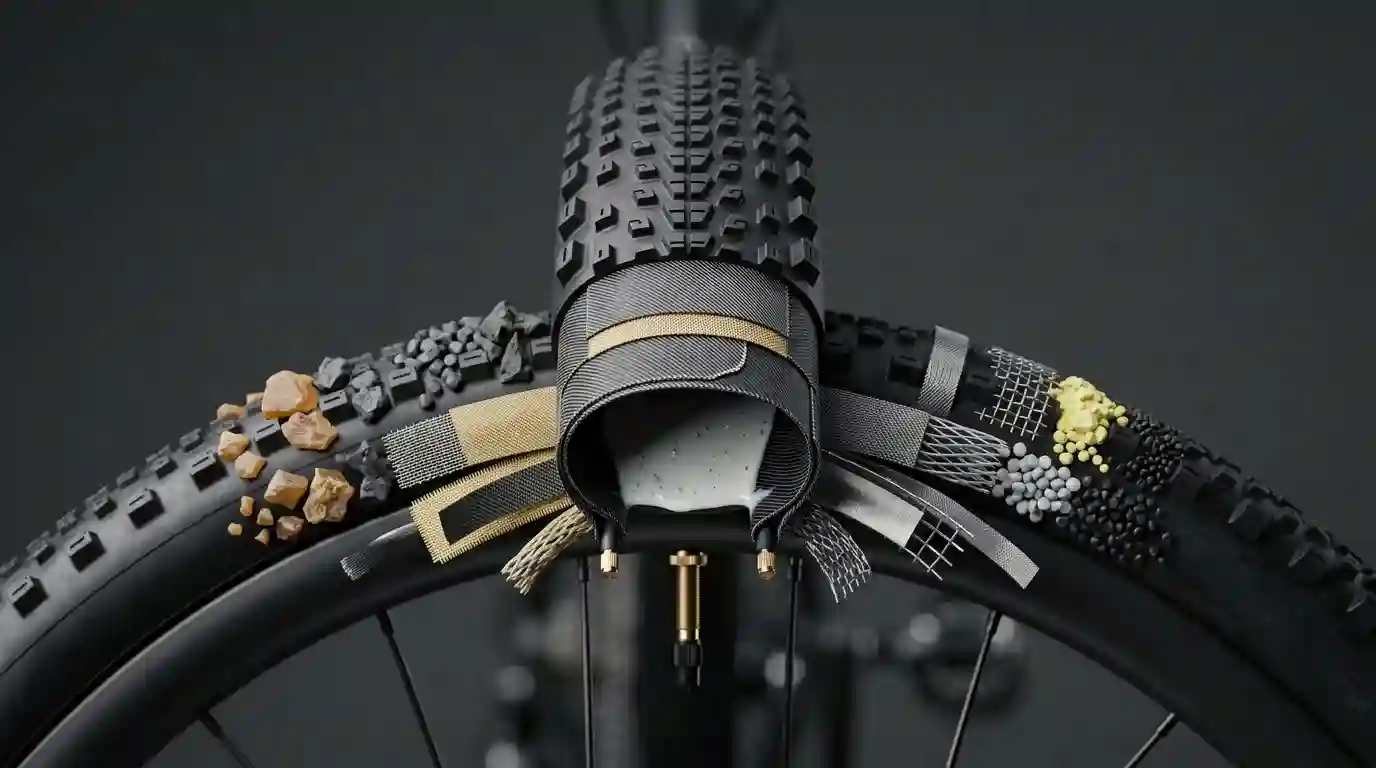
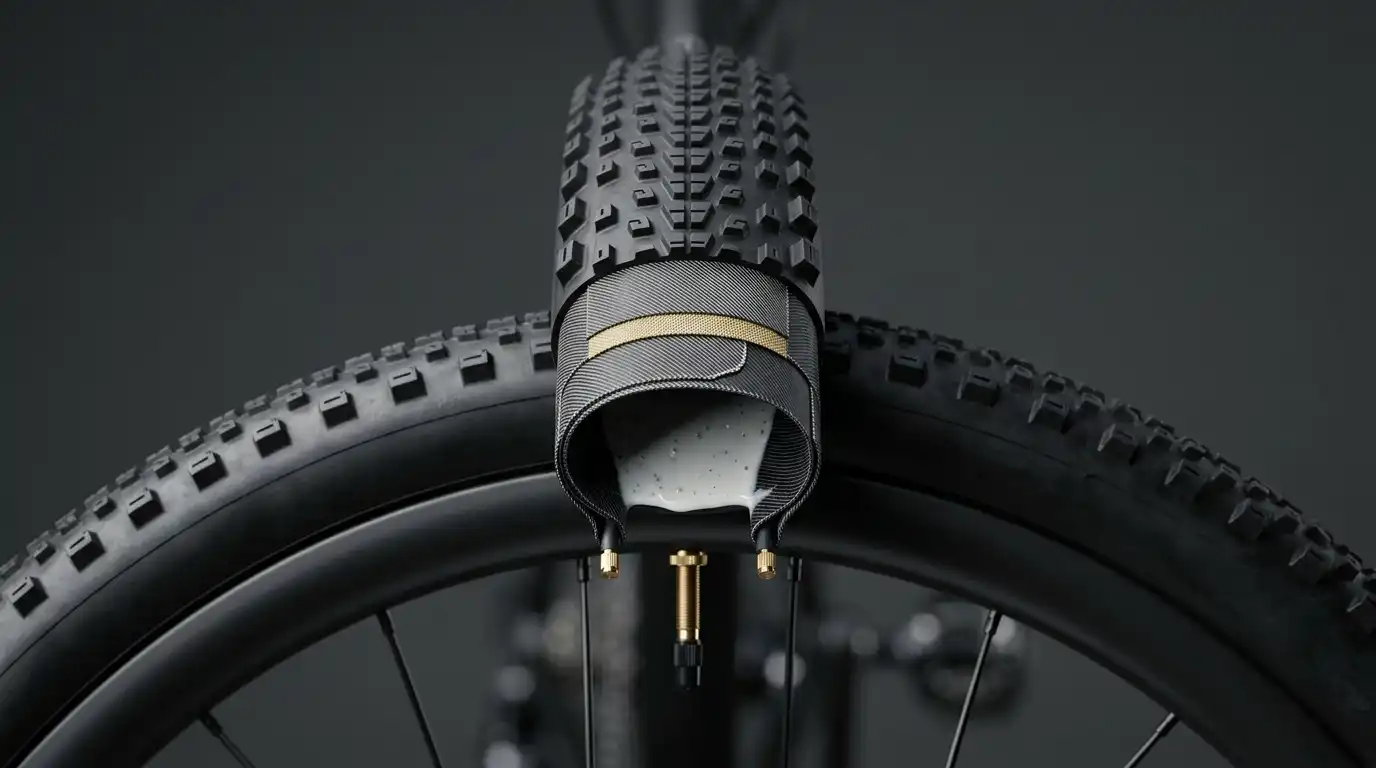
A supple casing can feel softer than a reinforced tire, even at a suitable PSI. Casing TPI means threads per inch in the tire body, and it is one factor in flexibility. Materials and construction matter too.
A flexible tire is not automatically damaged or underinflated. In fact, supple casings often ride better. Read what a bike tire casing is and how much bike tires affect comfort.
4. Your Tire Is Too Wide or Narrow for Your Setup
Tire width sets the air volume, the tire shape, and the pressure needed to carry you. Inner rim width is the gap between the rim walls, and it shapes sidewall support. A mismatch can make a tire feel squirmy.
Check approved tire and rim pairings before you change size or pressure. Start with bike tire width explained and what tire width to choose.
5. Your Inner Tube or Valve Is Damaged
A punctured tube can lose air slowly or all at once. A loose or faulty valve core can also leak. Both make a tire feel soft again after you pump it up.
If pressure keeps falling, check the tube and valve. Look closely at the rim strip too, since a sharp spoke hole edge can wear a tube.
6. Your Tubeless Tire Is Losing Air
Tubeless tires can leak through punctures, the valve, rim tape, or the tire bead. Tubeless sealant is a liquid inside the tire that plugs small holes. It may not fix larger cuts or damaged parts.
Check sealant condition and inspect the wheel if pressure drops again and again. Sealant dries out over time, so follow the maker’s schedule.
7. Your Tire Is Worn or Damaged
Worn tread, cracked sidewalls, bulges, and exposed casing all affect safety. A damaged tire may leak or fail under load. It can also feel mushy long before it fails.
Replace a tire with structural damage instead of adding PSI. Read how often bike tires should be replaced and how much tread a bike tire should have.
How to Tell If Your Bike Tire Is Actually Underinflated
Touch alone is not reliable. Thumb pressure varies with tire width, casing, and your own hand. A tire that feels soft may be fine, and a tire that feels firm may be low.
The better way is to compare measured PSI with the tire’s recommended range. Keep in mind that wide mountain and gravel tires usually feel more flexible than narrow road tires. That is normal.
Check Tire Pressure With a Gauge
Use a floor pump gauge or a suitable digital gauge. Check before you ride for steady readings. Cool tires give the most consistent numbers.
Compare the reading with your tire and rim specifications, not a generic PSI chart alone. Our guide to how to check bike tire pressure covers gauge types and valve tips.
Look for Excessive Tire Deflection
If needed, ask a helper to watch the tire while you sit on the bike. Excess flattening, folded sidewalls, or the rim nearly touching the ground can signal low pressure. A little bulge at the bottom is normal.
Do not ride if the tire looks unstable or the rim is striking the ground or obstacles. Stop and inflate first.
Compare Front and Rear Tire Pressure
The rear tire often carries more weight, so it may need a different pressure. Front and rear tires may also differ in width or construction. That can change how each one feels.
Record both PSI readings. Notes make future checks faster, and they help you spot a tire that is slowly losing air.
What Happens If You Ride With a Soft Bike Tire?
A soft tire changes comfort, speed, grip, and durability. Some drop in pressure is helpful off-road, because it improves traction. Too much drop is unsafe underinflation.
Correct very low pressure before you keep riding. A few minutes with a pump can save a rim.
Does a Soft Tire Increase Rolling Resistance?
Yes, it can. Excess flex wastes energy, and pedaling gets harder. You may feel it most on smooth pavement.
On rough surfaces, an appropriate lower PSI may reduce vibration and improve real-world efficiency. The best pressure depends on tire width, casing, surface, and rider weight. See how much bike tires affect speed and how to choose fast rolling bike tires.
Can Low Tire Pressure Cause a Puncture?
Yes. An inner tube can pinch against the rim during a hard hit. This is called a pinch flat, and it often leaves two small holes.
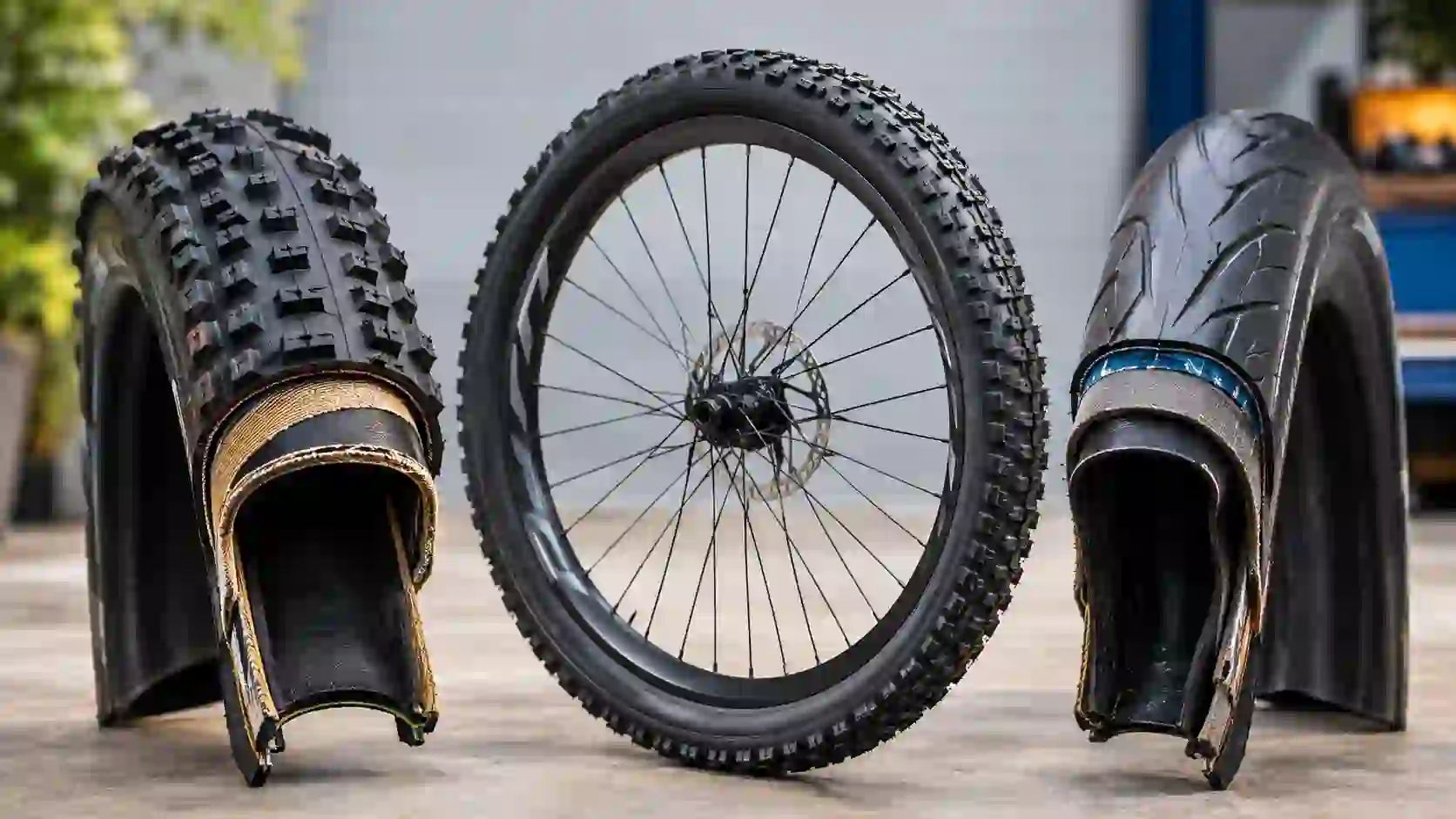
Tubeless tires can suffer rim strikes, bead burping, or sidewall damage. A puncture belt, which is a protective layer under the tread, helps against some sharp objects. It cannot prevent every flat. Browse the best bike tires for puncture protection and puncture protection vs rolling resistance.
Can a Soft Tire Affect Cornering Grip?
A suitable drop in PSI helps the tire follow uneven ground. Think of loose Southwestern rock, where a softer tire finds more purchase. That can boost cornering traction.
Too little pressure makes the tire squirm or roll in hard turns. Tread pattern, rubber compound, and casing also matter. Read how much bike tires affect grip and why bike tires have different tread patterns.
Is It Safe to Ride With a Soft Tire?
A slightly low tire may be fine for a short, cautious trip. It depends on how much pressure is missing. A very soft tire can damage the rim and reduce steering control.
Inflate and inspect the tire before riding if it looks collapsed, feels unstable, or loses air fast. In wet Pacific Northwest weather, a soft tire is even riskier, so read how to choose bike tires for wet weather.
How to Fix a Bike Tire That Feels Soft
Fixing a soft tire is straightforward. Check for damage, measure, inflate, find the leak, repair, and recheck. Follow the six steps below.
Cover both inner tube and tubeless setups. Also note whether your valve is Presta or Schrader, since pumps differ.
Step 1: Check the Tire for Visible Damage
Scan the tread for glass, thorns, nails, and other sharp objects. Look for sidewall cuts, bulges, cracks, and uneven tire seating. Run a gloved finger around the tire carefully.
Do not pull out an embedded object before you check whether it is keeping a puncture partly sealed. Removing it may release all the air.
Step 2: Measure the Current PSI
Connect a suitable gauge to the valve. Compare the reading with the recommended pressure for your tire, rim, load, and conditions. Skip the thumb test, especially on high-pressure road tires.
If you are unsure of your target, see the PSI section below. A good gauge makes every later step easier.
Inflate the Tire to a Suitable Pressure (Step 3)
Use a pump that fits your Presta or Schrader valve. Add air gradually and check PSI as you near your target. Small bursts prevent overshooting.
Never go above the tire or rim limit. Our guide on how to inflate a bike tire correctly walks through the pump and valve details.
Check for Air Leaks (Step 4)
Listen for escaping air around the valve, and look over the tire for damage. Mix soapy water and apply it to accessible areas. Bubbles show where air is escaping.
For tubeless tires, check the valve, rim tape, bead, and sealant. You can also try the overnight test. Note the PSI, wait 24 hours, and measure again. A big drop points to a leak.
Repair or Replace Damaged Parts (Step 5)
Patch or replace a damaged inner tube by the maker’s instructions. Repair a tubeless puncture with a method suited to the tire and the hole. Plugs work for small holes.
Replace tires with severe sidewall damage, exposed casing, or structural defects. If flats keep coming, see how to choose puncture resistant bike tires.
Recheck Pressure Before Riding (Step 6)
Confirm the tire holds pressure after inflation or repair. Check that the bead sits evenly around the rim. A thin guide line on the sidewall should sit an even distance from the rim.
Take a short, cautious test ride. Stop if the tire loses air or feels unstable. Then set a routine using how often to check bike tires.
What Is the Correct PSI for a Bike Tire?
No single PSI works for every bicycle. The right number depends on tire width, rider weight, total load, rim width, and terrain. A calculator gives a good starting point.
Start with the sidewall range and the rim limit. Then make small adjustments. Our guide on how to find the correct bike tire pressure walks through the full process, and our guide to bike tire sidewall markings explains the numbers printed on the tire.
Typical Tire Pressure Ranges by Bike Type
These are broad examples only. Actual recommendations vary with tire size, rider and cargo weight, tire construction, and manufacturer limits.
| Bike type | Illustrative pressure range |
|---|---|
| Road bike | 60-100 PSI |
| Gravel bike | 25-45 PSI |
| Mountain bike | 18-35 PSI |
| Hybrid or commuter bike | 40-70 PSI |
| E-bike | Depends on tire type, load, and approved limits |
- Narrow road tires often need higher PSI than wider gravel or mountain bike tires.
- Wider tires can often run lower pressure while supporting a similar load.
- Always check tire and rim specifications before using these example ranges.
See how to choose bike tires for gravel roads and how to choose tires for a commuter bike for type-specific tips.
How Does Rider Weight Affect Tire Pressure?
Heavier riders and loads usually need more pressure to limit deflection. Lighter riders may use less PSI and still stay stable. Front and rear pressures can differ because each wheel carries a different load.
| Total system weight (rider + bike + gear) | 28 mm road tire with tube | 40 mm gravel tire, tubeless |
|---|---|---|
| Under 150 lb (68 kg) | 55-65 PSI | 24-30 PSI |
| 150-180 lb (68-82 kg) | 60-70 PSI | 27-33 PSI |
| 180-210 lb (82-95 kg) | 65-78 PSI | 30-37 PSI |
| 210-250 lb (95-113 kg) | 72-85 PSI | 33-41 PSI |
| Over 250 lb (113 kg) | 80-95 PSI | 37-45 PSI |
Note: These are illustrative starting points. Stay inside the tire and rim limits.
Does Rim Width Affect Tire Pressure?
Yes. Rim width changes tire shape, sidewall support, and approved tire compatibility. A tire on an unsuitable rim may handle poorly or become unsafe.
| Inner rim width | Typical tire width range (check maker charts) |
|---|---|
| 17-19 mm | 25-35 mm (about 1.0-1.4 in) |
| 21-23 mm | 28-42 mm (about 1.1-1.7 in) |
| 25-28 mm | 35-50 mm (about 1.4-2.0 in) |
| 30 mm and wider | 2.3-2.6 in mountain bike tires |
Hooked rims have a lip that grips the tire bead. Hookless rims have no lip and usually have a lower maximum pressure, often near 72 PSI (5 bar). Follow both the tire and rim makers’ guidance.
For more, read bike tire size compatibility, will this bike tire fit my wheel, and ETRTO bike tire sizes.
How Do You Find Your Ideal PSI?
Use these four steps to set a safe starting pressure. They rely on total system weight, which is rider plus bike plus gear.
- Add your weight. Example: 170 lb rider + 25 lb bike + 5 lb gear = 200 lb.
- Split it by wheel. Use about 45% front and 55% rear on a road bike. In the example, that is 90 lb front and 110 lb rear.
- Check limits and find a starting PSI. Use the lower of the tire and rim maximums, then use a calculator or maker chart for your load per wheel and tire width.
- Adjust and test. For rough or loose ground, try: Starting PSI x 0.90 to 0.95. Change by 2 to 3 PSI and ride.
One bar equals about 14.5 PSI, which helps with metric labels.
How Tire Design Affects a Soft Feeling
Tire materials and build change ride feel. Two tires can feel very different at the same PSI. That is why a soft feel does not always mean a pressure problem.
Use these sections to decide whether you need more air or a different tire. For a bigger picture, read what makes a good bike tire.
Tire Casing TPI and Flexibility
TPI means threads per inch and describes one part of casing construction. Higher TPI does not always mean a better or stronger tire. Materials and construction matter too.
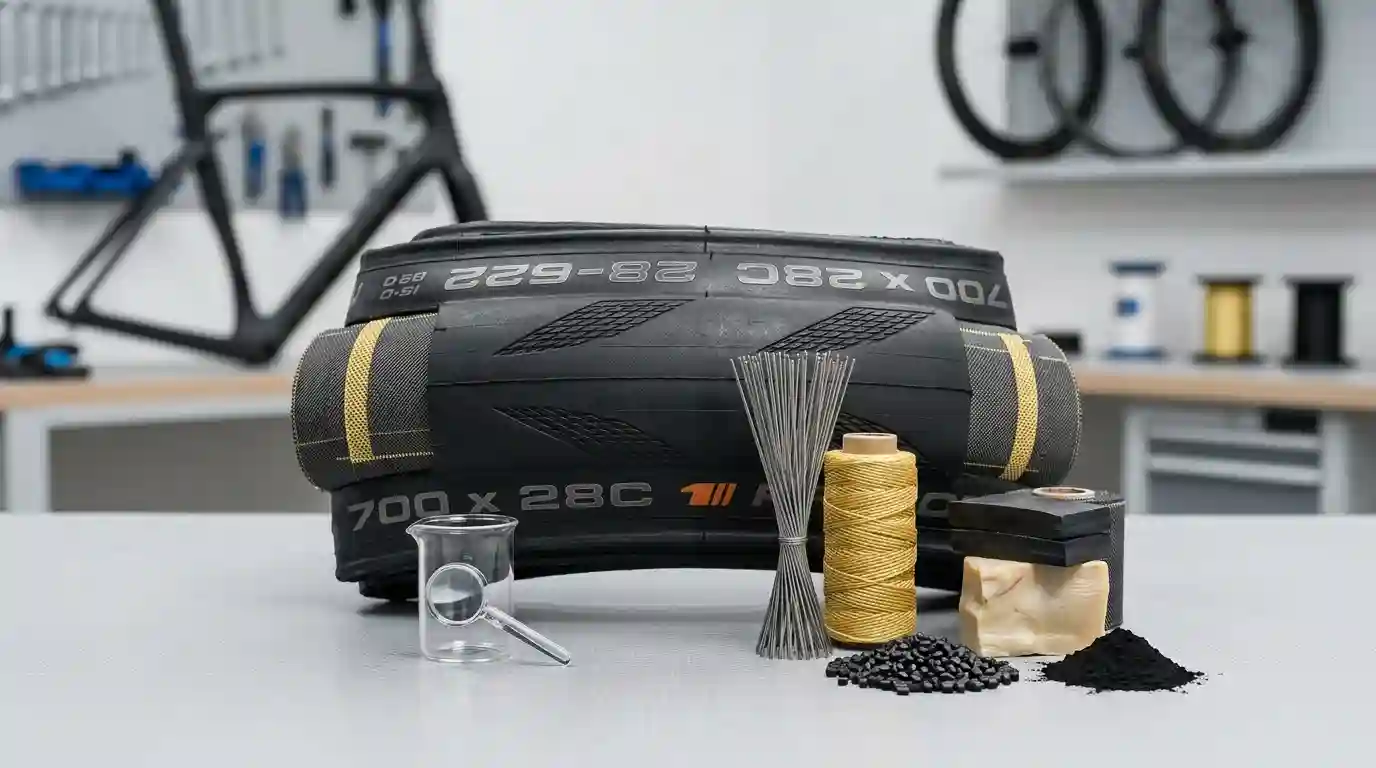
Supple casings feel more flexible. Reinforced casings may give more support and cut resistance. See what bike tires are made of.
Tread Pattern and Rubber Compound
Smooth road tread, gravel tread, and mountain bike knobs suit different surfaces. Pacific Northwest mud calls for open knobs, while pavement favors smooth rubber. Durometer measures rubber hardness, and softer rubber grips more but may wear faster.
A soft-feeling tire is not a problem if pressure and construction suit the ride. Learn more in what bike tire rubber compound is.
Puncture Belts and Tire Durability
Puncture belts help protect against some sharp objects beneath the tread. Added protection can add weight and make the casing stiffer. It is a trade-off.
Pick a tire that balances puncture resistance, comfort, and rolling efficiency for your needs. See how to choose durable bike tires.
Gravel Tires and E-Bike Tires
Gravel tires often run lower PSI than narrow road tires to improve comfort and control on loose surfaces. They can feel soft but still be right. Check the sidewall range first.
E-bikes may need pressure settings that account for higher loads and their tire load ratings. E-bike torque affects acceleration and traction, but it does not set PSI alone. See bike tires for daily commuting.
Tubeless vs. Inner-Tube Tires: Why Does One Feel Softer?
Each system holds air in its own way. Tubes hold air inside a separate bladder. Tubeless tires hold air against the rim, with sealant for small holes.
Tubeless tires may allow lower pressure in suitable setups, but they still have safety limits. Common leak points differ, and so does basic upkeep.
Why Does My Inner-Tube Tire Keep Going Soft?
Small punctures release air over time. Faulty valves or a damaged rim strip can cause repeat flats. Latex tubes also lose air faster than butyl tubes.
When you chase a leak, check the tube, the inside of the tire, the valve, and the rim strip or tape. A tiny thorn inside the tire can ruin a new tube.
Why Does My Tubeless Tire Keep Losing Air?
Air can escape through the valve, rim tape, bead, or a puncture. Sealant can dry out or fail to close larger holes. Many riders top it up every few months.
Inspect the whole system and follow the sealant maker’s maintenance guidance. A fresh dose of sealant often solves slow loss.
Are Tubeless Tires Better for Preventing Flats?
Often they help. Sealant can close some small punctures without a tube change, and the system avoids traditional pinch flats. That is a big win on thorny trails.
Problems remain. Sidewall cuts, bead failures, and rim strikes can still cause trouble. Treat tubeless as a strong upgrade, not a magic fix.
How to Test Tire Pressure for Comfort and Performance
Use a repeatable test, not guesswork. Compare grip, comfort, rolling resistance, and handling at different pressures. Record the conditions so your results stay useful.
Our testing process uses the same idea. One variable at a time gives the clearest answers.
Test on a Familiar Route
Ride the same route at different safe pressure settings. Change one variable at a time where practical. A familiar road helps you notice small differences.
Note surface conditions, tire temperature, and rider load. Wind and heat can change the result.
Compare Rolling Resistance and Comfort
Use repeatable speed or power data if you have it. Compare how the tire behaves on smooth roads and rough surfaces. Do not assume the fastest result on one surface is best on another.
For the trade-offs, read bike tires for speed vs comfort.
Follow Recognized Testing and Safety Standards
ISO 5775 covers bicycle tire and rim designation and compatibility. Use maker limits and approved tire-rim pairs as your main safety boundaries.
Prefer independent tests with clear methods and repeatable results when you compare products. If you plan to buy, start with how to choose bike tires.
Frequently Asked Questions About Soft Bike Tires
1. Why does my bike tire feel soft even when it has air?
- A flexible casing or wide tire can feel soft even at suitable PSI.
- The tire may still be underinflated or losing air slowly.
- Use a gauge to check the pressure rather than relying on touch.
2. How do I know if my bike tire has a slow leak?
- Check whether the tire loses pressure again soon after inflation.
- Inspect the valve, tread, bead, and sidewall for leaks or damage.
- Use soapy water on suitable areas to help identify escaping air.
3. Can I ride my bike if the tire feels soft?
- It depends on how low the pressure is and whether the tire is damaged.
- A very soft tire can cause rim strikes, unstable handling, or a flat.
- Inflate and inspect the tire before riding if it looks collapsed or feels unstable.
4. What PSI should I use for my weight?
- Heavier riders and cargo usually require more pressure than lighter loads.
- Tire width, casing, and front-to-rear weight distribution also matter.
- Use a calculator for a starting estimate and verify all component limits.
5. Are tubeless tires less likely to go flat?
- Sealant can close some small punctures while riding.
- Tubeless tires avoid inner-tube pinch flats but can still lose air.
- Regular pressure and sealant checks help keep the system reliable.
6. How often should I inflate my bike tires?
- Check pressure before important rides and regularly during everyday use.
- Some tires lose air faster than others, depending on the setup and condition.
- Inflate when readings fall below your suitable target pressure.
7. Can the wrong rim width make a tire feel soft?
- Yes. An incompatible rim can affect tire shape and sidewall support.
- Correct rim and tire pairing helps maintain stable handling.
- Check the manufacturers’ approved width combinations before changing components.
8. When should I replace a soft-feeling bike tire?
- Replace a tire with severe sidewall damage, exposed casing, or a structural bulge.
- Repeated pressure loss may require a tube, valve, sealant, or tire repair instead.
- Identify the cause before buying a replacement.
Conclusion: Get the Right Feel From Your Bike Tires
A soft tire may be underinflated, leaking air, or simply built with a flexible casing. The fix starts with a gauge, a quick inspection, and a look at your tire width and rim. Most problems are easy to solve once you find the cause.
Check PSI, inspect for damage, and account for tire width, rim fit, rider weight, and terrain. Regular checks improve comfort, handling, and tire life. If the opposite problem worries you, read what happens if bike tire pressure is too high and can you overinflate a bike tire. For rough terrain, see how to choose bike tires for rough roads and the best bike tires for comfort.
Test Your Exact Setup Today
Stop guessing and start riding with confidence. Use the Free Bike Tire Pressure Calculator and Tire Finder Tool at TheBikeTires.com to get a starting PSI for your weight, tire width, and terrain. It takes less than a minute, and your next ride will feel safer, faster, and smoother.

Mohidul Islam is a leading cycling technology specialist and bike tire consultant with over 15 years of hands-on experience in the bicycle industry. He holds a Bachelor of Science in Mechanical Engineering from Penn State University, where he focused heavily on material science, tread mechanics, and rubber compound performance. Over the past decade and a half, Alex has conducted extensive field testing, tubeless setup evaluations, and tire pressure modeling for road, mountain, and e-bikes. His practical insights and data-driven approach help cyclists of all levels optimize grip, speed, and durability on every ride.