Nothing ruins a ride like the hiss of a flat. It can happen on a city bike lane full of glass, a Southwest trail full of loose rock, or a muddy Pacific Northwest climb.
If you want to know how to prevent bike tyre punctures, there is no single trick. The answer is a smart mix of the right tire, the right tire pressure (PSI), a clean setup, and a few simple habits.
Flats are only one problem US riders face. Poor cornering grip, wrong pressure, and fast tread wear also cause trouble. The good news is that they share many of the same fixes.
Your tire choice and PSI affect safety, speed, and comfort at the same time. A soft tire can fold in a turn. A rock-hard tire can skip over bumps and lose grip.
This guide covers both. You will find plain-English definitions, pressure formulas, quick tables, and links to deeper guides from our team. Our testing process shows how we check every claim we make.
Quick takeaway: Most flats come from low pressure, worn tires, and missed debris. Fix those three and your flat count drops fast.
What Causes Bike Tyre Punctures?
A bike tire puncture is any break in the tire or tube that lets air escape. Sharp objects, hard impacts, and worn rubber cause most of them. Knowing the cause tells you which fix to use.
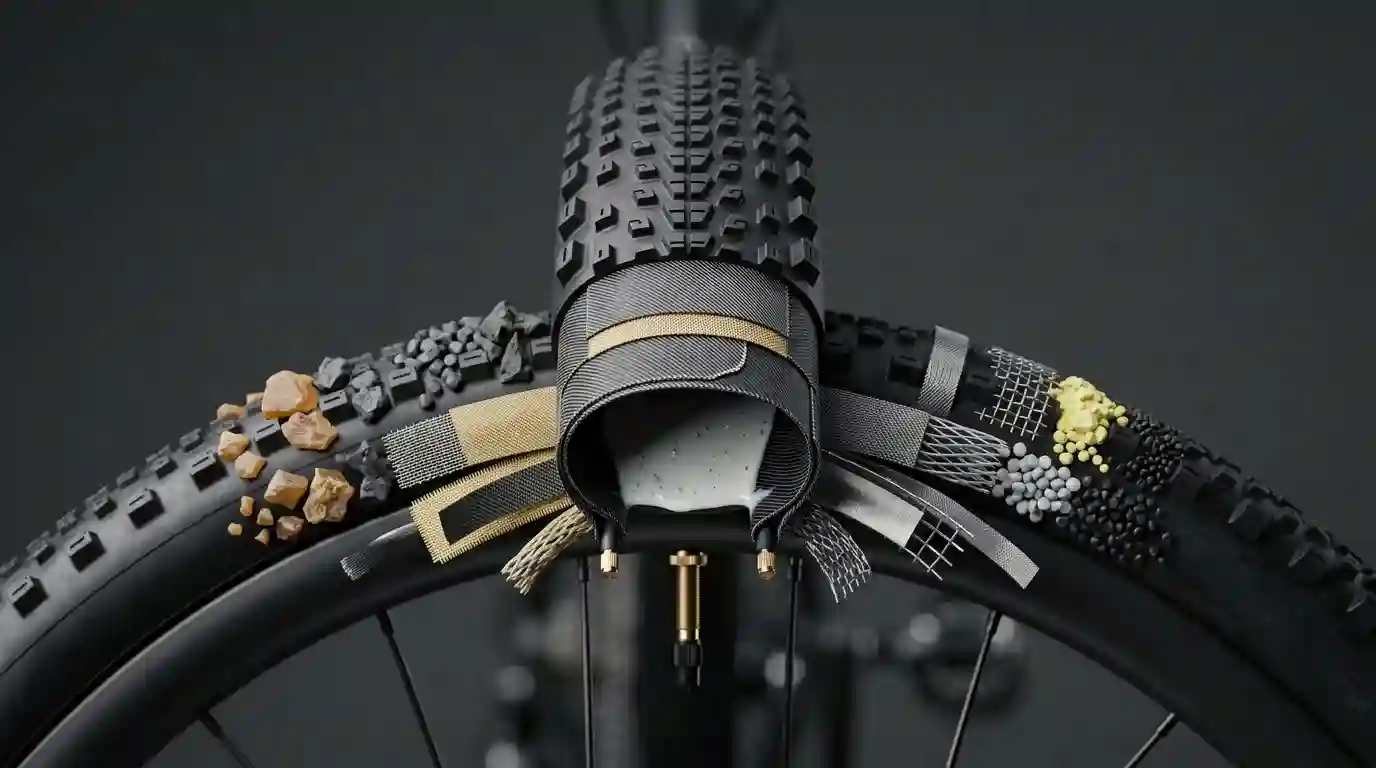
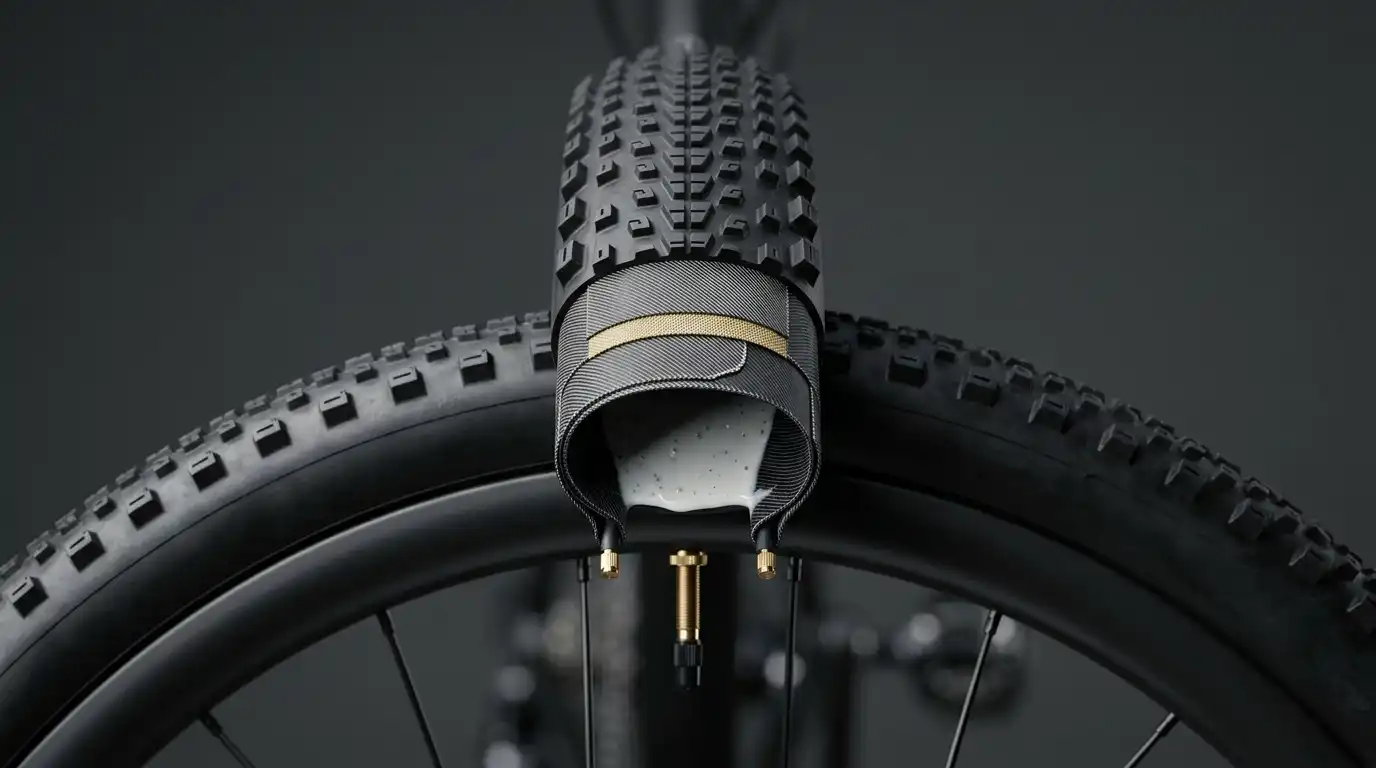
Three tire features matter most. The casing is the fabric body of the tire. The rubber compound controls grip and wear. Puncture protection is an extra layer under the tread.
You can learn more in our guides on what a bike tire casing is and how rubber compounds work. For the full picture, read what makes a good bike tyre.
Common Types of Bike Tire Punctures
Flats fall into four groups. Each one has a different cause and a different cure.
| Flat Type | Typical Cause | Best Defense |
|---|---|---|
| Tread puncture | Glass, thorns, nails, wire | Puncture belt, tubeless sealant |
| Pinch flat | Hard hit with low PSI | Correct pressure, wider tire |
| Sidewall cut | Sharp rocks, curb edges | Reinforced sidewalls |
| Valve leak | Loose core or poor seal | Check and tighten the valve |
A pinch flat happens when the tube gets trapped between the rim and the tire. It often leaves two small holes side by side, called a snakebite.
Why Do Some Bike Tires Get More Flats Than Others?
Thin casings and worn tread give sharp objects an easy path. A tire at the end of its life simply has less rubber to stop a thorn.
Pressure plays a big part too. Low PSI raises pinch-flat risk. Very high PSI cuts grip and makes the tire bounce over debris.
Setup mistakes cause repeat flats as well. Damaged rim tape, a pinched tube, or a sliver of glass left inside the tire can flatten a fresh tube within minutes.
How to Prevent Bike Tyre Punctures: 9 Proven Tips
These nine habits work for commuters, road riders, gravel fans, mountain bikers, and e-bike owners. Choose tires that suit your surface. Keep pressure correct. Add protection without giving up too much grip or speed.
For a deeper buying guide, see how to choose puncture-resistant bike tyres.
1. Choose Tires With Built-In Puncture Protection
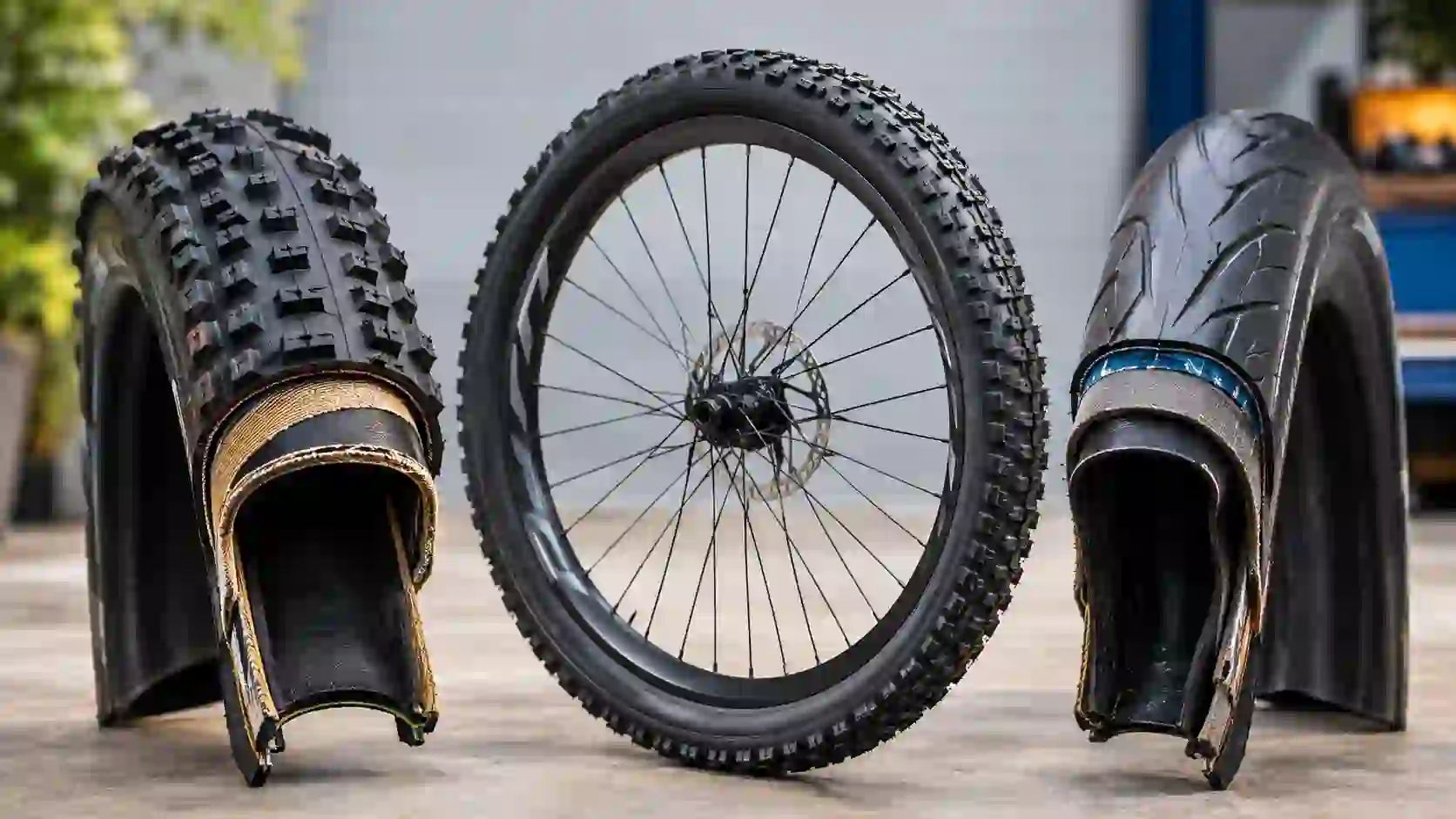
A puncture belt is a layer of tough material under the tread. Makers use rubber, nylon, aramid (the family that includes Kevlar), and similar fibers.
Compare the belt, the casing, the weight, and the rolling resistance. That is the energy you lose as the tire rolls.
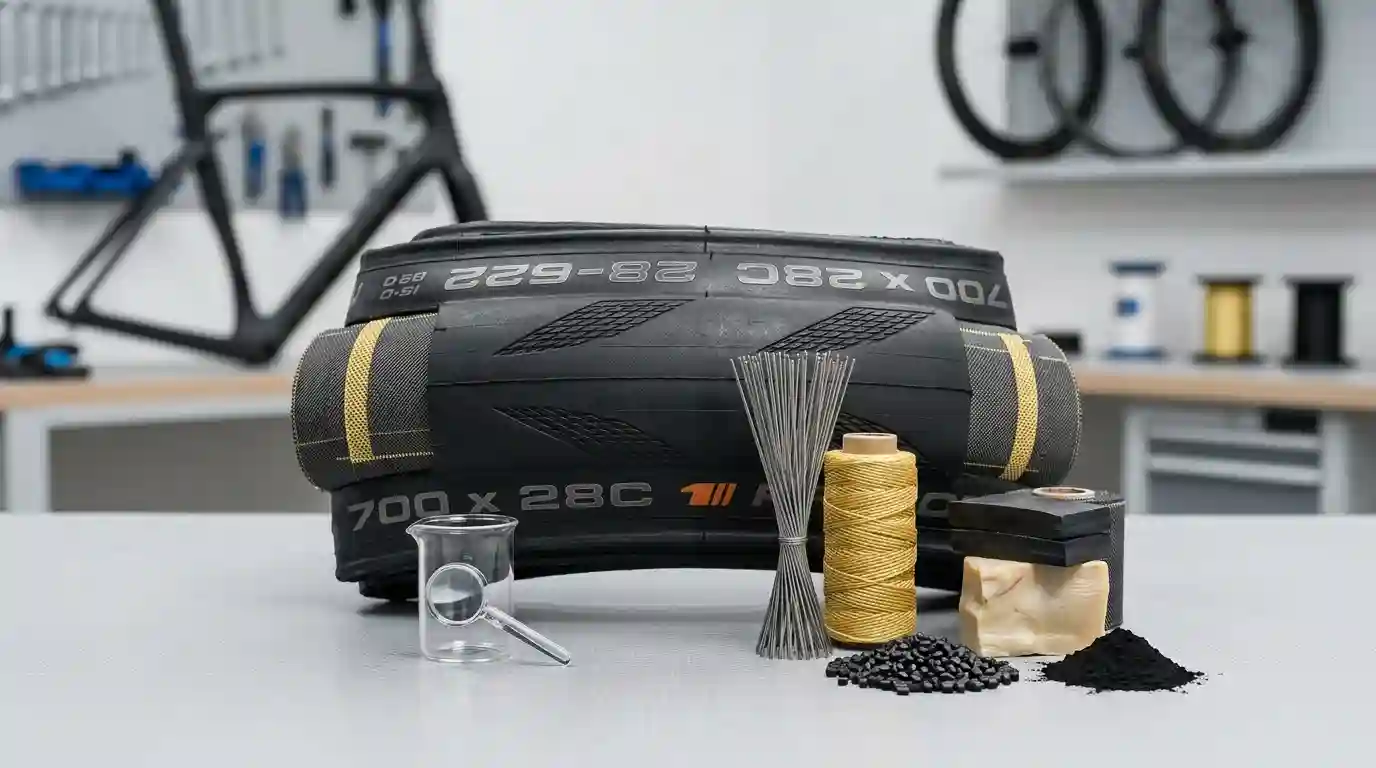
Casing TPI (threads per inch) matters too. Lower TPI, around 60, often means thicker threads and more cut resistance. Higher TPI, 120 or more, feels smoother and faster but can be easier to cut.
Pick reinforced tires for daily use. Pick lighter tires for race day. Our guide to bike tyres for puncture protection vs rolling resistance explains the trade-off.
2. Maintain the Correct Tire Pressure (PSI)
Pressure is the cheapest flat prevention you have. Check it before long rides and at regular intervals.
Start with the limits printed on the tire and the rim. Then adjust for rider weight, tire width, terrain, and load. There is no one number that fits everyone.
Learn the basics in how to check bike tire pressure and how to find the correct bike tire pressure. You can also read how often to inflate your bike tires.
3. Inspect Tires Before Every Ride
Take thirty seconds to look over each tire. Search for embedded glass, thorns, sharp stones, cuts, and worn tread.
Spin the wheel slowly so you see the full circle. Pick out loose debris with care, using a small pick or the tip of a key. Never use your bare fingers on glass.
Replace any tire with deep cuts or structural damage. Our guide on how often to check bike tyres offers a simple routine.
4. Avoid Road Debris and Sharp Objects
Ride around broken glass, metal bits, and rough road edges when it is safe. In many US cities, glass piles up near gutters and bike lane edges.
In the Southwest, goatheads (puncturevine thorns) are a well-known flat maker. Choose a clean line and avoid debris-filled shoulders.
Stay calm and predictable. Never swerve hard into traffic or toward another rider. Safety always comes before saving a tire.
5. Consider Tubeless Tires
A tubeless setup uses a compatible rim, tire, valve, and tubeless sealant instead of an inner tube. The sealant is a liquid latex that plugs small holes as they happen.
Typical starting amounts are about 2 oz for road, 2 to 3 oz for gravel, and 3 to 4 oz for mountain bike tires. Check the sealant every few months. It dries out faster in hot, dry climates like Arizona.
Carry a plug kit or a spare tube for bigger holes. Sealant is helpful, but it is not magic.
6. Use Tire Liners or Puncture-Resistant Tubes
A tire liner is a strip of tough material that sits between the tread and the tube. It adds a barrier against thorns and glass.
Puncture-resistant tubes have thicker walls. They can help, but they add weight and may feel slower.
Fit liners with care. Rough or badly placed edges can rub through a tube and cause the very flats you want to avoid.
7. Match Tire Width to Your Riding Conditions
A wider tire holds more air. That lets you run lower pressure for better impact absorption and grip, as long as the rim and frame allow it.
Check your inner rim width before you upgrade. The table below shows typical ranges. Always confirm with the rim maker.
| Inner Rim Width | Typical Tire Width Range |
|---|---|
| 17 mm (0.67 in) | 25 to 35 mm |
| 19 mm (0.75 in) | 28 to 40 mm |
| 21 mm (0.83 in) | 30 to 47 mm |
| 25 mm (1.0 in) | 38 to 55 mm |
| 30 mm (1.2 in) | 2.1 to 2.5 in |
Read bike tire width explained, how much wider a tire you can fit, and whether you can use wider tires on your bike. Also confirm bike tire size compatibility before buying.
8. Replace Worn or Damaged Tires
Replace a tire when you see exposed casing threads, deep cuts, bulges, or repeat punctures. Check the center of the tread for wear and the sidewalls for cracks.
Do not trust tread depth alone. Many road and gravel tires have very shallow tread by design.
Our guides on how often bike tyres should be replaced and how much tread a bike tyre should have cover the signs in detail.
9. Install Tires and Inner Tubes Correctly
Poor installation is a hidden flat maker. Before you mount a tire, inspect the rim tape, valve stem, tire beads, and the inside of the casing.
Make sure the tube is not trapped under the bead. Inflate in stages and check that the tire sits evenly around the rim.
Follow the steps in how to inflate a bike tire correctly to finish the job safely.
How to Choose the Best Bike Tires for Puncture Protection
Compare puncture resistance, rolling resistance, cornering grip, and durability side by side. Then match them to your terrain, speed, mileage, and upkeep habits.
Check independent tests and maker specs before you buy. Our list of the best bike tyres for puncture protection is a good place to start. If durability is your top goal, read how to choose durable bike tyres.
Best Tires for Daily Commuting
Commuters face glass, curbs, and wet roads every day. Pick reinforced tires built for steady road use.
Reflective sidewalls and strong wet grip add real-world value. Balance toughness against rolling resistance so you do not waste effort on every ride.
See bike tyres for daily commuting and how to choose tyres for a commuter bike for more picks.
Road Cycling Tires That Resist Flats
Look for a good mix of low rolling resistance, casing quality, and tread protection. Many riders now train on puncture-resistant road tires and save race tires for events.
If flat prevention is your main goal, skip the thinnest race tire. Wider, tougher models often feel faster in the real world, too.
For speed-focused riders, see how to choose fast-rolling bike tyres and the best tyre width for road and city riding.
Gravel and Mountain Bike Tires for Rough Terrain
Gravel tires need a casing that handles loose stones and rough tracks. Mountain bike tires need tread that bites on your local dirt, from Pacific Northwest mud to Southwestern loose rocks.
Reinforced sidewalls help resist cuts. Still, no tire is truly puncture-proof.
Our guides on choosing bike tires for gravel roads and choosing bike tires for rough roads go deeper.
E-Bike Tires Built for Torque and Weight
E-bike torque and higher system weight put extra stress on a tire during launches and corners. A tire made for e-bikes handles that load better.
Check the load rating and compatibility with your bike. Some tires also carry speed ratings such as E-25 (about 15.5 mph) or E-50 (about 31 mph). A Class 3 e-bike assists up to 28 mph, so match the rating to your top speed.
What Is the Best Tire Pressure to Prevent Punctures?
There is no single PSI that works for every rider or tire. The right pressure balances impact protection, traction, comfort, and rolling resistance.
Avoid both extremes. Too much pressure cuts grip and comfort. Too little pressure invites rim strikes and pinch flats.
Our guides on how much air to put in a bike tire and whether you can overinflate a bike tire explain both sides. You can also learn what happens if bike tire pressure is too high.
How to Calculate the Right Tire Pressure
Here is a simple method you can use today. It gives you a starting point that you then refine on the road.
- Find your total system weight. Add rider, bike, clothing, gear, and cargo in pounds.
- Split the weight. On road and gravel bikes, assume about 45% on the front wheel and 55% on the rear.
- Pick a starting PSI. Use the table in the next section for your tire width.
- Adjust for conditions. Drop 3 to 5 PSI for rough or wet surfaces. Add about 5 PSI if you run tubes.
- Test and refine. Change pressure in 2 PSI steps until the bike feels grippy but not mushy.
A helpful formula is contact patch (sq in) = wheel load (lb) ÷ PSI. A 107 lb rear load at 66 PSI gives about 1.6 square inches of rubber on the road.
Never go above the tire or rim limit. Many hookless rims cap pressure near 72.5 PSI (5 bar), so check your rim first.
Featured snippet quick answer: To help prevent bike tire punctures, inflate your tires to a suitable pressure, use puncture-resistant tires, inspect the tread before rides, remove sharp debris, and replace damaged tires. Avoid pressure that is too low for your load or riding conditions.
How Rider Weight Affects PSI
Heavier riders and loaded bikes need more pressure for the same tire. Lighter riders can often run lower pressure, as long as it stays inside safe limits.
Tire width, casing build, and weight balance also change the ideal number. Use the table below as a starting point for tubeless setups on modern wide rims.
| Total System Weight | Road 28 mm (Front / Rear PSI) | Gravel 40 mm (Front / Rear PSI) | MTB 2.4 in Trail (Front / Rear PSI) |
|---|---|---|---|
| 120 to 140 lb | 48 / 52 | 28 / 31 | 17 / 19 |
| 141 to 160 lb | 54 / 58 | 31 / 34 | 19 / 21 |
| 161 to 180 lb | 58 / 62 | 33 / 36 | 21 / 23 |
| 181 to 200 lb | 62 / 66 | 35 / 38 | 23 / 25 |
| 201 to 230 lb | 66 / 71 | 38 / 41 | 25 / 27 |
| 231 to 260 lb | 71 / 76 | 41 / 44 | 27 / 29 |
These are estimates, not guarantees. Always stay under your tire and rim limits.
Road Conditions and Their Effect on PSI
Smooth pavement can support a higher pressure. Rough asphalt, chip seal, and gravel call for less. A small drop improves comfort and grip, within safe limits.
For wet roads, many riders drop 3 to 5 PSI on the road for more grip. Go too low and you risk a pinch flat or a squirmy corner.
Tubeless and tube setups also differ. Tubeless riders can usually run lower pressure with less flat risk. For more on wet and rough conditions, read how to choose bike tires for wet weather and how to choose tires for mixed surfaces.
Tubeless vs. Inner Tube: Which Prevents More Punctures?
Both setups can work well. They handle small holes, pinch flats, and big cuts in different ways.
| Feature | Tubeless | Inner Tube |
|---|---|---|
| Small thorn holes | Sealant often closes them | Tube deflates quickly |
| Pinch flats | Much less common | More likely at low PSI |
| Large cuts | May need plug or tube | Needs tube swap or patch |
| Cost | Higher upfront | Lower upfront |
| Upkeep | Sealant refills needed | Very simple |
Tubeless tires lower some flat risks, but they do not remove punctures.
Benefits of Tubeless Tires
Sealant can close many small holes before you even notice them. You keep riding instead of stopping to fix a flat.
With no tube, the usual pinch-flat cause is gone. That also lets you run lower pressure for grip.
Safe setup depends on rim and tire compatibility. Always follow the maker’s guidance for mounting and inflating.
Benefits of Inner-Tube Tires
Tubes are simple and cheap to maintain. A spare tube is easy to carry and gives you a quick roadside fix.
A quality puncture-resistant tire and the right PSI can still give dependable flat protection. For many riders, that is plenty.
Can You Use a Tire Liner With a Tubeless Setup?
Some liners are made for tubeless tires. Others are meant for inner tubes only.
Check the liner, rim, and tire makers’ guidance before you mix parts. A poor fit can block sealing, hurt seating, or change how the tire feels.
How to Prevent Pinch Flats and Rim Damage
A hard hit squeezes the tire against the rim. That can pinch a tube or dent the rim itself.
Pressure, tire volume, rider load, and riding style all work together. Take extra care around potholes, curbs, rocks, and on loaded touring bikes. For more on volume and fit, see how to read bike tire size.
How to Avoid Pinch Flats
Use a pressure that fits your tire size, weight, and terrain. Slow down before potholes and sharp hits whenever it is safe.
Consider a wider tire or a compatible insert if your roads are rough. Extra air volume is the best shield against rim strikes.
Protecting Your Rims From Damage
Check the rim for dents, cracks, sharp edges, and worn rim tape. Keep pressure within both the tire limit and the rim limit.
After a big hit, inspect the wheel. Pay extra attention if the tire loses air or the rim looks bent.
How to Check and Maintain Bike Tires
A simple routine saves time and money. Check before rides and again after rough trips.
Track slow air loss, casing damage, and repeat flat spots. If your tire drops air fast, read why bike tyres lose air. Keep tools that fit your tire system.
A Quick Pre-Ride Tire Checklist
- Check pressure with a reliable gauge.
- Look over the tread and sidewalls for debris, cuts, and bulges.
- Make sure the bead sits evenly and the valve is snug.
How Often Should You Check Bike Tire Pressure?
Check before important rides, and often enough to catch slow leaks. Road tires need more frequent checks because they hold less air at higher pressure.
Tubeless tires also lose air over time and need sealant care. Many riders check weekly, and before every long ride.
What to Carry to Reduce the Impact of a Flat
Carry a spare tube, tire levers, and a pump or CO₂ inflator. Tubeless riders should add a plug kit.
For longer rides, pack a patch kit and a multitool. Our picks for bike tyres for long distance cycling pair well with a good repair kit.
How to Test Bike Tires for Puncture Resistance
Do not rely on product claims alone. Compare controlled puncture tests with clear methods and repeatable results.
Real-world durability matters as much as lab data. We explain our approach on our editorial policy page.
What Should a Reliable Tire Test Measure?
A good test covers three areas. Puncture force is the push needed for a test object to pierce the tread. Rolling resistance is the energy lost under a set load, pressure, and speed.
The third area is grip and durability. That includes wet and dry traction, casing damage, and wear over time. See how much bike tires affect grip and how much bike tires affect speed.
How to Interpret Tire Testing Results
Check that tires were tested at similar pressures, loads, and temperatures. Look for repeat measurements and listed equipment.
Treat lab data as a useful comparison, not a promise. A tire that wins in the lab can still flat on a bad road.
Relevant Standards and Testing Practices
Review any ISO or other recognized safety standards for your tire and wheel type. Safety and size tests are not the same as puncture tests.
Never call a tire puncture-proof based on one test or a label. Decode the sidewall text with bike tyre markings explained for beginners and what the numbers on bike tyres mean.
Common Mistakes That Cause More Bike Tire Punctures
Even great tires fail when setup and upkeep slip. A few simple fixes can cut flats right away.
Many riders also believe myths about high PSI, thick tread, and puncture-proof gear. Let us clear those up.
Inflating Tires Too Much or Too Little
Too much PSI cuts grip and comfort on uneven roads. Too little PSI raises pinch-flat and rim-strike risk on tube setups.
Follow approved limits and adjust to your real conditions.
Ignoring Small Cuts and Embedded Debris
Small bits of glass or wire can work deeper into the tread with every ride. Flats in the same spot often point to a stuck object or bad rim tape.
Inspect the tire and tube closely before you fit a new tube.
Choosing Tires Based on Price Alone
A very cheap tire may skimp on casing protection and life. A very costly tire may not suit your surface or style.
Compare specs, independent tests, warranty terms, and expected use. Our guide on how to choose bike tyres can help you decide.
Frequently Asked Questions About Preventing Bike Tire Punctures
1. What is the best way to prevent bike tyre punctures?
Use tires with proper puncture protection and keep PSI correct. Inspect your tires often and pick out embedded debris. Replace worn or damaged tires early.
2. Are tubeless tires less likely to get punctures than inner-tube tires?
Often, yes for small holes. Sealant closes many tread punctures as they happen. Tubeless systems also avoid tube pinch flats, but they can still suffer cuts and bead or valve leaks.
3. What PSI should I use to prevent bike punctures?
Use the tire and rim maker’s approved range. Then adjust for rider weight, tire width, cargo, and road conditions. Never just fill to the maximum number on the sidewall.
4. Do puncture-resistant tires make cycling slower?
They can. Reinforced tires may weigh more than race tires. Still, rolling resistance depends on casing, rubber compound, pressure, and surface, so compare measured results if speed matters.
5. How often should I replace my bike tires?
Replace them when the casing shows, the sidewalls are damaged, or bulges appear. Follow any wear marks the maker gives. Mileage alone is not a reliable rule.
6. Can wider tires help prevent punctures?
Yes, they often help. Wider tires hold more air and allow lower pressure for better impact absorption. Check rim width and frame clearance first.
7. Do tire liners stop all punctures?
No. A liner can block some sharp objects, but it cannot cover every part of the tire. Poor fit can rub or damage the tube, so choose a liner made for your system.
8. Why does my bike tire keep getting punctures in the same place?
A thorn, glass chip, or wire may still be stuck in the tire. A worn rim strip can also puncture the tube from the inside. Match the hole in the tube to the spot on the tire and rim to find the cause.
Conclusion: Prevent Bike Tyre Punctures With the Right Setup
You cannot stop every flat. Still, correct PSI, durable tires, regular checks, and sound installation can cut your flats by a lot.
Match your tire protection and tread to your style, terrain, and goals. Then keep your setup clean and carry the right repair tools, so a puncture never ends your ride.
Want to go further? Learn how bike tires work, see what bike tyres are made of, and meet the team on our about page.
Ready to dial in your setup? Stop guessing and test your exact tire, rim, and weight. Try the Free Bike Tire Pressure Calculator / Tire Finder Tool at TheBikeTires.com and ride flat-free with confidence.

Mohidul Islam is a leading cycling technology specialist and bike tire consultant with over 15 years of hands-on experience in the bicycle industry. He holds a Bachelor of Science in Mechanical Engineering from Penn State University, where he focused heavily on material science, tread mechanics, and rubber compound performance. Over the past decade and a half, Alex has conducted extensive field testing, tubeless setup evaluations, and tire pressure modeling for road, mountain, and e-bikes. His practical insights and data-driven approach help cyclists of all levels optimize grip, speed, and durability on every ride.