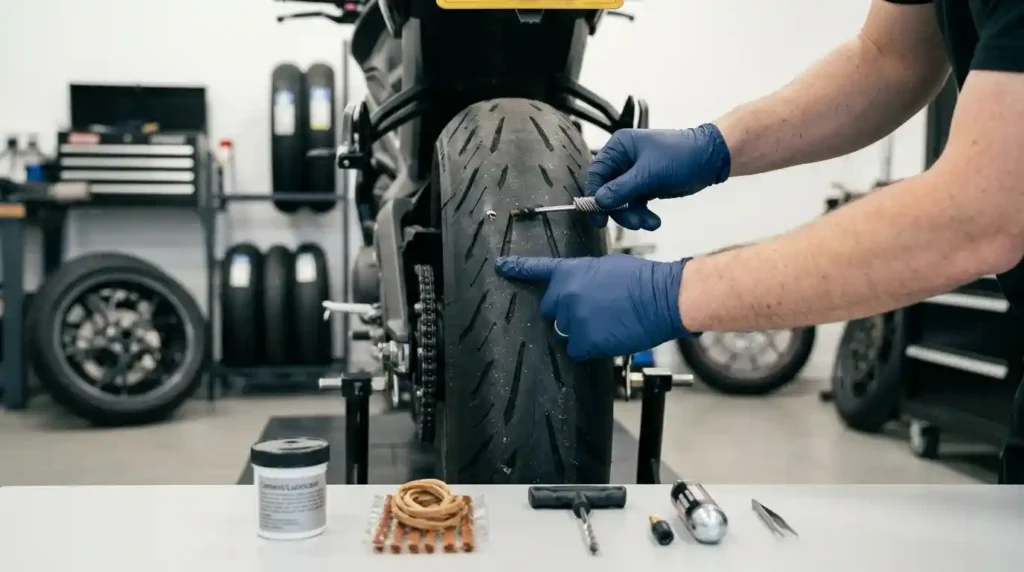
A flat tire can end a good ride fast. It may happen on a commuter bike lane full of glass, a gravel road in Colorado, or a desert trail full of thorns. The good news is simple. Most small punctures are easy to fix at home or on the roadside.
If you have ever searched for how to fix a punctured bike tyre, this guide is for you. You will learn how to find the hole, repair the tube, and put the tire back on the right way. We also cover tubeless repairs, the correct tire pressure (PSI), and ways to stop repeat flats.
US riders face more than flats. Low pressure hurts cornering traction. Wrong PSI wears out tread early. A tire in poor shape is also less safe, slower, and less comfortable. See how much bike tires affect grip, speed, and comfort to learn why every detail counts.
You only need a patch kit and a few basic tools. Set aside about 15 to 20 minutes the first time. With practice, most riders finish in under 10.
Let us get started.
What Do You Need to Fix a Punctured Bike Tire?
Gather your tools before you remove the wheel. It makes the repair faster and less stressful.
First, check whether your bike uses an inner tube or a tubeless tire. The steps differ. If you ride to work, tour, or head to remote trails, carry a small repair kit every time.
Essential Tools for a Bike Tire Repair
| Tool | What it does |
|---|---|
| Tire levers | Lift the tire bead off the rim without harming the wheel |
| Patch kit | Repairs a small hole in the tube |
| Spare tube | Gives a quick swap when a patch will not do |
| Pump and gauge | Inflates to the right PSI and checks for leaks |
A tire bead is the edge of the tire that locks onto the rim. Levers protect it from damage.
A small multitool and a pair of gloves are also handy. Gloves keep your hands clean and protect them from sharp debris.
Not sure which spare tube fits? Learn how to read bike tire size from the sidewall, or see bike tire markings explained for beginners.
Do You Need a Different Kit for Tubeless Tires?
Yes, a little. Tubeless riders need extra items.
- Tubeless plugs: These seal many small holes in the tread.
- Tubeless sealant: This liquid latex closes small punctures on its own. Large cuts may need a tire boot or a new tire.
- Backup items: Carry a compatible pump, a spare tube, and a plug kit for longer rides.
Riders on rocky Southwestern trails often carry a tire boot as well. It can save a ride when a rock slices the casing.
How to Fix a Punctured Bike Tyre in 6 Easy Steps
Quick answer:
- Remove the wheel and let out any air.
- Remove one tire bead and take out the inner tube.
- Find the puncture and check inside the tire for sharp objects.
- Patch the hole or replace the tube.
- Refit the tube and tire without trapping the tube under the bead.
- Inflate to the correct PSI and check that the tire holds air.
The next six sections explain each step in detail. Read them once before your first repair. Then keep the quick list in your head for the road.
Remove the Wheel Safely (Step 1)
Shift the chain to an easier gear before you remove a rear wheel. This makes it simpler to slide out.
Release the brake or axle system as needed. Follow your bike maker’s instructions. On an e-bike, switch off the system first. Follow the maker’s guidance for the battery and wheel removal, because the motor and extra weight change the process.
Remove the Tire and Inner Tube (Step 2)
Let all the air out of the tube. Slide a lever under the bead and lift one side over the rim.
Take the tube out gently. Leave the tire on the other side of the rim so you can match the hole to the tire later. Note where the valve sits. That spot is your reference point.
Do not pull the tire fully off unless you must. Leaving one side on makes it easier to line up the tube and tire later.
Find the Puncture (Step 3)
Add a little air to the tube. Listen for hissing or feel for air on your lips or cheek.
If the hole is tiny, dip the tube in water or brush on soapy water. Bubbles show the leak. Keep the tube away from sharp objects as you work. Then match the hole to the tire and rim to spot glass, thorns, sharp rim tape, or spoke damage.
Patch the Inner Tube (Step 4)
- Clean and dry the area around the hole.
- Roughen it if the kit tells you to.
- Apply vulcanizing solution if required, then wait the stated time.
- Press the patch down firmly and hold it.
Patches work best on clean, dry rubber, so avoid touching the glued area with your fingers. Check that the patch sealed before you reinstall the tube. If the tube has a big tear or a torn valve, replace it.
Refit the Tube and Tire (Step 5)
Add a little air to the tube so it holds its shape. A rounded tube is less likely to twist.
Place the tube inside the tire. Work the bead back onto the rim by hand when you can. Use levers only if you must, and go slowly. Check both sides of the tire to be sure no part of the tube is trapped under the bead.
Inflate and Check the Tire (Step 6)
Inflate in stages. Watch the bead and make sure it sits evenly around the rim.
Set the pressure within the tire and rim limits. Our guide on how to inflate a bike tire correctly covers pump types and common errors. Spin the wheel and look for rubbing. Confirm that the tube holds air before you ride.
How to Find the Cause of a Bike Tire Puncture
A good repair starts with the cause. If you skip this step, you may fix the same flat again in a week.
Check the tire, tube, rim tape, valve, and rim for damage before you put it all back together. Never install a new tube until you remove any sharp object from the tire.
Take a minute to think about where and when the flat happened. A flat after a pothole points to a pinch flat. A flat after a glassy street points to debris. If flats keep coming back, read why bike tires lose air.
What Different Puncture Marks Tell You
| What you see | Likely cause | What to do |
|---|---|---|
| One hole on the outer side | Glass, a thorn, or a sharp object | Find and remove the object |
| Two holes close together | Pinch flat from a pothole or curb at low PSI | Raise PSI and ride smoother |
| Hole on the rim side | Damaged rim tape, spoke hole, or sharp rim edge | Replace the tape and check the rim |
A pinch flat happens when the tube gets squeezed between the tire and the rim.
How to Check the Tire Casing and Tread
Look at the tread pattern for debris, deep cuts, and heavy wear. Run a gloved finger or cloth along the inside of the tire.
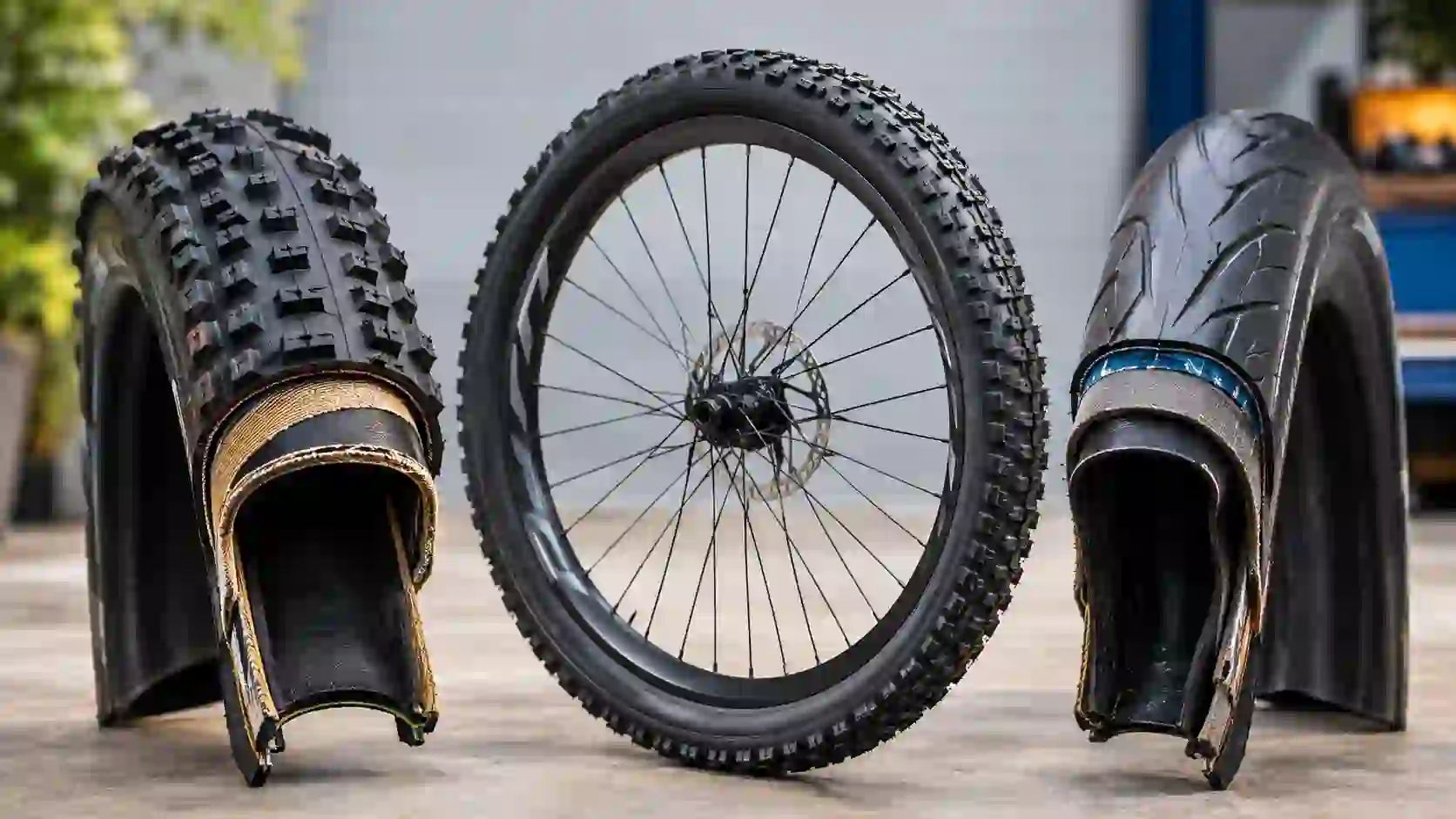
Check the sidewalls for bulges, tears, or exposed threads. The casing is the fabric body of the tire. Learn more about the bike tire casing and how much tread a bike tire should have. Replace a tire with serious damage instead of relying on a patch.
Inspecting Rim Tape and the Valve
Look for gaps, tears, movement, or exposed spoke holes in the rim tape. Make sure the tape width suits the inner rim width.
The valve should sit straight and fit the valve hole. Replace any damaged part. If you are unsure about sizes, see tire size compatibility.
How to Fix a Tubeless Bike Tire Puncture
Quick answer: Small punctures may seal on their own as tubeless sealant reaches the hole.
- Larger tread holes may need a compatible tubeless plug.
- Serious cuts can require a tire boot or a new tire.
- Check the tire and rim maker’s instructions before you plug or reinflate.
How to Repair a Small Puncture With Tubeless Sealant
- Rotate the wheel so the hole sits at the lowest point. Sealant pools there.
- Wait a moment and watch whether air keeps escaping.
- Reinflate to a suitable pressure and make sure the tire holds air.
Sealant dries out over time. In hot, dry areas such as Arizona, check it often and refill it as the maker advises.
If the hole is too big for sealant, move on to a plug. Do not keep pumping air into a tire that will not seal.
Using a Tubeless Tire Plug
Use a plug kit made for your tire and read its safety notes. Push the plug into a suitable tread hole and check that the leak stops.
Inspect the repair afterward. If the cut is large or the casing is damaged, replace the tire. A plug is for tread holes only, not sidewall damage.
When Should You Install an Inner Tube in a Tubeless Tire?
Fit a compatible spare tube if sealant and a plug cannot close the hole. Remove the cause of the puncture first, and check inside the tire for damage.
You can use a tire boot to protect a small casing cut for a short time. Replace an unsafe tire before you resume normal riding.
Tubeless tires fitted with a tube can still hold air well. Ride gently and head home or to a shop for a proper fix.
What Is the Correct Tire Pressure After a Repair?
Correct pressure helps the tire carry the rider and cuts the risk of pinch flats. Too little pressure can cause rim strikes. Too much can reduce grip and comfort.
Choose PSI based on rider and bike weight, tire width, terrain, and the tire and rim limits. See how to find the correct bike tire pressure for more detail.
How to Choose the Right PSI for Your Weight
Follow these steps for a solid starting point.
- Add your weights. Total system weight = rider + bike + clothing + cargo. A 170 lb rider on a 30 lb bike with 10 lb of gear is 210 lb.
- Split the load. The rear wheel carries about 60 percent. The front carries about 40 percent.
- Pick a base PSI from the table below.
- Adjust for conditions. Take off 3 to 5 PSI for wet roads or rough gravel. Add 3 to 5 PSI for inner tubes.
- Stay inside the printed limits on the tire and rim.
| System weight | 28 mm road (1.1 in) | 40 mm gravel (1.6 in) | 2.3 in MTB |
|---|---|---|---|
| 140 lb (64 kg) | 60 to 70 PSI | 30 to 36 PSI | 20 to 24 PSI |
| 170 lb (77 kg) | 68 to 78 PSI | 34 to 40 PSI | 22 to 26 PSI |
| 200 lb (91 kg) | 75 to 85 PSI | 38 to 45 PSI | 25 to 29 PSI |
| 230 lb (104 kg) | 82 to 92 PSI | 42 to 50 PSI | 27 to 32 PSI |
Note: These are tubeless starting points. Use a gauge, and see how much air to put in bike tires.
For quick conversion, 1 bar equals 14.5 PSI.
Does Tire Width Affect Pressure?
Yes. Wider tires hold more air, so they can run lower pressure for a similar load. Narrow road tires often need higher PSI than gravel or mountain bike tires.
Check that the tire fits the rim and has enough frame and fork clearance. Learn what tire width to choose, see bike tire width explained, and measure bike tire size before you swap.
Can Incorrect Tire Pressure Cause Another Puncture?
Yes. Low pressure can lead to pinch flats and rim strikes when the wheel hits a hard edge. Too much pressure cuts grip and comfort, mostly on rough roads.
Check pressure before every ride. A tire can look fine and still sit 10 PSI too low. Use a reliable gauge, not your thumb. Read what happens if bike tire pressure is too high and how to check bike tire pressure.
Common Mistakes to Avoid When Fixing a Flat Bike Tire
Rushing causes most repair errors. A calm, careful repair takes only a few extra minutes and saves you a second flat. You may trap the tube under the bead or leave sharp debris inside the tire.
A patch cannot fix a damaged casing, rim, or valve. Always inspect the whole wheel before you ride again.
Installing a New Tube Without Checking the Tire
A glass shard or thorn can puncture a new tube as soon as you inflate it. Check the inner surface closely and pull out any object with a suitable tool.
If the first hole was on the rim side, check the rim tape and spoke holes too.
Using the Wrong Patch or Tire Pressure
- Choose a patch kit made for your tube material and follow its steps.
- Never inflate past the tire or rim limit.
- Confirm that tire and tube sizes match before you install. Read about ETRTO tire sizes if you are unsure.
You can also see what bike tire size you need.
Riding on a Damaged Tire
Do not ride a tire with a serious sidewall cut, bulge, or exposed casing. A tire boot is only a short-term emergency fix for certain small cuts.
Replace unsafe tires before you ride fast or carry heavy loads. See how often bike tires should be replaced.
How to Prevent Future Bike Tire Punctures
Good habits stop most flats. A weekly two-minute check beats a roadside repair in the rain. Check pressure, tread, and sidewalls as part of normal bike care. Pick a tire with the right protection for your routes.
Avoid debris when it is safe. After rides through glass or thorns, inspect your tires. See how often to check bike tires and how often to inflate bike tires.
Choose Puncture-Resistant Bike Tires
- Commuter tires balance durability, protection, and everyday rolling resistance. See commuter bike tires.
- Gravel tires need tread and casing built for mixed surfaces and sharp stones. See bike tires for gravel roads.
- E-bike tires should match the bike’s load, speed, and wheel size, plus the e-bike torque.
Browse the best bike tires for puncture protection and learn how to choose puncture resistant bike tires.
Understand Casing TPI and Puncture Belts
TPI means threads per inch. It shows how dense the casing weave is. Higher TPI is often lighter and more supple. Lower TPI is often tougher.
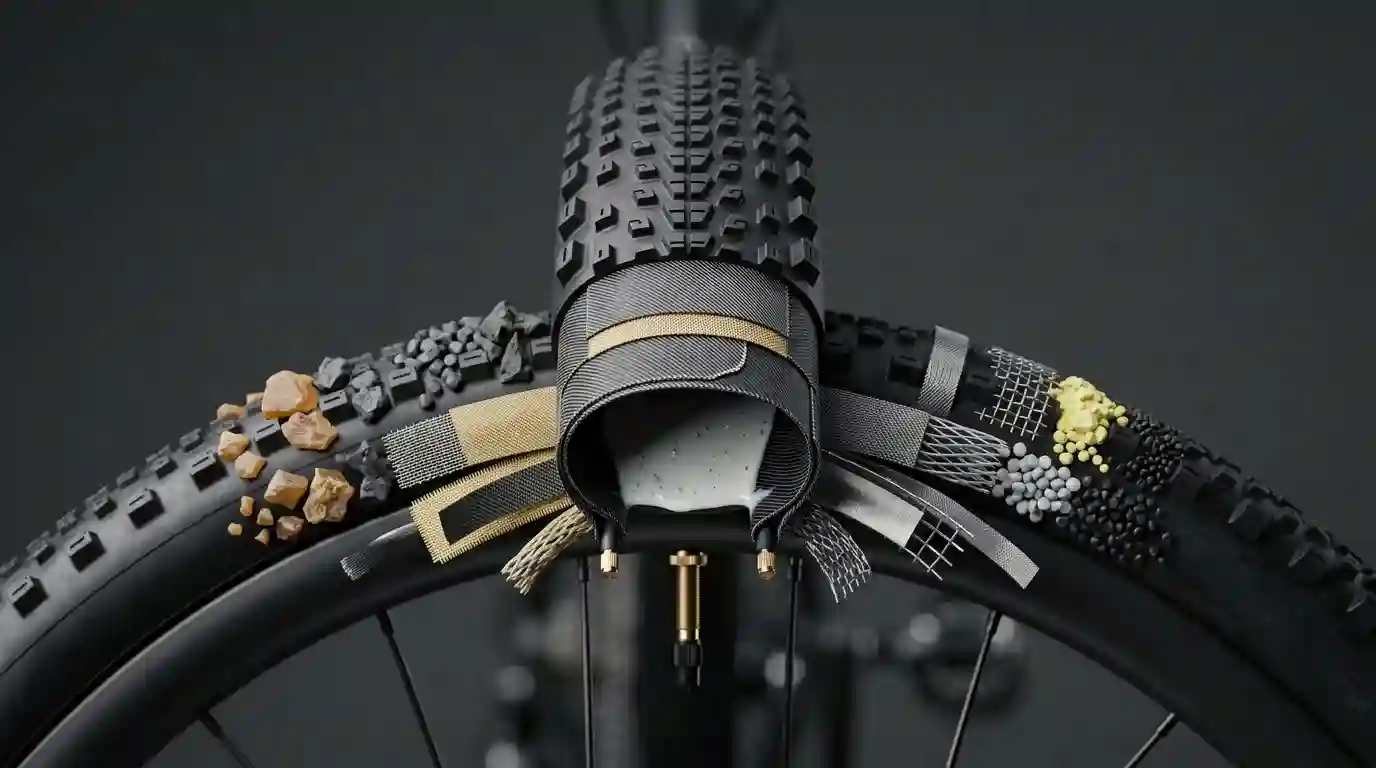
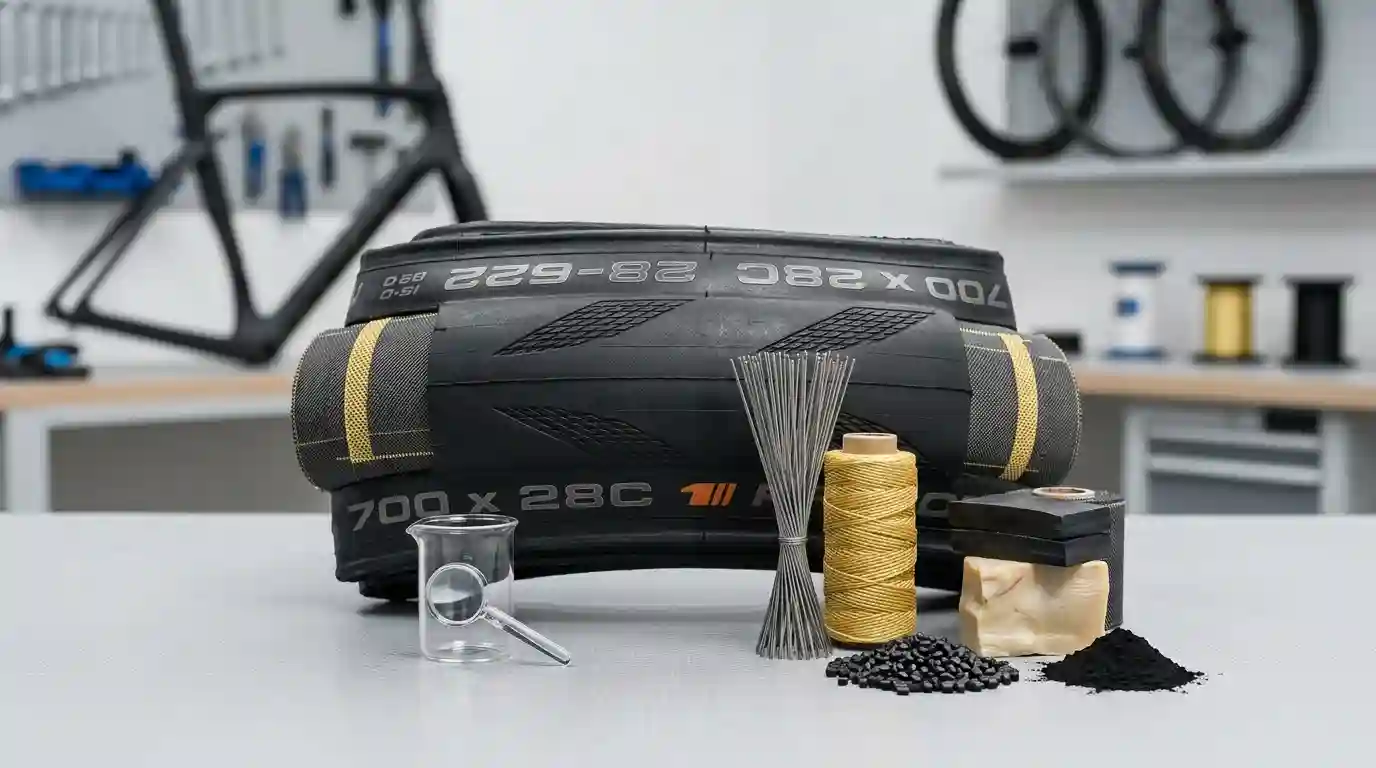
A puncture belt is a protective layer under the tread. Designs and materials vary. Do not judge puncture resistance by TPI alone. Consider the casing, rubber compound, tread, and test data. See the bike tire rubber compound guide and what bike tires are made of.
Durometer is a rubber hardness scale. Softer rubber grips better. Harder rubber lasts longer. Explore puncture protection vs rolling resistance to weigh the trade-off.
Maintain Tires for Better Grip and Fewer Flats
Inspect the tread and sidewalls before long rides. Use a tread pattern that suits your surface. Learn why there are different tread patterns.
Keep PSI right to support cornering grip and cut stress on the tire and rim. Even a few PSI too low can make a corner feel vague and raise your flat risk. In Pacific Northwest mud, a slightly lower pressure helps traction. On Southwestern loose rock, add a little pressure and choose a stronger casing. For wet days, see wet weather bike tires.
How Do Experts Test Bike Tire Puncture Resistance?
Experts compare tires with controlled methods and clear test conditions. They record tire size, rim width, pressure, load, and method so results are fair.
They also separate lab puncture data from real-world reports of durability and grip. See our testing process, read our editorial policy, and learn about TheBikeTires.
What Should a Good Tire Test Measure?
- Puncture resistance: The force needed to get through the tire under a set method.
- Rolling resistance: The energy lost as the tire rolls under controlled conditions.
- Durability and grip: Wear, casing damage, and cornering traction on real surfaces.
Why Do Test Conditions Matter?
Pressure, load, temperature, and tire size all change results. Use the same method when you compare models.
A tire tested at 60 PSI cannot be fairly compared with one tested at 90 PSI. Pressure should suit each tire’s width and use.
Good tests cite recognized methods and explain their limits. They do not make claims they cannot support. Learn how bike tires work to read test data with confidence.
Frequently Asked Questions About Fixing a Punctured Bike Tire
1. Can I fix a punctured bike tire without removing the wheel?
Sometimes. A tubeless plug can fix an accessible tread hole while the wheel stays on.
Tube repairs are usually easier and safer with the wheel and tube removed. Follow the maker’s advice for your tire and wheel system.
If you cannot see or reach the hole, take the wheel off. A rushed plug in the wrong spot can hide damage.
2. Is it better to patch a bike tube or replace it?
A patch works well for a small hole in a healthy tube. Replace a tube with a torn valve, a large split, or several damaged spots.
A spare tube speeds up roadside repairs. Patch the old tube later at home, where you have better light and a clean surface.
Many commuters keep one fresh spare and one patched backup. That way a second flat does not end the trip.
3. How long does a bike tire patch take to dry?
It depends on the patch and the kit. Vulcanizing patches often need the solution to turn tacky before you apply them.
Follow the kit’s instructions. Do not guess the time.
Some modern patches are glueless and stick right away. They are handy on the road, but many riders still trust glue patches for a lasting fix at home.
4. Can I ride my bike with a patched inner tube?
Yes, if the patch is fitted well and the tube holds air. Check the pressure, casing, and bead before you ride.
Replace the tube or tire if the damage makes the setup unsafe.
A good patch can last for thousands of miles. If the same tube keeps failing, the rubber may be worn thin, so replace it.
5. What PSI should I use after fixing a puncture?
No single PSI fits all bikes and riders. Weigh your system weight, tire width, terrain, and the tire and rim limits.
A calculator gives a good starting point. Learn about overinflated bike tires so you stay in a safe range.
6. Are tubeless tires better for preventing punctures?
Tubeless sealant can close many small holes and end tube pinch flats. Large cuts and sidewall damage may still need a plug, boot, or new tire.
Tubeless setups need compatible parts and regular sealant checks.
| Feature | Tubeless | Inner tube |
|---|---|---|
| Small tread holes | Often seals itself | Needs a patch or new tube |
| Pinch flats | Much less likely | More likely at low PSI |
| Upkeep | Sealant top-ups | Simple and cheap |
7. When should I replace a punctured bike tire?
Replace a tire with serious casing damage, a bulge, or a deep cut that weakens its structure. A small tread puncture may be repairable if the tire is still sound.
Follow the maker’s repair advice and never ride an unsafe tire. Daily riders can also see bike tires for daily commuting.
8. Can the wrong rim width cause punctures?
Yes. A poor tire and rim pairing can change tire shape, bead fit, and safe pressure.
Check the tire maker’s approved rim range. Hookless rims often cap pressure near 72.5 PSI (5 bar) and need compatible tires. Hooked rims have a bead lip and usually allow higher limits.
| Inner rim width | Typical tire width |
|---|---|
| 17 mm | 25 to 35 mm |
| 19 mm | 28 to 42 mm |
| 21 mm | 32 to 50 mm |
| 25 mm | 40 to 60 mm (1.6 to 2.4 in) |
Treat these as typical ranges. Confirm with the maker, and see whether a tire will fit your wheel. Wondering about a bigger tire? Read can I use wider tires on my bike.
Conclusion: Fix Your Flat and Ride With Confidence
You now know how to fix a punctured bike tire. Remember the key points:
- Find the cause before you patch or replace the tube.
- Refit with care. Use the correct PSI and inspect the rim tape and casing.
- Prevent repeats. Choose suitable protection and keep your tires in good shape. Check them weekly and replace them when they wear out. For long days, see the best bike tires for long rides.
If you are shopping for a new tire, start with how to choose bike tires.
Find Your Ideal Bike Tire Pressure
Make your next ride smoother and take the guesswork out of PSI. Visit TheBikeTires.com and use the Free Bike Tire Pressure Calculator and Tire Finder Tool. Find a smart starting PSI and explore tire options for your bike, riding style, and road conditions.

Mohidul Islam is a leading cycling technology specialist and bike tire consultant with over 15 years of hands-on experience in the bicycle industry. He holds a Bachelor of Science in Mechanical Engineering from Penn State University, where he focused heavily on material science, tread mechanics, and rubber compound performance. Over the past decade and a half, Alex has conducted extensive field testing, tubeless setup evaluations, and tire pressure modeling for road, mountain, and e-bikes. His practical insights and data-driven approach help cyclists of all levels optimize grip, speed, and durability on every ride.