You fix a flat, pump the tire, and ride off happy. A few days later, the tire is flat again. It is a frustrating loop that many US riders know well.
If you keep asking, “why does my bike tyre keep getting punctures,” the answer is rarely bad luck. Repeat flats usually trace back to one hidden cause. It could be a tiny shard of glass still stuck in the tread, a worn rim tape, or the wrong tire pressure (PSI).
US cyclists face a long list of tire problems. Flats top the list. Poor cornering traction, soft or overinflated tires, and fast tread wear follow close behind.
The right tire and the right PSI matter for more than flats. They shape how much bike tires affect grip, speed, and comfort. They also decide how safe your bike feels in a corner or a panic stop.
This guide gives you a practical plan. You will learn how to find the cause, fix it, and choose tires that resist flats. If you want a broader starting point, read our guide on how to choose bike tires.
Why Does My Bike Tire Keep Getting Punctures?
Short answer: Repeated bike tire punctures usually happen because of sharp road debris, underinflation, worn tires, rim damage, or debris trapped inside the tire.
- Inspect the tire, inner tube, rim tape, and valve before you fit another tube.
- Keep the right tire pressure for your weight, tire width, and terrain.
- Use a tire with real protection. Our guide to how to choose puncture resistant bike tires shows what to look for.
The Most Common Causes of Repeated Flat Tires
Most repeat flats fall into three groups.
- Sharp objects: Glass, thorns, nails, and wire can pierce the tread or sidewall. In the Southwest, goathead thorns are a classic culprit.
- Pinch flats: Low pressure lets the tube get squeezed between the tire and rim after a hard hit.
- Mechanical damage: Worn rim tape, sharp rim edges, loose spokes, or a bad valve can cause flat after flat.
Some riders also blame the road alone. In truth, the same few habits cause most repeat flats: skipped inspections, low PSI, and tires that are past their prime.
Slow leaks are a different problem. Learn why bike tires lose air if your tire goes soft overnight.
How to Identify the Type of Puncture
The tube tells a story. Read it before you patch it.
| What you see | Likely cause | Next step |
|---|---|---|
| One hole on the outer side | Sharp object in the tread | Find and remove the object |
| Two small holes side by side | Pinch flat from a pothole or curb | Raise the PSI and ride smoother |
| Hole on the rim side | Bad rim tape or a sharp spoke hole | Replace the tape and check the rim |
| Hole near the valve | Valve damage or poor seating | Replace the tube and reseat the valve |
What Causes Bike Tires to Get Flat Again After a Repair?
A repair fixes the hole, not the reason for the hole. If the cause stays, the flat comes back. That is why a careful inspection matters more than a fast patch.
If you want to see how we judge tires and parts, read our testing process.
A good rule is to treat every flat as a clue. Ask where the hole sits, what the tire looks like inside, and how the rim tape looks. Those three answers solve most cases.
Debris Left Inside the Tire
Tiny shards can hide in the rubber. They poke the new tube from the inside.
- Remove the tube first.
- Wrap a cloth around your fingers and run it slowly along the inside of the tire.
- Pull out any glass, thorn, wire, or metal bit you find.
Check the outside tread too. Look for small cuts that hold a sharp fragment.
A common trap is a thorn or glass chip that sits flush with the rubber. You cannot see it, but the tube feels it on every turn of the wheel. Slow, patient checking beats a quick glance.
Damaged Rim Tape and Sharp Rim Edges
Rim tape shields the tube from the spoke holes. When it moves or cracks, the tube gets cut from below.
Check that the tape is whole, centered, and wide enough for your rim’s inner rim width. It must fully cover every spoke hole. Replace worn tape and file or fix any sharp edges before you ride.
Incorrect Tube or Valve Installation
The tube must match the tire. A tube that is too big folds. A tube that is too small stretches thin.
Read the size on your tire with our guide on how to read bike tire size. Then check the valve. It should sit straight and fit the valve hole. Add a little air before fitting the tire so the tube is not trapped under the bead.
After the tire is on, push each bead toward the center and look for a bulge. A pinched tube can hold air for a short time and then fail on the road.
Can Incorrect Tire Pressure Cause Frequent Punctures?
Yes. Low pressure raises the risk of pinch flats, rim strikes, and casing damage, especially on rough roads.
Too much pressure can also hurt. It cuts grip and comfort. See what happens if bike tire pressure is too high for the full picture.
The right PSI depends on tire width, rider and bike weight, terrain, tire build, and whether the setup is tubeless.
Many riders guess their pressure. That works until a pothole, a curb, or a sharp rock turns a small error into a flat. A gauge and a plan fix that.
How to Find the Correct Bike Tire Pressure (PSI)
Use this simple method. It gives you a solid starting point.
- Add your weights. Total system weight = rider + bike + gear. A 175 lb rider with a 25 lb bike and 10 lb of gear is 210 lb.
- Split the load. The rear wheel carries about 60 percent. The front carries about 40 percent.
- Pick a base PSI from the table in the next section.
- Adjust for conditions. Drop 3 to 5 PSI for wet roads or rough gravel. Add 3 to 5 PSI for tubes.
- Stay within limits. Never exceed the max PSI on the tire or rim.
Here is a worked example. Say your system weight is 210 lb and you ride 40 mm gravel tires tubeless. The table gives about 38 to 45 PSI. Start near 42 PSI in the rear and 39 PSI in the front, since the rear carries more load. Then lower both by 3 PSI on rough, loose gravel.
Quick conversion: 1 bar equals 14.5 PSI, and 1 lb equals 0.45 kg. For more detail, see how to find the correct bike tire pressure and how much air to put in bike tires.
Does Rider Weight Affect Puncture Risk?
Yes. Heavier riders and loaded touring bikes squash the tire more. That raises the chance of a pinch flat unless you add pressure.
Use these tubeless starting points. Add 3 to 5 PSI if you run tubes.
| Total system weight | 28 mm road (1.1 in) | 40 mm gravel (1.6 in) | 2.3 in MTB |
|---|---|---|---|
| 140 lb (64 kg) | 60 to 70 PSI | 30 to 36 PSI | 20 to 24 PSI |
| 170 lb (77 kg) | 68 to 78 PSI | 34 to 40 PSI | 22 to 26 PSI |
| 200 lb (91 kg) | 75 to 85 PSI | 38 to 45 PSI | 25 to 29 PSI |
| 230 lb (104 kg) | 82 to 92 PSI | 42 to 50 PSI | 27 to 32 PSI |
| 260 lb (118 kg) | 88 to 100 PSI | 46 to 54 PSI | 30 to 35 PSI |
Note: These are starting points, not rules. Always check the limits printed on your tire and rim.
E-bike riders should add the motor, battery, and e-bike torque to the weight picture. Wider tires can run lower PSI at the same load, as long as the setup stays safe.
How Often Should You Check Tire Pressure?
Check before long rides and at least once a week for regular riding. Check daily if you commute every day.
Always use a gauge. Thumb pressure is not reliable. Narrow road tires and tubeless setups can lose air between rides, and temperature swings change pressure too. A cold morning can drop PSI by several points.
Learn how often to check bike tires, how often to inflate bike tires, and how to check bike tire pressure the right way.
How to Find and Fix a Repeated Bike Tire Puncture
Quick steps:
- Remove the wheel and let out the remaining air.
- Inspect the tire, tube, rim tape, and valve to find the real cause.
- Repair or replace the damaged part, then reinstall and inflate.
Work in a clean, well-lit spot. Take your time. Rushed fixes cause the next flat.
Keep a small kit on every ride. Two tire levers, a patch kit, a spare tube, and a pump or CO2 inflator cover most roadside repairs.
Remove the Wheel and Inner Tube (Step 1)
Shift to the right gear and release the brake or axle as needed. Take the wheel off.
Use tire levers with care to unseat one bead. Avoid pinching the tube. Mark the tube’s position against the tire so you can match the hole to the spot on the tire.
Inspect the Tire and Locate the Damage (Step 2)
Look for cuts, embedded debris, exposed casing threads, and worn tread. Compare the hole in the tube with the same area of the tire and rim.
Pull out any sharp object. If the tire’s structure looks unsafe, replace it.
Hold the tire up to the light. Thin spots or tiny pinholes in the casing sometimes show as bright dots. Those tires will keep failing.
Patch or Replace the Tube (Step 3)
Use a good patch kit for small holes in an otherwise healthy tube. Make sure the patch sticks well.
Replace the tube if it has a big tear, a damaged valve stem, or repeated holes in thin rubber. Test that it holds air before you reinstall it.
Reinstall and Inflate the Tire (Step 4)
Check the bead and rim tape first. Fit the tube, then inflate slowly. Watch that the bead seats evenly on both sides.
Set the right PSI and check for leaks. Our guide on how to inflate a bike tire correctly covers pump types and common errors.
Which Tire Problems Make Punctures More Likely?
A tired tire is a flat waiting to happen. Wear, weak casings, and thin protection all raise your risk. Know what to look for.
US riders often keep tires too long. Daily commuters on glass-heavy bike lanes and riders on desert trails wear them out faster than they expect.
Worn Tread and Damaged Tire Casings
Replace tires with deep cuts, bulges, or exposed casing threads. These are safety risks, not just flat risks.
A smooth center can be normal on road tires. Judge wear by the tire’s design. Learn how much tread a bike tire should have. Check sidewalls often, since casing damage can hide behind decent tread.
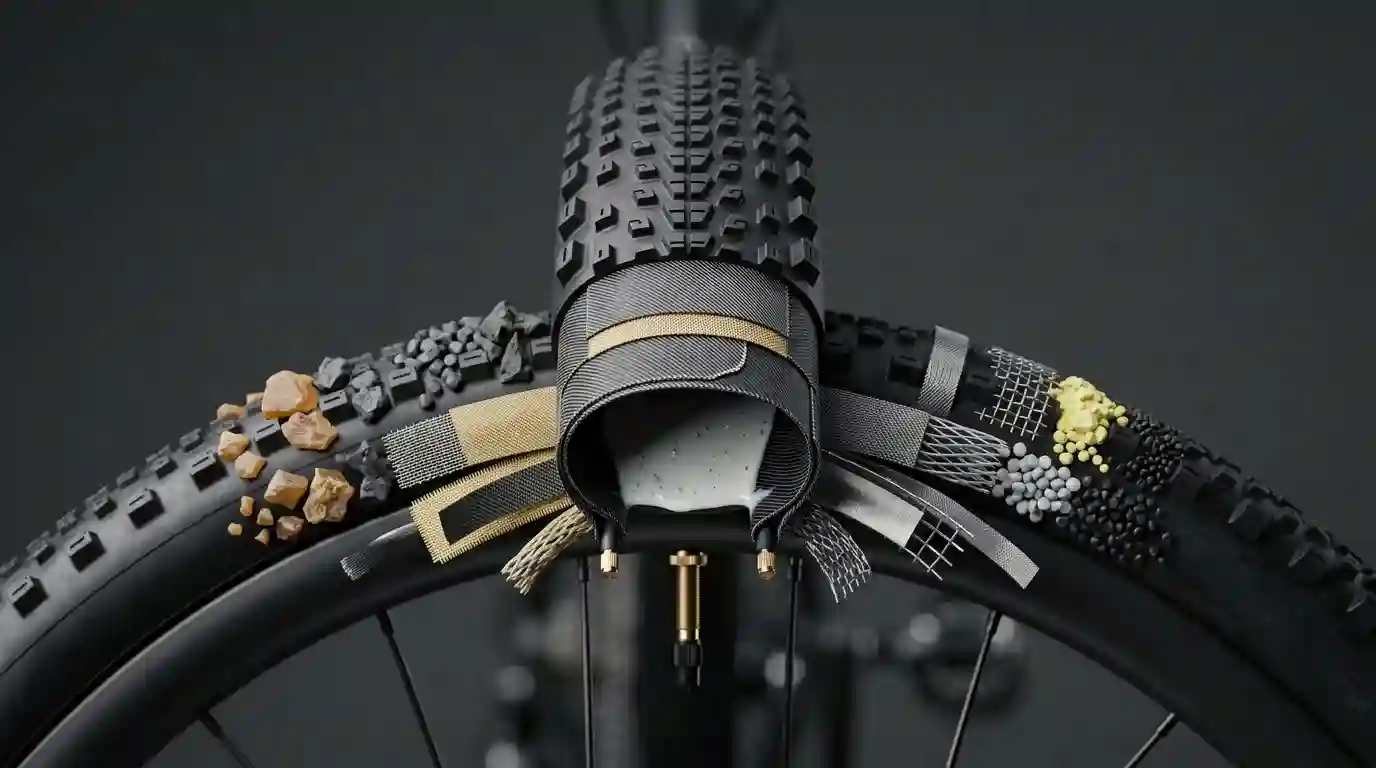
How Tire Casing TPI Affects Puncture Resistance
TPI means threads per inch. It describes how dense the casing weave is.
Higher TPI is often lighter and more supple. Lower TPI often uses thicker threads and feels tougher. TPI alone does not set puncture resistance. Rubber thickness, casing layers, and belts matter too. Read more about the bike tire casing and the rubber compound.
Durometer is a rubber hardness rating. Softer rubber grips better. Harder rubber usually lasts longer.
What Is a Puncture Protection Belt?
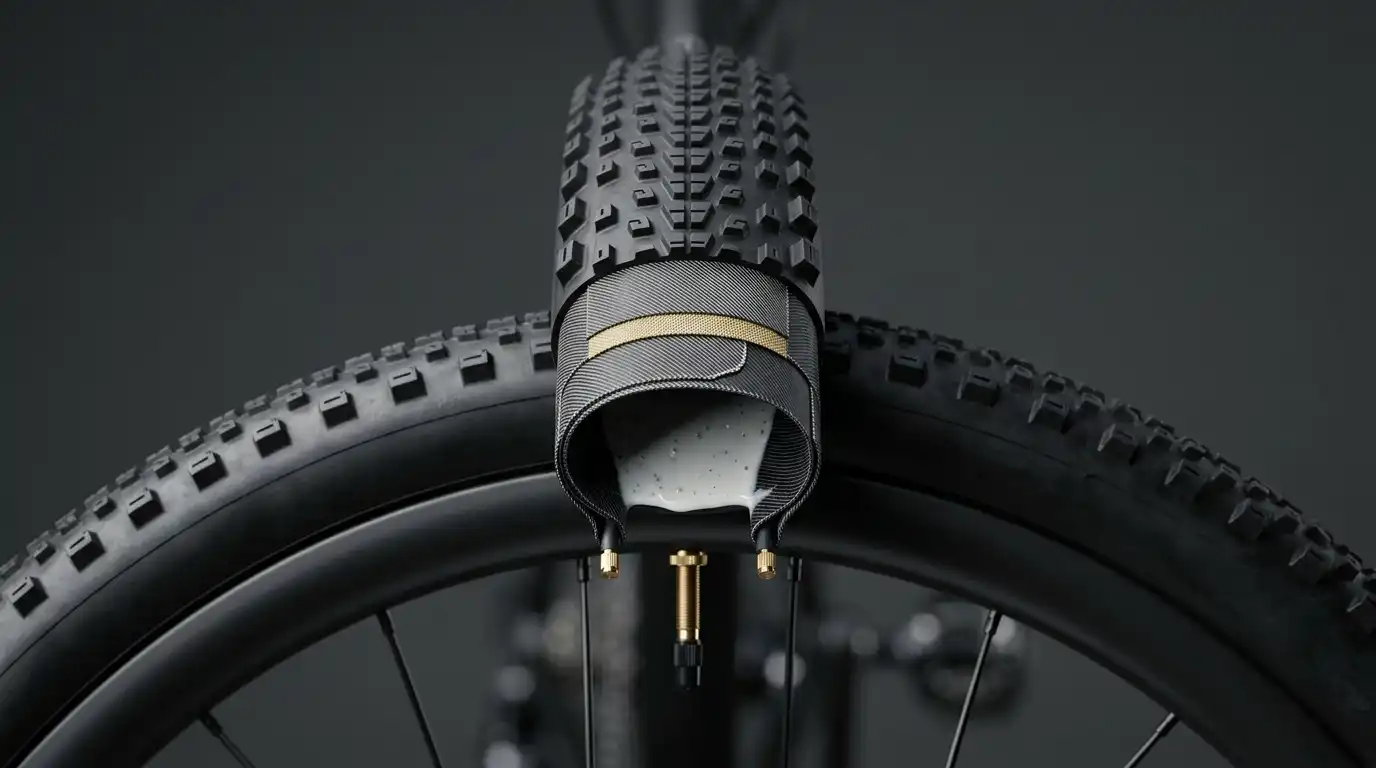
A puncture belt is a layer under the tread that helps block sharp objects.
Materials vary. You may see nylon, reinforced fabric, or other protective layers. Compare tested protection, weight, rolling resistance, and ride feel. Do not rely on marketing alone. A belt adds a little weight, but for many riders the fewer flats are worth it. See what bike tires are made of for more on materials.
Are Some Bike Tires Better at Preventing Punctures?
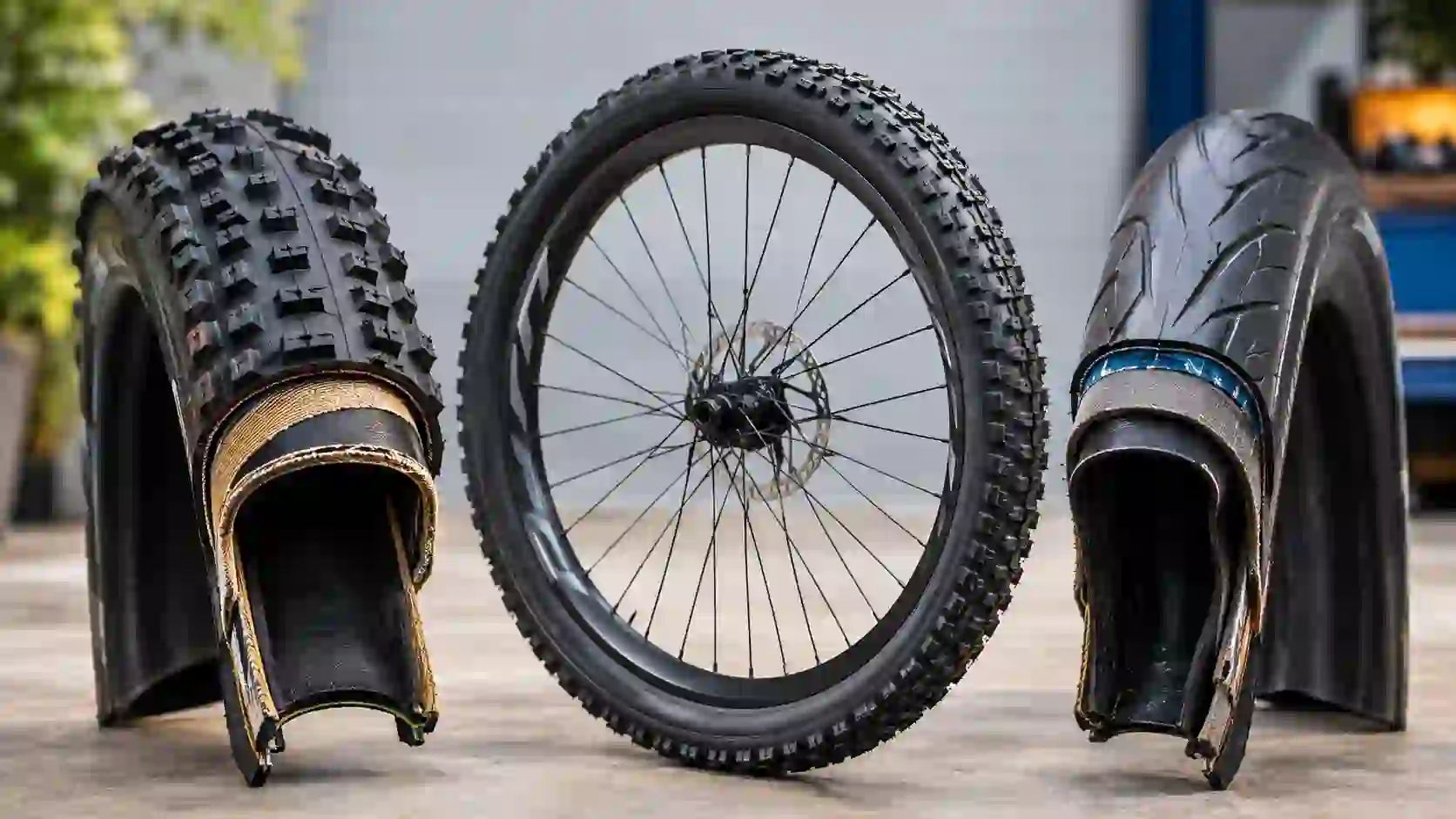
Yes. Tires made for commuting, touring, gravel, and e-bikes often have extra casing protection or reinforced tread.
More protection can add weight and rolling resistance. Pick a tire that fits your riding. Match the width and build to your rim, frame clearance, and terrain.
The best choice is a balance. A tire with more protection may feel slower. A tire with less may feel lively but fail more often.
Best Bike Tire Types for Puncture Protection
| Tire type | What it offers | Best for |
|---|---|---|
| Commuter | Tough tread, wet grip, belts | Daily city riding |
| Gravel | Mixed tread, casing options | Pavement and loose gravel |
| E-bike | Higher load ratings, strong casing | Heavy bikes and torque |
See our picks for the best bike tires for puncture protection. Commuters can read about commuter bike tires. Rough pavement riders should see tires for rough roads.
Puncture Protection vs. Rolling Resistance
Extra layers can make a tire heavier or stiffer. The effect depends on the model.
Rolling resistance comes from casing design, rubber compound, tread, and inflation pressure. Explore the trade-off in puncture protection vs rolling resistance. If speed matters most, see fast rolling bike tires.
How to Choose a Durable Tire for Your Riding Style
Road riders may like a fast tire with a light belt and a width that suits their rims. Daily commuters often want tough tread, reflective sidewalls, and dependable wet grip.
Mountain bikers and gravel riders should match tread pattern and casing strength to rocks, roots, and loose surfaces. Our guide to durable bike tires helps you weigh these choices. Learn why different tread patterns exist.
Can Tubeless Tires Stop Frequent Punctures?
Short answer: Tubeless tires use tubeless sealant to close many small holes without an inner tube.
- They reduce pinch flats caused by tube squeeze.
- They cannot stop every cut or tire failure.
- They need compatible rims, tires, valves, sealant, and correct setup.
Tubeless vs. Inner Tube: Which Is Better?
| Feature | Tubeless | Inner tube |
|---|---|---|
| Small tread holes | Often seals itself | Needs a patch or new tube |
| Pinch flats | Much less likely | More likely at low PSI |
| Maintenance | Sealant top-ups | Simple and cheap |
| Best for | Gravel, MTB, frequent flatters | Casual riders, basic wheels |
Neither system ends punctures. Large holes may need plugs, patches, a tire boot, or a new tire.
Tubeless Sealant: How It Works
Sealant flows toward a small hole. It forms a plug as air tries to escape.
Sealant dries out over time. Check it and refill it as the maker advises. In hot, dry climates like Arizona, it can dry in a few months. If pressure keeps dropping, check the valve, bead, and rim tape for leaks.
How to Set Up a Tubeless Tire Correctly
- Confirm the tire and rim are made to work as a tubeless system.
- Fit tubeless rim tape and a compatible valve, then add the right amount of sealant.
- Seat the bead with a suitable pump or inflator. Stay within the maker’s pressure limits.
Check tire size compatibility first, and use the ETRTO tire sizes guide to confirm the match.
How to Prevent Bike Tire Punctures on Different Roads
Terrain changes the plan. A tire that works well on city streets may struggle on Pacific Northwest mud or Southwestern loose rock.
In wet mud, drop pressure a little for cornering traction. On sharp desert rock, add a little pressure and choose a stronger casing to guard against pinch flats.
Preventing Punctures on City Streets
Steer around visible glass and metal when it is safe. Choose a tough commuter tire and check the tread after rides on messy roads.
Keep PSI in range to cut pinch flats near potholes and curbs. For wet days, see wet weather bike tires.
Gravel Roads and Trails: Puncture Prevention
Pick gravel tires with the right casing and tread for your surface. Do not run pressure so low that the tire bottoms out on rocks.
Adjust PSI for load, width, terrain, and your setup. Our guide on how to choose bike tires for gravel roads goes deeper. For routes that mix surfaces, see tires for mixed surfaces.
E-Bikes: How to Prevent Punctures
Choose tires built for your bike’s load, wheel size, and top speed. Check PSI often because extra weight adds stress.
Inspect the rear tire most. It takes the biggest load and the hardest push from e-bike torque.
How Do Experts Test Bike Tires for Puncture Resistance?
Good testing compares controlled puncture tests, rolling resistance data, and tire weight. It does not lean on marketing words.
Testers keep pressure, surface, and temperature steady. They also separate lab results from real-world riding impressions. See our editorial policy and learn about TheBikeTires.
What Should a Reliable Tire Review Measure?
- Puncture resistance: The force needed to get through the tread or casing.
- Rolling resistance: The energy lost as the tire rolls under set load and pressure.
- Durability and grip: Wear over time, wet and dry cornering traction, and casing damage.
Why Tire Pressure Must Stay Consistent During Testing
PSI changes rolling resistance, comfort, grip, and puncture risk. A fair test uses the right pressure for each tire’s width and use.
Good reviews report tire size, rim width, pressure, load, and test conditions. That lets you judge the results for yourself.
Common Mistakes That Lead to Repeated Flat Tires
- Swapping the tube without checking the tire and rim for the first cause.
- Riding on a damaged casing, thin protection, or the wrong PSI.
- Mixing parts that do not fit, like the wrong tire, tube, tape, or tubeless part.
Why Patching a Tube May Not Solve the Problem
A patch fixes the tube. It does not remove glass, thorns, or metal in the tire.
Several holes can point to repeated impacts, poor installation, or a rim fault. If flats continue, inspect the whole wheel system instead of fitting tube after tube.
When Should You Replace a Bike Tire?
Replace tires with structural damage, exposed casing, deep sidewall cuts, or unsafe bulges. Also think about a new tire when flats become frequent and the tread or belt is badly worn.
Follow the maker’s advice rather than mileage alone. Our guide on how often bike tires should be replaced explains the signs.
Frequently Asked Questions About Repeated Bike Tire Punctures
1. Why does my bike tire keep going flat overnight?
A slow leak may come from a tiny puncture, a faulty valve, bad rim tape, or a weak tubeless seal.
Inflate the tire and brush on soapy water to find bubbles. Check the valve and bead. Fix the leak before you ride.
2. Are tubeless tires better than inner tubes for preventing punctures?
Tubeless setups can seal many small holes and end tube pinch flats. They still need upkeep, and they may not seal larger cuts.
The best choice depends on your wheels, riding style, and repair habits.
3. What PSI should I use to prevent bike tire punctures?
No single PSI fits every rider or tire. Weigh your system weight, tire width, surface, and the tire and rim limits.
Use a calculator as a starting point. Then fine-tune for grip, comfort, and rim protection.
4. Can overinflated bike tires cause punctures?
Too much pressure cuts grip and comfort. It may also raise the chance of losing control on rough roads.
Stay inside the tire and rim limits, and never go past the printed maximum. Read more about overinflated bike tires.
5. How often should I replace my bike tires?
It depends on mileage, conditions, tire build, and care. Look for casing damage, cuts, bulges, and wear marks.
Replace any tire with structural damage, even if the mileage is low.
6. Can the wrong rim width cause repeated punctures?
Yes. A poor tire and rim pairing can change tire shape, bead hold, and safe pressure.
Check the tire maker’s approved rim range. Hookless rims often cap pressure near 72.5 PSI (5 bar) and need compatible tires. Hooked rims use a bead lip and usually allow higher limits.
| Inner rim width | Typical tire width |
|---|---|
| 17 mm | 25 to 35 mm |
| 19 mm | 28 to 42 mm |
| 21 mm | 32 to 50 mm |
| 25 mm | 40 to 60 mm (1.6 to 2.4 in) |
| 30 mm | 2.3 to 2.6 in |
Treat these as typical ranges. Always confirm with the maker. Learn whether a tire will fit your wheel before you buy.
7. Do wider bike tires get fewer punctures?
Wider tires can run lower pressure at the same load. They also give more air volume and comfort.
Puncture resistance still depends on tread protection, casing, rubber, and conditions. Learn what tire width to choose, and see bike tire width explained. Check clearance and measure bike tire size first.
8. Should I replace a tire after every puncture?
No. A small puncture does not always mean a new tire.
Remove the object and check the casing and inner surface. Replace the tire if the cut is structural, the casing shows, or the damage cannot be repaired safely.
Final Verdict: How to Stop Getting Bike Tire Punctures
Repeat flats have a cause, and you can find it. Here is your short plan:
- Find the cause first. Check the tire, tube, rim tape, valve, and install.
- Dial in your PSI. Match it to your weight, width, and terrain.
- Pick the right tire. Choose protection that fits your roads and load. Explore the best bike tires for long rides if you ride far.
- Consider tubeless. It can seal small holes and cut tube-related flats.
Ready to stop the flats? Test your exact setup with the Free Bike Tire Pressure Calculator and Tire Finder Tool at TheBikeTires.com. Enter your weight, tire size, and terrain, and get a PSI you can trust today.

Mohidul Islam is a leading cycling technology specialist and bike tire consultant with over 15 years of hands-on experience in the bicycle industry. He holds a Bachelor of Science in Mechanical Engineering from Penn State University, where he focused heavily on material science, tread mechanics, and rubber compound performance. Over the past decade and a half, Alex has conducted extensive field testing, tubeless setup evaluations, and tire pressure modeling for road, mountain, and e-bikes. His practical insights and data-driven approach help cyclists of all levels optimize grip, speed, and durability on every ride.