
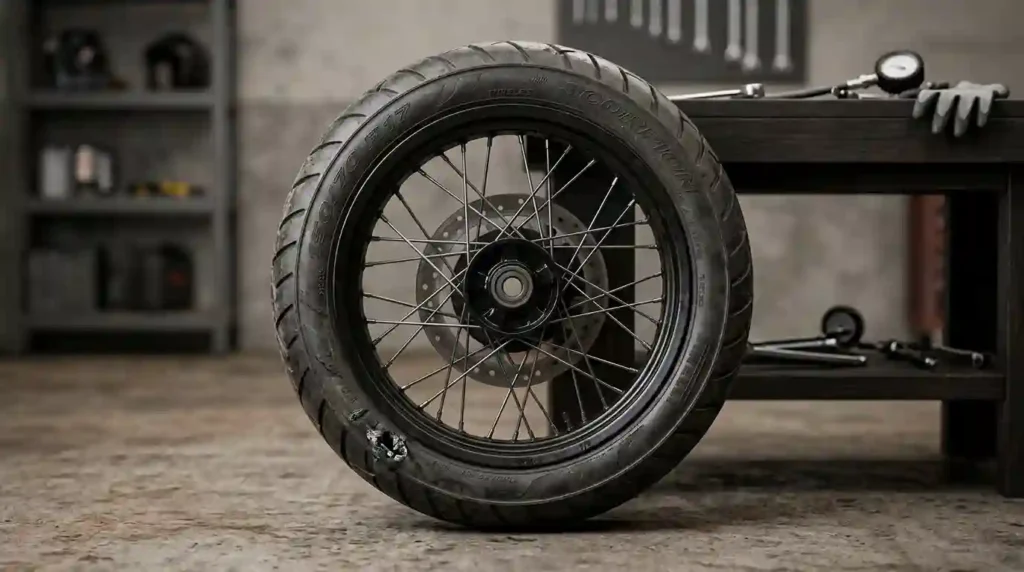
You hit a sharp rock on a Southwestern trail. Or a glass shard in a city bike lane. Air hisses out, and the cut is on the side of the tire. That is a bike tyre puncture on the sidewall, and it is not a normal flat.
US riders deal with a lot of tire trouble. Flats, weak cornering grip, wrong tire pressure (PSI), and fast tread wear top the list. The right tire and the right PSI shape your safety, your speed, and your comfort on every ride. If you are still sorting out your setup, start with our guide on how to choose bike tyres.
A sidewall cut is the most serious of these problems. The sidewall holds the tire’s shape and carries the load. Once it is damaged, a simple patch may not be enough.
This guide shows you how to judge the damage, fix the flat safely, and know when to buy a new tire. You will also see how pressure, width, and tire build change your risk.
Quick answer: A tube patch fixes a tube, not a tire. A boot can get you home. A structurally damaged sidewall means a new tire.
What Is a Bike Tire Sidewall Puncture?
A sidewall is the side area of the tire. It sits between the tread and the bead. The bead is the reinforced edge that locks the tire onto the rim.
A sidewall puncture is any damage in that zone. The casing is the fabric layer under the rubber. It sets the tire’s shape, holds air pressure, and supports cornering grip. Learn more in our explainers on what a bike tire casing is and how bike tires work.
Not all damage is equal. Use these three levels:
- Surface cut: The rubber is nicked, but no fabric shows.
- Casing puncture: Something went through the casing. Air may leak, or the tube may bulge.
- Structural tear: Threads are cut or broken. The tire has lost strength.
Sidewall Puncture vs. Tread Puncture
Tread punctures often come from glass, thorns, or sharp stones. They hit the road-contact area. That area has thick rubber and often a puncture belt.
Sidewalls are thin. A cut can show casing threads or let an inner tube bulge through. Tread patterns also change how a tire handles debris, as we explain in why bike tires have different tread patterns.
A tread puncture may be repairable. Structural sidewall damage usually calls for a new tire.
| Feature | Tread Puncture | Sidewall Puncture |
|---|---|---|
| Rubber thickness | Thicker | Thin |
| Puncture belt | Often present | Usually absent |
| Common cause | Glass, thorns, stones | Rocks, curbs, potholes |
| Repair outlook | Often fixable | Often needs a new tire |
| Main risk | Slow leak | Bulge or blowout |
Why Sidewall Damage Is Riskier
The sidewall flexes every time the wheel turns. Damaged casing fibers face that stress again and again. A small cut can grow fast. Riders often miss this. A tire can hold air for a few miles and then fail on a fast corner or a long descent.
High pressure can push an inner tube through the cut. That can cause a sudden blowout. A weak sidewall also hurts stability and braking control, and it cuts into cornering traction. See how much bike tires affect grip for the bigger picture.
Warning: A sidewall that bulges under air pressure is unsafe. Stop riding.
What Causes a Bike Tire Puncture on the Sidewall?
Common causes include sharp rocks, broken glass, road debris, and hard hits on curbs or potholes. Low pressure can also trigger pinch flats when the tire squashes against the rim.
Other factors add up over time. Tire age, casing wear, poor installation, and heavy e-bike loads all raise the risk.
Sharp Objects and Road Debris
Glass shards, metal bits, thorns, and sharp gravel can pierce thin sidewall rubber. Southwestern slickrock and loose desert rock are hard on tires. So are Pacific Northwest roots and broken trail edges.
Low-profile road tires often have less sidewall protection than tires built for rough ground. Our guide on how to choose bike tires for rough roads covers what to look for.
After any flat, check both sidewalls. The object may still be stuck in the tire.
A sharp stone can wedge into the casing and work deeper with each wheel turn. Pull it out with care, and never press it further in.
Low Tire Pressure and Impact Damage
Low pressure lets the tire collapse against the rim. That pinches the tube and often leaves two small holes. It also raises the risk of rim strikes.
A pothole or curb can cut the casing even when no sharp object is present. Set your PSI for rider weight, tire width, rim fit, and terrain. Our guide on how much air to put in a bike tire is a good starting point.
Worn Casing and Tire Construction
Aging rubber, cracked sidewalls, and exposed threads signal a weak tire. These tires cut more easily.
Casing TPI means threads per inch. A higher number does not always mean better puncture protection. Puncture belts, sidewall reinforcement, rubber compound, and overall build all matter. Read up on what bike tires are made of and what a bike tire rubber compound is.
Can You Repair a Bike Tire Sidewall Puncture?
A tube patch repairs an inner tube. It does not repair a damaged tire casing.
A small cut can sometimes be covered from the inside with a temporary tire boot. That is not a permanent fix. Boots such as the Park Tool TB-2 are sold for emergency use, and the maker says to replace the cut tire as soon as possible.
Replace any tire with a deep cut, exposed or broken threads, a bulge, or damage near the bead.
When in doubt, treat the tire as finished. A new tire costs far less than a crash or a trip to urgent care.
When Is a Sidewall Puncture Repairable?
A tiny cut with intact casing fibers may suit a temporary boot. Do this only if the tire maker allows it.
A tubeless tire may seal a small hole. But tubeless sealant cannot reliably restore lost sidewall strength.
Follow the tire maker’s repair guidance. Inspect the tire closely before you ride again.
Look at the inside of the casing in good light. Flex the tire gently and watch the cut. If it opens up or shows fabric, retire the tire.
When Should You Replace the Tire?
Replace the tire if the casing is torn, the bead is damaged, or the sidewall bulges when inflated. Do not ride a tire with visible structural damage, even if it holds air.
Be extra careful on fast road descents, technical trails, and heavy e-bikes. Our guide on how often bike tyres should be replaced adds more detail.
| What You See | Damage Level | Action |
|---|---|---|
| Small nick, no fabric | Surface cut | Inspect often, monitor |
| Cut through rubber, threads intact | Minor casing damage | Temporary boot, then replace soon |
| Exposed or broken threads | Structural | Replace |
| Bulge when inflated | Structural | Replace now |
| Damage near the bead | Structural | Replace |
How to Fix a Bike Tire Puncture on the Sidewall
First, stop in a safe place. Release the air before you remove the wheel or tire.
Next, check the inside and outside of the tire. Find the damage and any trapped debris. Use a boot only when it suits the damage. Replace a structurally damaged tire before normal riding.
Quick steps: 1. Stop and deflate. 2. Remove the wheel and tire. 3. Find the cut and clear debris. 4. Boot the cut if suitable. 5. Reinstall and inflate slowly.
Remove the Wheel and Inspect the Tire (Step 1)
Shift the chain to the smallest rear cog if the flat is on the rear. Remove the wheel based on your axle and brake setup. On a disc-brake bike, do not squeeze the brake lever while the wheel is out.
Work one bead off the rim with tire levers. Avoid pinching the tube or damaging the rim tape. Find the cut, check the inside of the tire, and clear any sharp debris with a cloth.
Check the Inner Tube or Tubeless System (Step 2)
With an inner tube, look for holes. Check whether they line up with the tire cut.
With tubeless, check sealant coverage, valve condition, bead seating, and the size of the opening. Slow air loss can have several causes, as our guide on why bike tyres lose air explains.
Do not assume more air or sealant makes a damaged casing safe.
Apply a Temporary Tire Boot if Suitable (Step 3)
Deflate the tire fully. Place a purpose-made boot inside the casing over the small cut. The boot sits between the tube and the tire.
Make sure it extends well past the edges of the damage. It must suit your tire and tube setup. Many tubeless riders fit a tube for a torn sidewall, because sealant cannot hold the opening.
Treat the boot as an emergency fix. It does not repair a torn or weakened sidewall.
Ride home at low speed. Brake early and avoid hard corners until you can swap the tire.
Reinstall and Check the Tire (Step 4)
Check the rim tape, tube position, bead, and valve before you reassemble. Make sure the tube is not twisted or trapped under the bead.
Inflate slowly within the tire and rim maker’s limits. Watch the repair for bulges or bead movement. Our guide on how to inflate a bike tire correctly walks through the process.
If the tire shows any weakness, do not ride it. Replace it.
Can Tubeless Sealant Fix a Sidewall Puncture?
Sealant works best on small holes. The liquid must reach the opening and plug it. Many products are made with tread punctures in mind.
Large cuts and tears often beat the sealant. It cannot form a lasting seal across a wide gap.
Tubeless plugs and boots may help in some cases. Neither one restores a compromised casing.
Tubeless vs. Inner-Tube Sidewall Punctures
Inner-tube systems can lose air fast if the tube pushes through a cut. Tubeless systems may seal small holes, depending on the opening, the sealant, and the tire build.
Both systems need a new tire when sidewall damage makes riding unsafe.
| Factor | Inner Tube | Tubeless |
|---|---|---|
| Small sidewall hole | Fast air loss | May self-seal |
| Roadside repair | Simple | Often needs a tube |
| Large sidewall cut | Needs boot and tube | Sealant usually fails |
| Structural damage | Replace tire | Replace tire |
When to Use a Tubeless Plug or Tire Boot
Use only products approved for your tire system and damage type. Check the maker’s instructions, especially for sidewall use.
Replace the tire if air keeps escaping, the casing bulges, or the cut grows.
How Tire Pressure Affects Sidewall Punctures
Pressure changes casing deflection, pinch-flat risk, rolling resistance, and impact protection. Start with the tire maker’s range. Then adjust for tire width, rim width, total weight, and terrain.
Higher PSI does not always prevent punctures. Too much pressure can worsen impact behavior and reduce grip. The goal is a pressure that protects the rim without making the tire harsh. Small changes of 2 to 3 PSI are easy to test and often matter. Read what happens if bike tire pressure is too high and whether you can overinflate a bike tire.
How to Choose the Right Tire Pressure (PSI)
Consider rider weight, bike and cargo weight, tire width, casing build, and load split. Here is a quick starting estimate. It is a rule of thumb, not a standard.
- Add rider, bike, and gear weight in pounds. This is your system weight.
- Front load is about 47% of that. Rear load is about 53%.
- Multiply each load by the width factor below.
- Subtract about 10% for tubeless, 5% for wet roads, and 10% for rough ground.
| Tire Width | Width Factor |
|---|---|
| 28 mm (1.1 in) | 0.80 |
| 32 mm (1.25 in) | 0.68 |
| 40 mm (1.6 in) | 0.40 |
| 2.1 in (53 mm) MTB | 0.30 |
| 2.4 in (61 mm) MTB | 0.22 |
Example for 32 mm tubed tires:
| System Weight | Front PSI | Rear PSI |
|---|---|---|
| 150 lb | 48 | 54 |
| 180 lb | 58 | 65 |
| 210 lb | 67 | 76 |
| 250 lb | 80 | 90 |
Never exceed the tire or rim limit. Use a gauge, not your thumb. Our guide on how to check bike tire pressure shows how, and how to find the correct bike tire pressure goes deeper.
Does Tire Width Affect Sidewall Protection?
Wider tires can often run lower pressure for the same load. That helps absorb hits. But the right value depends on the full wheel and tire setup.
Check rim width and pressure limits before you change size. See bike tire width explained, will this bike tire fit my wheel, and bike tire size compatibility. The ETRTO sizing standard explains the numbers on your tire.
| Inner Rim Width | Typical Tire Range |
|---|---|
| 17 mm | 25 to 32 mm |
| 21 mm | 28 to 40 mm |
| 25 mm | 35 to 50 mm |
| 30 mm | 2.1 to 2.6 in |
These are common guides only. Follow your rim maker. Many hookless rims have lower pressure caps, often near 72 PSI, and need compatible tires. Find out how much wider a tire you can fit before you buy.
Can E-Bike Torque and Weight Increase Tire Damage?
Yes. E-bikes carry more system weight and deliver strong e-bike torque from a stop. Both raise the demands on the tire.
Choose tires with proper load ratings and e-bike approval where needed. Look for marks that show intended use, as in bike tyre markings explained for beginners. For heavy commuting and cargo, see how to choose durable bike tyres.
Check for sidewall cuts and pressure loss more often when carrying cargo or riding rough routes.
How to Prevent Future Sidewall Punctures
Pick tires with the right casing reinforcement and puncture protection for your riding. Inspect them often for cuts, debris, cracks, bulges, and exposed threads.
Keep PSI right. Avoid hits that overload the tire and rim.
Good habits cost little. A two-minute check before each ride catches most problems early, and it keeps small cuts from turning into roadside repairs.
Choose Tires with Better Sidewall Protection
Compare reinforced casings, puncture belts, and the maker’s durability claims. Match the build to road, gravel, mountain, or commuting use.
Balance protection against weight, rolling resistance, and cornering grip. Our piece on puncture protection vs. rolling resistance explains the trade-off. For a full buying guide, see how to choose puncture-resistant bike tyres.
Inspect Tire Wear and Casing Condition
Look for repeated cuts, dry rot, uneven wear, and damage near the bead. Replace a tire when wear or damage hurts its structure, no matter the mileage.
Check both sidewalls and the tread after debris or a pothole hit. Learn how much tread a bike tyre should have and how often to check bike tyres.
Maintain Tire Pressure and Wheel Compatibility
Check PSI before long rides. Check it often during daily commuting. See how often to inflate bike tires for a simple schedule.
Confirm that tire size, rim width, bead type, and pressure limits match the wheel maker’s guidance. If the markings confuse you, learn how to read bike tire size. With tubeless, keep rim tape and valves in good shape.
Best Bike Tires for Sidewall Puncture Protection
Compare tires by casing strength, puncture belt design, sidewall reinforcement, and terrain. Weigh trade-offs among puncture resistance, rolling resistance, comfort, grip, and weight. See our full list of the best bike tyres for puncture protection.
| Rider Type | Look For | Common Width |
|---|---|---|
| Road and commuter | Durable casing, belt | 28 to 40 mm |
| Gravel | Reinforced sidewalls | 38 to 50 mm |
| Mountain bike | Strong casing, wide volume | 2.2 to 2.6 in |
| E-bike | Load rating, e-bike approval | 40 mm and up |
Best Tires for Road Cycling and Commuting
Prioritize a tough casing and real puncture protection for city riding. Think about glass, debris, daily miles, and the balance between speed and reliability.
Confirm the tire fits your rim and frame. See the best bike tyre size for commuting, how to choose tyres for a commuter bike, and our picks of bike tyres for daily commuting.
Gravel and Mountain Bike Tires: What to Pick
Look for sidewall reinforcement if you ride sharp rock, loose gravel, or technical trails. Match tread pattern and rubber to the ground and the grip you need.
Wet Pacific Northwest trails ask for different tread than dry desert rock. Read how to choose bike tires for gravel roads, how to choose tires for mixed surfaces, and how to choose bike tires for wet weather.
E-Bike Tires: What to Pick
Choose tires approved for your bike’s use, load, and speed. In the US, Class 3 e-bikes assist up to 28 mph, so speed ratings matter.
Consider reinforced casings for commuting, cargo, and rough city streets. Check wheel fit and the stated pressure range. Not sure of your size? Read what bike tire size you need.
How Sidewall Puncture Protection Is Tested
Compare maker claims with documented puncture and casing test methods. Look for repeatable conditions, sample sizes, set pressures, and clear equipment details.
Lab results are comparative evidence. They are not a guarantee against real sidewall damage. A tire that wins in a lab can still fail on a sharp edge of rock. Use test data as one input, then match it to your own terrain. You can see how we approach evaluation on our testing process page and our editorial policy.
What to Look for in Tire Test Results
Separate tread-puncture tests from sidewall-cut or casing-strength tests. They measure different things.
Compare tires under equal conditions. Tell independent testing apart from maker claims. Consider field data across surfaces, temperatures, loads, and pressures. Speed and comfort results matter too, so see how much bike tires affect speed and how much they affect comfort.
Understanding TPI, Puncture Belts, and Casing Layers
TPI means threads per inch. What it tells you depends on thread size, material, weave, and casing design. Puncture belts often cover only the tread. They may not protect the sidewall as well.
Judge the whole build, not one number. If tire numbers confuse you, see what the numbers on bike tyres mean.
| Term | Plain-English Meaning |
|---|---|
| TPI | Thread density in the casing |
| Durometer | Rubber hardness; lower is softer |
| Puncture belt | Extra layer, usually under tread |
| Casing layers | Plies that give shape and strength |
| Rolling resistance | Energy lost as the tire rolls |
Frequently Asked Questions About Bike Tire Sidewall Punctures
Can you ride a bike with a sidewall puncture?
Avoid riding a tire with a deep cut, exposed casing, bulge, or damaged bead. A temporary boot may allow limited emergency travel if the casing is still fit for it. Replace structurally damaged tires before normal riding.
Can a bike tire sidewall be patched?
An inner-tube patch repairs the tube, not the casing. A purpose-made internal boot may offer a temporary fix for some small cuts. Replace the tire if the casing or bead is damaged.
Will tubeless sealant fix a sidewall puncture?
Sealant can close some small holes but may fail on larger sidewall cuts. A plug or boot may work when the product maker approves it. A bulging or torn casing needs a new tire.
What causes repeated sidewall punctures?
Common causes include sharp debris, impacts, underinflation, worn casings, and unsuitable tire build. Check your terrain, pressure, load, and rim fit. Consider a tire with stronger sidewalls if it keeps happening.
What PSI should I use to prevent sidewall punctures?
There is no single PSI. It depends on rider and bike weight, tire width, rim design, and terrain. Follow tire and rim limits and use a calculator as a start. Too little pressure raises pinch-flat risk, while too much can hurt grip.
Are tubeless tires safer than tires with inner tubes?
Tubeless tires can seal some small punctures without a tube change. Inner tubes are often simpler to fix at the roadside. Neither one makes a damaged sidewall safe.
How do I know when a bike tire needs replacing?
Look for deep cuts, visible casing threads, bulges, bead damage, or steady air loss. Replace the tire if its structure is hurt, even when the tread looks fine. If you are unsure, ask a bike mechanic.
Does rim width affect sidewall puncture risk?
Rim width changes tire shape and support, which can change handling and casing behavior. Use approved tire and rim pairs and respect pressure limits. A wider rim or tire does not guarantee protection, so read whether you can use wider tires on your bike.
Final Verdict: Stay Safe After a Sidewall Puncture
A bike tire puncture on the sidewall can be more serious than a tread flat. It may damage the casing that holds your tire together.
Here are the key takeaways:
- Inspect the tire closely after every sidewall flat.
- Use a boot only as an emergency fix, and only when it suits the damage.
- Replace any tire with a tear, bulge, exposed threads, or bead damage.
- Prevent repeats with regular checks, correct PSI, compatible rims, and tires built for your terrain.
Test your exact setup. Do not guess your pressure or your tire fit. Use the Free Bike Tire Pressure Calculator / Tire Finder Tool at TheBikeTires.com to match PSI and tire size to your weight, rim, and riding style. It takes a minute, and it can save your next ride.
Ride smart, check often, and replace what is damaged. Your tires are the only part of the bike that touches the ground.

Mohidul Islam is a leading cycling technology specialist and bike tire consultant with over 15 years of hands-on experience in the bicycle industry. He holds a Bachelor of Science in Mechanical Engineering from Penn State University, where he focused heavily on material science, tread mechanics, and rubber compound performance. Over the past decade and a half, Alex has conducted extensive field testing, tubeless setup evaluations, and tire pressure modeling for road, mountain, and e-bikes. His practical insights and data-driven approach help cyclists of all levels optimize grip, speed, and durability on every ride.



