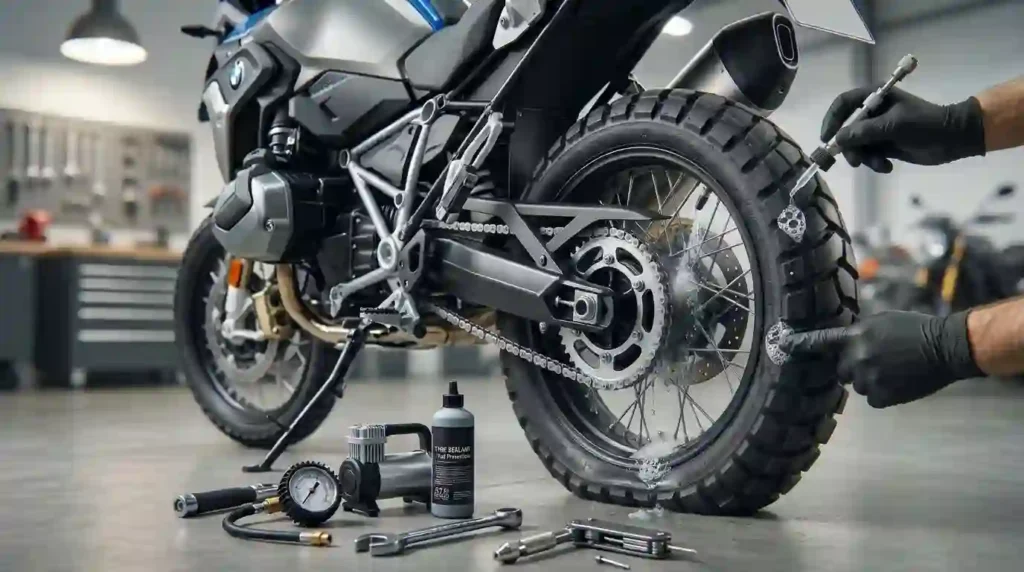
You pump the tire to the right pressure. A day later it feels soft, but you cannot find a hole. A bike tyre losing air but no puncture is one of the most confusing problems a rider can face.
US cyclists deal with this on commutes, gravel rides, and weekend trails. It often shows up with other headaches like wrong tire pressure, weak cornering grip, and tread that wears out early. Many of them share the same root causes.
Air can leave through the valve, the rim tape, the tire bead, the casing, or a hole too small to see. Cold weather can also lower pressure with no leak at all.
The right tire and the right tire pressure (PSI) protect your safety, speed, and comfort. A tire that holds air corners with confidence and rolls with less effort.
This guide helps you find the source, fix it, and stop it from returning. It follows our testing process for every claim.
Why Is My Bike Tire Losing Air but There Is No Puncture?
A bike tire can lose air without a visible hole. The usual causes are valve leaks, damaged rim tape, poor tubeless seals, and tiny hidden punctures.
Temperature changes and slow air seep through tire materials also lower pressure. Finding the true source stops the cycle of re-inflating and surprise flats.
If the air loss keeps coming back, our guide on why a bike tire keeps losing air adds more detail.
Is It Normal for a Bike Tire to Lose Air?
A small drop over time is normal. Narrow tires with high starting PSI lose air faster, and latex tubes lose it faster than butyl tubes.
A tire that loses pressure fast, or goes fully flat, needs inspection. Compare readings at similar temperatures to tell a leak from a temperature change.
| 24-Hour Check | What It Often Means |
|---|---|
| A few PSI lower | Normal seep |
| Much lower than yesterday | Likely leak |
| Fully flat | Active leak, inspect now |
| Low only after a cold night | Temperature effect |
Our guides on why bike tyres lose air and why a bike tire feels soft explain normal loss in more depth.
The Most Common Causes of Air Loss Without a Visible Puncture
Three groups of causes show up again and again. The first is the valve: loose cores, damaged stems, and leaking tubeless valves.
The second is the seal and the casing: poor rim tape coverage, bead leaks, and holes too small to see. The third is physics: temperature swings, worn casings, and gradual air loss through the tire itself.
7 Reasons Your Bike Tire Loses Air Without a Puncture
Inspect the valve, tire, rim, and tube before you replace anything. Use soapy water to find leaks that are too small to see or hear.
First check whether you ride tubes or tubeless. The repair differs for each. Use this quick table to match clues to causes.
| Cause | Common Clue | Quick Test |
|---|---|---|
| Leaking valve | Bubbles at the stem | Soapy water on the valve |
| Bad rim tape | Repeat tube failures | Inspect the rim bed |
| Bead leak (tubeless) | Hiss near the rim | Soapy water on the bead |
| Dry sealant | Dried, crusty sealant | Shake and inspect |
| Tiny puncture | Slow loss, no visible hole | Water test the tube |
| Temperature change | Low only when cold | Recheck when warm |
| Worn casing | Cracks, weeping sealant | Visual check |
1. A Leaking Valve or Loose Valve Core
A loose valve core can let air out slowly. Dirt, wear, or damage around the stem can stop a tight seal.
Pump heads can loosen the core when you remove them. Brush soapy water around the valve and watch for bubbles that keep growing. Many road bikes use thin Presta valves, while many hybrid and mountain bikes use wider Schrader valves.
2. Damaged or Poorly Fitted Rim Tape
Rim tape covers the spoke holes inside the rim. Without it, a tube can push into a hole and wear thin.
Torn, shifted, or wrong tape can cause repeat air loss or punctures. On tubeless rims, poor tape can also leak at the spoke holes. Check the rim bed for open holes, sharp edges, and damaged tape.
3. A Tubeless Tire Bead That Does Not Seal
Air can escape where the tire bead meets the rim. Dirt, dried sealant, poor seating, or mismatched parts can all spoil the seal.
Inspect the bead and check the inner rim width against the tire size. See bike tire size compatibility and whether a tire will fit your wheel.
4. Dry or Insufficient Tubeless Sealant
Tubeless sealant is a liquid latex that closes small holes. It dries out over a few months, and faster in hot, dry places like Arizona.
Low sealant leaves parts of the tire unprotected. Check its condition and top it up using the maker’s directions.
5. A Tiny Hidden Puncture
Small glass chips, thorns, or wires can make holes that are hard to spot. Some holes leak only when the tire is under pressure or flexing.
Southwestern riders often meet goatheads (puncturevine thorns) that hide in the tread. Inspect the tread and tube with care, even if the outside looks fine.
6. Temperature Changes Overnight
Cool air lowers tire pressure even when no air has escaped. For a fixed tire volume, pressure moves roughly with absolute temperature.
A garage in Minnesota or a porch in the Pacific Northwest can swing 30°F overnight. Recheck at a similar temperature before you decide the tire has a leak. Our guide on why bike tire pressure drops overnight covers it in depth.
7. An Aging or Damaged Tire Casing
The casing is the fabric body of the tire. Cracks, cuts, worn rubber, or exposed threads can all leak air.
Sidewall damage is harder to spot than tread damage. On tubeless tires, sealant may weep through a porous sidewall. Replace a badly damaged tire instead of trusting sealant or repeat patches. Learn more in what a bike tire casing is.
How to Find a Hidden Leak in a Bike Tire
Start with a visual check. Then test the valve, tread, sidewalls, and bead with soapy water.
You can find many leaks without taking the wheel apart. If you ride tubes, remove the tube only when you need to check for hidden damage.
Step 1: Check the Tire Pressure
- Inflate the tire to a safe pressure inside tire and rim limits.
- Record the pressure with a reliable gauge.
- Recheck later at a similar temperature to measure the drop.
Our pick of the best bike tire pressure gauge can help. See how to check bike tire pressure for the method.
Step 2: Test the Valve With Soapy Water
Brush soapy water around the valve core, stem, and base. Look for bubbles that keep forming, not just foam left from the brush.
Tighten or replace faulty parts with compatible ones. A small core tool makes this easy.
Inspect the Tread and Sidewalls (Step 3)
Look for tiny cuts, glass, thorns, cracks, and bulges. Turn the wheel slowly so you see the whole tire.
Remove stuck debris with care. Replace a tire with unsafe damage. Our guide on how to find a puncture in a bike tire can help with tiny holes.
Inspect the Rim Tape and Bead (Step 4)
Check the rim tape for tears, gaps, and open spoke holes. On tubeless wheels, inspect the bead and the valve seal.
Confirm that tire size, rim width, and setup match the maker’s guidance.
Test the Inner Tube if Needed (Step 5)
Remove the tube and inflate it slightly. Listen for air, or use soapy water to spot bubbles.
If you use a water test, dry the tube before you patch or refit it. Take the tire off gently, as shown in how to remove a bike tire without damaging the tube.
How to Fix a Bike Tire That Loses Air Without a Puncture
Match the repair to the source of the leak. Do not just keep adding air.
Replace damaged valves, rim tape, or tubes when a safe repair is not possible. Test the repair before you ride to confirm that pressure holds.
Fixing a Leaking Bike Tire Valve
Tighten a loose removable valve core with the correct tool. Replace a damaged tube valve or a faulty tubeless valve part.
Do not overtighten the core or force parts that do not match.
Replacing Damaged Rim Tape
Remove the tire and inspect the rim bed. Fit compatible rim tape that fully covers the spoke holes and suits your rim design.
Check the tape position before you refit the tire and inflate it.
Resealing a Tubeless Tire That Keeps Losing Air
Check the sealant amount, condition, and match with your tire. Clean the bead and reseat the tire using the maker’s instructions.
Use a suitable plug for an appropriate tread puncture. Replace tires with unsafe structural damage.
When Should You Replace the Tire or Tube?
Replace tubes with damaged valve bases, large holes, or damage that cannot be patched safely. Replace tires with serious cuts, bulges, exposed casing, or leaks that never stop.
Follow the maker’s repair limits. See how often bike tyres should be replaced, and how to repair a bike inner tube when a patch is enough.
How Tire Pressure (PSI) Affects Air Loss
Correct pressure balances grip, comfort, rolling resistance, and impact protection. Rolling resistance is the energy lost as the tire rolls.
Low pressure raises pinch flat risk with tubes. Too much pressure cuts grip and can pass tire or rim limits. Read how PSI affects punctures.
What PSI Should You Use for Your Bike Tire?
Start with the range on the tire and the limit set by the rim maker. Then adjust for rider weight, bike weight, tire width, cargo, and surface.
Add rider, bike, and gear weight. Assume about 45% sits on the front wheel and 55% on the rear. Use this table for tubeless setups on modern wide rims.
| System Weight | Road 28 mm (Front / Rear PSI) | Gravel 40 mm (Front / Rear PSI) | MTB 2.4 in (Front / Rear PSI) |
|---|---|---|---|
| 120 to 140 lb | 48 / 52 | 28 / 31 | 17 / 19 |
| 141 to 160 lb | 54 / 58 | 31 / 34 | 19 / 21 |
| 161 to 180 lb | 58 / 62 | 33 / 36 | 21 / 23 |
| 181 to 200 lb | 62 / 66 | 35 / 38 | 23 / 25 |
| 201 to 230 lb | 66 / 71 | 38 / 41 | 25 / 27 |
Add about 5 PSI for tubes. Many hookless rims cap pressure near 72.5 PSI (5 bar), and hooked rims have a lip that holds the bead. See how to find the correct bike tire pressure and how much air to put in a bike tire.
Can Low PSI Cause Air Loss Without a Puncture?
Low PSI does not usually make a parked tire leak. The leak has another cause.
Still, low pressure raises the risk of impact damage, pinch flats, and rim strikes while riding. Check for a leak if pressure keeps falling after you inflate correctly. See what too-low pressure does to your ride.
How Temperature Affects Tire Pressure
Tire pressure falls as the air inside cools. Here is the formula in plain terms, with temperatures in °F:
New PSI = (Old PSI + 14.7) × (New Temp + 459.67) ÷ (Old Temp + 459.67) − 14.7
This table shows the approximate drop from 70°F.
| Starting PSI at 70°F | Drop at 50°F | Drop at 40°F | Drop at 30°F |
|---|---|---|---|
| 30 PSI (gravel, MTB) | 1.7 PSI | 2.5 PSI | 3.4 PSI |
| 60 PSI (road) | 2.8 PSI | 4.2 PSI | 5.6 PSI |
| 90 PSI (racing road) | 4.0 PSI | 5.9 PSI | 7.9 PSI |
Featured snippet quick answer: If your bike tire loses air but has no visible puncture, check the valve, rim tape, tire bead, and tubeless sealant. Inspect the casing for tiny holes and compare PSI readings at similar temperatures to find the cause.
Tubeless vs. Inner-Tube Tires: Which Holds Air Better?
Inner tubes are simple to repair but may leak through a tiny hole or a faulty valve. Tubeless tires can seal many small tread punctures, but they rely on good bead seating and sealant.
Neither system is immune to air loss.
| Feature | Tubeless | Inner Tube |
|---|---|---|
| Small holes | Sealant often closes them | Tube leaks until patched |
| Pinch flats | Much less common | More likely at low PSI |
| Bead leaks | Possible | Not an issue |
| Valve leaks | Possible at the base | Possible at the stem |
| Upkeep | Sealant refills | Very simple |
Why Inner-Tube Tires Lose Air
A small hole or damaged valve can release air slowly. Poor installation can pinch the tube or expose it to sharp rim edges.
Check the tire, rim tape, and tube together before you replace parts.
Why Tubeless Tires Lose Air
Air can leave through the bead, valve, casing, or a puncture that sealant cannot close. Dried sealant or poor installation can cut pressure retention.
Check that the tire, rim, valve, and sealant are compatible.
Which Setup Is Best for Road, Gravel, and Mountain Biking?
Road cyclists often value low rolling resistance, steady pressure, and predictable cornering traction. Gravel and mountain bikers often gain from tubeless sealant and strong impact protection.
Commuters and e-bike riders should weigh durability, load, repair needs, and cost. See bike tyres for daily commuting and how PSI affects rolling resistance.
How to Prevent Your Bike Tire From Losing Air Again
Inspect tires regularly and remove debris before it causes damage. Keep pressure right, and replace worn or mismatched parts.
Check valves, rim tape, and sealant as part of your routine. Our guide on how to prevent bike tyre punctures adds more habits.
Choose Tires With Suitable Puncture Protection
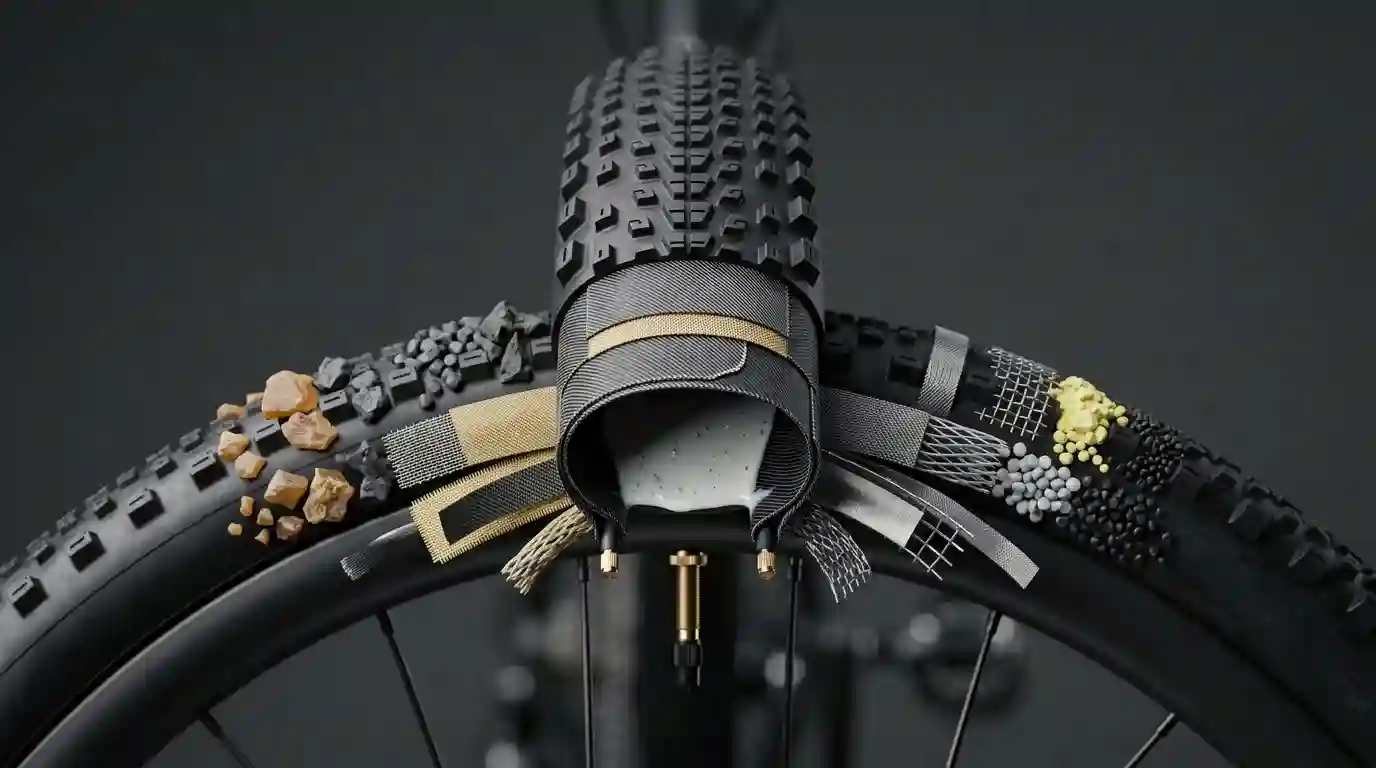
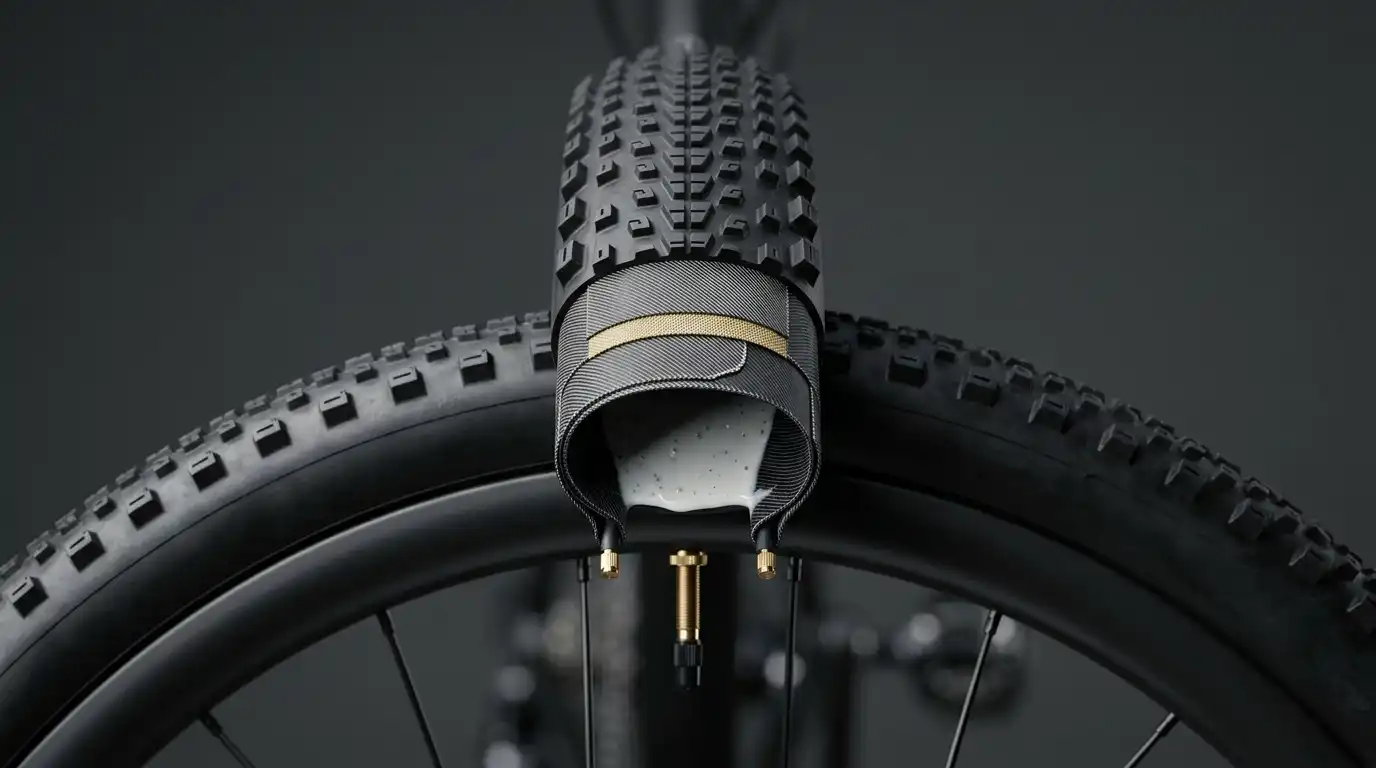
A puncture belt is a tough layer under the tread that blocks sharp objects. Compare casing TPI (threads per inch), rubber compound, sidewall strength, and rolling resistance.
Durometer is the rubber hardness rating, and softer rubber grips more but wears faster. Learn about rubber compounds and how to choose puncture-resistant bike tyres.
Check Tire Compatibility and Rim Width
Confirm that your tire width is approved for your rim and frame. A wrong pairing can cause poor bead seating or unsafe handling.
These ranges are typical, so check with the rim maker.
| Inner Rim Width | Typical Tire Width |
|---|---|
| 19 mm (0.75 in) | 28 to 40 mm |
| 25 mm (1.0 in) | 38 to 55 mm |
| 30 mm (1.2 in) | 2.1 to 2.5 in |
Read bike tire width explained.
Build a Simple Tire Maintenance Routine
- Check PSI before important rides and after big temperature swings.
- Inspect the tread, sidewalls, valves, and tire seating.
- Check tubeless sealant at the advised interval and carry repair tools.
See how often to inflate bike tires and how often to check bike tyres. A floor pump with a gauge makes it easy.
Choosing Reliable Tires for Different Riding Conditions
Balance puncture protection with rolling resistance, comfort, and cornering grip. Consider casing design, tread pattern, rubber compound, and tire width.
Use independent test data and maker specs to guide your choice. Our guide on what makes a good bike tyre gives the full picture.
Best Tire Features for Daily Commuters
Look for a durable casing and suitable puncture protection for debris-filled roads. Choose a tread that grips in the weather you face.
Reflective sidewalls and long life help everyday riding. Read how to choose tyres for a commuter bike.
Gravel and Mountain Bike Tire Features
Gravel tires should suit loose surfaces, rocks, and mixed terrain. Mountain bike tires need tread and casing protection for your trails, from Pacific Northwest mud to Southwestern loose rocks.
Pick a PSI that balances traction with rim-strike protection. Start with how to choose bike tires for gravel roads.
E-Bike Tire Features That Matter
Confirm the tire’s load rating and speed suitability. Some tires carry ratings such as E-25 (about 15.5 mph) or E-50 (about 31 mph).
E-bike torque, system weight, and frequent acceleration all affect wear. Look for tough build without losing grip and control. See the best pump for bike tyres to keep pressure right.
How Tire Testing Helps You Compare Air Retention and Durability
Compare clear test results for puncture resistance, rolling resistance, and casing durability. Use similar tire sizes, pressures, loads, and test conditions.
Treat lab tests as one source of evidence, not a promise. We explain our standards in our editorial policy.
What Should a Reliable Tire Test Measure?
Air retention is the pressure change over a stated period under controlled conditions. Puncture resistance is resistance to penetration using a set method.
Rolling resistance and grip show energy loss, traction, and handling under set conditions. See how much tires affect grip and speed.
Which Standards and Specifications Matter?
Review recognized ISO or other bicycle tire and wheel safety standards. Check maker specs for pressure, load, rim width, and tire fit.
Safety compliance does not rank air retention or puncture resistance. Learn to read your sidewall with what the numbers on bike tyres mean.
Common Mistakes When Diagnosing Tire Pressure Loss
Adding air again and again hides the cause. Replacing a tube without checking the rim and tire can lead to another leak. Mismatched parts and too much pressure can create new risks.
Avoid these three mistakes and you will fix the problem faster.
Assuming Every Leak Is a Puncture
A faulty valve or poor tubeless bead seal can leak with no visible hole. A small pressure drop may simply be temperature.
Test likely leak points before you replace the tire. See why a bike tire keeps getting punctures if you do find holes.
Ignoring Rim Tape and Valve Problems
Damaged rim tape can cause repeat tube failures. A leaking valve is hard to notice without soapy water.
Inspect both parts whenever a tire keeps losing air.
Using the Wrong Pressure or Tire Setup
Too little pressure raises impact damage. Too much pressure cuts grip. A tire and rim that do not match may not seal.
Follow approved ranges and compatibility guidance. Read can you overinflate a bike tire and what happens if pressure is too high.
Frequently Asked Questions About Bike Tires Losing Air
1. Why does my bike tire lose air when there is no hole?
Air may leave through the valve, rim tape, tubeless bead, or a tiny hidden puncture. Temperature changes can also lower PSI with no leak. A soapy water test finds the source.
2. Is it normal for bike tires to lose air every day?
Some slow loss is normal, and the rate varies by tire and setup. Rapid or repeat loss points to a leak or a damaged part. Track pressure with a gauge and inspect the tire if the loss seems high.
3. How do I know if my bike tire valve is leaking?
Brush soapy water around the valve core, stem, and base. Growing bubbles show escaping air. Tighten or replace faulty parts with compatible ones.
4. Can temperature changes make a bike tire look flat?
Yes, to a degree. Cooler air lowers pressure, but a modest drop is normal. A fully flat tire still needs inspection, so compare readings at similar temperatures.
5. Do tubeless tires lose air faster than inner-tube tires?
It depends on the tire, setup, sealant, and valve. Tubeless tires can leak at the bead or casing, while tubes can leak through small holes or valves. Regular upkeep helps both hold pressure.
6. What PSI should I use based on my weight?
There is no single PSI for each weight. Tire width, bike weight, cargo, rim limits, and surface all matter. Use the table above as a start, then check the approved limits. See guides for heavier riders and lighter riders.
7. When should I replace a bike tire?
Replace tires with exposed casing, serious cuts, sidewall cracks, bulges, or unsafe damage. Check any wear marks the maker gives. Never rely on sealant or repeat patches to fix structural damage. See how much tread a bike tyre should have.
8. Can the wrong rim width cause air leaks?
Yes. A rim and tire that do not match can stop proper bead seating. Poor installation can cause leaks or unsafe tire retention. Confirm fit with both makers.
Conclusion: Fix the Cause of Bike Tire Air Loss
A bike tire can lose air with no visible puncture because of valve leaks, rim tape damage, tubeless sealing issues, tiny holes, or cold weather. Inspect the whole setup, find the source, and fix or replace the faulty part.
Correct PSI, matched parts, and routine checks help your tires hold air and keep rides reliable. Learn more about how bike tires work, see what bike tyres are made of, and meet the team on our about page.
Ready to stop chasing slow leaks? Test your exact tire, rim, and weight with the Free Bike Tire Pressure Calculator / Tire Finder Tool at TheBikeTires.com. Dial in your setup and keep your tires firm ride after ride.

Mohidul Islam is a leading cycling technology specialist and bike tire consultant with over 15 years of hands-on experience in the bicycle industry. He holds a Bachelor of Science in Mechanical Engineering from Penn State University, where he focused heavily on material science, tread mechanics, and rubber compound performance. Over the past decade and a half, Alex has conducted extensive field testing, tubeless setup evaluations, and tire pressure modeling for road, mountain, and e-bikes. His practical insights and data-driven approach help cyclists of all levels optimize grip, speed, and durability on every ride.